
Mendenlian Genetics Heredity and traits Bellringer Remediation questions
Mendenlian Genetics Heredity and traits
Bellringer- Remediation questions Copy Question in GREEN and correct answer choice 2 minutes per slide
1. Which of the following accurately states the difference between plant and animal cells? A. Animal cells have stomata that allow for gas exchange B. Plant cells have chloroplasts that are sites of chemical reactions C. Plant cells have stromal cells that make up connective tissue D. Animal cells have chloropplasts that turn glucose into ATP
2. If you examined a cell under a microscope and found it had a nucleus and other organelles, how would you classify it? A. It is a plant cell B. It is an animal cell C. It is a eukaryotic cell D. It is a prokaryotic cell
3. Bacterial are prokaryotic cells, while multicellular and more sophisticated singlecelled organisms are eukaryotic. Which of these describes a prokaryotic cell and NOT a eukaryotic cell? A. Sunlight is absorbed by chloroplasts in the cell B. Molecules join together to assemble a permeable cell membrane C. The nuclear membrane dissassembles and chromosomes align in a cell D. DNA is distributed loosely within the cell rather than in chromosomes
4. Because of the function of most plant leaves is to carry out photosynthesis, their cells contain many more of what organelle than any other part of the plant? A. Chloroplasts B. Mitochondria C. Nuclei D. vacuoles
5. Which statement is true for both prokaryotes and eukaryotes? A. They can only reproduce asexually B. Their DNA is found within a nucleus C. Their DNA is found within the mitochondria D. Their DNA is replicated during reproduction
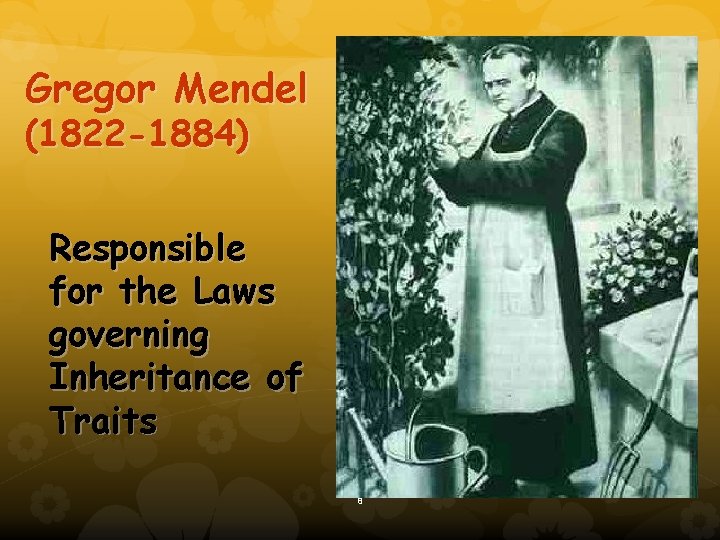
Gregor Mendel (1822 -1884) Responsible for the Laws governing Inheritance of Traits 8
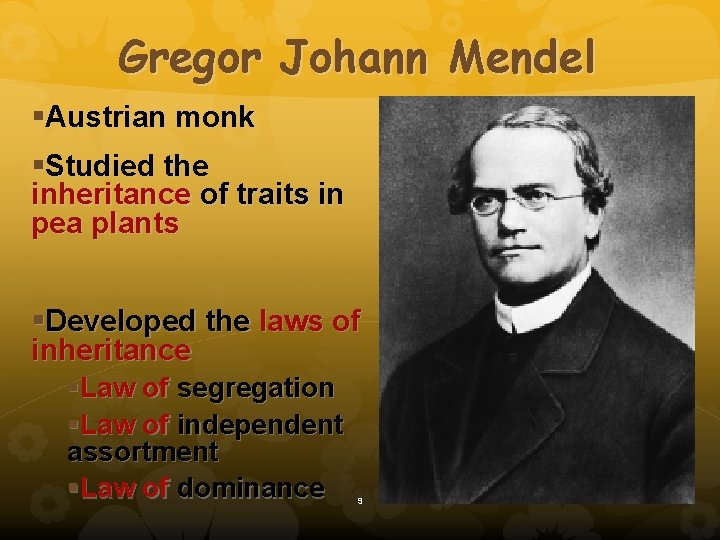
Gregor Johann Mendel §Austrian monk §Studied the inheritance of traits in pea plants §Developed the laws of inheritance §Law of segregation §Law of independent assortment §Law of dominance 9
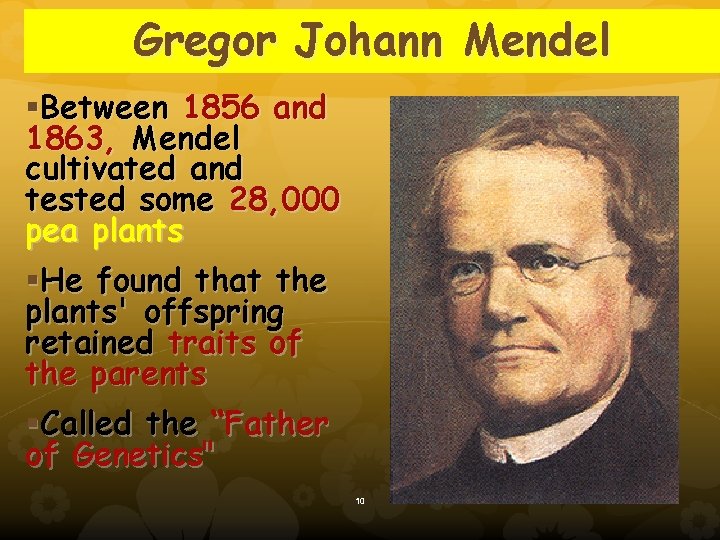
Gregor Johann Mendel §Between 1856 and 1863, Mendel cultivated and tested some 28, 000 pea plants §He found that the plants' offspring retained traits of the parents §Called the “Father of Genetics" 10
Genetic Terminology § Trait - any characteristic that can be passed from parent to offspring § Heredity - passing of traits from parent to offspring § Genetics - study of genes & heredity copyright cmassengale 11
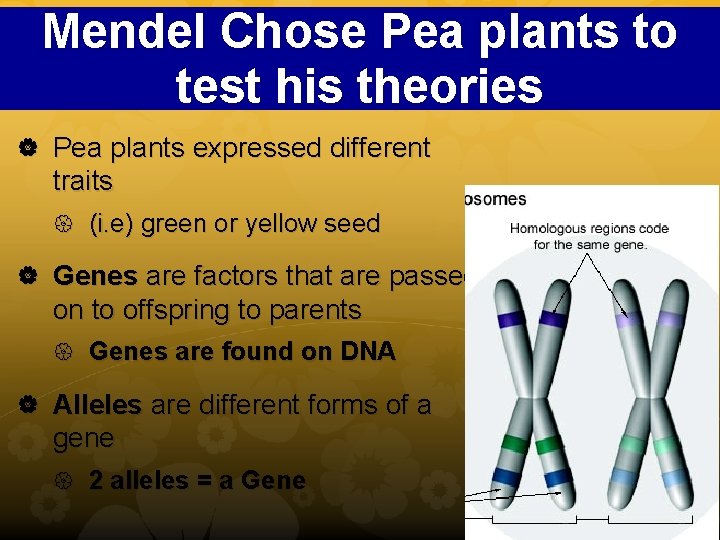
Mendel Chose Pea plants to test his theories Pea plants expressed different traits (i. e) green or yellow seed Genes are factors that are passed on to offspring to parents Genes are found on DNA Alleles are different forms of a gene 2 alleles = a Gene
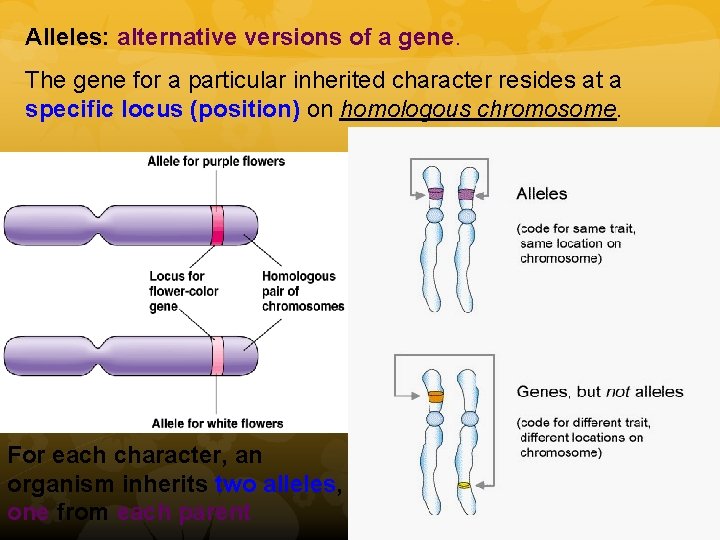
Alleles: alternative versions of a gene. The gene for a particular inherited character resides at a specific locus (position) on homologous chromosome. For each character, an organism inherits two alleles, one from each parent
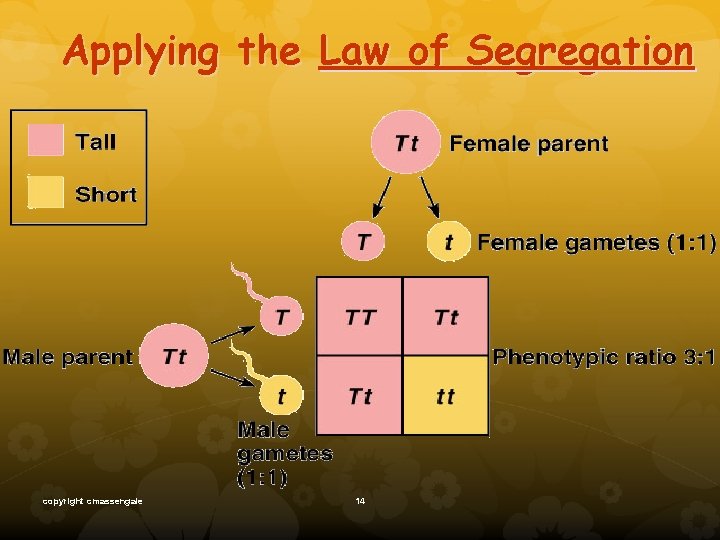
Applying the Law of Segregation copyright cmassengale 14
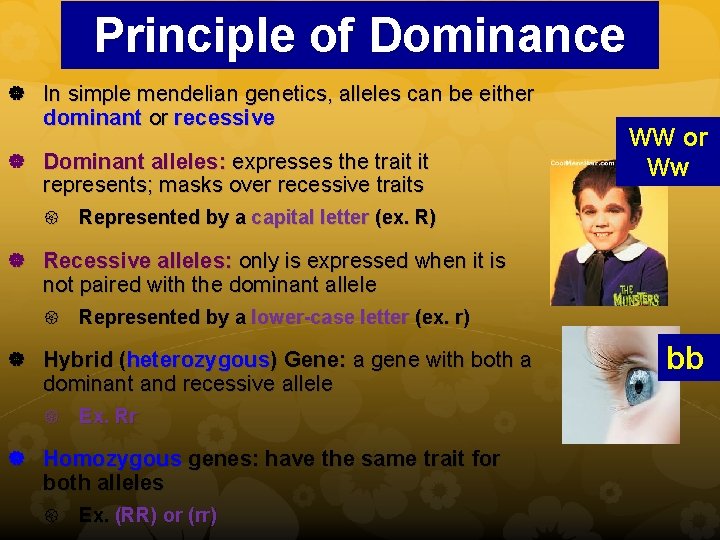
Principle of Dominance In simple mendelian genetics, alleles can be either dominant or recessive Dominant alleles: expresses the trait it represents; masks over recessive traits WW or Ww Represented by a capital letter (ex. R) Recessive alleles: only is expressed when it is not paired with the dominant allele Represented by a lower-case letter (ex. r) Hybrid (heterozygous) Gene: a gene with both a dominant and recessive allele Ex. Rr Homozygous genes: have the same trait for both alleles Ex. (RR) or (rr) bb
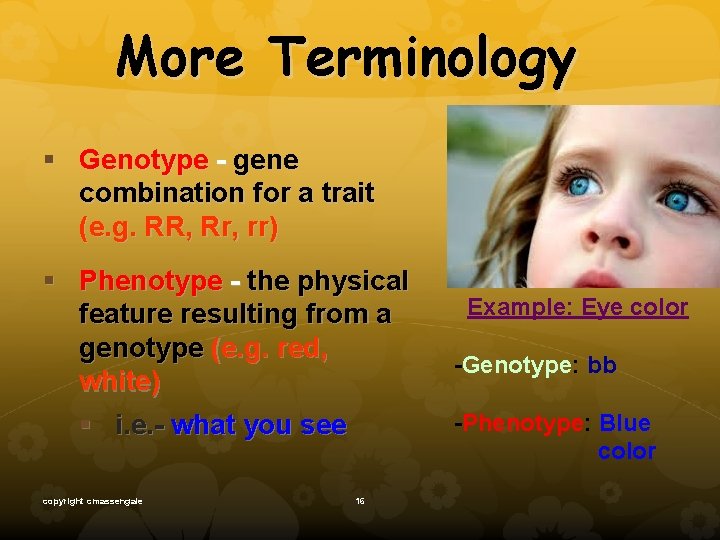
More Terminology § Genotype - gene combination for a trait (e. g. RR, Rr, rr) § Phenotype - the physical feature resulting from a genotype (e. g. red, white) § i. e. - what you see copyright cmassengale 16 Example: Eye color -Genotype: bb -Phenotype: Blue color
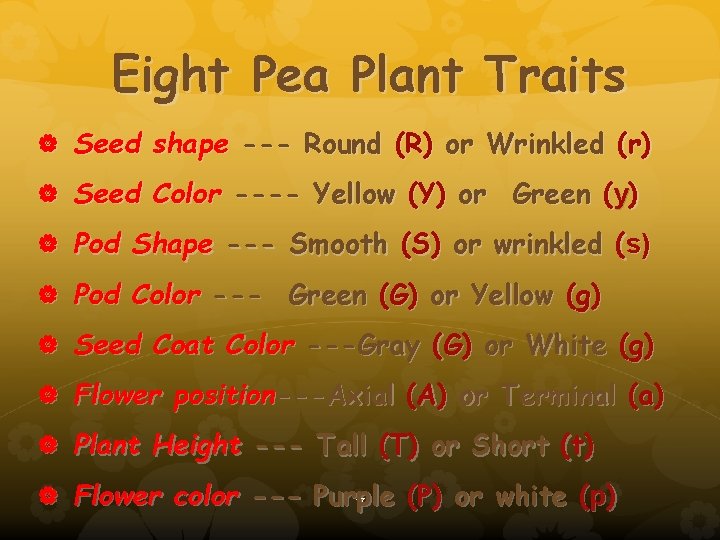
Eight Pea Plant Traits Seed shape --- Round (R) or Wrinkled (r) Seed Color ---- Yellow (Y) or Green (y) Pod Shape --- Smooth (S) or wrinkled (s) Pod Color --- Green (G) or Yellow (g) Seed Coat Color ---Gray (G) or White (g) Flower position---Axial (A) or Terminal (a) Plant Height --- Tall (T) or Short (t) Flower color --- Purple (P) or white (p) 17
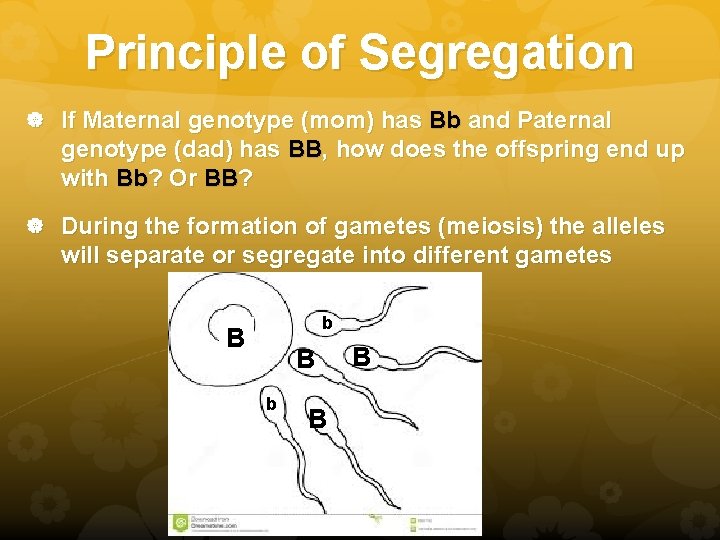
Principle of Segregation If Maternal genotype (mom) has Bb and Paternal genotype (dad) has BB, how does the offspring end up with Bb? Or BB? During the formation of gametes (meiosis) the alleles will separate or segregate into different gametes b B B
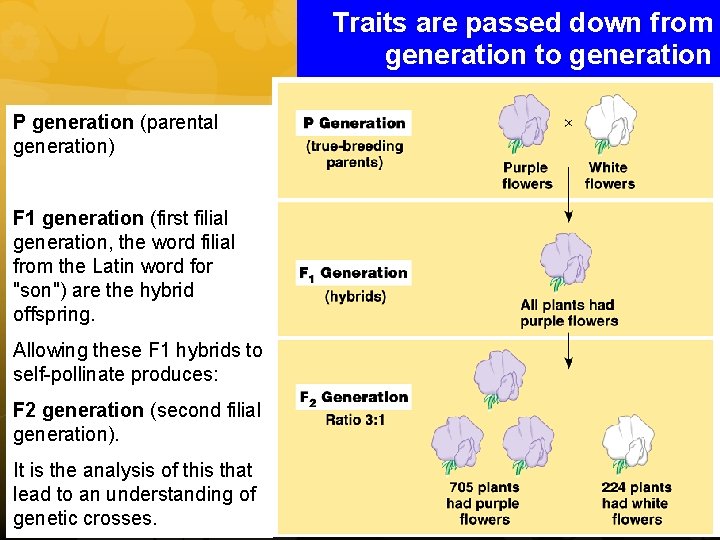
Traits are passed down from generation to generation P generation (parental generation) F 1 generation (first filial generation, the word filial from the Latin word for "son") are the hybrid offspring. Allowing these F 1 hybrids to self-pollinate produces: F 2 generation (second filial generation). It is the analysis of this that lead to an understanding of genetic crosses.
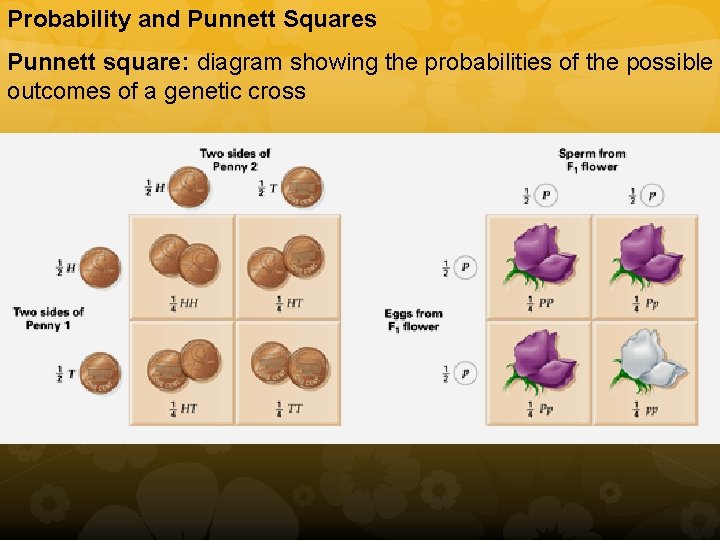
Probability and Punnett Squares Punnett square: diagram showing the probabilities of the possible outcomes of a genetic cross
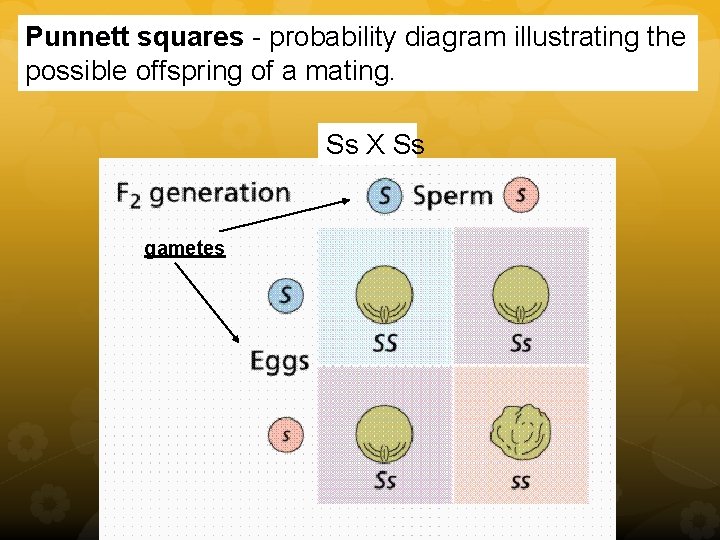
Punnett squares - probability diagram illustrating the possible offspring of a mating. Ss X Ss gametes
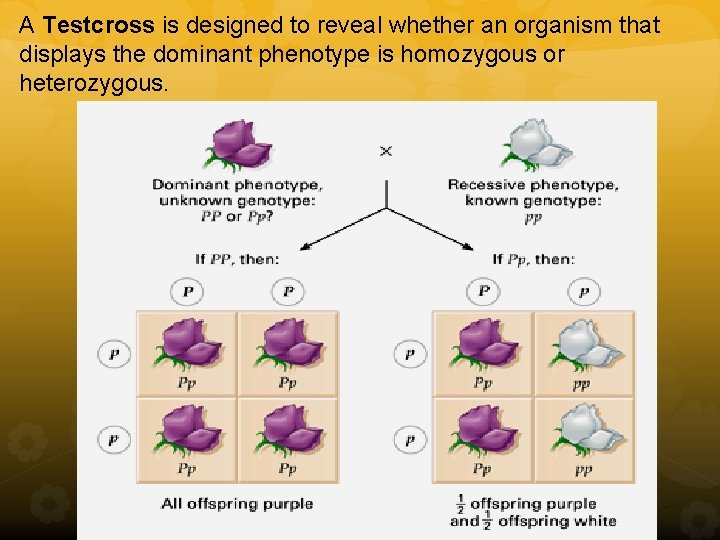
A Testcross is designed to reveal whether an organism that displays the dominant phenotype is homozygous or heterozygous.
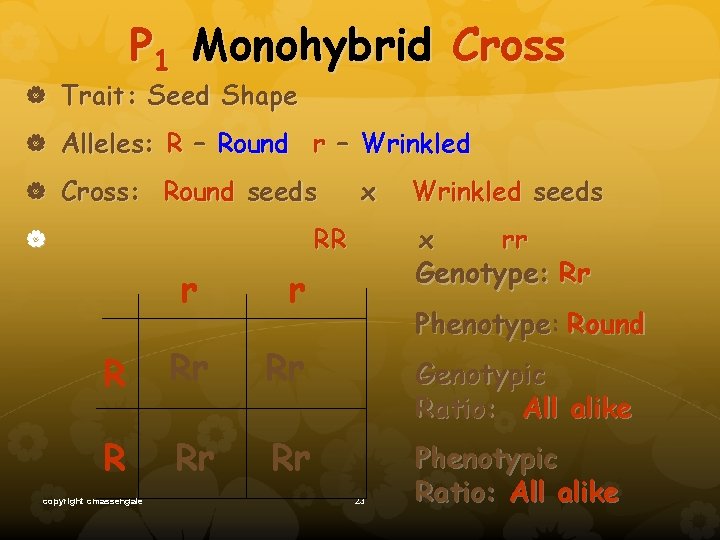
P 1 Monohybrid Cross Trait: Seed Shape Alleles: R – Round r – Wrinkled Cross: Round seeds x RR r Rr Rr Rr copyright cmassengale x rr Genotype: Rr r R Wrinkled seeds Phenotype: Phenotype Round Genotypic Ratio: All alike 23 Phenotypic Ratio: All alike
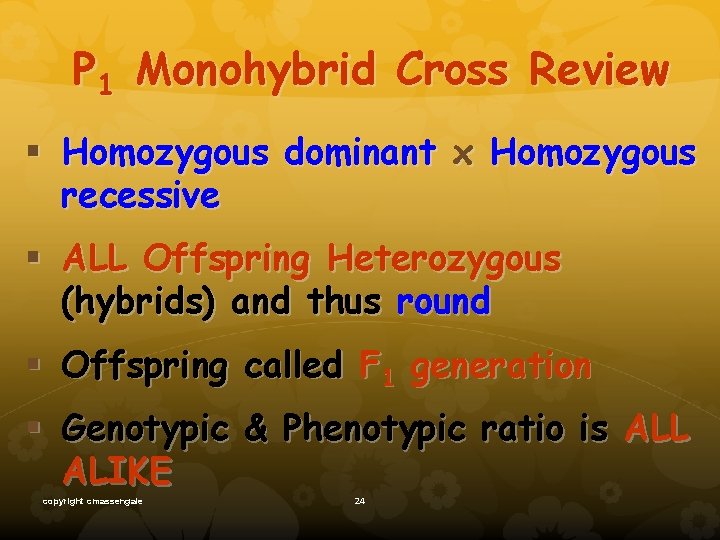
P 1 Monohybrid Cross Review § Homozygous dominant x Homozygous recessive § ALL Offspring Heterozygous (hybrids) and thus round § Offspring called F 1 generation § Genotypic & Phenotypic ratio is ALL ALIKE copyright cmassengale 24
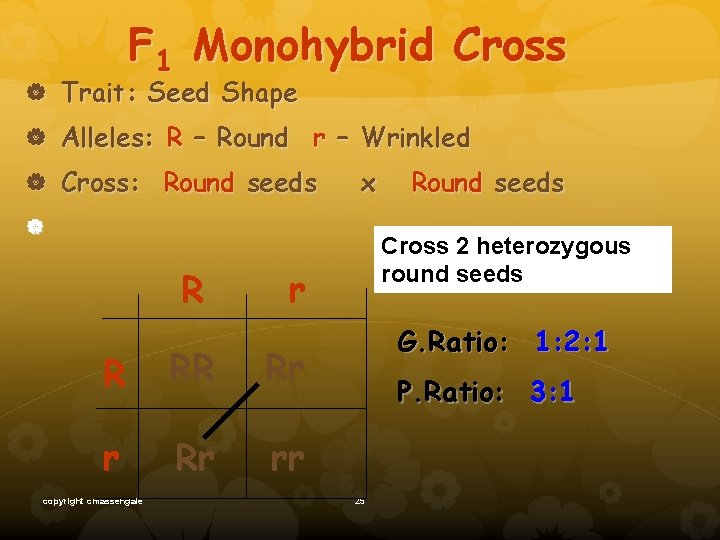
F 1 Monohybrid Cross Trait: Seed Shape Alleles: R – Round r – Wrinkled Cross: Round seeds x R RR Rr rr copyright cmassengale Cross 2 heterozygous round seeds r R Round seeds G. Ratio: 1: 2: 1 P. Ratio: 3: 1 25

Welcome Back! Get Ready for your remediation bellringer!
1. Over time, the climate of an island became drier, which resulted in changes to the populations of various island finch species. Finch populations with a certain beak shape thrived, while those not having that beak shape decreased. Which of the following describes a necessary condition for these changes in the finch populations to occur? A. fewer mutations B. limited food resources C. limited beak variations D. overproduction of offspring
2. Which of these would have the least effect on natural selection in a subspecies of giraffes that is geographically isolated from other subspecies of giraffes? A. available niches B. existing predators C. chromosome number D. available food resources
3. Mutations within a DNA sequence are A. natural processes that produce genetic diversity B. natural processes that always affect the phenotype C. unnatural processes that always affect the phenotype D. unnatural processes that are harmful to genetic diversity
4. Which of the following best illustrates natural selection? A. An organism with favorable genetic variations will tend to survive and breed successfully. B. A population monopolizes all of the resources in its habitat, forcing other species to migrate. C. A community whose members work together utilizing all existing resources and migratory routes. D. The largest organisms in a species receive the only breeding opportunities.
5. In his book On the Origin of the Species, Charles Darwin described how species change over time. Which of the following is NOT part of his observations that describes the mechanisms of natural selection? A. Organisms produce more offspring than can survive. B. Disease and natural disaster will limit population growth. C. Species today descended with modifications from ancestral species. D. Organisms with advantages will survive and reproduce.
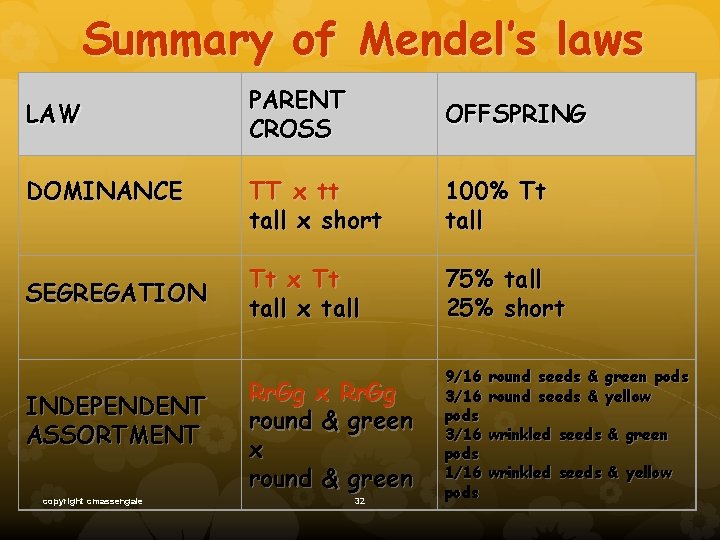
Summary of Mendel’s laws LAW DOMINANCE SEGREGATION INDEPENDENT ASSORTMENT copyright cmassengale PARENT CROSS OFFSPRING TT x tt tall x short 100% Tt tall Tt x Tt tall x tall 75% 25% Rr. Gg x Rr. Gg round & green x round & green 9/16 3/16 pods 1/16 pods 32 tall short round seeds & green pods round seeds & yellow wrinkled seeds & green wrinkled seeds & yellow
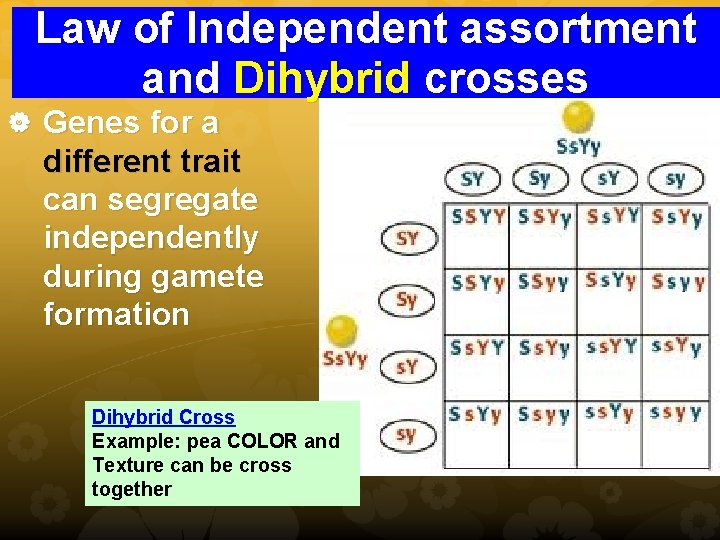
Law of Independent assortment and Dihybrid crosses Genes for a different trait can segregate independently during gamete formation Dihybrid Cross Example: pea COLOR and Texture can be cross together
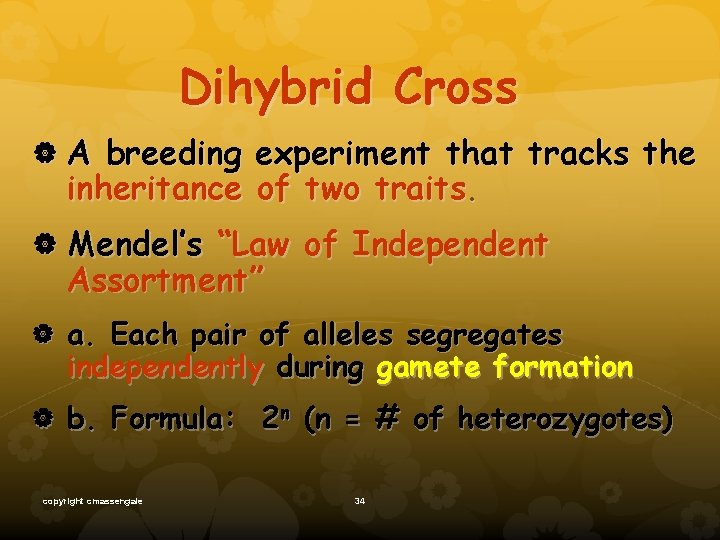
Dihybrid Cross A breeding experiment that tracks the inheritance of two traits. Mendel’s “Law of Independent Assortment” a. Each pair of alleles segregates independently during gamete formation b. Formula: 2 n (n = # of heterozygotes) copyright cmassengale 34
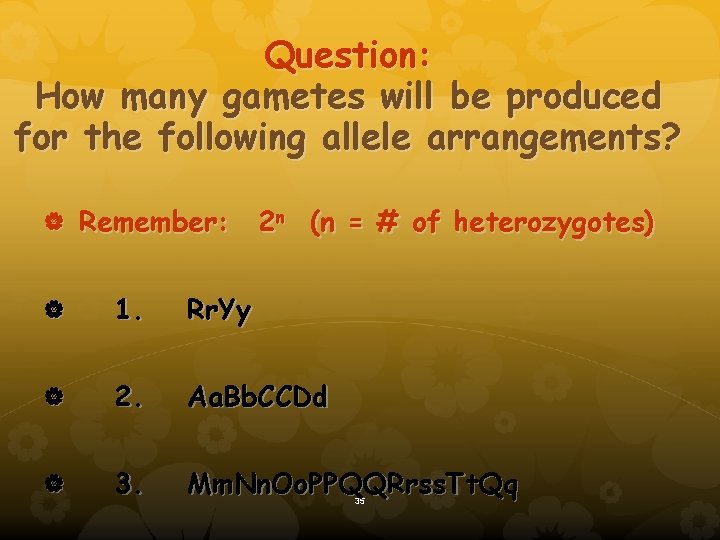
Question: How many gametes will be produced for the following allele arrangements? Remember: 2 n (n = # of heterozygotes) 1. Rr. Yy 2. Aa. Bb. CCDd 3. Mm. Nn. Oo. PPQQRrss. Tt. Qq 35
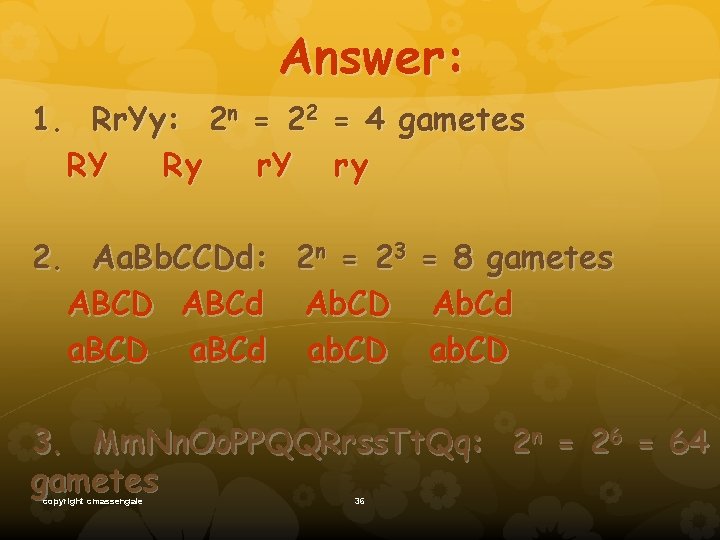
Answer: 1. Rr. Yy: 2 n = 22 = 4 gametes RY Ry r. Y ry 2. Aa. Bb. CCDd: 2 n = 23 ABCD ABCd Ab. CD a. BCd ab. CD = 8 gametes Ab. Cd ab. CD 3. Mm. Nn. Oo. PPQQRrss. Tt. Qq: 2 n = 26 = 64 gametes copyright cmassengale 36
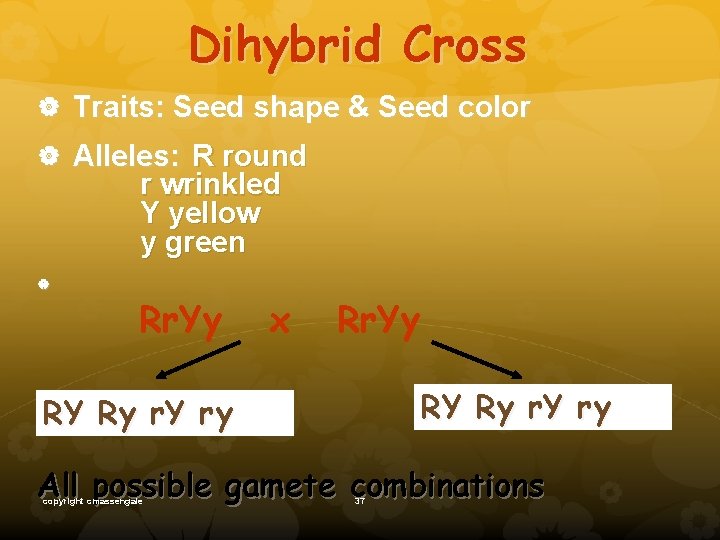
Dihybrid Cross Traits: Seed shape & Seed color Alleles: R round r wrinkled Y yellow y green Rr. Yy x Rr. Yy RY Ry r. Y ry All possible gamete combinations copyright cmassengale 37
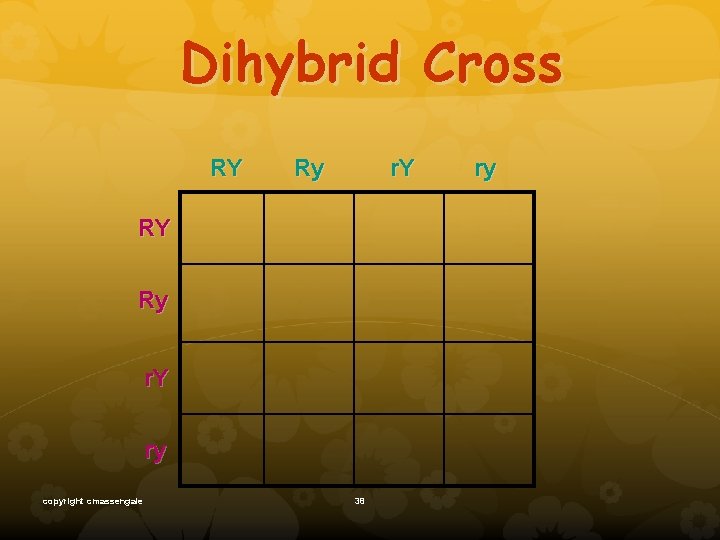
Dihybrid Cross RY Ry r. Y ry copyright cmassengale 38 ry
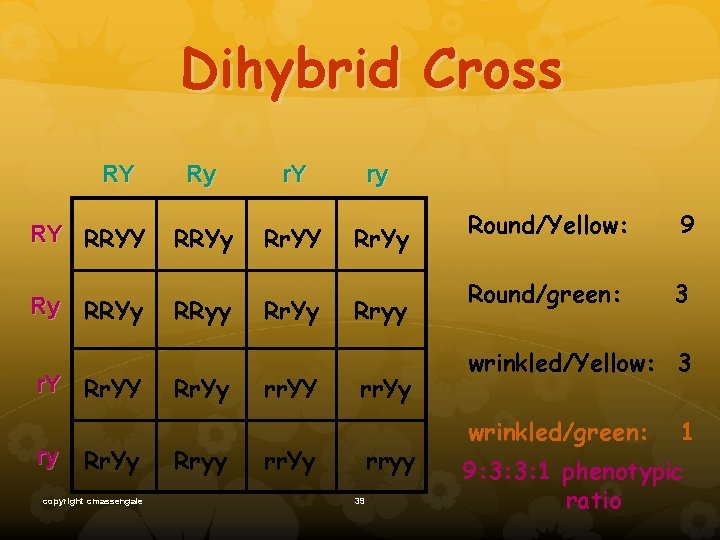
Dihybrid Cross RY RY RRYY Ry RRYy r. Y Rr. YY ry Rr. Yy copyright cmassengale Ry r. Y ry RRYy Rr. YY Rr. Yy RRyy Rr. Yy Rryy Rr. Yy rr. YY Rryy rr. Yy rryy 39 Round/Yellow: 9 Round/green: 3 wrinkled/Yellow: 3 wrinkled/green: 1 9: 3: 3: 1 phenotypic ratio
We Do: Dihybrid Practice Problems
Incomplete Dominance and Codominance copyright cmassengale 41
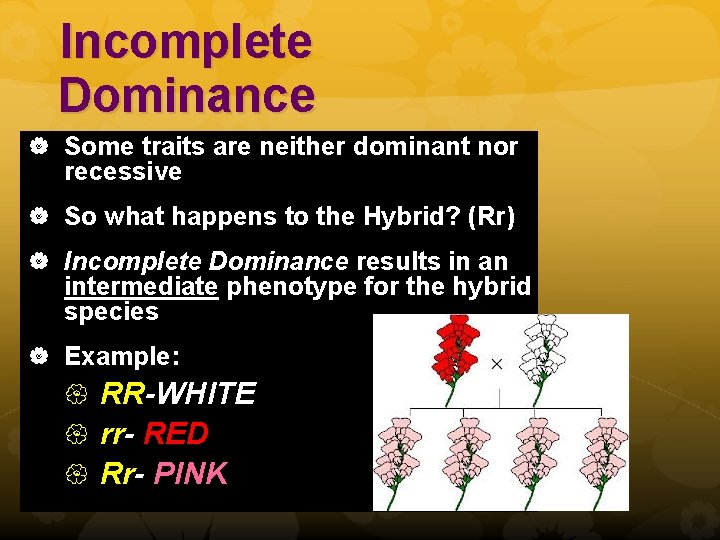
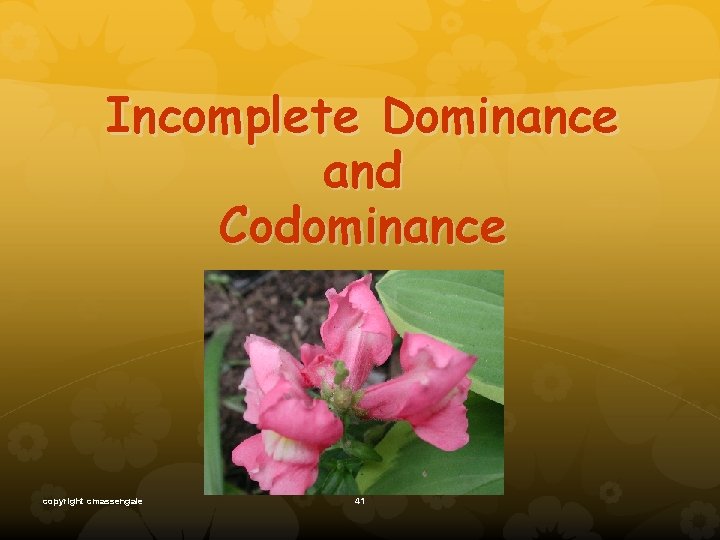
Incomplete Dominance Some traits are neither dominant nor recessive So what happens to the Hybrid? (Rr) Incomplete Dominance results in an intermediate phenotype for the hybrid species Example: RR-WHITE rr- RED Rr- PINK
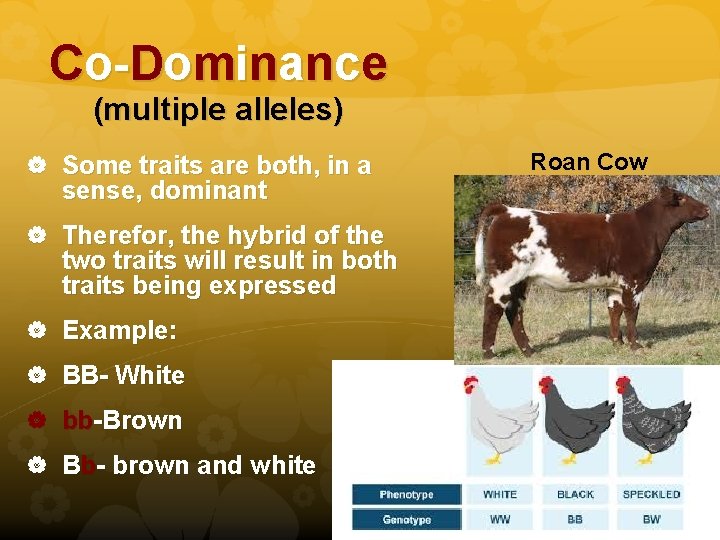
Co-Dominance (multiple alleles) Some traits are both, in a sense, dominant Therefor, the hybrid of the two traits will result in both traits being expressed Example: BB- White bb-Brown Bb- brown and white Roan Cow
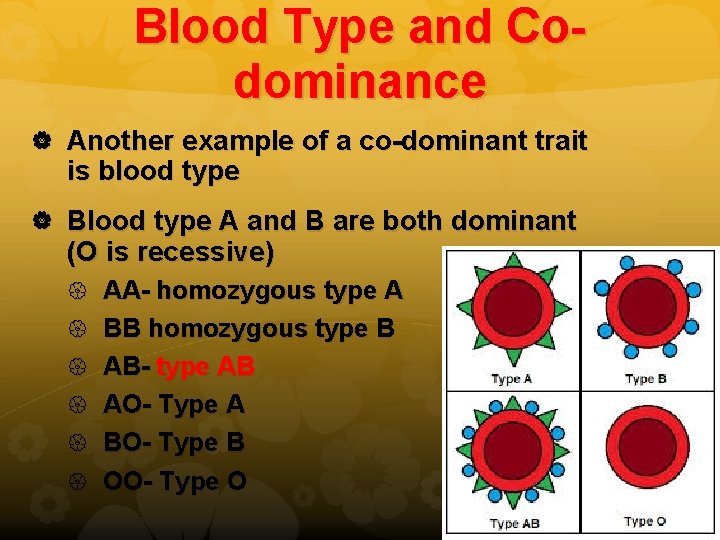
Blood Type and Codominance Another example of a co-dominant trait is blood type Blood type A and B are both dominant (O is recessive) AA- homozygous type A BB homozygous type B AB- type AB AO- Type A BO- Type B OO- Type O
Hero Blood When receiving blood transfusions, people must receive blood that matches their own blood types The body will reject a foreign blood type Because type O(-) is recessive, it can be given to any other blood type Downside of being O(-): You can only receive O(-) Only 9% of the population is O(-)
Sex-linked Traits (genes) located on the sex chromosomes Sex chromosomes are X and Y XX genotype for females XY genotype for males Many sex-linked traits carried on X chromosome copyright cmassengale 46
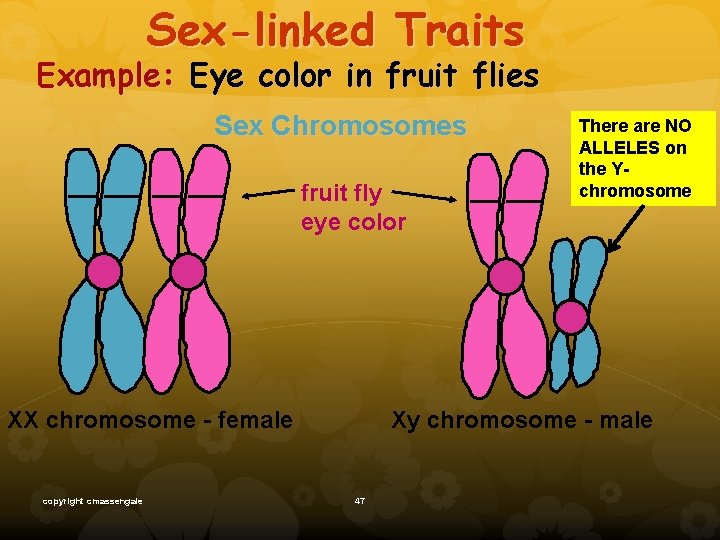
Sex-linked Traits Example: Eye color in fruit flies Sex Chromosomes fruit fly eye color XX chromosome - female copyright cmassengale There are NO ALLELES on the Ychromosome Xy chromosome - male 47
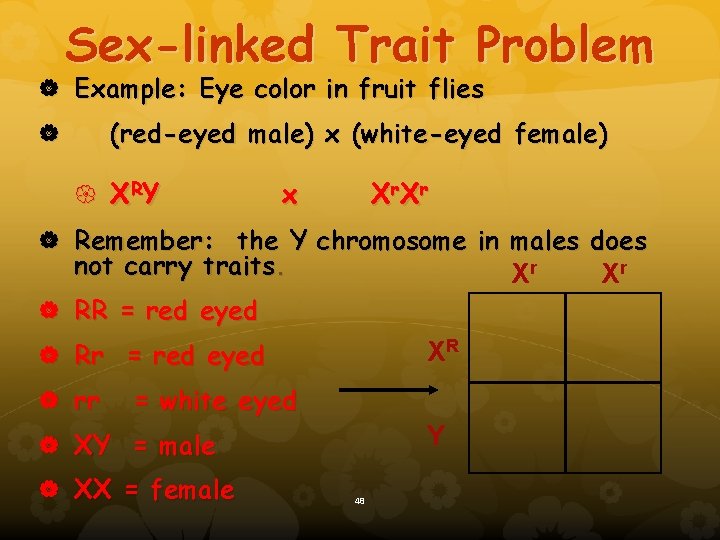
Sex-linked Trait Problem Example: Eye color in fruit flies (red-eyed male) x (white-eyed female) X RY x X r Remember: the Y chromosome in males does not carry traits. Xr RR = red eyed Rr = red eyed rr XR = white eyed Y XY = male XX = female 48 Xr
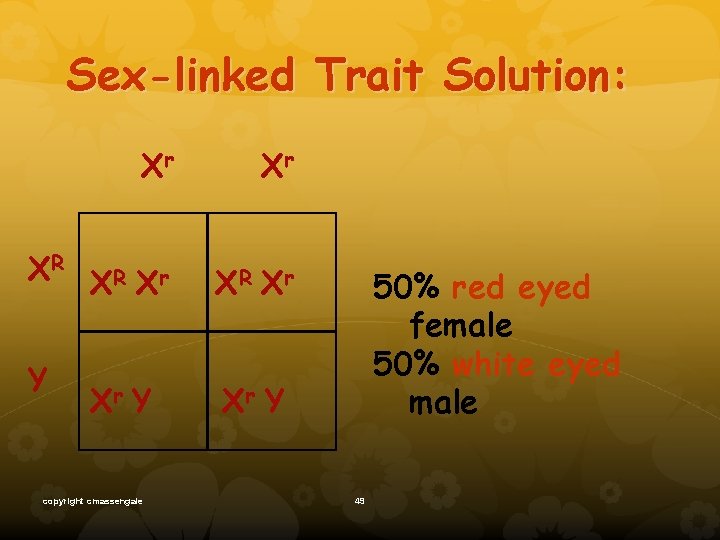
Sex-linked Trait Solution: Xr Xr XR XR Xr Y copyright cmassengale 50% red eyed female 50% white eyed male Xr Y 49
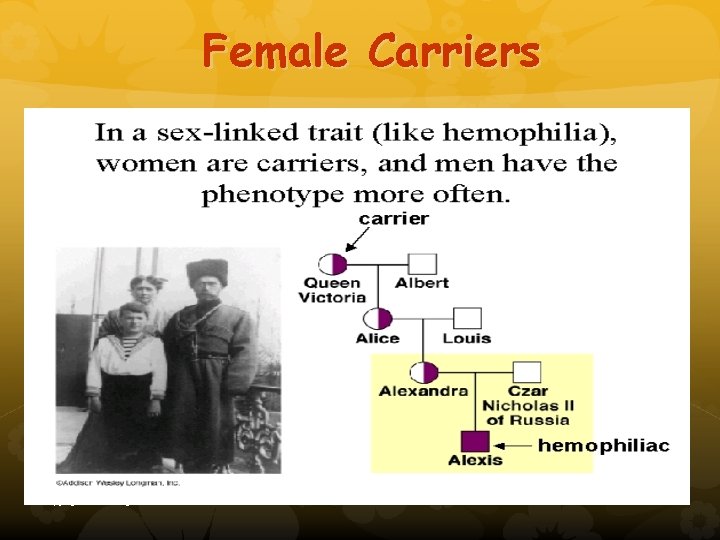
Female Carriers copyright cmassengale 50
Sex-linked trait facts 1. Y-chromosome carries NO traits 2. Male offspring always show the trait of their mother 3. Females can be carriers of the recessive trait herterozygotes 4. Males are never carriers They either have the trait or the don’t
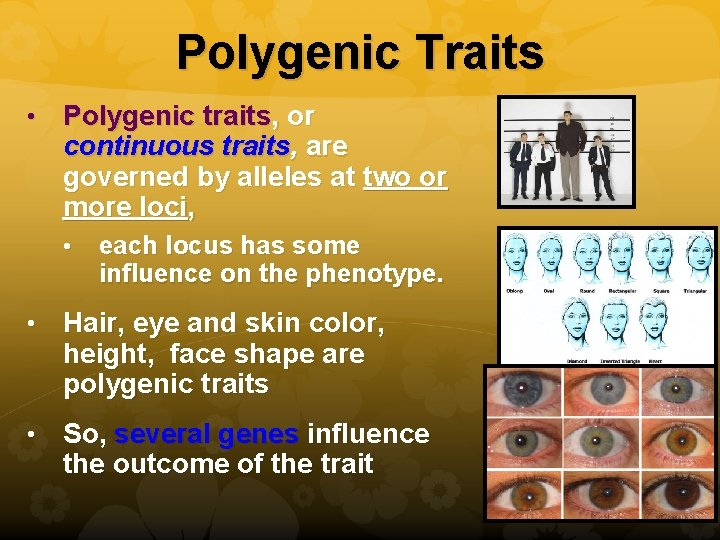
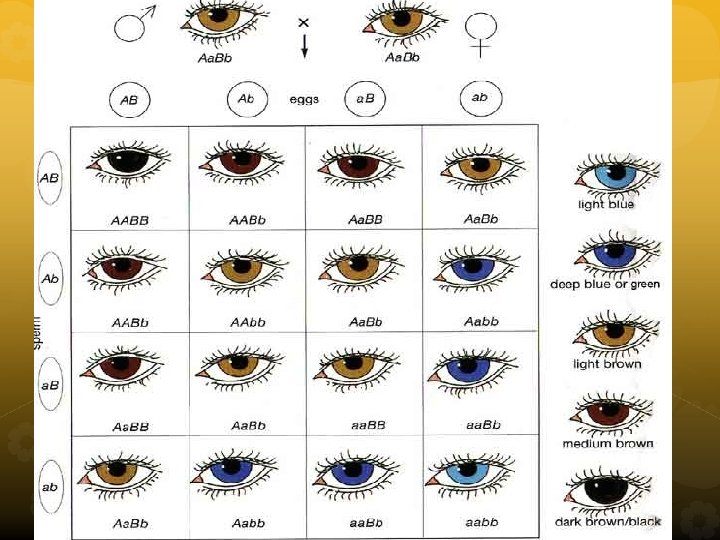
Polygenic Traits • Polygenic traits, or continuous traits, are governed by alleles at two or more loci, • each locus has some influence on the phenotype. • Hair, eye and skin color, height, face shape are polygenic traits • So, several genes influence the outcome of the trait
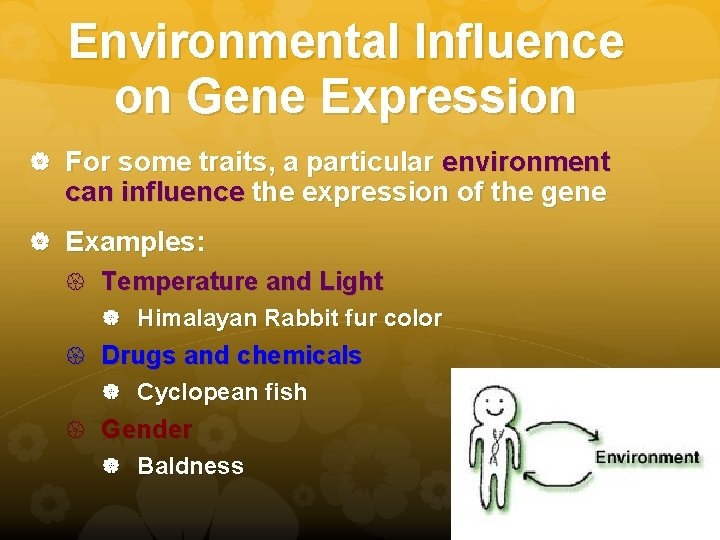
Environmental Influence on Gene Expression For some traits, a particular environment can influence the expression of the gene Examples: Temperature and Light Himalayan Rabbit fur color Drugs and chemicals Cyclopean fish Gender Baldness
You Do: Patterns of Inheritance Practice Problems
Bellringer- Human Impact Remediation
1. New fuels are being produced by converting corn and grasses into compounds containing alcohols that can be broken down for energy in various engines. The purpose of this research is to A. reduce the use of nonrenewable resources. B. increase the rate of air pollution. C. reduce the rate of homeostasis in organisms. D. cause a loss of biodiversity in the rain forests.
2. The presence of wastes, such as plastic bags and motor oil, in lakes and streams miles away from developed areas suggests that A. ecosystems are interconnected and human action can alter ecosystem equilibrium. B. recycling programs have failed to conserve biotic resources. C. natural processes can alter ecosystem stability. D. direct harvesting practices have led to irreversible destruction of ecosystems.
3. The northern elephant seal was almost hunted to extinction in the 1800 s. By the late 1890 s, approximately one hundred seals were left, reducing the gene pool of the population. What will be the consequence of this reduction? A. Competition within the population will increase. B. The surviving elephant seals will be better able to adapt. C. Inbreeding will be less frequent among the remaining population. D. The elephant seals will be more vulnerable to environmental change.
4. When fertilizers run off farmland into streams and ponds, the nitrogen content of the water increases. This can lead to rapid growth of algae in a process called eutrophication. How can this process affect other organisms in the water? A. Oxygen is used up as algae is decomposed, reducing the amount available to other organisms. B. The water becomes better able to support aerobic organisms. C. The algae provide food for fishes and other organisms, leading to decreased algae populations. D. The extra nitrogen provides additional food for the other organisms, increasing their population
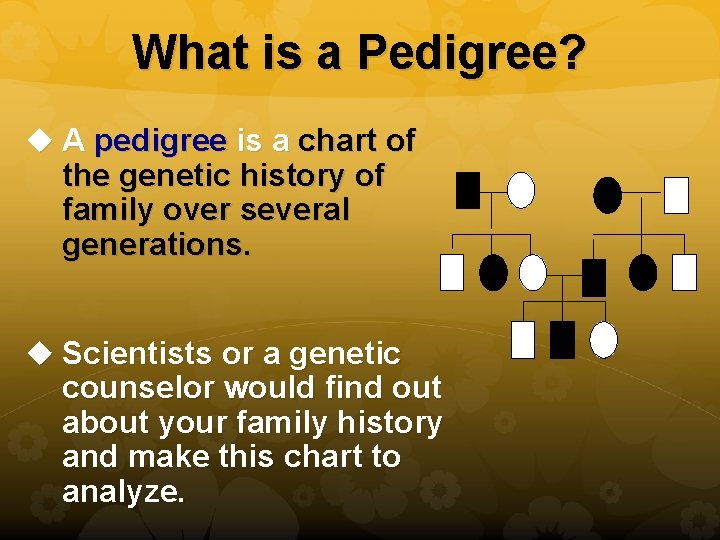
What is a Pedigree? u A pedigree is a chart of the genetic history of family over several generations. u Scientists or a genetic counselor would find out about your family history and make this chart to analyze.
Pedigree Analysis Goals of Pedigree Analysis 1. Determine the mode of inheritance: dominant, recessive, partial dominance, sex-linked, autosomal, mitochondrial, maternal effect. 2. Determine the probability of an affected offspring for a given cross.
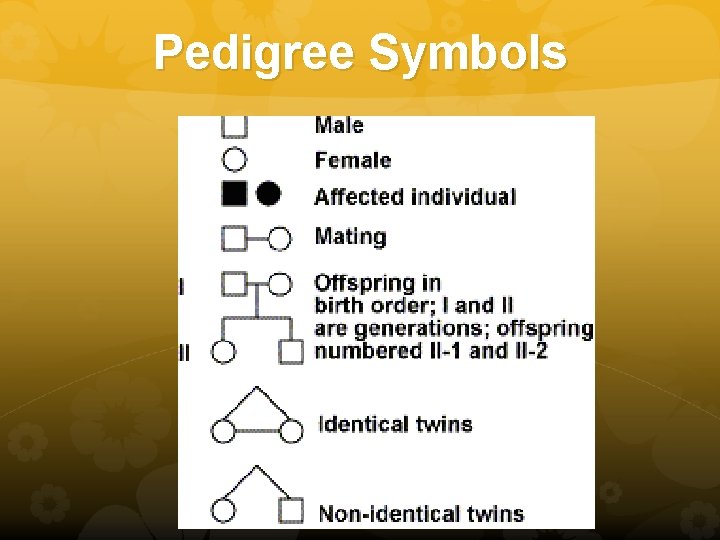
Pedigree Symbols
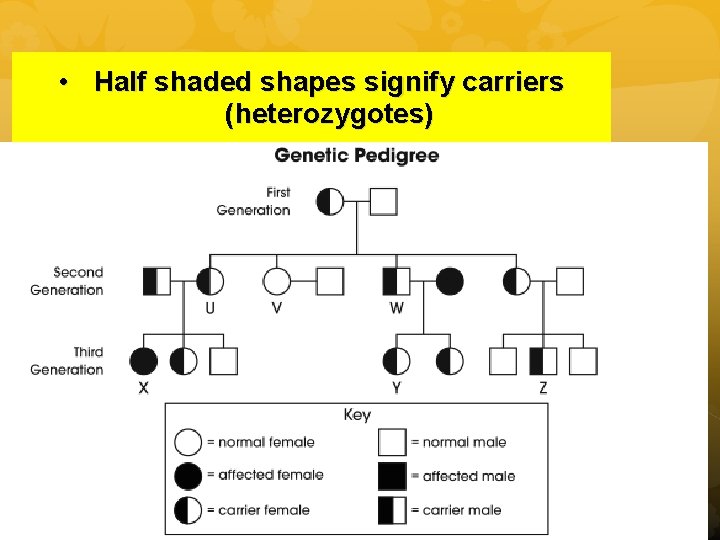
• Half shaded shapes signify carriers (heterozygotes)
Interpreting a Pedigree Chart 1. Determine if the pedigree chart shows an autosomal or X-linked disease. If most of the males in the pedigree are affected the disorder is X-linked If it is a 50/50 ratio between men and women the disorder is autosomal.
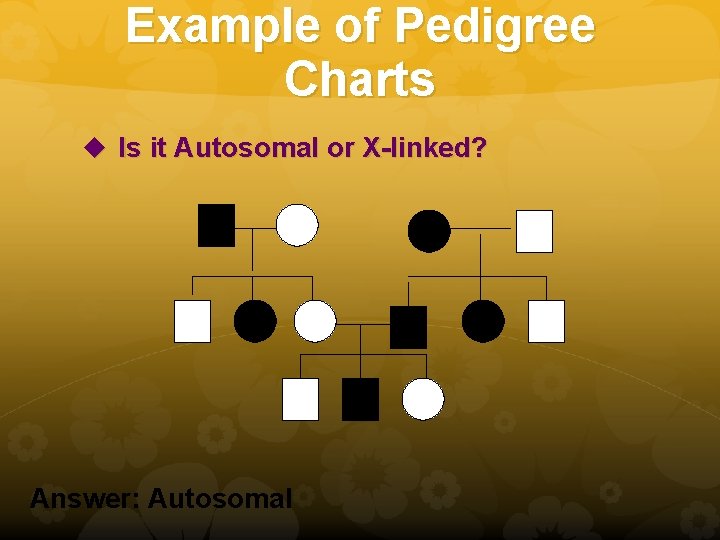
Example of Pedigree Charts u Is it Autosomal or X-linked? Answer: Autosomal
Interpreting a Pedigree Chart 2. Determine whether the disorder is dominant or recessive. If the disorder is dominant, one of the parents must have the disorder. If the disorder is recessive, neither parent has to have the disorder because they can be heterozygous.
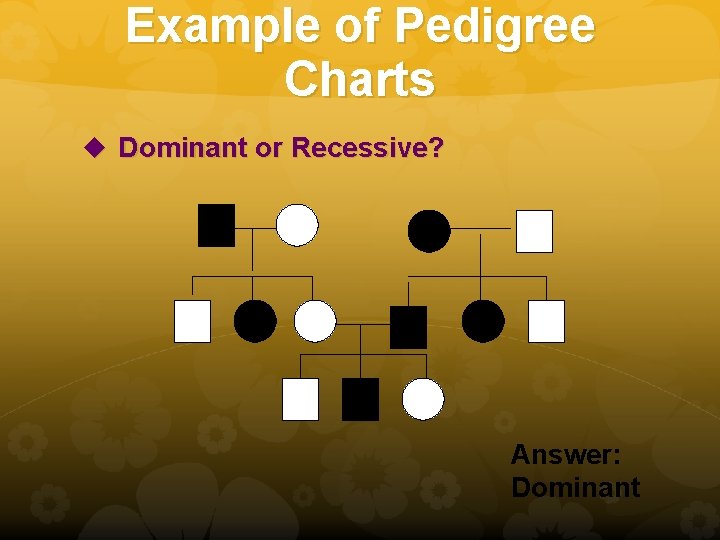
Example of Pedigree Charts u Dominant or Recessive? Answer: Dominant
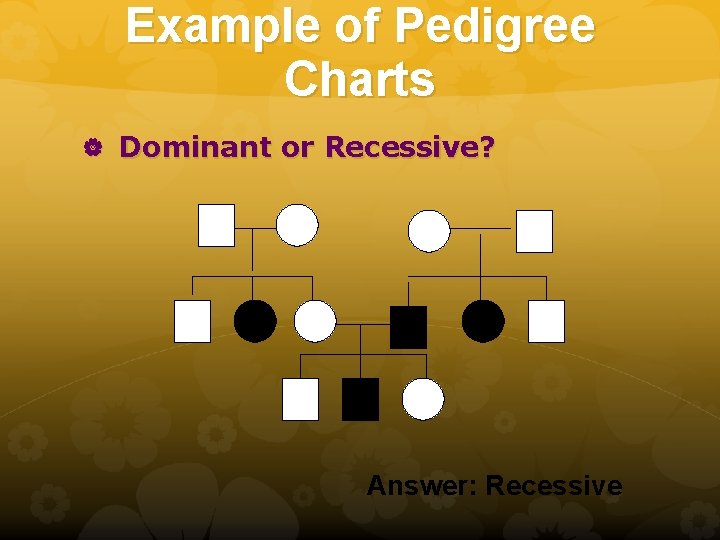
Example of Pedigree Charts Dominant or Recessive? Answer: Recessive
Summary Pedigrees are family trees that explain your genetic history. Pedigrees are used to find out the probability of a child having a disorder in a particular family. To begin to interpret a pedigree, determine if the disease or condition is autosomal or X-linked and dominant or recessive.
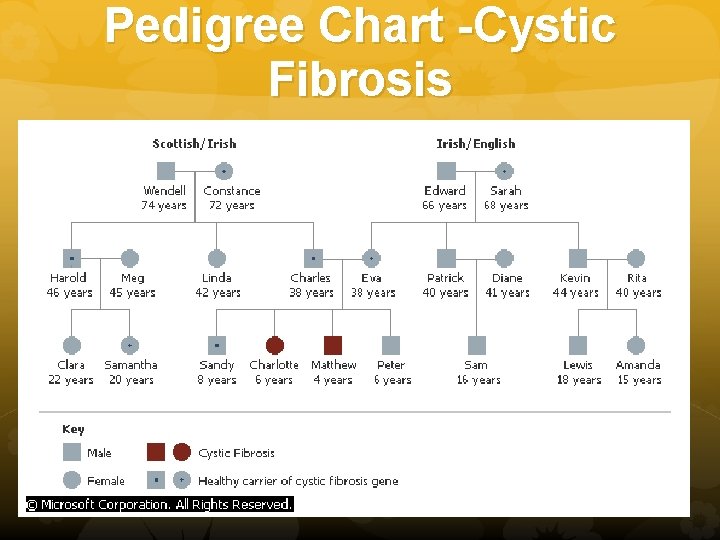
Pedigree Chart -Cystic Fibrosis
- Slides: 71