
Mendels Laws of Heredity Why we look the
- Slides: 23
Mendel’s Laws of Heredity Why we look the way we look. . .
What is GENETICS? b Genetics: the study of heredity b Heredity: The passing on of characteristics (traits) from parents to offspring
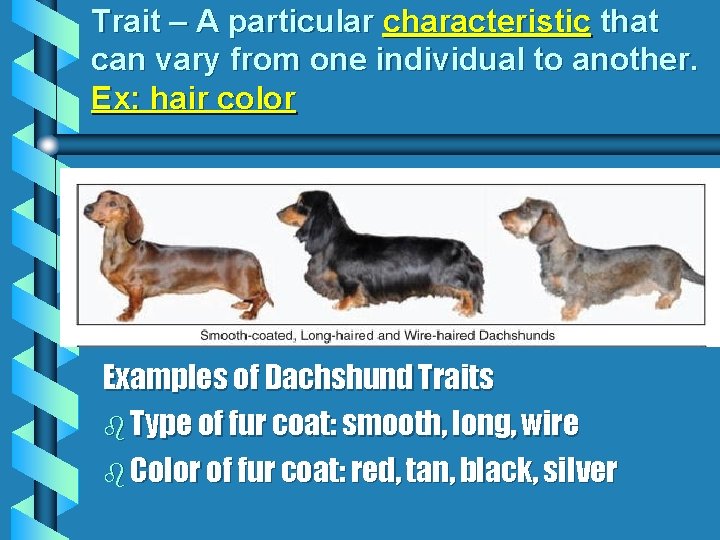
Trait – A particular characteristic that can vary from one individual to another. Ex: hair color Examples of Dachshund Traits b Type of fur coat: smooth, long, wire b Color of fur coat: red, tan, black, silver
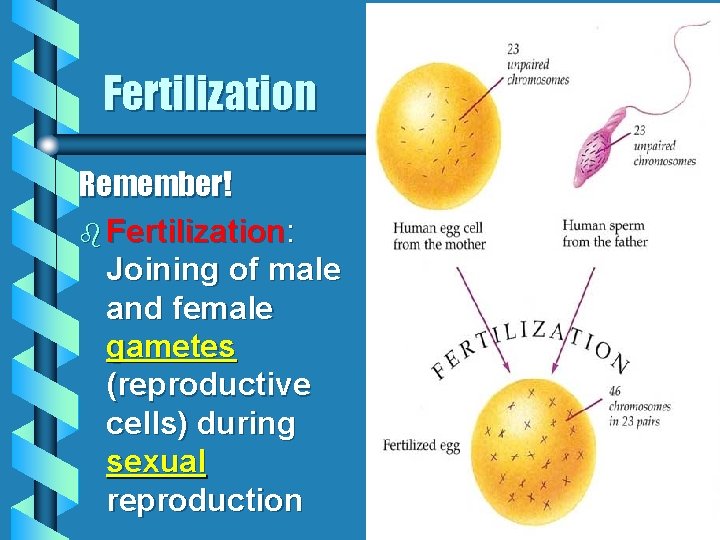
Fertilization Remember! b Fertilization: Joining of male and female gametes (reproductive cells) during sexual reproduction
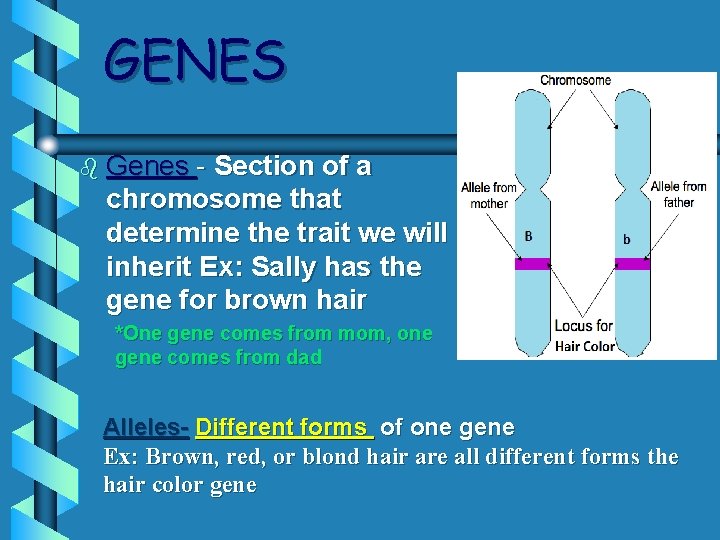
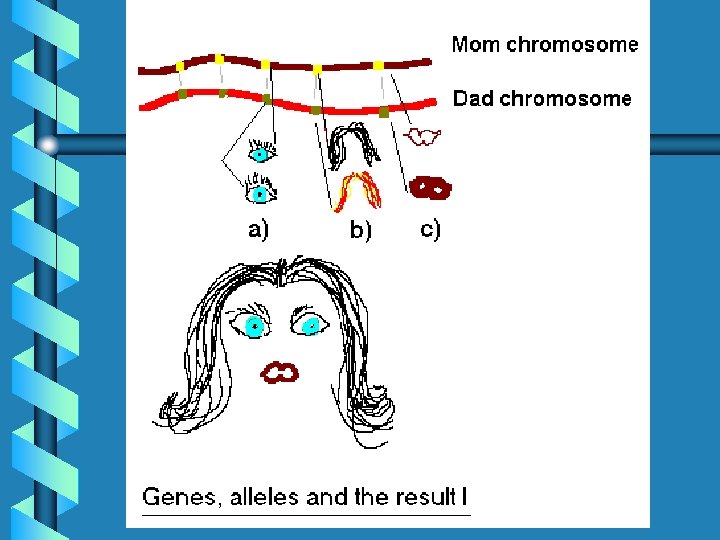
GENES b Genes - Section of a chromosome that determine the trait we will inherit Ex: Sally has the gene for brown hair *One gene comes from mom, one gene comes from dad Alleles- Different forms of one gene Ex: Brown, red, or blond hair are all different forms the hair color gene
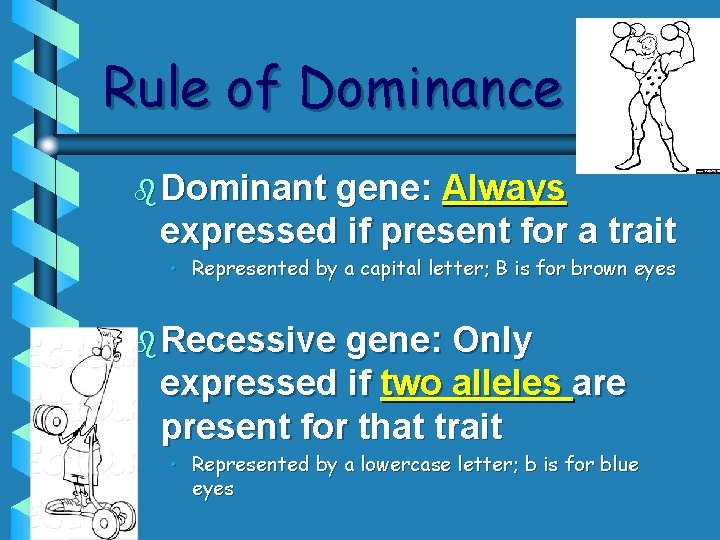
Rule of Dominance b Dominant gene: Always expressed if present for a trait • Represented by a capital letter; B is for brown eyes b Recessive gene: Only expressed if two alleles are present for that trait • Represented by a lowercase letter; b is for blue eyes
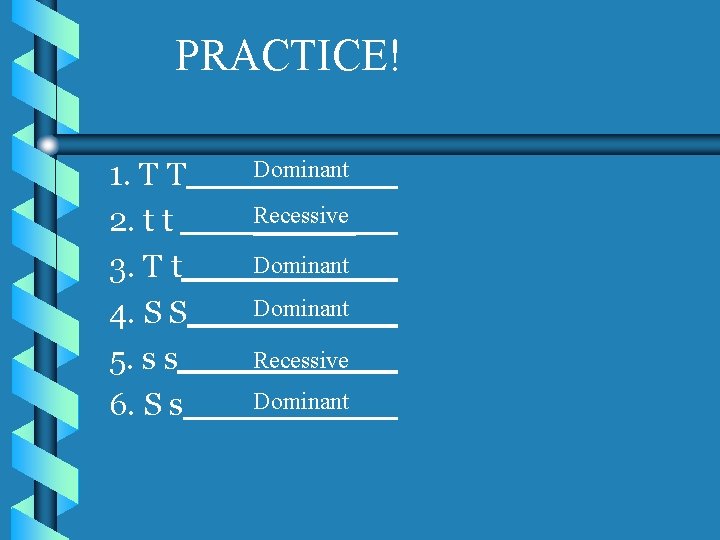
PRACTICE! 1. T T 2. t t 3. T t 4. S S 5. s s 6. S s Dominant Recessive _____ Dominant
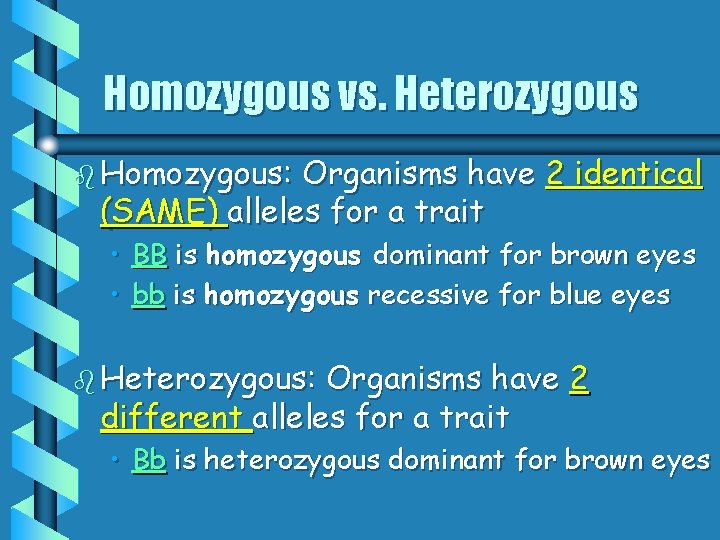
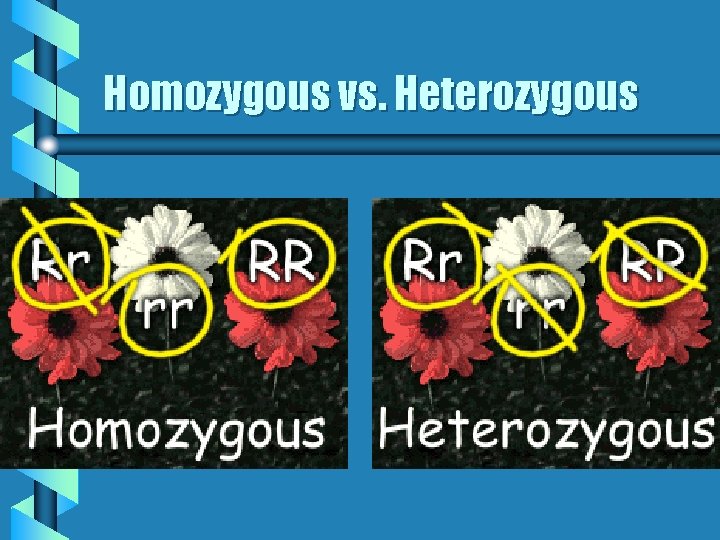
Homozygous vs. Heterozygous b Homozygous: Organisms have 2 identical (SAME) alleles for a trait • BB is homozygous dominant for brown eyes • bb is homozygous recessive for blue eyes b Heterozygous: Organisms have 2 different alleles for a trait • Bb is heterozygous dominant for brown eyes
Homozygous vs. Heterozygous
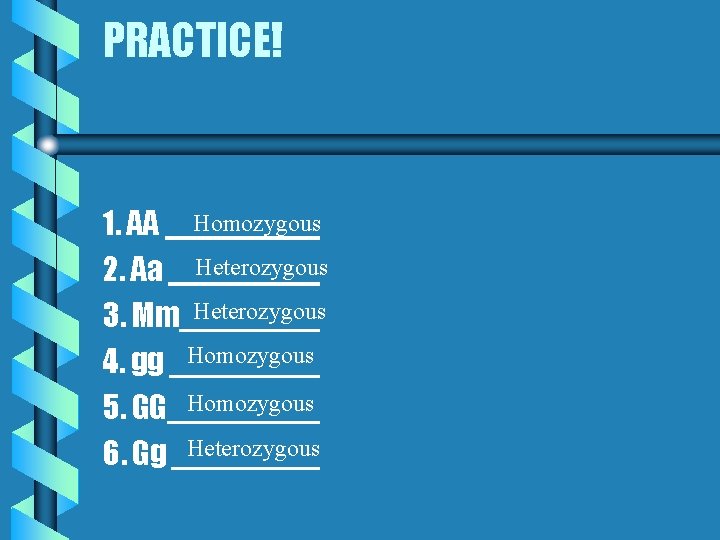
PRACTICE! 1. AA Homozygous 2. Aa Heterozygous 3. Mm Heterozygous 4. gg Homozygous 5. GG Homozygous 6. Gg Heterozygous
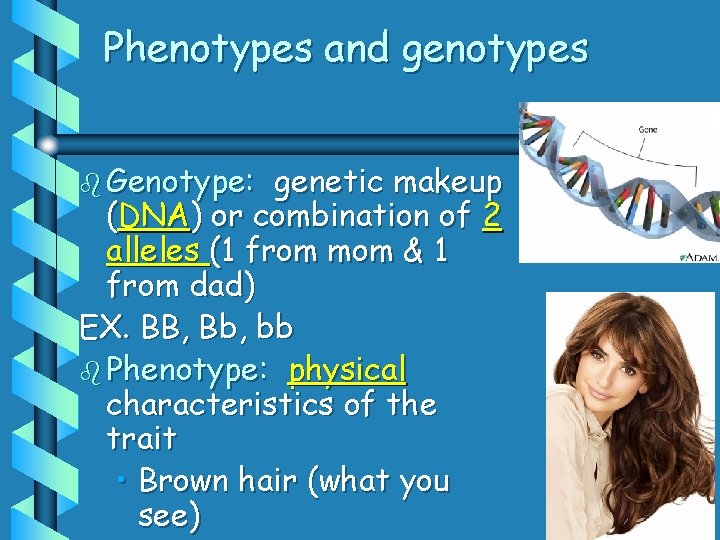
Phenotypes and genotypes b Genotype: genetic makeup (DNA) or combination of 2 alleles (1 from mom & 1 from dad) EX. BB, Bb, bb b Phenotype: physical characteristics of the trait • Brown hair (what you see)
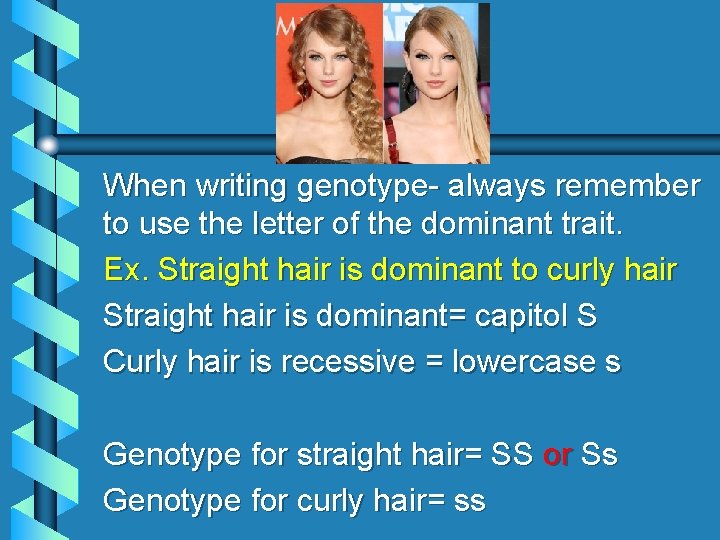
When writing genotype- always remember to use the letter of the dominant trait. Ex. Straight hair is dominant to curly hair Straight hair is dominant= capitol S Curly hair is recessive = lowercase s Genotype for straight hair= SS or Ss Genotype for curly hair= ss
Who is Gregor Mendel? b Austrian monk b The Father of Genetics b Crossbred common pea plants to study the inheritance of traits through each generation.
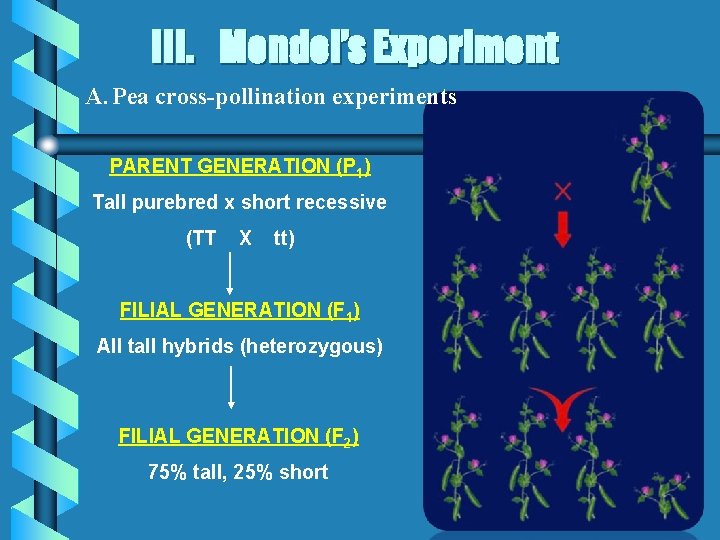
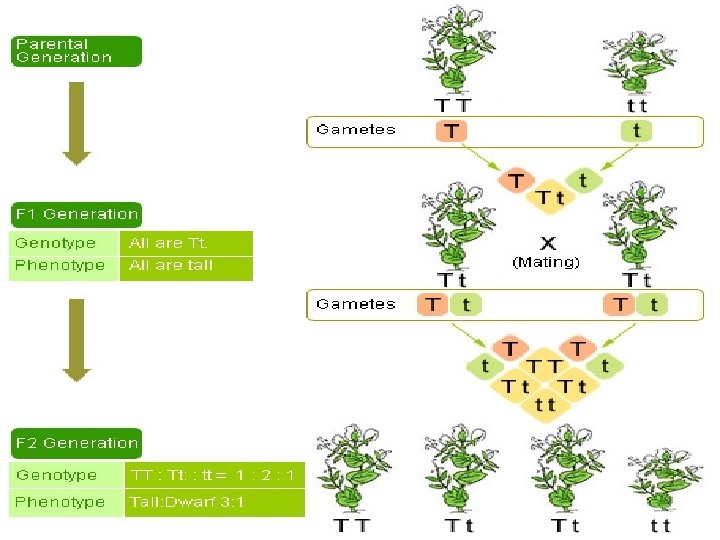
III. Mendel’s Experiment A. Pea cross-pollination experiments PARENT GENERATION (P 1) Tall purebred x short recessive (TT X tt) FILIAL GENERATION (F 1) All tall hybrids (heterozygous) FILIAL GENERATION (F 2) 75% tall, 25% short
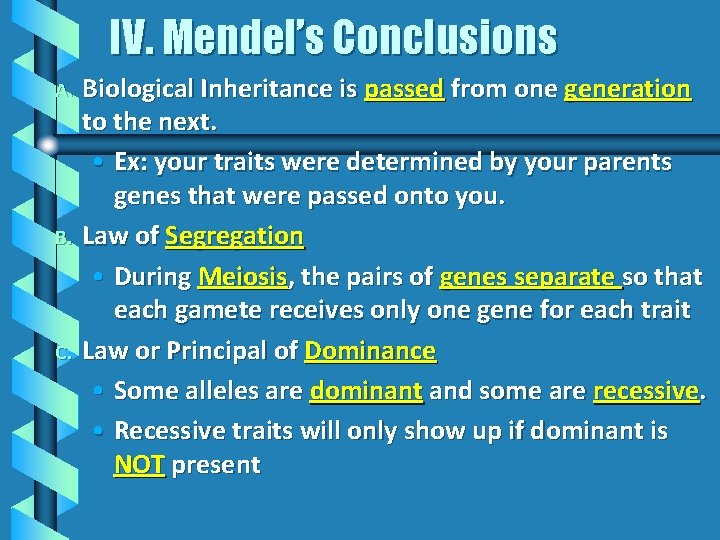
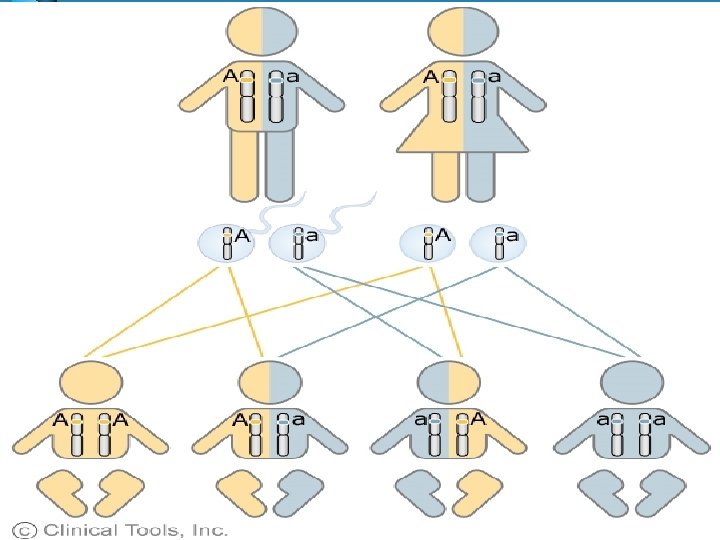
IV. Mendel’s Conclusions Biological Inheritance is passed from one generation to the next. • Ex: your traits were determined by your parents genes that were passed onto you. B. Law of Segregation • During Meiosis, the pairs of genes separate so that each gamete receives only one gene for each trait C. Law or Principal of Dominance • Some alleles are dominant and some are recessive. • Recessive traits will only show up if dominant is NOT present A.
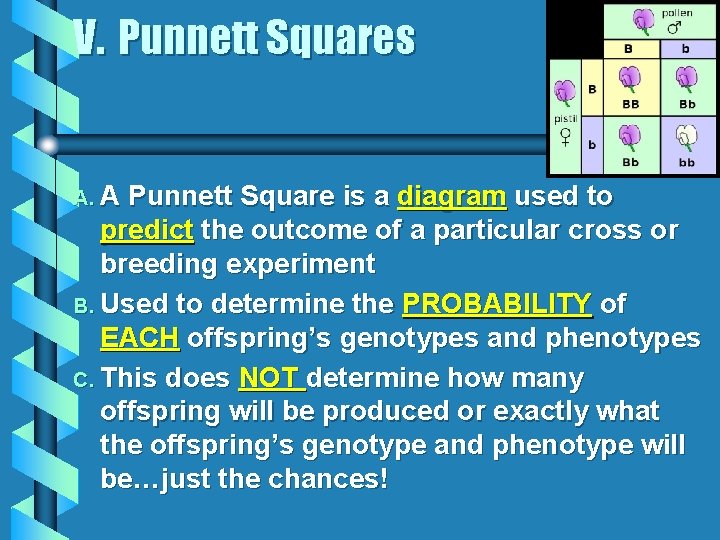
V. Punnett Squares A. A Punnett Square is a diagram used to predict the outcome of a particular cross or breeding experiment B. Used to determine the PROBABILITY of EACH offspring’s genotypes and phenotypes C. This does NOT determine how many offspring will be produced or exactly what the offspring’s genotype and phenotype will be…just the chances!
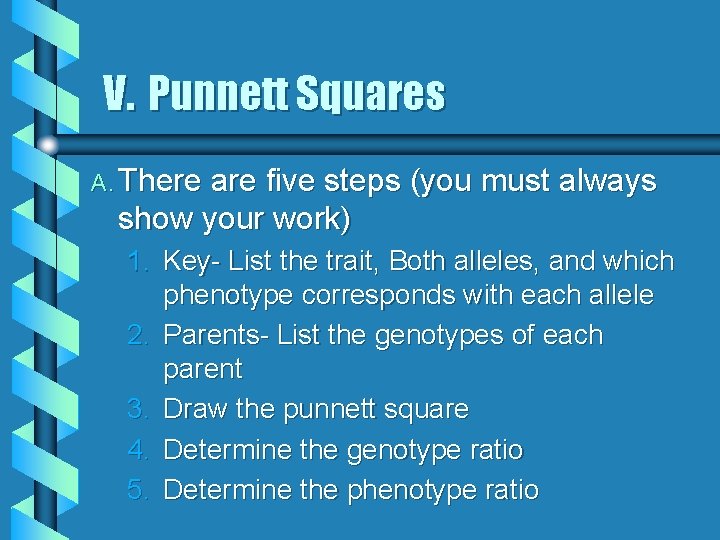
V. Punnett Squares A. There are five steps (you must always show your work) 1. Key- List the trait, Both alleles, and which phenotype corresponds with each allele 2. Parents- List the genotypes of each parent 3. Draw the punnett square 4. Determine the genotype ratio 5. Determine the phenotype ratio
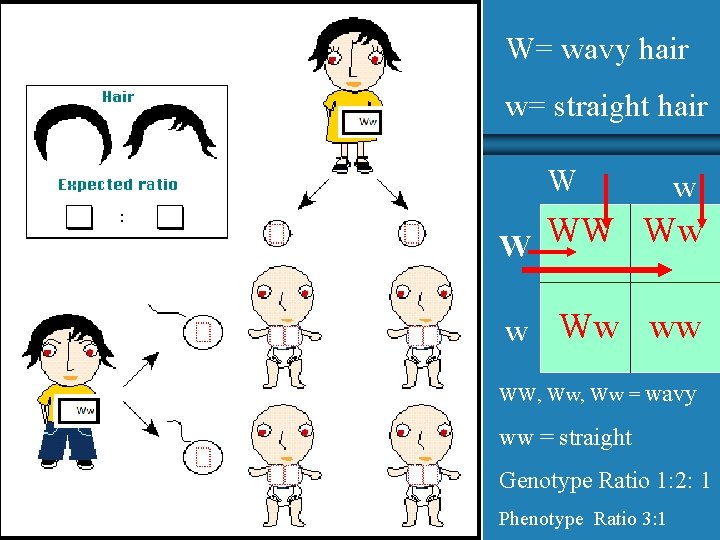
W= wavy hair w= straight hair W w WW Ww W w Ww ww WW, Ww = wavy ww = straight Genotype Ratio 1: 2: 1 Phenotype Ratio 3: 1
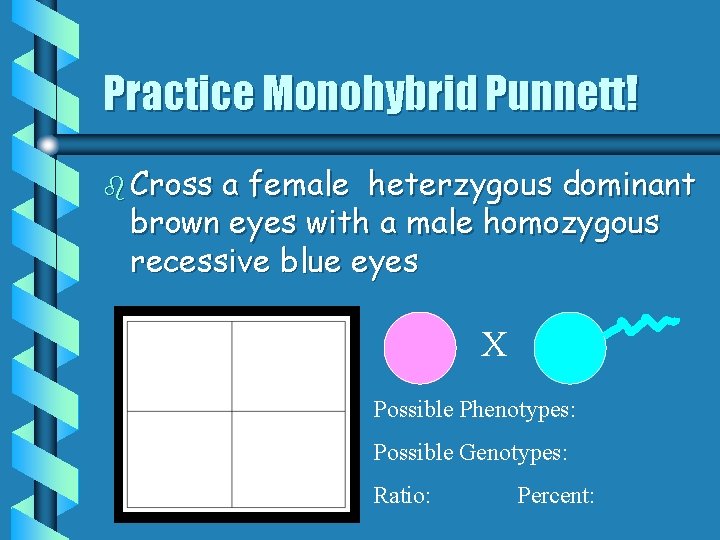
Practice Monohybrid Punnett! b Cross a female heterzygous dominant brown eyes with a male homozygous recessive blue eyes X Possible Phenotypes: Possible Genotypes: Ratio: Percent:
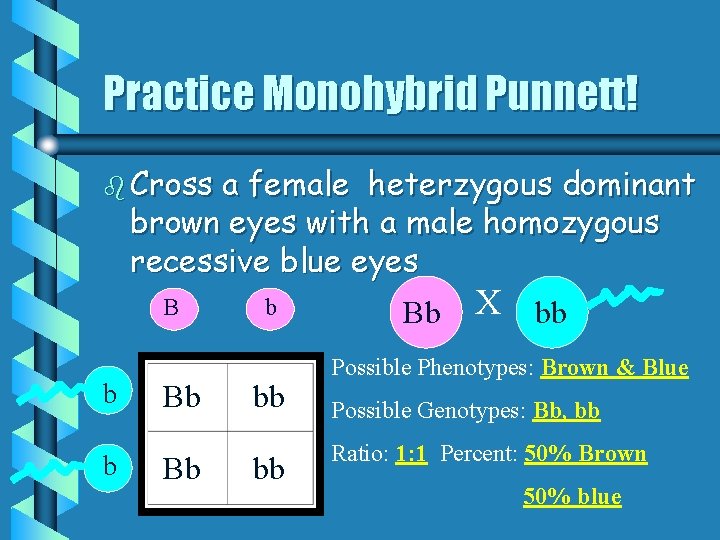
Practice Monohybrid Punnett! b Cross a female heterzygous dominant brown eyes with a male homozygous recessive blue eyes B b b Bb Bb b bb bb Bb X bb Possible Phenotypes: Brown & Blue Possible Genotypes: Bb, bb Ratio: 1: 1 Percent: 50% Brown 50% blue