
Mendels Contribution to Genetics Gregor Mendel 1822 1884
Mendel’s Contribution to Genetics
Gregor Mendel (1822 – 1884) • Mendel is called “the father of genetics” for his studies on plant inheritance. • Formed through discovery the 3 basic principles of genetics. • Work with Pea plants – simple genetic make up. – Cross-pollinate – have two different parents. or – Self-pollinate – have only one parent.
Principle of Dominance • Mendel’s principle of dominance states that some forms of a gene or trait are dominant over other traits, which are called recessive. • A dominant trait will mask or hide the presence of a recessive trait.
Principle of Segregation • This principle states that when forming sex cells, the paired alleles separate so that each egg and sperm carries one copy of the paired alleles. • The two forms of the allele come together again during fertilization.
Principle of Independent Assortment • This principle states that each pair of alleles segregate independently (crossing over)during the formation of the egg or sperm.
Genetic Expression
Genes • Genes are portions of DNA that determine hereditary characteristics. • Each person has a pair of alleles for each trait. • Alleles are different molecular forms of a gene.
Dominant and Recessive Genes • The dominant gene are the expressed genes. • BB (Both alleles are dominant= dominant trait expressed) • Bb (One dominant and one recessive = dominant trait expressed) • In order for expression of the recessive gene to occur, both alleles must be the recessive ones. • bb (both recessive = recessive trait expressed)
Genotype and Phenotype • Genotype is the term used for the combination of alleles inherited from the parents. • What the genes look like: ex. Bb, BB, bb • Phenotype is the physical expression of the traits. The phenotype does not necessarily reveal the combination of alleles. • What you look like: ex. Brown eyes, dark hair
When studying the expressions of traits: • Geneticists use letters as symbols for the different traits. • Capital letters are used for dominant alleles. • Lowercase letters for recessive alleles.
Looking at Alleles • If an individual inherits two of the same alleles (either dominant or recessive) for a particular characteristic, the individual is homozygous (Homo – same). Ex. BB, bb also called purebred • If the offspring inherits one dominant allele and one recessive allele, the individual is heterozygous (Hetero – different). Ex. Bb also called hybrids
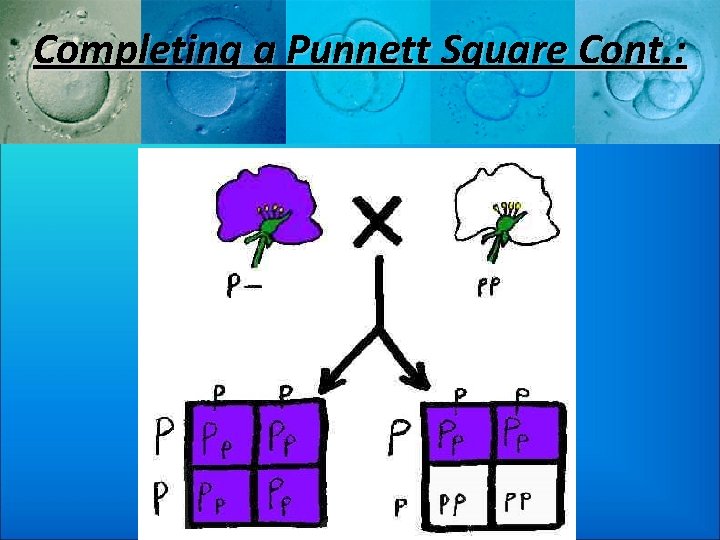
Punnett Squares • A Punnett Square is used to express the possible combinations for a certain trait an offspring may inherit from the parents • The Punnett Square shows possible genotype and phenotypes of one offspring. • Monohybrid cross – is a cross involving one trait.
Completing a Punnett Square Cont. :
Modes of Inheritance
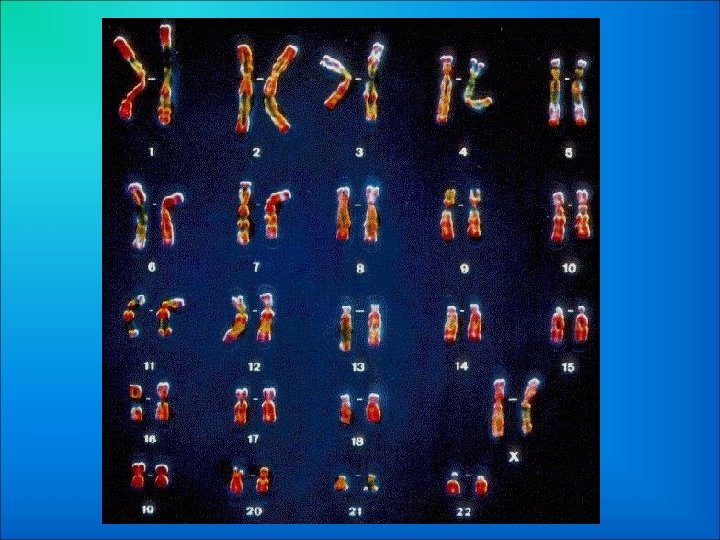
Sex-Linked Traits: • Sex chromosomes are the 23 rd pair of chromosomes and are sometimes called X or Y chromosomes. • Females have the genotype XX – In females, one X comes from their mother and one X comes from their father. • Males have the genotype XY – In males, the X chromosomes comes from their mother and the Y chromosome comes from their father.
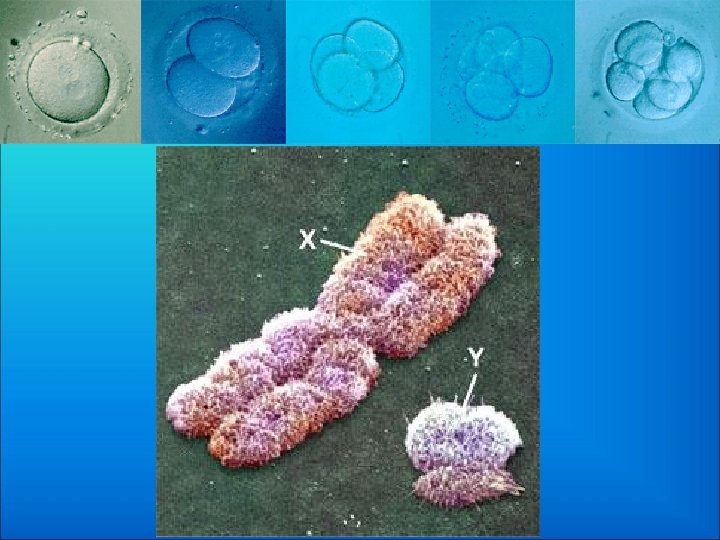
Sex-Linked Traits Continued: • Sex linked traits are carried on the X chromosome. – Color blindness and hemophilia are two examples. • In sex-linked traits – it is more likely that males will have the condition since they only have one X Chromosome. – Males do not have another X chromosome or a duplicate copy of the gene. • A female that has a recessive gene on one X chromosome is a carrier for that trait.
Incomplete Dominance: • A situation when one trait is not completely dominant over the other. • Think of it as a blending of the two traits.
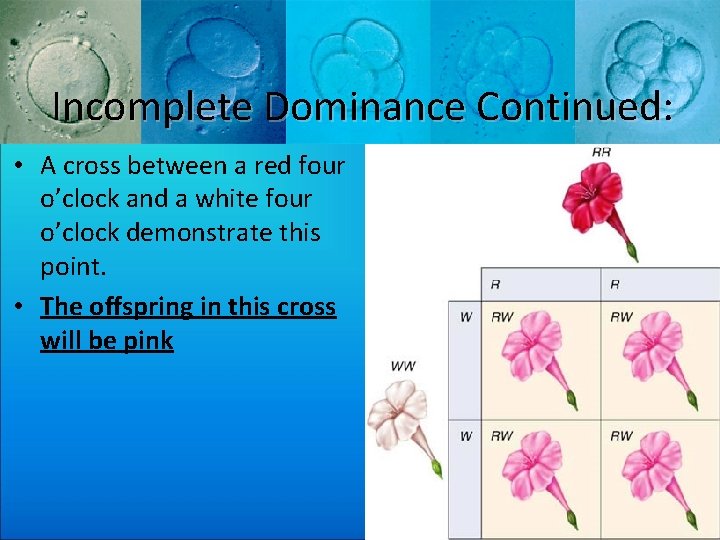
Incomplete Dominance Continued: • A cross between a red four o’clock and a white four o’clock demonstrate this point. • The offspring in this cross will be pink
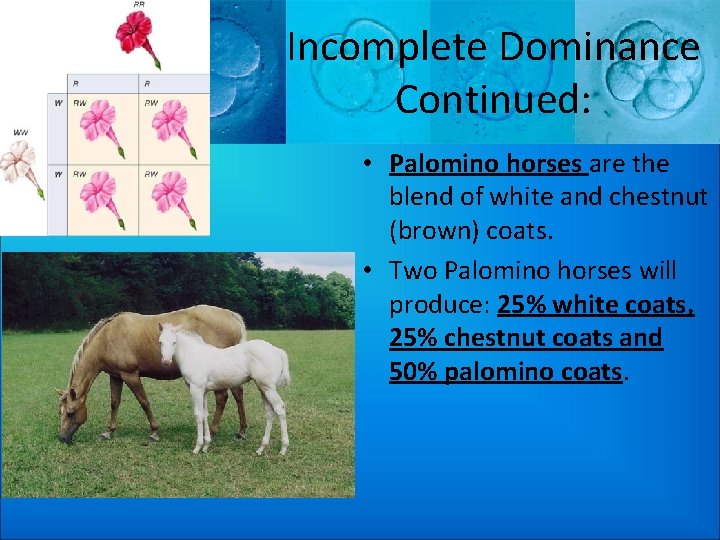
Incomplete Dominance Continued: • Palomino horses are the blend of white and chestnut (brown) coats. • Two Palomino horses will produce: 25% white coats, 25% chestnut coats and 50% palomino coats.
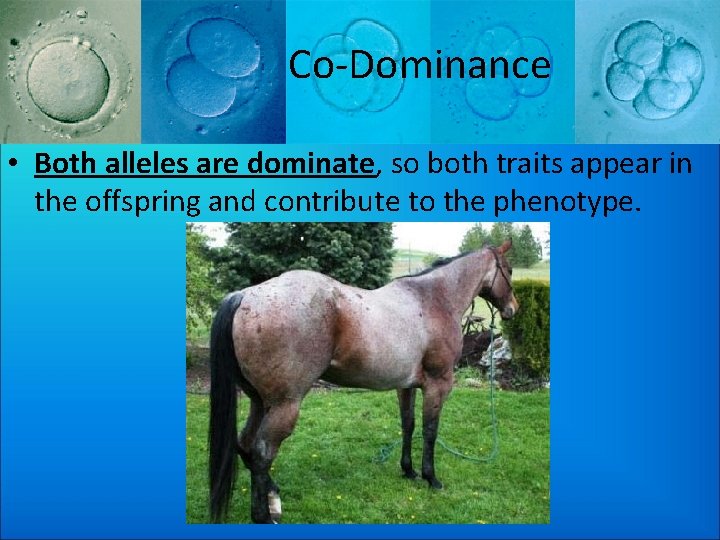
Co-Dominance • Both alleles are dominate, so both traits appear in the offspring and contribute to the phenotype.
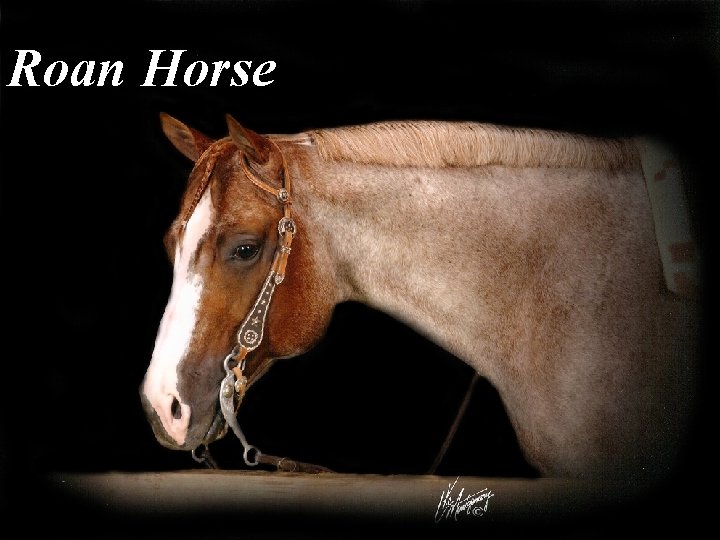
Roan Horse
Genetic Pedigrees
What is a Pedigree? • A pedigree is a graphical chart used to identify the lineage of individuals. • They are used when the genotype of individuals is unknown. • Pedigrees also help to show inheritance of genetic disorders within families.
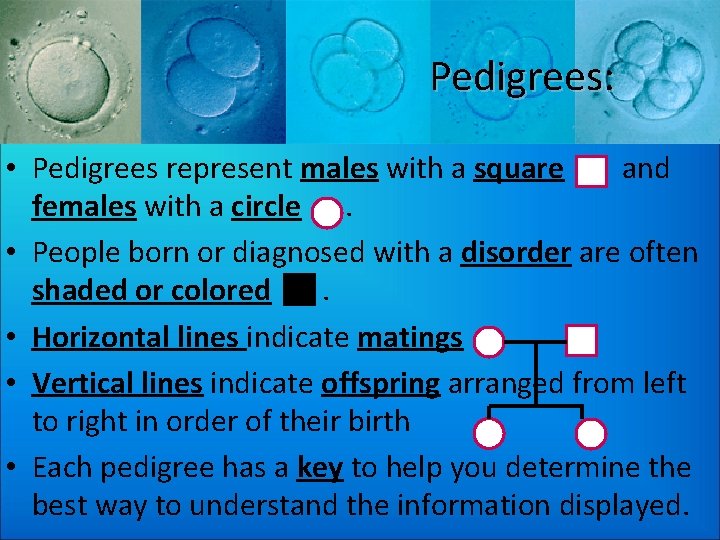
Pedigrees: • Pedigrees represent males with a square and females with a circle. • People born or diagnosed with a disorder are often shaded or colored. • Horizontal lines indicate matings • Vertical lines indicate offspring arranged from left to right in order of their birth • Each pedigree has a key to help you determine the best way to understand the information displayed.
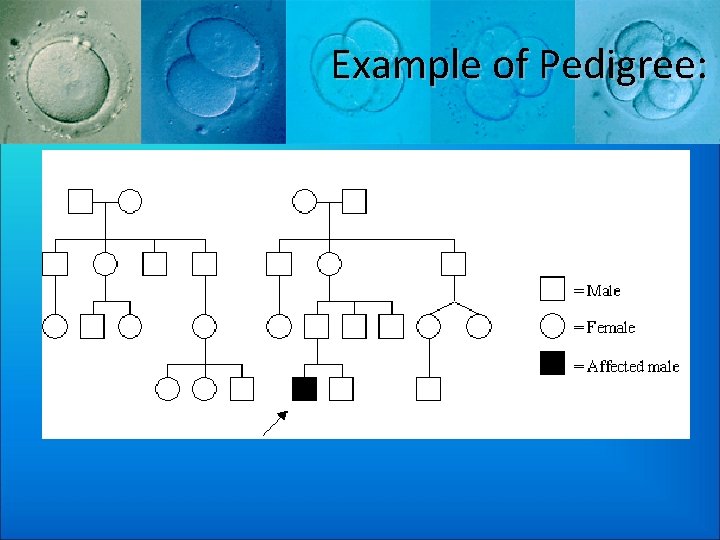
Example of Pedigree:
Genetic Disorders and Diseases
Hemophilia
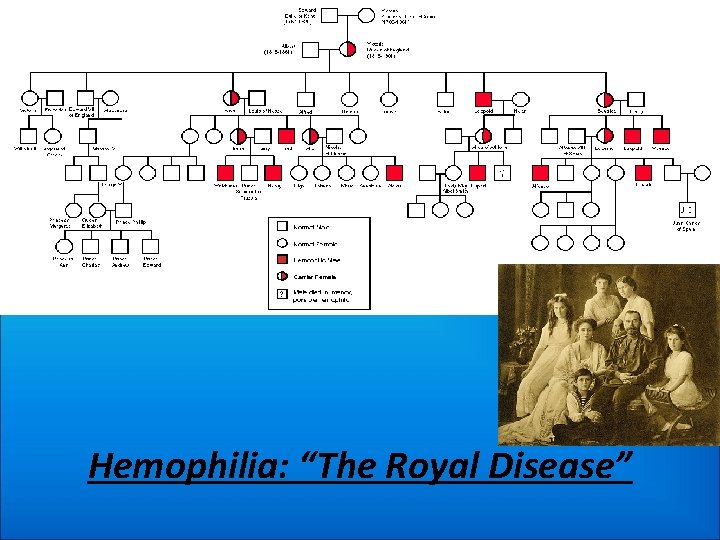
Hemophilia: “The Royal Disease”
Down’s Syndrome
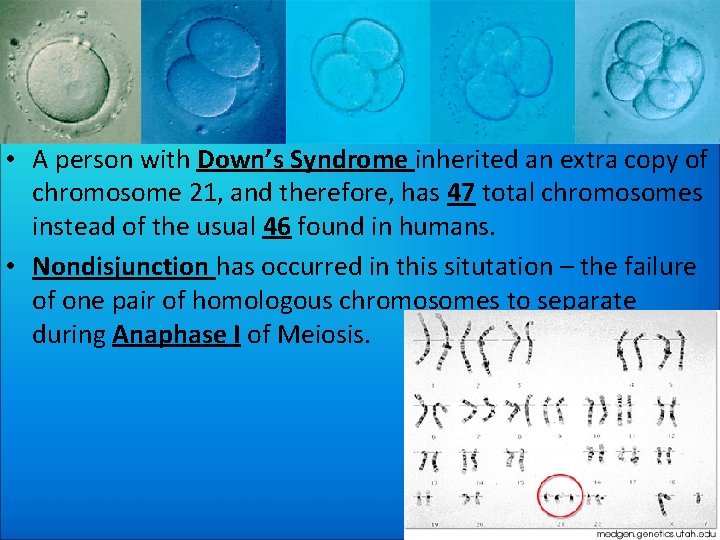
• A person with Down’s Syndrome inherited an extra copy of chromosome 21, and therefore, has 47 total chromosomes instead of the usual 46 found in humans. • Nondisjunction has occurred in this situtation – the failure of one pair of homologous chromosomes to separate during Anaphase I of Meiosis.
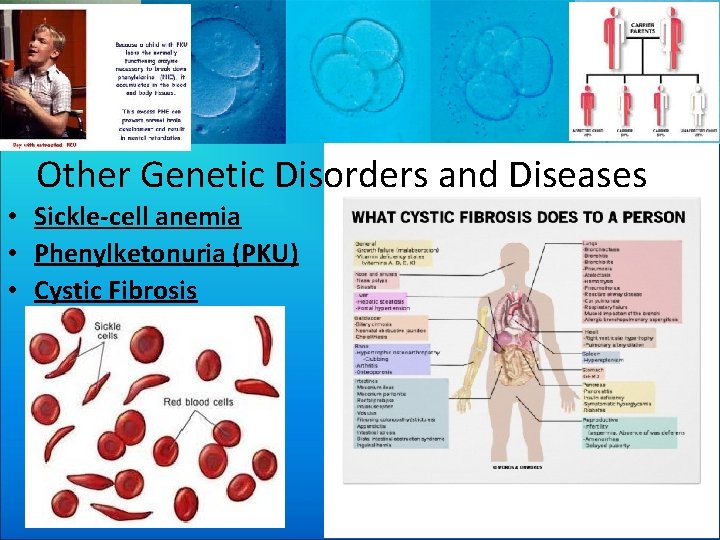
Other Genetic Disorders and Diseases • Sickle-cell anemia • Phenylketonuria (PKU) • Cystic Fibrosis
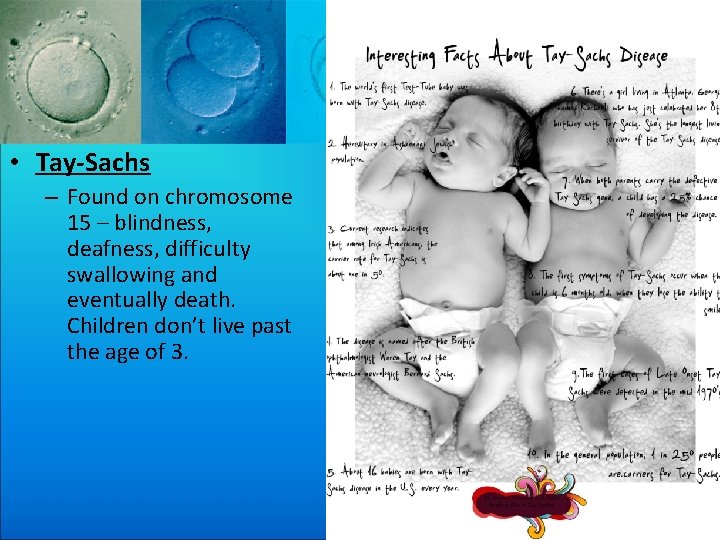
• Tay-Sachs – Found on chromosome 15 – blindness, deafness, difficulty swallowing and eventually death. Children don’t live past the age of 3.
- Slides: 34