
Mendelian Inheritance of Human Traits Pedigree 1 A
- Slides: 32
Mendelian Inheritance of Human Traits
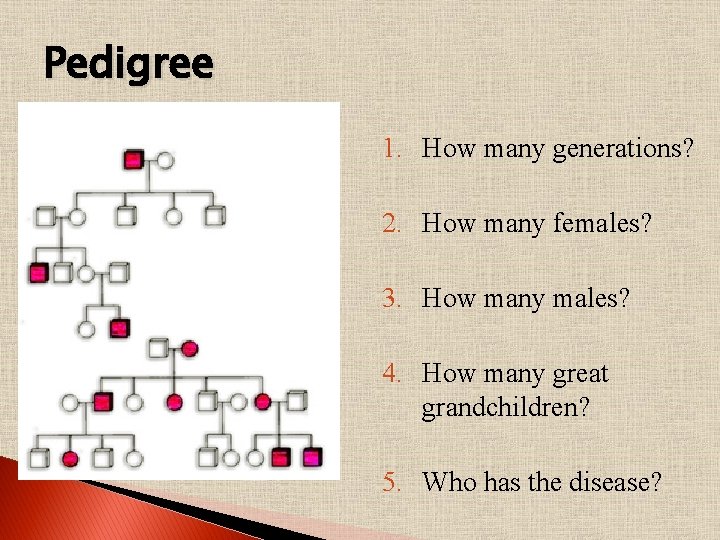
Pedigree 1. A PEDIGREE is a graphic representation of family inheritance a) Similar to a family tree b) Follows the inheritance a single trait i. E. g. color blindness c) Generations are marked with Roman numerals i. I, III, IV, V
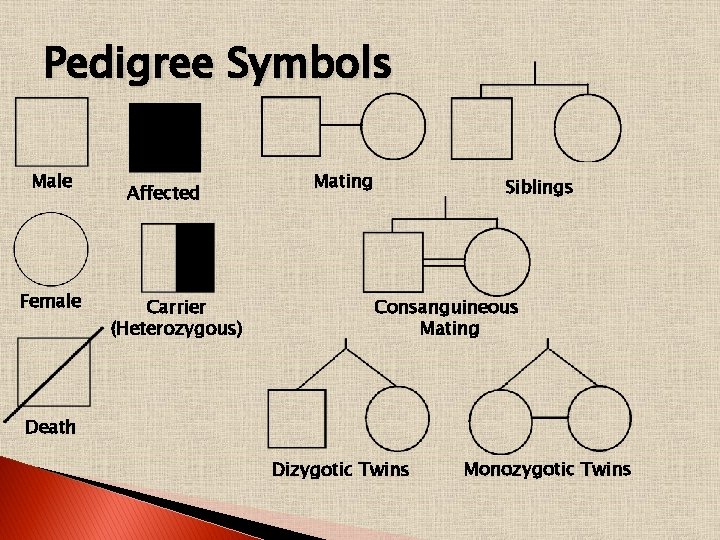
Pedigree Symbols Male Female Affected Carrier (Heterozygous) Mating Siblings Consanguineous Mating Death Dizygotic Twins Monozygotic Twins
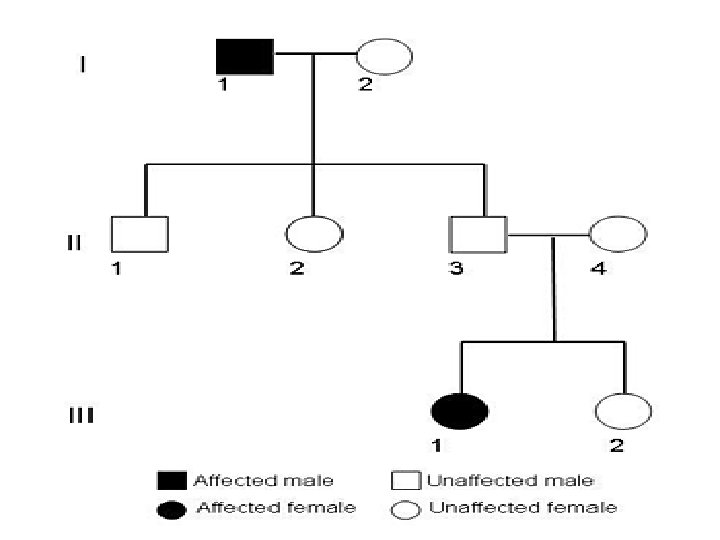
Pedigree 1. How many generations? 2. How many females? 3. How many males? 4. How many great grandchildren? 5. Who has the disease?
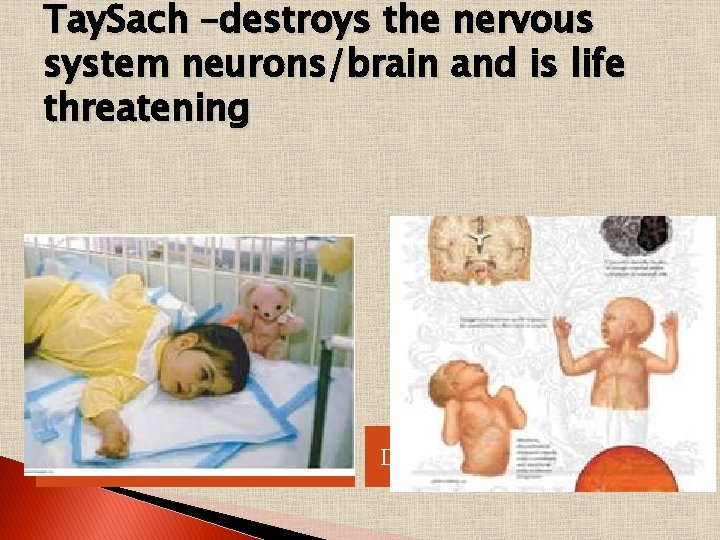
Simple Recessive Heredity 1. Most genetic disorders are caused by recessive alleles a) You must have TWO copies of the recessive allele to be affected 2. Examples: a) Cystic Fibrosis – build up of thick mucous in the lungs and digestive tract b) Tay-Sachs disease – a lipid that the body can’t break down accumulates in the nervous system; death by age 5 c) Phenylketonuria (PKU) – body can’t break down the amino acid phenylalinine; brain damage can occur without a special diet
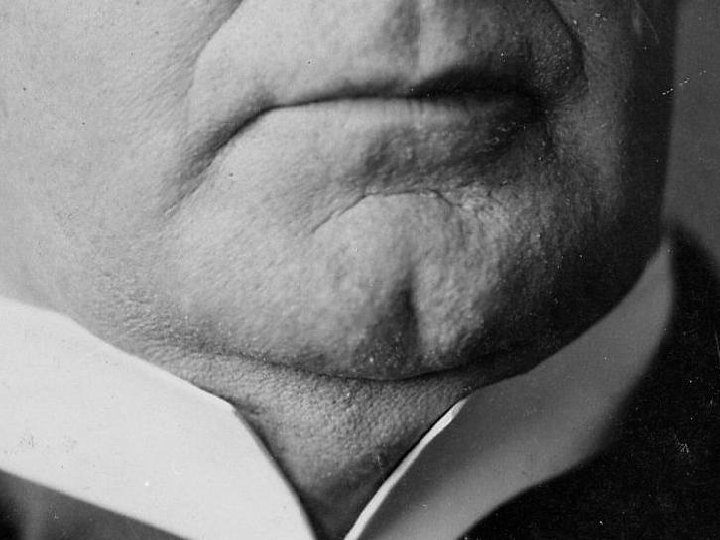
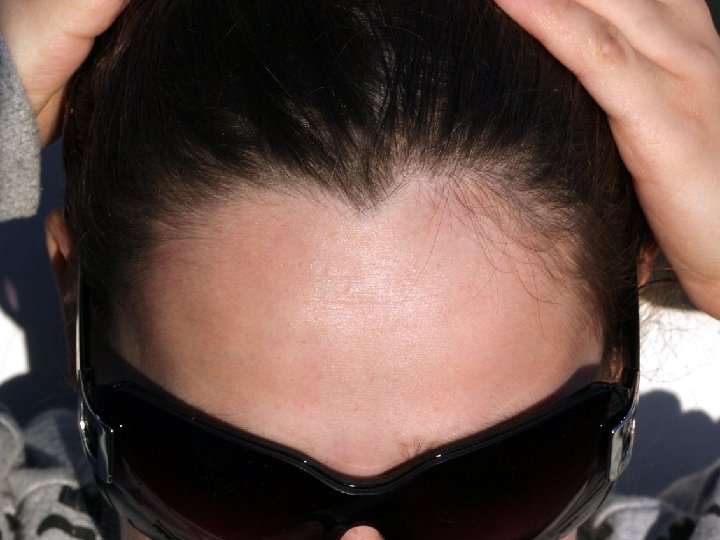
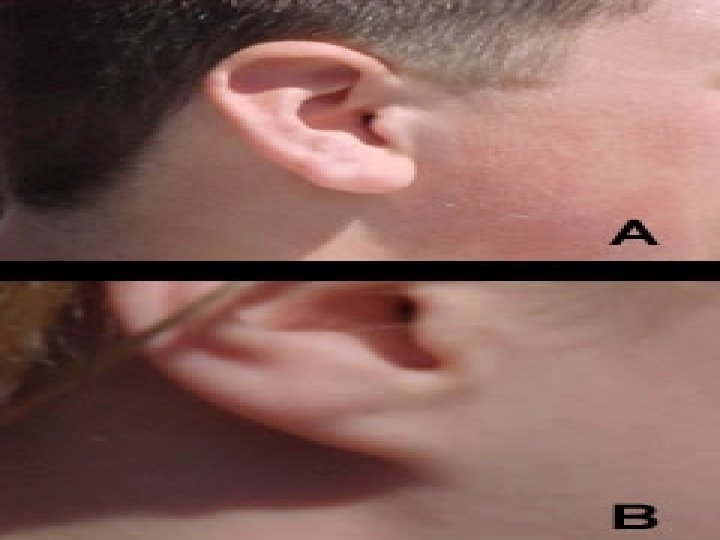
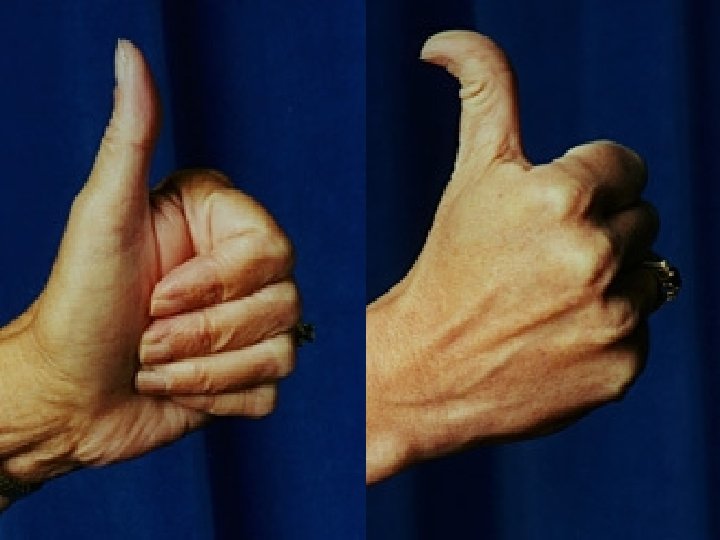
Simple Dominant Heredity 1. Some traits are caused by dominant alleles a) Only one dominant allele must be inherited for the trait to be present 2. Examples: a) Cleft chin b) Widow’s peak c) Free/Attached earlobes d) Hitchhiker’s Thumb e) Huntington’s disease – degeneration of brain and nervous system; death between 30 -50 yrs old
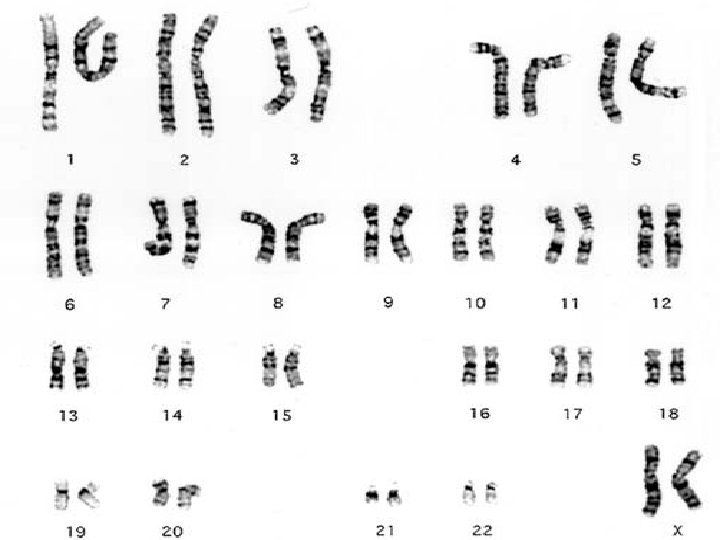
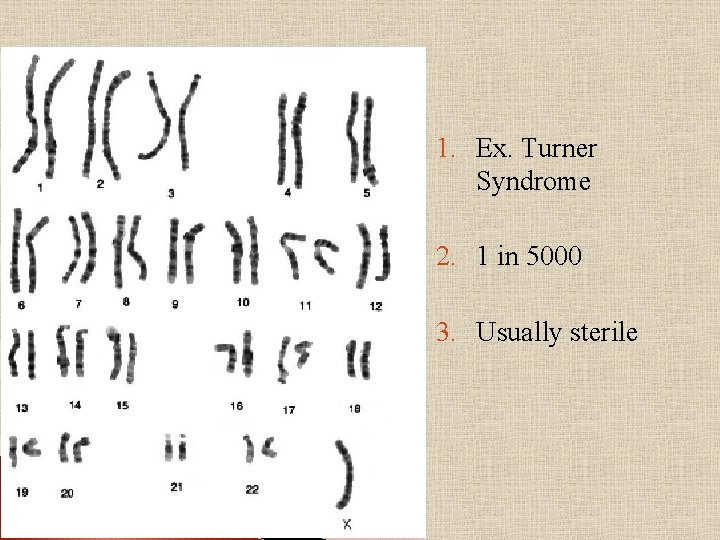
Karyotype 1. Karyotype – a picture of a person’s pairs of chromosomes a) Can be used to identify an abnormal number of chromosomes or sex determination (XX or XY)
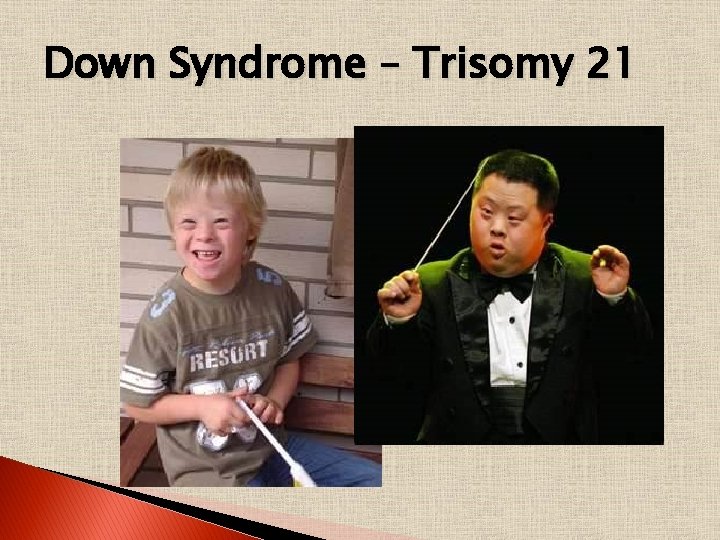
Down Syndrome – Trisomy 21
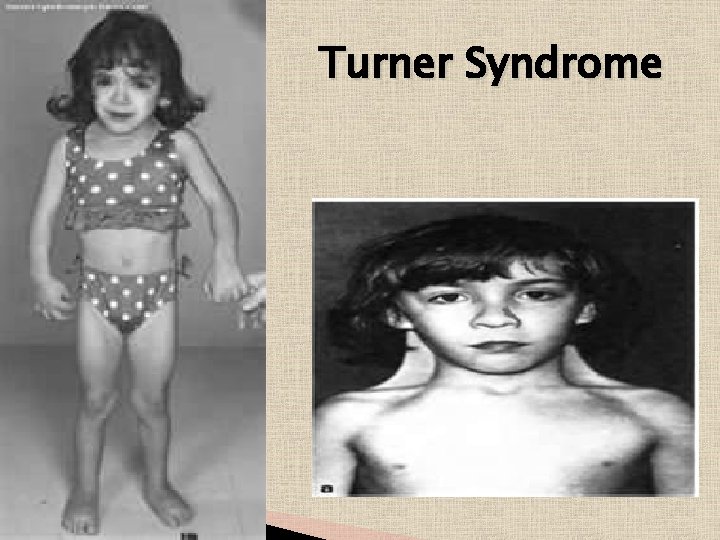
1. Ex. Turner Syndrome 2. 1 in 5000 3. Usually sterile
Turner Syndrome
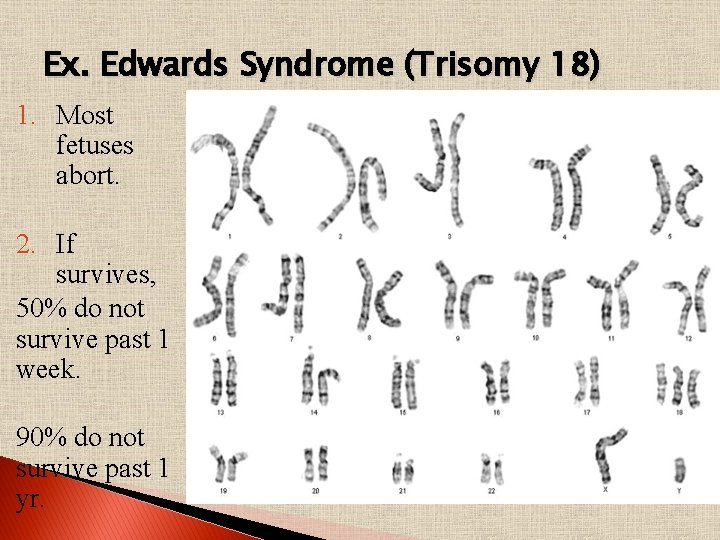
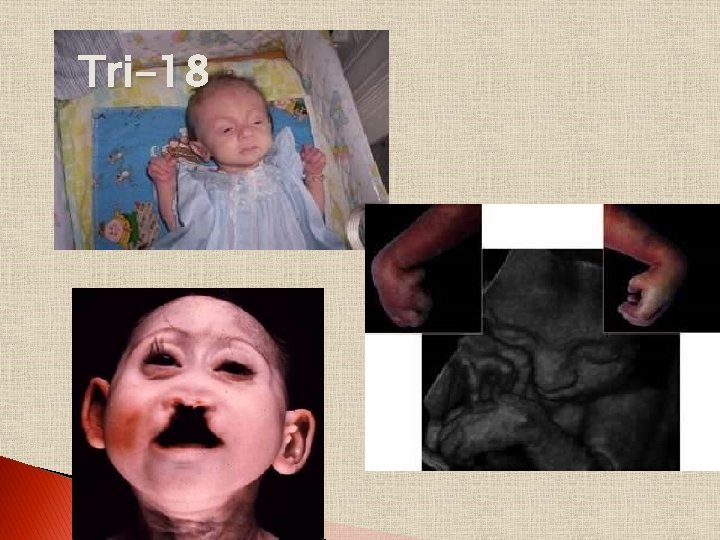
Ex. Edwards Syndrome (Trisomy 18) 1. Most fetuses abort. 2. If survives, 50% do not survive past 1 week. 90% do not survive past 1 yr.
Tri-18
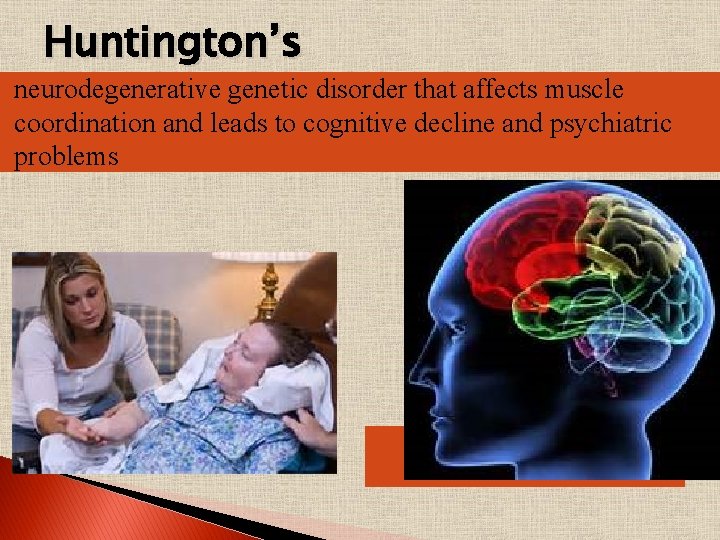
Huntington’s neurodegenerative genetic disorder that affects muscle coordination and leads to cognitive decline and psychiatric problems
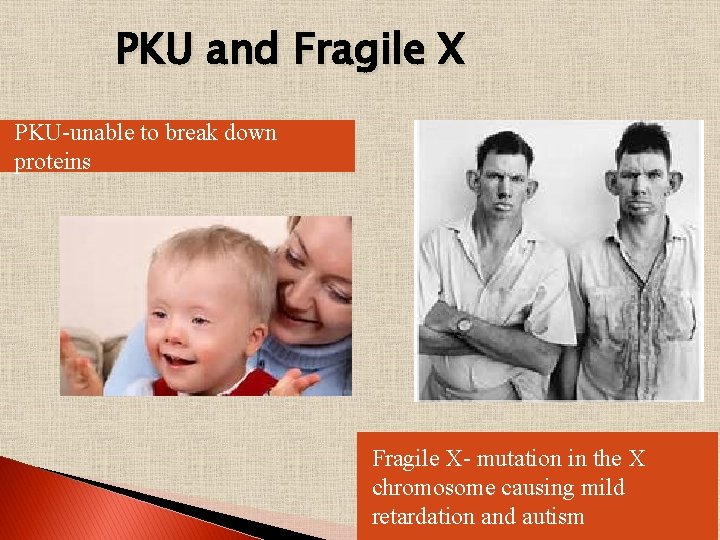
PKU and Fragile X PKU-unable to break down proteins Fragile X- mutation in the X chromosome causing mild retardation and autism
Tay. Sach –destroys the nervous system neurons/brain and is life threatening Destroys brain function
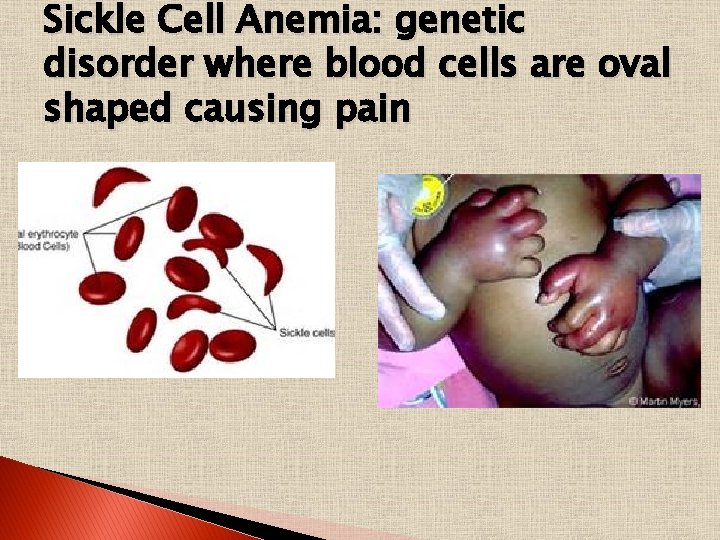
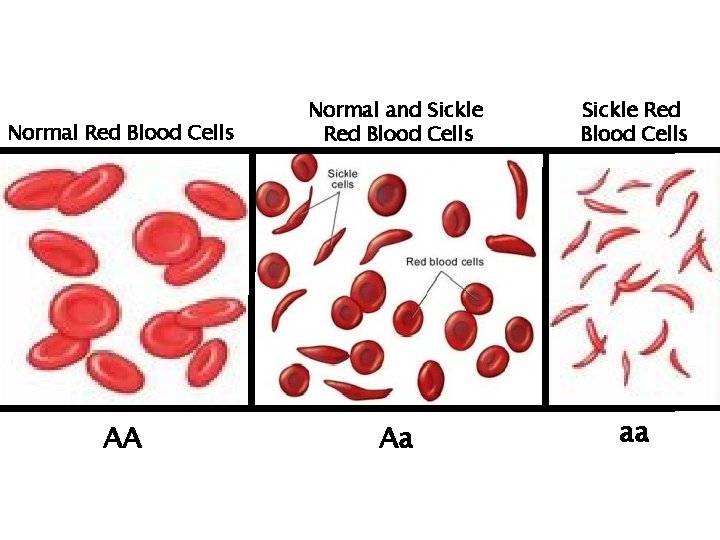
Codominance in Humans 1. Sickle-cell anemia a) A = normal allele a = sickle cell allele i. AA = normal ii. Aa = both normal and sickle cell blood cells �Heterozygous individuals have unique resistance to Malaria iii. aa = sickle-cell anemia
Sickle Cell Anemia: genetic disorder where blood cells are oval shaped causing pain
Normal Red Blood Cells Normal and Sickle Red Blood Cells AA Aa aa
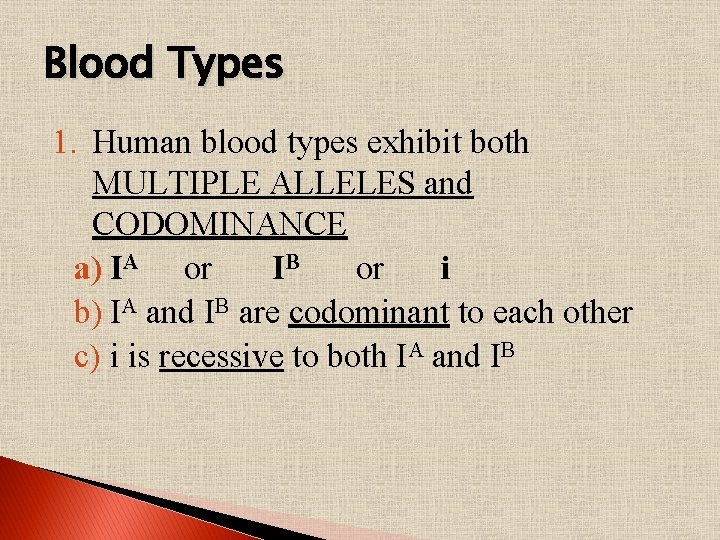
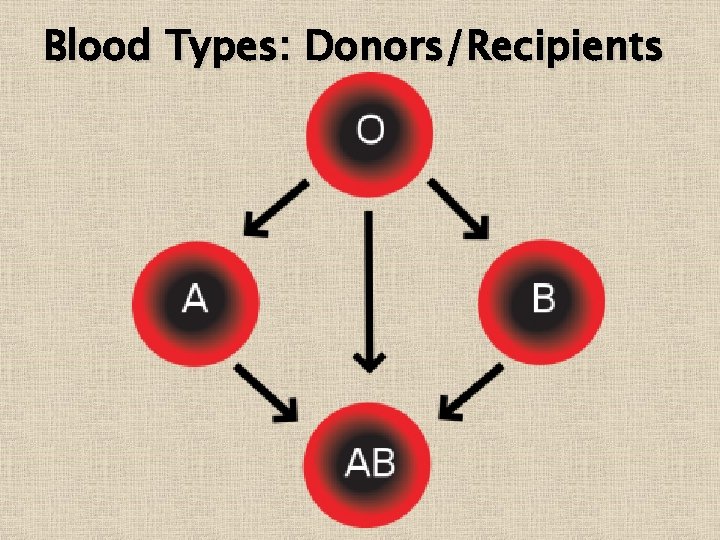
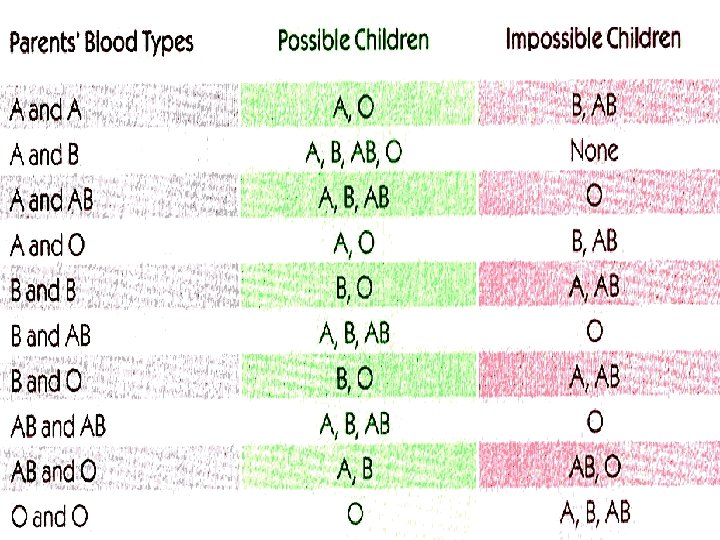
Blood Types 1. Human blood types exhibit both MULTIPLE ALLELES and CODOMINANCE a) IA or IB or i b) IA and IB are codominant to each other c) i is recessive to both IA and IB
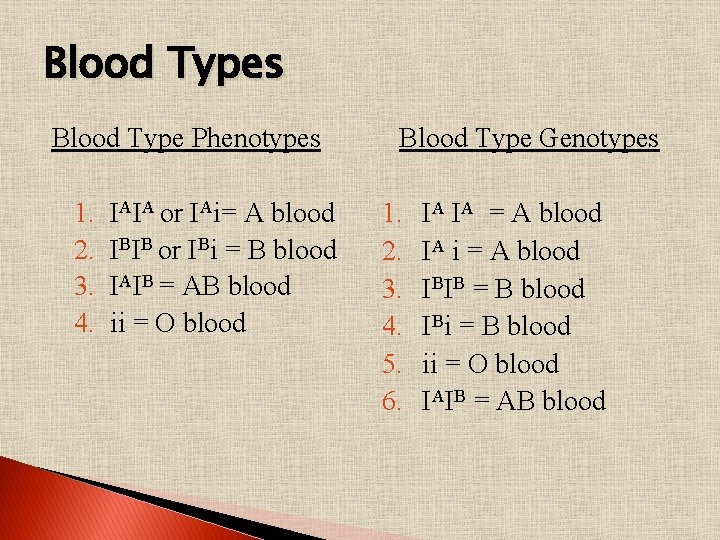
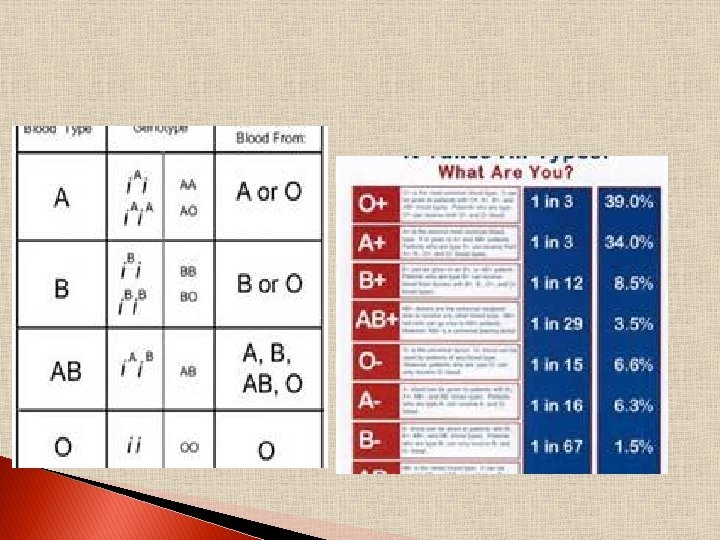
Blood Types Blood Type Phenotypes 1. 2. 3. 4. IAIA or IAi= A blood IBIB or IBi = B blood IAIB = AB blood ii = O blood Blood Type Genotypes 1. 2. 3. 4. 5. 6. IA IA = A blood IA i = A blood IBIB = B blood IBi = B blood ii = O blood IAIB = AB blood
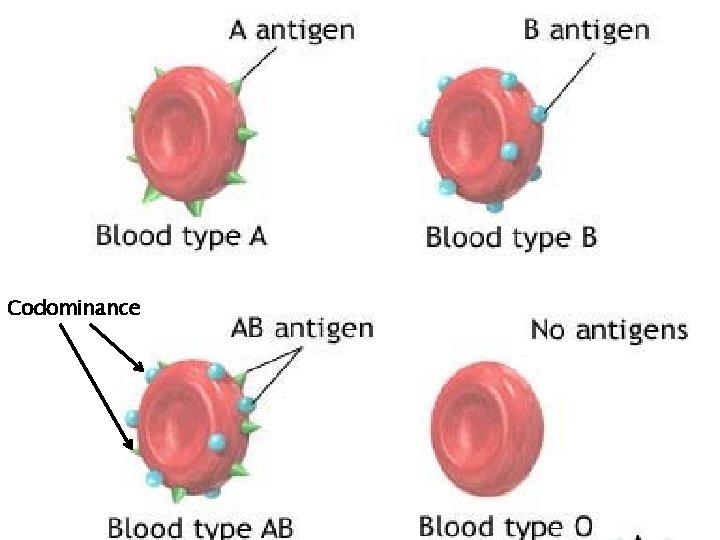
Codominance
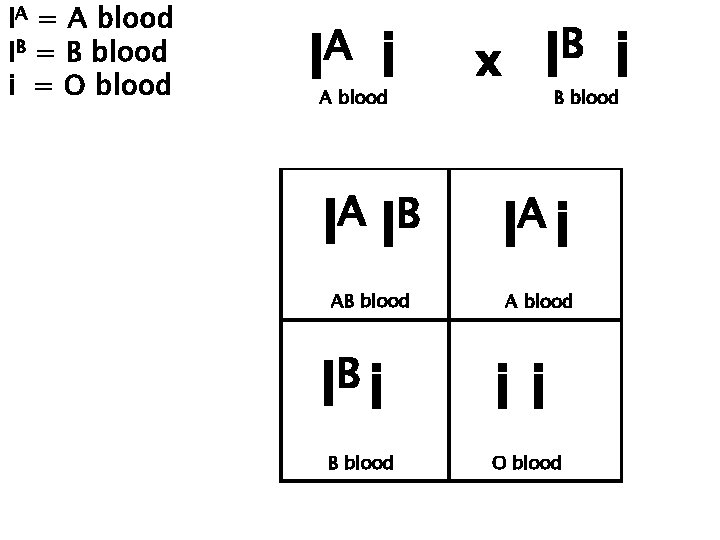
IA = A blood IB = B blood i = O blood A I i A blood x B I B blood A B I I A I i AB blood A blood B I i B blood i ii O blood
Blood Types: Donors/Recipients