
Mendelian Genetics What Came Before Blending Inheritance Inheritance
Mendelian Genetics

What Came Before? • Blending Inheritance • Inheritance of Acquired Characteristics

Mendel’s Model Organism • Advantages of pea plants for genetic study: o There are many varieties with distinct heritable features, or traits (such as peacolor) o Mating of plants can be controlled o Quick generation time; lots of offspring o Can isolate true-breeding lines for particular traits
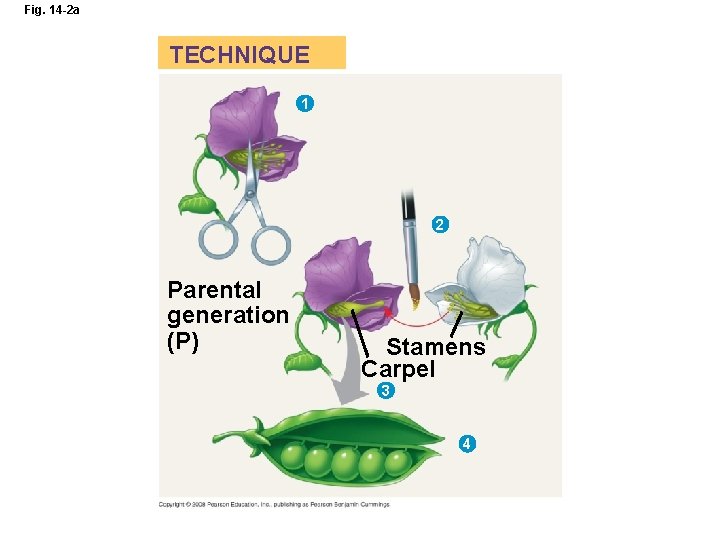
Fig. 14 -2 a TECHNIQUE 1 2 Parental generation (P) Stamens Carpel 3 4
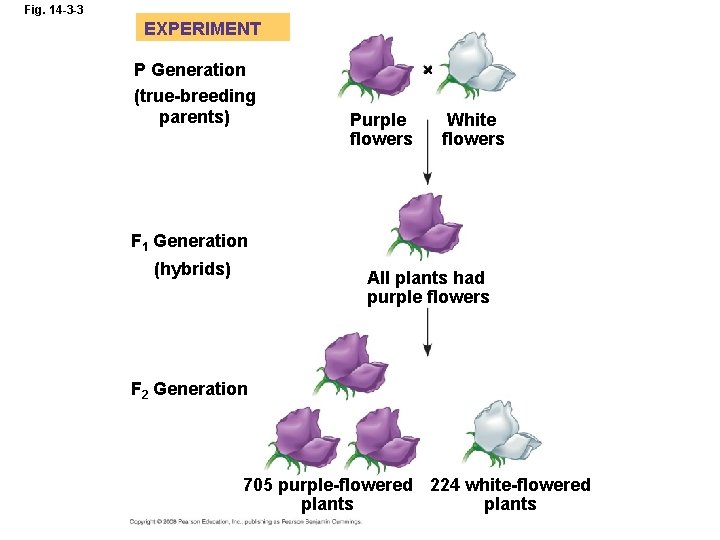
Fig. 14 -3 -3 EXPERIMENT P Generation (true-breeding parents) Purple flowers White flowers F 1 Generation (hybrids) All plants had purple flowers F 2 Generation 705 purple-flowered 224 white-flowered plants
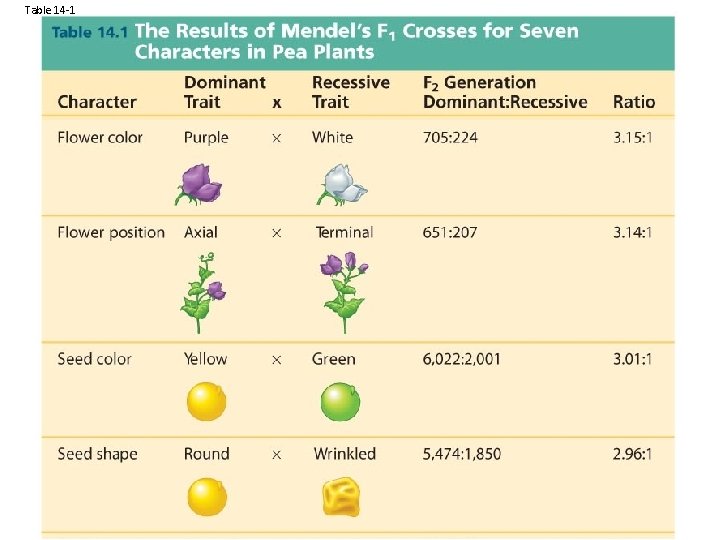
Table 14 -1
CONCEPT 1: There alternative versions of “heritable factors”
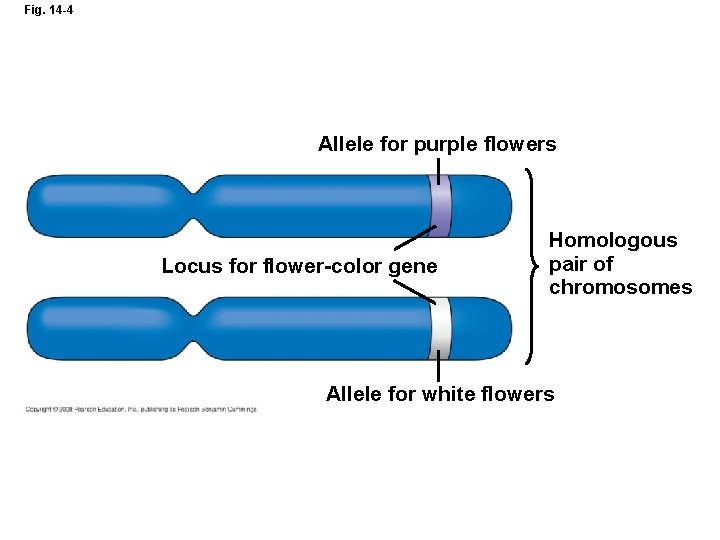
Fig. 14 -4 Allele for purple flowers Locus for flower-color gene Homologous pair of chromosomes Allele for white flowers
CONCEPT 2: For each trait, an organism inherits two alleles, one from each parent
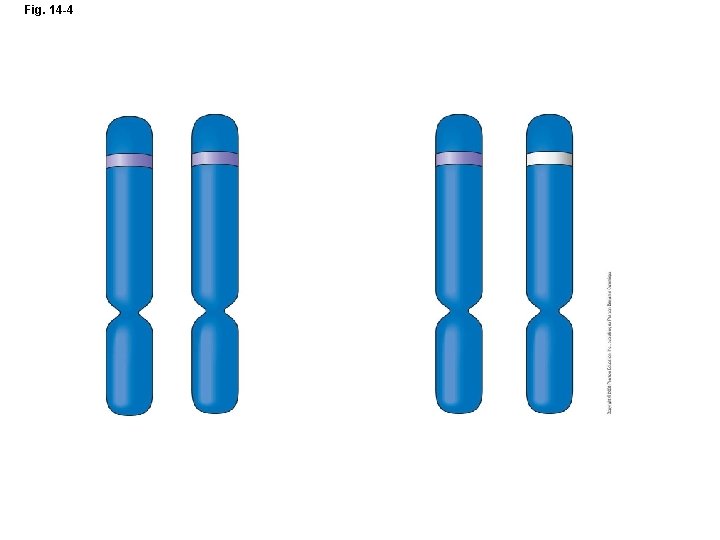
Fig. 14 -4
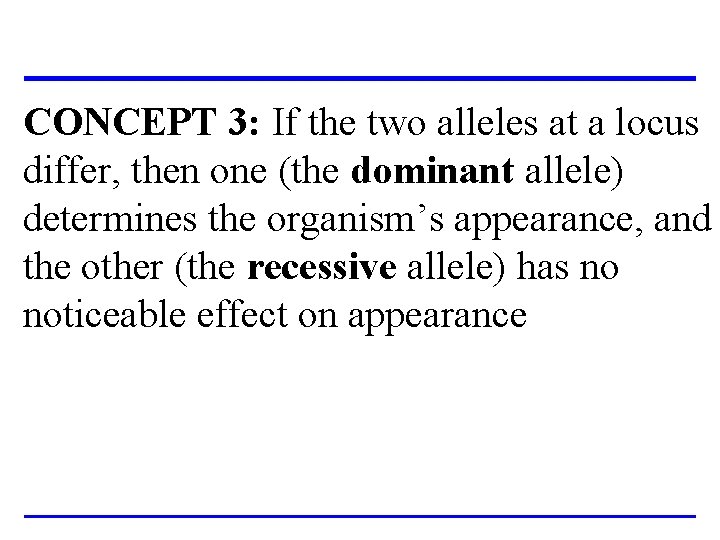
CONCEPT 3: If the two alleles at a locus differ, then one (the dominant allele) determines the organism’s appearance, and the other (the recessive allele) has no noticeable effect on appearance
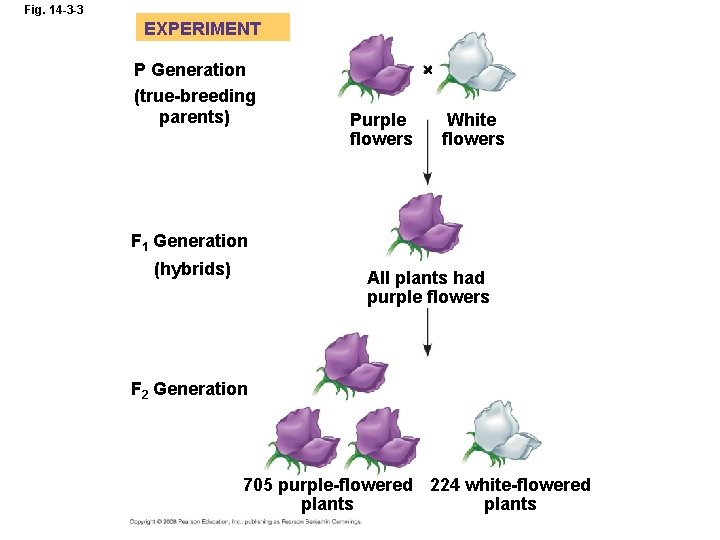
Fig. 14 -3 -3 EXPERIMENT P Generation (true-breeding parents) Purple flowers White flowers F 1 Generation (hybrids) All plants had purple flowers F 2 Generation 705 purple-flowered 224 white-flowered plants
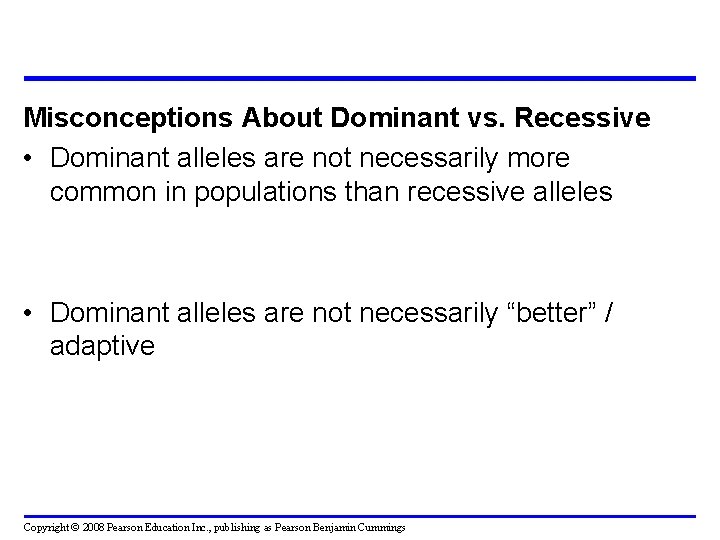
Misconceptions About Dominant vs. Recessive • Dominant alleles are not necessarily more common in populations than recessive alleles • Dominant alleles are not necessarily “better” / adaptive Copyright © 2008 Pearson Education Inc. , publishing as Pearson Benjamin Cummings
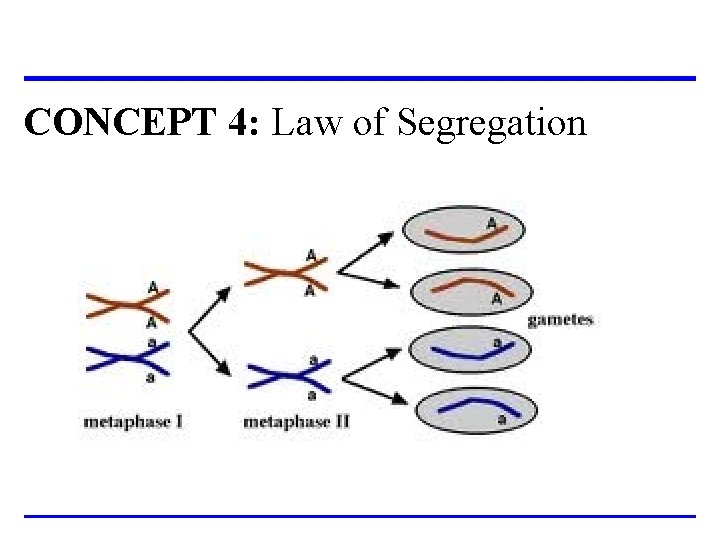
CONCEPT 4: Law of Segregation
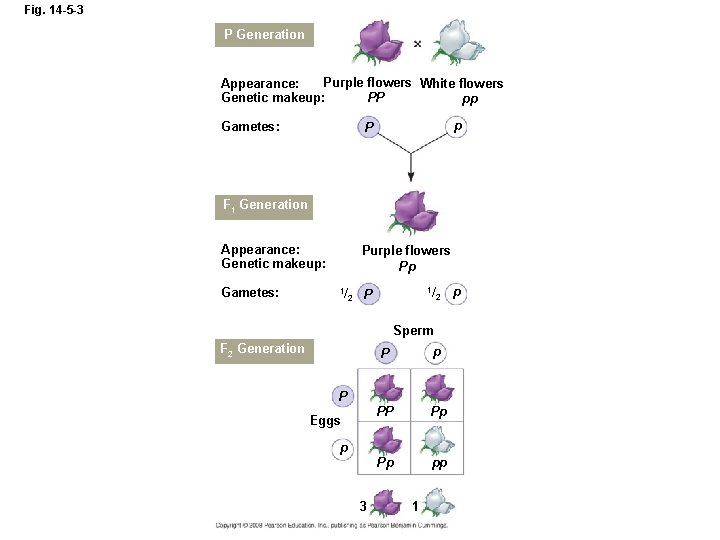
Fig. 14 -5 -3 P Generation Purple flowers White flowers Appearance: Genetic makeup: PP pp Gametes: p P F 1 Generation Appearance: Genetic makeup: Gametes: Purple flowers Pp 1/ 2 1/ P 2 Sperm F 2 Generation P p PP Pp Pp pp P Eggs p 3 1 p

How can you tell the genotype of an individual with the dominant phenotype?
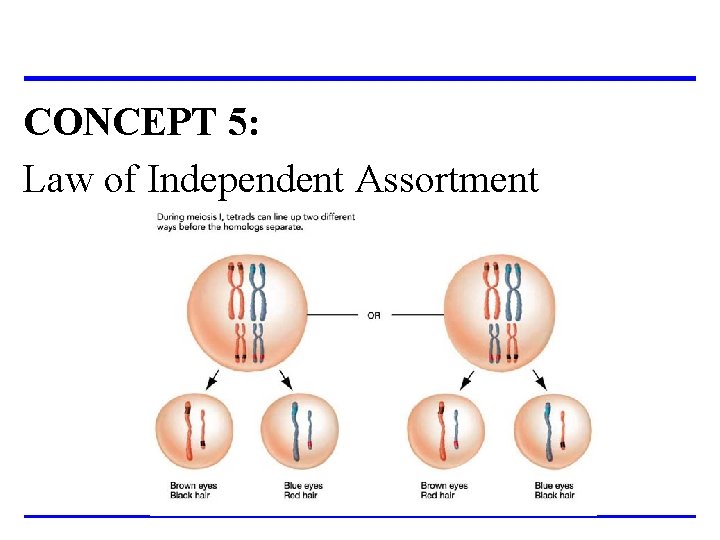
CONCEPT 5: Law of Independent Assortment
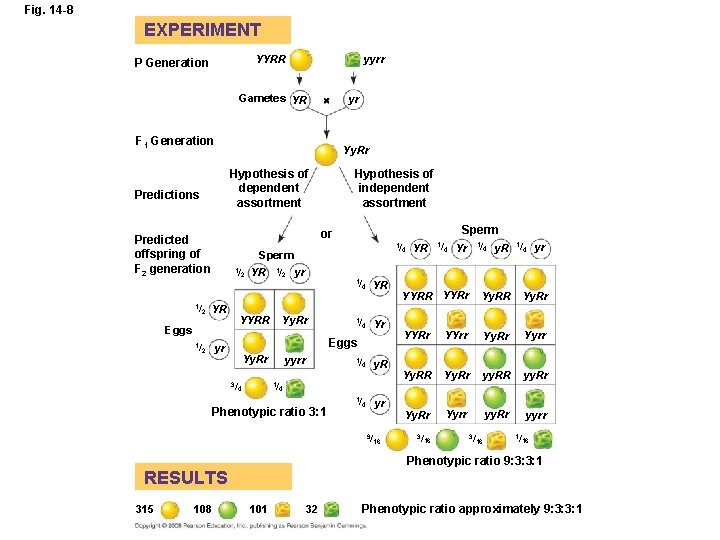
Fig. 14 -8 EXPERIMENT YYRR P Generation yyrr Gametes YR F 1 Generation Hypothesis of independent assortment Sperm or Predicted offspring of F 2 generation 1/ 2 Yy. Rr Hypothesis of dependent assortment Predictions yr 1/ 4 Sperm 1/ 1/ 2 YR 2 yr YR Eggs 1/ 2 YYRR 1/ 4 Yy. Rr 1/ 4 YR Yr Eggs yr Yy. Rr 3/ 4 yyrr 1/ 4 y. R 1/ 4 Phenotypic ratio 3: 1 1/ 4 yr 9/ 16 108 1/ 4 Yr y. R 1/ 4 yr YYRR YYRr Yy. RR Yy. Rr YYrr Yy. Rr Yyrr Yy. RR Yy. Rr yy. RR yy. Rr Yyrr yy. Rr yyrr 3/ 16 1/ 16 Phenotypic ratio 9: 3: 3: 1 RESULTS 315 YR 1/ 4 101 32 Phenotypic ratio approximately 9: 3: 3: 1
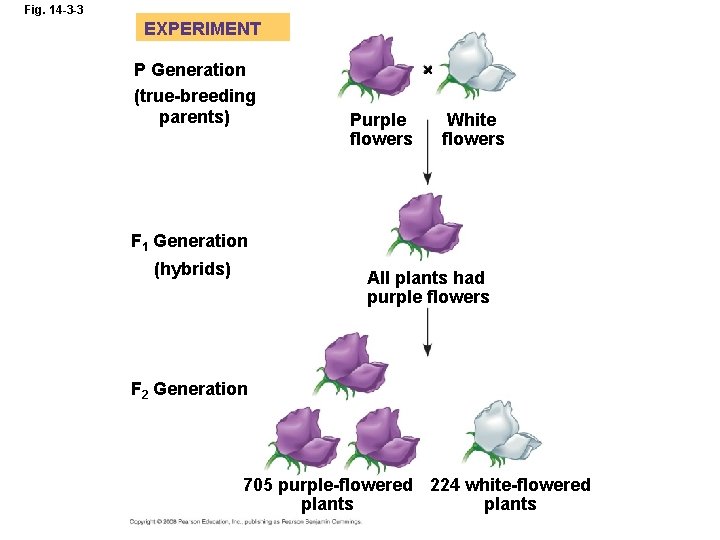
Fig. 14 -3 -3 EXPERIMENT P Generation (true-breeding parents) Purple flowers White flowers F 1 Generation (hybrids) All plants had purple flowers F 2 Generation 705 purple-flowered 224 white-flowered plants
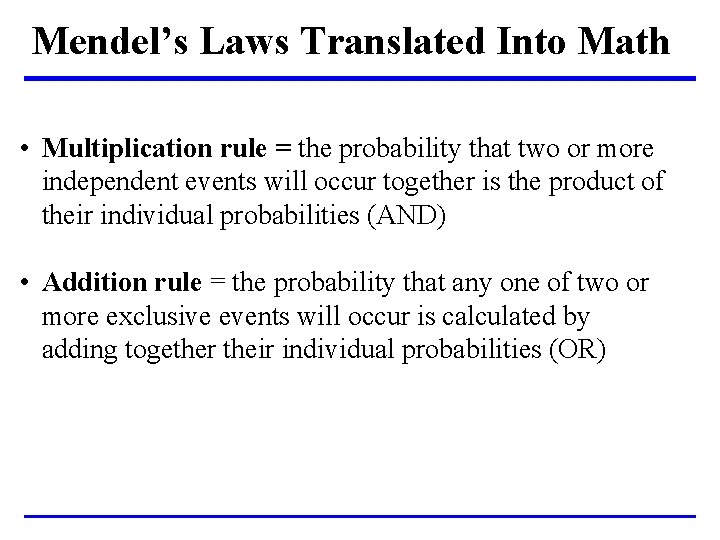
Mendel’s Laws Translated Into Math • Multiplication rule = the probability that two or more independent events will occur together is the product of their individual probabilities (AND) • Addition rule = the probability that any one of two or more exclusive events will occur is calculated by adding together their individual probabilities (OR)
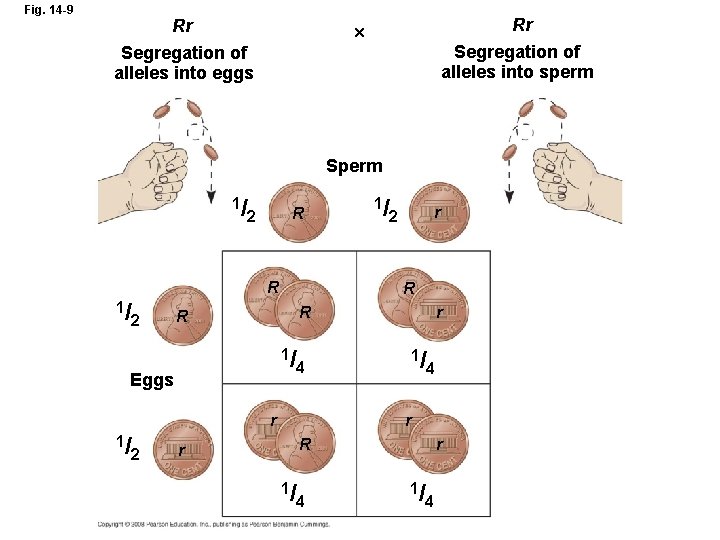
Fig. 14 -9 Rr Rr Segregation of alleles into sperm Segregation of alleles into eggs Sperm 1/ R 2 R 1/ 4 r 2 R R Eggs 1/ 1/ r 1/ 4 r r R r 1/ 4
Example: Bb. Ee x Bb. Ee • What is the probability the offspring will be homozygous recessive for both traits? • What is the probability the offspring will be homozygous recessive for at least one trait?

Example: Bb. Ee x Bb. Ee
PRACTICE PROBLEMS!
- Slides: 25