
Mendelian Genetics and Biotechnology OBJECTIVE 12 01 Define
Mendelian Genetics and Biotechnology OBJECTIVE: 12. 01 Define key genetic terms related to agriscience research and biotechnology.
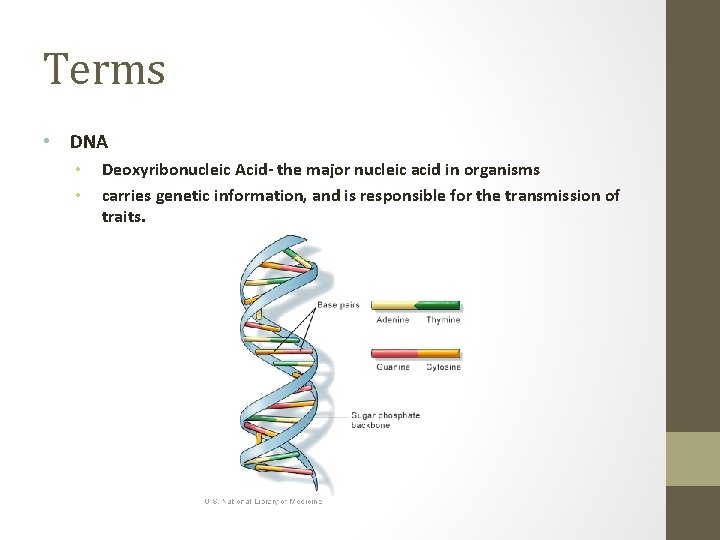
Terms • DNA • • Deoxyribonucleic Acid- the major nucleic acid in organisms carries genetic information, and is responsible for the transmission of traits.

Terms • Gene • segment of DNA that codes for a specific trait in an organism.
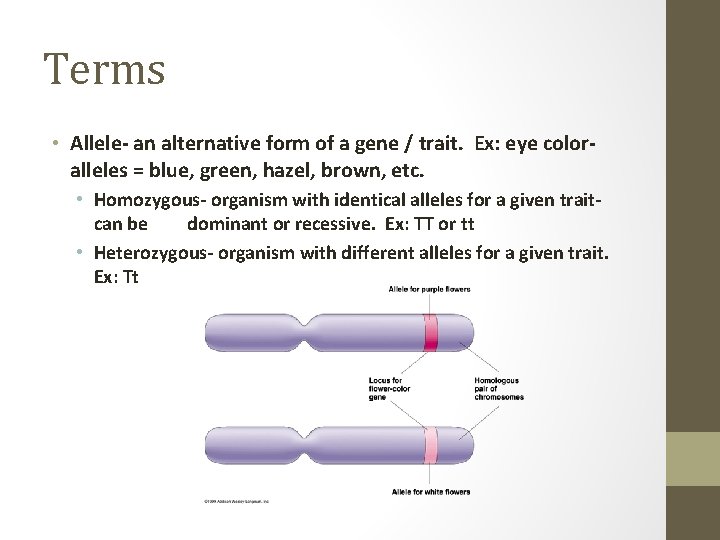
Terms • Allele- an alternative form of a gene / trait. Ex: eye coloralleles = blue, green, hazel, brown, etc. • Homozygous- organism with identical alleles for a given traitcan be dominant or recessive. Ex: TT or tt • Heterozygous- organism with different alleles for a given trait. Ex: Tt

Terms • Phenotype • the physical appearance of a trait in an organism- determined but not always indicative of the genetic makeup of the organism. • Ex: tall or short • Genotype • the genetic composition of an organism for a given trait- often cannot be determined by looking at an organism. • Ex Tt or TT
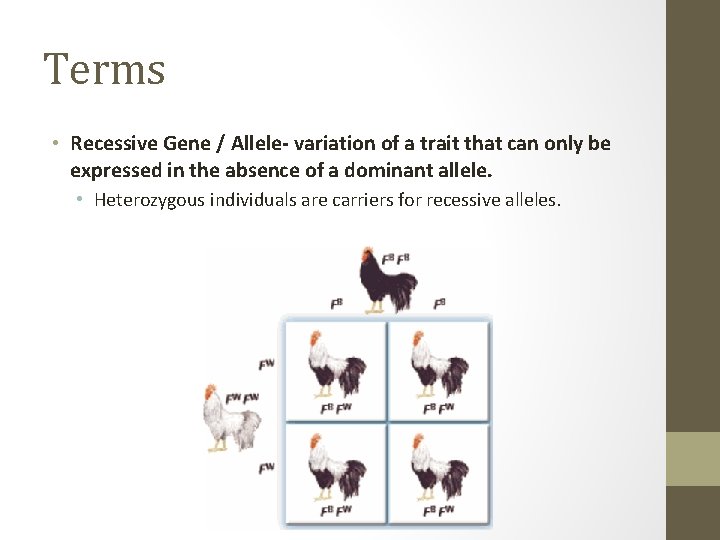
Terms • Recessive Gene / Allele- variation of a trait that can only be expressed in the absence of a dominant allele. • Heterozygous individuals are carriers for recessive alleles.
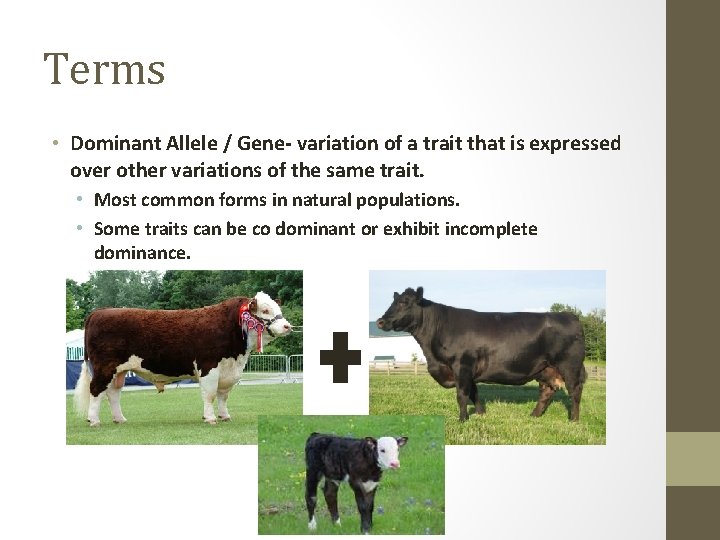
Terms • Dominant Allele / Gene- variation of a trait that is expressed over other variations of the same trait. • Most common forms in natural populations. • Some traits can be co dominant or exhibit incomplete dominance.
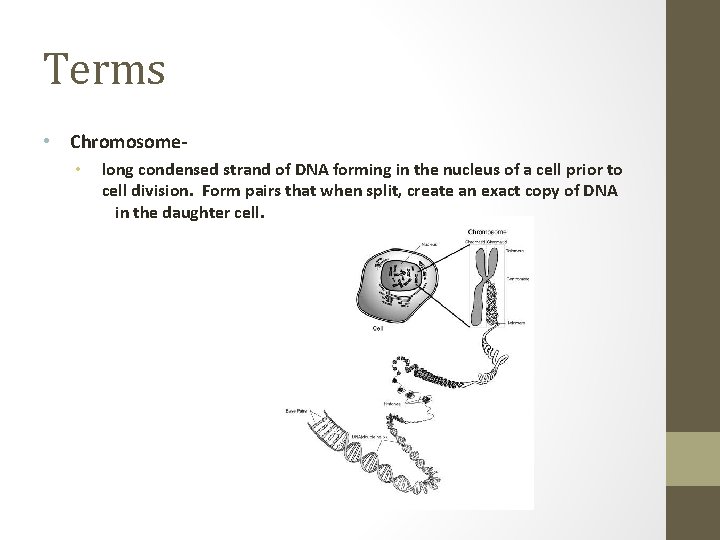
Terms • Chromosome • long condensed strand of DNA forming in the nucleus of a cell prior to cell division. Form pairs that when split, create an exact copy of DNA in the daughter cell.
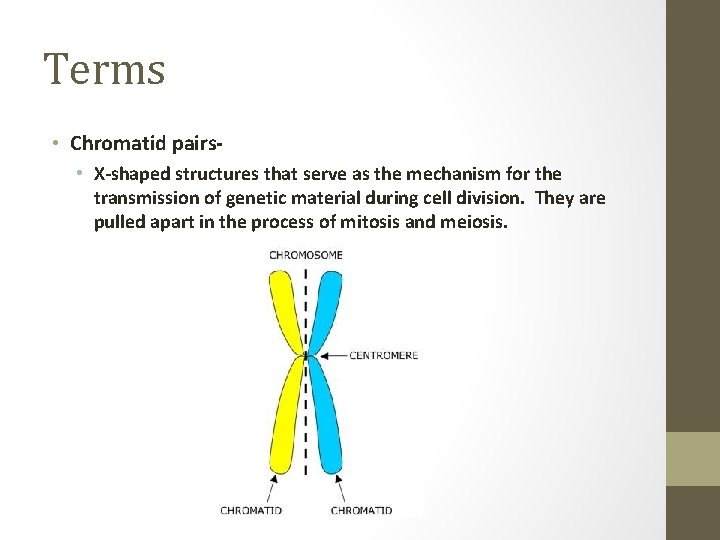
Terms • Chromatid pairs • X-shaped structures that serve as the mechanism for the transmission of genetic material during cell division. They are pulled apart in the process of mitosis and meiosis.
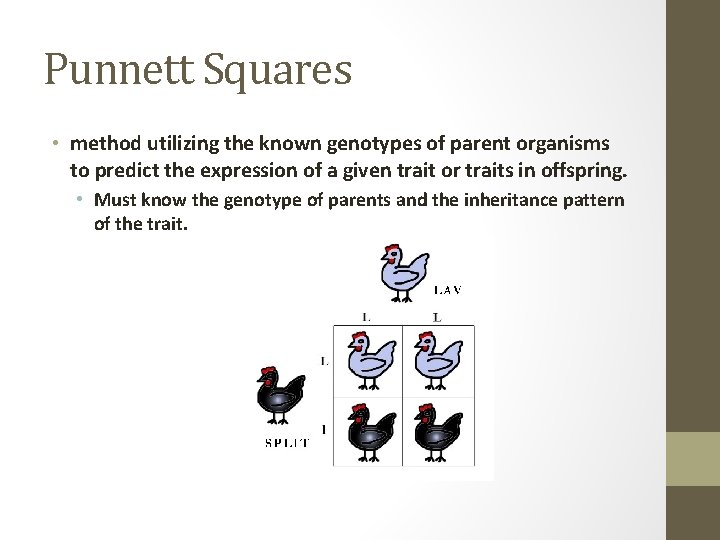
Punnett Squares • method utilizing the known genotypes of parent organisms to predict the expression of a given trait or traits in offspring. • Must know the genotype of parents and the inheritance pattern of the trait.
Punnett Squares • Conducting Tests • A box should be drawn with one space for each allele expressed by both parents. (in simple heredity, like pea height, boxes are 4 x 4) • The alleles for one parent should be placed above each column at the top, with the alleles for the other placed beside each row on one side. • The alleles of each parent should be distributed across and down the box.
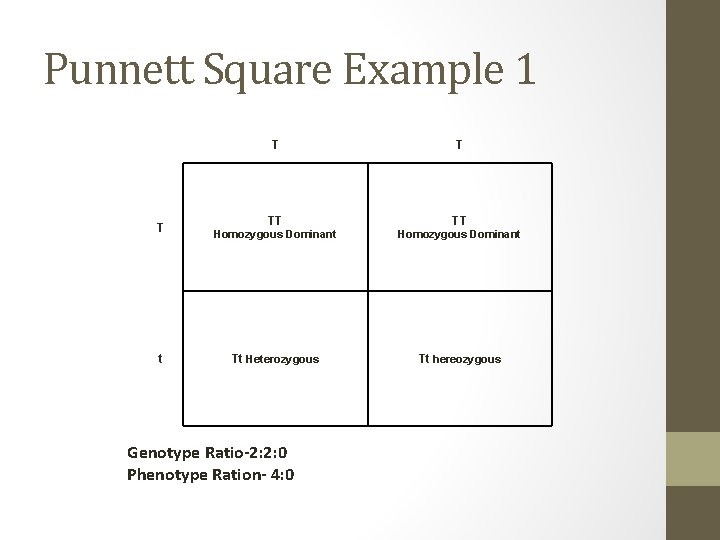
Punnett Square Example 1 T T t T TT TT Homozygous Dominant Tt Heterozygous Tt hereozygous Genotype Ratio-2: 2: 0 Phenotype Ration- 4: 0
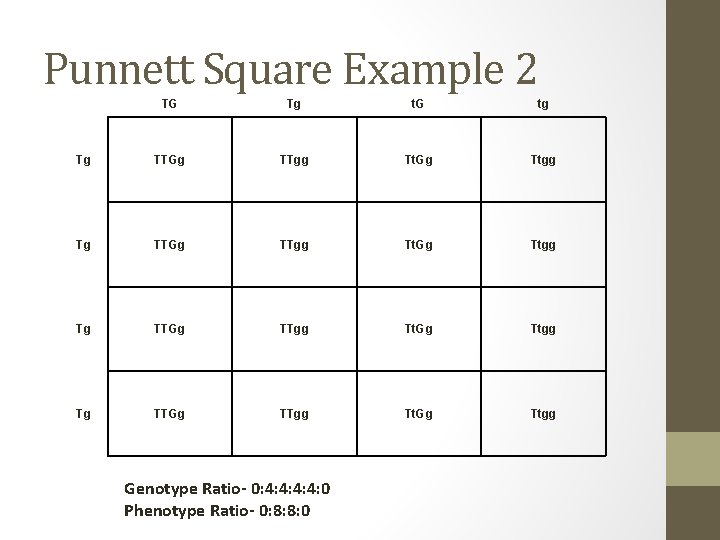
Punnett Square Example 2 TG Tg t. G tg Tg TTGg TTgg Tt. Gg Ttgg Genotype Ratio- 0: 4: 4: 0 Phenotype Ratio- 0: 8: 8: 0
Process of Simple Heredity • Definition- heredity is best described as the manner in which inheritable characteristics (traits) are passed from parents to offspring. • Heredity is a direct outcome of the RANDOM genetic recombination resulting during sexual reproduction. • ***ONLY FUNCTIONS IN SEXUAL REPRODUCTION • ***ENSURES GENETIC DIVERSITY • Heredity determines the genetic potential of an animal, but… • HEREDITY & ENVIRONMENTAL INFLUENCES determine the overall quality of an animal.
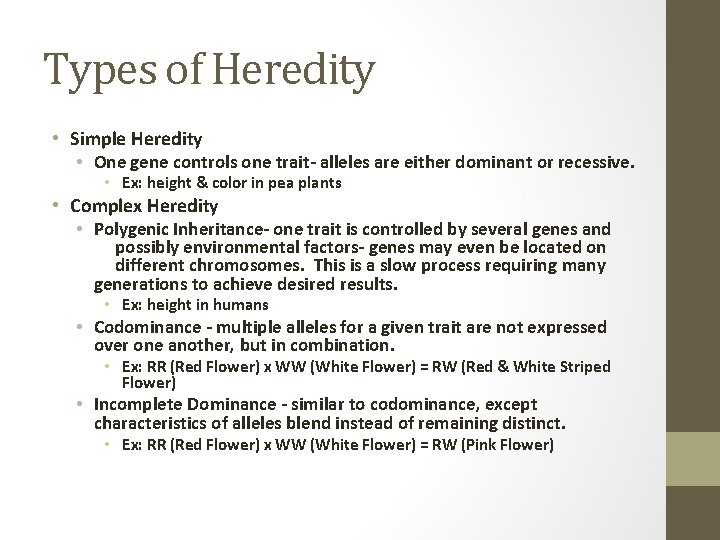
Types of Heredity • Simple Heredity • One gene controls one trait- alleles are either dominant or recessive. • Ex: height & color in pea plants • Complex Heredity • Polygenic Inheritance- one trait is controlled by several genes and possibly environmental factors- genes may even be located on different chromosomes. This is a slow process requiring many generations to achieve desired results. • Ex: height in humans • Codominance - multiple alleles for a given trait are not expressed over one another, but in combination. • Ex: RR (Red Flower) x WW (White Flower) = RW (Red & White Striped Flower) • Incomplete Dominance - similar to codominance, except characteristics of alleles blend instead of remaining distinct. • Ex: RR (Red Flower) x WW (White Flower) = RW (Pink Flower)
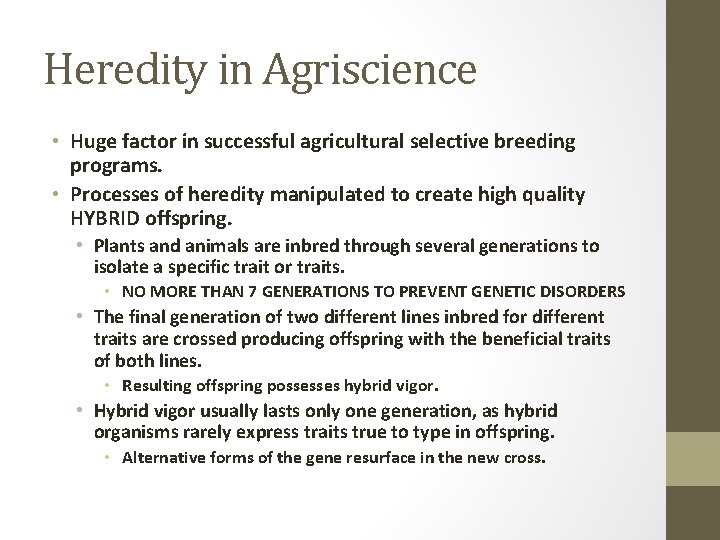
Heredity in Agriscience • Huge factor in successful agricultural selective breeding programs. • Processes of heredity manipulated to create high quality HYBRID offspring. • Plants and animals are inbred through several generations to isolate a specific trait or traits. • NO MORE THAN 7 GENERATIONS TO PREVENT GENETIC DISORDERS • The final generation of two different lines inbred for different traits are crossed producing offspring with the beneficial traits of both lines. • Resulting offspring possesses hybrid vigor. • Hybrid vigor usually lasts only one generation, as hybrid organisms rarely express traits true to type in offspring. • Alternative forms of the gene resurface in the new cross.
- Slides: 16