
Mendelian Genetics 1 Genetic Terminology Heredity passing of
- Slides: 37
Mendelian Genetics 1
Genetic Terminology Heredity – passing of traits from parent to offspring Trait – any characteristic that can be passed from parent to offspring Genetics– study of heredity Gene – a unit of heredity located on a chromosome (one protein) 2 copyright cmassengale
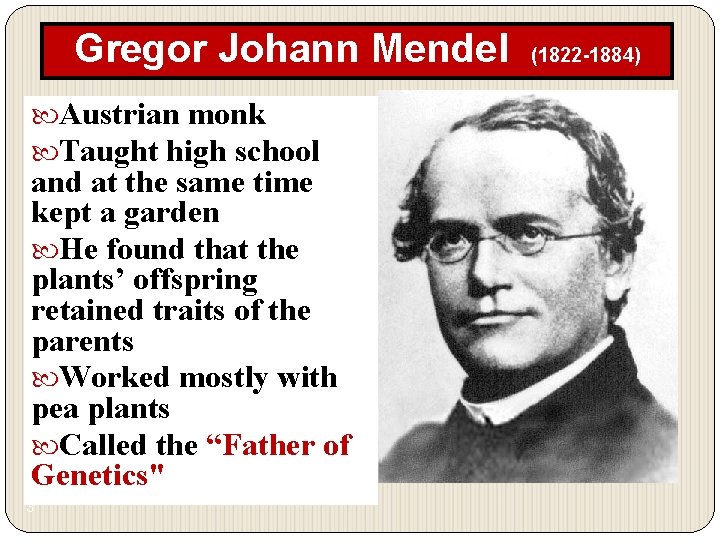
Gregor Johann Mendel (1822 -1884) Austrian monk Taught high school and at the same time kept a garden He found that the plants’ offspring retained traits of the parents Worked mostly with pea plants Called the “Father of Genetics" 3
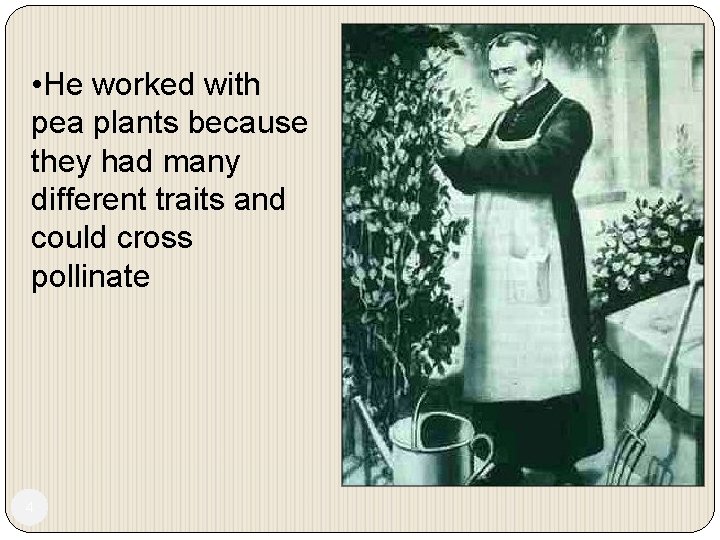
• He worked with pea plants because they had many different traits and could cross pollinate 4
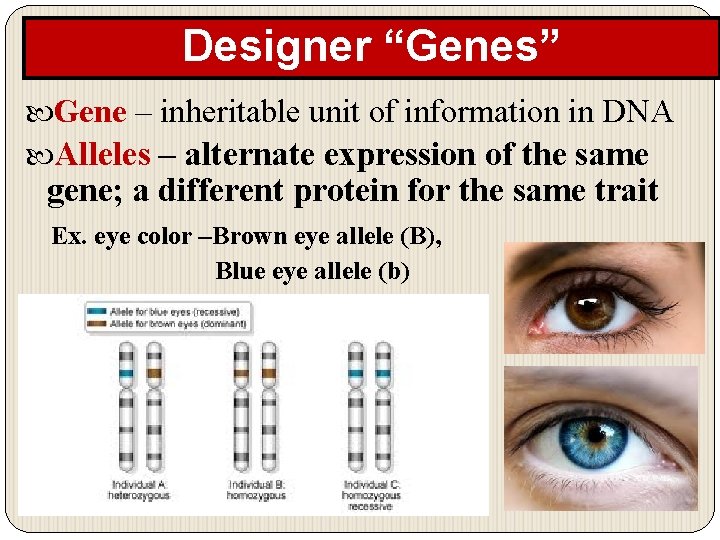
Designer “Genes” Gene – inheritable unit of information in DNA Alleles – alternate expression of the same gene; a different protein for the same trait Ex. eye color –Brown eye allele (B), Blue eye allele (b) 5
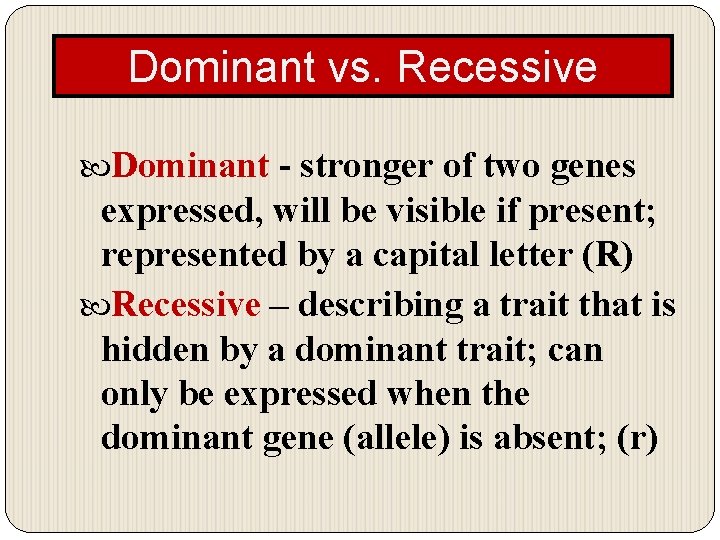
Dominant vs. Recessive Dominant - stronger of two genes expressed, will be visible if present; represented by a capital letter (R) Recessive – describing a trait that is hidden by a dominant trait; can only be expressed when the dominant gene (allele) is absent; (r)
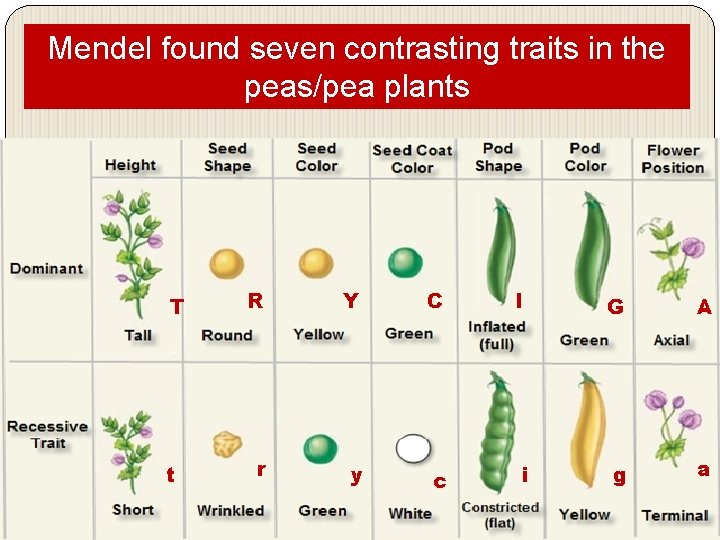
Mendel found seven contrasting traits in the peas/pea plants T t 7 R Y C I G A r y c i g a
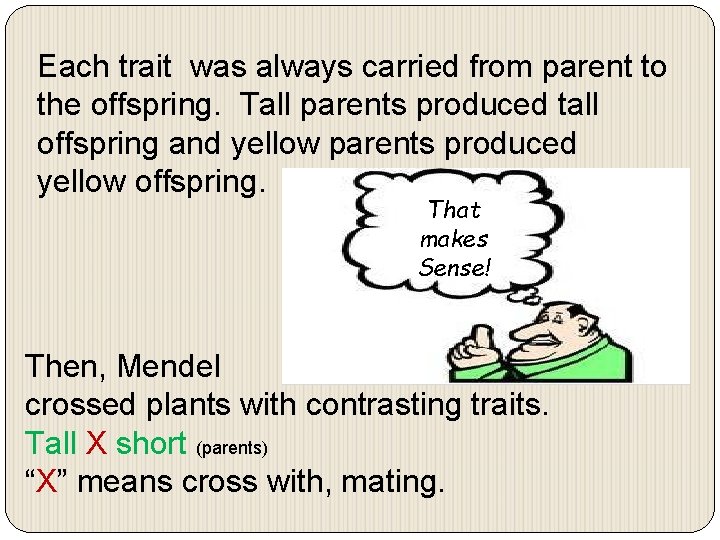
Each trait was always carried from parent to the offspring. Tall parents produced tall offspring and yellow parents produced yellow offspring. That makes Sense! Then, Mendel crossed plants with contrasting traits. Tall X short (parents) “X” means cross with, mating.
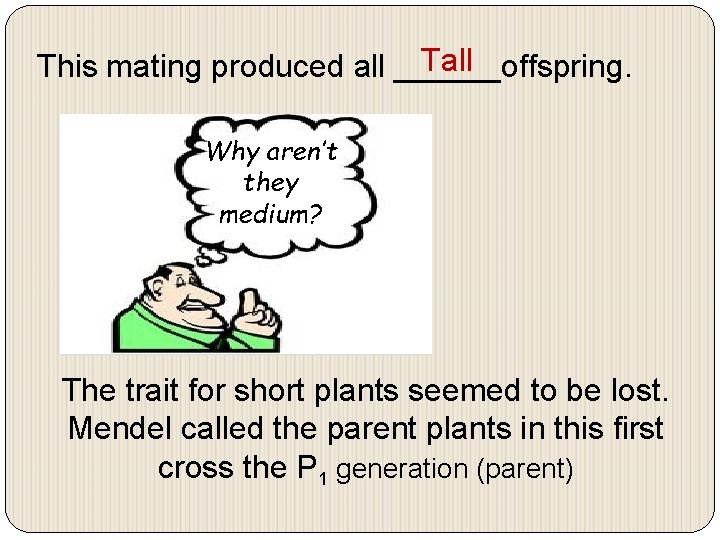
Tall This mating produced all ______offspring. Why aren’t they medium? The trait for short plants seemed to be lost. Mendel called the parent plants in this first cross the P 1 generation (parent)
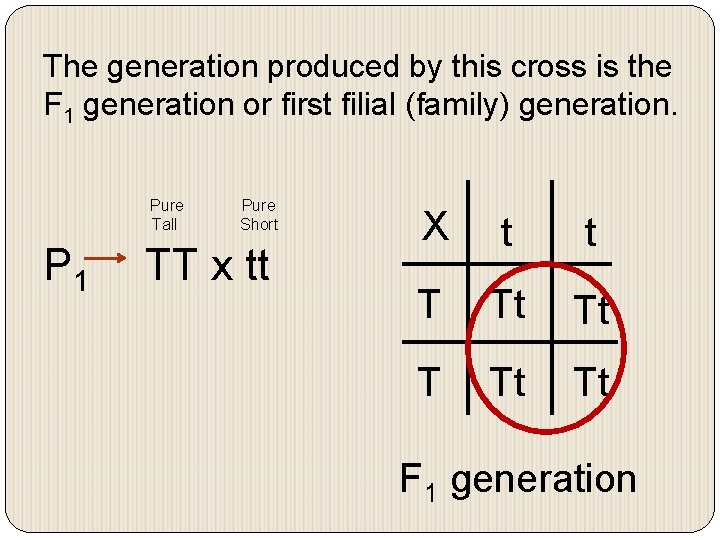
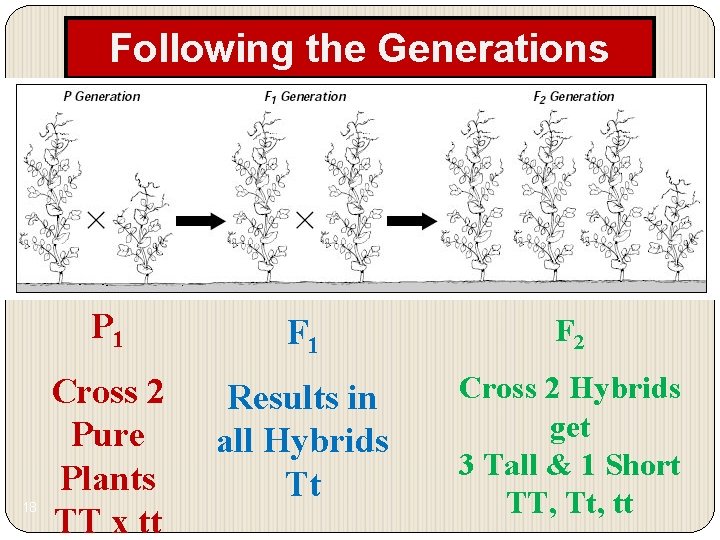
The generation produced by this cross is the F 1 generation or first filial (family) generation. Pure Tall Short P 1 TT x tt X t t T Tt Tt F 1 generation
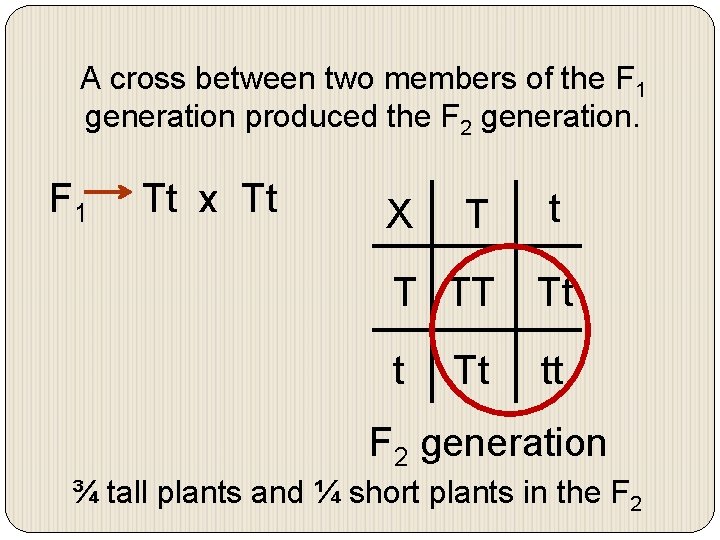
A cross between two members of the F 1 generation produced the F 2 generation. F 1 Tt x Tt X T t T TT Tt t tt Tt F 2 generation ¾ tall plants and ¼ short plants in the F 2
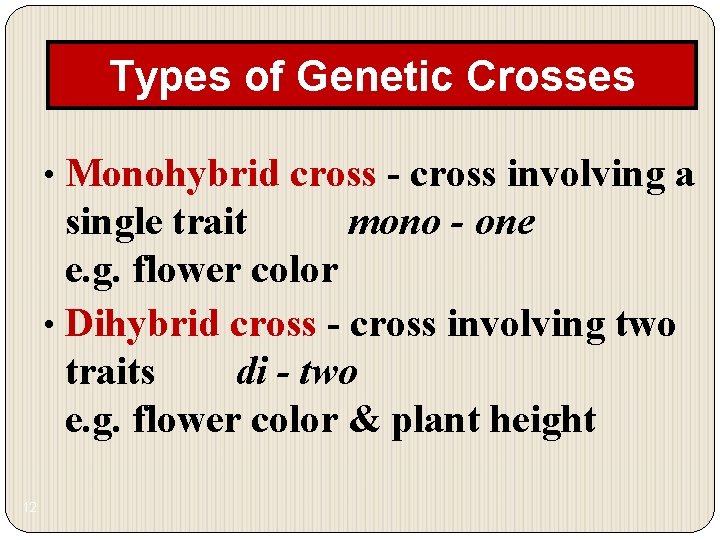
Types of Genetic Crosses • Monohybrid cross - cross involving a single trait mono - one e. g. flower color • Dihybrid cross - cross involving two traits di - two e. g. flower color & plant height 12
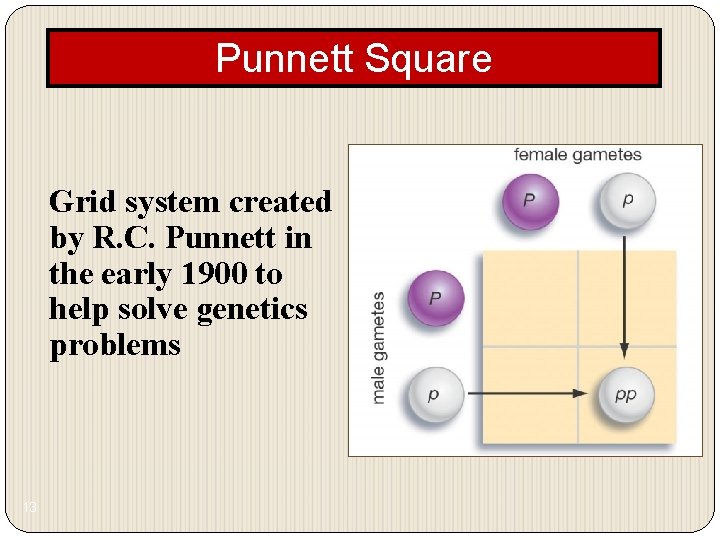
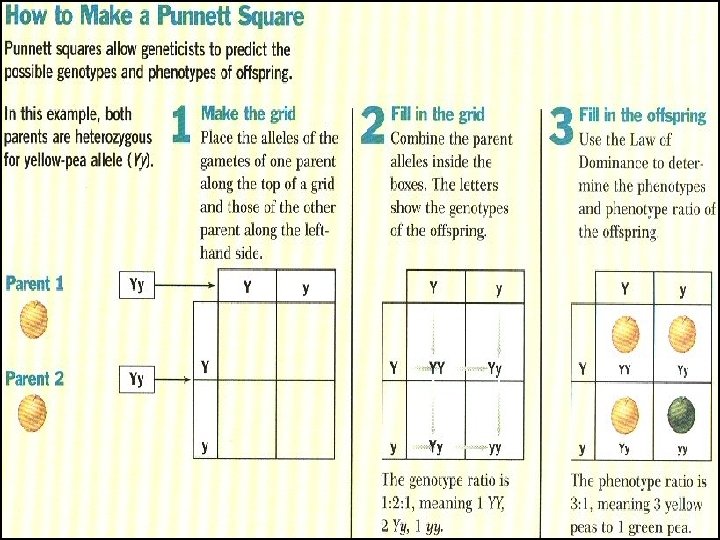
Punnett Square Grid system created by R. C. Punnett in the early 1900 to help solve genetics problems 13
14
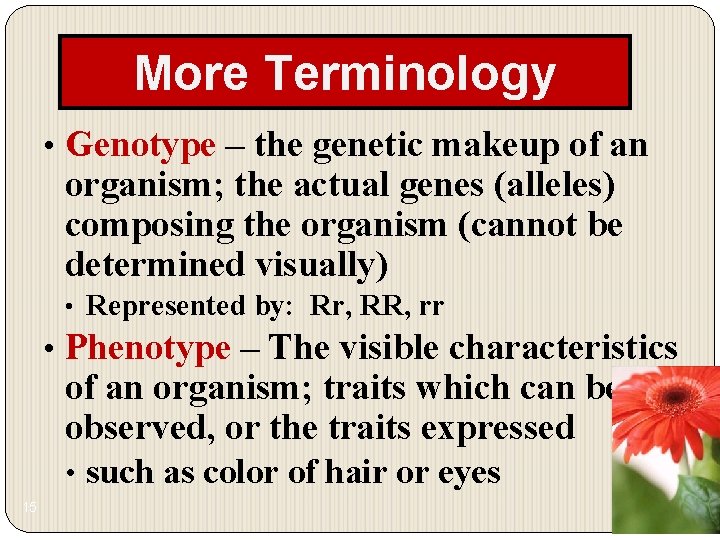
More Terminology • Genotype – the genetic makeup of an organism; the actual genes (alleles) composing the organism (cannot be determined visually) • Represented by: Rr, RR, rr • Phenotype – The visible characteristics of an organism; traits which can be observed, or the traits expressed • such as color of hair or eyes 15
More Terminology Genotypes can be homozygous or heterozygous for a specific trait. Homozygous (pure) – the gene pair or alleles are identical (AA, aa, BB) homo-Latin for same Heterozygous (hybrid) – the gene pair or alleles are different (Aa, Bb) hetero-Latin for different The capital letter in a heterozygous pair is written first. Is it hetero or homo? Look at the case of the
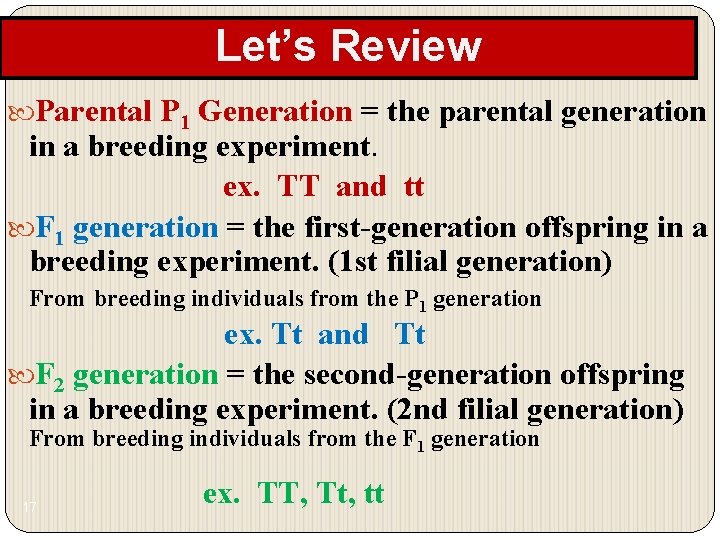
Let’s Review Parental P 1 Generation = the parental generation in a breeding experiment. ex. TT and tt F 1 generation = the first-generation offspring in a breeding experiment. (1 st filial generation) From breeding individuals from the P 1 generation ex. Tt and Tt F 2 generation = the second-generation offspring in a breeding experiment. (2 nd filial generation) From breeding individuals from the F 1 generation 17 ex. TT, Tt, tt
Following the Generations 18 P 1 F 2 Cross 2 Pure Plants TT x tt Results in all Hybrids Tt Cross 2 Hybrids get 3 Tall & 1 Short TT, Tt, tt
Solving Monohybrid Crosses 19
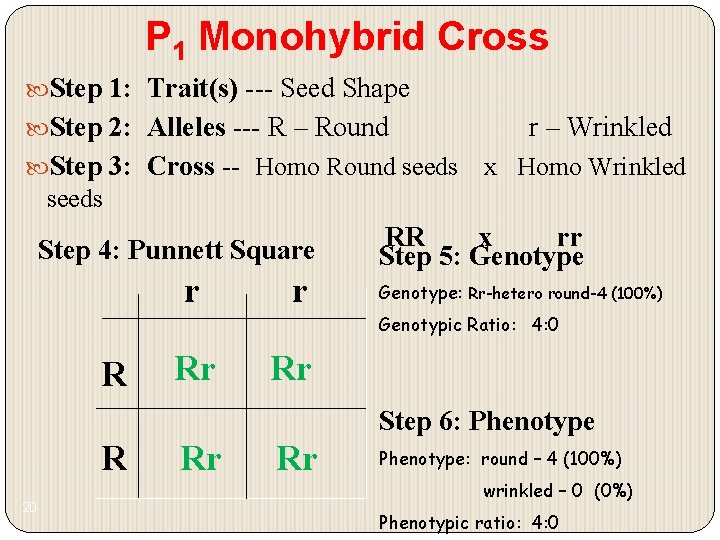
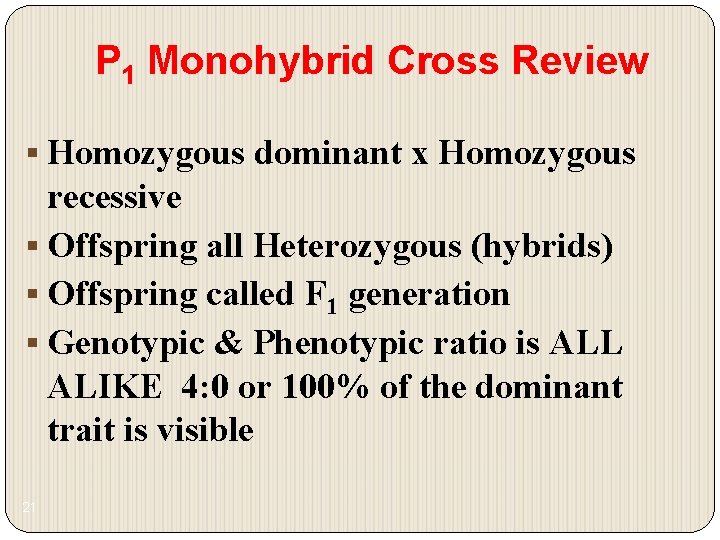
P 1 Monohybrid Cross Step 1: Trait(s) --- Seed Shape Step 2: Alleles --- R – Round Step 3: Cross -- Homo Round seeds r – Wrinkled x Homo Wrinkled seeds Step 4: Punnett Square r r RR x rr Step 5: Genotype: Rr-hetero round-4 (100%) Genotypic Ratio: 4: 0 R Rr Rr Step 6: Phenotype R 20 Rr Rr Phenotype: round – 4 (100%) wrinkled – 0 (0%) Phenotypic ratio: 4: 0
P 1 Monohybrid Cross Review § Homozygous dominant x Homozygous recessive § Offspring all Heterozygous (hybrids) § Offspring called F 1 generation § Genotypic & Phenotypic ratio is ALL ALIKE 4: 0 or 100% of the dominant trait is visible 21
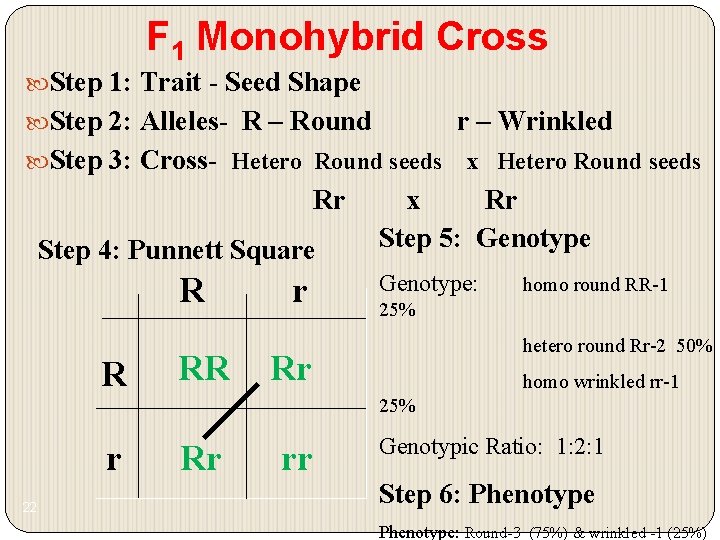
F 1 Monohybrid Cross Step 1: Trait - Seed Shape Step 2: Alleles- R – Round r – Wrinkled Step 3: Cross- Hetero Round seeds x Hetero Round seeds Rr Step 4: Punnett Square R R r 22 RR r x Rr Step 5: Genotype: homo round RR-1 25% hetero round Rr-2 50% Rr homo wrinkled rr-1 25% Rr rr Genotypic Ratio: 1: 2: 1 Step 6: Phenotype: Round-3 (75%) & wrinkled -1 (25%)
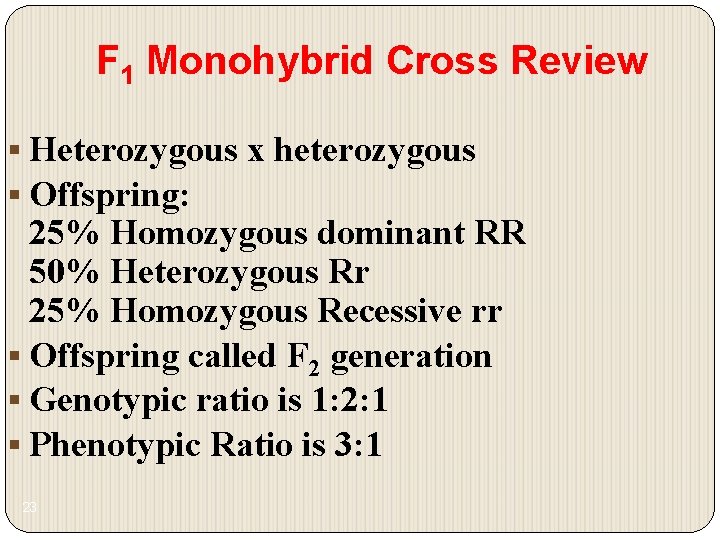
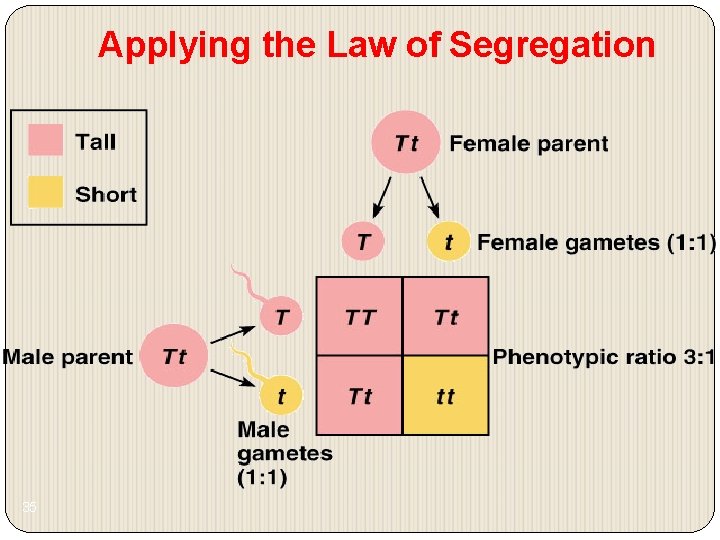
F 1 Monohybrid Cross Review § Heterozygous x heterozygous § Offspring: 25% Homozygous dominant RR 50% Heterozygous Rr 25% Homozygous Recessive rr § Offspring called F 2 generation § Genotypic ratio is 1: 2: 1 § Phenotypic Ratio is 3: 1 23
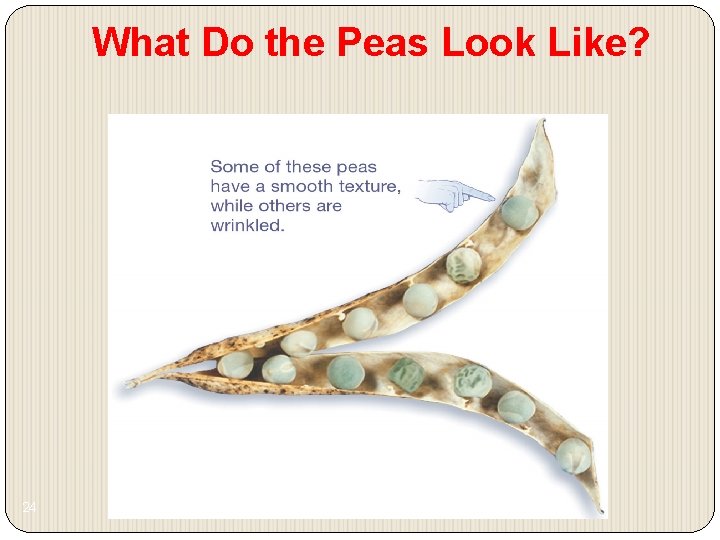
What Do the Peas Look Like? 24
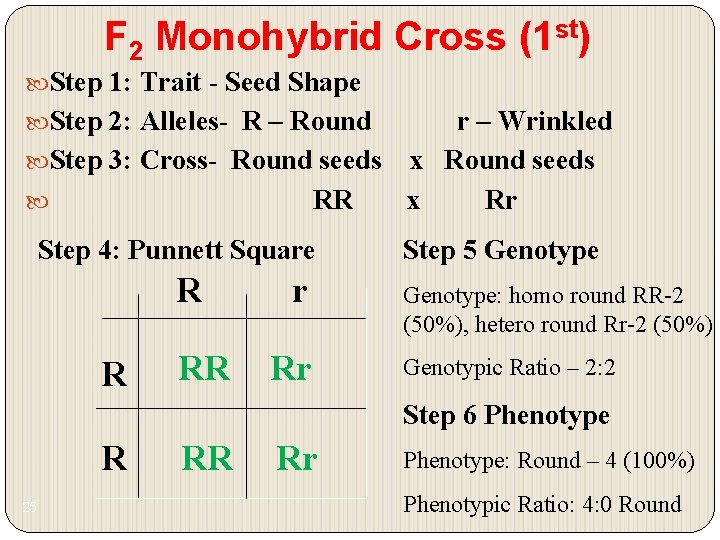
F 2 Monohybrid Cross (1 st) Step 1: Trait - Seed Shape Step 2: Alleles- R – Round r – Wrinkled Step 3: Cross- Round seeds x Round seeds RR x Rr Step 4: Punnett Square R R RR r Rr Step 5 Genotype: homo round RR-2 (50%), hetero round Rr-2 (50%) Genotypic Ratio – 2: 2 Step 6 Phenotype R 25 RR Rr Phenotype: Round – 4 (100%) Phenotypic Ratio: 4: 0 Round
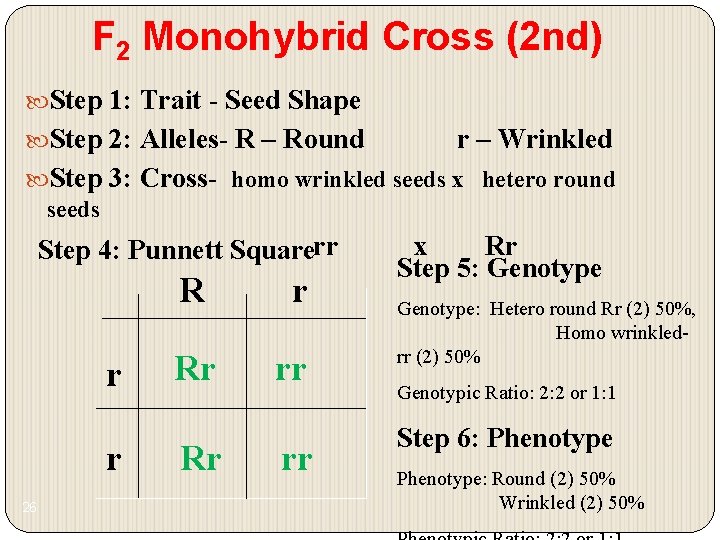
F 2 Monohybrid Cross (2 nd) Step 1: Trait - Seed Shape Step 2: Alleles- R – Round r – Wrinkled Step 3: Cross- homo wrinkled seeds x hetero round seeds Step 4: Punnett Squarerr r r 26 R r Rr rr x Rr Step 5: Genotype: Hetero round Rr (2) 50%, Homo wrinkledrr (2) 50% Genotypic Ratio: 2: 2 or 1: 1 Step 6: Phenotype: Round (2) 50% Wrinkled (2) 50%
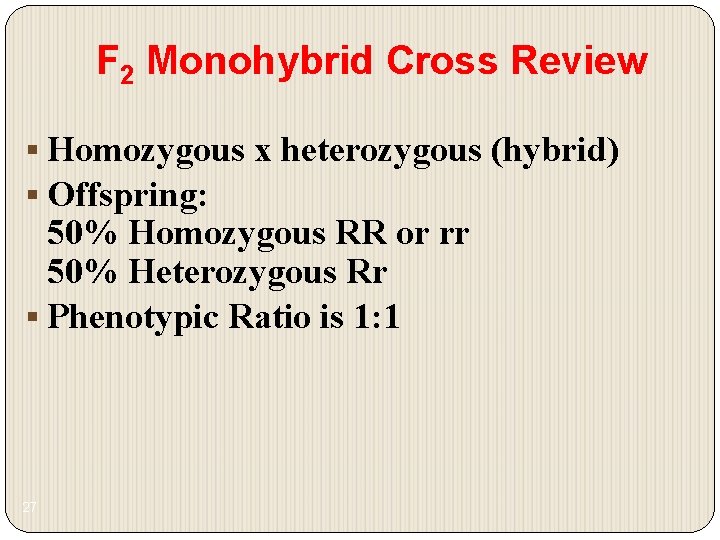
F 2 Monohybrid Cross Review § Homozygous x heterozygous (hybrid) § Offspring: 50% Homozygous RR or rr 50% Heterozygous Rr § Phenotypic Ratio is 1: 1 27
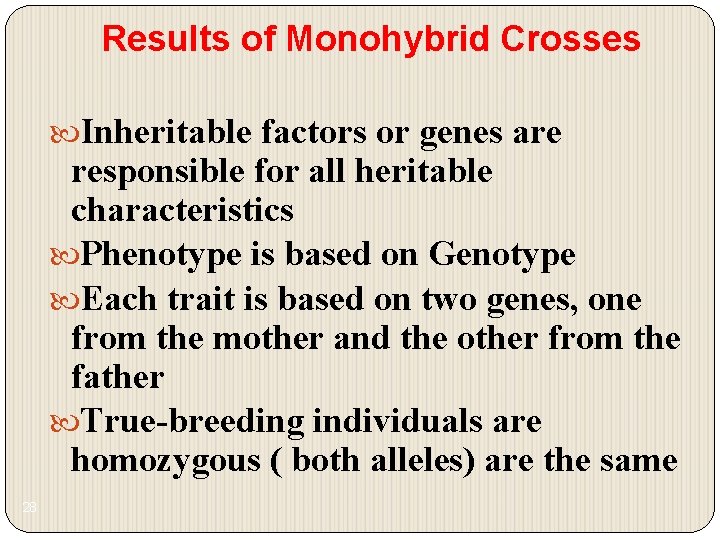
Results of Monohybrid Crosses Inheritable factors or genes are responsible for all heritable characteristics Phenotype is based on Genotype Each trait is based on two genes, one from the mother and the other from the father True-breeding individuals are homozygous ( both alleles) are the same 28
Mendel’s Three Laws of Inheritance
Mendel’s Hypothesis For each inherited trait, an individual has two copies of the gene – one from each parent There alternate versions of genes, or alleles. (Pea flower color can be purple or white. ) When two different alleles occur together, one of them may be completely expressed, while the other may have no observable effect on the organism’s appearance. (Dominant vs Recessive) 30
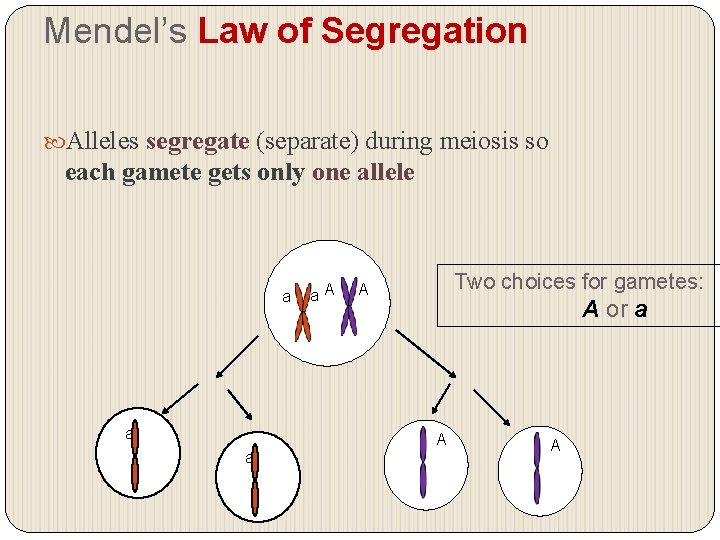
Mendel’s Hypothesis continued When gametes are formed, the alleles for each gene in an individual separate independently of one another. Thus, gametes only carry one allele for each inherited trait. When gametes unite during fertilization, each gamete contributes one allele.
Laws of Inheritance Mendel’s hypothesis led to laws and principles. Principle of Dominance Law of Segregation Law of Independent Assortment (to be discussed later)
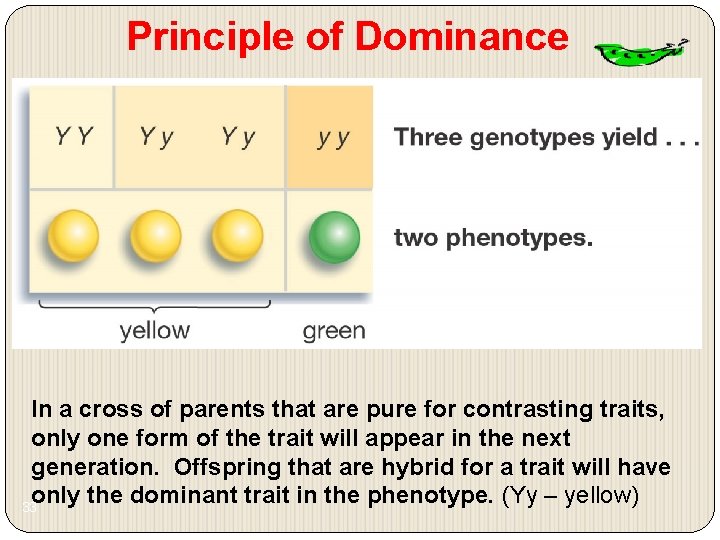
Principle of Dominance In a cross of parents that are pure for contrasting traits, only one form of the trait will appear in the next generation. Offspring that are hybrid for a trait will have only the dominant trait in the phenotype. (Yy – yellow) 33
Law of Segregation During the formation of gametes (eggs or sperm - Meiosis), the two alleles responsible for a trait separate from each other. Alleles for a trait are then "recombined" at fertilization, producing the genotype for the traits of the offspring. 34
Applying the Law of Segregation 35
Mendel’s Law of Segregation Alleles segregate (separate) during meiosis so each gamete gets only one allele a a a. A Two choices for gametes: A A or a A
Mendel’s Law of Independent Assortment To be discussed later…