
Mendeleev In 1869 Dmitri Ivanovitch Mendelev created the

- Slides: 19
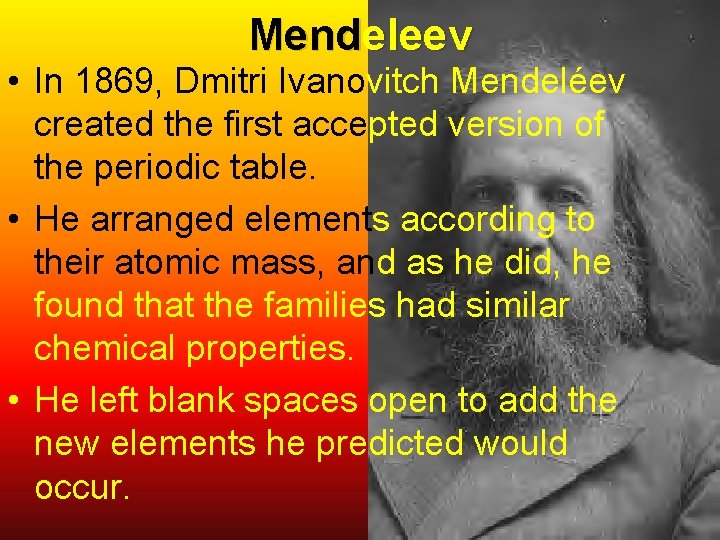
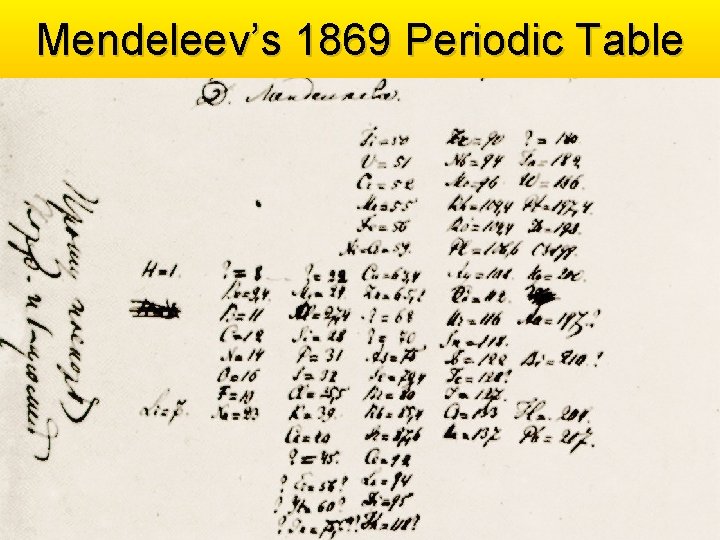
Mendeleev • In 1869, Dmitri Ivanovitch Mendeléev created the first accepted version of the periodic table. • He arranged elements according to their atomic mass, and as he did, he found that the families had similar chemical properties. • He left blank spaces open to add the new elements he predicted would occur.
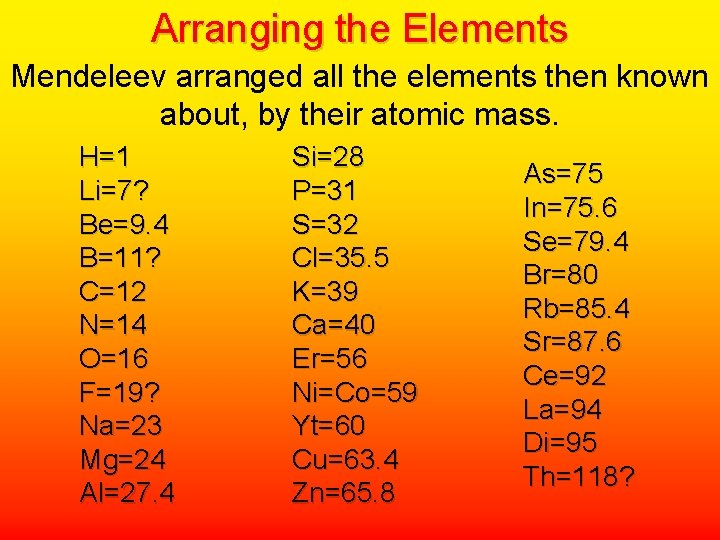
Arranging the Elements Mendeleev arranged all the elements then known about, by their atomic mass. H=1 Li=7? Be=9. 4 B=11? C=12 N=14 O=16 F=19? Na=23 Mg=24 Al=27. 4 Si=28 P=31 S=32 Cl=35. 5 K=39 Ca=40 Er=56 Ni=Co=59 Yt=60 Cu=63. 4 Zn=65. 8 As=75 In=75. 6 Se=79. 4 Br=80 Rb=85. 4 Sr=87. 6 Ce=92 La=94 Di=95 Th=118?
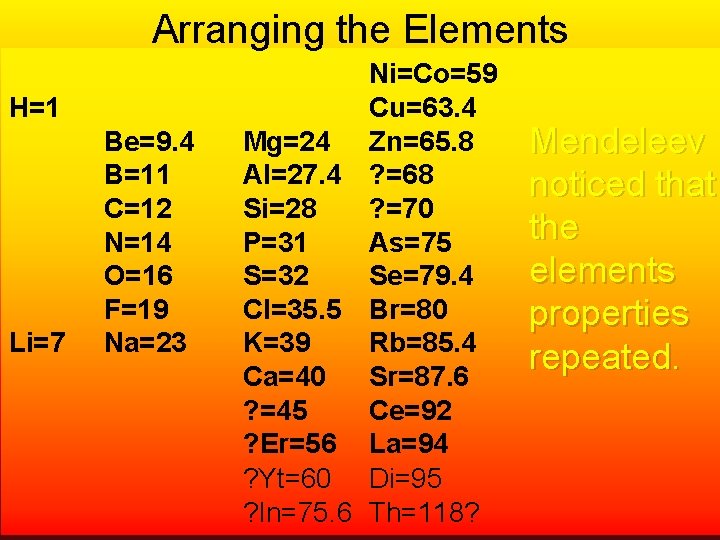
Arranging the Elements H=1 Li=7 Be=9. 4 B=11 C=12 N=14 O=16 F=19 Na=23 Ni=Co=59 Cu=63. 4 Mg=24 Zn=65. 8 Al=27. 4 ? =68 Si=28 ? =70 P=31 As=75 S=32 Se=79. 4 Cl=35. 5 Br=80 K=39 Rb=85. 4 Ca=40 Sr=87. 6 ? =45 Ce=92 ? Er=56 La=94 ? Yt=60 Di=95 ? In=75. 6 Th=118? Mendeleev noticed that the elements properties repeated.
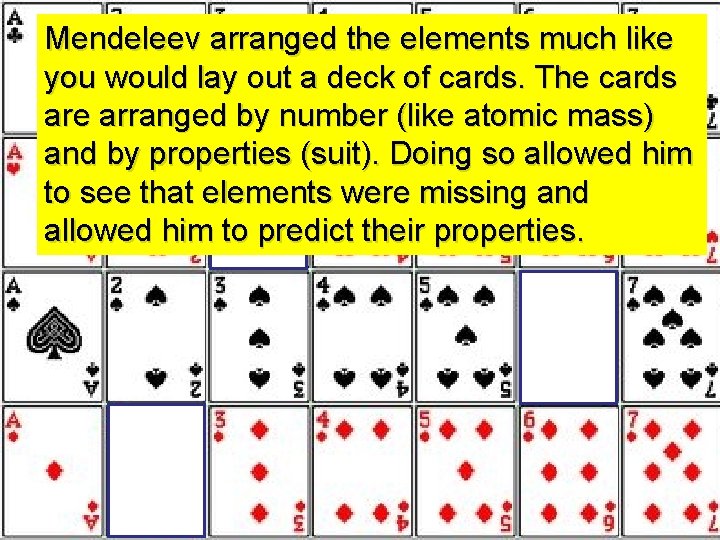
Mendeleev arranged the elements much like you would lay out a deck of cards. The cards are arranged by number (like atomic mass) and by properties (suit). Doing so allowed him to see that elements were missing and allowed him to predict their properties.
Mendeleev’s 1869 Periodic Table
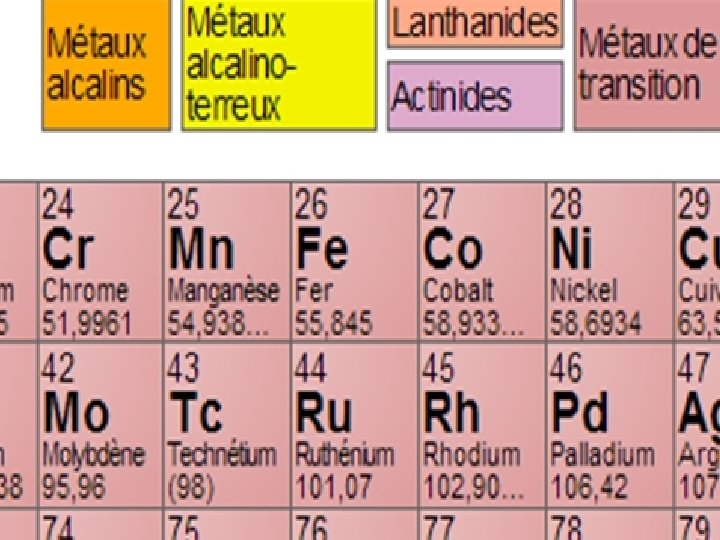
Japanese Periodic Table
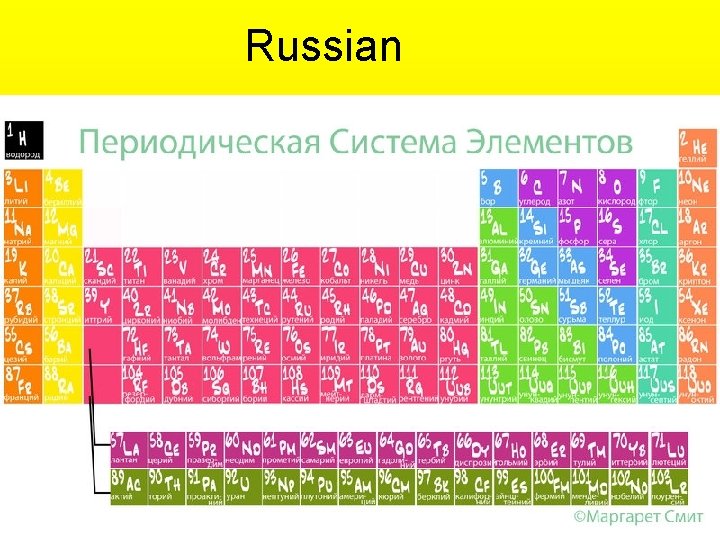
Russian
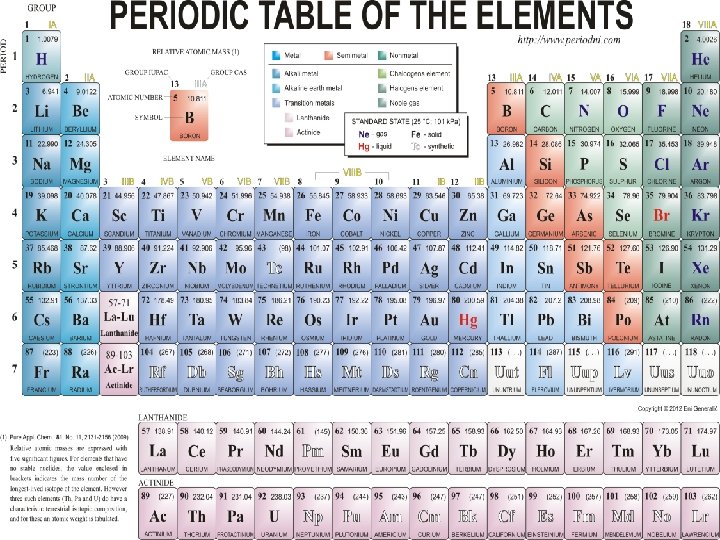
Universal Design The Periodic Table is standard design that can be read and understand worldwide.
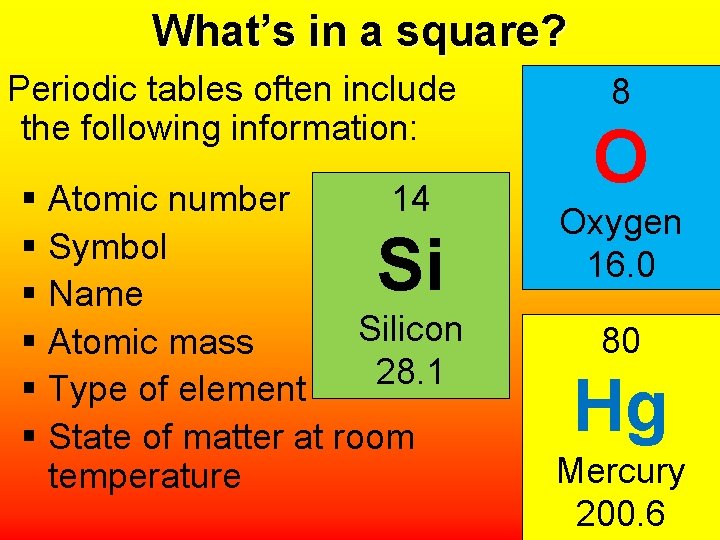
What’s in a square? Periodic tables often include the following information: § Atomic number 14 § Symbol § Name Silicon § Atomic mass 28. 1 § Type of element § State of matter at room temperature Si 8 O Oxygen 16. 0 80 Hg Mercury 200. 6
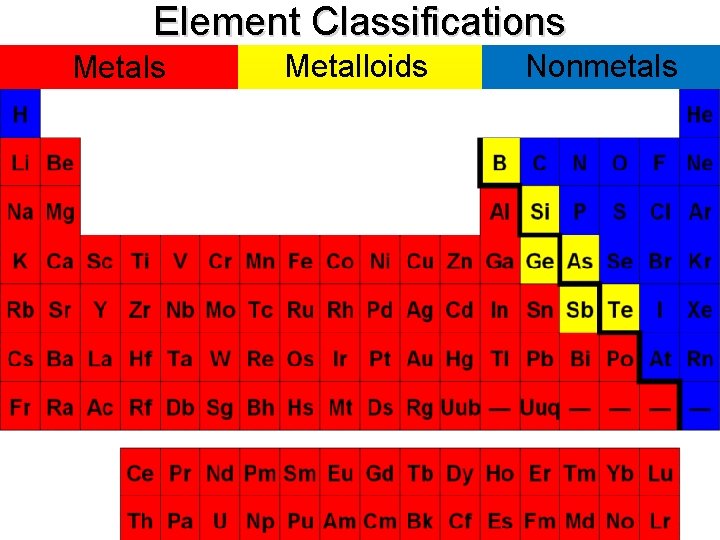
Element Classifications Metalloids Nonmetals
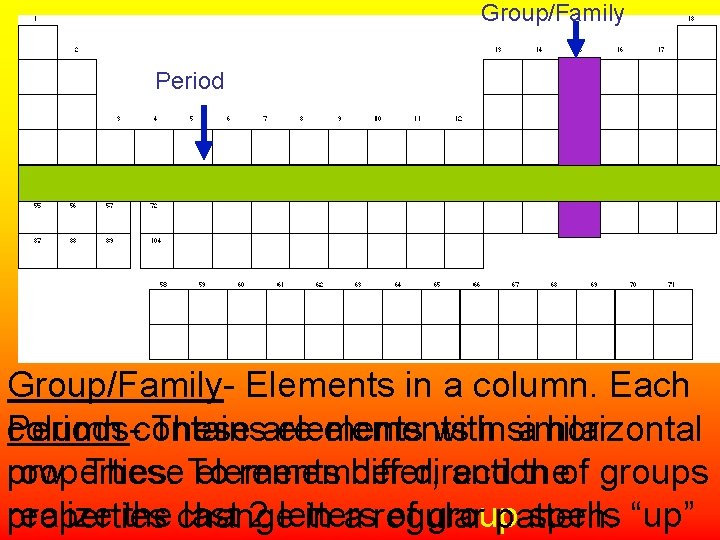
Group/Family Period Group/Family- Elements in a column. Each column contains elements withinsimilar Periods. These are elements a horizontal properties. remember direction row. These To elements differ, and theof groups realize the change last 2 letters of group spells “up” properties in a regular pattern.
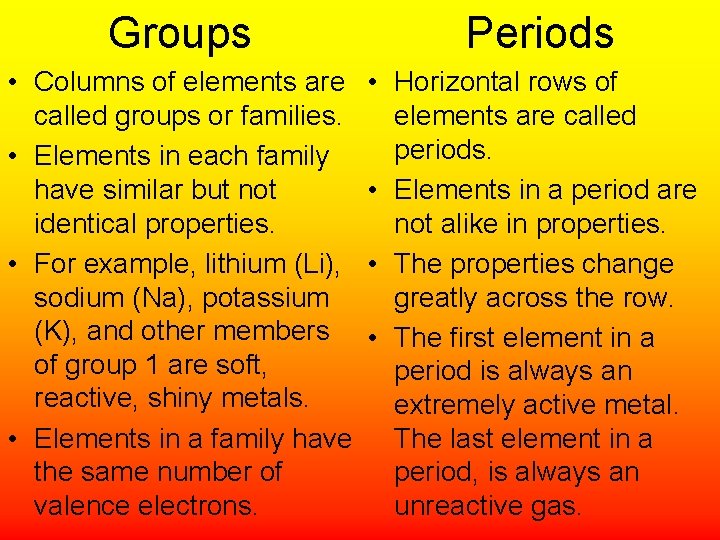
Groups Periods • Columns of elements are called groups or families. • Elements in each family have similar but not identical properties. • For example, lithium (Li), sodium (Na), potassium (K), and other members of group 1 are soft, reactive, shiny metals. • Elements in a family have the same number of valence electrons. • Horizontal rows of elements are called periods. • Elements in a period are not alike in properties. • The properties change greatly across the row. • The first element in a period is always an extremely active metal. The last element in a period, is always an unreactive gas.
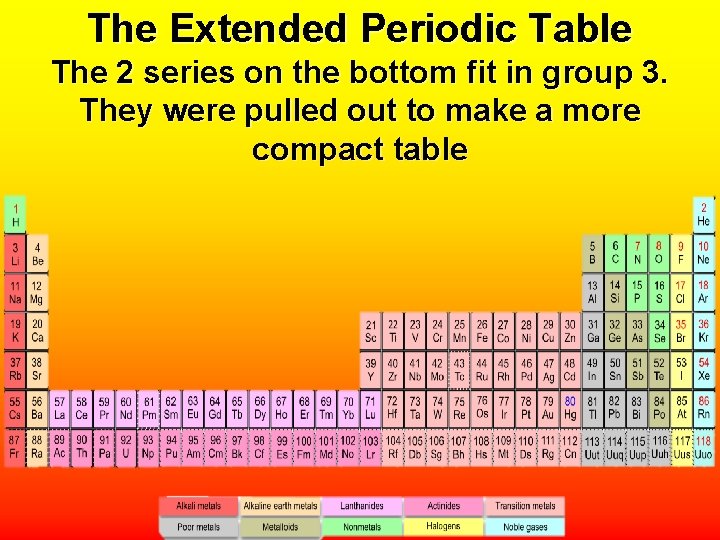
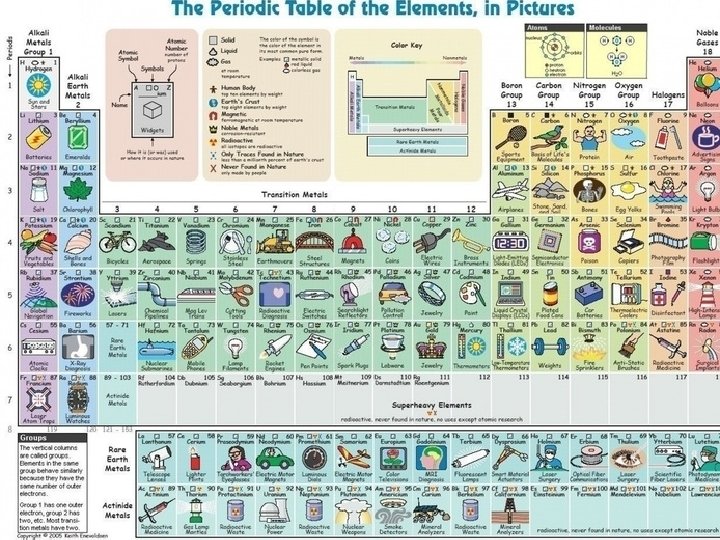
The Extended Periodic Table The 2 series on the bottom fit in group 3. They were pulled out to make a more compact table
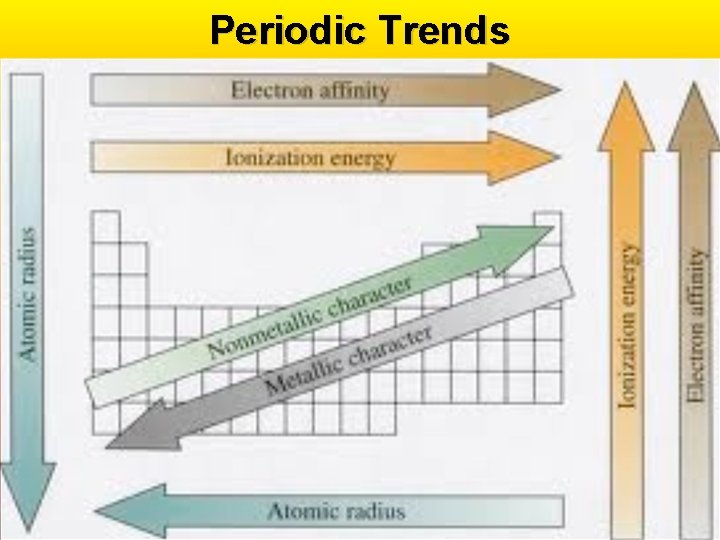
Periodic Trends
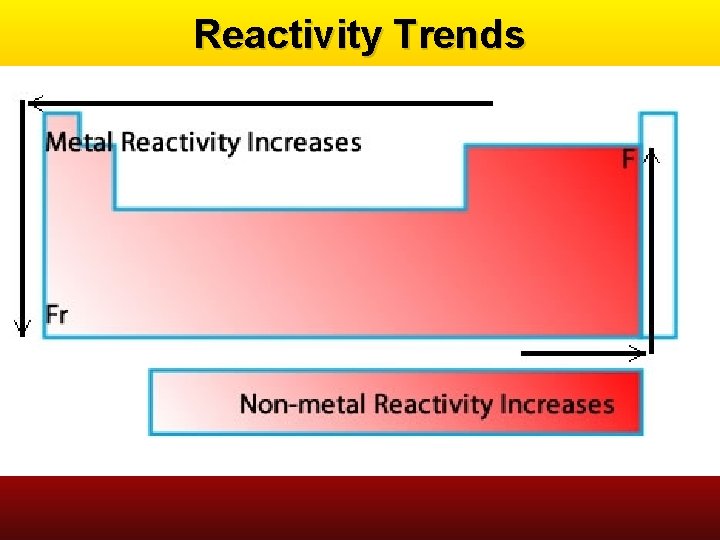
Reactivity Trends
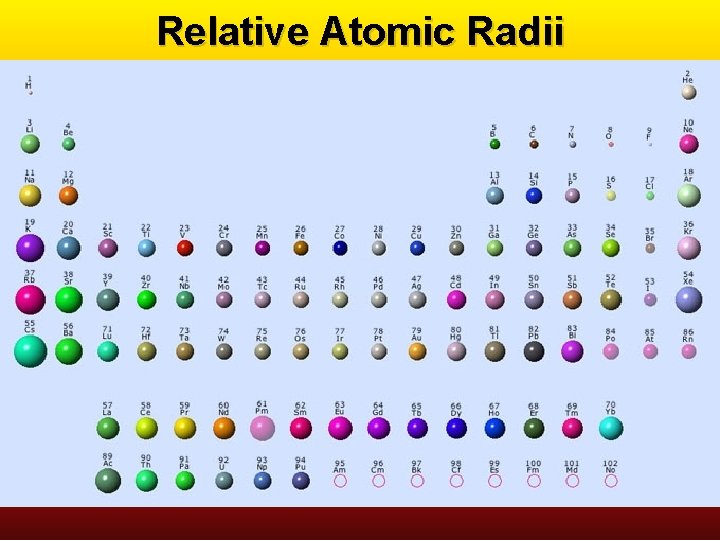
Relative Atomic Radii