
Mendel Genetics Gregor Mendel Modern genetics began in
Mendel & Genetics
Gregor Mendel • Modern genetics began in the mid-1800 s in an abbey garden, where a monk named Gregor Mendel documented inheritance in peas – used experimental method – used quantitative analysis • collected data & counted them – excellent example of scientific method
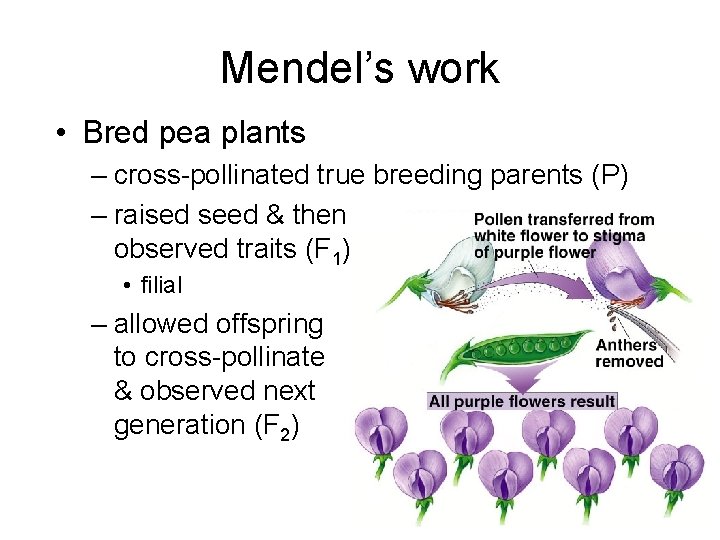
Mendel’s work • Bred pea plants – cross-pollinated true breeding parents (P) – raised seed & then observed traits (F 1) • filial – allowed offspring to cross-pollinate & observed next generation (F 2)
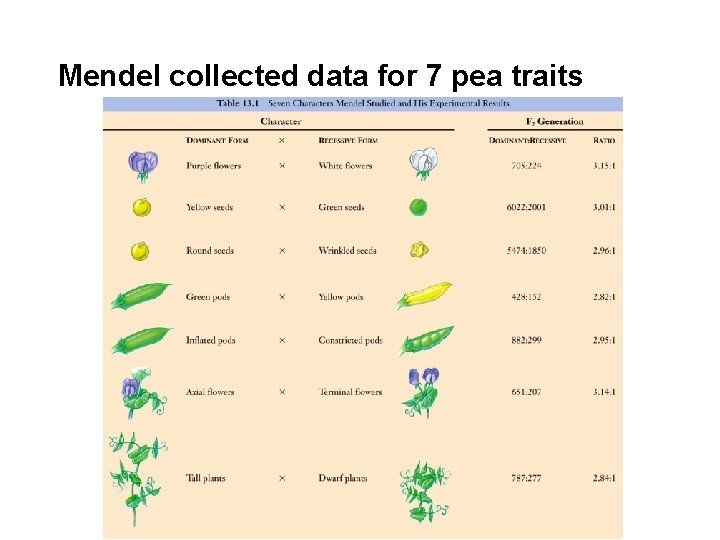
Mendel collected data for 7 pea traits

Looking closer at Mendel’s work P true-breeding purple-flower peas X white-flower peas F 1 100% purple-flower peas generation (hybrids) 100% self-pollinate F 2 generation 75% �� 25% purple-flower peas white-flower peas 3: 1
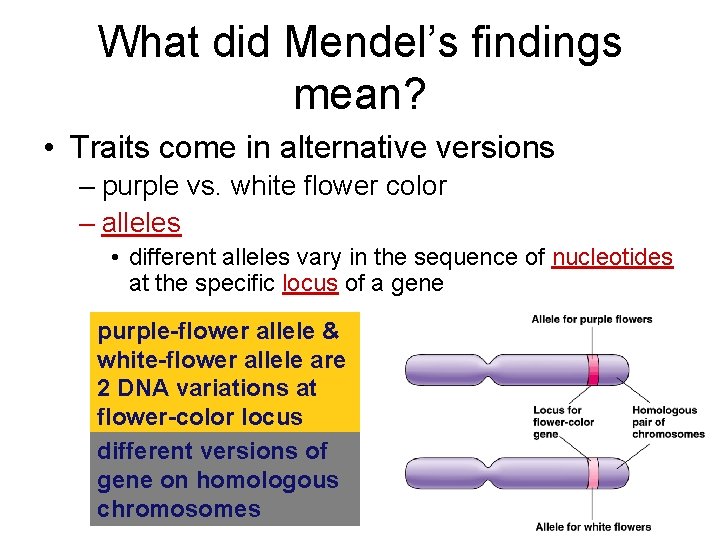
What did Mendel’s findings mean? • Traits come in alternative versions – purple vs. white flower color – alleles • different alleles vary in the sequence of nucleotides at the specific locus of a gene purple-flower allele & white-flower allele are 2 DNA variations at flower-color locus different versions of gene on homologous chromosomes
Traits are inherited as discrete units • For each characteristic, an organism inherits 2 alleles, 1 from each parent – diploid organism • inherits 2 sets of chromosomes, 1 from each parent • homologous chromosomes • like having 2 editions of encyclopedia – Encyclopedia Britannica – Encyclopedia Americana
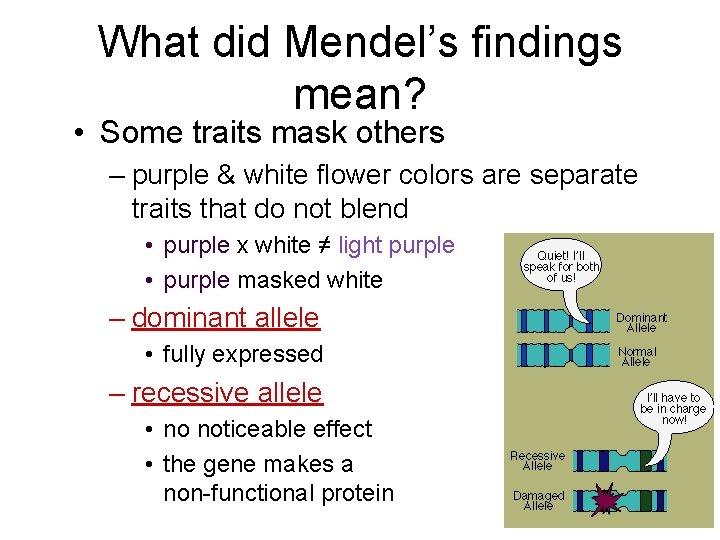
What did Mendel’s findings mean? • Some traits mask others – purple & white flower colors are separate traits that do not blend • purple x white ≠ light purple • purple masked white – dominant allele • fully expressed – recessive allele • no noticeable effect • the gene makes a non-functional protein
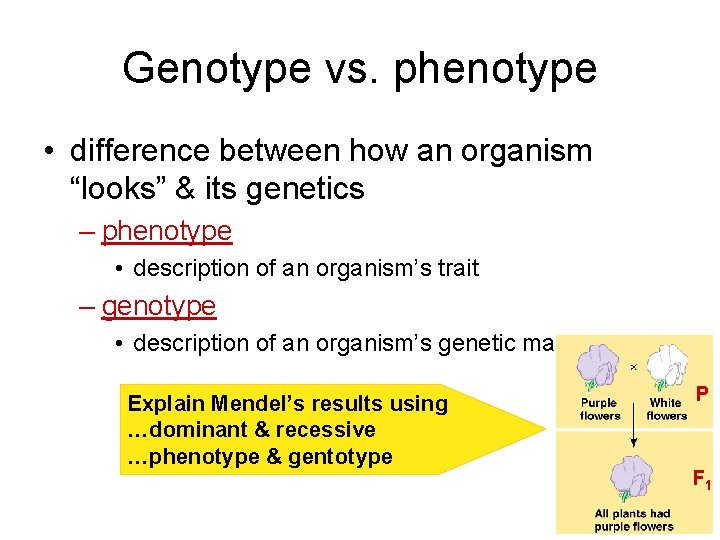
Genotype vs. phenotype • difference between how an organism “looks” & its genetics – phenotype • description of an organism’s trait – genotype • description of an organism’s genetic makeup Explain Mendel’s results using …dominant & recessive …phenotype & gentotype P F 1
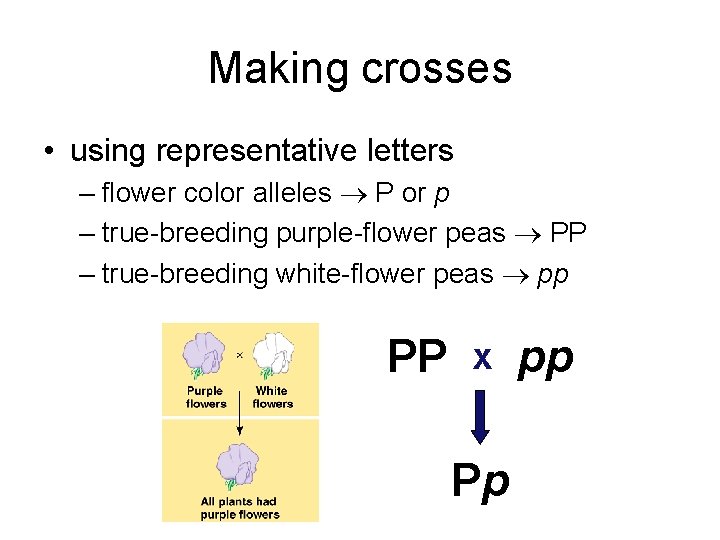
Making crosses • using representative letters – flower color alleles P or p – true-breeding purple-flower peas PP – true-breeding white-flower peas pp PP x pp Pp
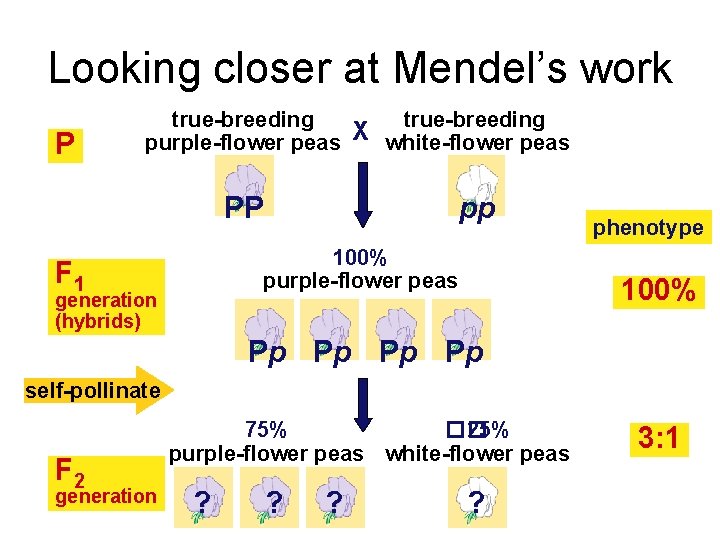
Looking closer at Mendel’s work P true-breeding purple-flower peas X white-flower peas PP pp 100% purple-flower peas F 1 generation (hybrids) phenotype 100% Pp Pp self-pollinate F 2 generation 75% �� 25% purple-flower peas white-flower peas ? ? 3: 1
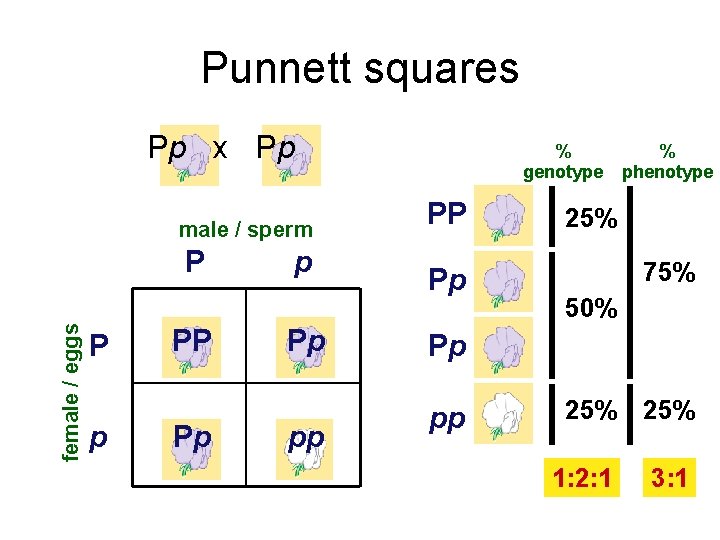
Punnett squares Pp x Pp male / sperm female / eggs P P p PP Pp pp % genotype PP Pp % phenotype 25% 75% 50% Pp pp 25% 1: 2: 1 3: 1
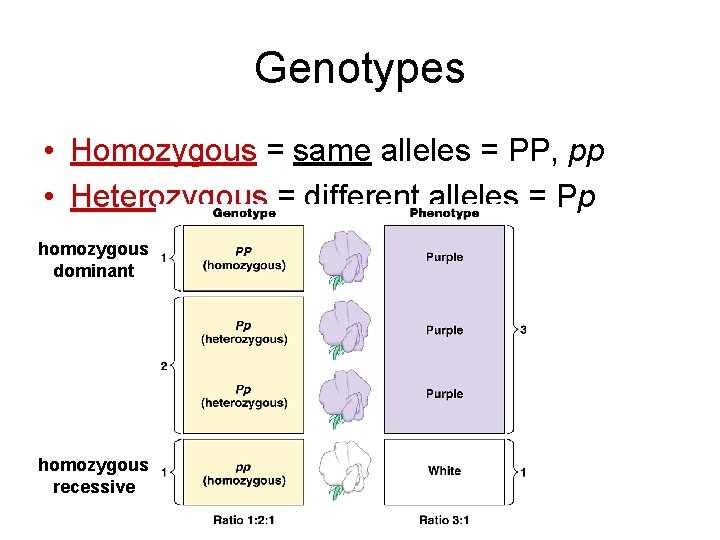
Genotypes • Homozygous = same alleles = PP, pp • Heterozygous = different alleles = Pp homozygous dominant homozygous recessive
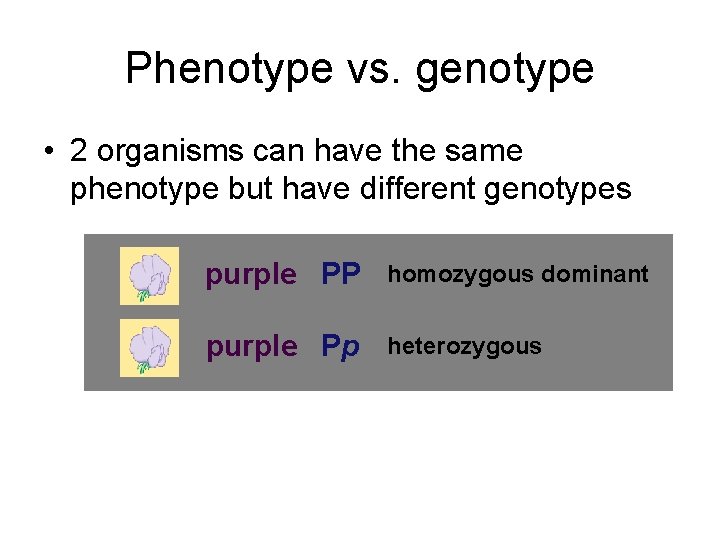
Phenotype vs. genotype • 2 organisms can have the same phenotype but have different genotypes purple PP homozygous dominant purple Pp heterozygous
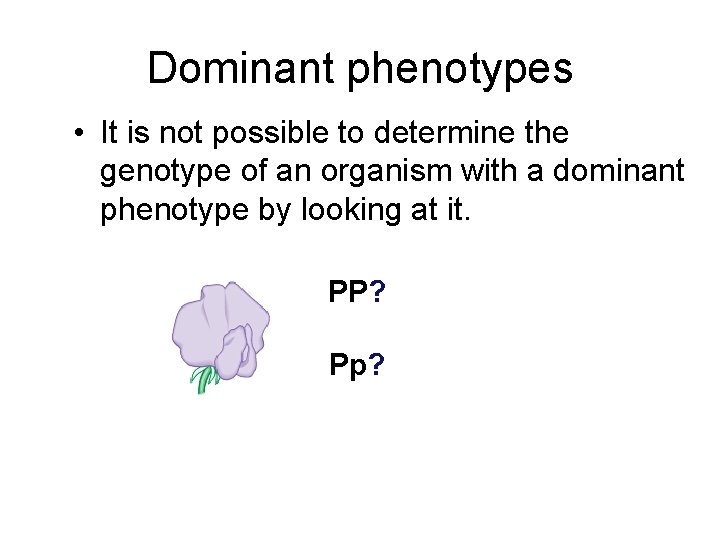
Dominant phenotypes • It is not possible to determine the genotype of an organism with a dominant phenotype by looking at it. PP? Pp?
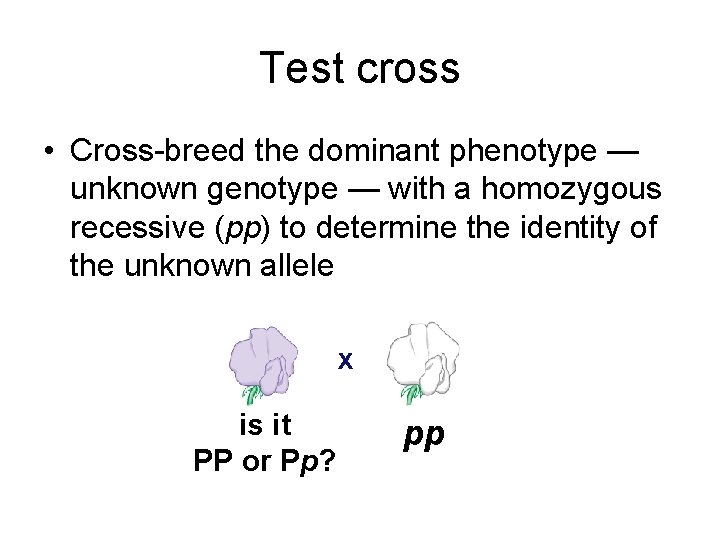
Test cross • Cross-breed the dominant phenotype — unknown genotype — with a homozygous recessive (pp) to determine the identity of the unknown allele x is it PP or Pp? pp
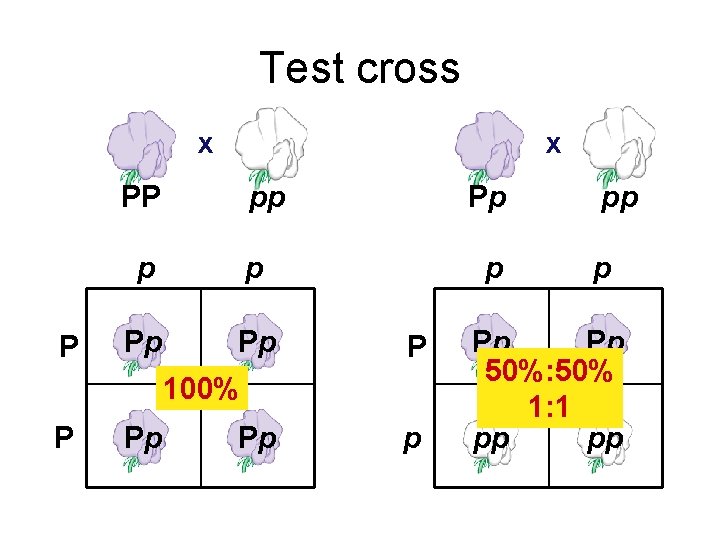
Test cross x x PP P pp p p Pp Pp Pp p P 100% P Pp Pp p pp p Pp Pp 50%: 50% 1: 1 pp pp
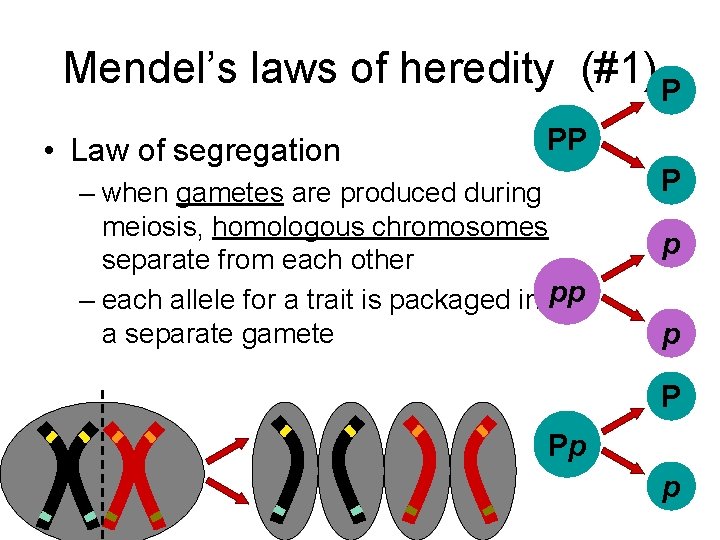
Mendel’s laws of heredity (#1) P • Law of segregation PP – when gametes are produced during meiosis, homologous chromosomes separate from each other pp – each allele for a trait is packaged into a separate gamete P p p P Pp p
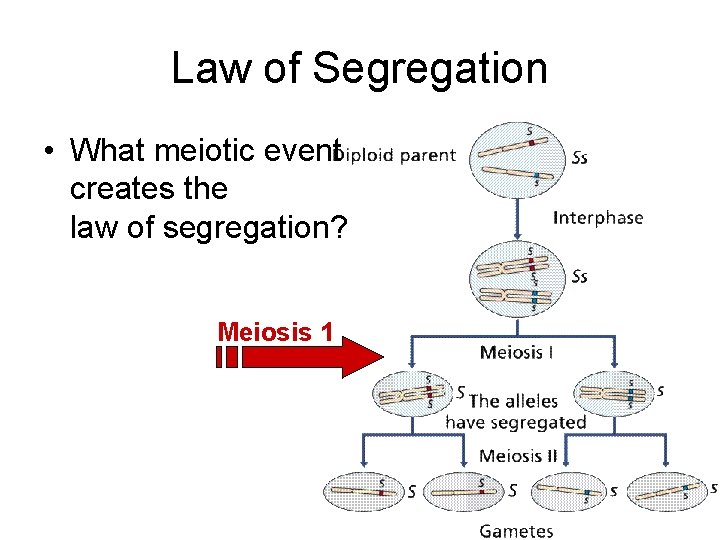
Law of Segregation • What meiotic event creates the law of segregation? Meiosis 1
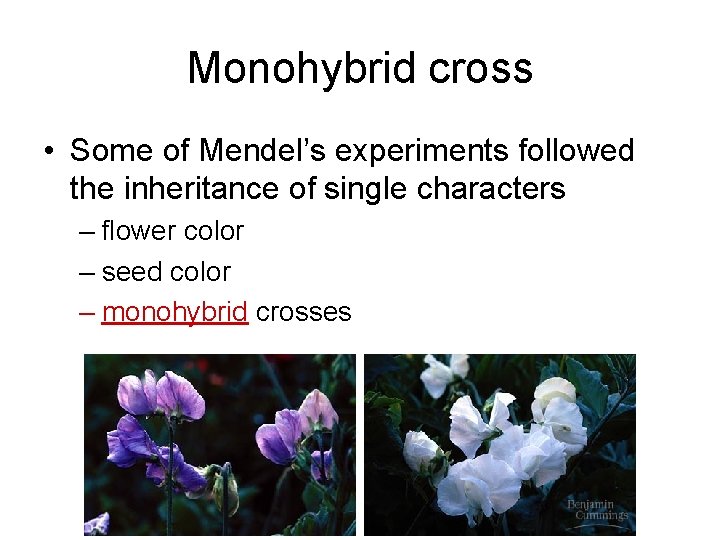
Monohybrid cross • Some of Mendel’s experiments followed the inheritance of single characters – flower color – seed color – monohybrid crosses
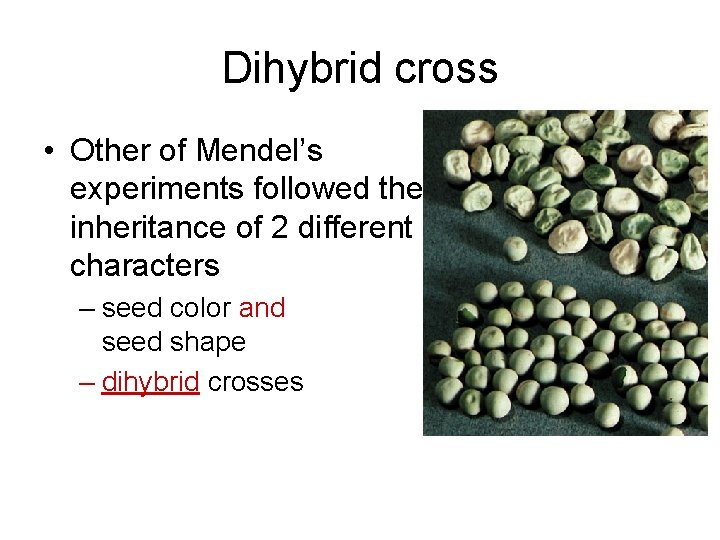
Dihybrid cross • Other of Mendel’s experiments followed the inheritance of 2 different characters – seed color and seed shape – dihybrid crosses
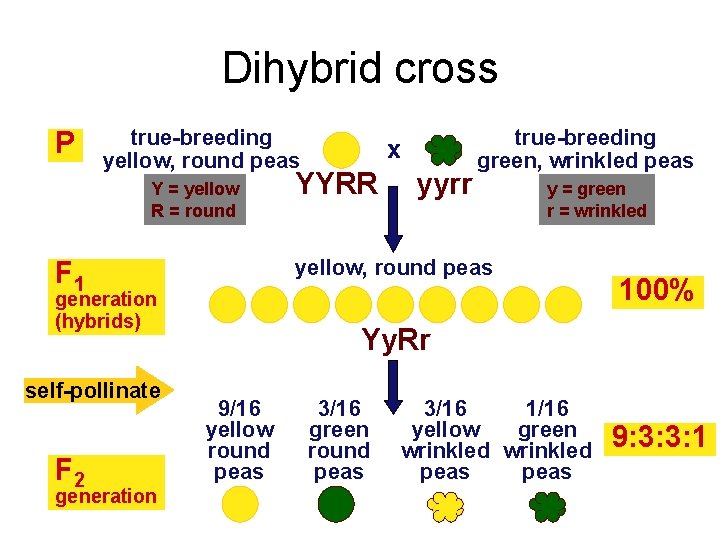
Dihybrid cross P true-breeding yellow, round peas Y = yellow R = round generation (hybrids) F 2 generation YYRR yyrr true-breeding green, wrinkled peas y = green r = wrinkled yellow, round peas F 1 self-pollinate x 100% Yy. Rr 9/16 yellow round peas 3/16 green round peas 3/16 1/16 yellow green wrinkled peas 9: 3: 3: 1
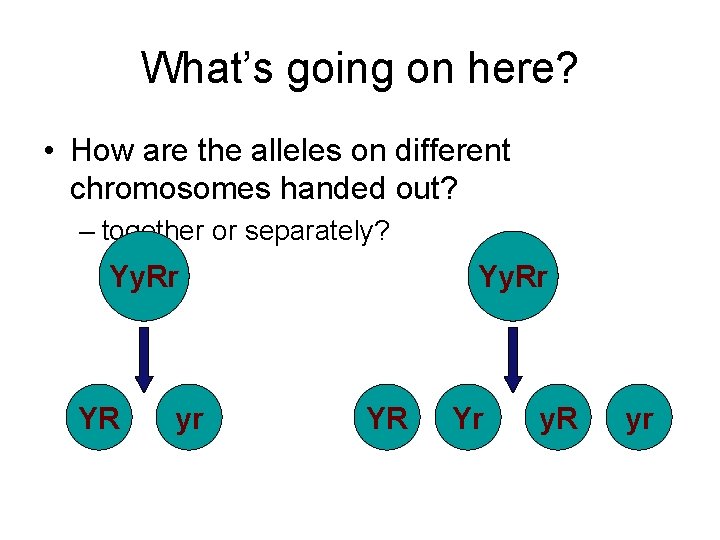
What’s going on here? • How are the alleles on different chromosomes handed out? – together or separately? Yy. Rr YR yr Yy. Rr YR Yr y. R yr
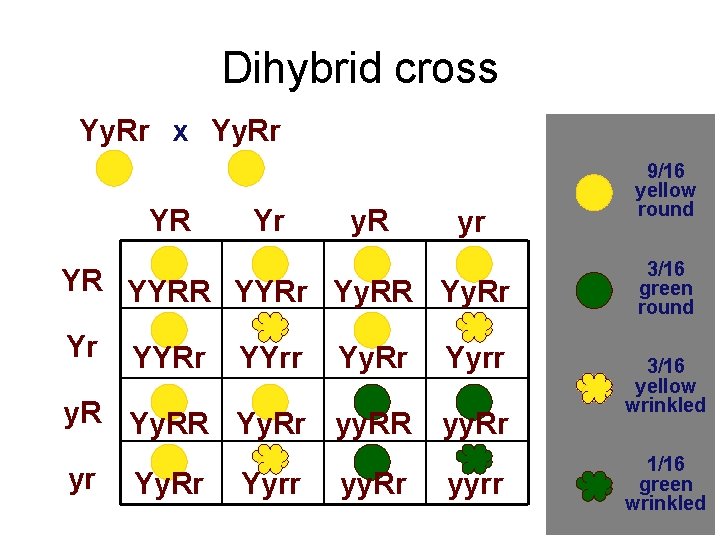
Dihybrid cross Yy. Rr x Yy. Rr YR Yr y. R yr YR YYRr Yy. RR Yy. Rr Yr Yy. Rr Yyrr y. R Yy. Rr yy. RR yy. Rr yr YYRr Yy. Rr YYrr Yyrr yy. Rr yyrr 9/16 yellow round 3/16 green round 3/16 yellow wrinkled 1/16 green wrinkled
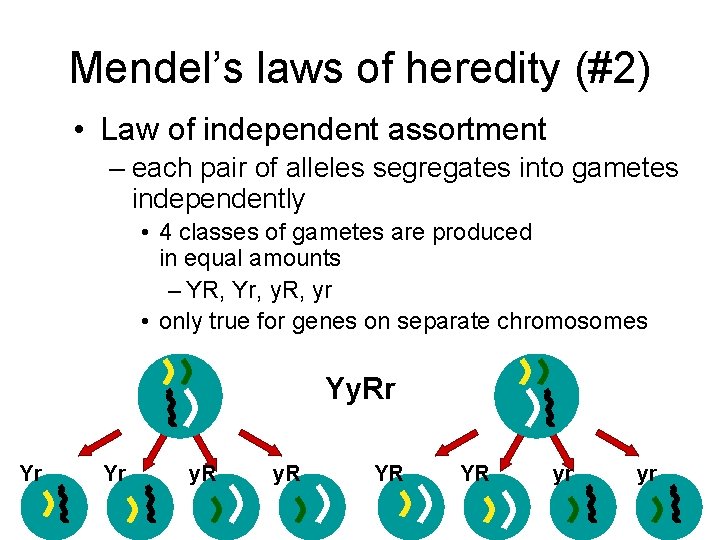
Mendel’s laws of heredity (#2) • Law of independent assortment – each pair of alleles segregates into gametes independently • 4 classes of gametes are produced in equal amounts – YR, Yr, y. R, yr • only true for genes on separate chromosomes Yy. Rr Yr Yr y. R YR YR yr yr
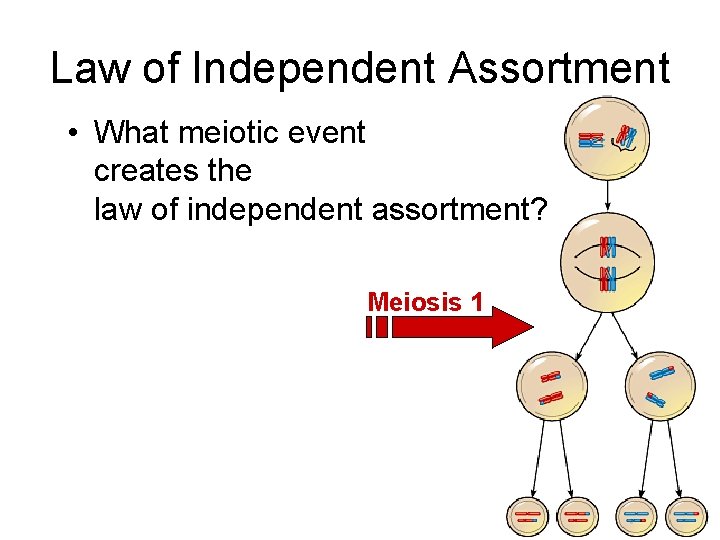
Law of Independent Assortment • What meiotic event creates the law of independent assortment? Meiosis 1
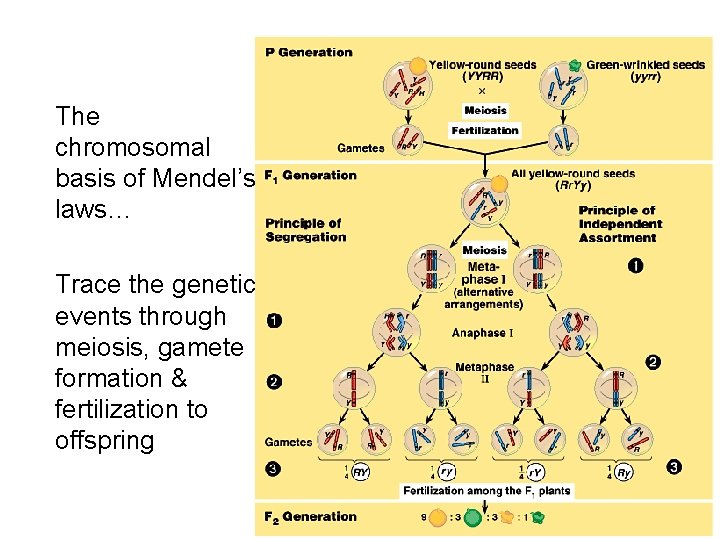
The chromosomal basis of Mendel’s laws… Trace the genetic events through meiosis, gamete formation & fertilization to offspring
Review: Mendel’s laws of heredity • Law of segregation – monohybrid cross • single trait – each allele segregates into separate gametes • established by Meiosis 1 • Law of independent assortment – dihybrid (or more) cross • 2 or more traits – each pair of alleles for genes on separate chromosomes segregates into gametes independently • established by Meiosis 1
Mendel chose peas wisely • Pea plants are good for genetic research – available in many varieties with distinct heritable features with different variations • flower color, seed shape, etc. – Mendel had strict control over which plants mated with which • each pea plant has male & female structures • pea plants can self-fertilize • Mendel could also cross-pollinate plants: moving pollen from one plant to another
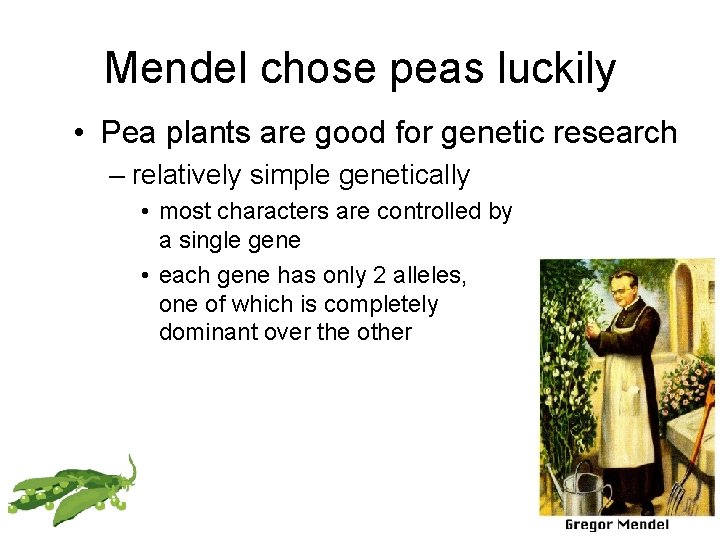
Mendel chose peas luckily • Pea plants are good for genetic research – relatively simple genetically • most characters are controlled by a single gene • each gene has only 2 alleles, one of which is completely dominant over the other
Any Questions? ?
Probability & Genetics
Genetics & Probability • Mendel’s laws: – segregation – independent assortment reflect same laws of probability that apply to tossing coins or rolling dice
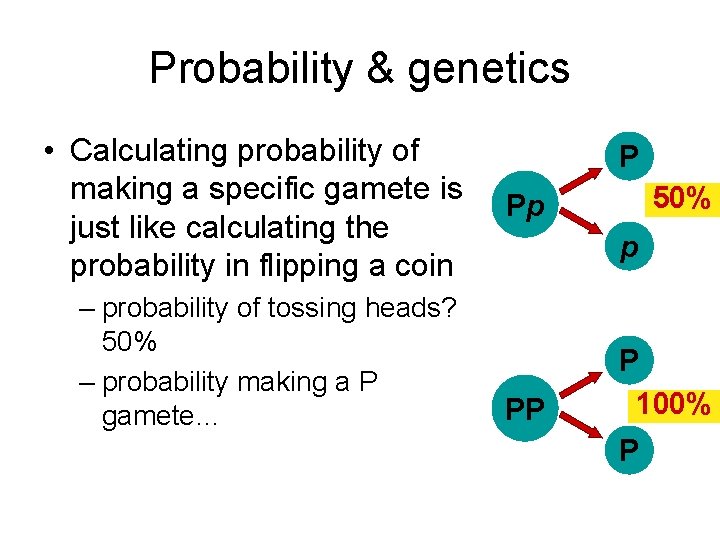
Probability & genetics • Calculating probability of making a specific gamete is just like calculating the probability in flipping a coin – probability of tossing heads? 50% – probability making a P gamete… P 50% Pp p PP P 100% P
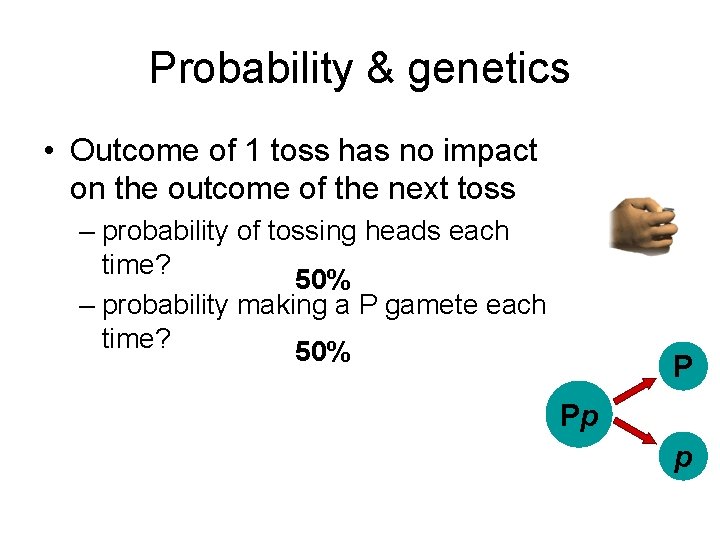
Probability & genetics • Outcome of 1 toss has no impact on the outcome of the next toss – probability of tossing heads each time? 50% – probability making a P gamete each time? 50% P Pp p
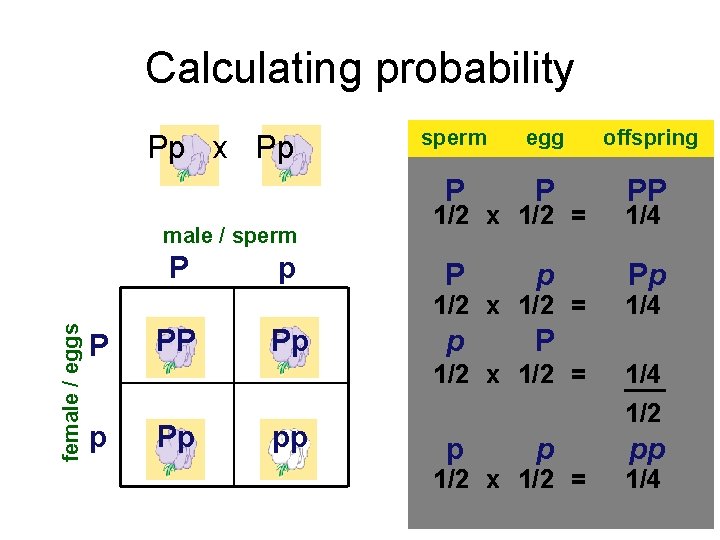
Calculating probability Pp x Pp male / sperm P p sperm egg offspring P P PP P p p P 1/2 x 1/2 = female / eggs 1/2 x 1/2 = P p PP Pp 1/2 x 1/2 = Pp pp 1/4 Pp 1/4 1/2 p p 1/2 x 1/2 = pp 1/4
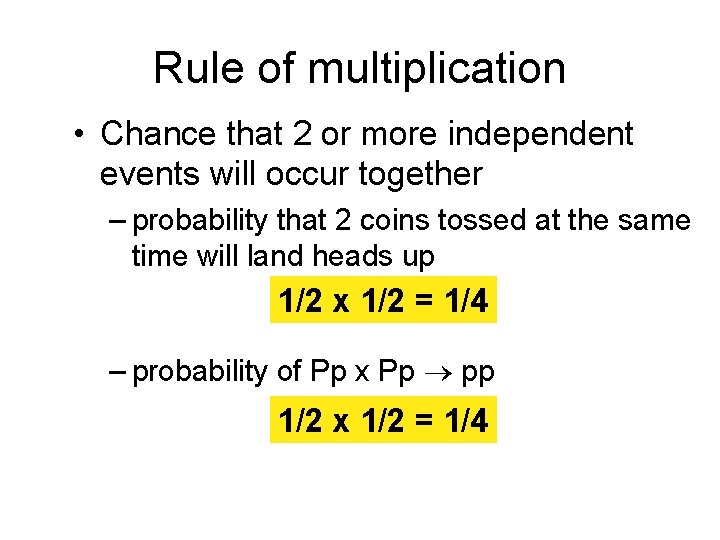
Rule of multiplication • Chance that 2 or more independent events will occur together – probability that 2 coins tossed at the same time will land heads up 1/2 x 1/2 = 1/4 – probability of Pp x Pp pp 1/2 x 1/2 = 1/4
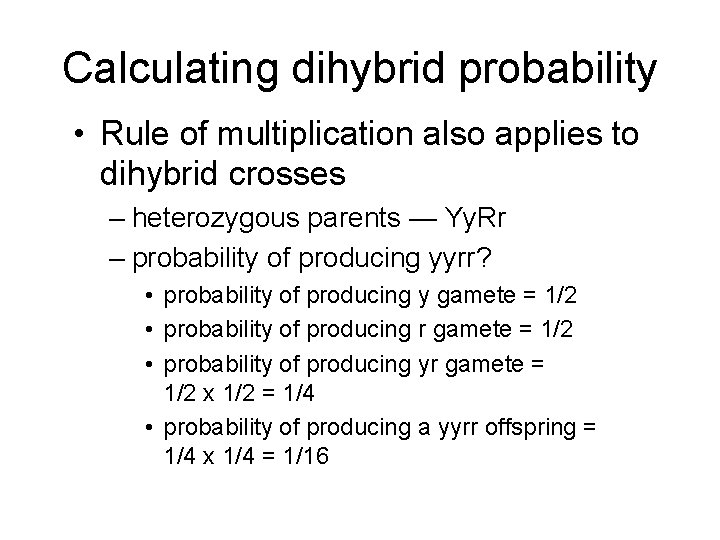
Calculating dihybrid probability • Rule of multiplication also applies to dihybrid crosses – heterozygous parents — Yy. Rr – probability of producing yyrr? • probability of producing y gamete = 1/2 • probability of producing r gamete = 1/2 • probability of producing yr gamete = 1/2 x 1/2 = 1/4 • probability of producing a yyrr offspring = 1/4 x 1/4 = 1/16
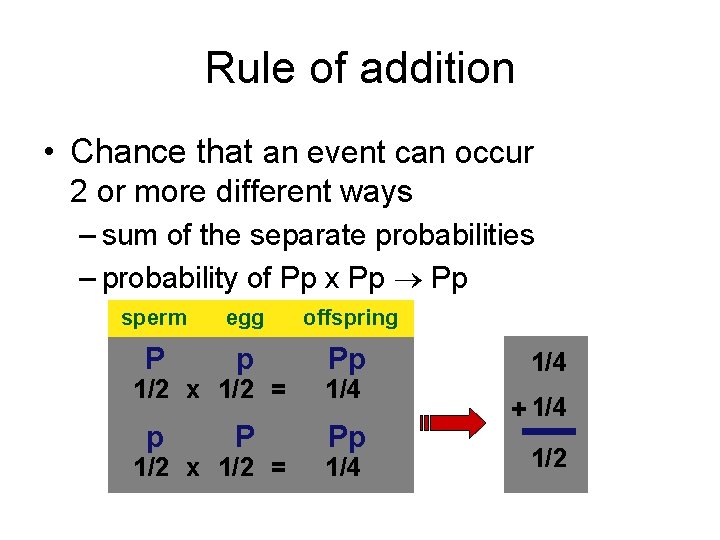
Rule of addition • Chance that an event can occur 2 or more different ways – sum of the separate probabilities – probability of Pp x Pp sperm egg offspring P p Pp 1/2 x 1/2 = p P 1/2 x 1/2 = 1/4 Pp 1/4 + 1/4 1/2
Chi-square test • Test to see if your data supports your hypothesis • Compare “observed” vs. “expected” data – is variance from expected due to “random chance”? – is there another factor influencing data? • null hypothesis • degrees of freedom • statistical significance
Any Questions? ?
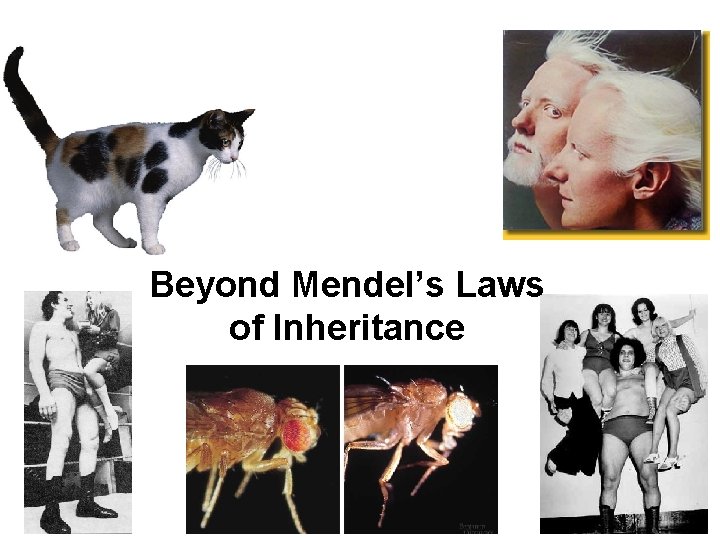
Beyond Mendel’s Laws of Inheritance
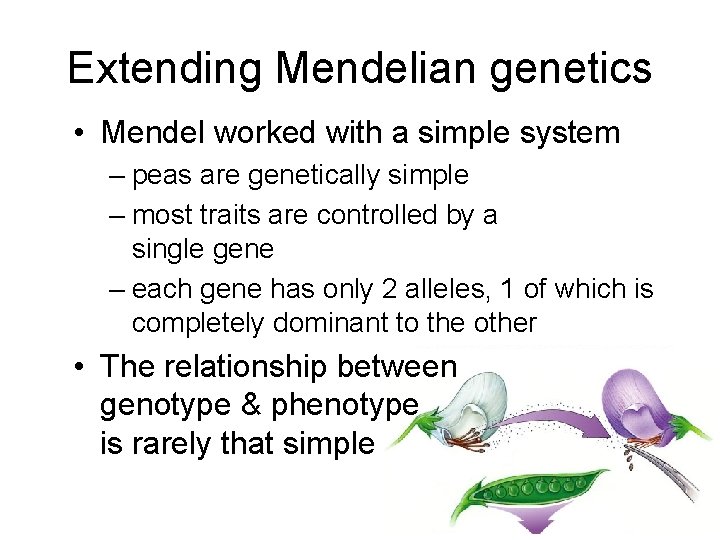
Extending Mendelian genetics • Mendel worked with a simple system – peas are genetically simple – most traits are controlled by a single gene – each gene has only 2 alleles, 1 of which is completely dominant to the other • The relationship between genotype & phenotype is rarely that simple
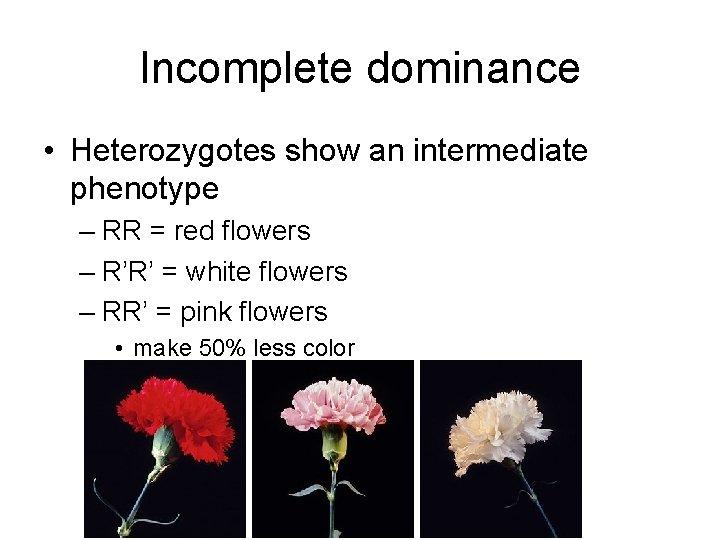
Incomplete dominance • Heterozygotes show an intermediate phenotype – RR = red flowers – R’R’ = white flowers – RR’ = pink flowers • make 50% less color
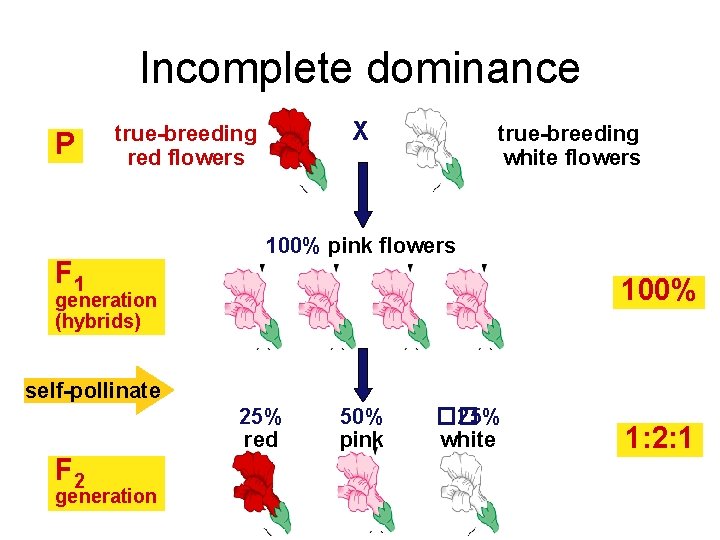
Incomplete dominance P X true-breeding red flowers F 1 true-breeding white flowers 100% pink flowers 100% generation (hybrids) self-pollinate 25% red F 2 generation 50% pink �� 25% white 1: 2: 1
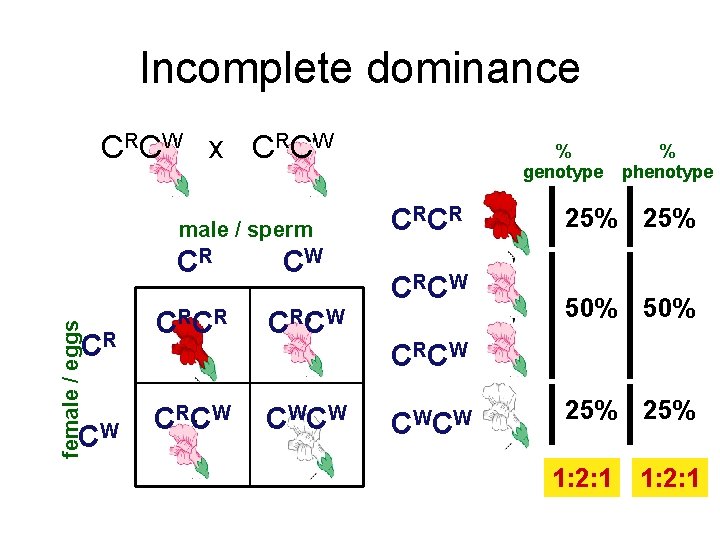
Incomplete dominance C RC W x C RC W female / eggs male / sperm CR CW C RC R C RC W CW CW % genotype C RC R C RC W % phenotype 25% 50% C RC W CW CW 25% 1: 2: 1
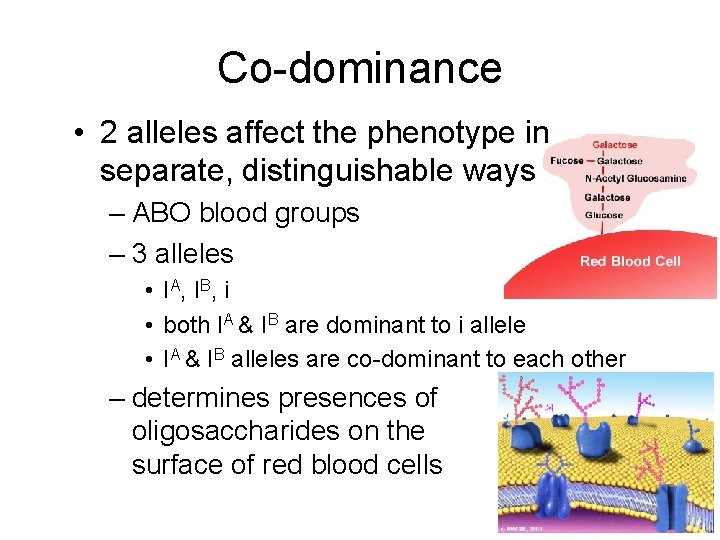
Co-dominance • 2 alleles affect the phenotype in separate, distinguishable ways – ABO blood groups – 3 alleles • IA, I B, i • both IA & IB are dominant to i allele • IA & IB alleles are co-dominant to each other – determines presences of oligosaccharides on the surface of red blood cells
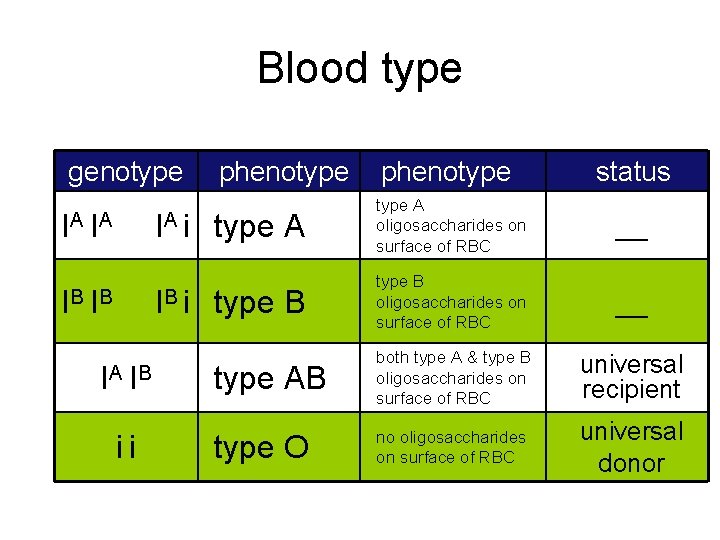
Blood type genotype IA IA IB IB IA IB ii phenotype status IA i type A oligosaccharides on surface of RBC __ IB i type B oligosaccharides on surface of RBC __ type AB both type A & type B oligosaccharides on surface of RBC universal recipient type O no oligosaccharides on surface of RBC universal donor
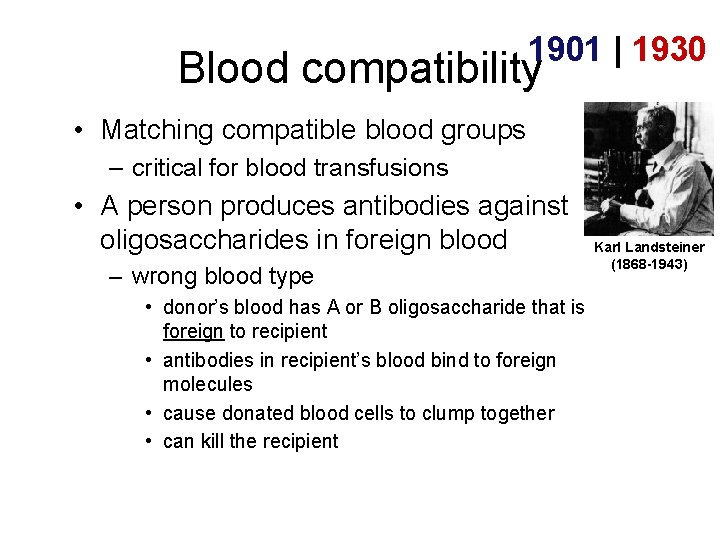
1901 | 1930 Blood compatibility • Matching compatible blood groups – critical for blood transfusions • A person produces antibodies against oligosaccharides in foreign blood – wrong blood type • donor’s blood has A or B oligosaccharide that is foreign to recipient • antibodies in recipient’s blood bind to foreign molecules • cause donated blood cells to clump together • can kill the recipient Karl Landsteiner (1868 -1943)
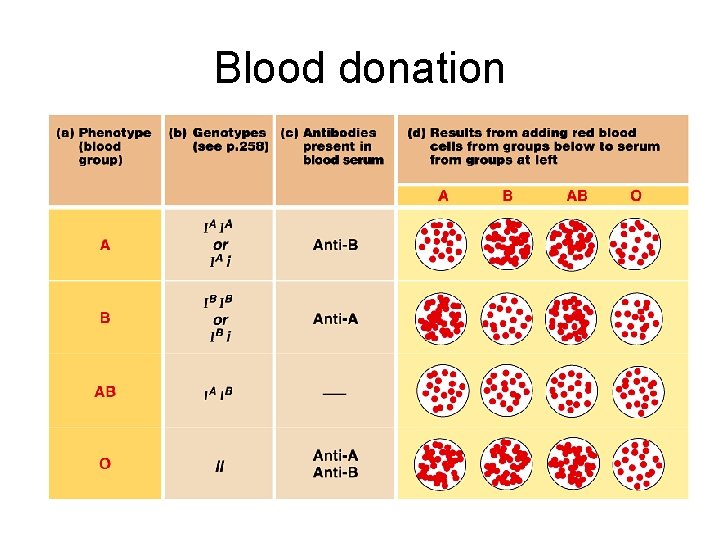
Blood donation
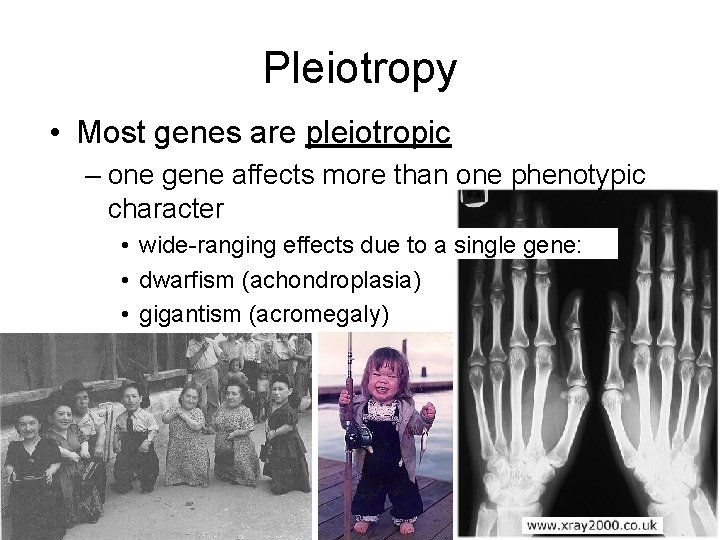
Pleiotropy • Most genes are pleiotropic – one gene affects more than one phenotypic character • wide-ranging effects due to a single gene: • dwarfism (achondroplasia) • gigantism (acromegaly)
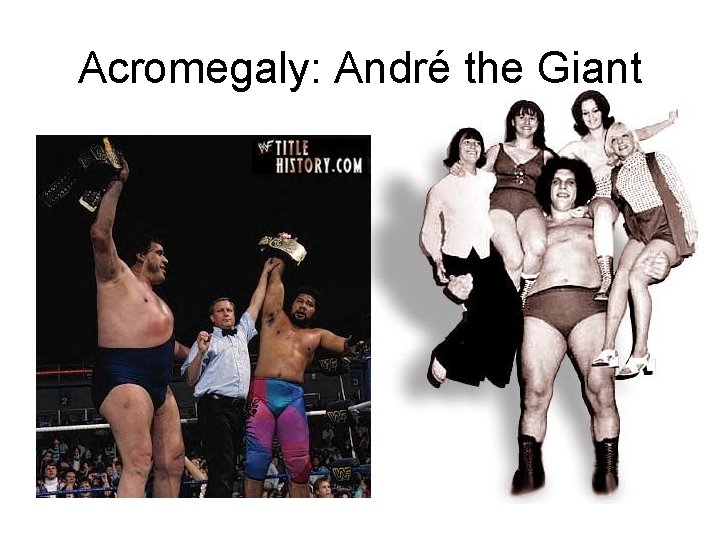
Acromegaly: André the Giant
Pleiotropy • It is not surprising that a gene can affect a number of organism’s characteristics – consider the intricate molecular & cellular interactions responsible for an organism’s development • cystic fibrosis – mucus build up in many organs • sickle cell anemia – sickling of blood cells
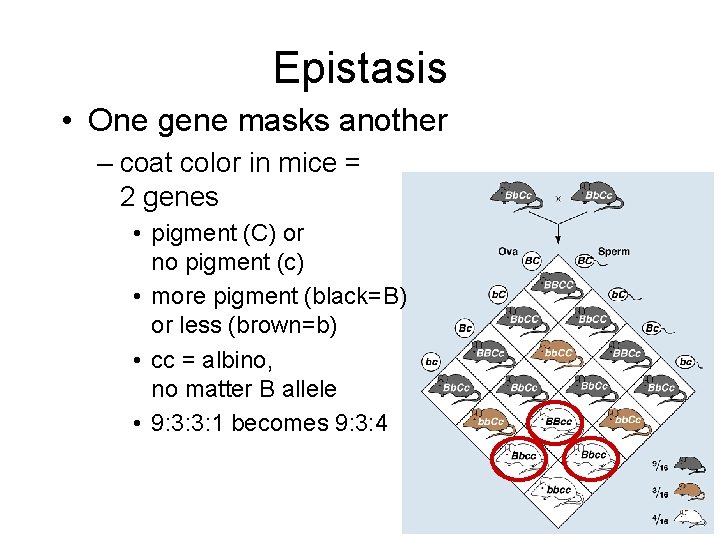
Epistasis • One gene masks another – coat color in mice = 2 genes • pigment (C) or no pigment (c) • more pigment (black=B) or less (brown=b) • cc = albino, no matter B allele • 9: 3: 3: 1 becomes 9: 3: 4
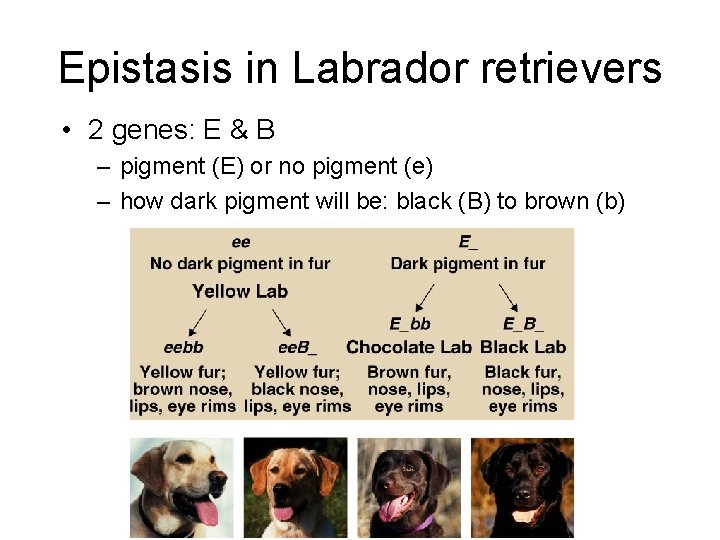
Epistasis in Labrador retrievers • 2 genes: E & B – pigment (E) or no pigment (e) – how dark pigment will be: black (B) to brown (b)
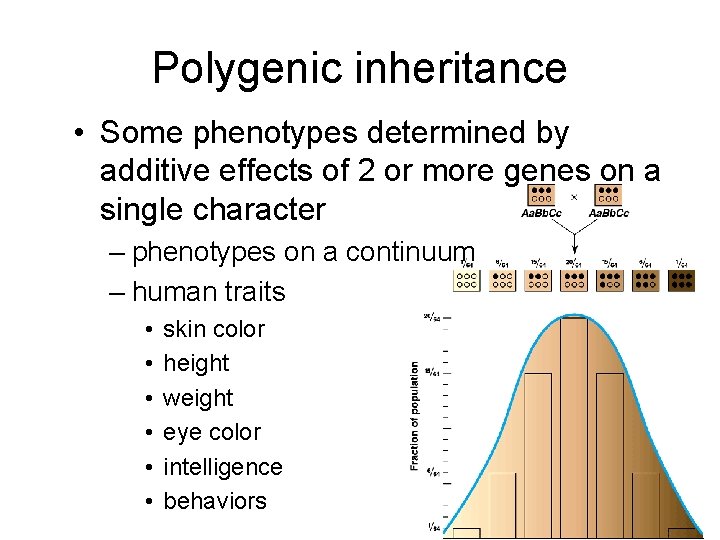
Polygenic inheritance • Some phenotypes determined by additive effects of 2 or more genes on a single character – phenotypes on a continuum – human traits • • • skin color height weight eye color intelligence behaviors
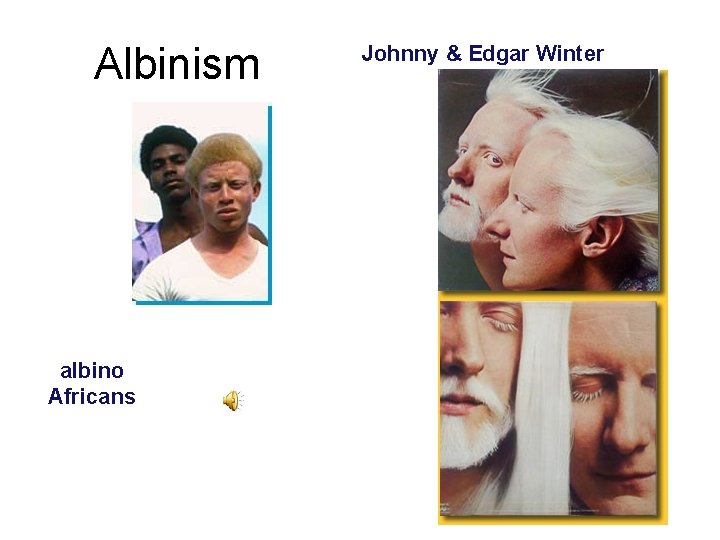
Albinism albino Africans Johnny & Edgar Winter
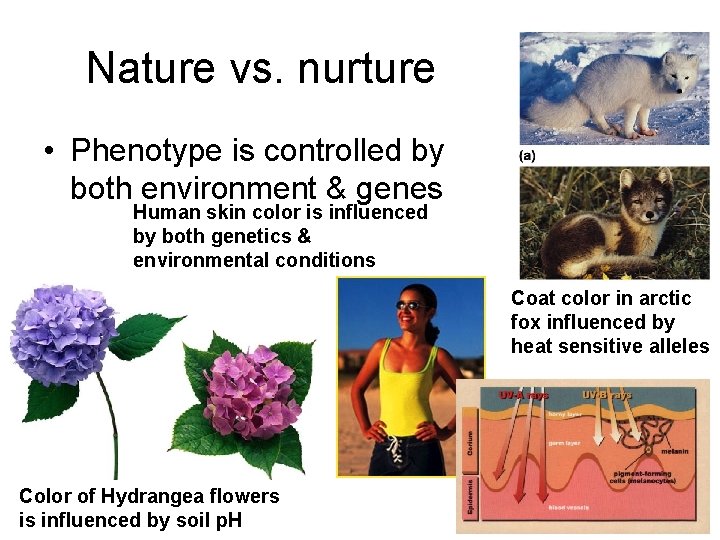
Nature vs. nurture • Phenotype is controlled by both environment & genes Human skin color is influenced by both genetics & environmental conditions Coat color in arctic fox influenced by heat sensitive alleles Color of Hydrangea flowers is influenced by soil p. H
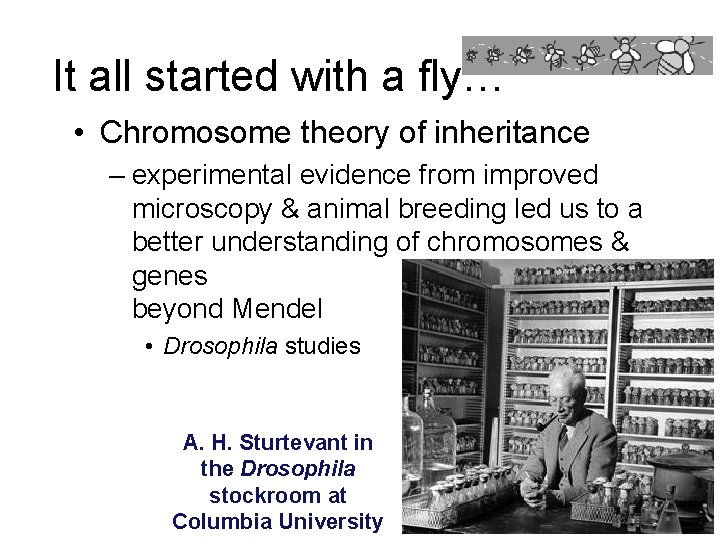
It all started with a fly… • Chromosome theory of inheritance – experimental evidence from improved microscopy & animal breeding led us to a better understanding of chromosomes & genes beyond Mendel • Drosophila studies A. H. Sturtevant in the Drosophila stockroom at Columbia University
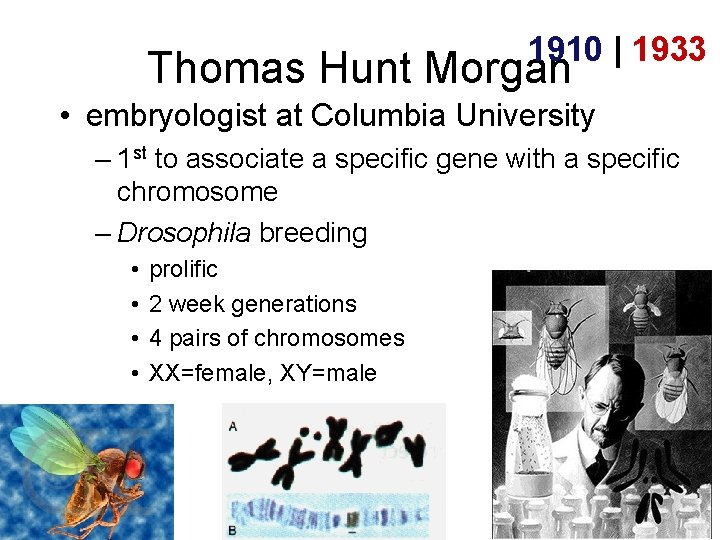
1910 | 1933 Thomas Hunt Morgan • embryologist at Columbia University – 1 st to associate a specific gene with a specific chromosome – Drosophila breeding • • prolific 2 week generations 4 pairs of chromosomes XX=female, XY=male
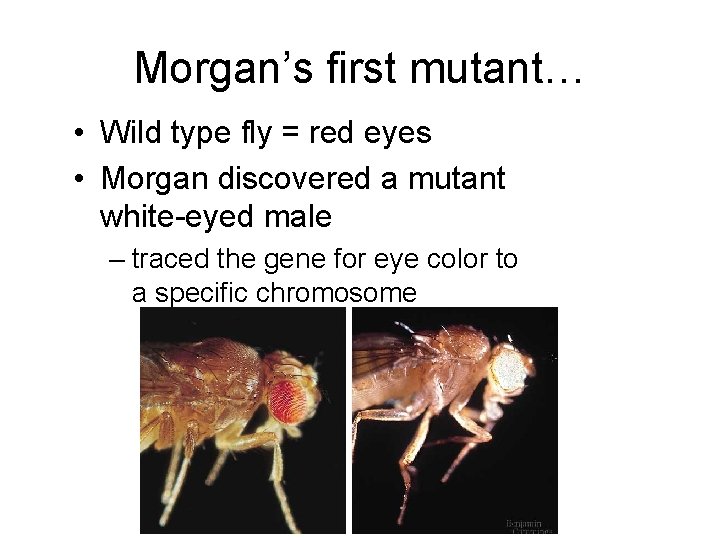
Morgan’s first mutant… • Wild type fly = red eyes • Morgan discovered a mutant white-eyed male – traced the gene for eye color to a specific chromosome
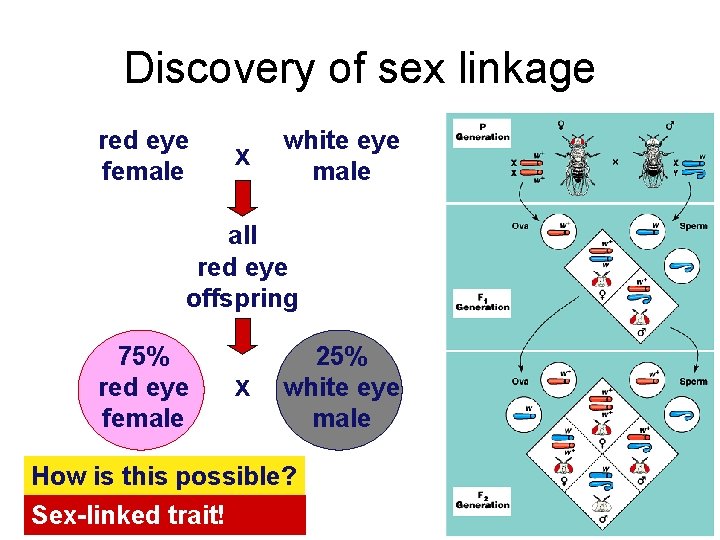
Discovery of sex linkage red eye female x white eye male all red eye offspring 75% red eye female x 25% white eye male How is this possible? Sex-linked trait!
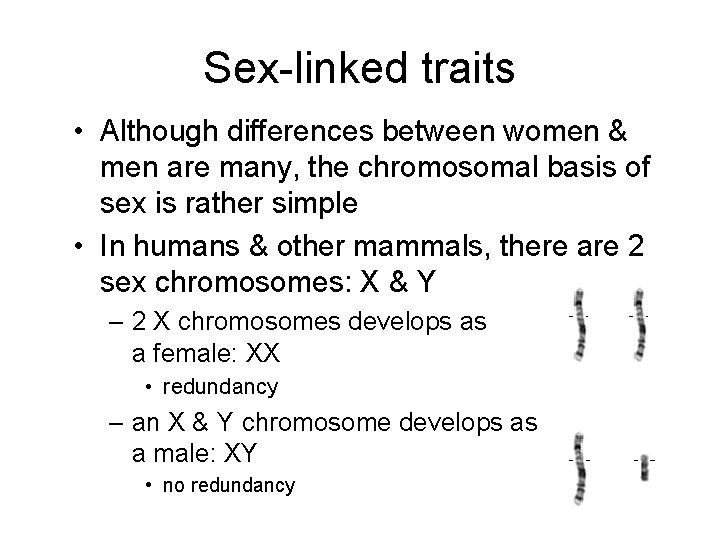
Sex-linked traits • Although differences between women & men are many, the chromosomal basis of sex is rather simple • In humans & other mammals, there are 2 sex chromosomes: X & Y – 2 X chromosomes develops as a female: XX • redundancy – an X & Y chromosome develops as a male: XY • no redundancy
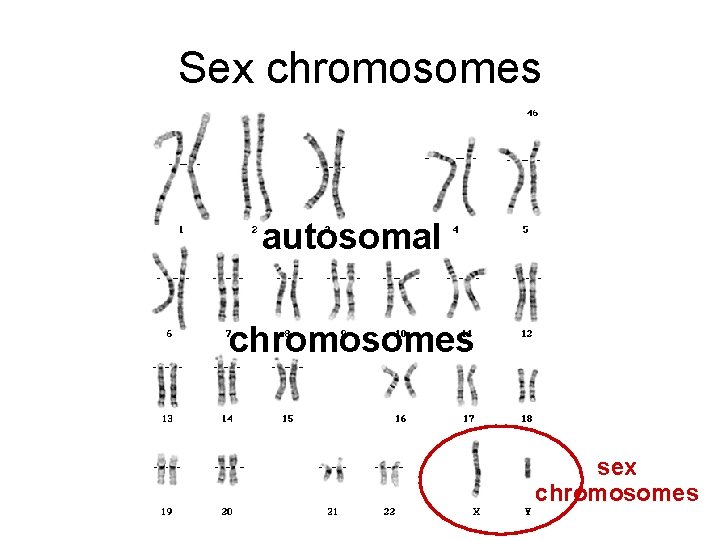
Sex chromosomes autosomal chromosomes sex chromosomes
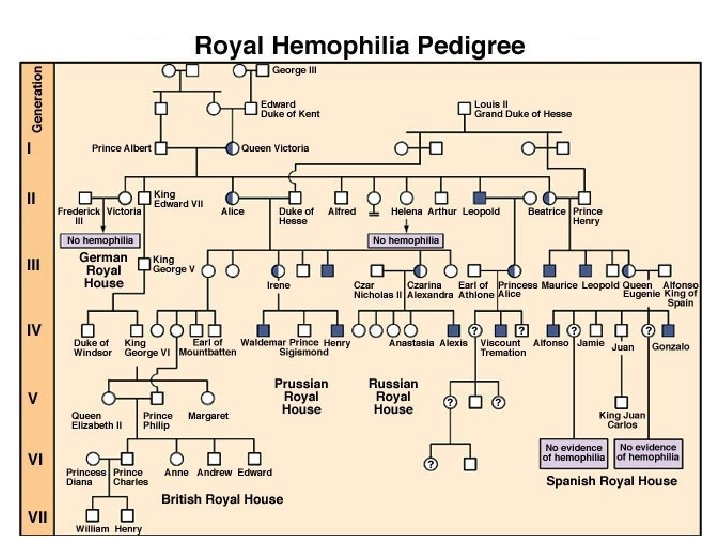
Genes on sex chromosomes • Y chromosome – SRY: sex-determining region • master regulator for maleness • turns on genes for production of male hormones – pleiotropy! • X chromosome – other traits beyond sex determination • hemophilia • Duchenne muscular dystrophy • color-blind
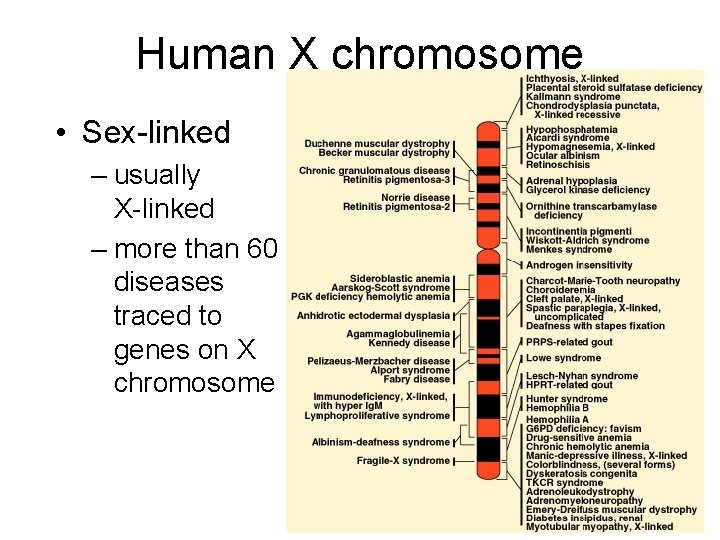
Human X chromosome • Sex-linked – usually X-linked – more than 60 diseases traced to genes on X chromosome
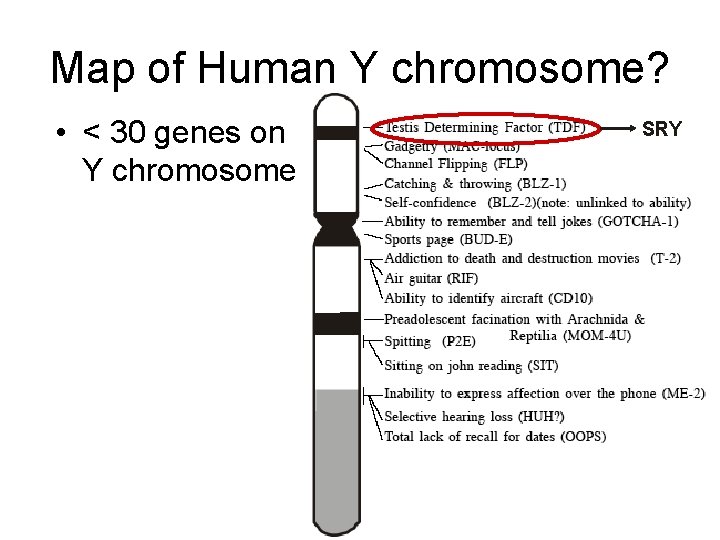
Map of Human Y chromosome? • < 30 genes on Y chromosome SRY
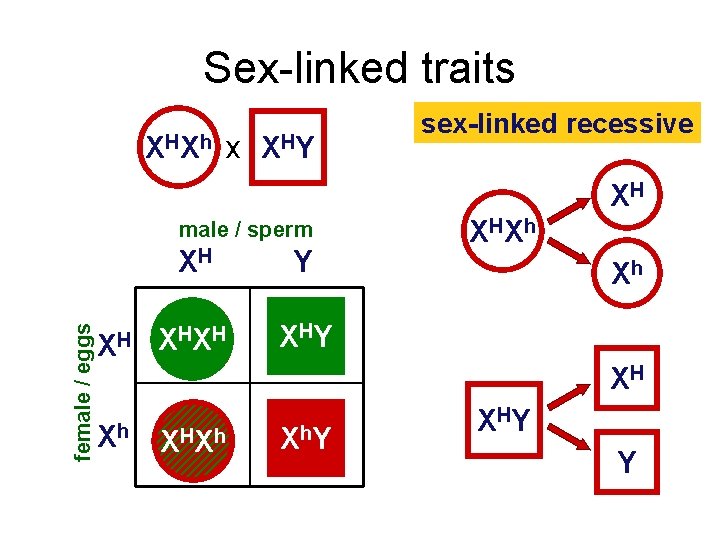
Sex-linked traits HX h x X HY HH XHh sex-linked recessive XH female / eggs male / sperm XH Xh XH Y X HX H X HY X HX h Xh XH X HX h X h. Y X HY Y
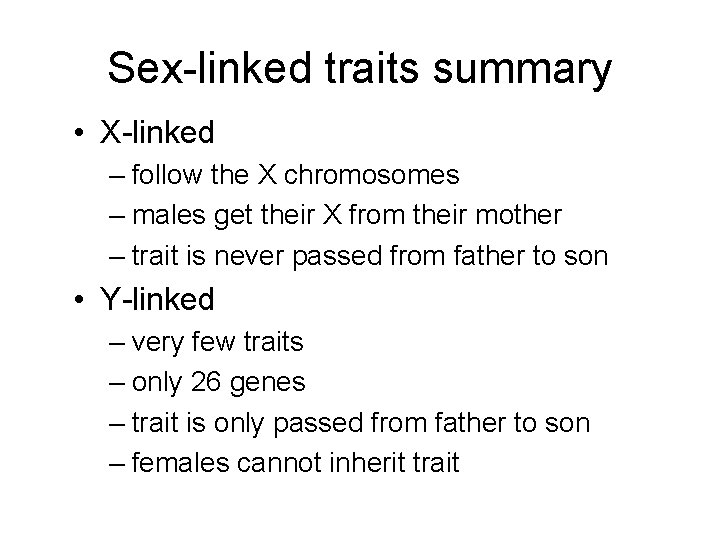
Sex-linked traits summary • X-linked – follow the X chromosomes – males get their X from their mother – trait is never passed from father to son • Y-linked – very few traits – only 26 genes – trait is only passed from father to son – females cannot inherit trait
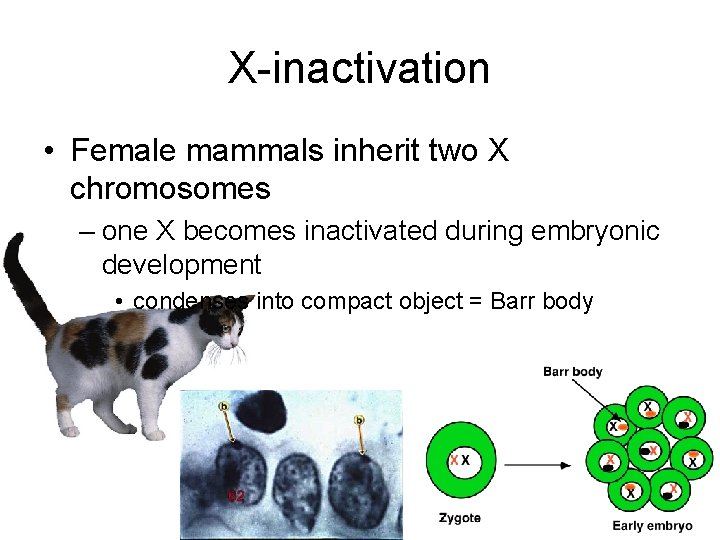
X-inactivation • Female mammals inherit two X chromosomes – one X becomes inactivated during embryonic development • condenses into compact object = Barr body
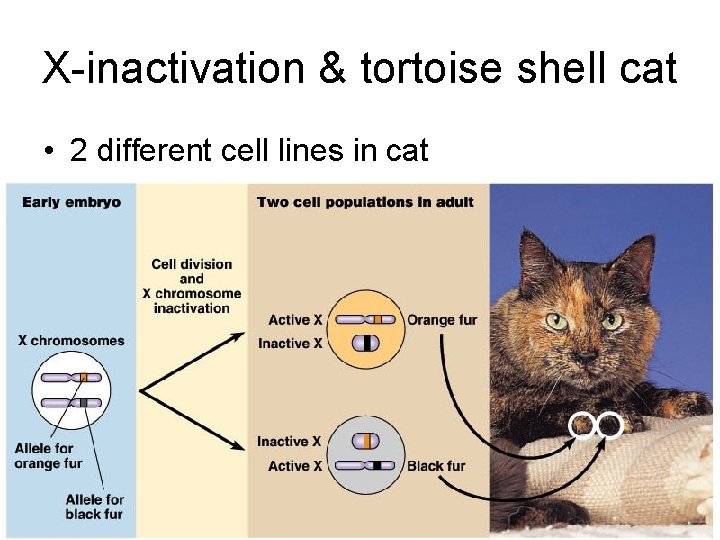
X-inactivation & tortoise shell cat • 2 different cell lines in cat
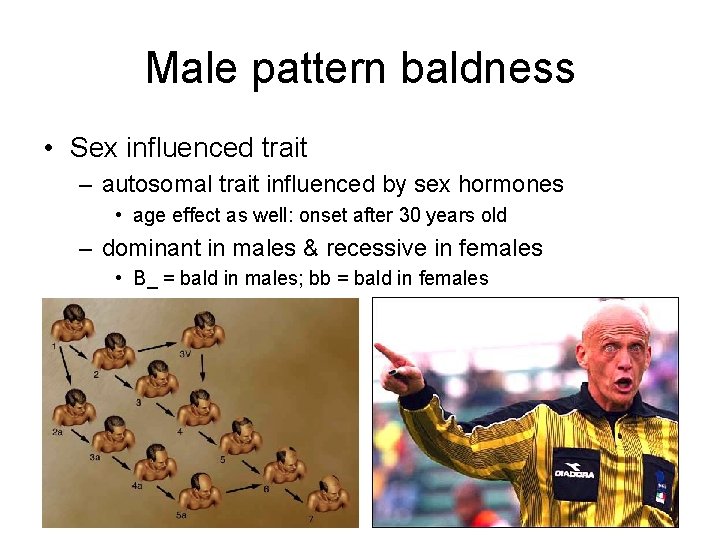
Male pattern baldness • Sex influenced trait – autosomal trait influenced by sex hormones • age effect as well: onset after 30 years old – dominant in males & recessive in females • B_ = bald in males; bb = bald in females
Mechanisms of inheritance • What causes the differences in alleles of a trait? – yellow vs. green color – smooth vs. wrinkled seeds – dark vs. light skin – Tay sachs disease vs. no disease – Sickle cell anemia vs. no disease
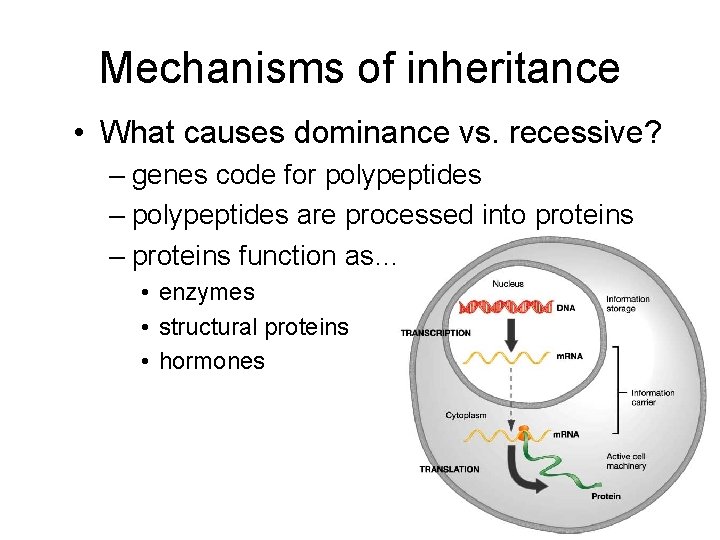
Mechanisms of inheritance • What causes dominance vs. recessive? – genes code for polypeptides – polypeptides are processed into proteins – proteins function as… • enzymes • structural proteins • hormones
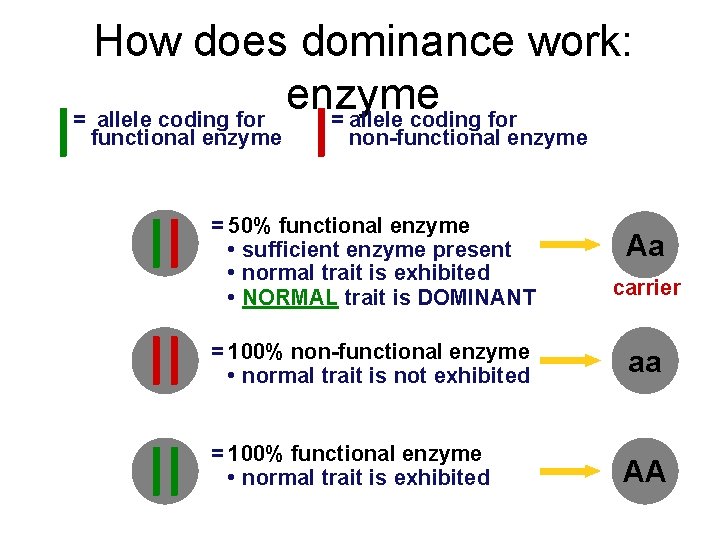
How does dominance work: enzyme = allele coding for functional enzyme non-functional enzyme = 50% functional enzyme • sufficient enzyme present • normal trait is exhibited • NORMAL trait is DOMINANT carrier = 100% non-functional enzyme • normal trait is not exhibited aa = 100% functional enzyme • normal trait is exhibited AA Aa
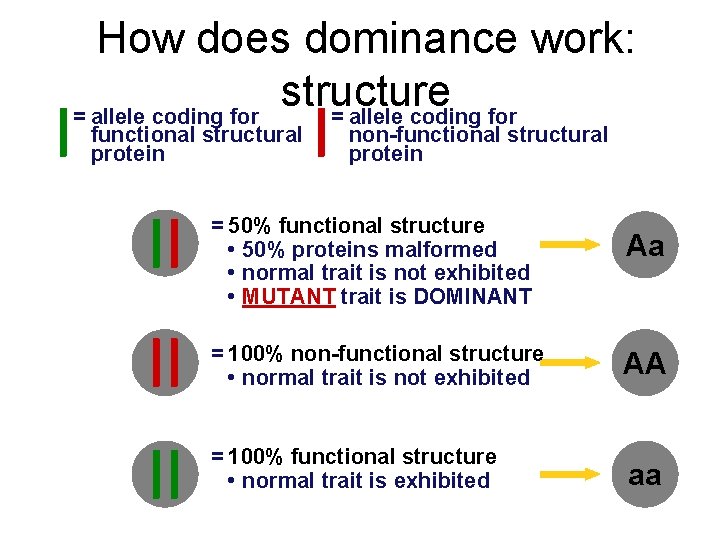
How does dominance work: structure = allele coding for functional structural protein non-functional structural protein = 50% functional structure • 50% proteins malformed • normal trait is not exhibited • MUTANT trait is DOMINANT Aa = 100% non-functional structure • normal trait is not exhibited AA = 100% functional structure • normal trait is exhibited aa
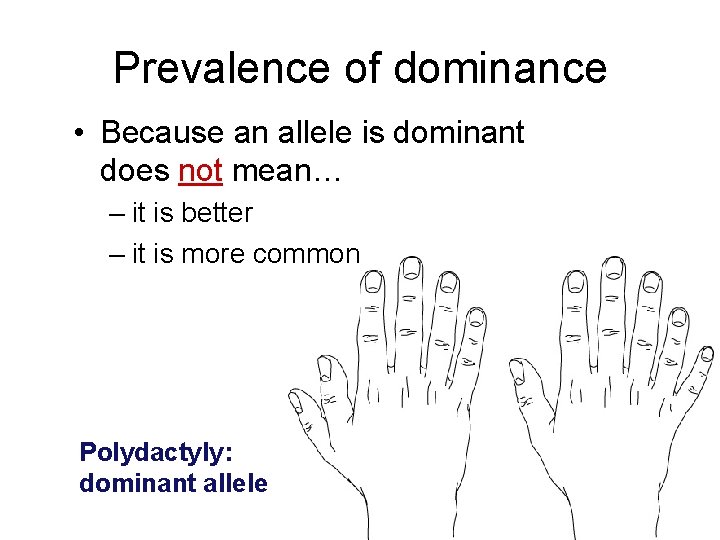
Prevalence of dominance • Because an allele is dominant does not mean… – it is better – it is more common Polydactyly: dominant allele
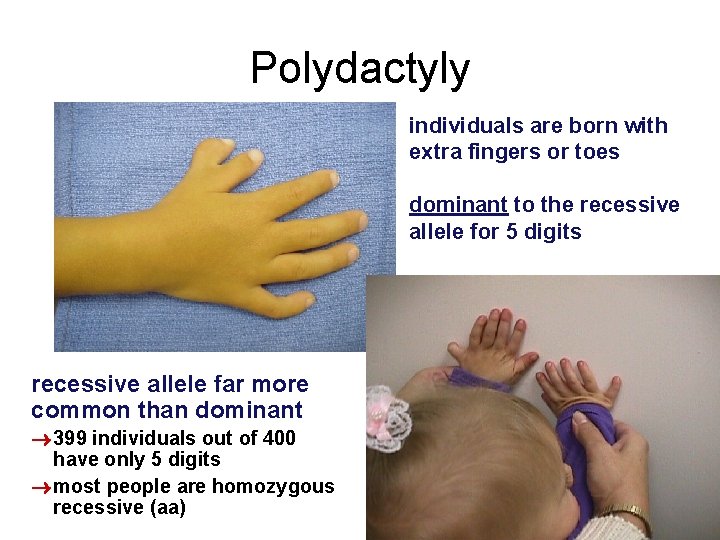
Polydactyly individuals are born with extra fingers or toes dominant to the recessive allele for 5 digits recessive allele far more common than dominant 399 individuals out of 400 have only 5 digits most people are homozygous recessive (aa)
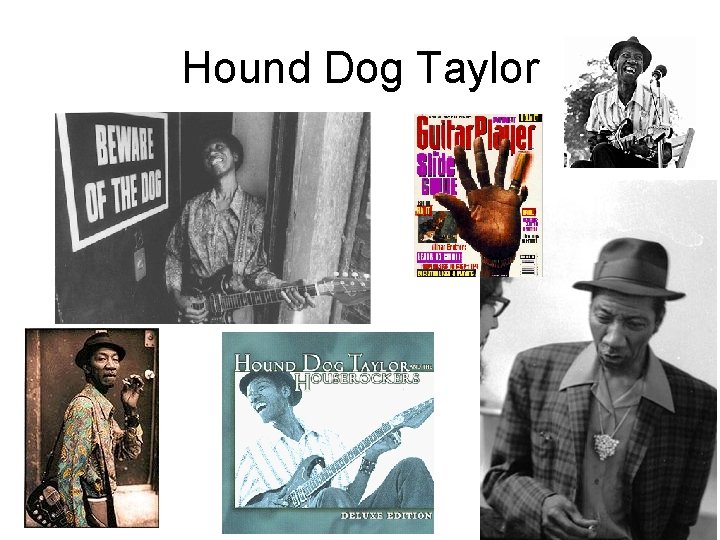
Hound Dog Taylor
Any Questions? ?
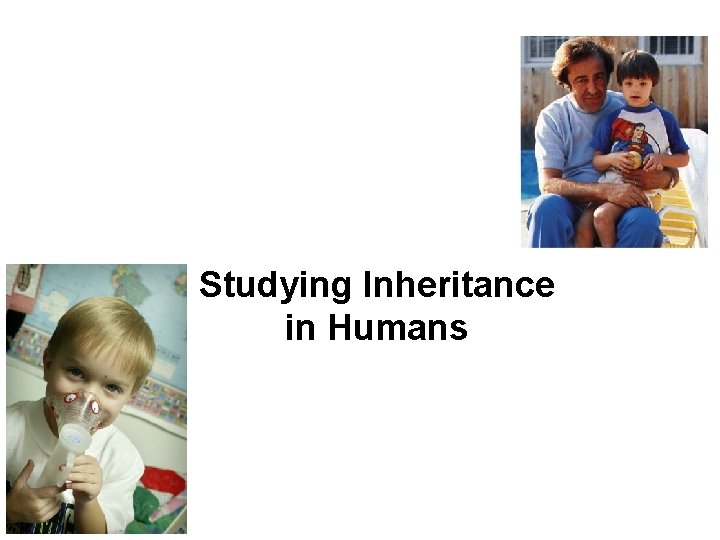
Studying Inheritance in Humans
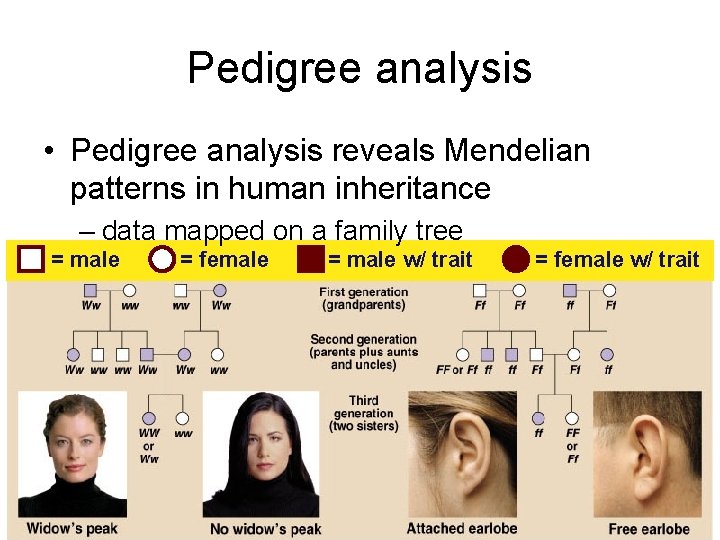
Pedigree analysis • Pedigree analysis reveals Mendelian patterns in human inheritance – data mapped on a family tree = male = female = male w/ trait = female w/ trait
Genetic counseling • Pedigree can help us understand the past & predict the future • Thousands of genetic disorders are inherited as simple recessive traits – benign conditions to deadly diseases – albinism – cystic fibrosis – Tay sachs – sickle cell anemia – PKU
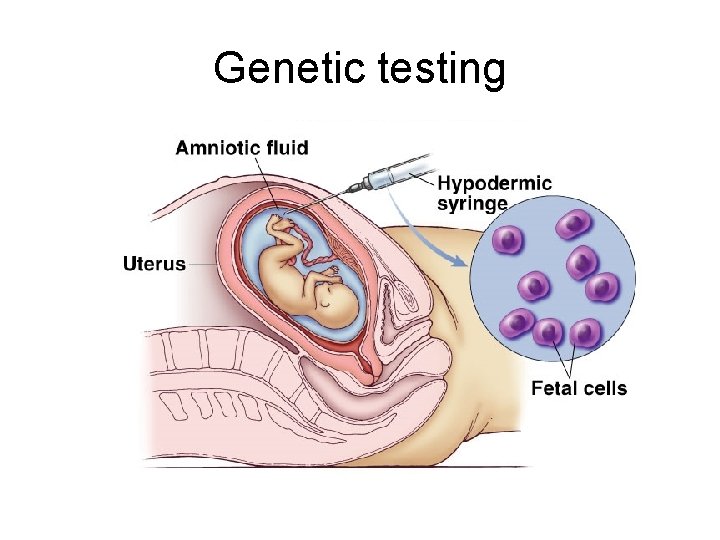
Genetic testing
Recessive diseases • The diseases are recessive because the allele codes for either a malfunctioning protein or no protein at all – Heterozygotes (Aa) • carriers • have a normal phenotype because one “normal” allele produces enough of the required protein
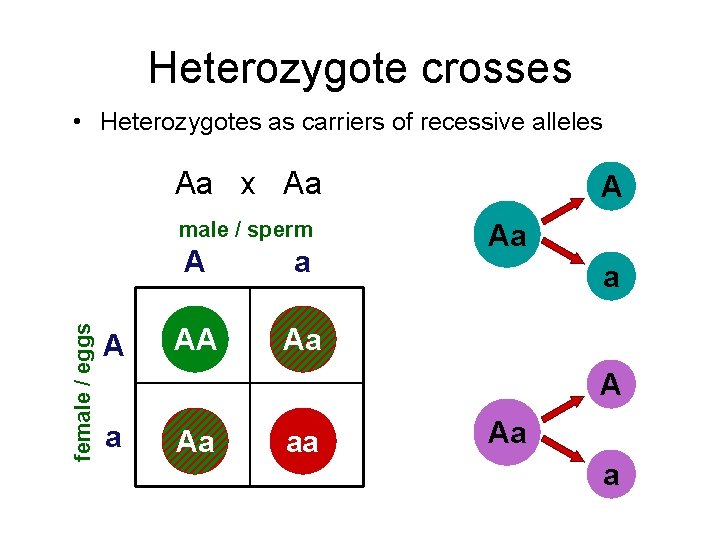
Heterozygote crosses • Heterozygotes as carriers of recessive alleles Aa x Aa female / eggs male / sperm A A a AA AA Aa Aa A Aa a Aa Aa a
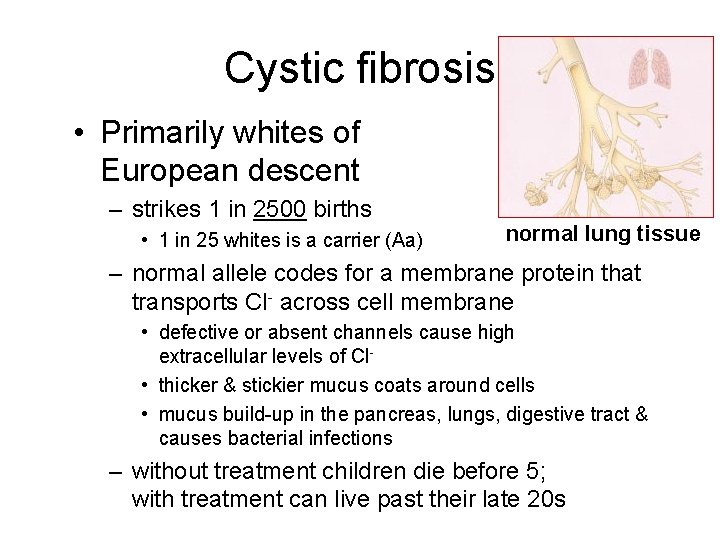
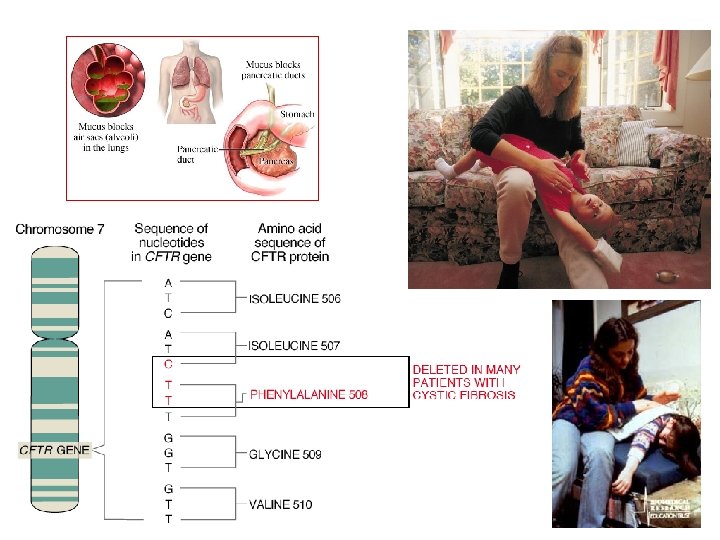
Cystic fibrosis • Primarily whites of European descent – strikes 1 in 2500 births • 1 in 25 whites is a carrier (Aa) normal lung tissue – normal allele codes for a membrane protein that transports Cl- across cell membrane • defective or absent channels cause high extracellular levels of Cl • thicker & stickier mucus coats around cells • mucus build-up in the pancreas, lungs, digestive tract & causes bacterial infections – without treatment children die before 5; with treatment can live past their late 20 s
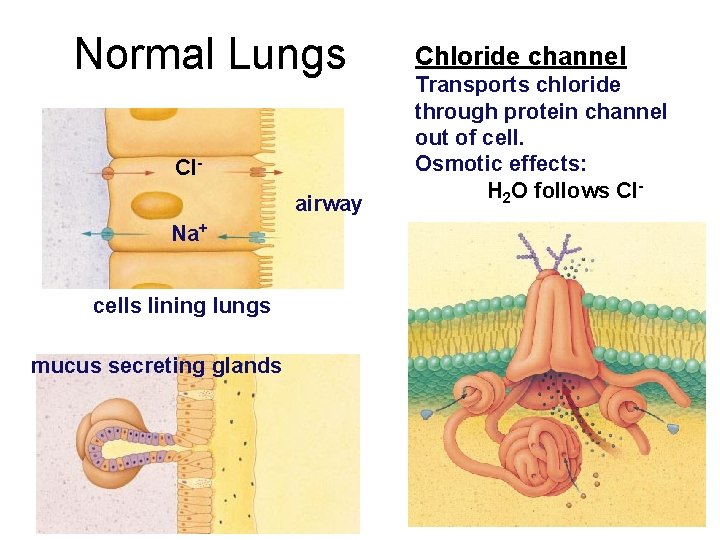
Normal Lungs Clairway Na+ cells lining lungs mucus secreting glands Chloride channel Transports chloride through protein channel out of cell. Osmotic effects: H 2 O follows Cl-
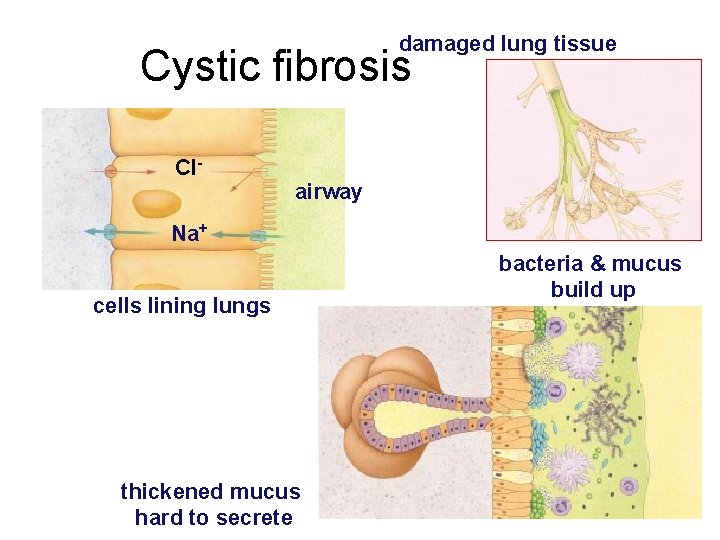
damaged lung tissue Cystic fibrosis Cl- airway Na+ cells lining lungs thickened mucus hard to secrete bacteria & mucus build up
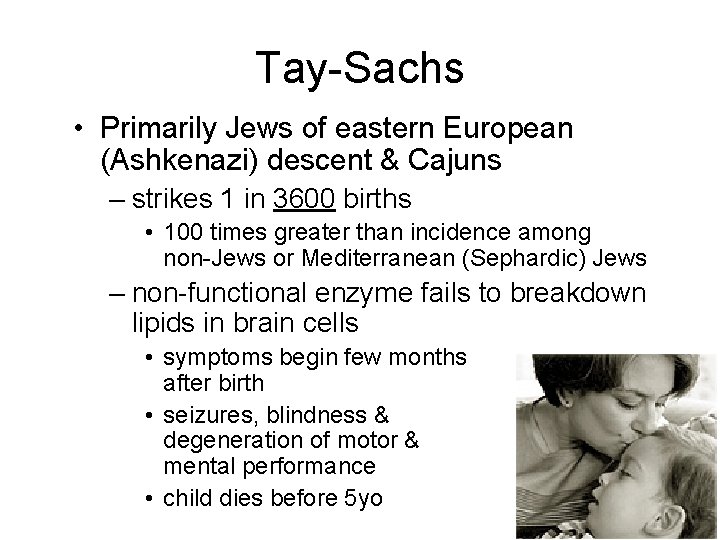
Tay-Sachs • Primarily Jews of eastern European (Ashkenazi) descent & Cajuns – strikes 1 in 3600 births • 100 times greater than incidence among non-Jews or Mediterranean (Sephardic) Jews – non-functional enzyme fails to breakdown lipids in brain cells • symptoms begin few months after birth • seizures, blindness & degeneration of motor & mental performance • child dies before 5 yo
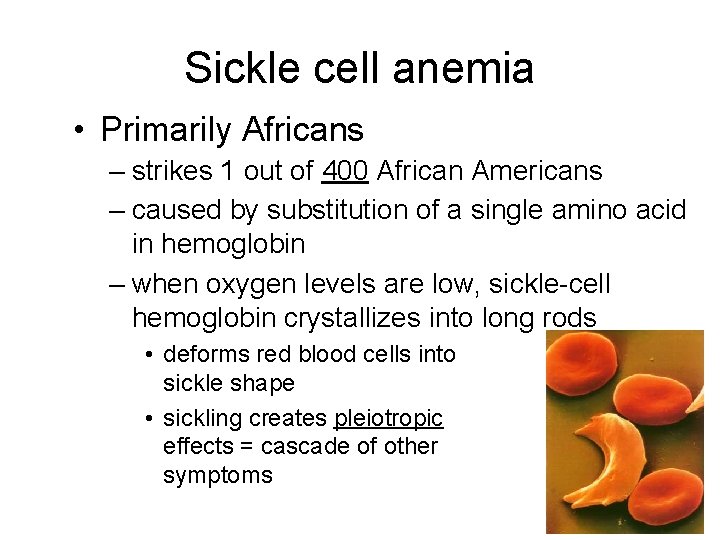
Sickle cell anemia • Primarily Africans – strikes 1 out of 400 African Americans – caused by substitution of a single amino acid in hemoglobin – when oxygen levels are low, sickle-cell hemoglobin crystallizes into long rods • deforms red blood cells into sickle shape • sickling creates pleiotropic effects = cascade of other symptoms
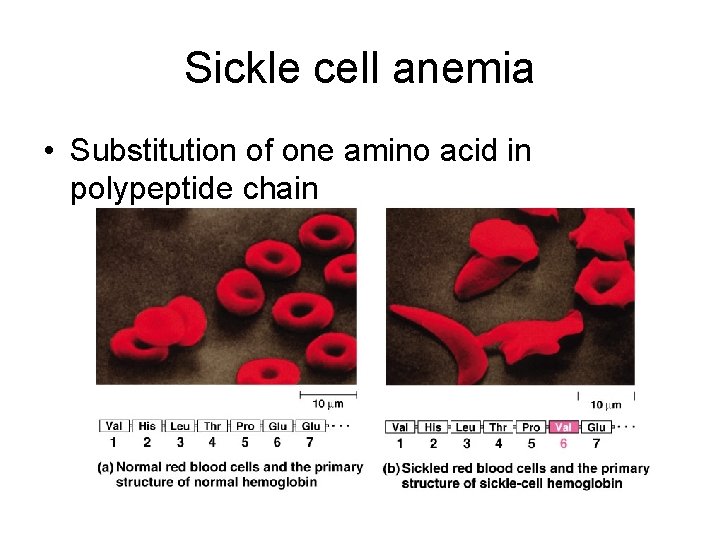
Sickle cell anemia • Substitution of one amino acid in polypeptide chain
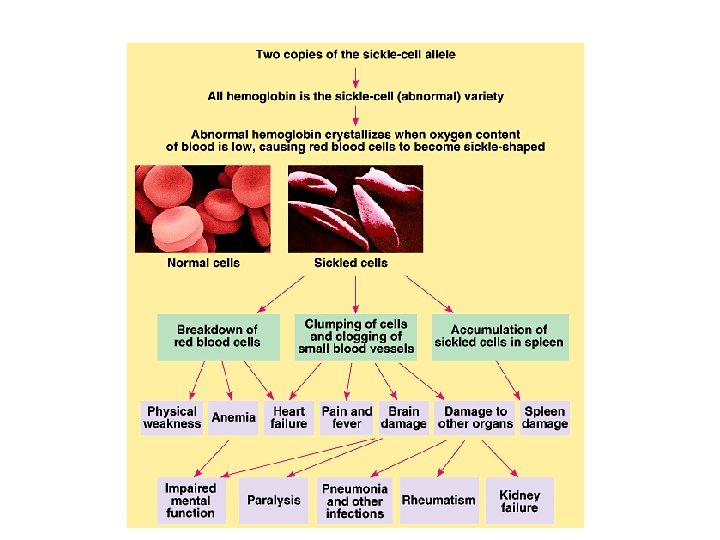
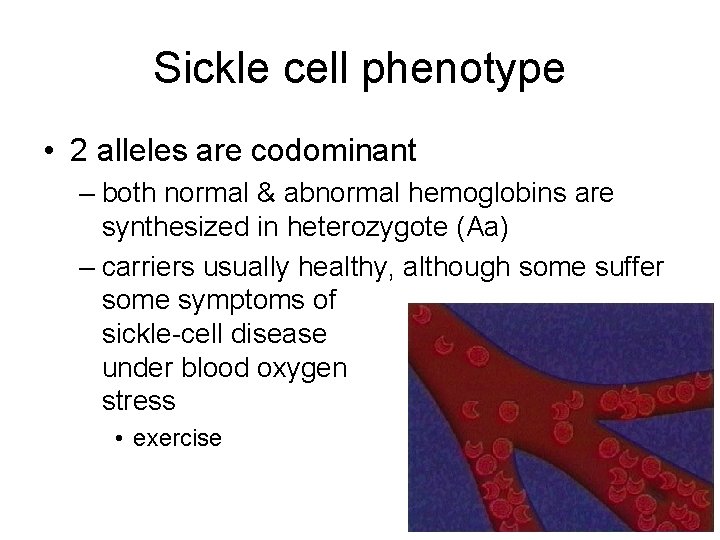
Sickle cell phenotype • 2 alleles are codominant – both normal & abnormal hemoglobins are synthesized in heterozygote (Aa) – carriers usually healthy, although some suffer some symptoms of sickle-cell disease under blood oxygen stress • exercise
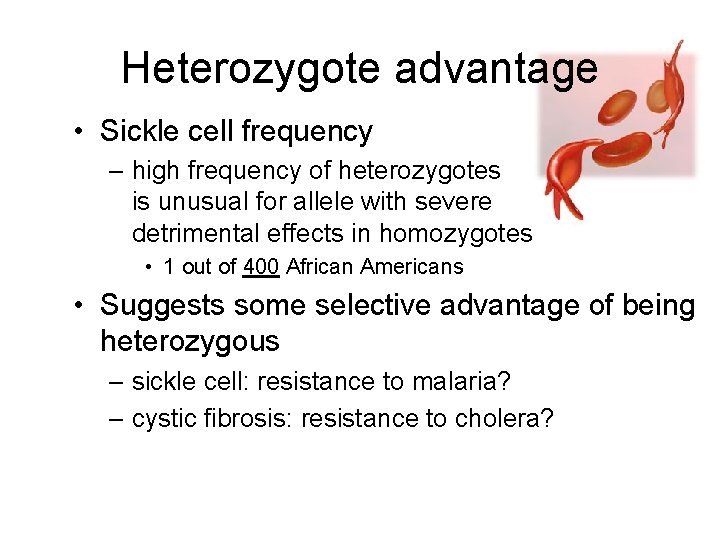
Heterozygote advantage • Sickle cell frequency – high frequency of heterozygotes is unusual for allele with severe detrimental effects in homozygotes • 1 out of 400 African Americans • Suggests some selective advantage of being heterozygous – sickle cell: resistance to malaria? – cystic fibrosis: resistance to cholera?
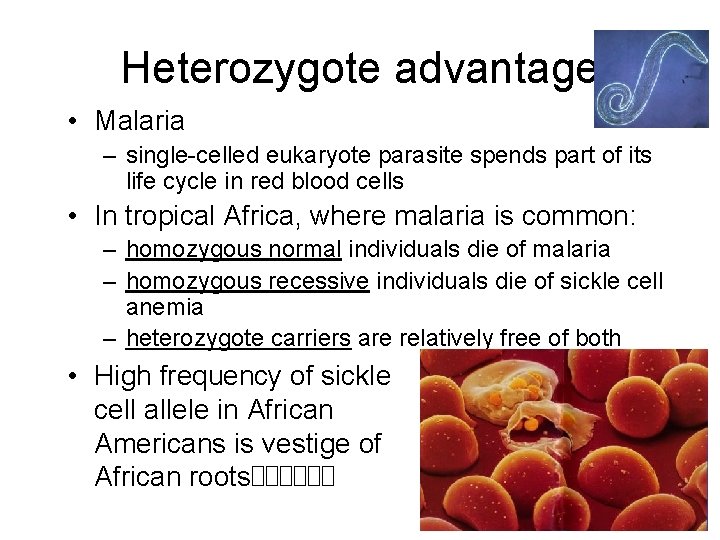
Heterozygote advantage • Malaria – single-celled eukaryote parasite spends part of its life cycle in red blood cells • In tropical Africa, where malaria is common: – homozygous normal individuals die of malaria – homozygous recessive individuals die of sickle cell anemia – heterozygote carriers are relatively free of both • High frequency of sickle cell allele in African Americans is vestige of African roots
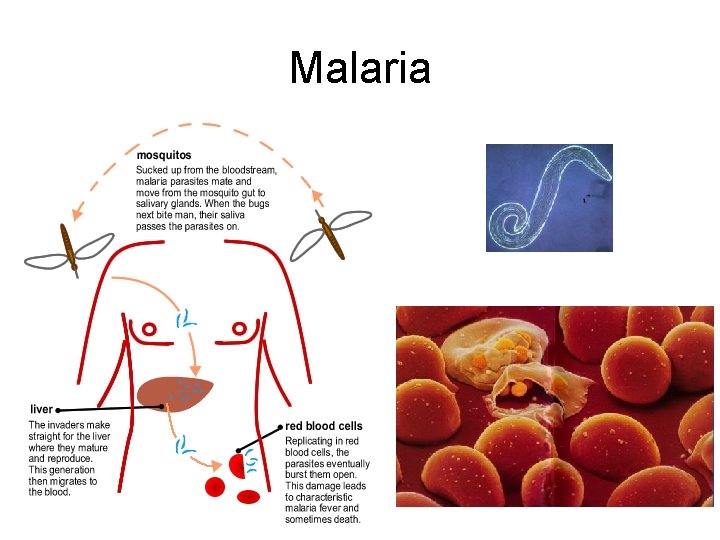
Malaria
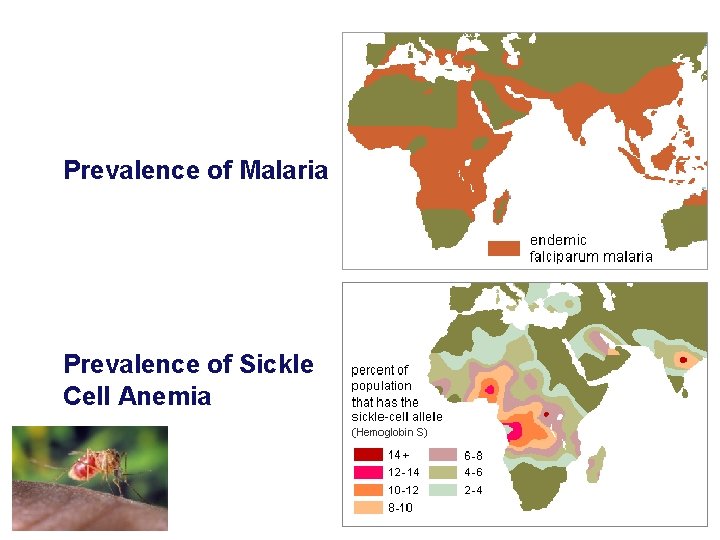
Prevalence of Malaria Prevalence of Sickle Cell Anemia
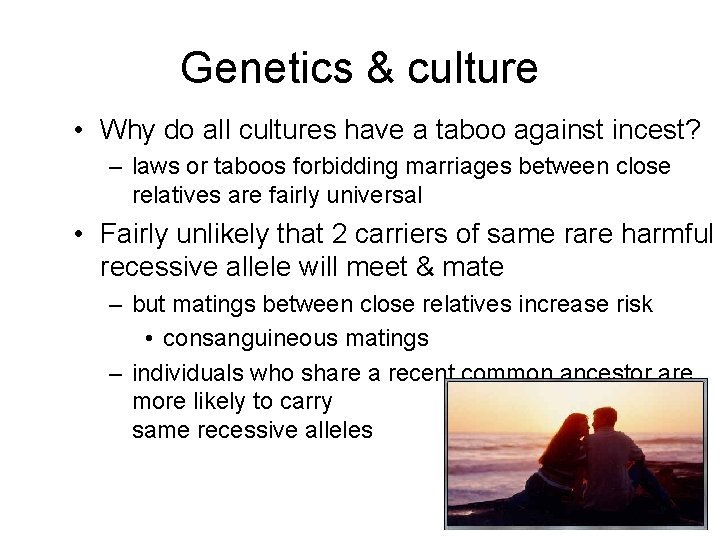
Genetics & culture • Why do all cultures have a taboo against incest? – laws or taboos forbidding marriages between close relatives are fairly universal • Fairly unlikely that 2 carriers of same rare harmful recessive allele will meet & mate – but matings between close relatives increase risk • consanguineous matings – individuals who share a recent common ancestor are more likely to carry same recessive alleles
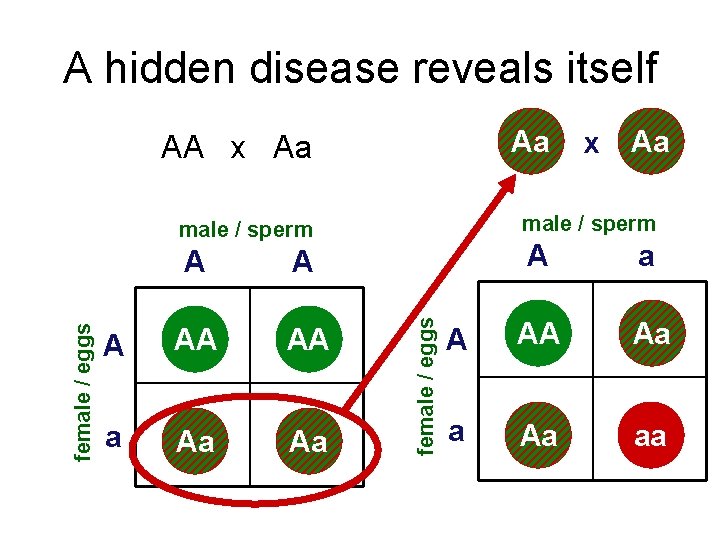
A hidden disease reveals itself Aa AA x Aa A AA AA a Aa Aa female / eggs A Aa male / sperm A x A a A AA Aa aa
Any Questions? ?
- Slides: 104