
MEMORY TECHNOLOGY FOR SMALL FORM FACTOR SYSTEMS Bill
MEMORY TECHNOLOGY FOR SMALL FORM FACTOR SYSTEMS Bill Gervasi Chairman, JEDEC Memory Parametrics
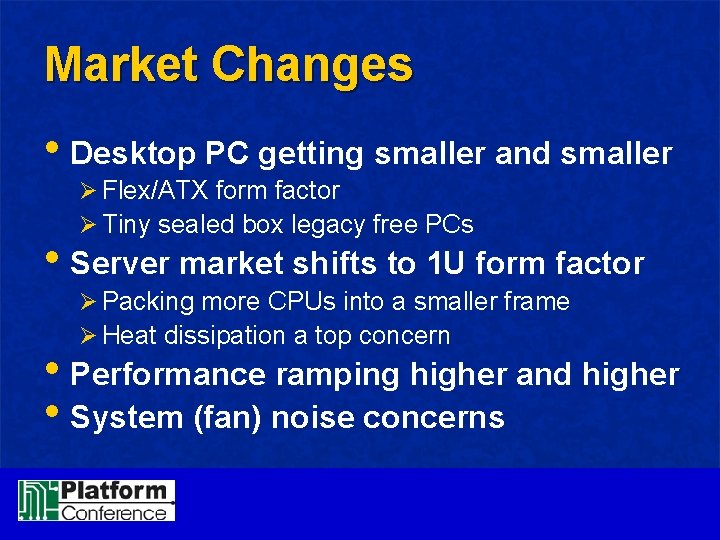
Market Changes • Desktop PC getting smaller and smaller Ø Flex/ATX form factor Ø Tiny sealed box legacy free PCs • Server market shifts to 1 U form factor Ø Packing more CPUs into a smaller frame Ø Heat dissipation a top concern • Performance ramping higher and higher • System (fan) noise concerns
New System Designs and Form Factors
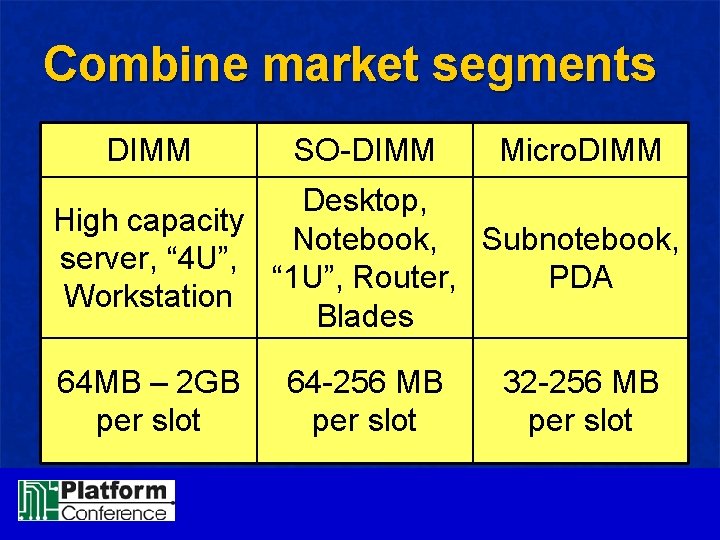
Combine market segments DIMM SO-DIMM Micro. DIMM Desktop, High capacity Notebook, Subnotebook, server, “ 4 U”, “ 1 U”, Router, PDA Workstation Blades 64 MB – 2 GB per slot 64 -256 MB per slot 32 -256 MB per slot
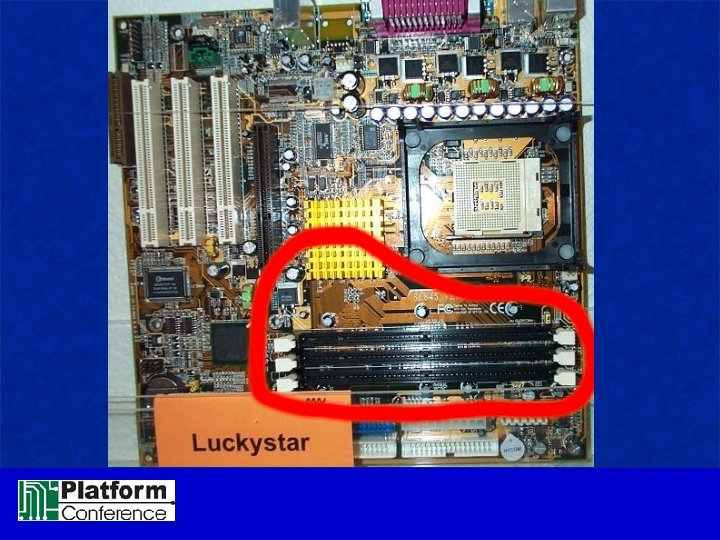
It’s Time for a Change • PC demand plateau at 128 -256 MB Ø DDR SO-DIMM clearly meets this need • 30% of Flex. ATX PCB is memory sockets • & traces 1 U = 86% of server market (by unit) Ø Trying to fit 6 -8 CPUs in one 19” rack • Increasing operating frequency harder to achieve with 5¼“ DIMM
Comparing DDR Memory Modules
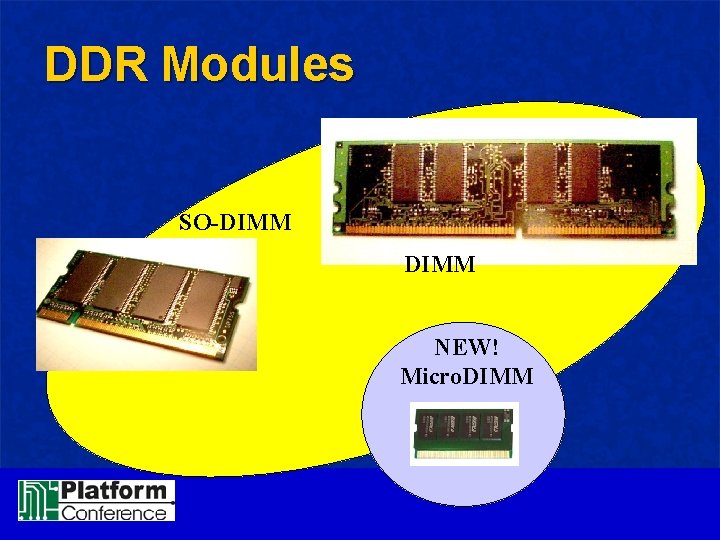
DDR Modules SO-DIMM NEW! Micro. DIMM
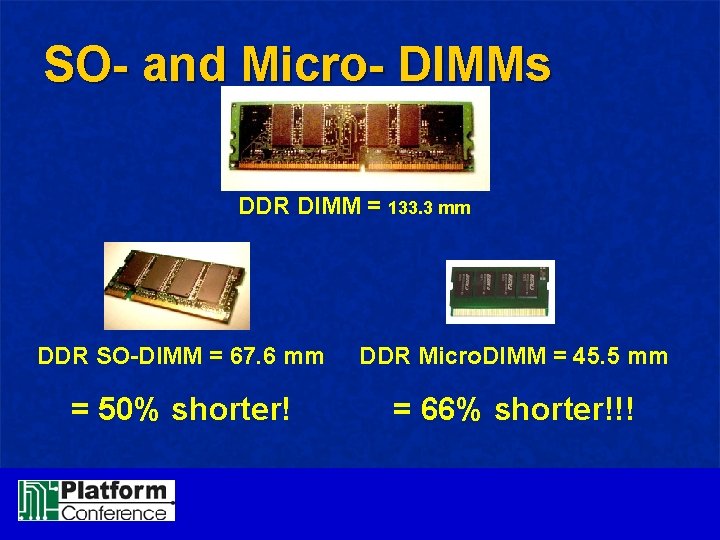
SO- and Micro- DIMMs DDR DIMM = 133. 3 mm DDR SO-DIMM = 67. 6 mm DDR Micro. DIMM = 45. 5 mm = 50% shorter! = 66% shorter!!!
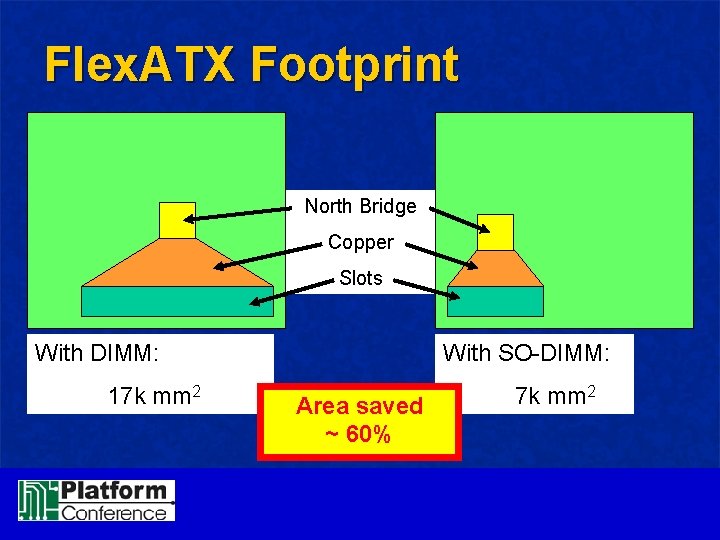
Flex. ATX Footprint North Bridge Copper Slots With DIMM: 17 k mm 2 With SO-DIMM: Area saved ~ 60% 7 k mm 2
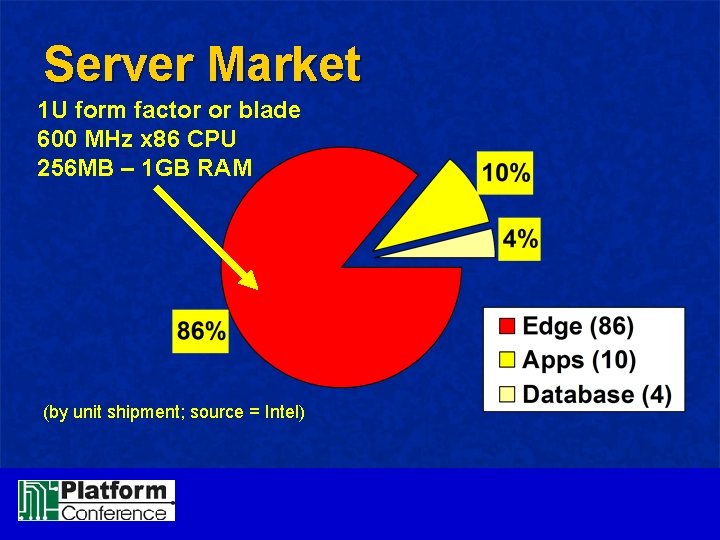
Server Market 1 U form factor or blade 600 MHz x 86 CPU 256 MB – 1 GB RAM (by unit shipment; source = Intel)
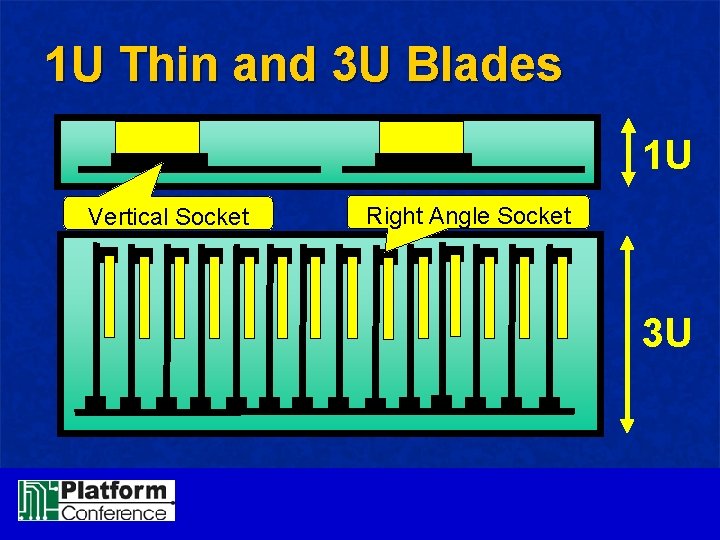
1 U Thin and 3 U Blades 1 U Vertical Socket Right Angle Socket 3 U
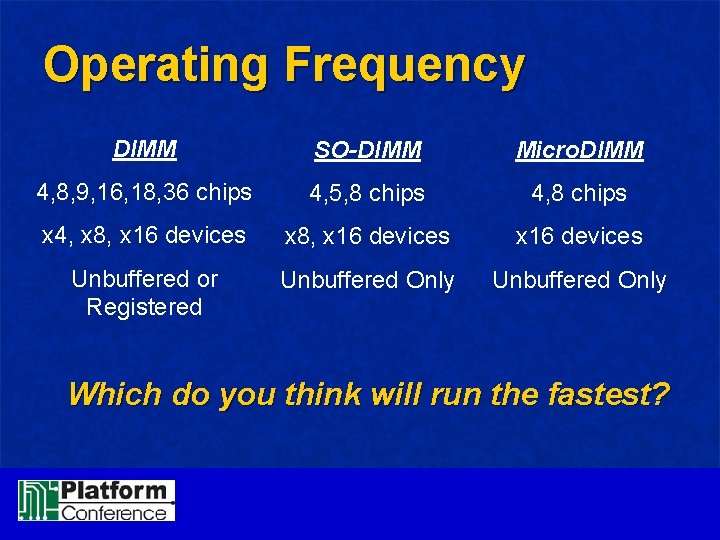
Operating Frequency DIMM SO-DIMM Micro. DIMM 4, 8, 9, 16, 18, 36 chips 4, 5, 8 chips 4, 8 chips x 4, x 8, x 16 devices Unbuffered or Registered Unbuffered Only Which do you think will run the fastest?

Matching Requirements and Implementations
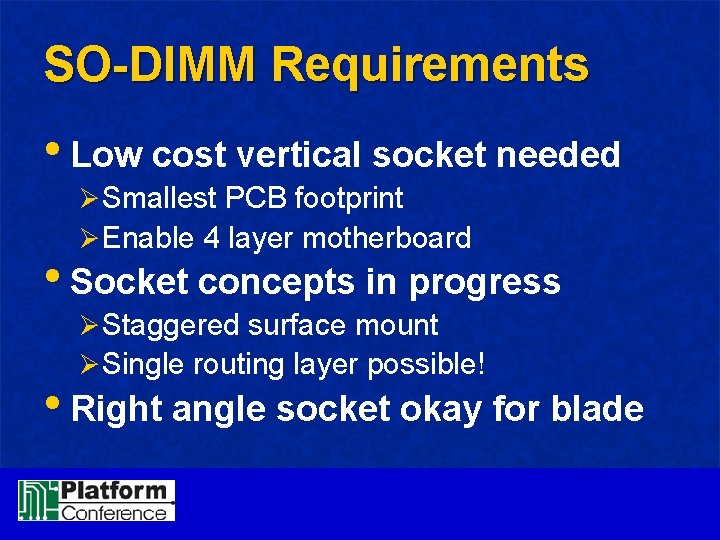
SO-DIMM Requirements • Low cost vertical socket needed ØSmallest PCB footprint ØEnable 4 layer motherboard • Socket concepts in progress ØStaggered surface mount ØSingle routing layer possible! • Right angle socket okay for blade
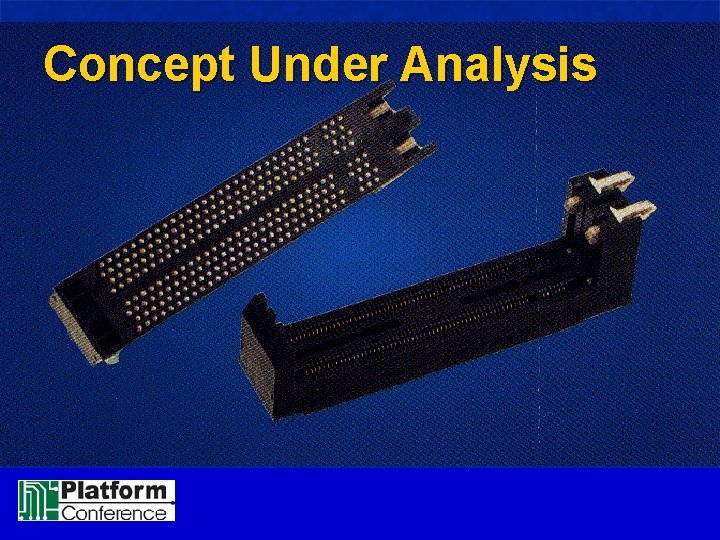
Concept Under Analysis

Discussions Under Way Began negotiations with the major mother board manufacturers – all are open to evaluating the concept Of course, no one will make the move unless WE ALL MOVE TOGETHER
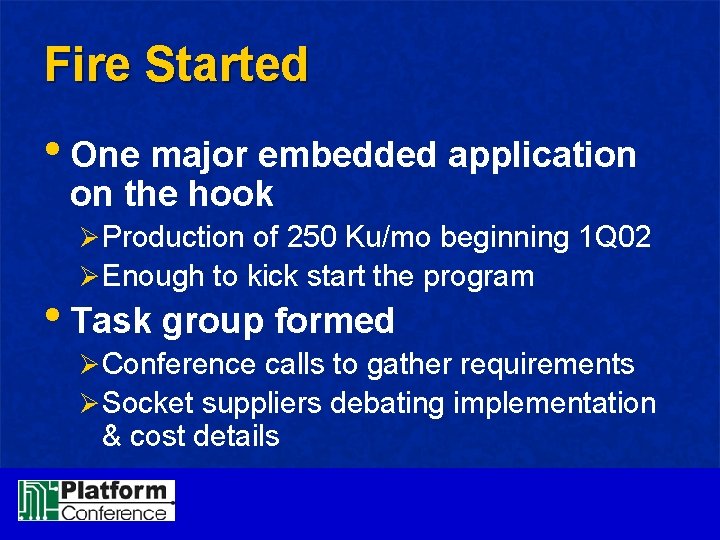
Fire Started • One major embedded application on the hook ØProduction of 250 Ku/mo beginning 1 Q 02 ØEnough to kick start the program • Task group formed ØConference calls to gather requirements ØSocket suppliers debating implementation & cost details
We have an opportunity to establish the DDR SO-DIMM as the highest volume, lowest cost, highest performance memory module in the industry.
What about Micro. DIMM? • Notebooks & subnotebooks • PDAs and Web Tablets • High density 1 U servers? ? ?
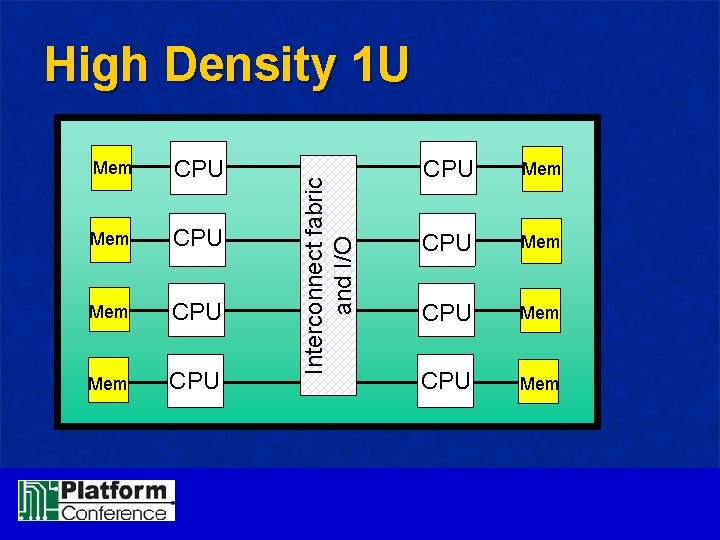
Mem CPU Interconnect fabric and I/O High Density 1 U CPU Mem
Micro. DIMM Requirements • DDR Micro. DIMM used in high density 1 U ØRight angle socket okay… 1 x 2” footprint ØOne module per CPU • No vertical socket demand seen… yet…
Heat & Noise
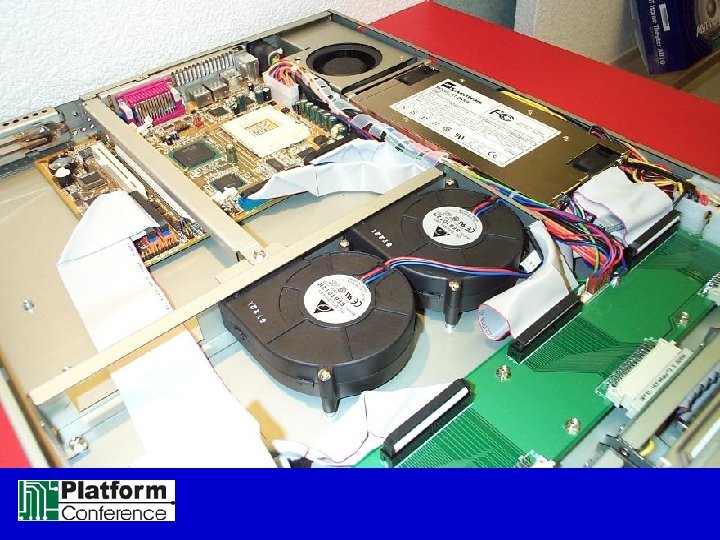
Dealing w/ heat and noise • Greatest challenge for 1 U server is HEAT • Dissipating heat takes FANS • Fans generate MORE HEAT
Fanless Desktop PC? • What doesn’t fit? ØMP 3 music Ø 100 W per channel amp ØBose surround speaker system ØPC fans with 75 d. B of white noise
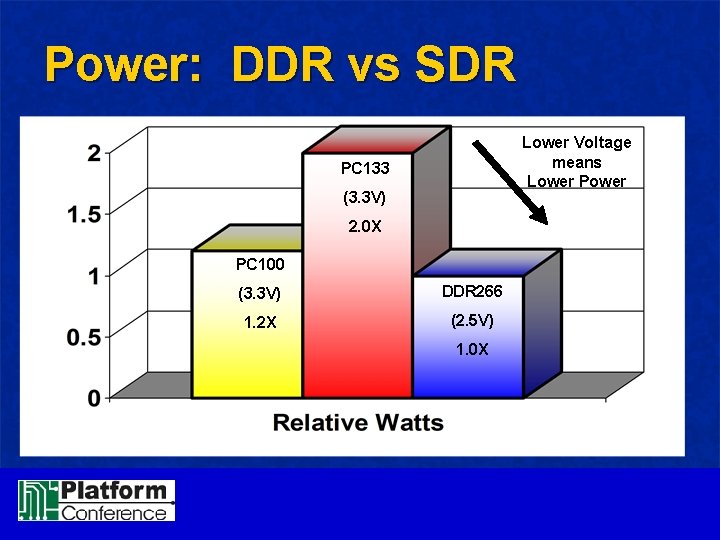
Power: DDR vs SDR Lower Voltage means Lower PC 133 (3. 3 V) 2. 0 X PC 100 (3. 3 V) DDR 266 1. 2 X (2. 5 V) 1. 0 X
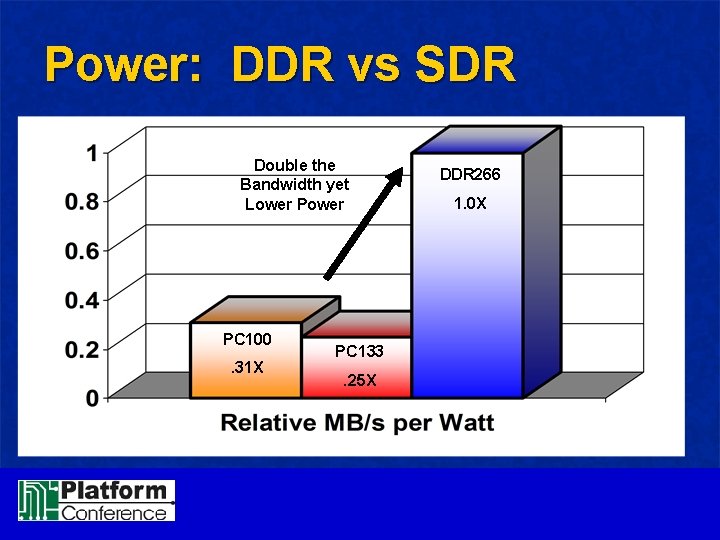
Power: DDR vs SDR Double the Bandwidth yet Lower PC 100. 31 X PC 133. 25 X DDR 266 1. 0 X
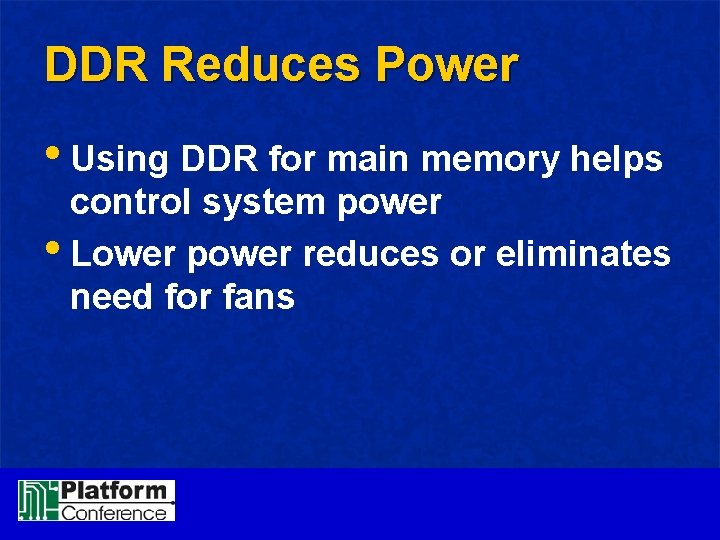
DDR Reduces Power • Using DDR for main memory helps control system power • Lower power reduces or eliminates need for fans
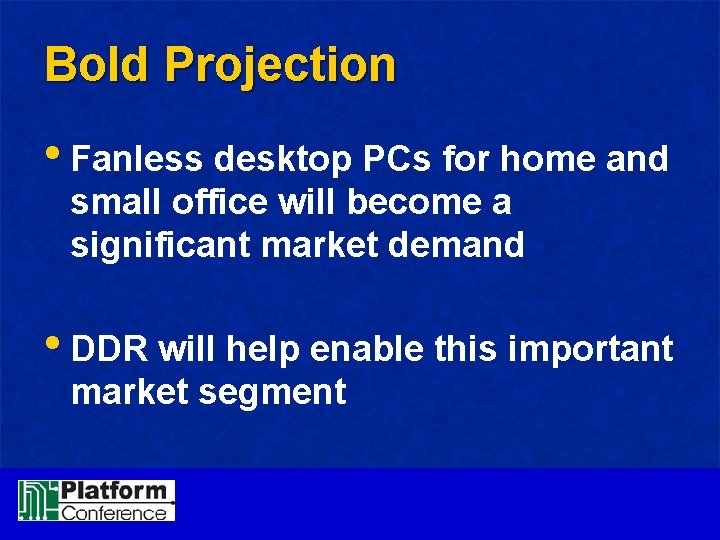
Bold Projection • Fanless desktop PCs for home and small office will become a significant market demand • DDR will help enable this important market segment
Another Wild Card • Low Power SDR Ø 1. 8 V Ø No DLL Ø Inventive refresh options • Some focus here, especially for cell • phones… will it spread? Features considered for DDR family, too
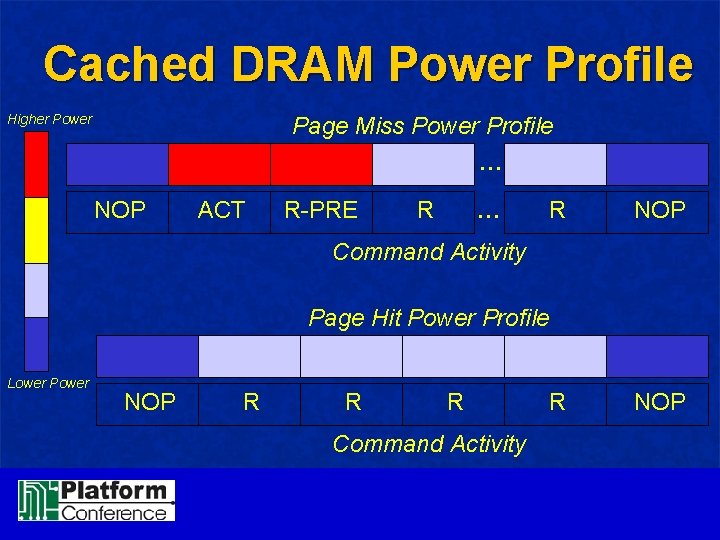
Cached DRAM Power Profile Higher Power Page Miss Power Profile … NOP ACT R-PRE R … R NOP Command Activity Page Hit Power Profile Lower Power NOP R R R Command Activity R NOP
Conclusions • Market form factors are changing • New designs require rethinking our past • • assumptions DDR SO-DIMM could replace the DIMM for desktop applications Lower power would allow us to eliminate noisy fans

Thank You
- Slides: 34