
Memory Techniques Learn to Use Visualization Notes Visualization
- Slides: 7
Memory Techniques
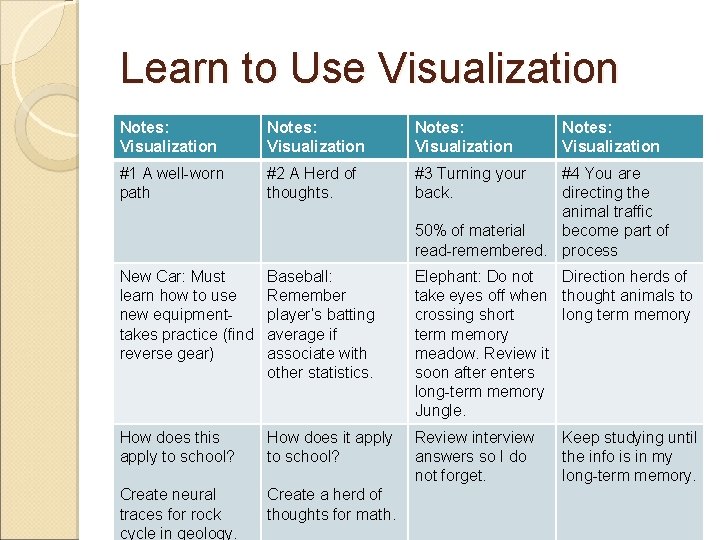
Learn to Use Visualization Notes: Visualization #1 A well-worn path #2 A Herd of thoughts. #3 Turning your back. New Car: Must learn how to use new equipmenttakes practice (find reverse gear) Baseball: Remember player’s batting average if associate with other statistics. Elephant: Do not Direction herds of take eyes off when thought animals to crossing short long term memory meadow. Review it soon after enters long-term memory Jungle. How does this apply to school? How does it apply to school? Review interview answers so I do not forget. Create neural traces for rock cycle in geology. Create a herd of thoughts for math. #4 You are directing the animal traffic 50% of material become part of read-remembered. process Keep studying until the info is in my long-term memory.
An Ideal Study Area People with short attention spans need a quiet environment. Lighting: two or more sources. Work Space promotes concentration.
Setting up mental stage Be active learning Use goal-setting techniques Do warm-up at beginning of study block. Use techniques to deal with internal and external distracters.
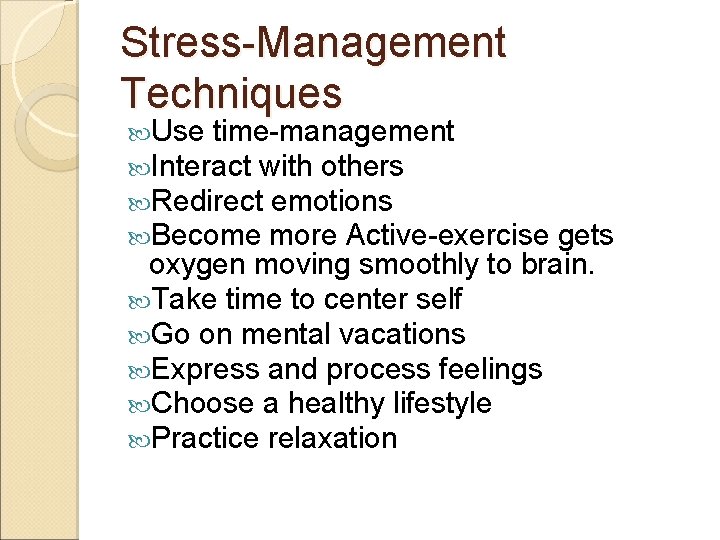
Stress-Management Techniques Use time-management Interact with others Redirect emotions Become more Active-exercise gets oxygen moving smoothly to brain. Take time to center self Go on mental vacations Express and process feelings Choose a healthy lifestyle Practice relaxation
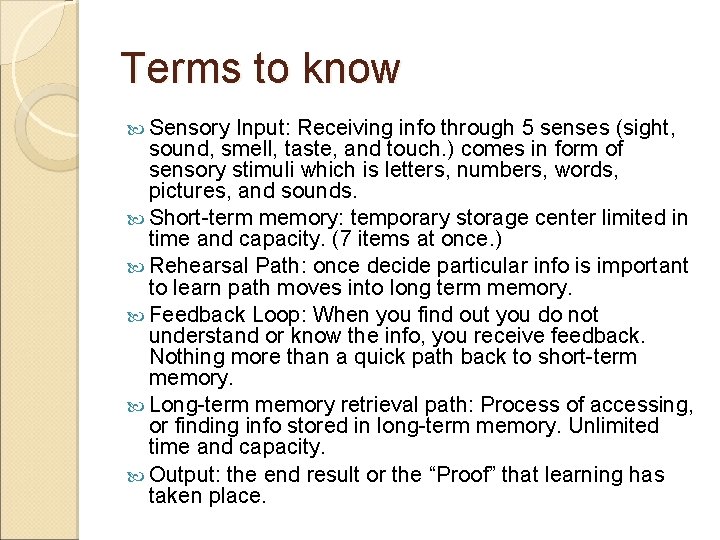
Terms to know Sensory Input: Receiving info through 5 senses (sight, sound, smell, taste, and touch. ) comes in form of sensory stimuli which is letters, numbers, words, pictures, and sounds. Short-term memory: temporary storage center limited in time and capacity. (7 items at once. ) Rehearsal Path: once decide particular info is important to learn path moves into long term memory. Feedback Loop: When you find out you do not understand or know the info, you receive feedback. Nothing more than a quick path back to short-term memory. Long-term memory retrieval path: Process of accessing, or finding info stored in long-term memory. Unlimited time and capacity. Output: the end result or the “Proof” that learning has taken place.
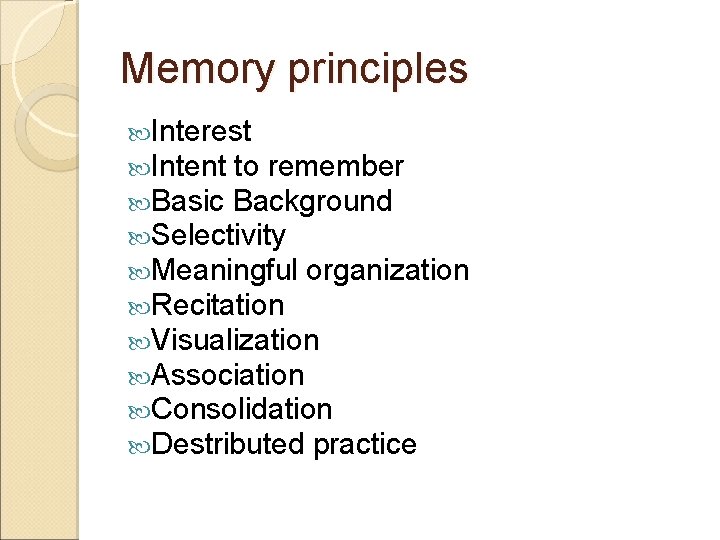
Memory principles Interest Intent to remember Basic Background Selectivity Meaningful organization Recitation Visualization Association Consolidation Destributed practice