
Memory Retrieval Getting Information Out Retrieval Retrieval is
- Slides: 9
Memory Retrieval: Getting Information Out
Retrieval • Retrieval is: • Recall • Recognition • Speedy relearning • All three are evidence that something has been learned
Retrieval • Retrieval Cues • Priming • A quick association that leads to recall of a memory • Context Effects • Similar location and conditions might help to trigger a memory • Moods • Some information is more easily recalled when you are in a similar mood as when the information was processed
Forgetting • The Seven Sins of Memory • Three sins of forgetting • Absent-mindedness – inattention to details produces encoding failure • Transience – storage decay over time • Blocking – inaccessibility of stored information
Forgetting • Three sins of distortion • Misattribution – confusions the source of information • Suggestibility – the lingering effects of misinformation • Bias – belief-colored recollections • One sin of intrusion • Persistence – unwanted memories
Forgetting • Encoding Failure • Information is never entered into our long term memory • Can you spot the real penny?
Forgetting • Storage Decay • Previously learned information is sometimes lost • A gradual fading of the physical memory trace
Forgetting • Retrieval Failure • Interference • Proactive interference – something you learned earlier disrupts recall of something you experience later • Retroactive interference – something you learned recently disrupts your recall of something you previously learned
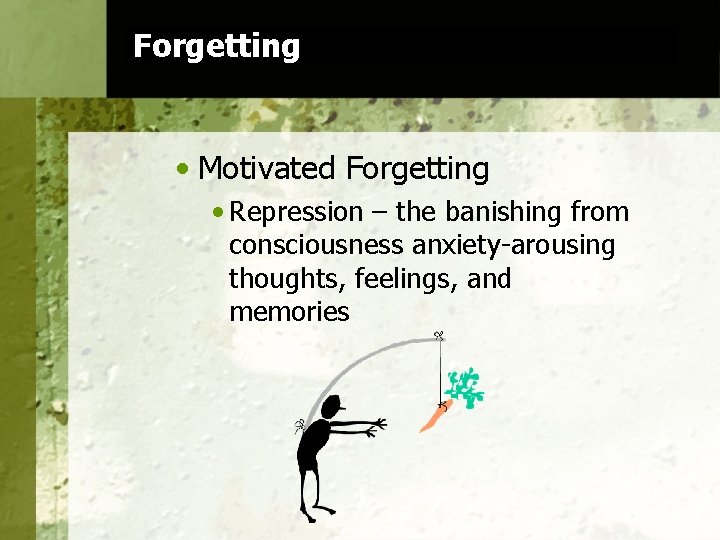
Forgetting • Motivated Forgetting • Repression – the banishing from consciousness anxiety-arousing thoughts, feelings, and memories