
Memory Myers Ch 7 A Three Basic Stages
Memory Myers Ch. 7 A
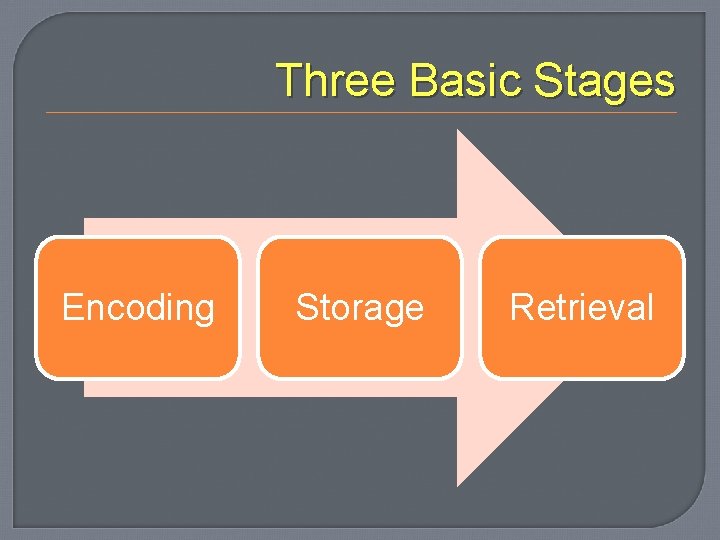
Three Basic Stages Encoding Storage Retrieval
I need 4 volunteers…
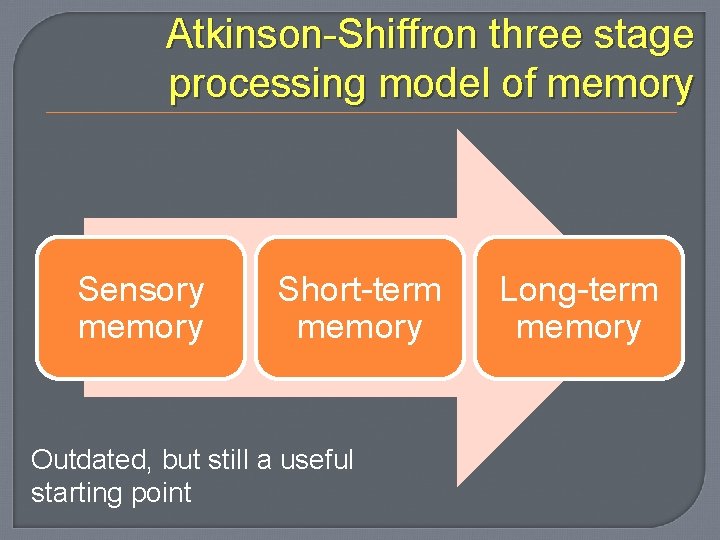
Atkinson-Shiffron three stage processing model of memory Sensory memory Short-term memory Outdated, but still a useful starting point Long-term memory
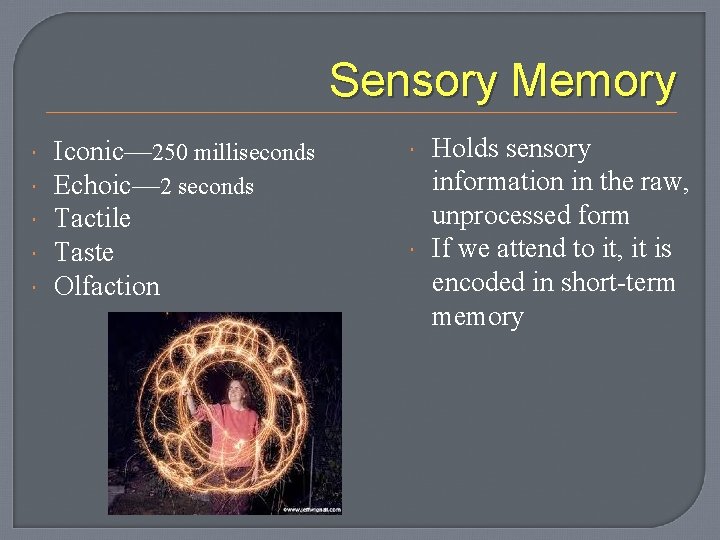
Sensory Memory Iconic— 250 milliseconds Echoic— 2 seconds Tactile Taste Olfaction Holds sensory information in the raw, unprocessed form If we attend to it, it is encoded in short-term memory
Encoding Automatic processing • Describe your day so far… Effortful processing Parallel processing— dejavu (theory)
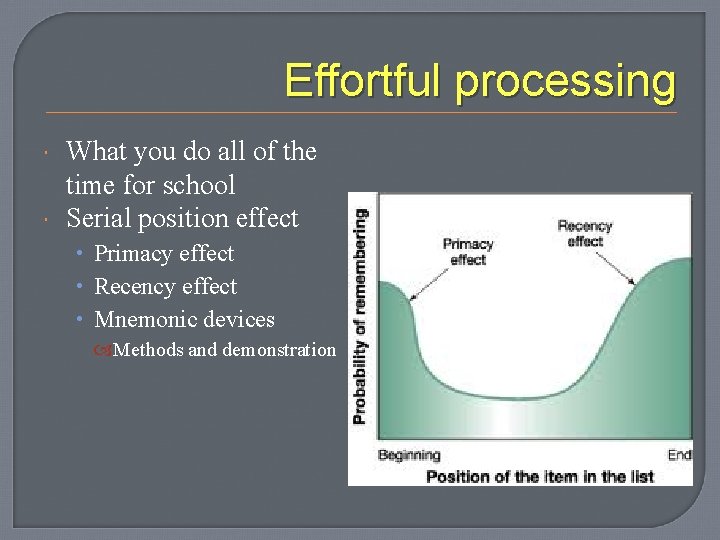
Effortful processing What you do all of the time for school Serial position effect • Primacy effect • Recency effect • Mnemonic devices Methods and demonstration
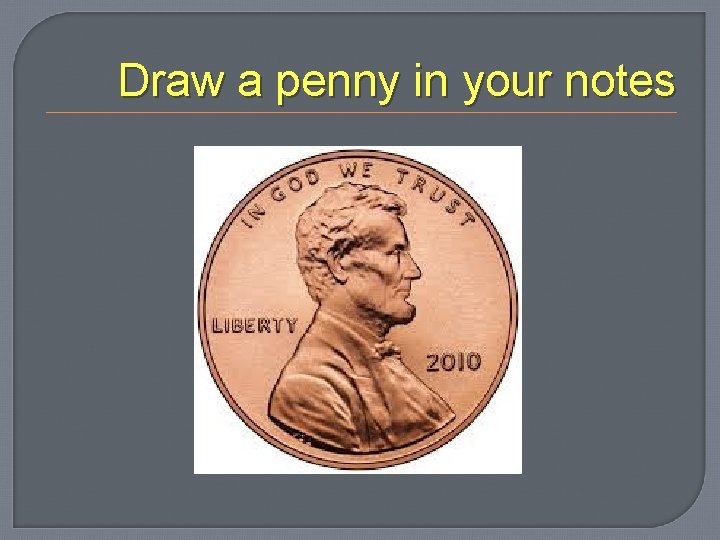
Draw a penny in your notes
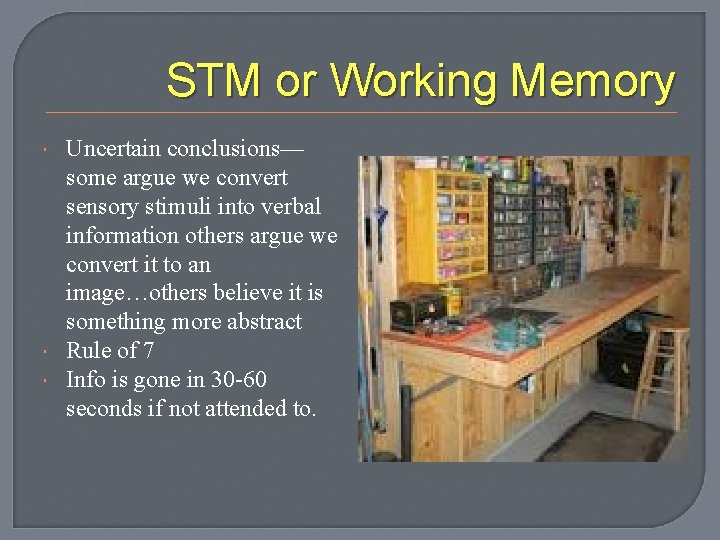
STM or Working Memory Uncertain conclusions— some argue we convert sensory stimuli into verbal information others argue we convert it to an image…others believe it is something more abstract Rule of 7 Info is gone in 30 -60 seconds if not attended to.
Long-term Memory Competition! Demonstration #1 • Two groups • Whatever group remembers the most words wins. Demonstration #2 • Remember the list of words in order • Two rounds
Long Term Memory (LTM) Rehearsal—Verbal • Best for phone #s, passwords, SS #s, learning alphabet, etc… Elaboration—visual (or otherwise) connection to something you already know 1) Relatively permanent 2) Assumed to be unlimited 3) Contains different types of memories
Types of memories 1) Explicit/Declarative • Semantic—meaning • Episodic—personal 2) Implicit—unaware of retrieval (nondeclarative) • Procedural--(i. e. , riding a bike, tying shoes, etc…) • Emotional—love, hate, fear, anxiety, etc…

The neuroscience of long-term storage Memory occurs in the synapse via neural connections LTP—Long term potentiation
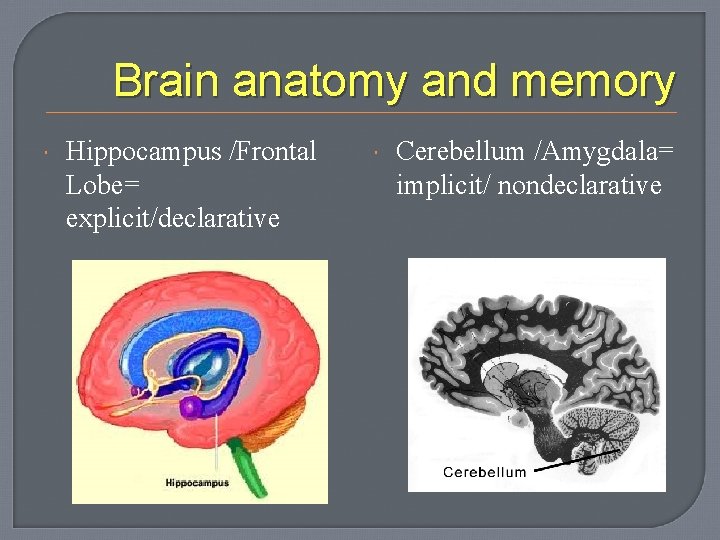
Brain anatomy and memory Hippocampus /Frontal Lobe= explicit/declarative Cerebellum /Amygdala= implicit/ nondeclarative
Storage problems ANTEROGRADE AMNESIA Inability to transfer new information from short-term into long term Clive Wearing 50 First Dates RETROGRADE AMNESIA Inability to retrieve information that was acquired before a particular date, usually the date of an injury or operation
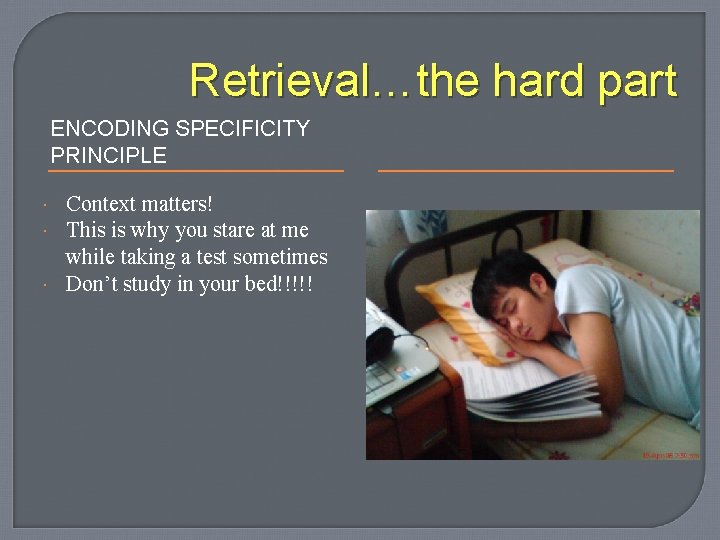
Retrieval…the hard part ENCODING SPECIFICITY PRINCIPLE Context matters! This is why you stare at me while taking a test sometimes Don’t study in your bed!!!!!
Name the Seven Dwarfs
The Seven Sins of Memory • Proactive interference—when information learned earlier impairs memory for information acquired later. • Retroactive interference—when information learned later impairs memory for information acquired earlier • P: proactive • O: old • R: retroactive • N: new 1) Transience
The Seven Sins of Memory 2) Absentmindedness—lapse of attention results in memory failure
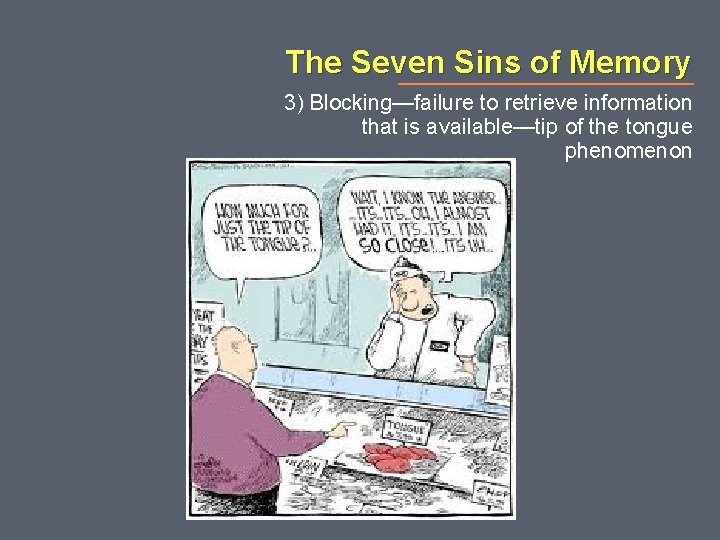
The Seven Sins of Memory 3) Blocking—failure to retrieve information that is available—tip of the tongue phenomenon
The Seven Sins of Memory 4) Memory misattribution—assigning a recollection or an idea to the wrong source New Jersey SC Elizabeth Loftus Eyewitness Testimony
Try to remember the list of words I read aloud to you.
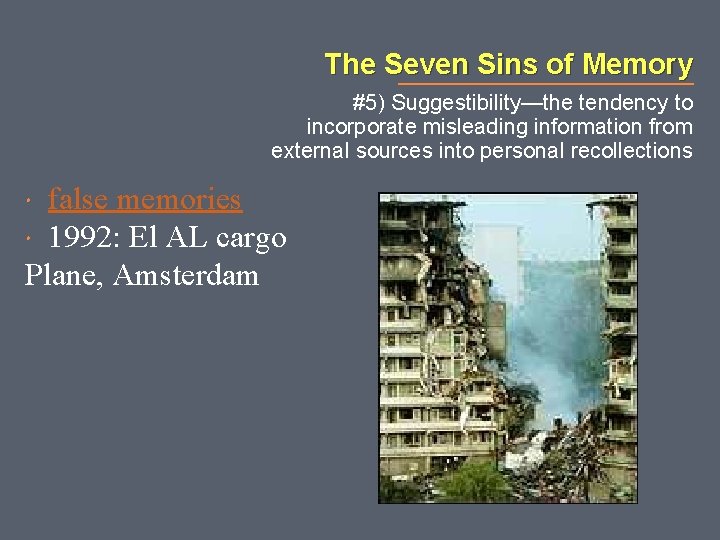
The Seven Sins of Memory #5) Suggestibility—the tendency to incorporate misleading information from external sources into personal recollections false memories 1992: El AL cargo Plane, Amsterdam
The Seven Sins of Memory #6) Bias—distortion of memories due to present knowledge/beliefs/feelings We remember the good and forget the bad We like to think of ourselves as consistent so we diminish the memory of change in ourselves— cognitive dissonance Confirmation Bias
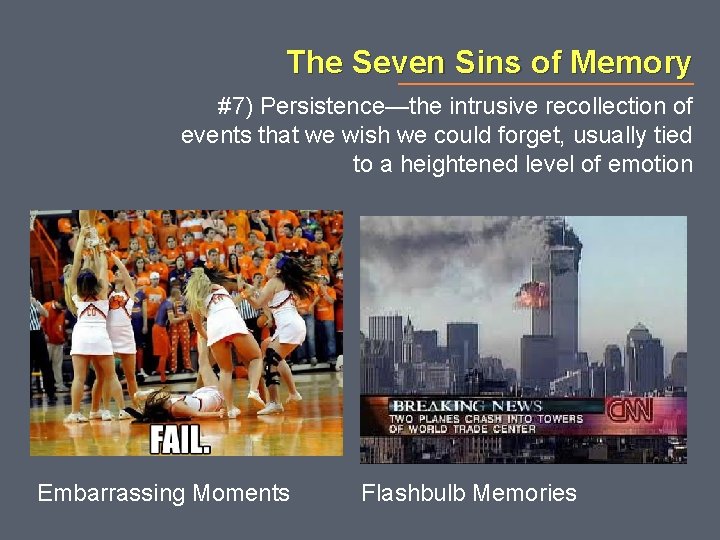
The Seven Sins of Memory #7) Persistence—the intrusive recollection of events that we wish we could forget, usually tied to a heightened level of emotion Embarrassing Moments Flashbulb Memories
Ways to improve memory Mnemonics Massed vs. distributed practice Overlearning Imagery
Autobiographical Memory
Humanistic Theories and Memory Alfred Adler • Present determines past • What is your earliest memory—write it down or draw it in detail… Are memories based on present mood and situation?
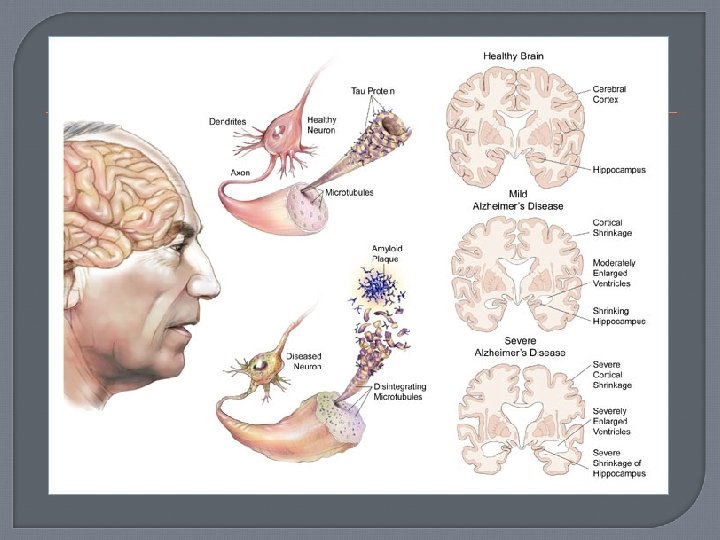
Alzheimer’s Disease What does it mean to lose your memory? Are you still the same person to yourself and to others? Do you still have your identity?
- Slides: 30