
MEMORY Human Memory Basic Questions The informationprocessing model
MEMORY
Human Memory: Basic Questions � � The information-processing model of memory sees memory as functioning like a computer, which encodes information, stores it, and makes it accessible for future retrieval. How does information get into memory? � � How is information maintained in memory? � � Encoding Storage How is information pulled back out of memory? � Retrieval
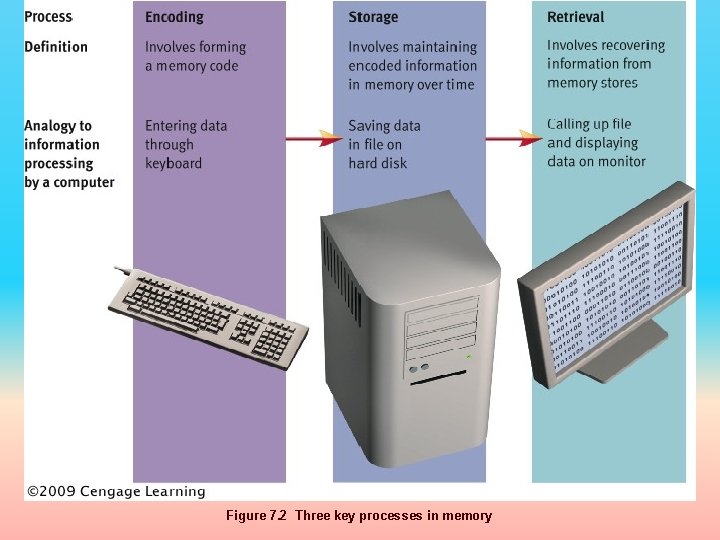
Figure 7. 2 Three key processes in memory
Encoding: Getting Information Into Memory � � � The first step in getting information into memory is to pay attention to it. Attention involves focusing awareness on a narrowed range of stimuli or events. Selective attention is a term used by many psychologists to describe this payingattention-to-something process; however, the word selective is really redundant, Attention IS selection of input. Usually, attention is likened to a filter in an informationprocessing model of memory, . The filter screens out most stimuli, while allowing a select few to get by. Much research has been done to determine whether this filtering process occurs early in the information processing sequence or later. It appears that both may be at play. Sometimes you are paying attention to someone talking with you at a party, and you suddenly hear your name from across the room (cocktail party effect).

Levels of Processing: Craik and Lockhart (1972) Incoming information processed at different levels Deeper processing provides for longer lasting memory codes Encoding levels: Structural encoding (how something looks or appears) = shallow processing Phonemic encoding (how something sounds) = intermediate processing Semantic encoding (what something means)= deep and meaningful processing
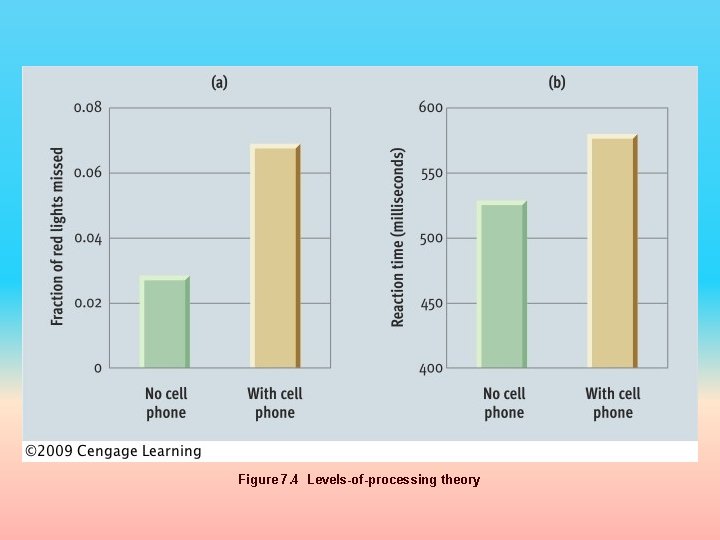
Figure 7. 4 Levels-of-processing theory
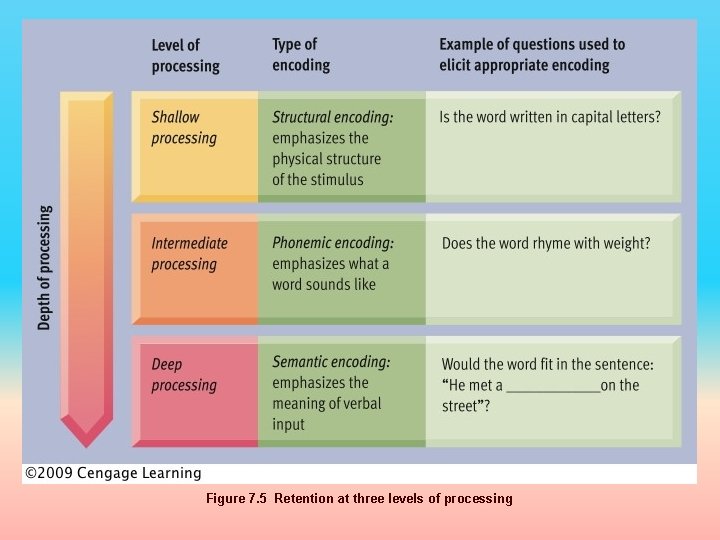
Figure 7. 5 Retention at three levels of processing
Levels of Processing Theory Some information gets processed without us even being aware of it. For example, one can drive their car, obey road rules and sing songs all at the same time. The way home is something you don’t have to think about – you are processing this information automatically (automatic processing). Other information you have to focus on in order to process it properly. Say you’re driving home from school while arguing with your girlfriend on the cell phone. The driving is automatic, but the argument is effortful (effortful processing). If you think about it, you can clearly see why driving while using cell phones is a dangerous thing indeed.
Serial Position Effect When presented with a long list of items, subjects will not be able to remember the middle items, but their memories will be much better when remembering items at the beginning and end of the list. This phenomenon is referred to as the serial position effect. The ability to remember items at the beginning of the list (the primacy effect) is weaker than the ability to remember items at the end of the list (the recency effect).
The Spacing Effect When attempting to study or remember a large amount of material, it is better for long term as well as short term remembering if you distribute your rehearsal sessions over a longer period of time rather than cram your studying into a very short time right before you have to recall the information. This phenomenon is known as the spacing effect.
Enriching Encoding: Improving Memory Elaboration is defined as linking a stimulus to other information at the time of encoding in order to enhance and enrich the processing. Elaboration often consists of thinking of examples. Self-generated examples seem to work best. For example, you are studying phobias for your psychology test, and you apply this information to your own fear of spiders. Visual Imagery refers to the creation of visual images to represent words to be remembered Concrete words are much easier to create images of. Self-Referent Encoding (aka the self-reference effect) creates deeper encoding by making information personally meaningful
Mnemonic Devices are methods, tricks really, that we all use to help us remember lists of items. The treble clef, or scale is taught in introductory music reading sessions using a mnemonic device – the notes E G B D and F are remembered by the following: Every Good Boy Does Fine. The bass clef is a different menmonic: F A C and E. FACE.
Storage: Maintaining Information in Memory An analogy to this process is found in how information is stored in computers - info is input and either filtered out as irrelevant or processed to deeper levels for later retrieval. There are three levels of storage: Sensory Short-term Long-term See next several slides for details
Sensory Memory Acts as a sensory filter that makes split second decisions as to what information will be filtered out and what will move to deeper levels of processing. There is a brief preservation of information in its original sensory form. All incoming information goes through this filter. Auditory and visual sensory register has approximately ¼ second retention - The visual and auditory sensory stores appear to decay after about ¼ second George Sperling (1960) conducted a classic experiment on how long visual images stay in the sensory memory register, illustrating how brief the sensory store actually is…his experiment is depicted in the following figure.
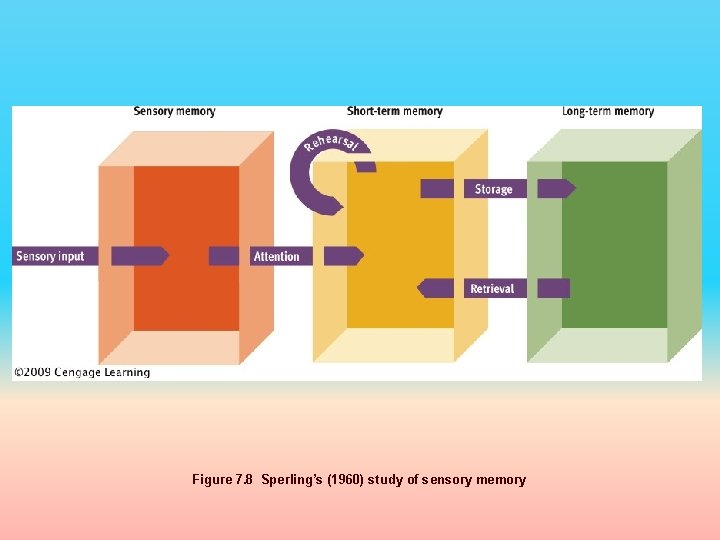
Figure 7. 8 Sperling’s (1960) study of sensory memory
Short Term Memory (STM) Short-term memory (STM) is defined as a limited-capacity store that can maintain unrehearsed information for up to about 20 seconds. information can only be kept there for 20 secs before it is lost George Miller (1956) wrote a famous paper called “The Magical Number Seven, Plus or Minus Two: Some Limits on Our Capacity for Processing Information, " where he illustrated that the average person can hold between 5 and 9 chunks of information in STM. Chunking – grouping familiar stimuli for storage as a single unit; for example, the following numbers 8 -6 - 7 - 5 - 3 - 0 - 9 can be thought of as 7 individual numbers or they can be chunked together in groups of 2, 3, etc. Rehearsal – the process of repetitively verbalizing or thinking about the information.
Long-Term Memory (LTM): Unlimited Capacity While most researchers agree that LTM has an unlimited capacity; that is, our memory store never gets full, much debate remains over whether storage is permanent. Flashbulb memory and hypnosis based memory suggest that LTM is indeed permanent, that the only reason we forget is that we aren’t able to access information that is still in LTM (interference theory). Research shows, however, that flashbulb and hypnosis based memories are not always accurate. Is the information still there, or does it decay over time, and we make up for this by building up decayed memories so that they make sense? Long term memories one never forgets, or at least don’t forget for super long periods of time are referred to as Permastore Memories.
� � Retrieval: Getting Information Out of Memory The tip-of-the-tongue phenomenon shows that recall is often guided by partial information about a word, which are called retrieval cues. Memories can also be reinstated by context cues. It’s easier to recall long-forgotten events if you return after a number of years to a place where you used to live. Memories are reconstructions of the past, which may not be entirely accurate. Research shows that reconstructions can be influenced by new information, which is the misinformation effect. Elizabeth Loftus has shown that eyewitness testimony can be influenced by information presented to witnesses. Example – researchers showed a video of two cars in an accident and asked one group of people how fast the cars were going when they bumped into each other, asked another group how fast the cars were going when the SMASHED INTO each other. A week later they asked whethere was any broken glass in the video…the “smashed into” group said yes, the “bumped” group said no.
Retrieval: Getting Information Out of Memory The misinformation effect is explained in part by the unreliability of source monitoring, which is the process of making attributions about the origins of memories. People make decisions at the time of retrieval about where their memory is coming from (did I read that somewhere or think of it on my own? Cryptoamnesia is inadvertent plagiarism that occurs when you think you came up with something but were really exposed to it earlier).
Forgetting: When Memory Lapses To study forgetting empirically, psychologists must measure it precisely. To measure forgetting, we must first measure memory. Retention – the proportion of material one is able to maintain in long term memory. Three types of tasks are used to measure retention: Recall requires subjects to reproduce information on their own without any cues. Recognition requires subjects to select previously learned material from an array of options. Relearning requires subjects to relearn previously learned information to see how much LESS time or effort it takes them.
Forgetting: When Memory Lapses Ebbinghaus’ Forgetting Curve - Ebbinghaus found that retention and forgetting occur over time and plotted his data, which became known as the famous forgetting curve depicted on the next slide. Ebbinghaus used himself as a subject.
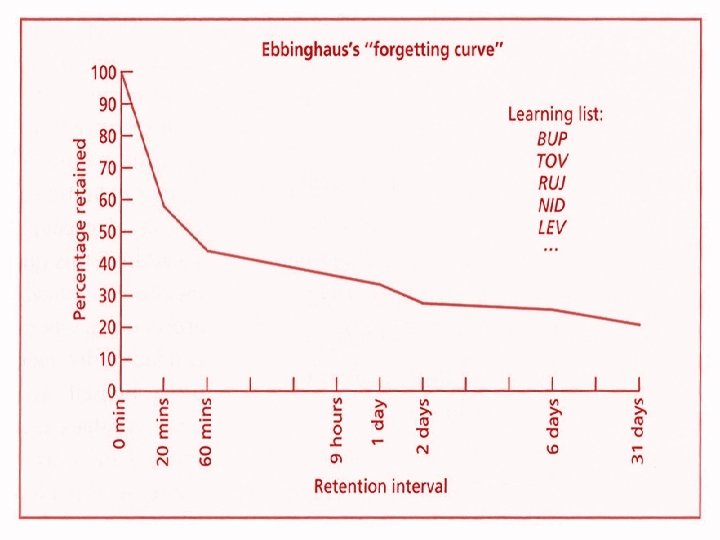
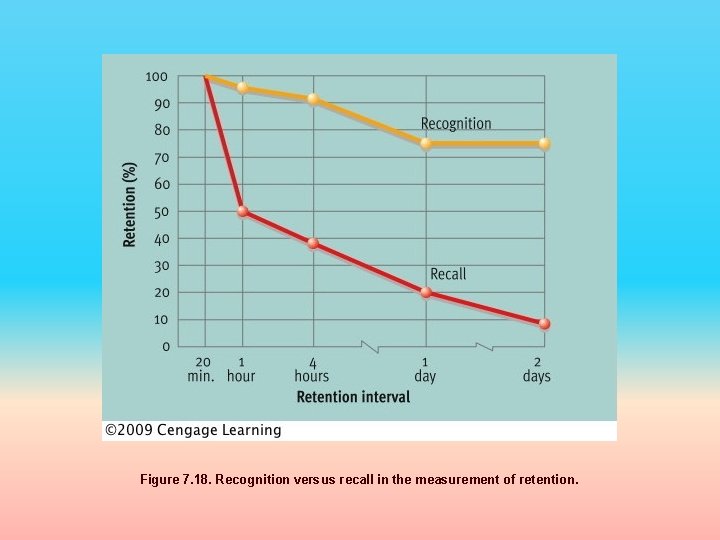
Figure 7. 18. Recognition versus recall in the measurement of retention.
Why Do We Forget? Research indicates that forgetting can be related to encoding, storage, or retrieval processes. Much forgetting may only look like forgetting; it may never have been inserted into memory in the first place. This is called pseudoforgetting and is usually due to a lack of attention. The encoding never actually occurs as a result. Ineffective encoding occurs when you encode on a more superficial level than you intend to. For example, if you are distracted when studying and encode what you are reading on a phonemic rather than a semantic level, you probably won’t recall the information the next day on the exam, or you’ll recall it improperly. Decay theory proposes that forgetting occurs because memory traces fade with time.
Why Do We Forget? The negative impact of competing information on retention is explained by interference theory. This theory holds that people forget information because of competition from other material. Proactive interference occurs when previously learned information interferes with the retention of new information, while retroactive interference occurs when new information impairs the retention for previously learned information. New research argues that forgetting is actually adaptive. How so? Imagine how cluttered your memory would be if you never forgot anything. You need to forget information that is no longer relevant, such as out-of-date phone numbers, discarded passwords, lines that were memorized for a tenth-grade play, and where you kept your important papers three apartments ago. This reduces competition among memories that can cause interference and confusion.
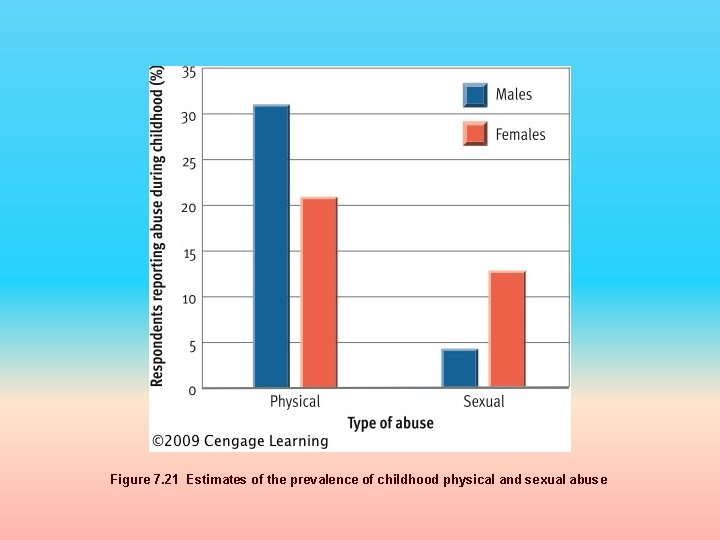
Figure 7. 21 Estimates of the prevalence of childhood physical and sexual abuse
The Physiology of Memory From a biochemical perspective, memory appears to be related to alterations in synaptic transmission at specific sites. Durable changes in synaptic transmission may be the building blocks of memories. Other research shows that learning causes hormonal changes which may modulate activity in a variety of neurotransmitter systems. Protein synthesis has also been shown to be necessary for memory formation - if you give drugs that interfere with protein synthesis, memory is impaired (at least in chicks and rats).
The Physiology of Memory From a neural circuitry perspective, memories appear to depend on localized neural circuits on the cerebral cortex of the brain. These are reusable pathways in the brain that may be specific for specific memories. Research indicates that long-term potentiation occurs with learning. Long-term potentiation is a long-lasting increase in neural excitability at synapses along a specific neural pathway. This supports the idea that memory traces consist of specific neural circuits and the idea that these pathways created are the building blocks of learning and memory. Neurogenesis—the formation of new neurons
The Physiology of Memory Anatomy The Cerebral cortex is where previous memories are stored. The most meaningful and/or complex memories are stored on the Prefrontal cortex. The Hippocampus is the part of the limbic system associated with the formation of new memories and enabling new learning. The anatomy of memory is complex, and many brain structures have been shown to be important in memory. The next slide illustrates the brain structures involved in memory, while the following slide illustrates the two types of amnesia, retrograde amnesia (for prior events) and anterograde amnesia (for new/current events).
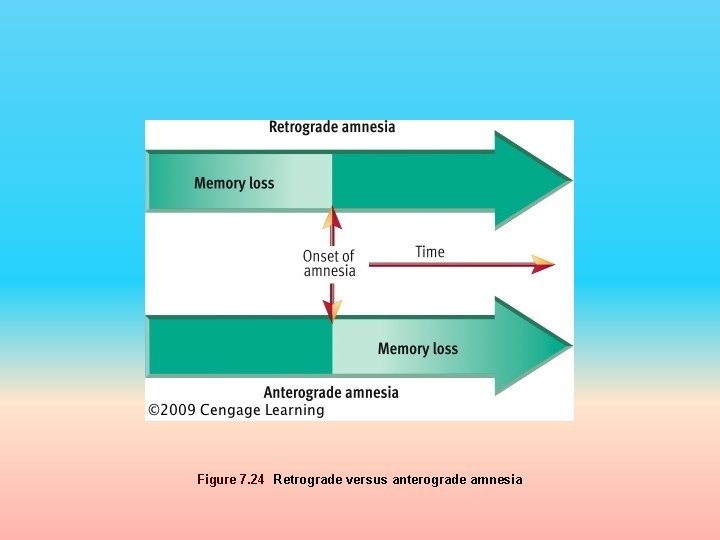
Figure 7. 24 Retrograde versus anterograde amnesia
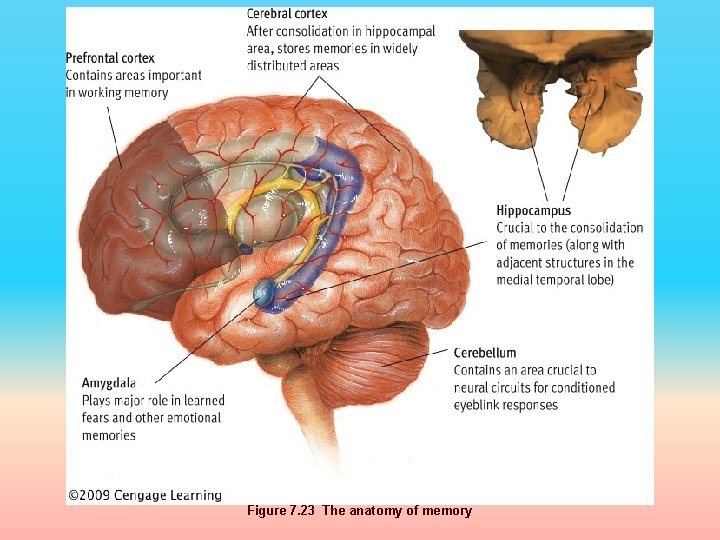
Figure 7. 23 The anatomy of memory
Are There Multiple Memory LTM Systems? The current thinking is that the answer is yes. The following are the possible subdivisions of long term memory, as put forth by most leading cognitivists: Declarative and Procedural: Procedural memory is memory for actions, skills, operations and conditioned responses, and declarative memory is memory for factual information. Semantic and Episodic: Declarative memory can be subdivided into memory for personal facts (episodic) and memory for general facts (semantic). Prospective and Retrospective: Retrospective memory is memory for past events, whereas prospective memory is remembering to do things in the future.
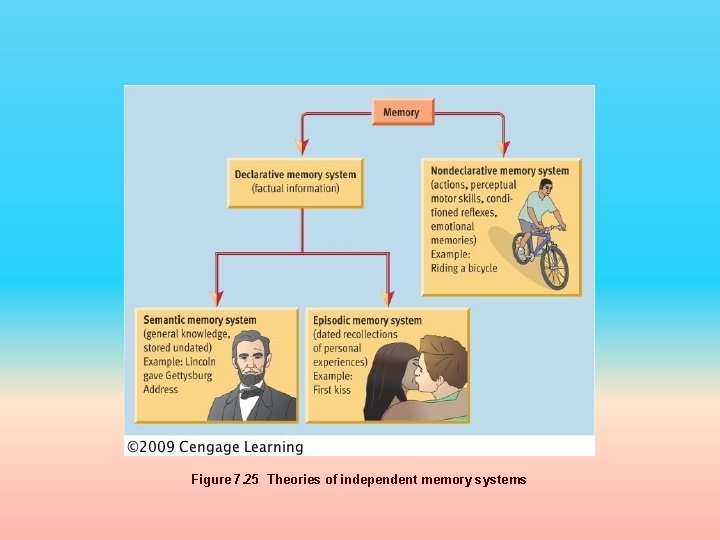
Figure 7. 25 Theories of independent memory systems
State Dependent and Mood Congruent Memory State-dependent memory or state-dependent learning is the phenomenon through which memory retrieval is most efficient when an individual is in the same state of consciousness as they were when the memory was formed. Mood-Congruent Memory indicates that, when humans store memories, they not only store the event, but they also store a memory of the mood they were in at the time. For this reason, when we feel happy we recall other happy memories. Likewise, when we feel depressed we remember other unhappy events. For this reason, it is easier to remember events when a person is in the same state of mind as when the memory was stored. Both are related to context cues, one involving state of consciousness at the time of the memory, the other involving mood at the time of the memory.
- Slides: 34