
Memory Encoding Storage and Retrieval 1 What is
- Slides: 22
Memory Encoding, Storage, and Retrieval 1
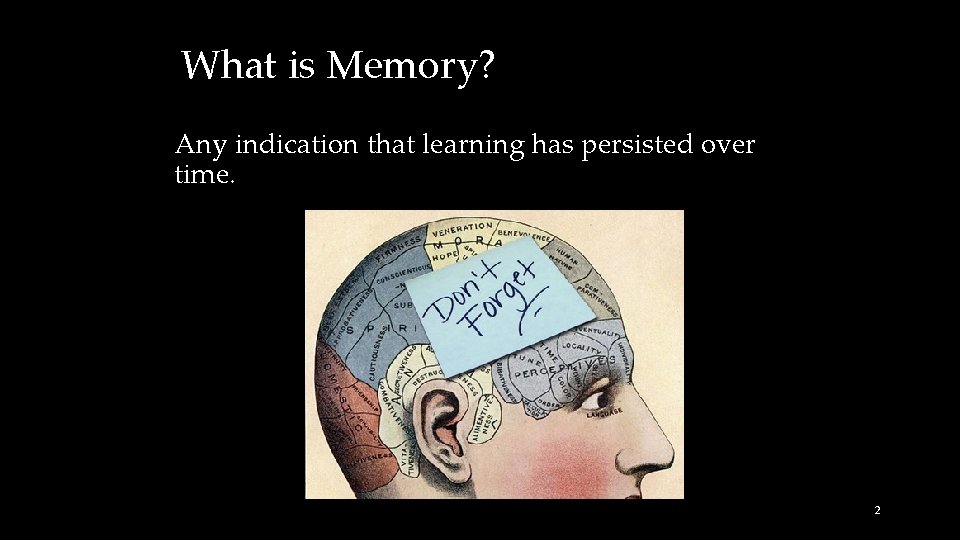
What is Memory? Any indication that learning has persisted over time. 2
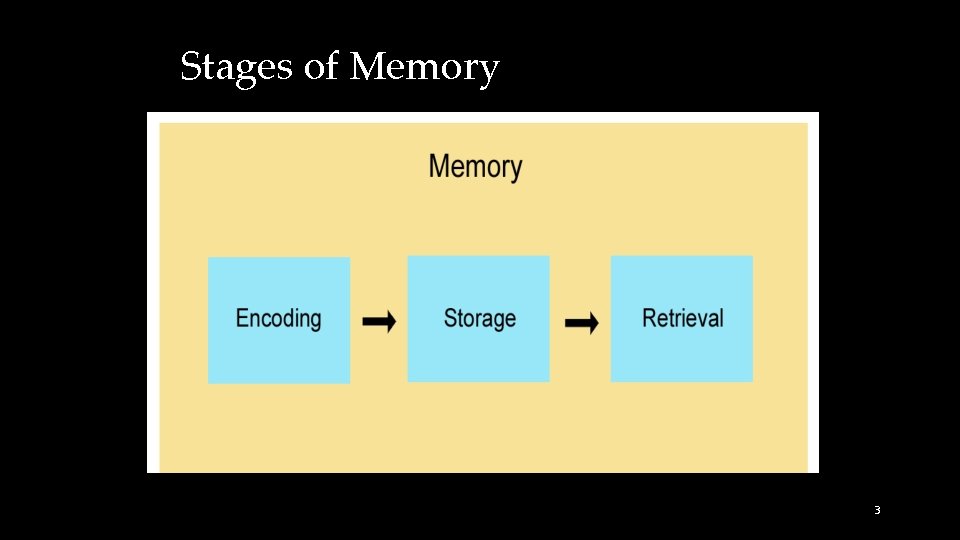
Stages of Memory 3
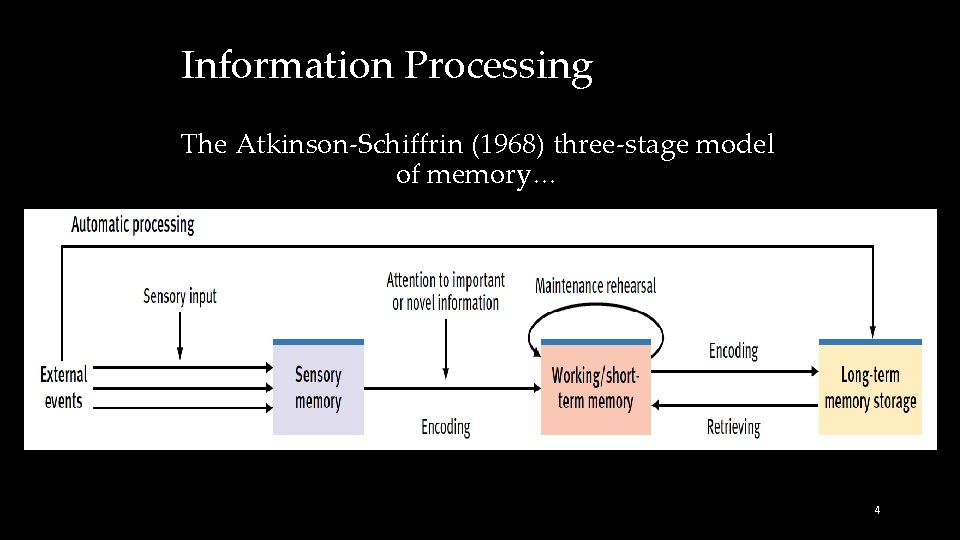
Information Processing The Atkinson-Schiffrin (1968) three-stage model of memory… 4
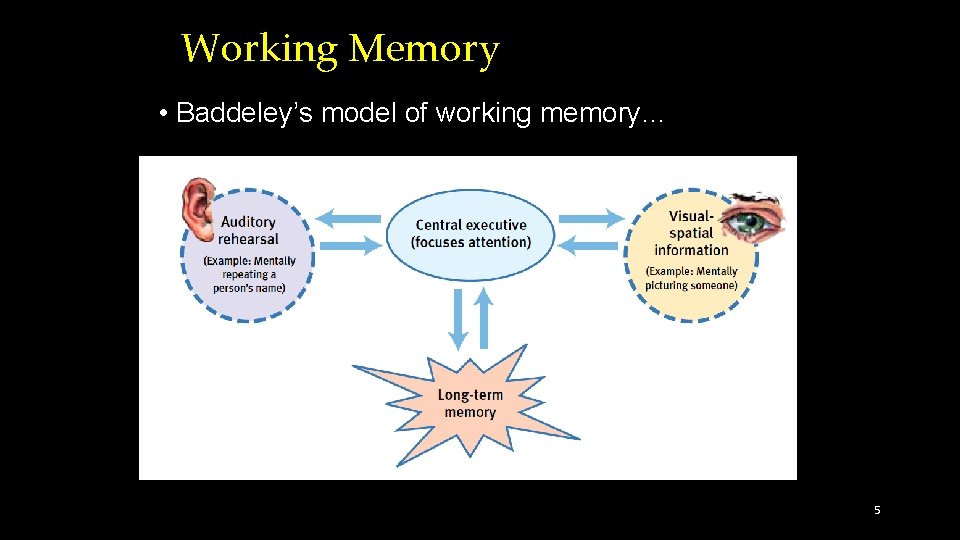
Working Memory • Baddeley’s model of working memory… 5
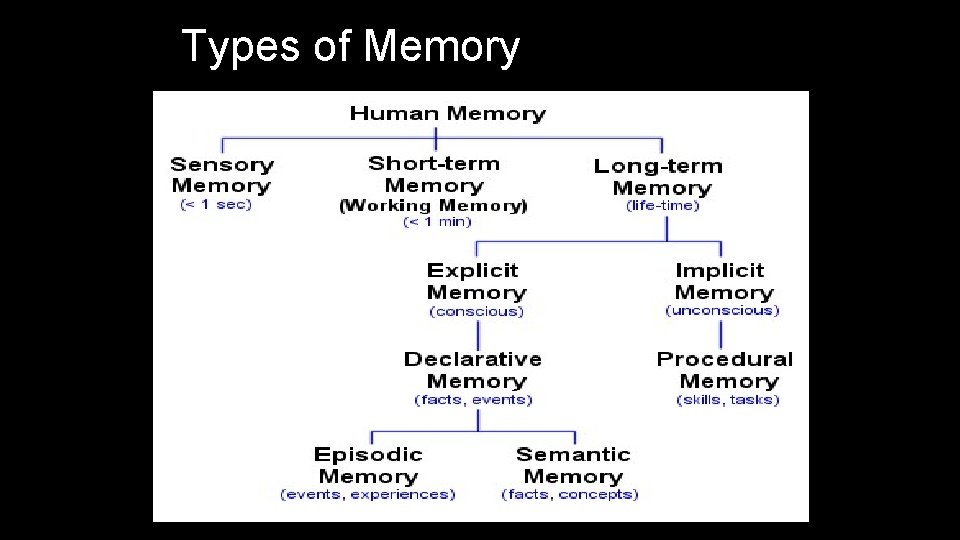
Types of Memory
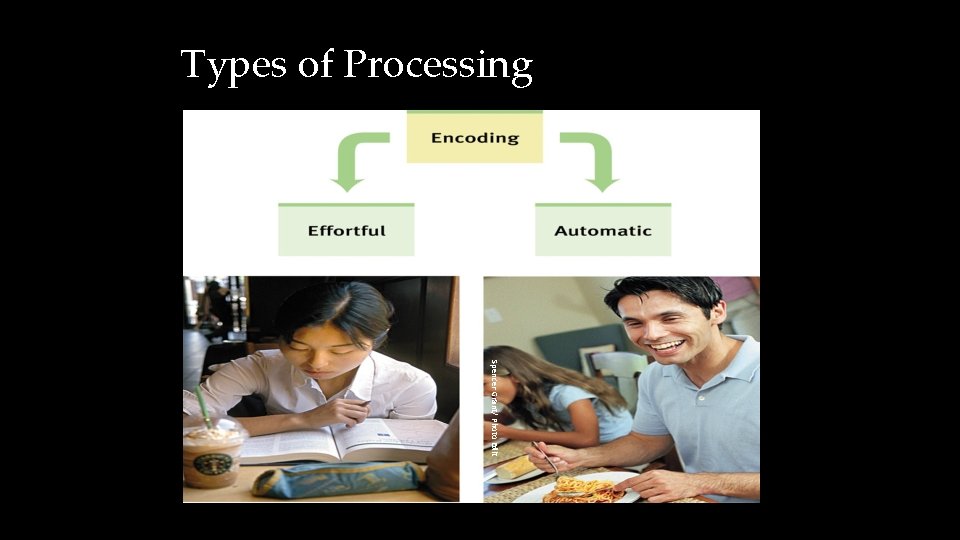
Types of Processing Spencer Grant/ Photo Edit
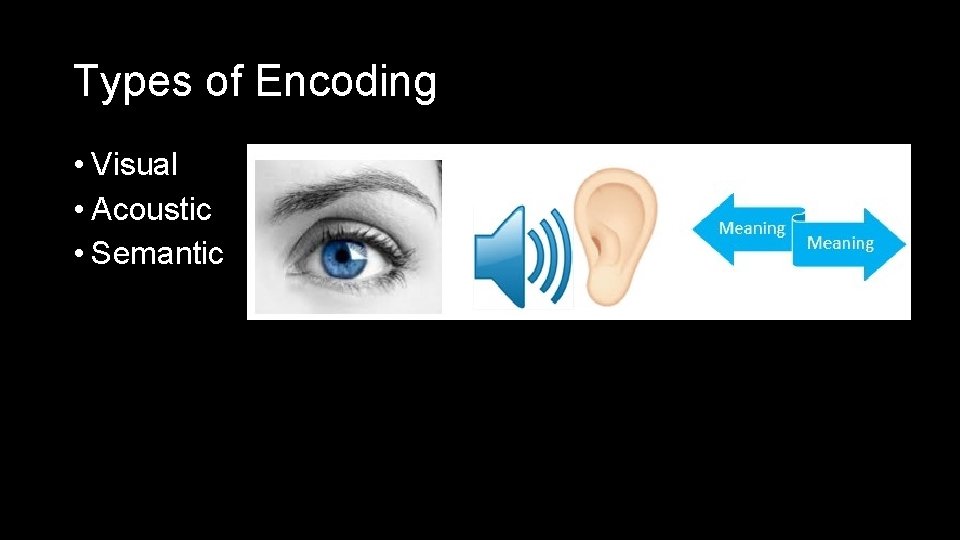
Types of Encoding • Visual • Acoustic • Semantic
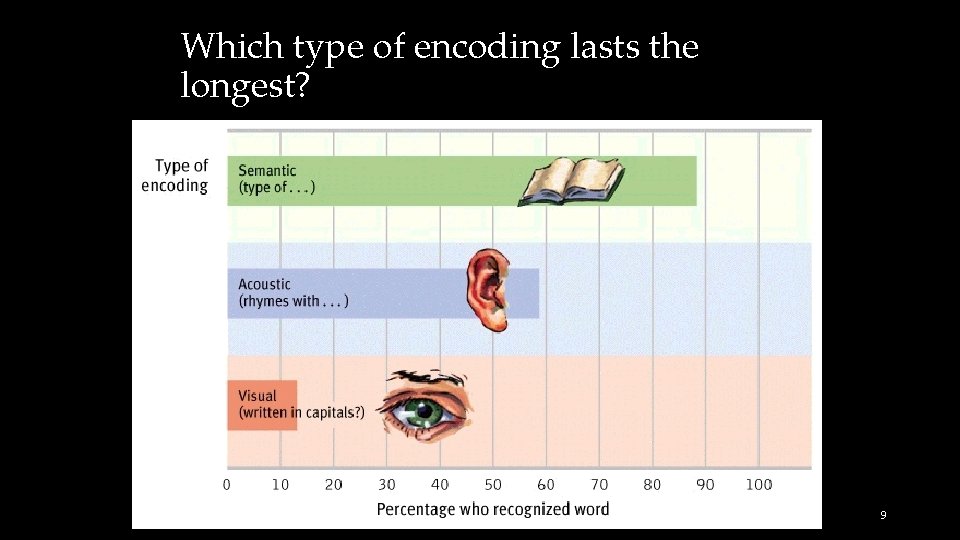
Which type of encoding lasts the longest? 9
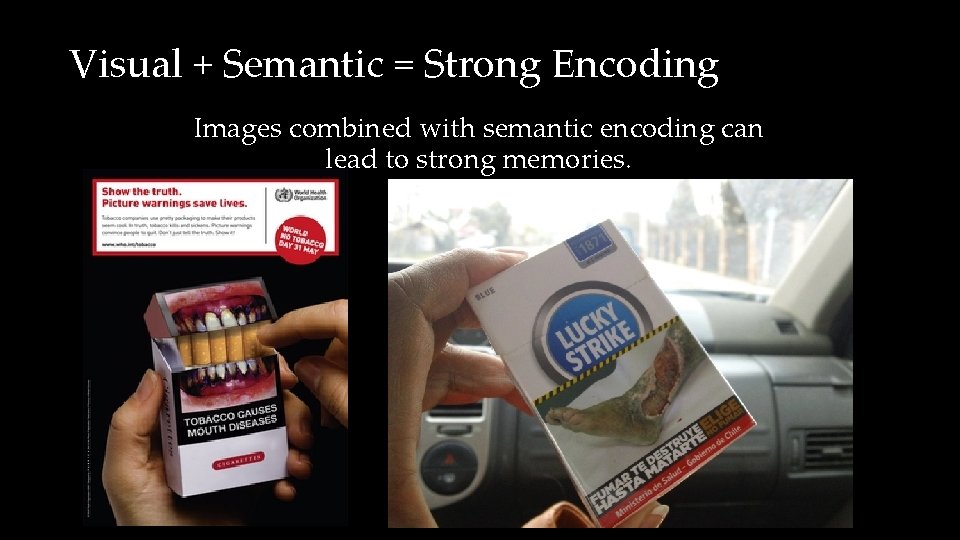
Visual + Semantic = Strong Encoding Images combined with semantic encoding can lead to strong memories. Both photos: Ho/AP Photo
Techniques to Aid Encoding • Mnemonics = Memory aids 1. Method of Loci 2. Link Method • Chunking • Hierarchies 11
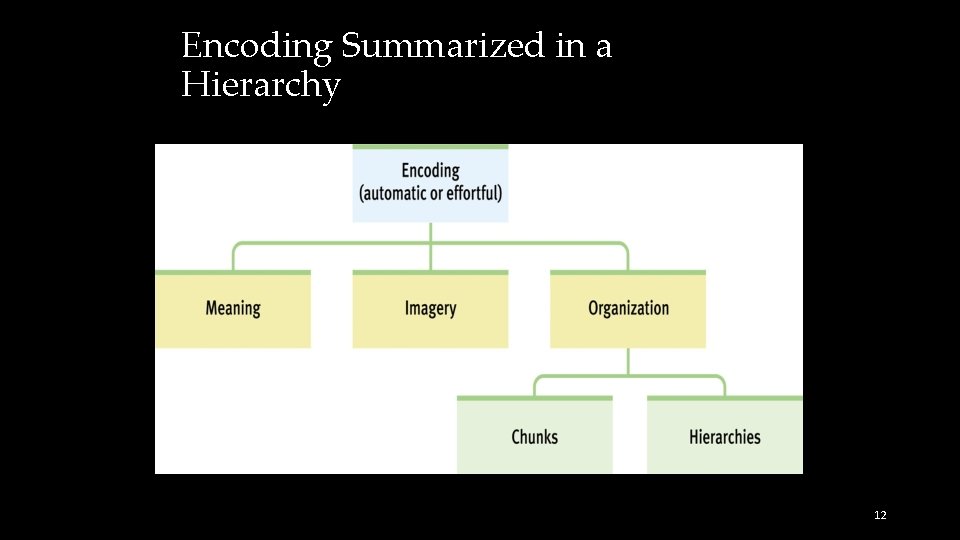
Encoding Summarized in a Hierarchy 12
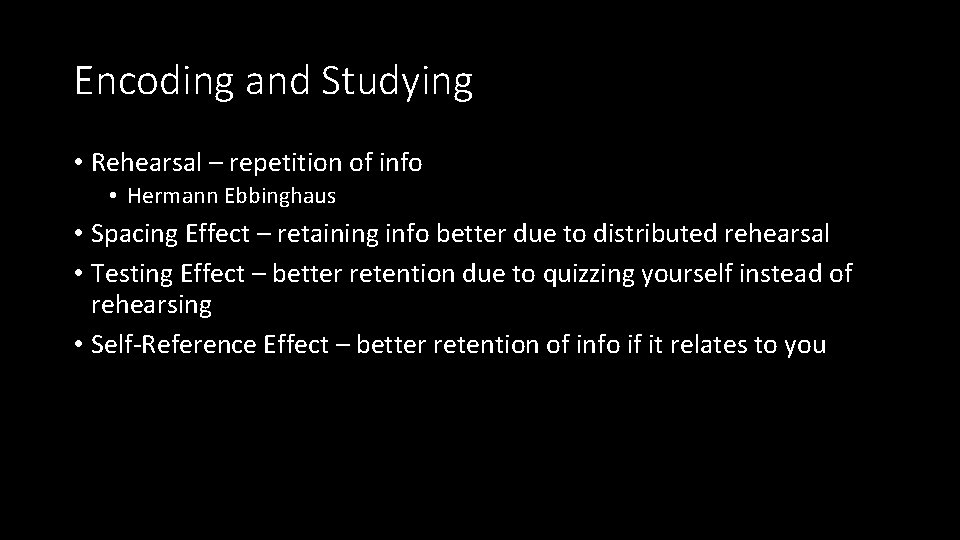
Encoding and Studying • Rehearsal – repetition of info • Hermann Ebbinghaus • Spacing Effect – retaining info better due to distributed rehearsal • Testing Effect – better retention due to quizzing yourself instead of rehearsing • Self-Reference Effect – better retention of info if it relates to you
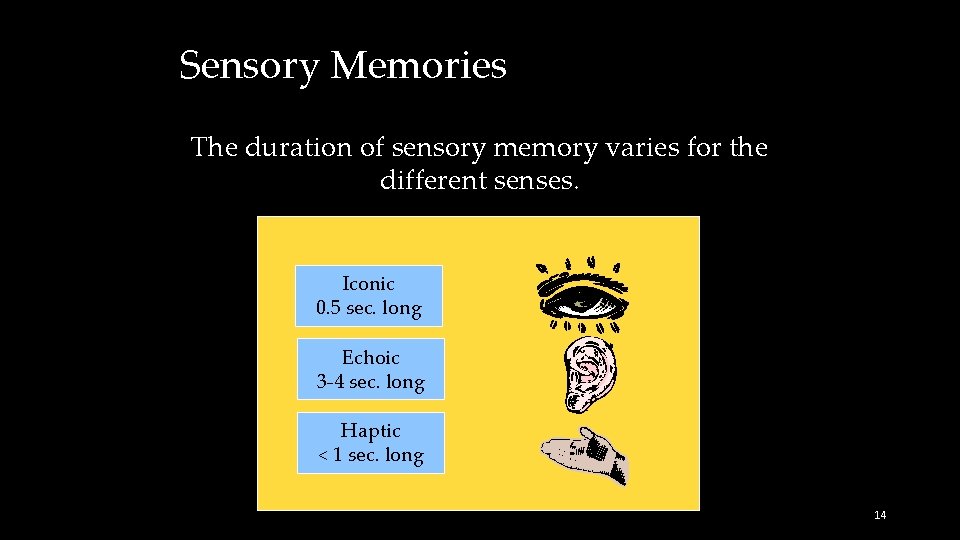
Sensory Memories The duration of sensory memory varies for the different senses. Iconic 0. 5 sec. long Echoic 3 -4 sec. long Haptic < 1 sec. long 14
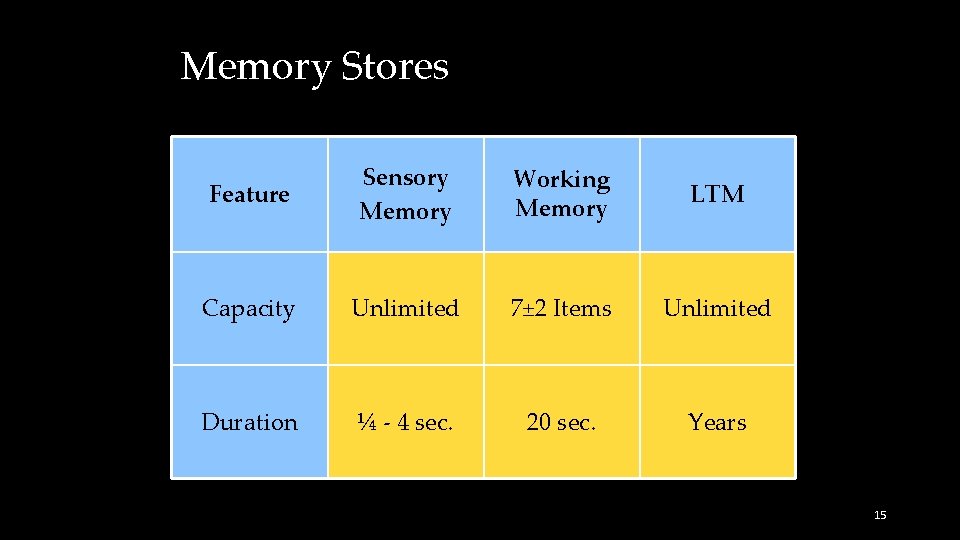
Memory Stores Feature Sensory Memory Working Memory LTM Capacity Unlimited 7± 2 Items Unlimited Duration ¼ - 4 sec. 20 sec. Years 15
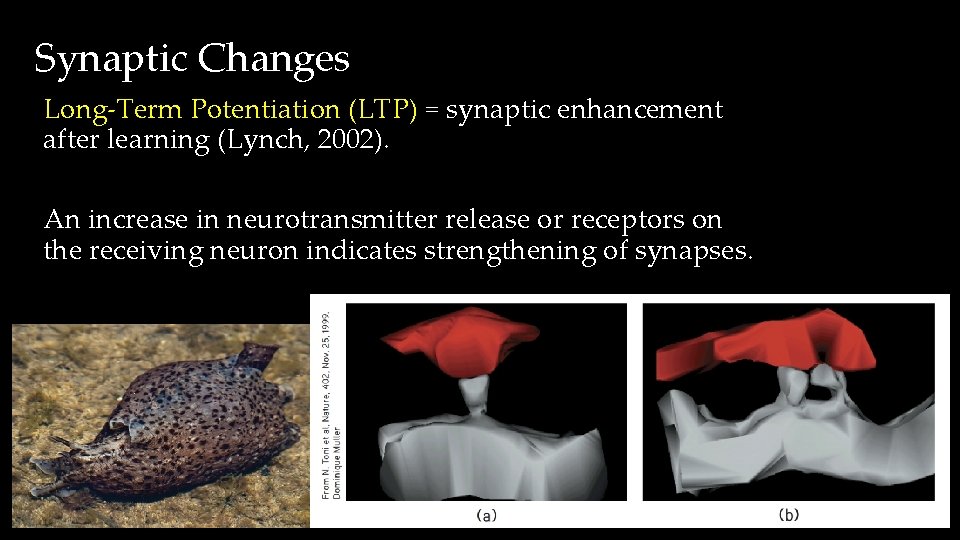
Synaptic Changes Long-Term Potentiation (LTP) = synaptic enhancement after learning (Lynch, 2002). An increase in neurotransmitter release or receptors on the receiving neuron indicates strengthening of synapses. 16
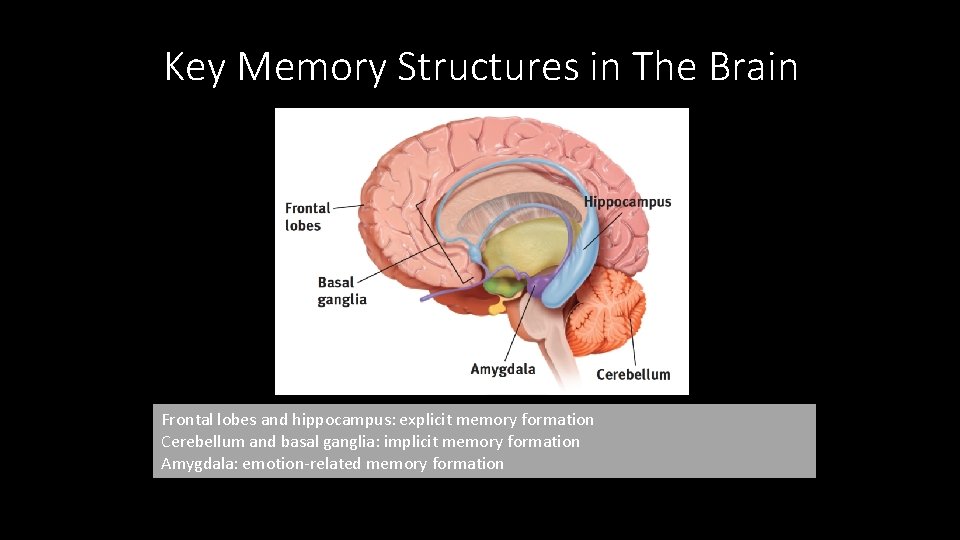
Key Memory Structures in The Brain Frontal lobes and hippocampus: explicit memory formation Cerebellum and basal ganglia: implicit memory formation Amygdala: emotion-related memory formation
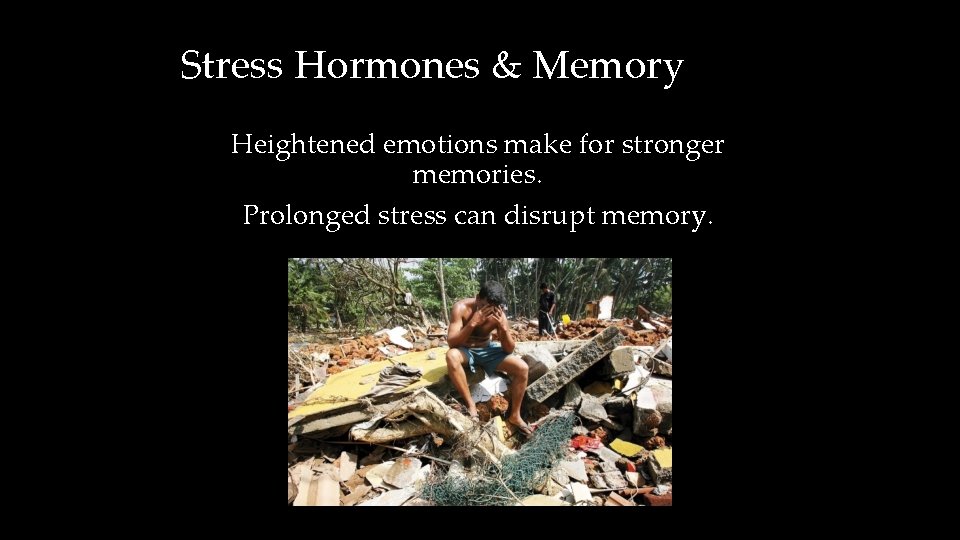
Stress Hormones & Memory Heightened emotions make for stronger memories. Prolonged stress can disrupt memory.
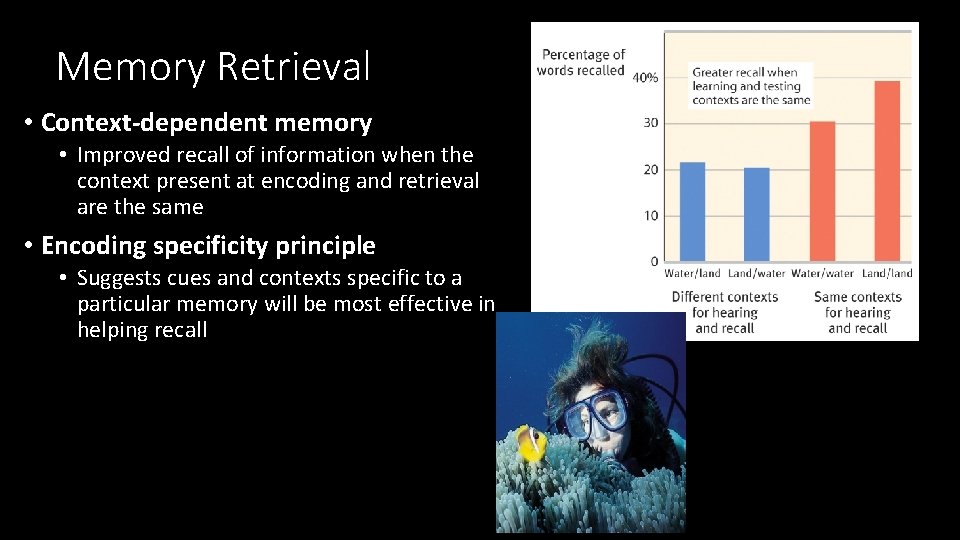
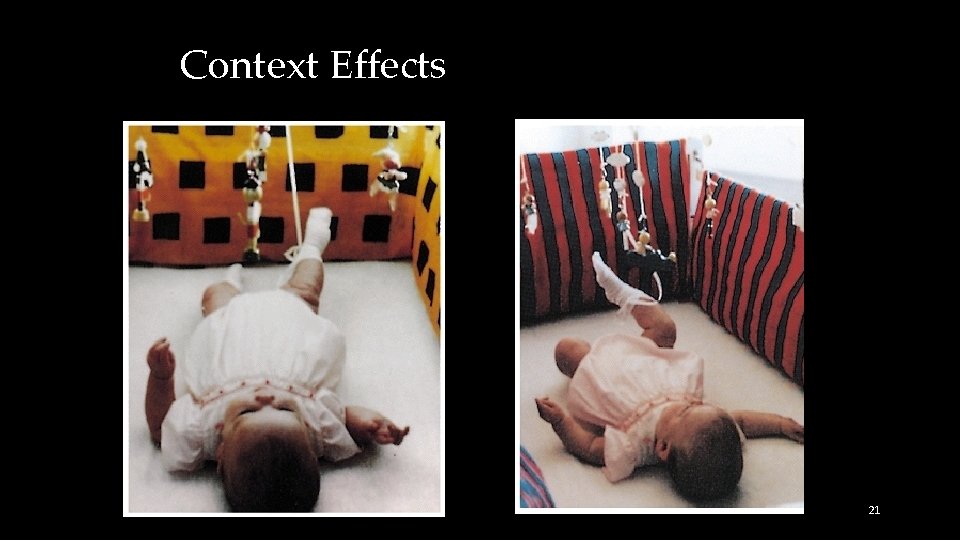
Memory Retrieval • Context-dependent memory • Improved recall of information when the context present at encoding and retrieval are the same • Encoding specificity principle • Suggests cues and contexts specific to a particular memory will be most effective in helping recall
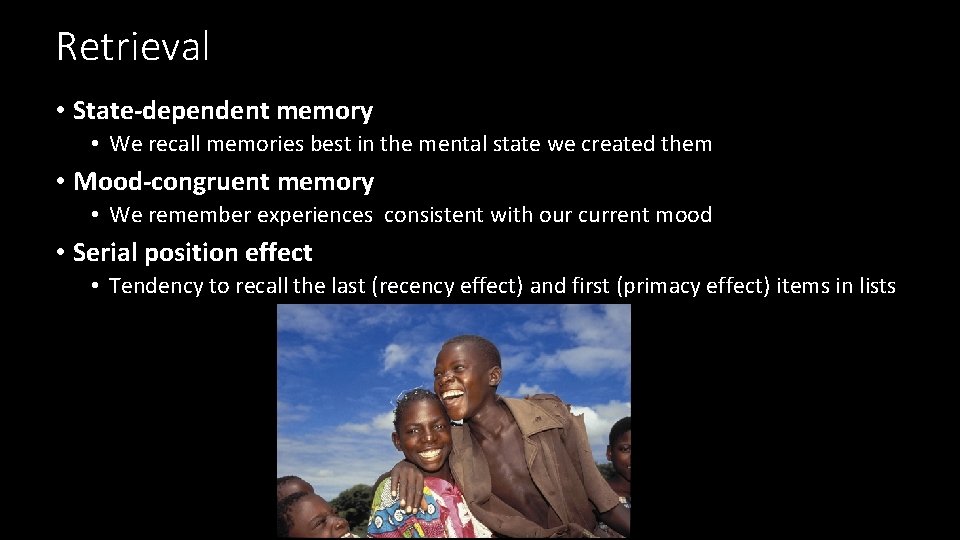
Retrieval • State-dependent memory • We recall memories best in the mental state we created them • Mood-congruent memory • We remember experiences consistent with our current mood • Serial position effect • Tendency to recall the last (recency effect) and first (primacy effect) items in lists
Context Effects 21
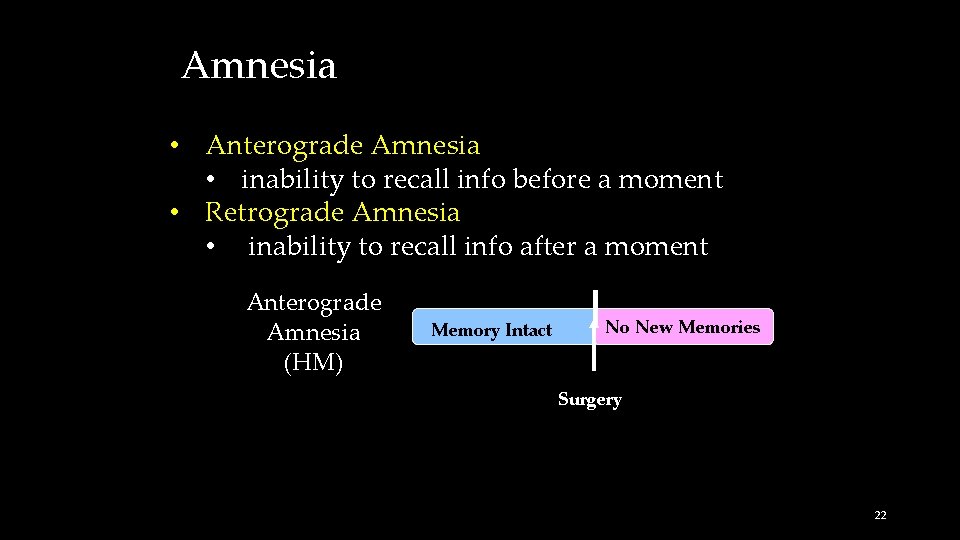
Amnesia • Anterograde Amnesia • inability to recall info before a moment • Retrograde Amnesia • inability to recall info after a moment Anterograde Amnesia (HM) Memory Intact No New Memories Surgery 22