
Memory Chapter 11 3 stages Representations of the

- Slides: 5
Memory Chapter 11
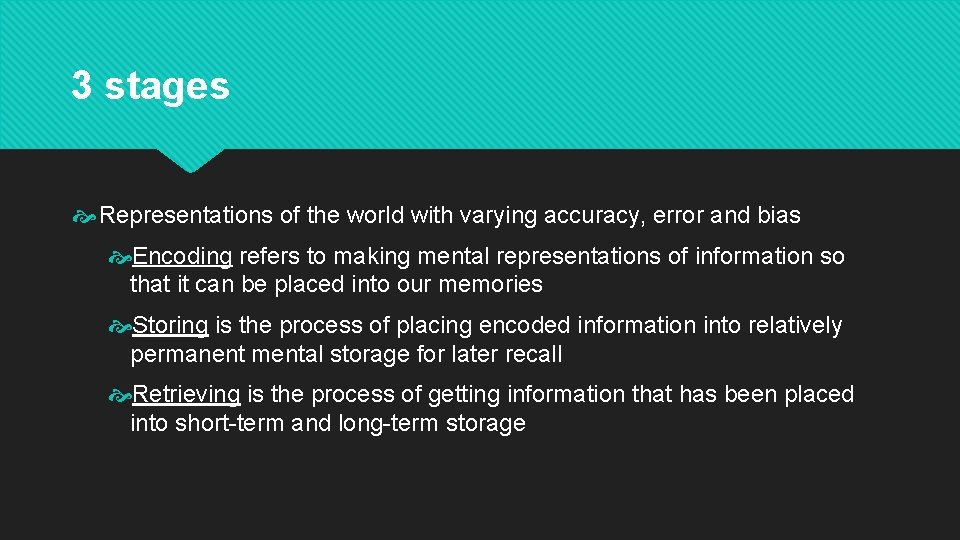
3 stages Representations of the world with varying accuracy, error and bias Encoding refers to making mental representations of information so that it can be placed into our memories Storing is the process of placing encoded information into relatively permanent mental storage for later recall Retrieving is the process of getting information that has been placed into short-term and long-term storage
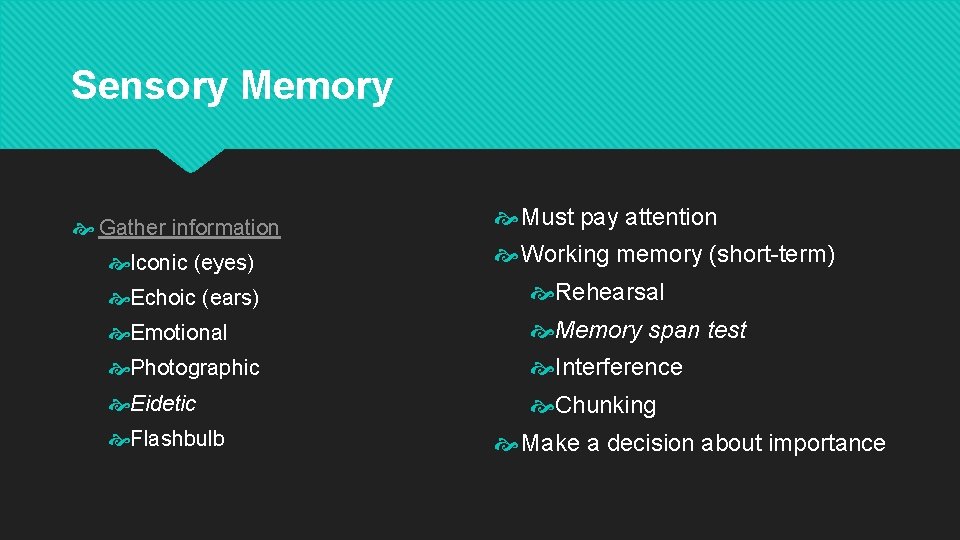
Sensory Memory Gather information Iconic (eyes) Must pay attention Working memory (short-term) Echoic (ears) Rehearsal Emotional Memory span test Photographic Interference Eidetic Chunking Flashbulb Make a decision about importance
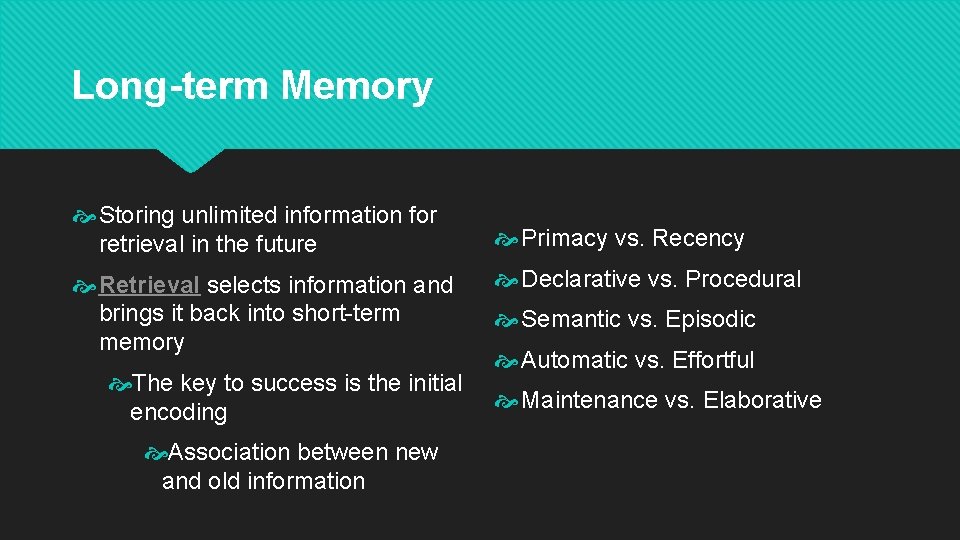
Long-term Memory Storing unlimited information for retrieval in the future Retrieval selects information and brings it back into short-term memory The key to success is the initial encoding Association between new and old information Primacy vs. Recency Declarative vs. Procedural Semantic vs. Episodic Automatic vs. Effortful Maintenance vs. Elaborative
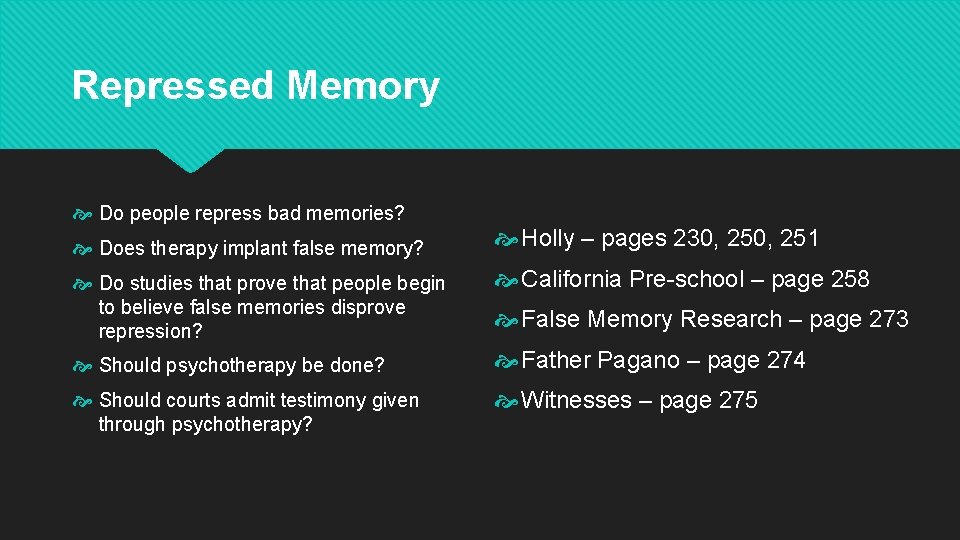
Repressed Memory Do people repress bad memories? Does therapy implant false memory? Holly – pages 230, 251 Do studies that prove that people begin to believe false memories disprove repression? California Pre-school – page 258 Should psychotherapy be done? Father Pagano – page 274 Should courts admit testimony given through psychotherapy? Witnesses – page 275 False Memory Research – page 273