
Memory AP Unit Cognition The persistence of learning

- Slides: 31
Memory (AP Unit – “Cognition”) The persistence of learning over time through the encoding, storage, and retrieval of information.
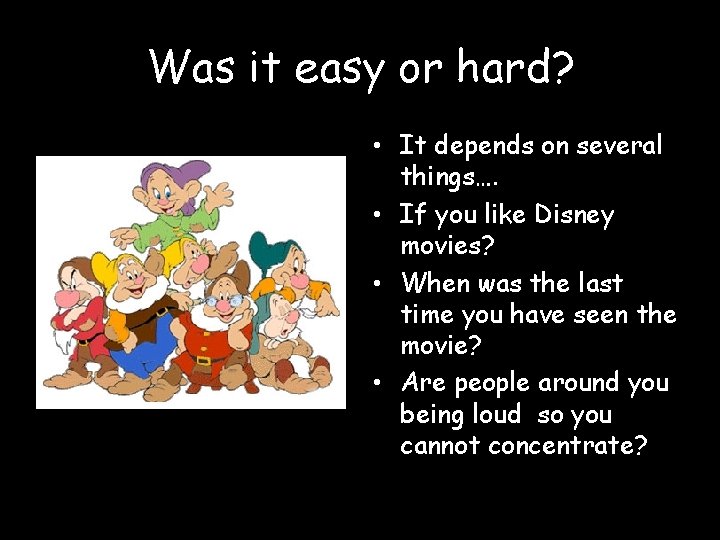
Was it easy or hard? • It depends on several things…. • If you like Disney movies? • When was the last time you have seen the movie? • Are people around you being loud so you cannot concentrate?
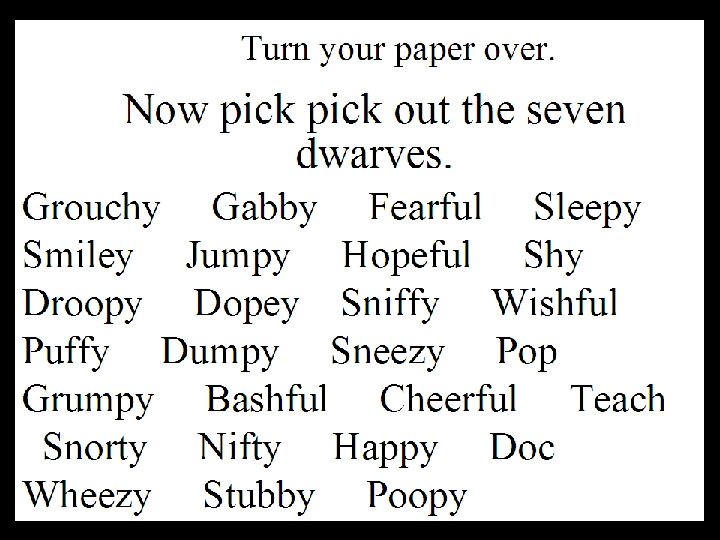
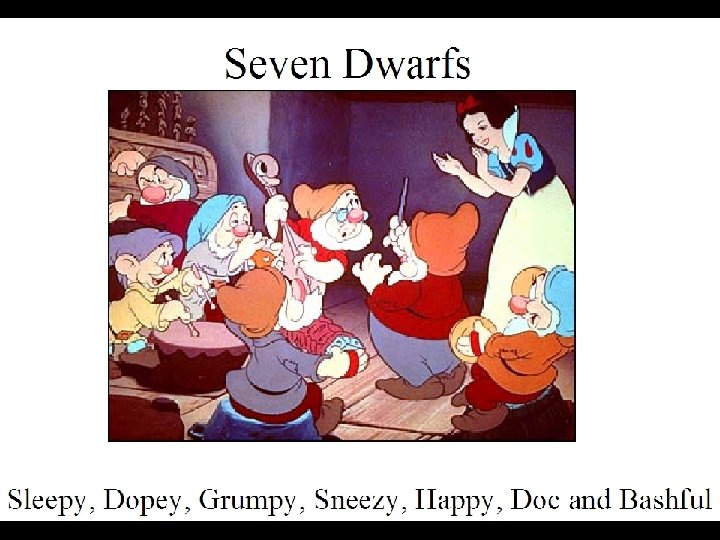
Take out a piece of paper…. . • Name the seven dwarves…. . Now name them…. .
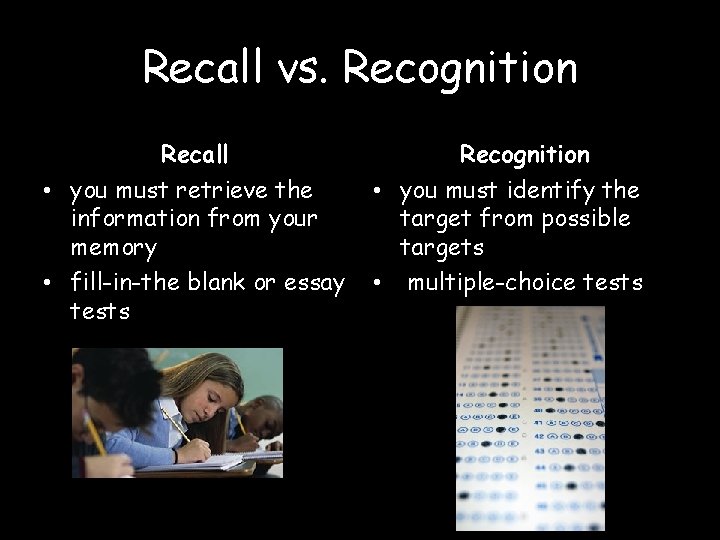
Recall vs. Recognition Recall • you must retrieve the information from your memory • fill-in-the blank or essay tests Recognition • you must identify the target from possible targets • multiple-choice tests
The Memory Process Three step process…. 1. Encoding: The processing of information into the memory system. 2. Storage: The retention of encoded material over time. 3. Retrieval: The process of getting the information out of memory storage.
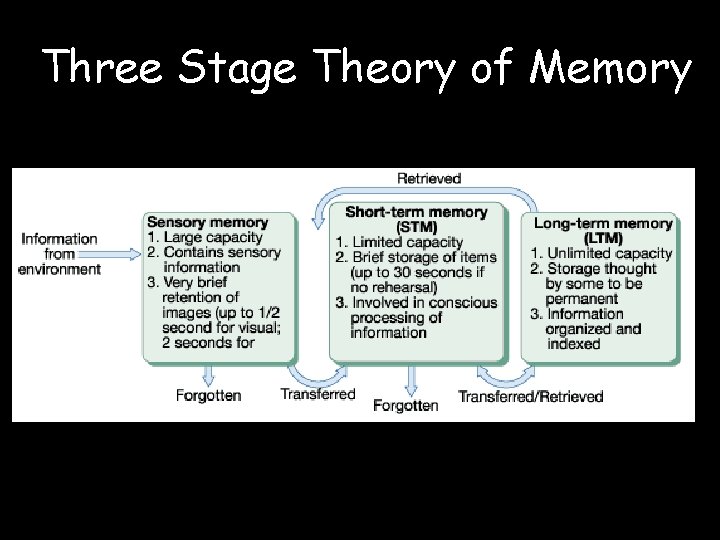
Three Stage Theory of Memory
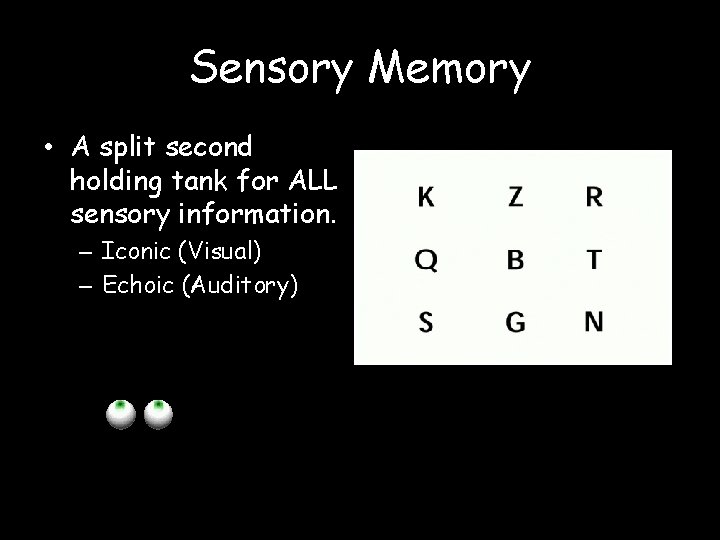
Sensory Memory • A split second holding tank for ALL sensory information. – Iconic (Visual) – Echoic (Auditory)
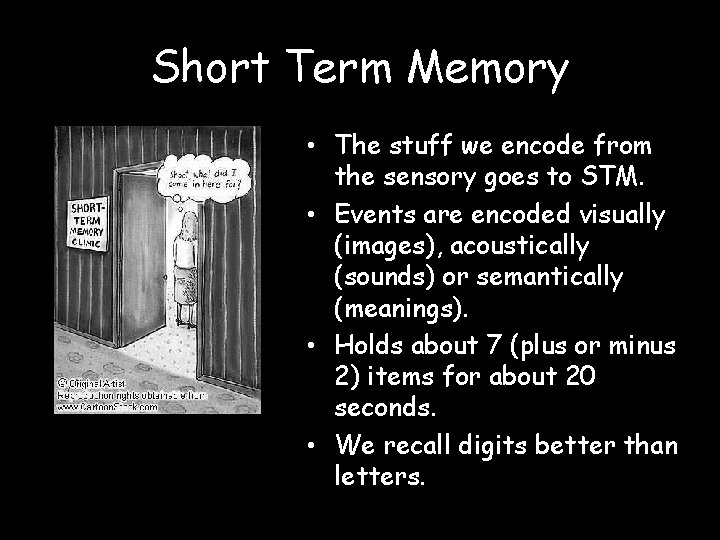
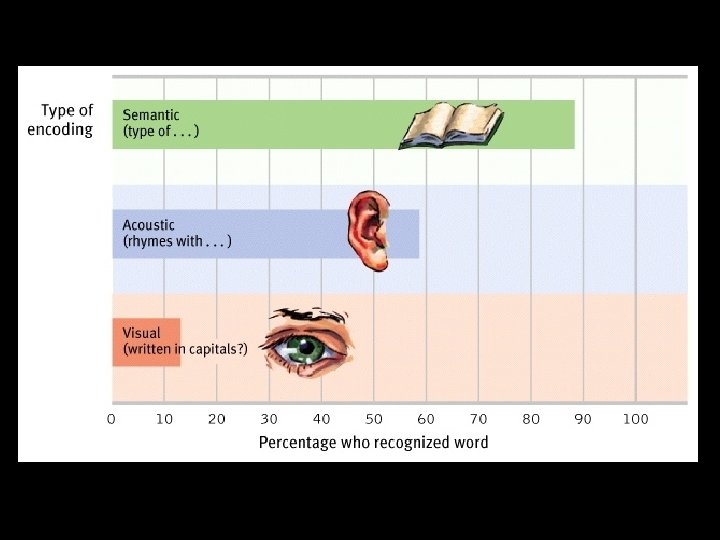
Short Term Memory • The stuff we encode from the sensory goes to STM. • Events are encoded visually (images), acoustically (sounds) or semantically (meanings). • Holds about 7 (plus or minus 2) items for about 20 seconds. • We recall digits better than letters.
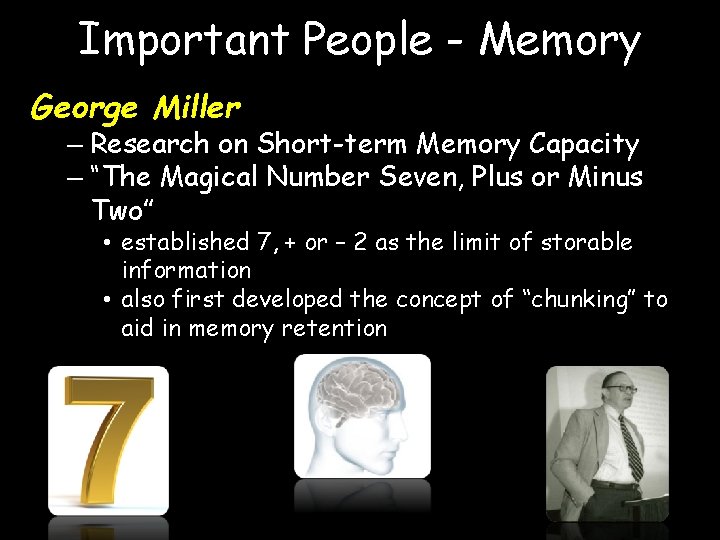
Important People - Memory George Miller – Research on Short-term Memory Capacity – “The Magical Number Seven, Plus or Minus Two” • established 7, + or – 2 as the limit of storable information • also first developed the concept of “chunking” to aid in memory retention
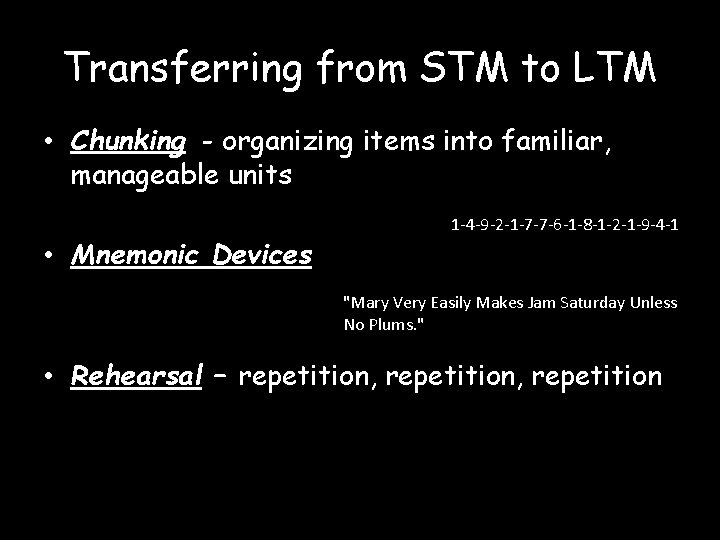
Transferring from STM to LTM • Chunking - organizing items into familiar, manageable units • Mnemonic Devices 1 -4 -9 -2 -1 -7 -7 -6 -1 -8 -1 -2 -1 -9 -4 -1 "Mary Very Easily Makes Jam Saturday Unless No Plums. " • Rehearsal – repetition, repetition
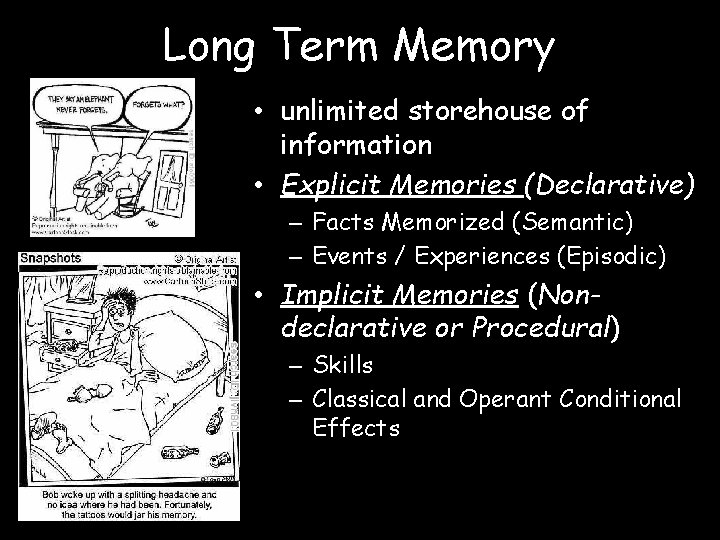
Long Term Memory • unlimited storehouse of information • Explicit Memories (Declarative) – Facts Memorized (Semantic) – Events / Experiences (Episodic) • Implicit Memories (Nondeclarative or Procedural) – Skills – Classical and Operant Conditional Effects
Storing Memories - Encoding Effortful Processing • done actively, “with effort”, on purpose • Studying for a test • Completing AP Psych reading assignment • Drilling with AP Psych flashcards Automatic Processing • done passively, “without effort”, by “accident” • Remembering what you ate for breakfast this morning • Remembering the score of sporting event • Remembering who you first spoke to today
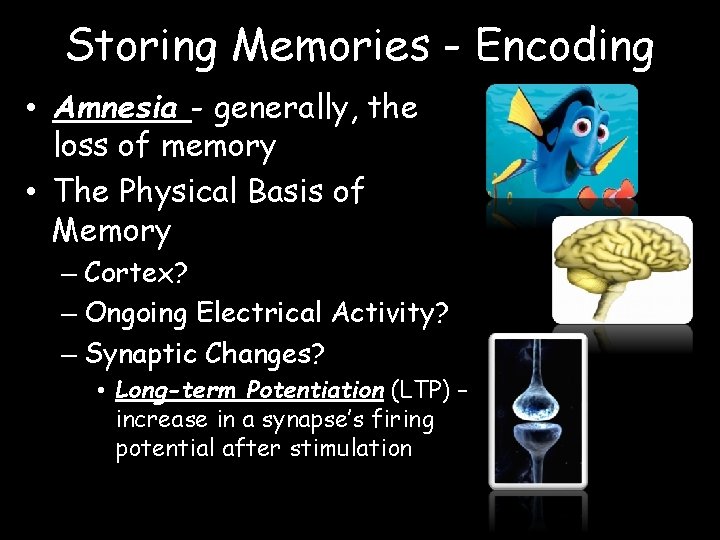
Storing Memories - Encoding • Amnesia - generally, the loss of memory • The Physical Basis of Memory – Cortex? – Ongoing Electrical Activity? – Synaptic Changes? • Long-term Potentiation (LTP) – increase in a synapse’s firing potential after stimulation
Encoding Processes • Visual Encoding: the encoding of images • Acoustic Encoding: the encoding of sound • Semantic Encoding: the encoding of meaning ü the most effective ü encoding with multiple process types is even more effective ü Elaborate Rehearsal – reharsal based on semantics/meaning
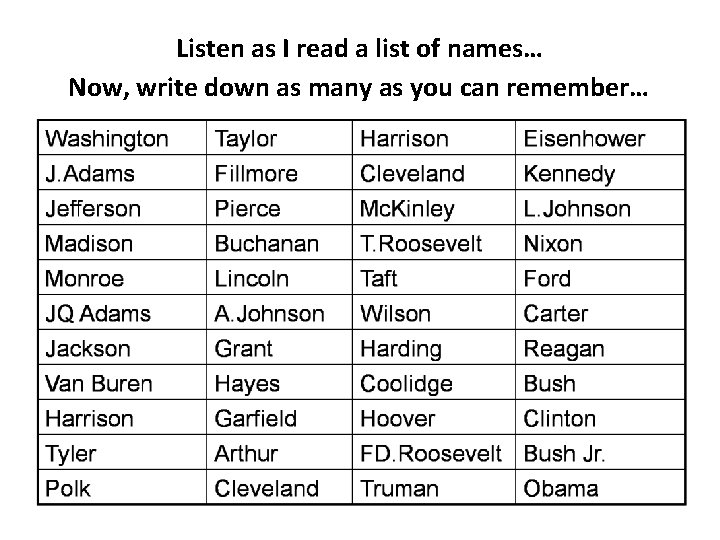
Listen as I read a list of names… Now, write down as many as you can remember…
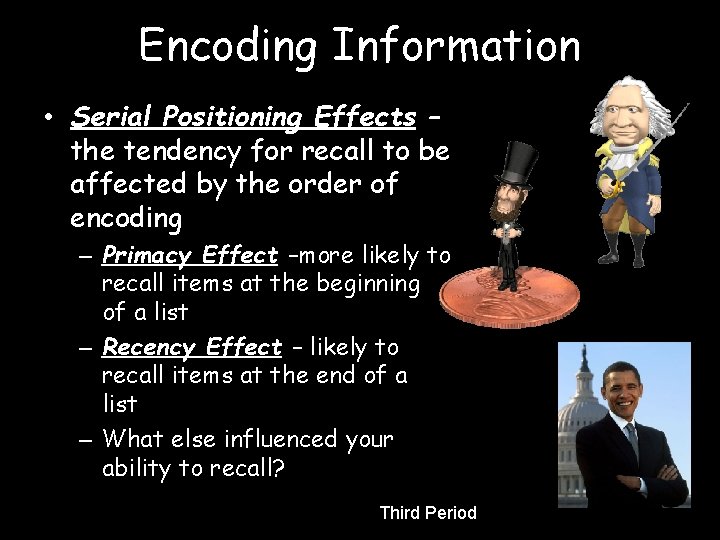
Encoding Information • Serial Positioning Effects – the tendency for recall to be affected by the order of encoding – Primacy Effect –more likely to recall items at the beginning of a list – Recency Effect – likely to recall items at the end of a list – What else influenced your ability to recall? Third Period
Encoding – The Spacing Effect • distributed study or practice yields better long term retention • cramming is minimally effective ü What, then, would be good strategies for preparing for AP Psych tests? ü For the AP Exam in the spring?
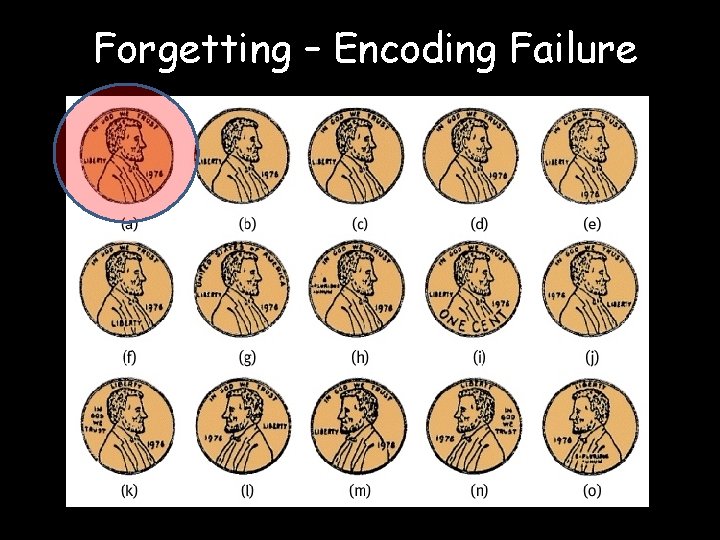
Forgetting – Encoding Failure
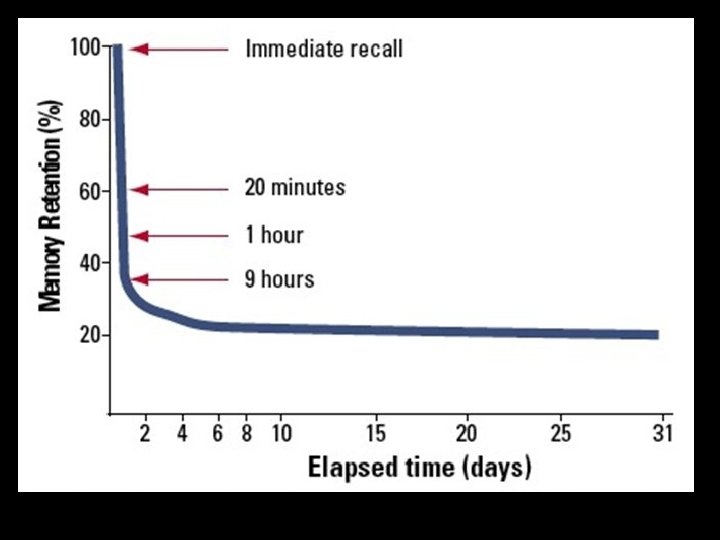
Forgetting - Storage Decay • Even after encoding something well, we sometimes forget it. • Herman Ebbinghaus’ experiments with non-sense syllables – Showed the memory fades quickly, but then the speed at which it fades levels out.
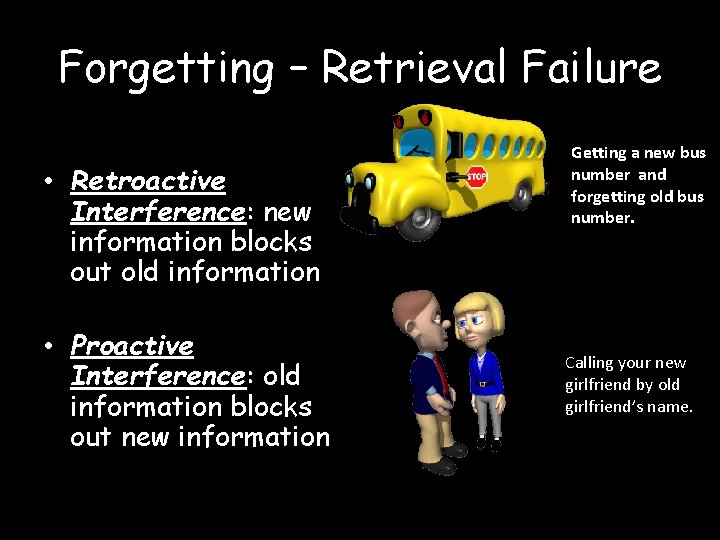
Forgetting – Retrieval Failure • Retroactive Interference: new information blocks out old information • Proactive Interference: old information blocks out new information Getting a new bus number and forgetting old bus number. Calling your new girlfriend by old girlfriend’s name.
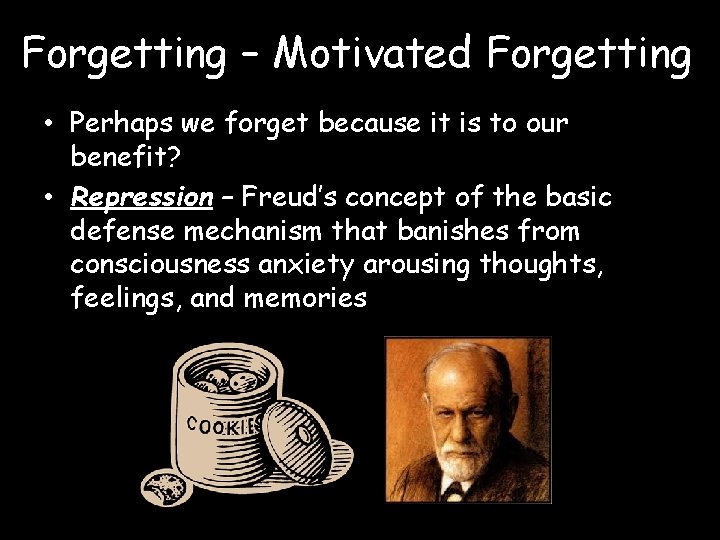
Forgetting – Motivated Forgetting • Perhaps we forget because it is to our benefit? • Repression – Freud’s concept of the basic defense mechanism that banishes from consciousness anxiety arousing thoughts, feelings, and memories
Endless Memory
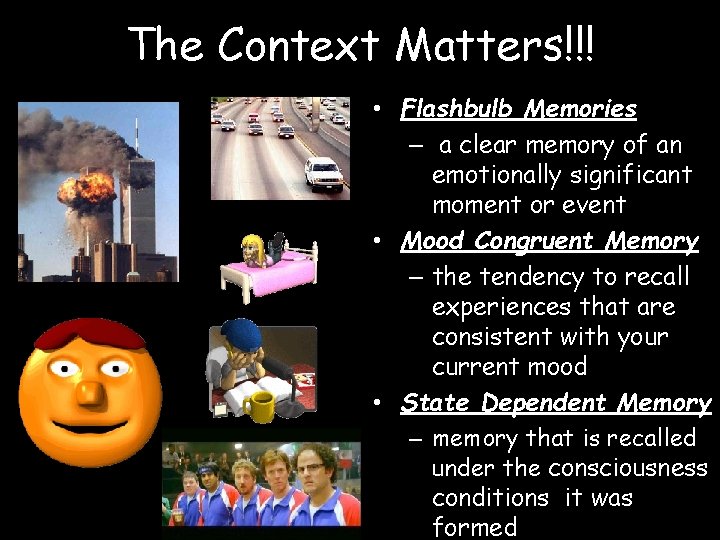
The Context Matters!!! • Flashbulb Memories – a clear memory of an emotionally significant moment or event • Mood Congruent Memory – the tendency to recall experiences that are consistent with your current mood • State Dependent Memory – memory that is recalled under the consciousness conditions it was formed
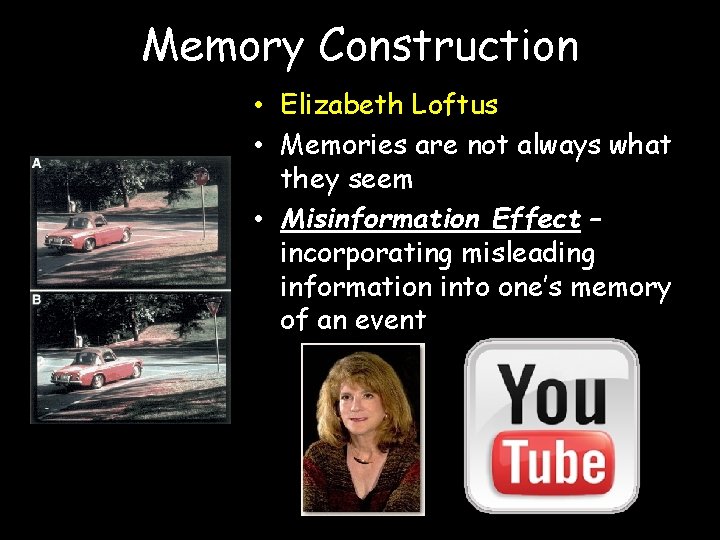
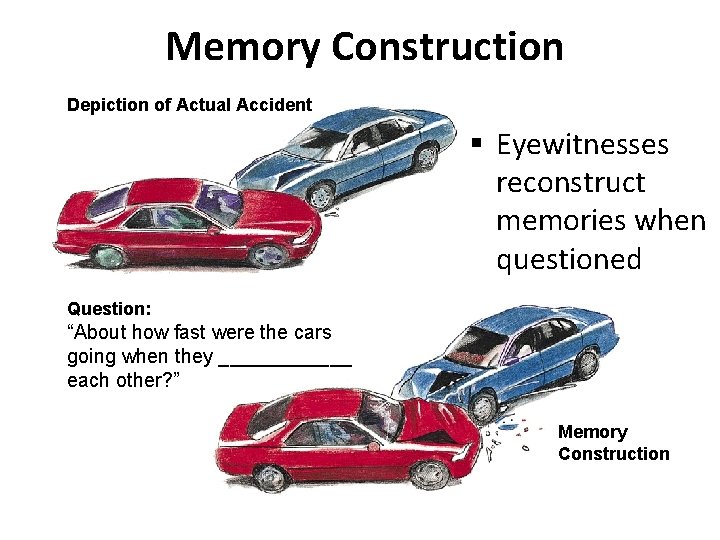
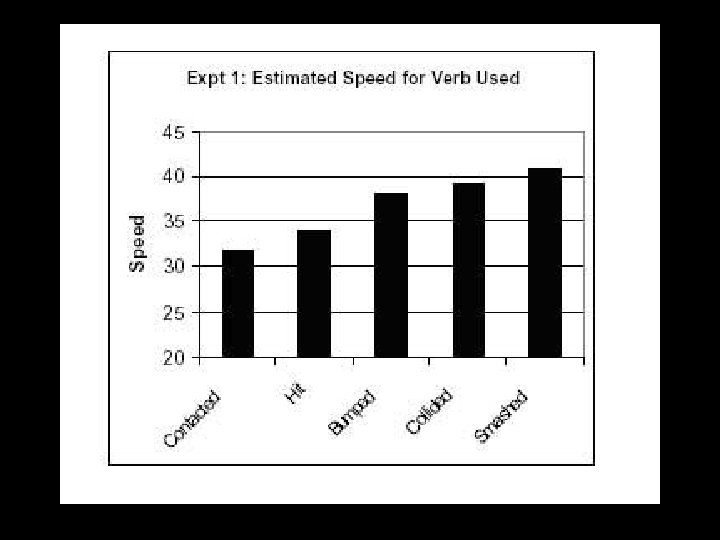
Memory Construction • Elizabeth Loftus • Memories are not always what they seem • Misinformation Effect – incorporating misleading information into one’s memory of an event
Memory Construction Depiction of Actual Accident § Eyewitnesses reconstruct memories when questioned Question: “About how fast were the cars going when they ______ each other? ” Memory Construction
Eyewitness