
Membranes Everything in life is variable Chaotic Membranes
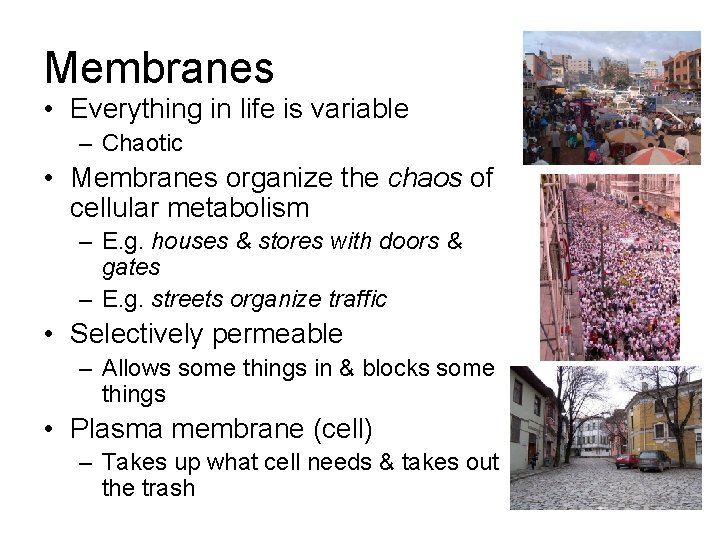
Membranes • Everything in life is variable – Chaotic • Membranes organize the chaos of cellular metabolism – E. g. houses & stores with doors & gates – E. g. streets organize traffic • Selectively permeable – Allows some things in & blocks some things • Plasma membrane (cell) – Takes up what cell needs & takes out the trash
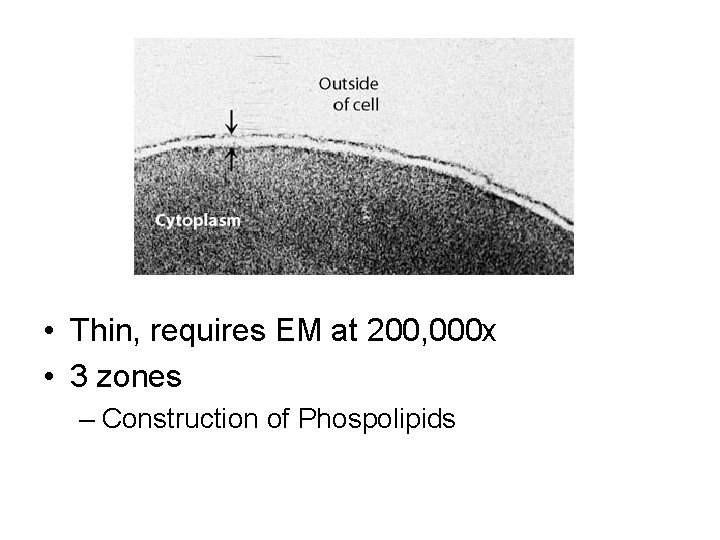
• Thin, requires EM at 200, 000 x • 3 zones – Construction of Phospolipids
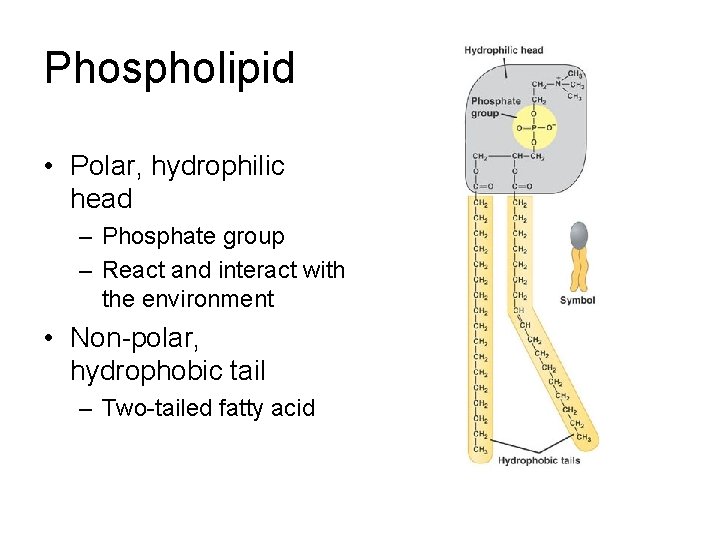
Phospholipid • Polar, hydrophilic head – Phosphate group – React and interact with the environment • Non-polar, hydrophobic tail – Two-tailed fatty acid
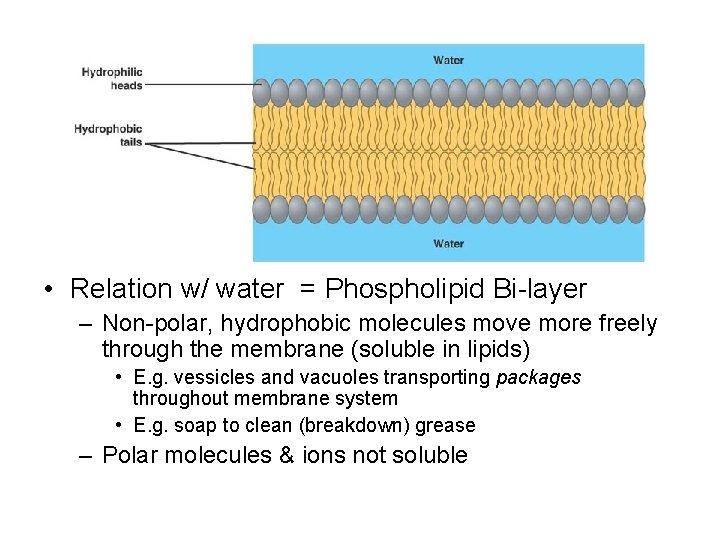
• Relation w/ water = Phospholipid Bi-layer – Non-polar, hydrophobic molecules move more freely through the membrane (soluble in lipids) • E. g. vessicles and vacuoles transporting packages throughout membrane system • E. g. soap to clean (breakdown) grease – Polar molecules & ions not soluble
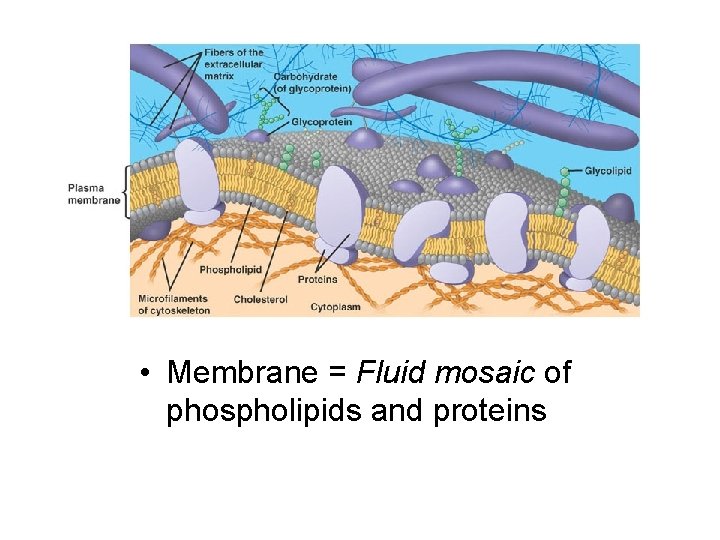
• Membrane = Fluid mosaic of phospholipids and proteins
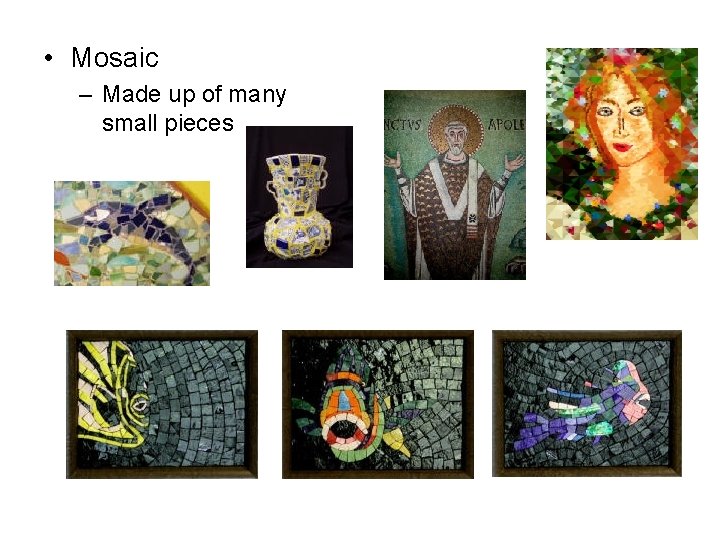
• Mosaic – Made up of many small pieces
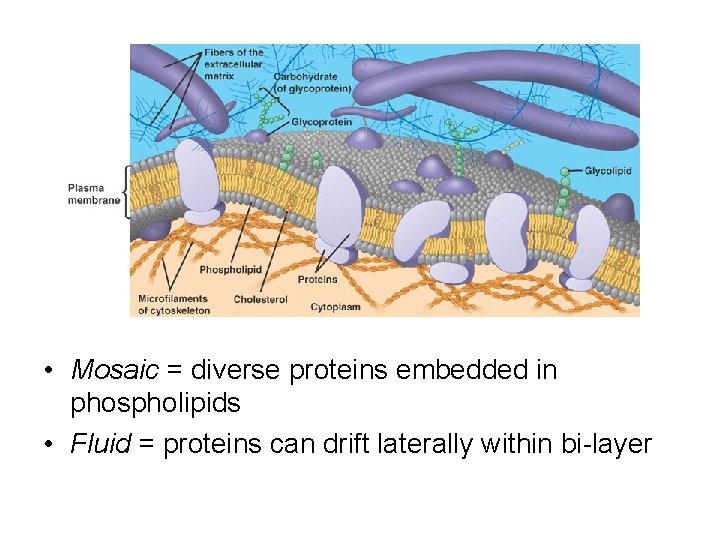
• Mosaic = diverse proteins embedded in phospholipids • Fluid = proteins can drift laterally within bi-layer
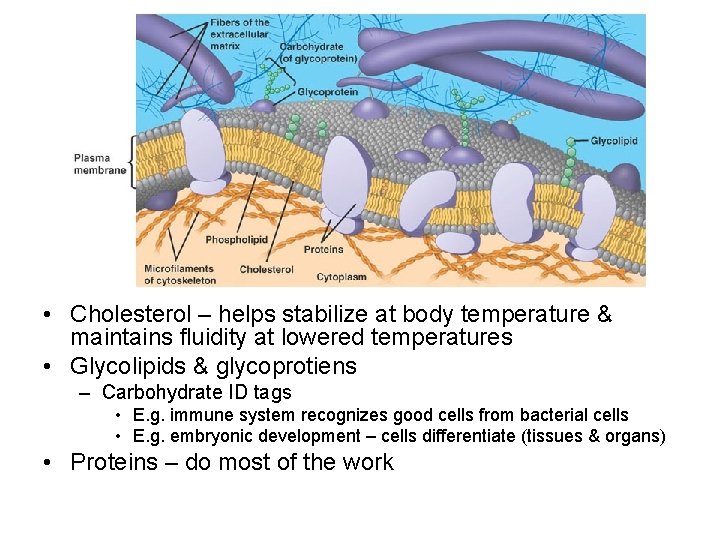
• Cholesterol – helps stabilize at body temperature & maintains fluidity at lowered temperatures • Glycolipids & glycoprotiens – Carbohydrate ID tags • E. g. immune system recognizes good cells from bacterial cells • E. g. embryonic development – cells differentiate (tissues & organs) • Proteins – do most of the work
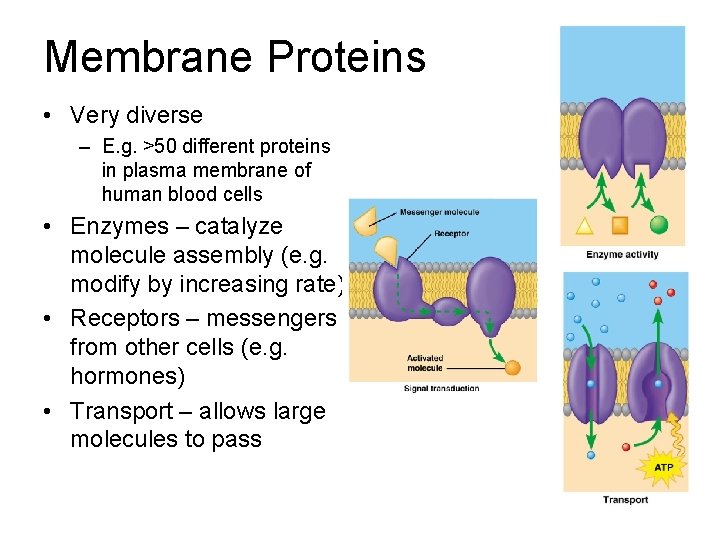
Membrane Proteins • Very diverse – E. g. >50 different proteins in plasma membrane of human blood cells • Enzymes – catalyze molecule assembly (e. g. modify by increasing rate) • Receptors – messengers from other cells (e. g. hormones) • Transport – allows large molecules to pass
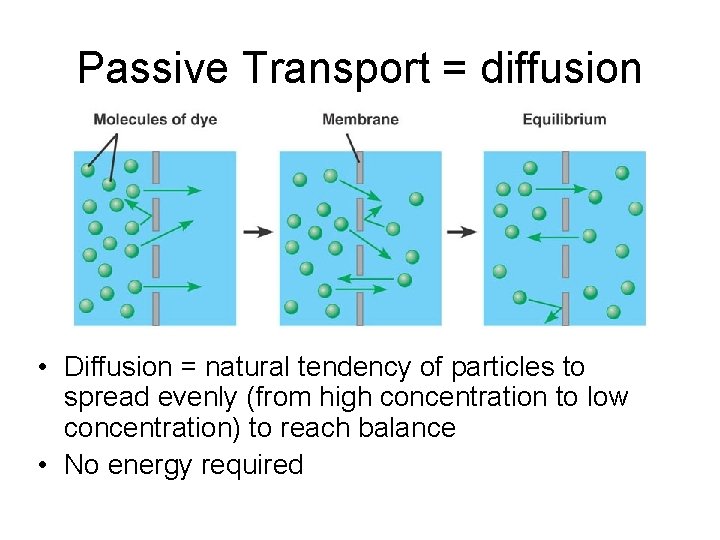
Passive Transport = diffusion • Diffusion = natural tendency of particles to spread evenly (from high concentration to low concentration) to reach balance • No energy required
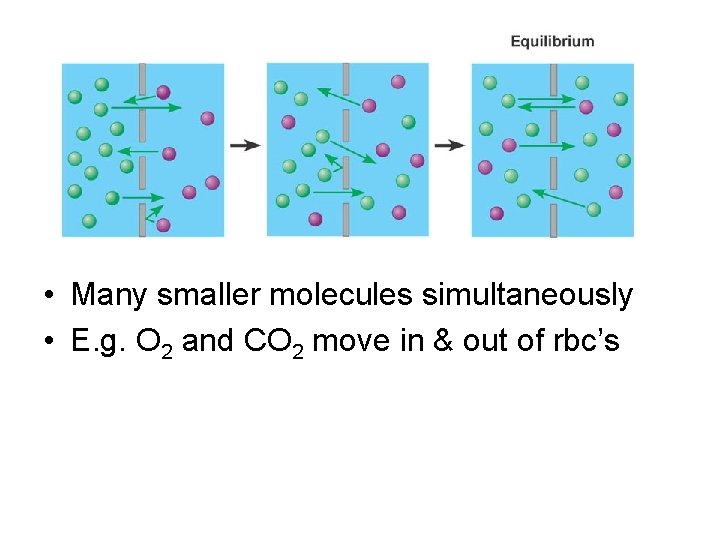
• Many smaller molecules simultaneously • E. g. O 2 and CO 2 move in & out of rbc’s
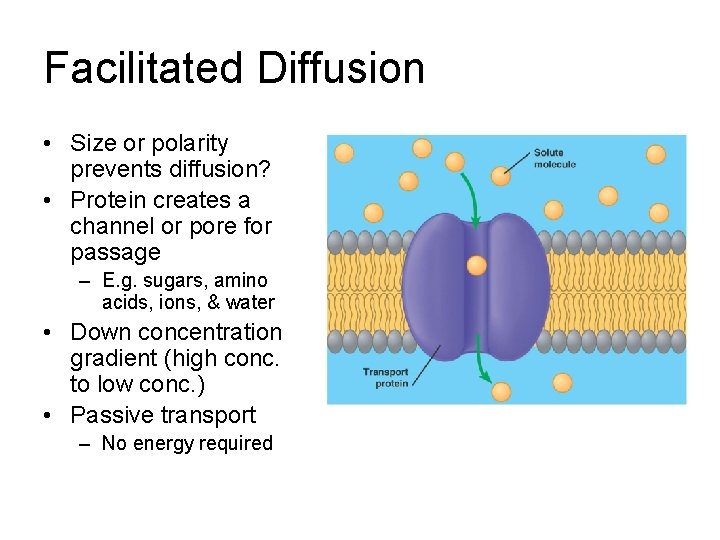
Facilitated Diffusion • Size or polarity prevents diffusion? • Protein creates a channel or pore for passage – E. g. sugars, amino acids, ions, & water • Down concentration gradient (high conc. to low conc. ) • Passive transport – No energy required
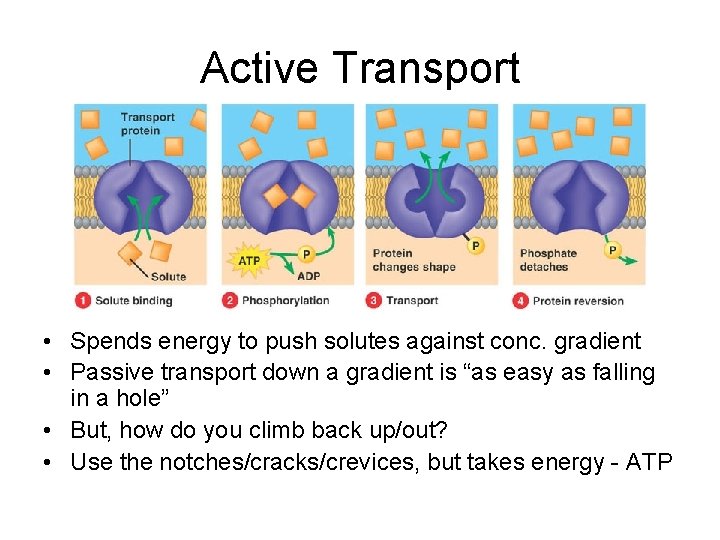
Active Transport • Spends energy to push solutes against conc. gradient • Passive transport down a gradient is “as easy as falling in a hole” • But, how do you climb back up/out? • Use the notches/cracks/crevices, but takes energy - ATP
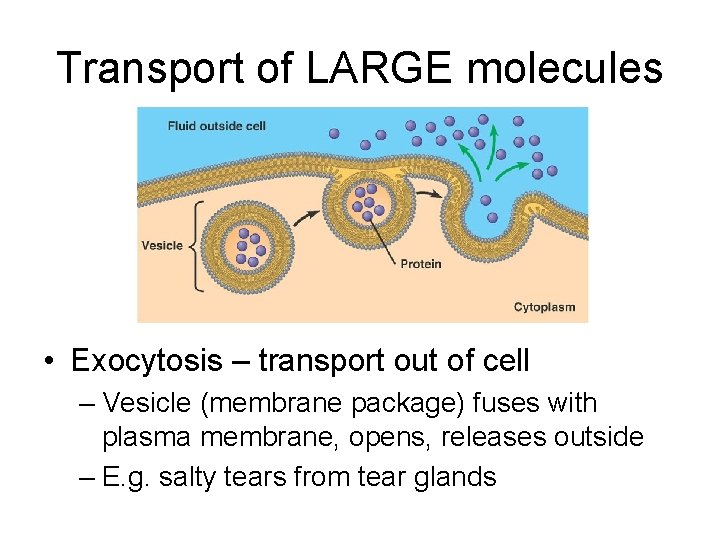
Transport of LARGE molecules • Exocytosis – transport out of cell – Vesicle (membrane package) fuses with plasma membrane, opens, releases outside – E. g. salty tears from tear glands
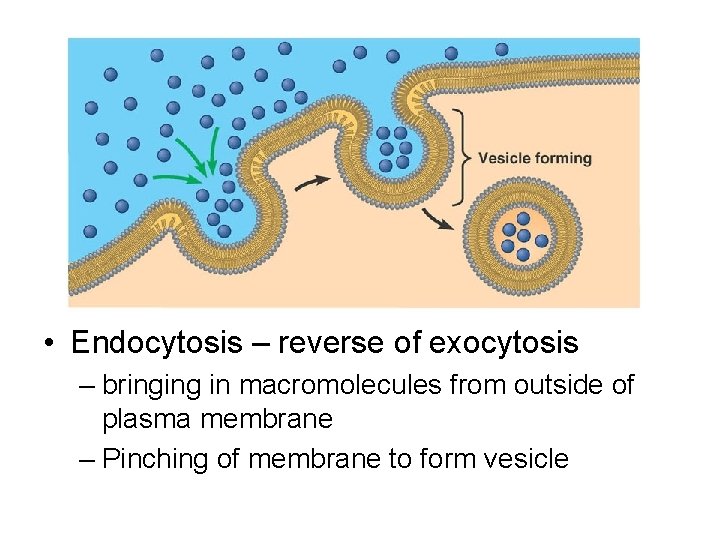
• Endocytosis – reverse of exocytosis – bringing in macromolecules from outside of plasma membrane – Pinching of membrane to form vesicle
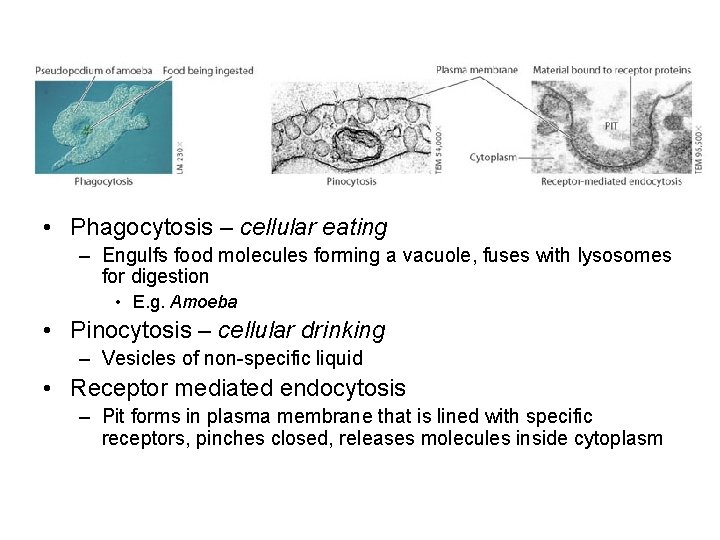
• Phagocytosis – cellular eating – Engulfs food molecules forming a vacuole, fuses with lysosomes for digestion • E. g. Amoeba • Pinocytosis – cellular drinking – Vesicles of non-specific liquid • Receptor mediated endocytosis – Pit forms in plasma membrane that is lined with specific receptors, pinches closed, releases molecules inside cytoplasm
- Slides: 16