
Membranes Chapter 5 Membrane Structure Fluid mosaic model
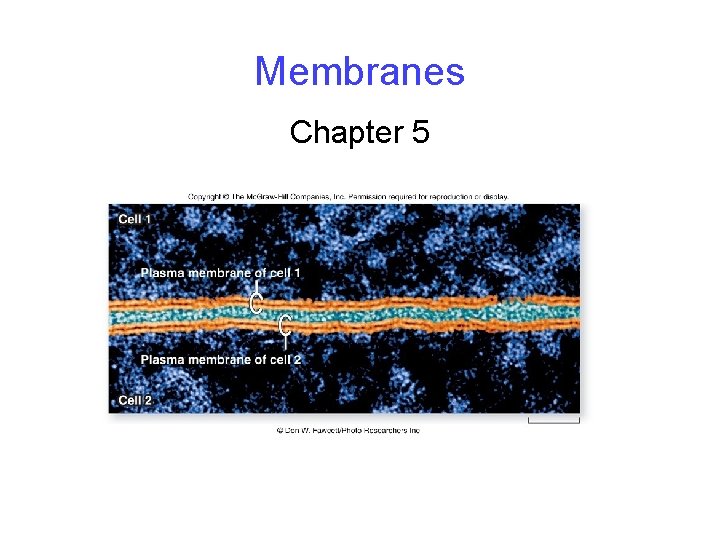
Membranes Chapter 5
Membrane Structure Fluid mosaic model 1. Phospholipid bilayer – Phospholipids: • • Glycerol 2 fatty acids – • Nonpolar (hydrophobic) Phosphate group – Polar (hydrophilic) 2
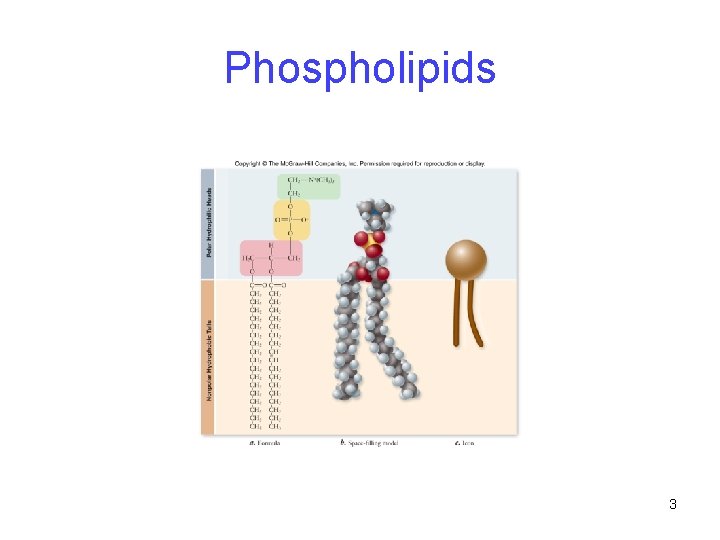
Phospholipids 3
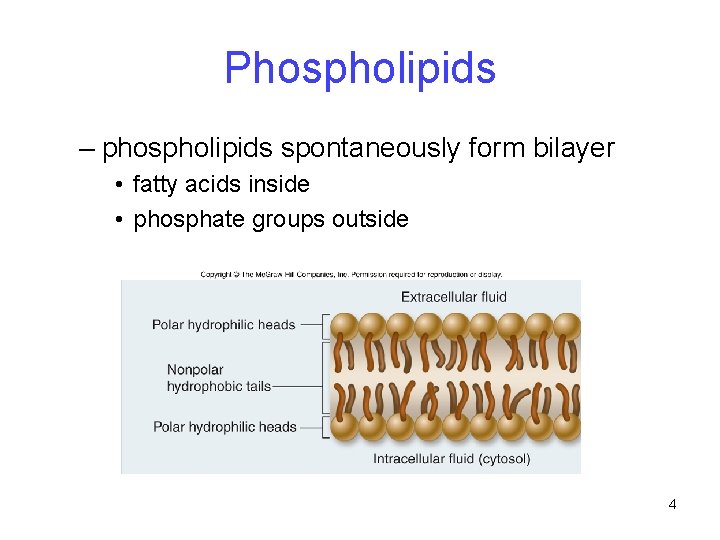
Phospholipids – phospholipids spontaneously form bilayer • fatty acids inside • phosphate groups outside 4
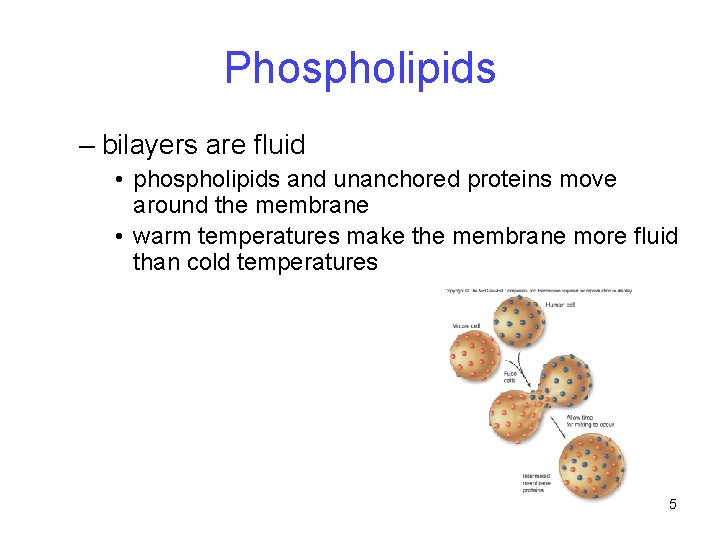
Phospholipids – bilayers are fluid • phospholipids and unanchored proteins move around the membrane • warm temperatures make the membrane more fluid than cold temperatures 5
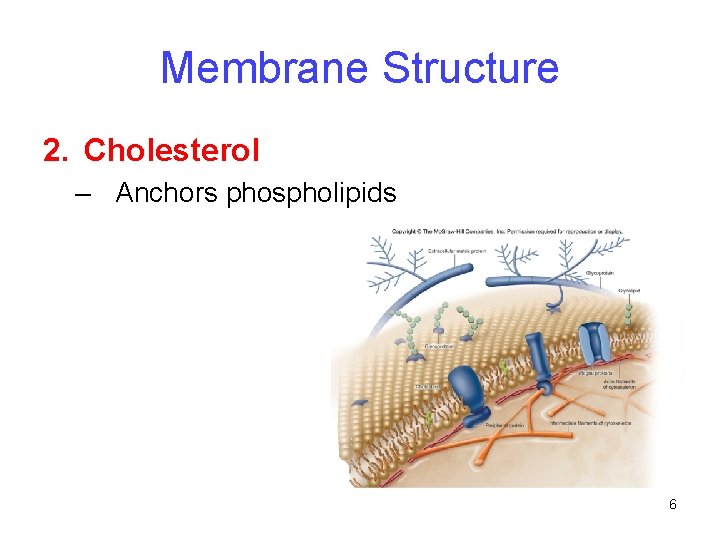
Membrane Structure 2. Cholesterol – Anchors phospholipids 6
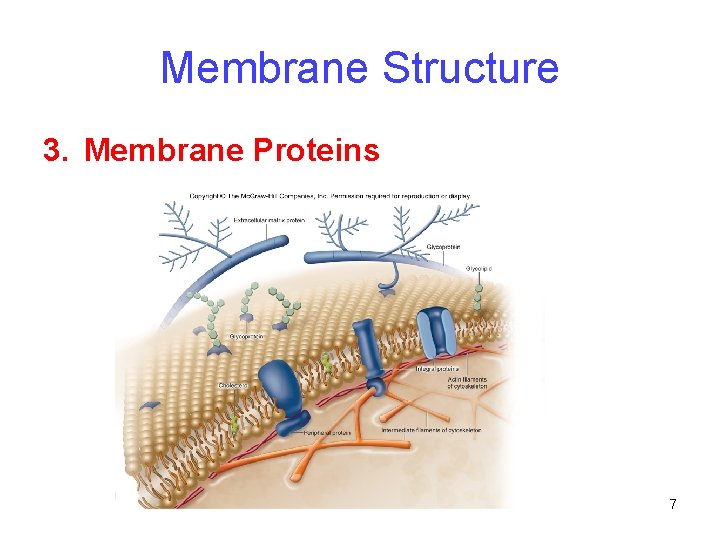
Membrane Structure 3. Membrane Proteins 7
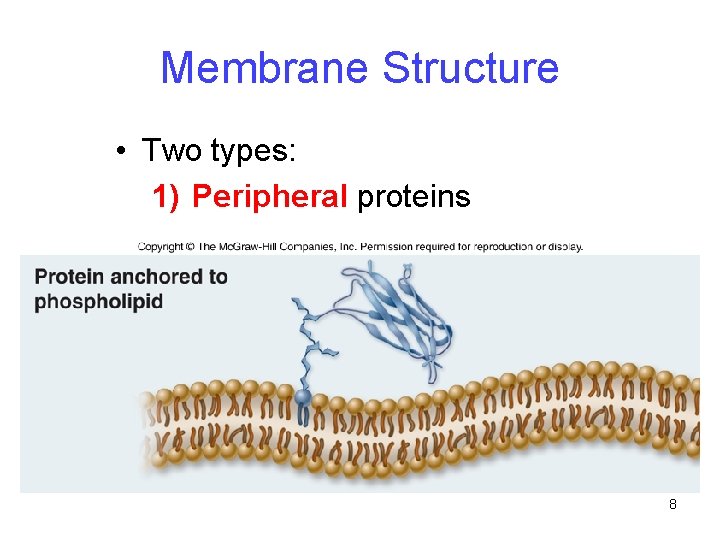
Membrane Structure • Two types: 1) Peripheral proteins 8
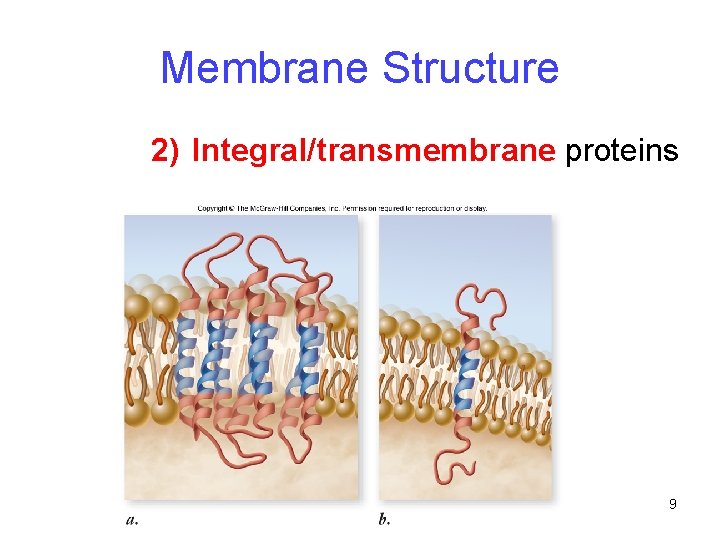
Membrane Structure 2) Integral/transmembrane proteins 9
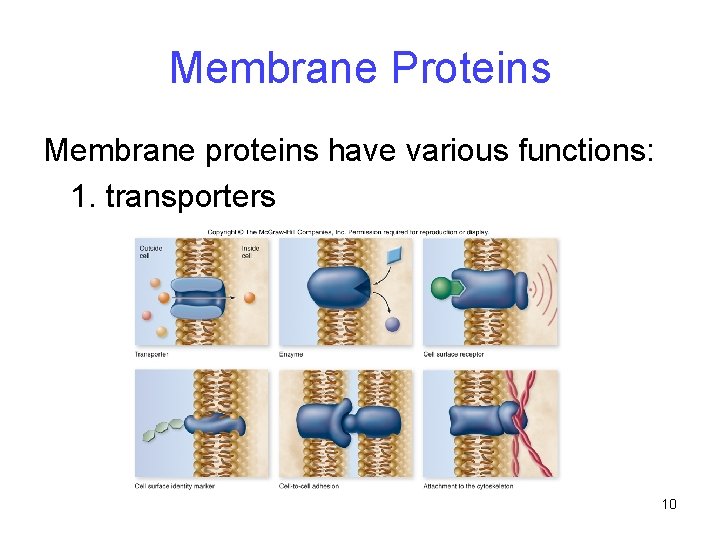
Membrane Proteins Membrane proteins have various functions: 1. transporters 10
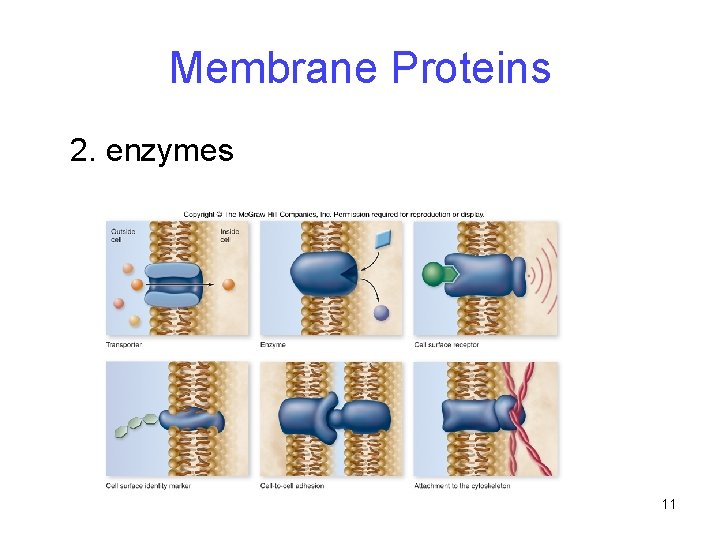
Membrane Proteins 2. enzymes 11
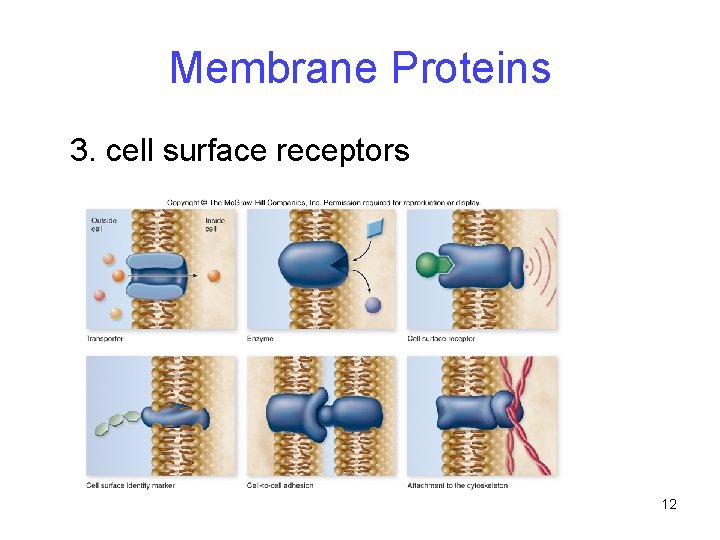
Membrane Proteins 3. cell surface receptors 12

Membrane Proteins 4. cell surface identity markers 13
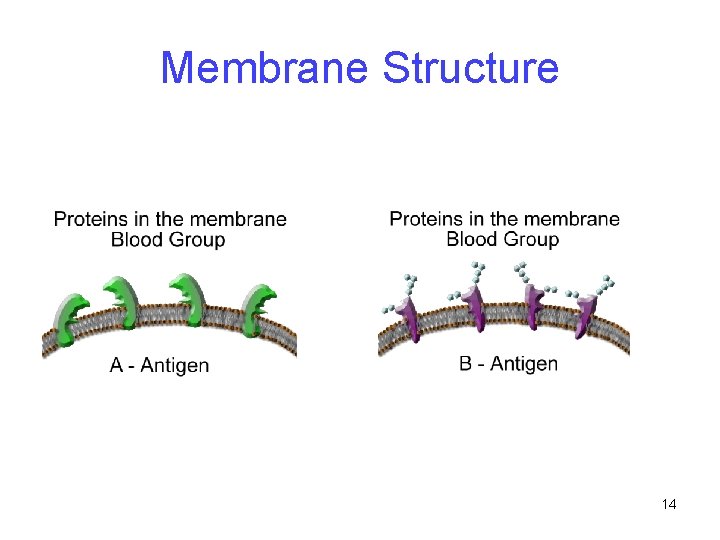
Membrane Structure 14
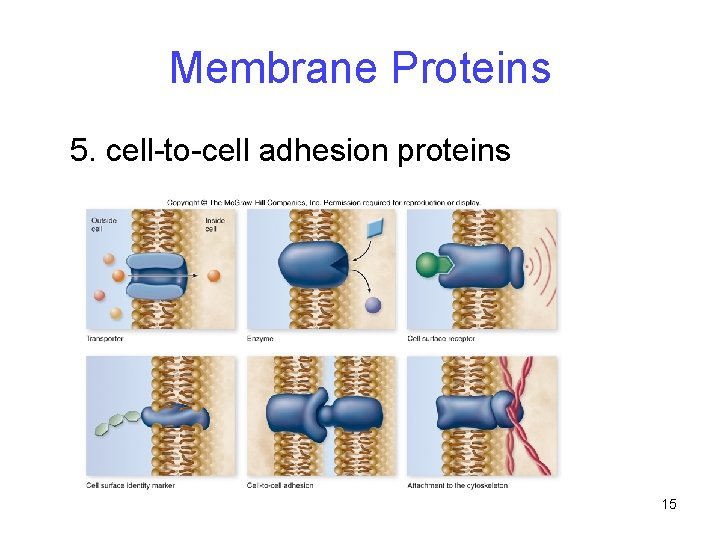
Membrane Proteins 5. cell-to-cell adhesion proteins 15

Membrane Proteins 6. attachments to the cytoskeleton 16
Passive Transport Passive transport • movement of mol. through the membrane • no E required • mol. move b/c of a concentration gradient ( [ ] grad. ) 17
![Passive Transport Three types: 1. Diffusion – mov. of mol. from high [ ]](http://slidetodoc.com/presentation_image_h2/6707189f2173921c0cee4b910e6f14f9/image-18.jpg "Passive Transport Three types: 1. Diffusion – mov. of mol. from high [ ]")
Passive Transport Three types: 1. Diffusion – mov. of mol. from high [ ] to low [ ] 18
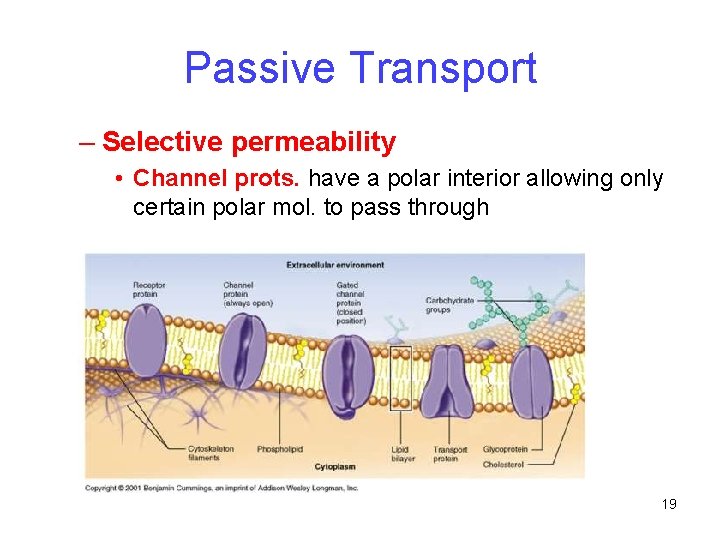
Passive Transport – Selective permeability • Channel prots. have a polar interior allowing only certain polar mol. to pass through 19
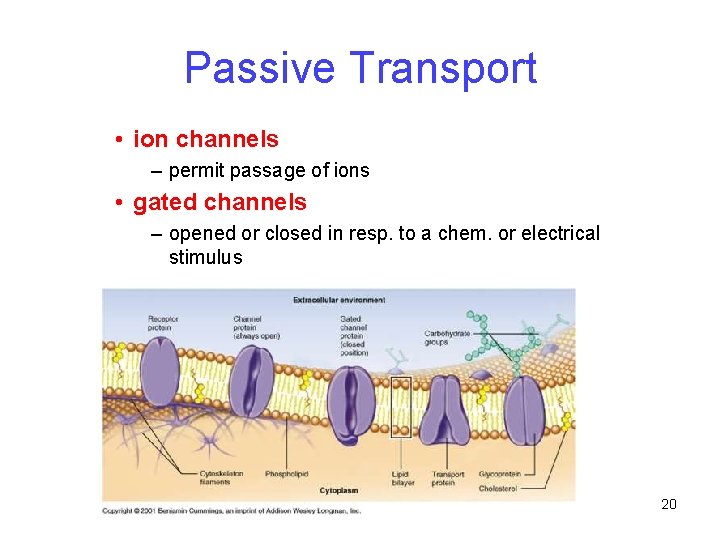
Passive Transport • ion channels – permit passage of ions • gated channels – opened or closed in resp. to a chem. or electrical stimulus 20
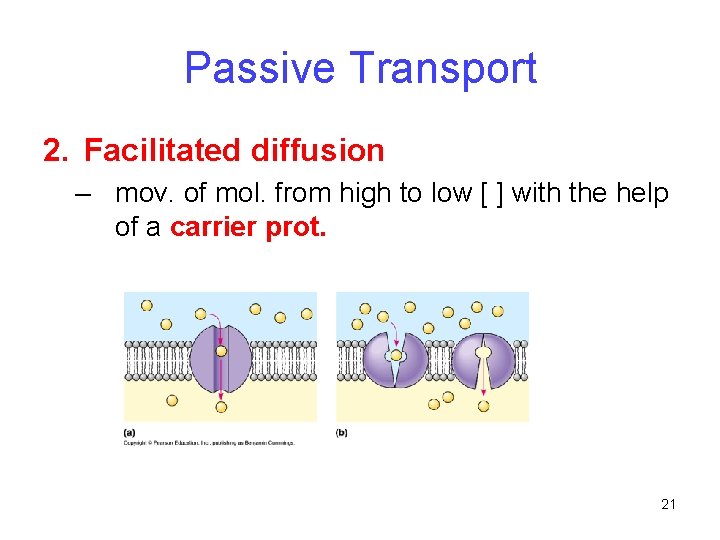
Passive Transport 2. Facilitated diffusion – mov. of mol. from high to low [ ] with the help of a carrier prot. 21
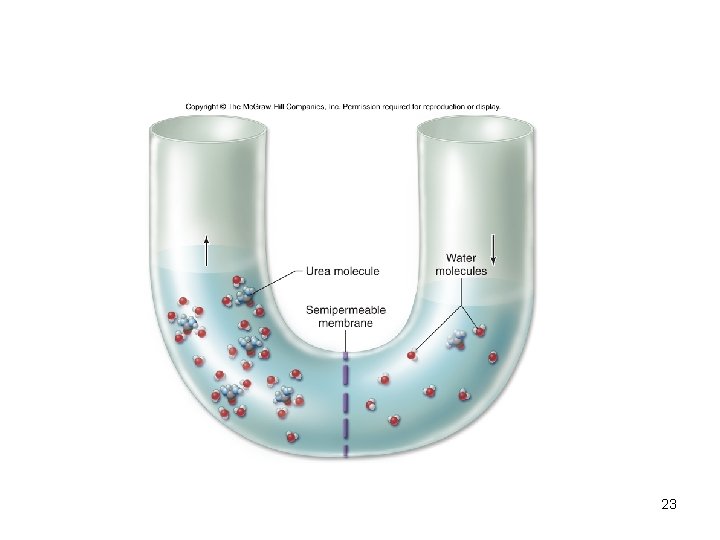
Passive Transport 3. Osmosis – mov. of H 2 O from an area of high to low [ ] of H 2 O – mov. of H 2 O toward an area of high solute [ ] 22
23
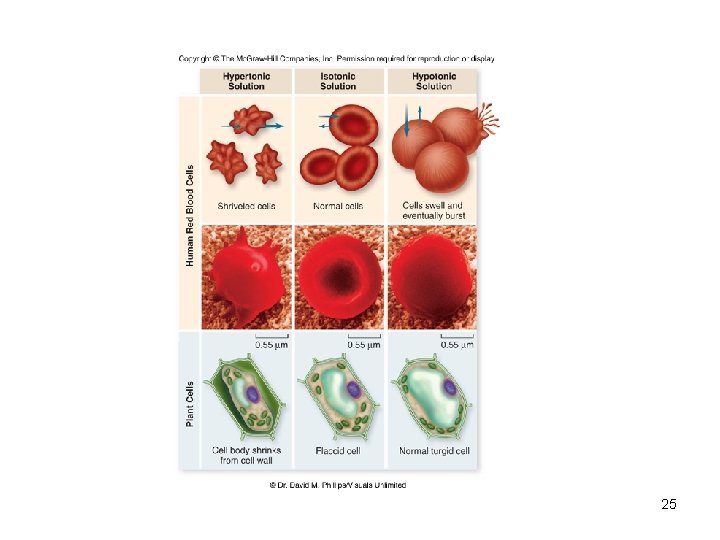
Passive Transport When 2 sol. have diff. osmotic conc. : – hypertonic solution has a higher [solute] – the hypotonic solution has a lower [solute] – osmosis moves water through aquaporins toward the hypertonic sol. 24
25
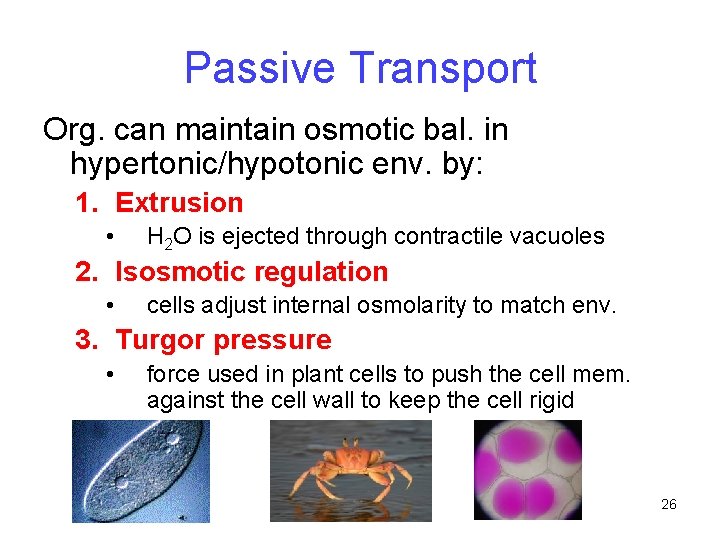
Passive Transport Org. can maintain osmotic bal. in hypertonic/hypotonic env. by: 1. Extrusion • H 2 O is ejected through contractile vacuoles 2. Isosmotic regulation • cells adjust internal osmolarity to match env. 3. Turgor pressure • force used in plant cells to push the cell mem. against the cell wall to keep the cell rigid 26
Active Transport Active transport • req. E (ATP is used directly or indirectly) • moves sub. from low to high [ ] (against their [ ] gradient) • req. the use of specialized carrier proteins 27
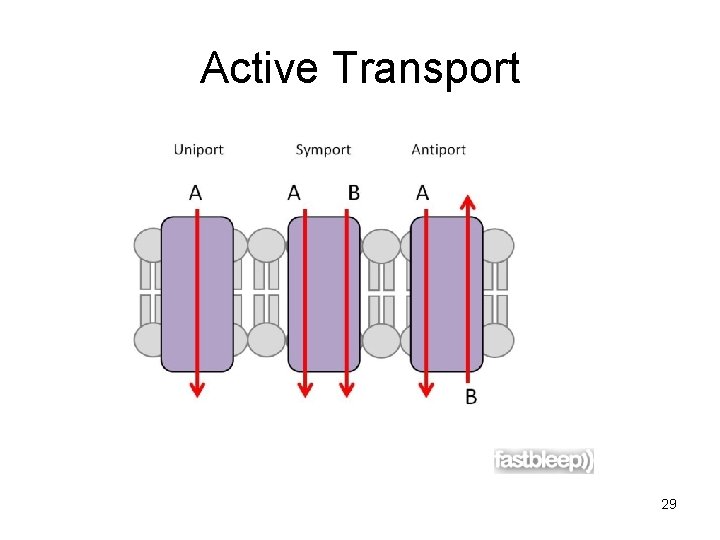
Active Transport Carrier prots. include: • Uniporters – move 1 molecule at a time • Symporters – move 2 mol. in the same direction • Antiporters – move 2 mol. in opp. directions 28
Active Transport 29
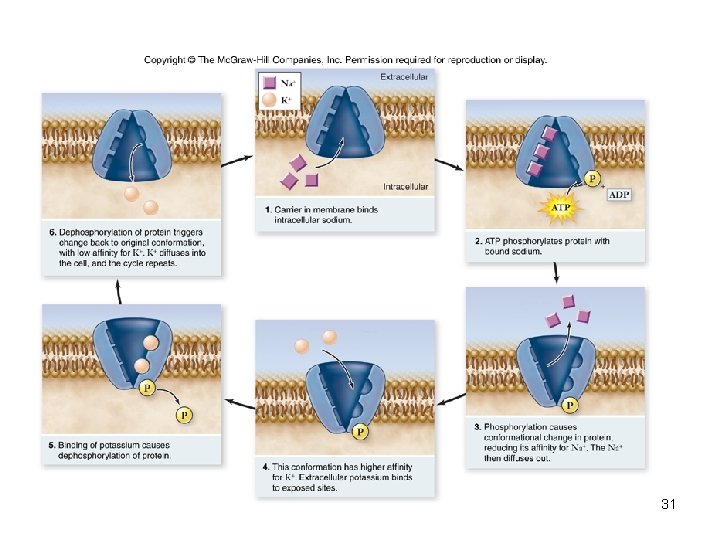
Active Transport Sodium-potassium (Na+-K+) pump • Antiporter that moves 3 Na+ out of a cell and 2 K+ into the cell • ATP used to change the conformation of the carrier prot. • affinity of the carrier protein for either Na+ or K+ changes as shape changes 30
31
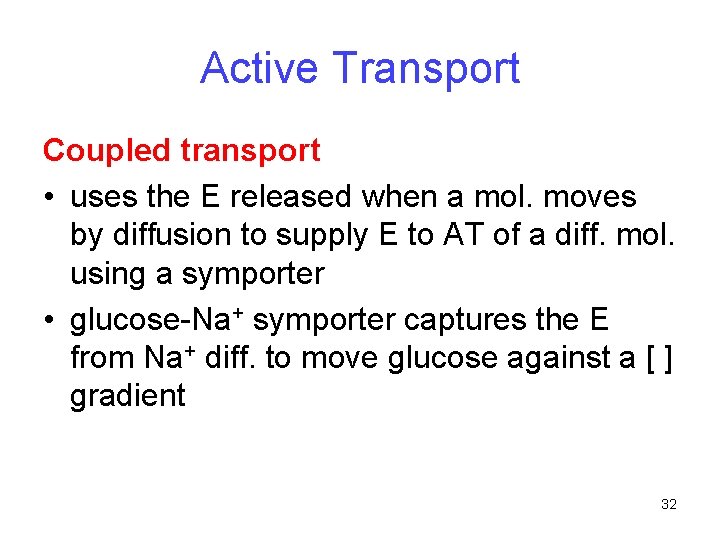
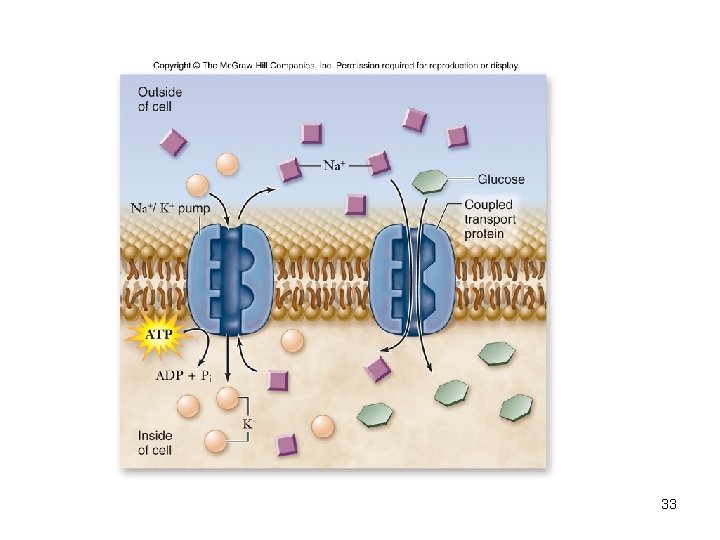
Active Transport Coupled transport • uses the E released when a mol. moves by diffusion to supply E to AT of a diff. mol. using a symporter • glucose-Na+ symporter captures the E from Na+ diff. to move glucose against a [ ] gradient 32
33
Bulk Transport 2 methods of bulk transport by cells: 1. Endocytosis – – mov. of mol. into the cell three types: 1) phagocytosis – Plasma membrane envelopes particulate matter 34

Bulk Transport 35
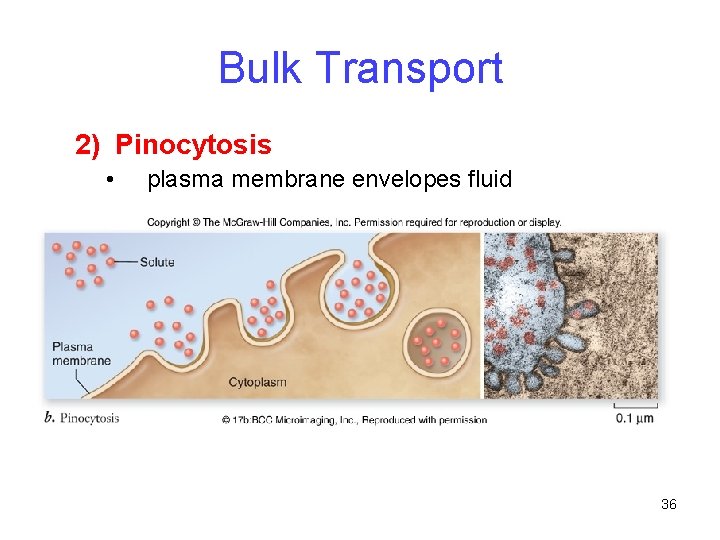
Bulk Transport 2) Pinocytosis • plasma membrane envelopes fluid 36
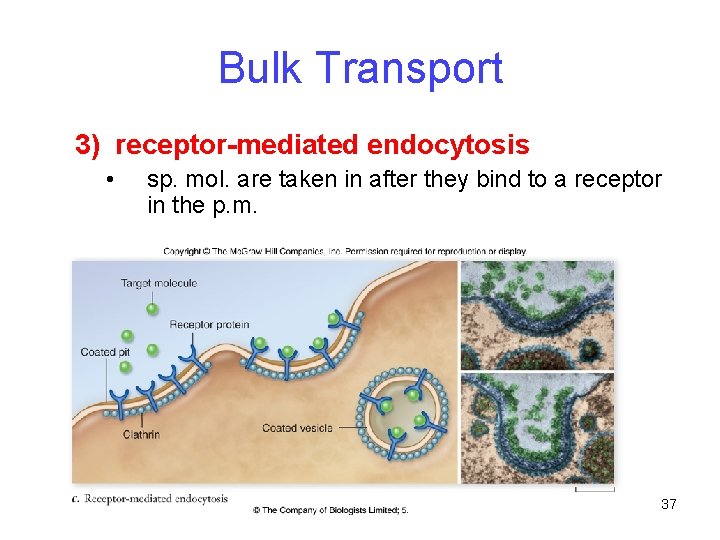
Bulk Transport 3) receptor-mediated endocytosis • sp. mol. are taken in after they bind to a receptor in the p. m. 37
Bulk Transport 2. Exocytosis – mov. of materials out of cell – plants export cell wall material – animals secrete hormones, neurotransmitters, digestive enzymes, etc. 38
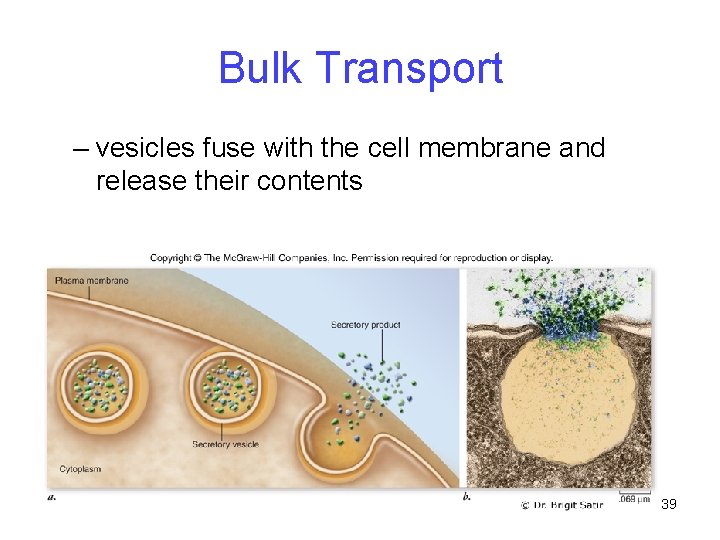
Bulk Transport – vesicles fuse with the cell membrane and release their contents 39
- Slides: 39