
Membranes and Stuff Unit 1 module 4 First
Membranes and Stuff Unit 1 module 4
First the spec! • • • Candidates should be able to demonstrate and understanding of: the roles of membranes within cells and at the surface of cells the fluid mosaic model of membrane structure and the roles of its components factors affecting membrane structure and permeability practical investigations into factors affecting membrane structure and permeability • the movement of molecules across membranes • practical investigations into the factors affecting diffusion rates in model cells • the movement of water across membranes by osmosis and the effects that solutions of different water potential can have on plant and animal cells • practical investigations into the effects of solutions of different water potential on plant and animal cells. • So lots
So starting off • Year 7 – what is a membrane • Year 9 – what does a membrane do • GCSE – what ways do cells absorb and lose things • How much do you know already? ?
Membrane jobs • Exterior Cellular membranes • Barrier is the first one – the one thing that separates inside from outside • They are partially permeable – what that mean? • They allow things in and out by diffusion, osmosis and active transport • Cellular recognition (externally anyways)
Interior Membranes • Organelle membranes • Divide the cell into different compartments (like office cubicles) e. g. mitochondria • They allow transport between different parts of the cell when vesicles are made e. g. when proteins move from the RER to the Golgi Body • Internal membranes are permeable e. g. the nuclear envelope • Barriers within organelles e. g. thylakoid membranes in chloroplasts keep all the bits in the right places • Sites for reactions, some are folded to increase surface area e. g. mitochondria membranes
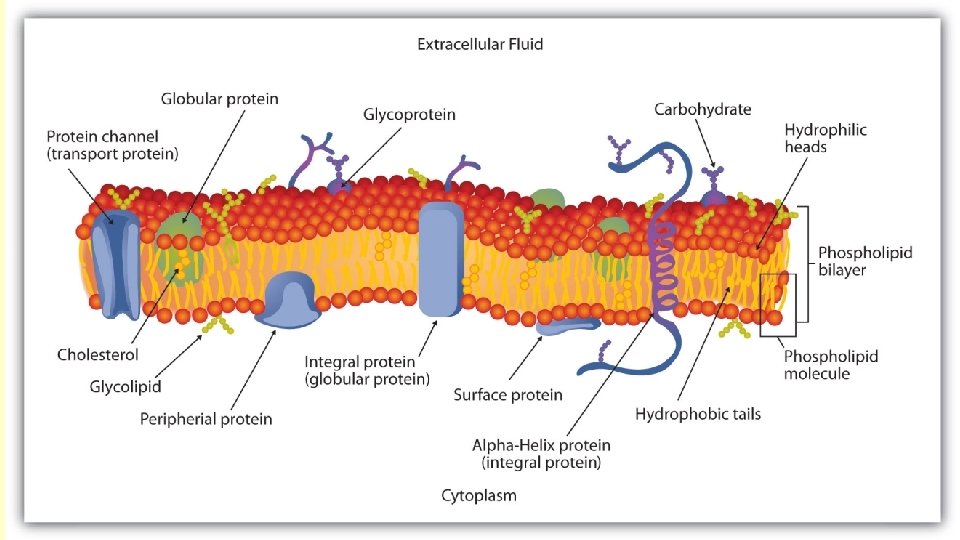
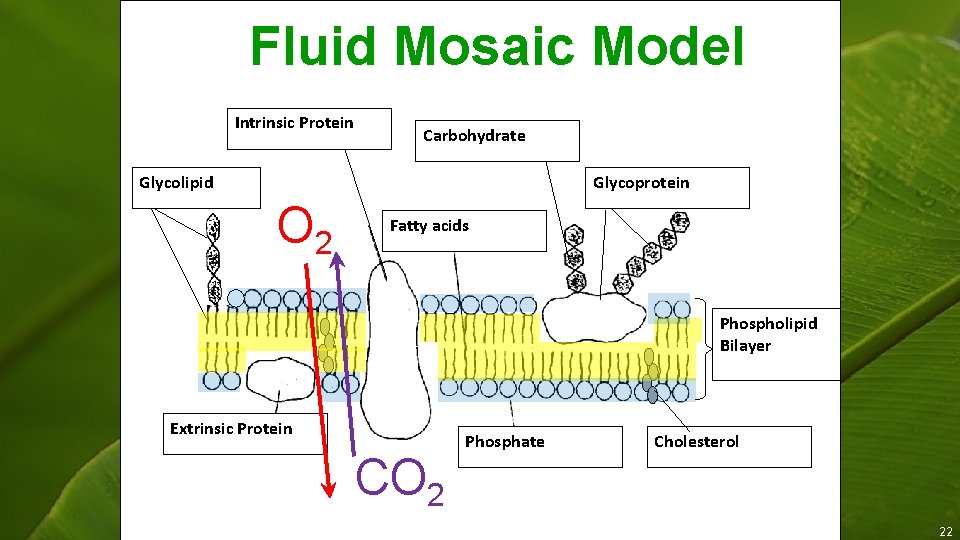
The phospholipid bilayer !!!! • Just a model but a damn good one! The membrane is made of phospholipids because they have two ends a hydrophilic and a hydrophobic This means there is not only a self making membrane but that soluble stuff (Ions) is contained inside or outside the cells and allows for control. Fat soluble stuff can just dissolve straight through
What’s in the membrane? • Cholesterol – lipid and adds structure to the membrane – makes it more rigid-but not too rigid! And being hydrophobic can control polar subs moving through the membrane • Proteins – these act as transport molecules (carrier proteins) they transport larger molecules and charged particles across the border and receptors for cell signalling • Glycolipids and Glycoproteins – Stabilise the membrane by making h-bonds with water outside, receptors for molecules and act as antigens
Questions • Suggest a use for the following membranes: • Chloroplast • Bacterial Cell • How would chloride ions cross the cell membrane? • The protein content of a typical cell is 50% in a Mitochondria it is 75% why?
Membrane permeability • So, so, far, the membrane is a permeable moving thing with stuff stuck in it! • But what affects it’s function and permeability • Solvents • Temperature
Solvents • Terribly easy this one, first a question • Do lipids dissolve in water? • What will lipids dissolve into? • Alcohols – ethanol and methanol affect permeability, ethanol is worse. – curve on board
Temperature • Below 0 – higher permeability due to protein breakdown (happens low temp) Ice can pierce the structure (tomatoes) • 0 -45 – Increasing permeability – more energy and the phospholipids move around more • Above 45 – Melting, denaturing, water expanding – hell on earth!!!
Investigate Permeability • Simple plan – look at board! • Now do questions on sheet
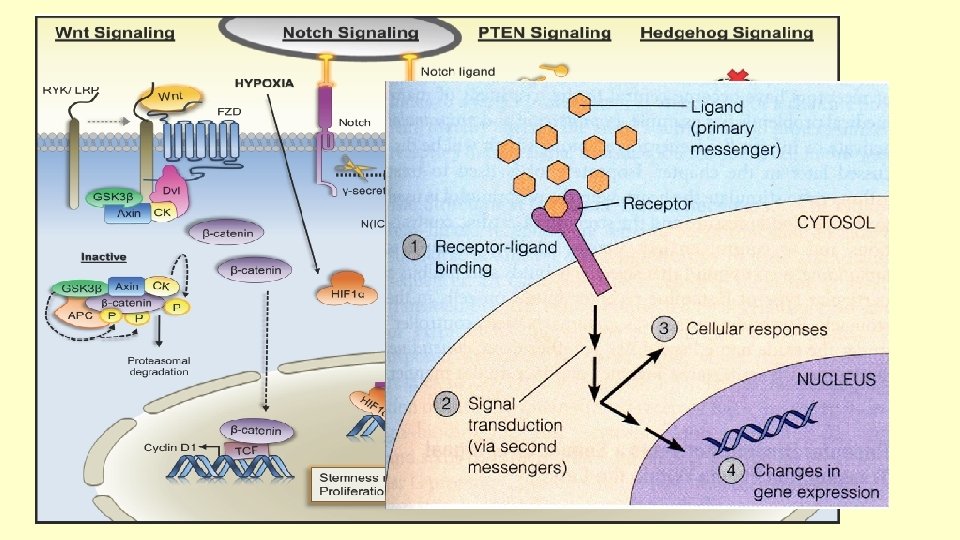
Cell signalling • Specific • Targeted • Controlled
Examples • All signals need to be specific – the wrong signal won’t stimulate the wrong cell. • Can take the form of hormones, chemicals or nerves, but you need to know: • Hormones: FSH, Glucagon • Drugs: Morphine, Antihistamines
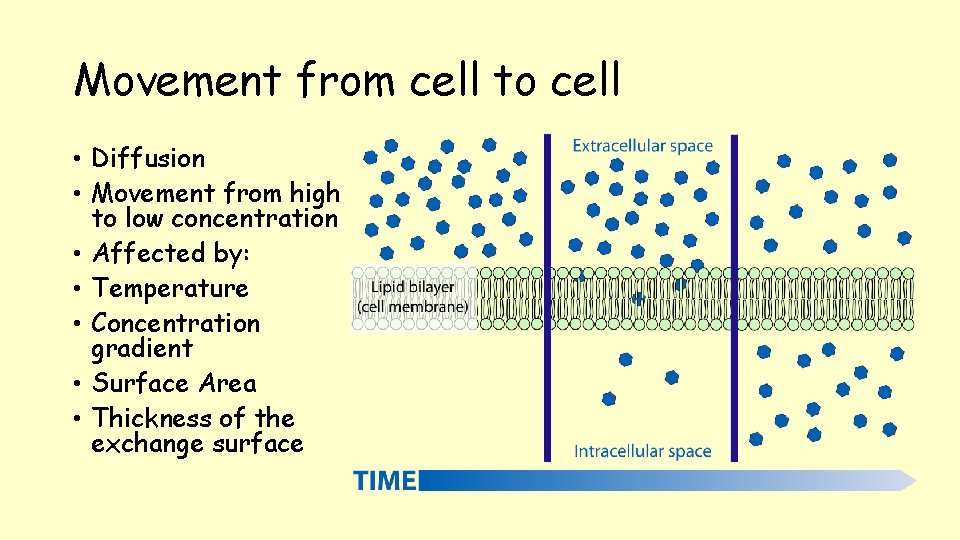
Movement from cell to cell • Diffusion • Movement from high to low concentration • Affected by: • Temperature • Concentration gradient • Surface Area • Thickness of the exchange surface
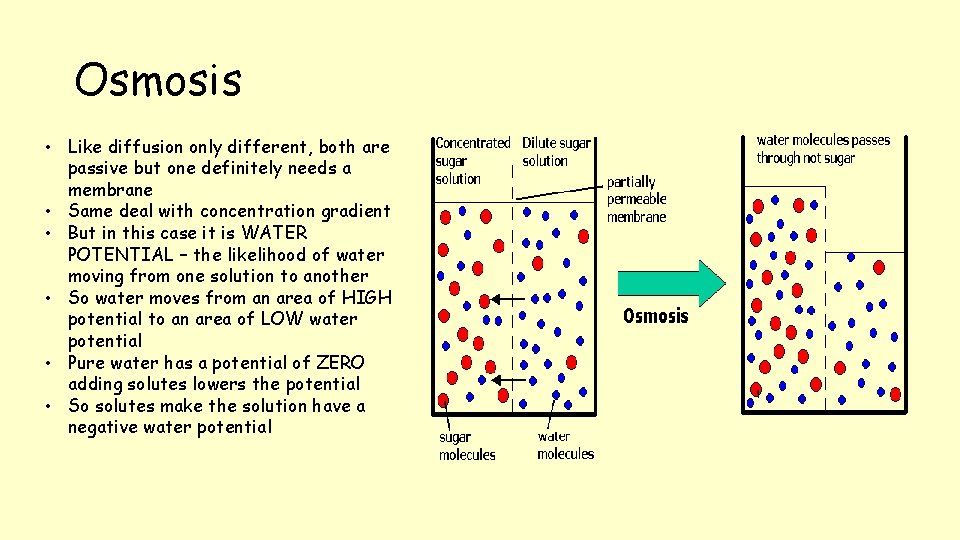
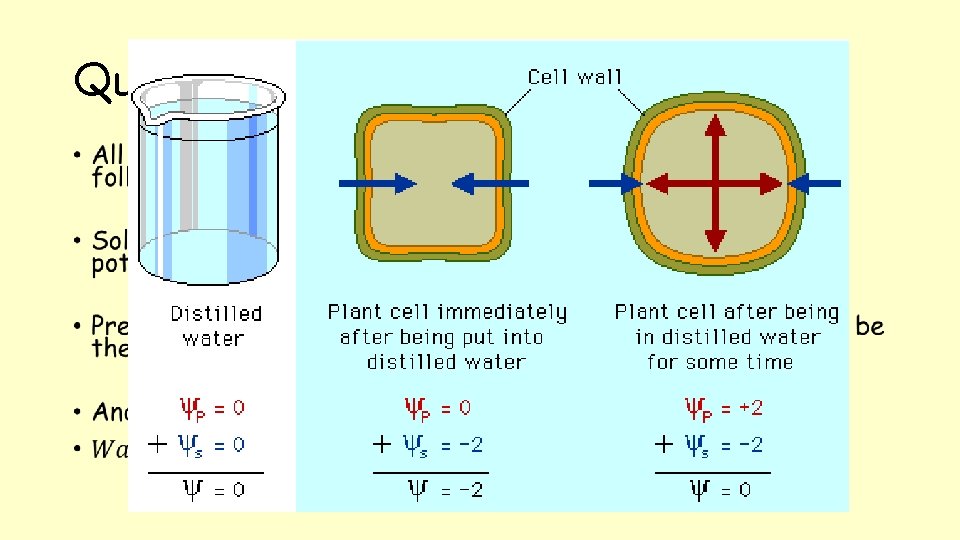
Osmosis • Like diffusion only different, both are passive but one definitely needs a membrane • Same deal with concentration gradient • But in this case it is WATER POTENTIAL – the likelihood of water moving from one solution to another • So water moves from an area of HIGH potential to an area of LOW water potential • Pure water has a potential of ZERO adding solutes lowers the potential • So solutes make the solution have a negative water potential
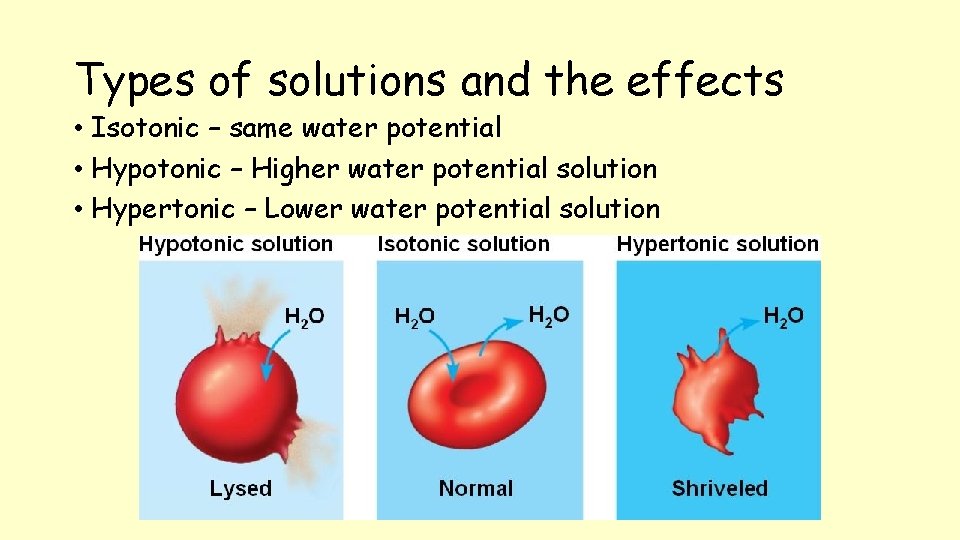
Types of solutions and the effects • Isotonic – same water potential • Hypotonic – Higher water potential solution • Hypertonic – Lower water potential solution
What we have so far! • Membranes are fluid – so move • Made of a combination of phospholipids which are amphiphilic (hydro phobe and phile) • Other molecules are in the membrane, cholesterol, proteins, glyco lipids and proteins • These are used to stabilise the membrane, act as signals, channels all sorts! • Cell signalling and natural and artificial signals • Diffusion across membranes • The finer points of osmosis – ah a quick thing!

PAG PAG!!!! • We have a new PAG – Before we do it though we need to complete the last one! • Remember that sheet you got? • Well I do here it is again – read the last page and refer this to your work to ensure you have done all of it • No todays and tomorrows work!
Concentration and it’s effects on diffusion • You will be given the following stuff • Phenolphthalein jelly cubes • Acid • When acid acts on the Phenolphthalein it goes clear. • How will you investigate how concentration affects the rate of diffusion. • PLAN!!!
Task in Pairs (1) Draw & Label a cell membrane (2) Identify hydrophobic & hydrophilic parts (3) Draw arrows to show the direction of diffusion of O 2 & CO 2 across the membrane of a respiring cell Success depends on: Label at least 6 parts Colour hydrophobic parts in yellow Colour hydrophilic parts in blue Arrows indicating diffusion of O 2 & CO 2 in correct direction Time allowed: 5 mins
Fluid Mosaic Model Intrinsic Protein Carbohydrate Glycolipid Glycoprotein A O 2 C B Fatty acids Phospholipid F Bilayer E Extrinsic Protein D CO 2 Phosphate Free Template from www. brainybetty. com Cholesterol 22
Special Diffusion • First a quick recap question – • Describe the phospholipid bilayer • Describe the process of diffusion and osmosis, how they work and what increases the rate of each. • Ten minutes • Swap and mark – what is missing and what needs to be added
Quick Osmosis recap •
Predict the water movement • Cell A – Ψs = -300 k. Pa Ψp = 100 k. Pa • Cell B – Ψs = -400 k. Pa Ψp= 300 k. Pa • Cell C – Ψs = -600 k. Pa Ψp = 100 k. Pa • Cell D – Ψs = -700 k. Pa Ψp = 200 k. Pa • Work them out!!
Important words • Plasmolysis • Cytolysis • Turgidity • Contractile Vacuole
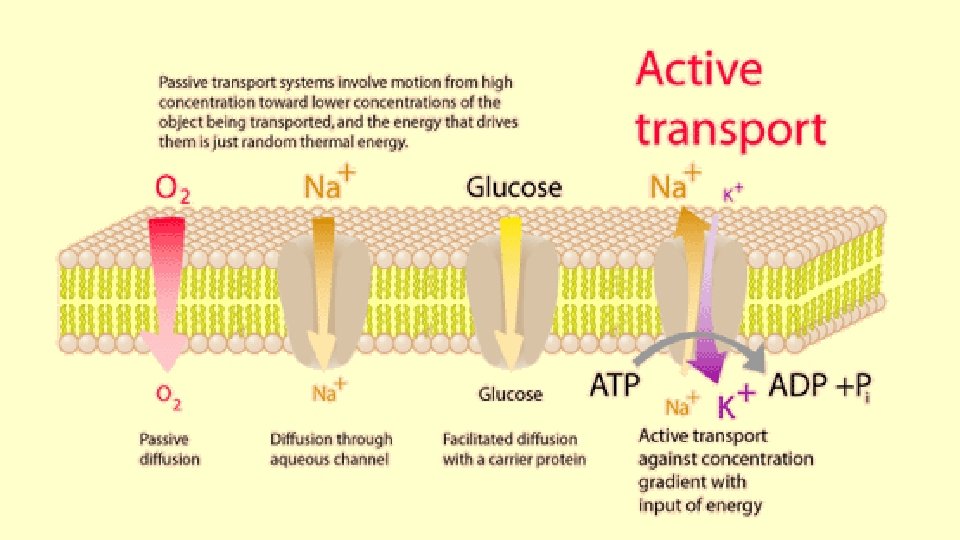
Special cases • So quickly to recap – we have two PASSIVE processes of cell transport – diffusion and osmosis, both require no energy and work across a concentration gradient. • When there is not an advantageous gradient or we are moving polar substances we need some help: • FACILITATED DIFFUSION • ACTIVE TRANSPORT
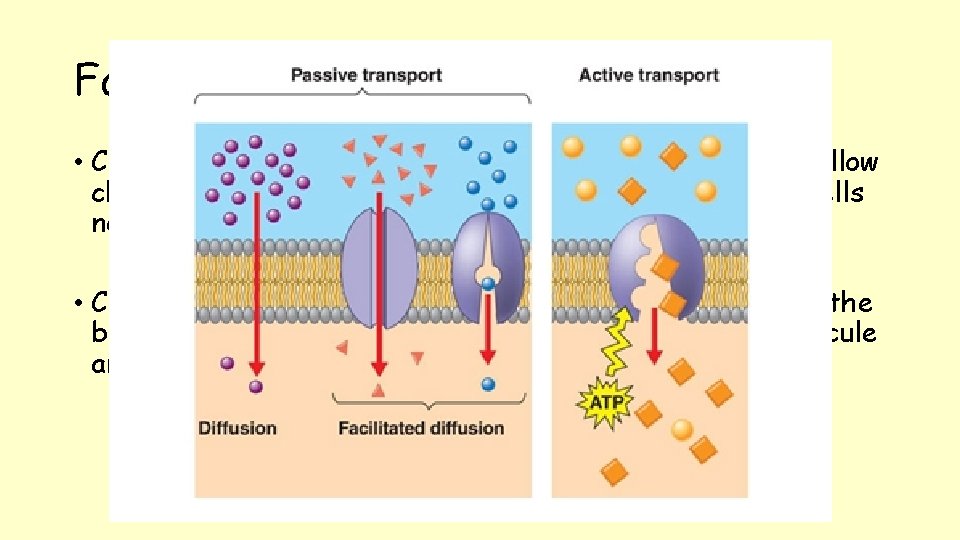
Facilitated diffusion • Channel proteins – lined with polar groups (R groups) to allow charged particles through – the pores open due to the cells needs • Carrier proteins – for bigger stuff (amino acids, sugars) the bonding to an ‘active site’ changes the shape of the molecule and this makes it move the substance
Maths • Surface area to volume ratio • Can you work this out for cubes as follows: • • 1 cm 2 cm 3 cm 4 cm • Which has the largest SA: V ratio ? ?
Active transport • Facts • Requires ATP (energy) • Works against a concentration gradient • Simple process • Molecule bonds to protein, ATP transfers a phosphate group to the protein, this changes the shape which carries the molecule into the cell, protein releases the molecule and it reverts to it’s original shape
Questions • What will cells need if they do a lot of active transport? • What can affect the rate of active transport? • What processes may require active transport?
Questions • What will cells need if they do a lot of active transport? • Lots of mitochondria and a high respiration rate • What can affect the rate of active transport? • Oxygen concentration, temperature, any metabolic poisons (cyanide, carbon monoxide) • What processes may require active transport? • Nerve transmission, muscle contraction, absorption in the gut, minerals in plants, kidney excretion of urea.
Endo and exocytosis • Or how stuff is absorbed and excreted! • Endocytosis – the cell wraps the surface membrane around material and then forms a vesicle around it. • Specialised in two ways: • Phagocytosis – e. g. when bacteria are digested by phagocytes • Pinocytosis – when a cell absorbs liquid via this method – e. g. human egg cells • Exocytosis – the opposite the vesicle merges with the membrane rather than being made from it
- Slides: 34