
Membranes and Diffusion Cell Membrane Structure Phospholipids have
Membranes and Diffusion
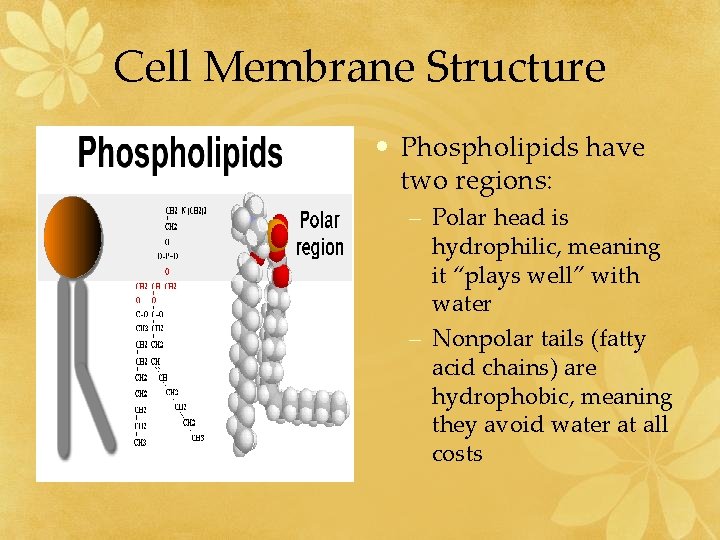
Cell Membrane Structure • Phospholipids have two regions: – Polar head is hydrophilic, meaning it “plays well” with water – Nonpolar tails (fatty acid chains) are hydrophobic, meaning they avoid water at all costs
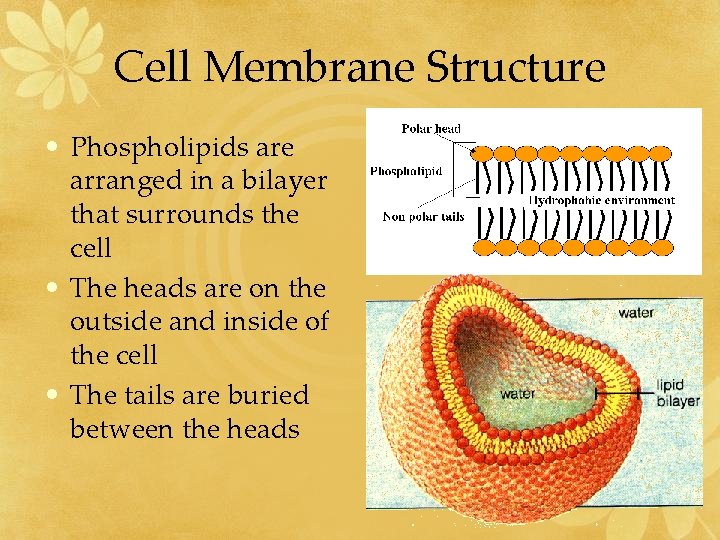
Cell Membrane Structure • Phospholipids are arranged in a bilayer that surrounds the cell • The heads are on the outside and inside of the cell • The tails are buried between the heads
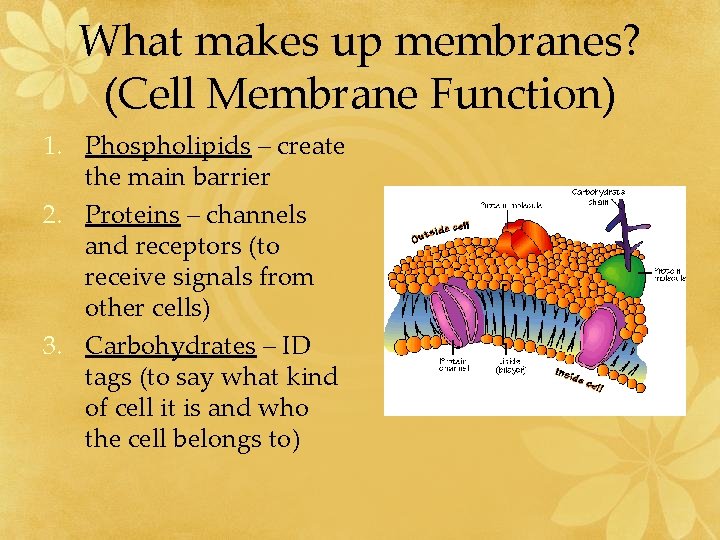
What makes up membranes? (Cell Membrane Function) 1. Phospholipids – create the main barrier 2. Proteins – channels and receptors (to receive signals from other cells) 3. Carbohydrates – ID tags (to say what kind of cell it is and who the cell belongs to)
Membranes aren’t stiff! (Cell Membrane Function) • The membrane components move around, so we say they’re fluid! • http: //www. stolaf. edu/people/giannini/fla shanimat/lipids/membrane%20 fluidity. swf
What do membranes do? • Keep bad things out • Let needed things in • Let wastes out • Maintain homeostasis (what is that again? ? )
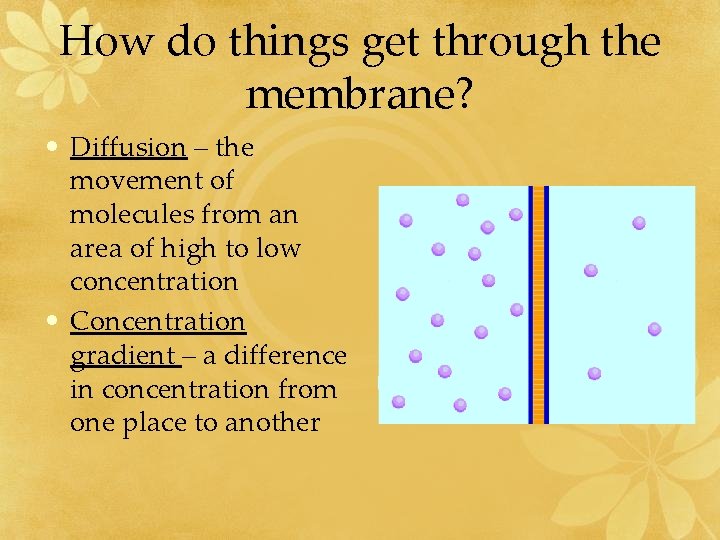
How do things get through the membrane? • Diffusion – the movement of molecules from an area of high to low concentration • Concentration gradient – a difference in concentration from one place to another
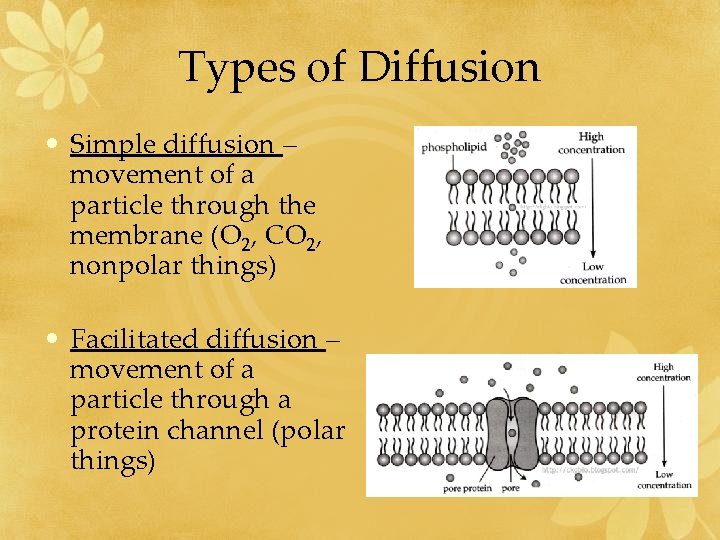
Types of Diffusion • Simple diffusion – movement of a particle through the membrane (O 2, CO 2, nonpolar things) • Facilitated diffusion – movement of a particle through a protein channel (polar things)
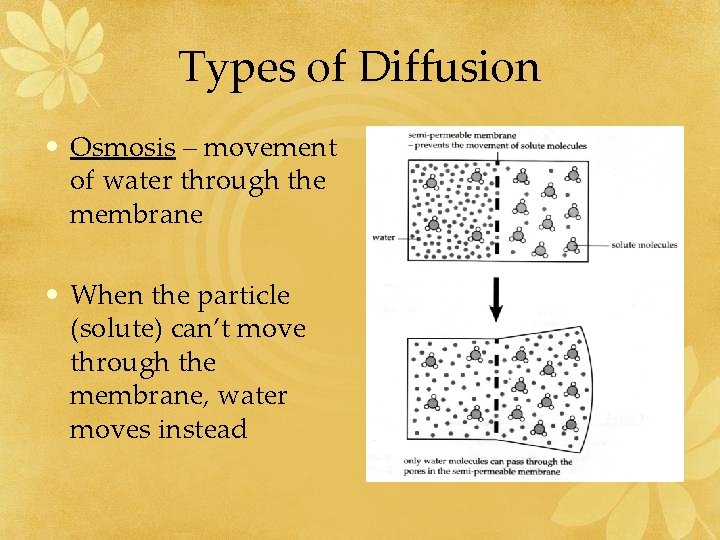
Types of Diffusion • Osmosis – movement of water through the membrane • When the particle (solute) can’t move through the membrane, water moves instead
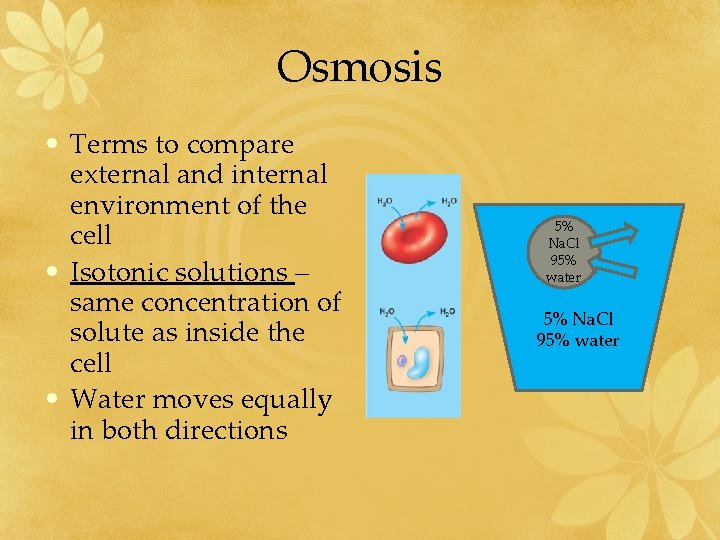
Osmosis • Terms to compare external and internal environment of the cell • Isotonic solutions – same concentration of solute as inside the cell • Water moves equally in both directions 5% Na. Cl 95% water
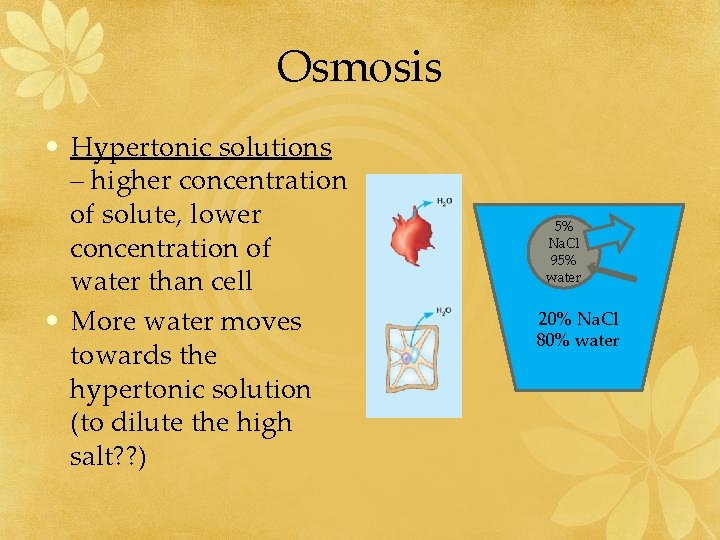
Osmosis • Hypertonic solutions – higher concentration of solute, lower concentration of water than cell • More water moves towards the hypertonic solution (to dilute the high salt? ? ) 5% Na. Cl 95% water 20% Na. Cl 80% water
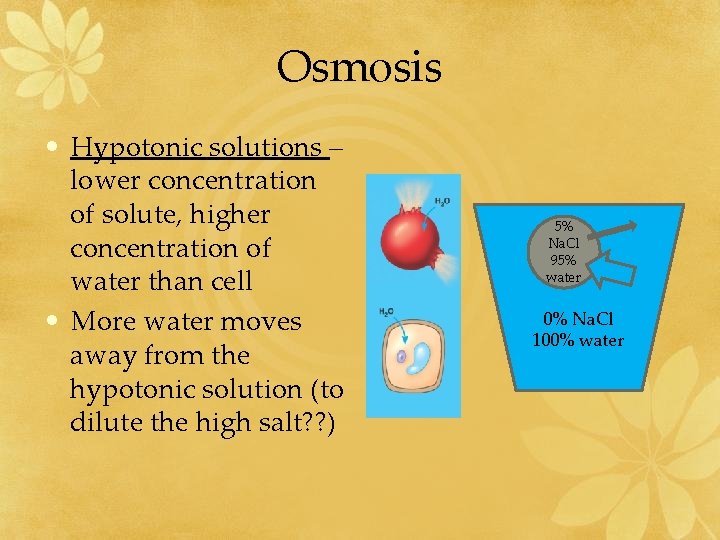
Osmosis • Hypotonic solutions – lower concentration of solute, higher concentration of water than cell • More water moves away from the hypotonic solution (to dilute the high salt? ? ) 5% Na. Cl 95% water 0% Na. Cl 100% water
Let’s try something… • The Problem: Imagine the plastic bag is a cell and the candy is the food. You must get the candy into the bag, using the following rules: – The candy must enter through a solid part of the bag – The inside of the bag may not be directly open to the external environment – The candies entering the bag must remain clustered together – You may work with your hands inside the bag to act as the inside of the cell – The candy may only be eaten if it enters the bag “cell” under these conditions
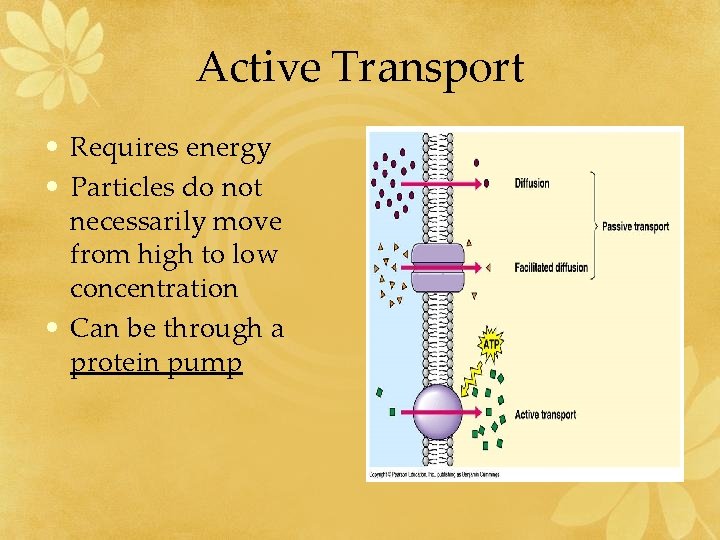
Active Transport • Requires energy • Particles do not necessarily move from high to low concentration • Can be through a protein pump
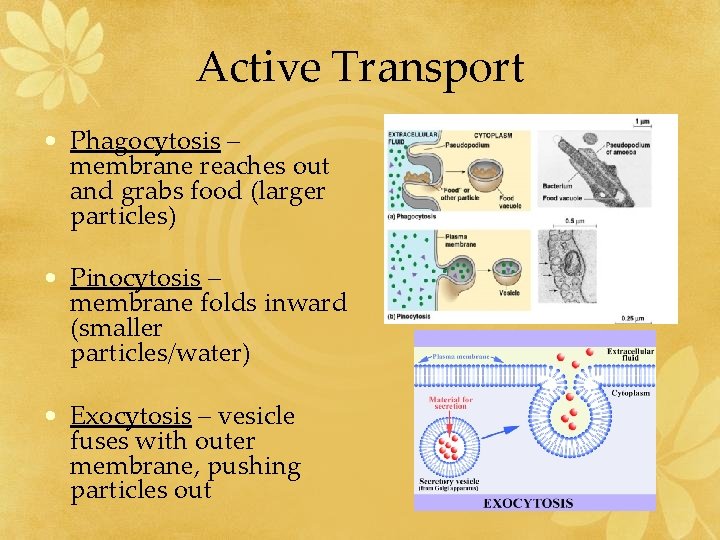
Active Transport • Phagocytosis – membrane reaches out and grabs food (larger particles) • Pinocytosis – membrane folds inward (smaller particles/water) • Exocytosis – vesicle fuses with outer membrane, pushing particles out
- Slides: 15