
MembraneBound Organelles Section 4 5 Learning Objectives Distinguish
Membrane-Bound Organelles Section 4. 5

Learning Objectives �Distinguish between smooth and rough endoplasmic reticulum in terms of structure and function �Trace the path of protein synthesis in rough ER from creation to delivery to final destination �Compare the functions of lysosomes, vacuoles, and peroxisomes �Contrast the functions of mitochondria & chloroplasts & compare their structure
Endomembrane System �A series of interacting organelles that exchange materials through small membrane-enclosed containers • Involved in making & modifying lipids & proteins for the cell • Made up of all organelles found in the cytoplasm except mitochondria and chloroplasts
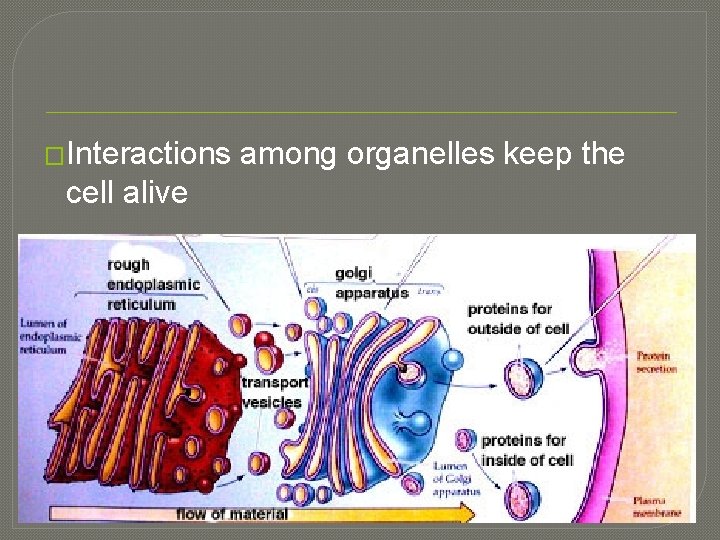
�Interactions cell alive among organelles keep the

Endoplasmic Reticulum (ER) �ER = a complex network of membranes expanding from the nuclear envelope that has various functions and structures • 2 main types: Rough ER and Smooth ER �One function in both types is storage of calcium ions for cell signaling
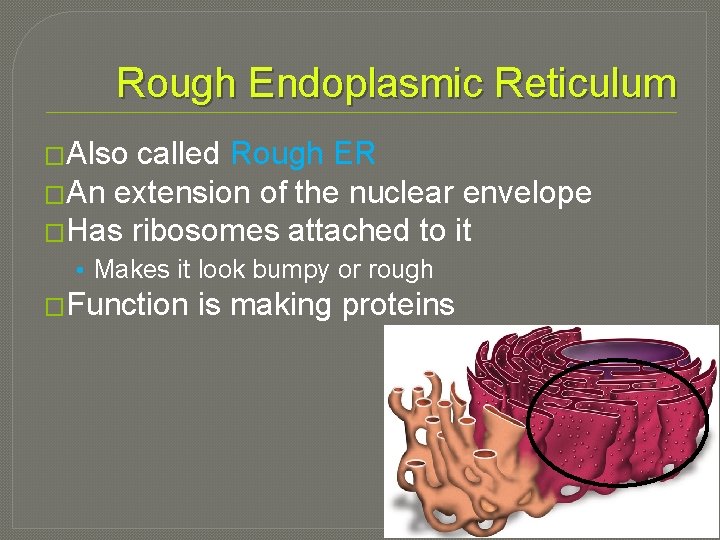
Rough Endoplasmic Reticulum �Also called Rough ER �An extension of the nuclear envelope �Has ribosomes attached to it • Makes it look bumpy or rough �Function is making proteins
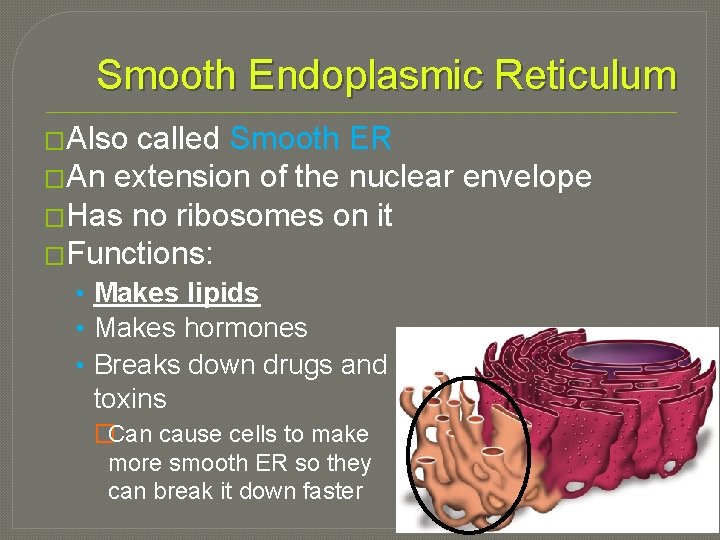
Smooth Endoplasmic Reticulum �Also called Smooth ER �An extension of the nuclear envelope �Has no ribosomes on it �Functions: • Makes lipids • Makes hormones • Breaks down drugs and toxins �Can cause cells to make more smooth ER so they can break it down faster
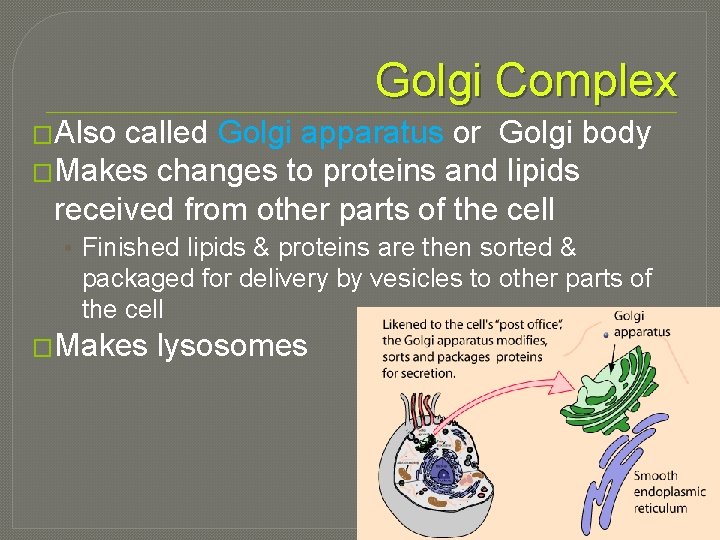
Golgi Complex �Also called Golgi apparatus or Golgi body �Makes changes to proteins and lipids received from other parts of the cell • Finished lipids & proteins are then sorted & packaged for delivery by vesicles to other parts of the cell �Makes lysosomes

Vesicles �Vesicle = Membrane bound sac or container �Transport materials around the cell • Move along cytoskeleton tracks or “roads”
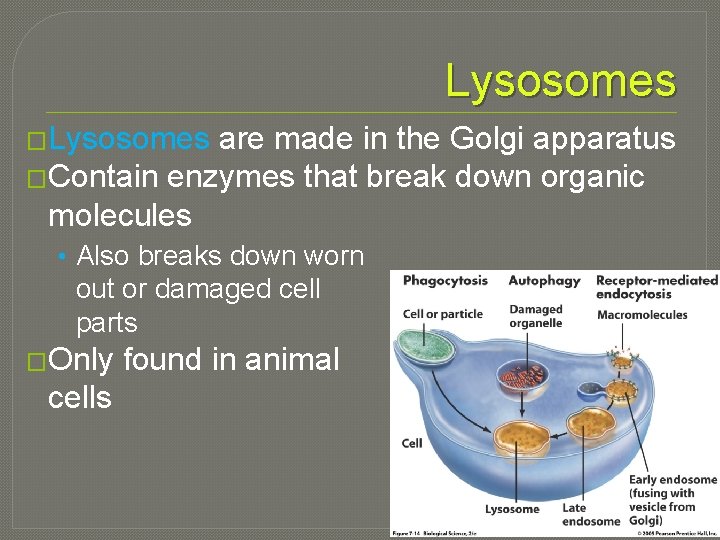
Lysosomes �Lysosomes are made in the Golgi apparatus �Contain enzymes that break down organic molecules • Also breaks down worn out or damaged cell parts �Only cells found in animal
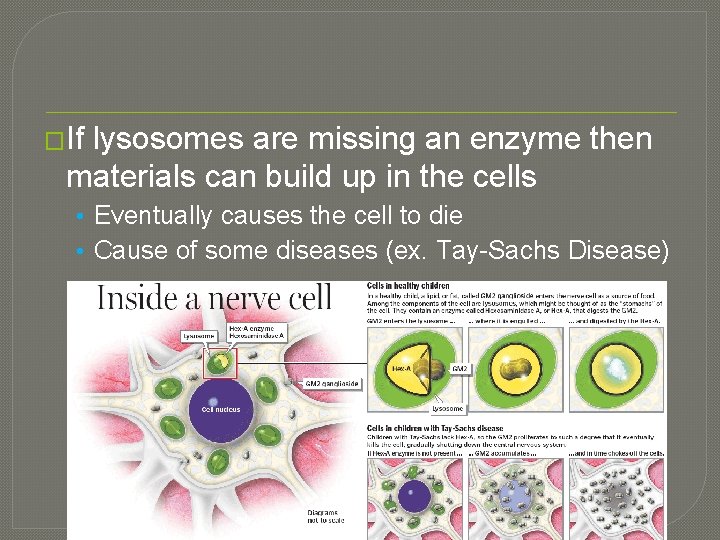
�If lysosomes are missing an enzyme then materials can build up in the cells • Eventually causes the cell to die • Cause of some diseases (ex. Tay-Sachs Disease)
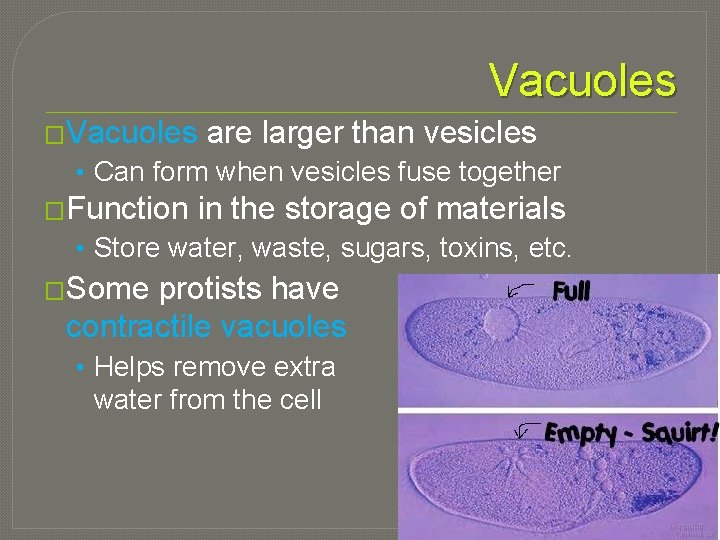
Vacuoles �Vacuoles are larger than vesicles • Can form when vesicles fuse together �Function in the storage of materials • Store water, waste, sugars, toxins, etc. �Some protists have contractile vacuoles • Helps remove extra water from the cell
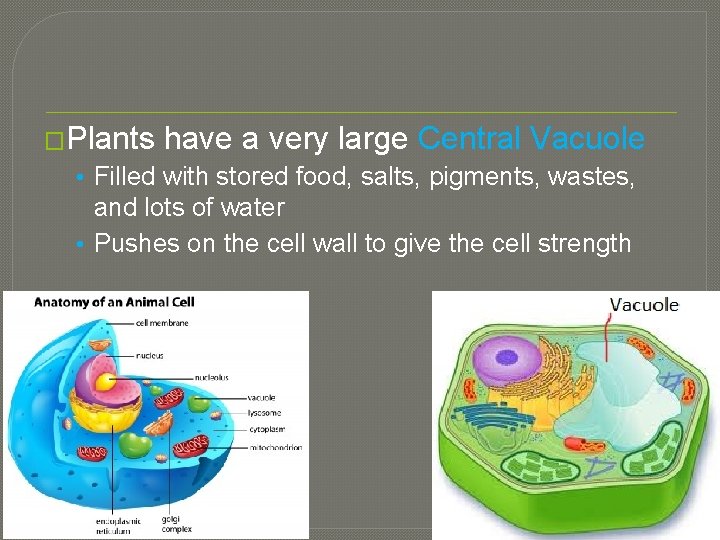
�Plants have a very large Central Vacuole • Filled with stored food, salts, pigments, wastes, and lots of water • Pushes on the cell wall to give the cell strength
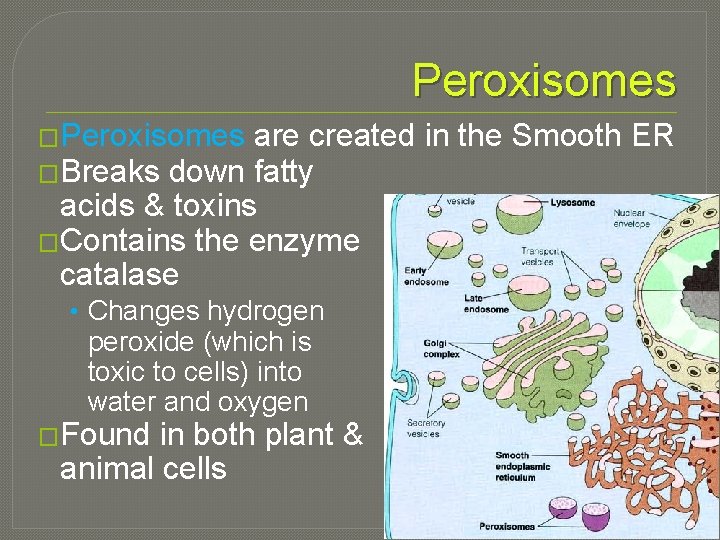
Peroxisomes �Peroxisomes are created in the Smooth ER �Breaks down fatty acids & toxins �Contains the enzyme catalase • Changes hydrogen peroxide (which is toxic to cells) into water and oxygen �Found in both plant & animal cells
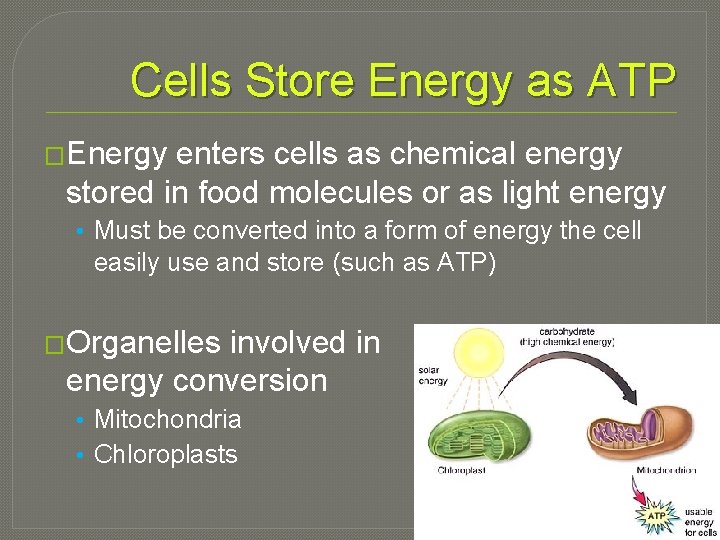
Cells Store Energy as ATP �Energy enters cells as chemical energy stored in food molecules or as light energy • Must be converted into a form of energy the cell easily use and store (such as ATP) �Organelles involved in energy conversion • Mitochondria • Chloroplasts
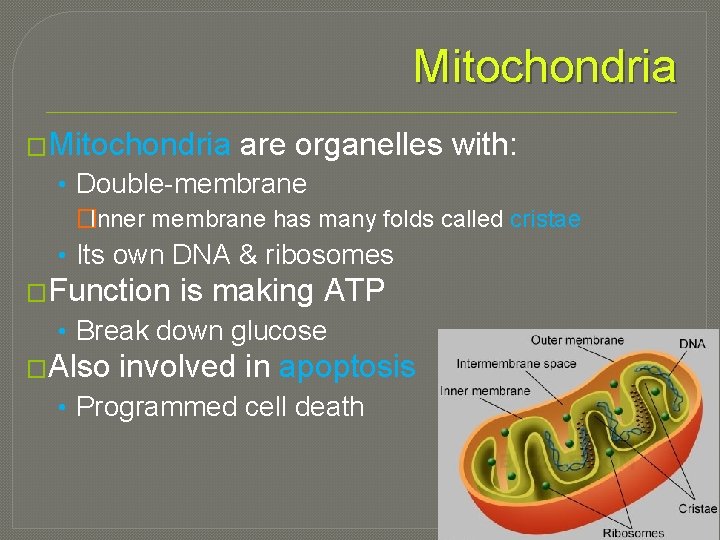
Mitochondria �Mitochondria are organelles with: • Double-membrane �Inner membrane has many folds called cristae • Its own DNA & ribosomes �Function is making ATP • Break down glucose �Also involved in apoptosis • Programmed cell death
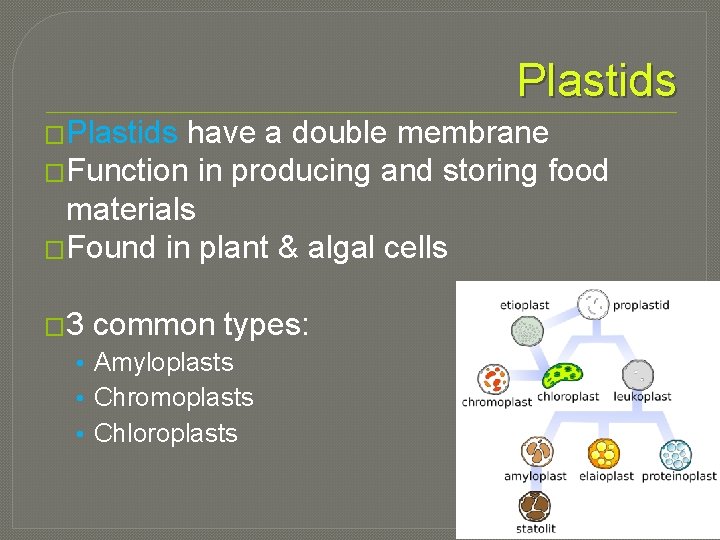
Plastids �Plastids have a double membrane �Function in producing and storing food materials �Found in plant & algal cells � 3 common types: • Amyloplasts • Chromoplasts • Chloroplasts
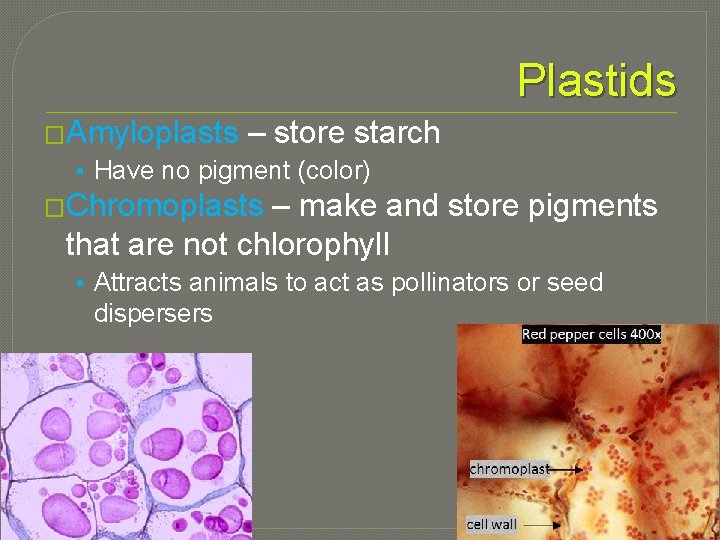
Plastids �Amyloplasts – store starch • Have no pigment (color) �Chromoplasts – make and store pigments that are not chlorophyll • Attracts animals to act as pollinators or seed dispersers
Chloroplast �Chloroplast = plastid specialized for photosynthesis • Has a double membrane (outer membranes) • Have their own DNA & ribosomes • Third highly folded inner membrane called the thylakoid membrane • Fluid filled space surrounding thylakoid membrane is the stroma �Function is to capture light energy to make sugars from water and CO 2
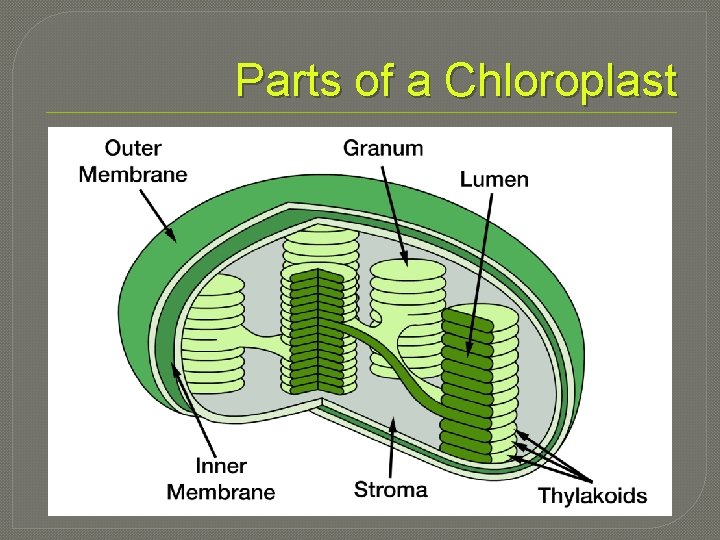
Parts of a Chloroplast
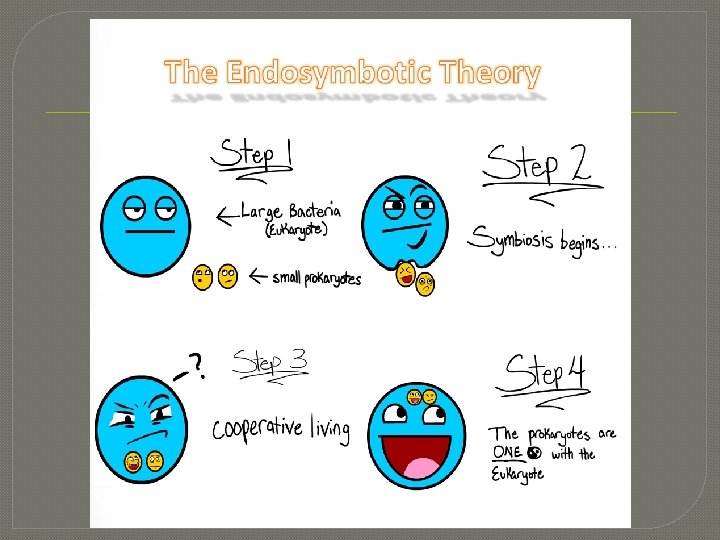
Theory of Endosymbiosis �Why do mitochondria & chloroplasts have their own DNA & ribosomes? • They are very similar to certain species of bacteria �Scientists think their ancestors were freeliving bacteria that were ingested by eukaryotic cells • The bacteria were then allowed to live within the cell & produce sugar or ATP for it
- Slides: 22