
MEMBRANE TRANSPORT Subtopic 1 4 How do membranes
MEMBRANE TRANSPORT Subtopic 1. 4
How do membranes control the composition of cells? ■ Membranes control the composition of cells by active and passive transport.
What are some materials a cell may need to import? ■ Materials essential for cell metabolism ■ Ex: – Glucose – Hormones – Ions
What are some materials a cell may need to export? ■ Waste products that are toxic to the cell. ■ Useful substances that need to be secreted. ■ Ex: – Enzymes – Hormones
Membranes are Selective Permeable ■ Many substances can diffuse (move) across biological membranes, but some are too big or too strongly charged to cross the lipid bilayer. ■ If a substance can diffuse (move) across the membrane, the membrane is said to be permeable to it. ■ If it cannot cross the membrane it is said to be impermeable. ■ Because most biological membranes only let certain things in and out, it is said to be selective permeable.
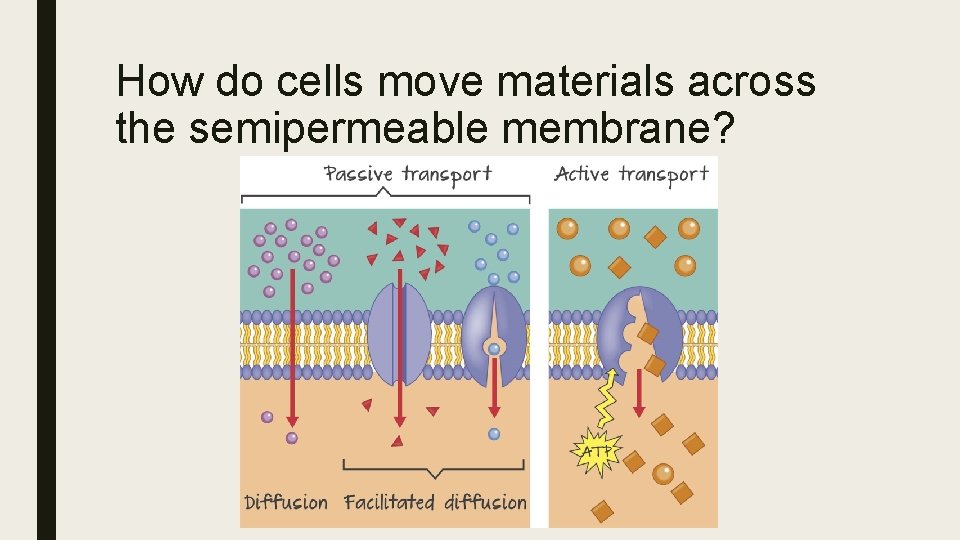
How do cells move materials across the semipermeable membrane?

Active Vs. Passive Transport Active Transport - It’s like going against the flow. IT TAKES ENERGY (ATP). - It’s like going with the flow. NO ENERGY IS USED. - Moving from _______ to ______ concentration. - Types of Transport: Endocytosis, Pinocytosis and Exocytosis. Types of Particles Transported: Proteins, ions, large cells and complex sugars. Moving from _______ to ______ concentration. Types of Transport: Diffusion, Facilitated Diffusion and Osmosis Types of Particles Transported: anything that can dissolve in lipids, small monosaccharide (sugars), water, oxygen, carbon dioxide, etc…
Passive Methods of Transport ■ Diffusion ■ Facilitated Diffusion ■ Osmosis In a solution, particles move all the time. They bump into one another and tend to spread out randomly. As a result, the particles tend to move from an area where they are more concentrated to an area where they are less concentrated.
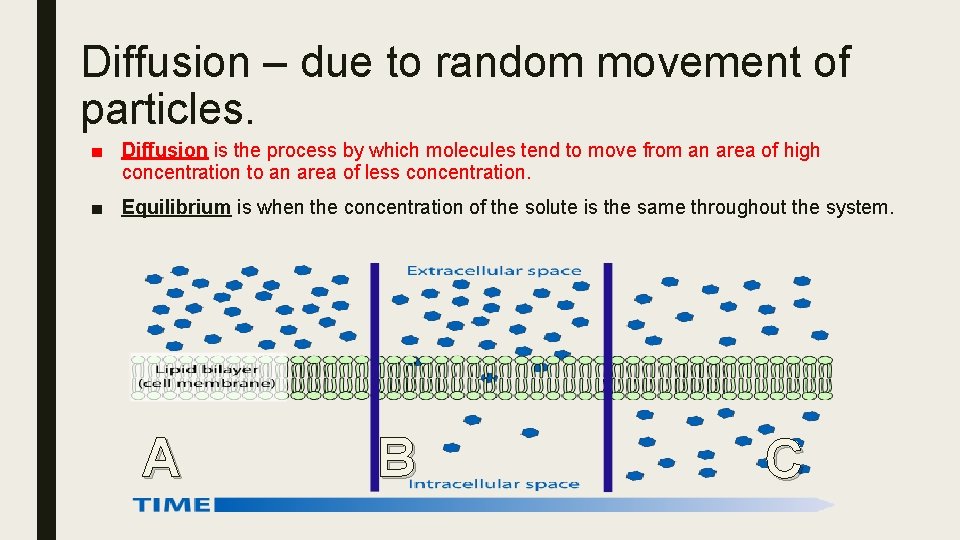
Diffusion – due to random movement of particles. ■ Diffusion is the process by which molecules tend to move from an area of high concentration to an area of less concentration. ■ Equilibrium is when the concentration of the solute is the same throughout the system. A B C
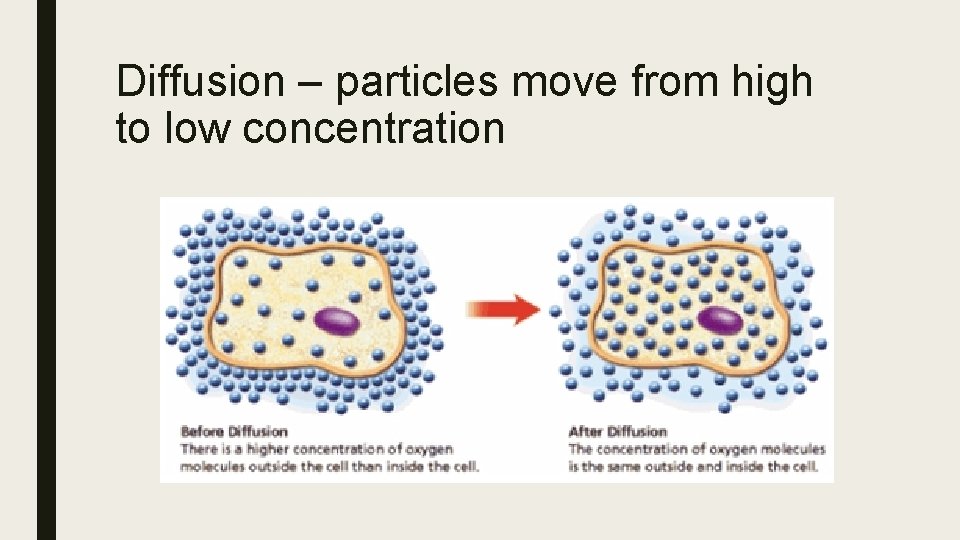
Diffusion – particles move from high to low concentration
What kind of molecules can do this? ■ Gas or liquid medium. ■ Only requires a concentration gradient. What kind of molecules cannot? ■ Molecules that are too big. ■ Charged particles are repelled by hydrophobic tails in the membrane.
Factors that Affect Diffusion ■ Temperature ■ Surface area of membrane ■ Size of particles ■ Concentration gradient of diffusing particles
What happens to molecules that are too big but still needed? ■ A few molecules, such as glucose, can pass through the cell membrane much quicker than they should. How can a big molecule like glucose move about so quickly? – Cell membranes have protein channels that make it easy for certain molecules to cross the membrane. The channels help the molecules to move across the membrane.
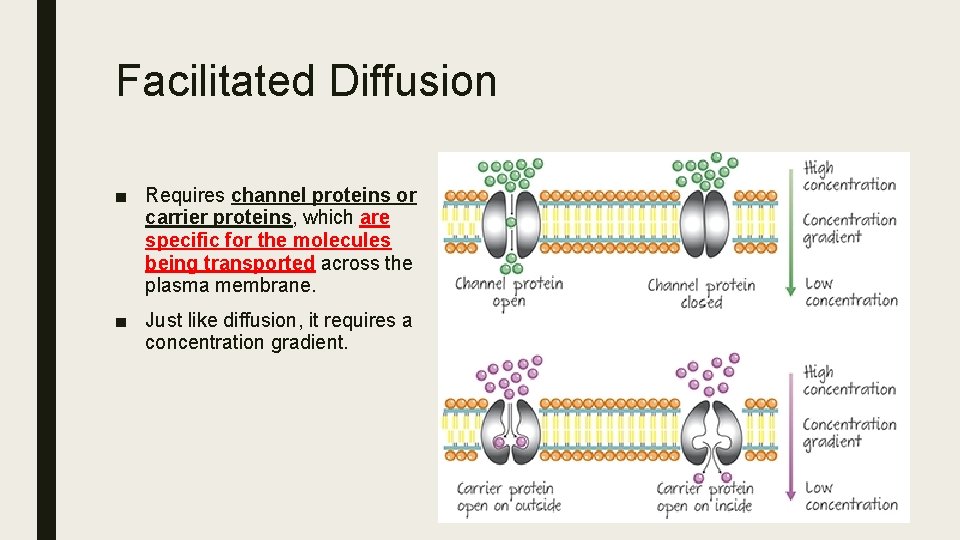
Facilitated Diffusion ■ Requires channel proteins or carrier proteins, which are specific for the molecules being transported across the plasma membrane. ■ Just like diffusion, it requires a concentration gradient.
Examples of Protein Channels ■ Chloride ion channels (Cl-) – Voltage-gated chloride channels display a variety of important physiological and cellular roles that include regulation of p. H, volume homeostasis, organic solute transport, cell migration, cell proliferation and differentiation. ■ Potassium ion channels (K+) – Movement of K+ ions in neurons during the generation of an action potential (a key step involved in propagation of nerve impulses along neurons). It helps in moving K+ ions out of the axons to cause repolarization (see subtopic 6. 5). The K+ channels involved are specific for movement of K+ ions only. They are also voltage gated, that is, they open and close with changes in voltage to regulate movement of K+ ions.
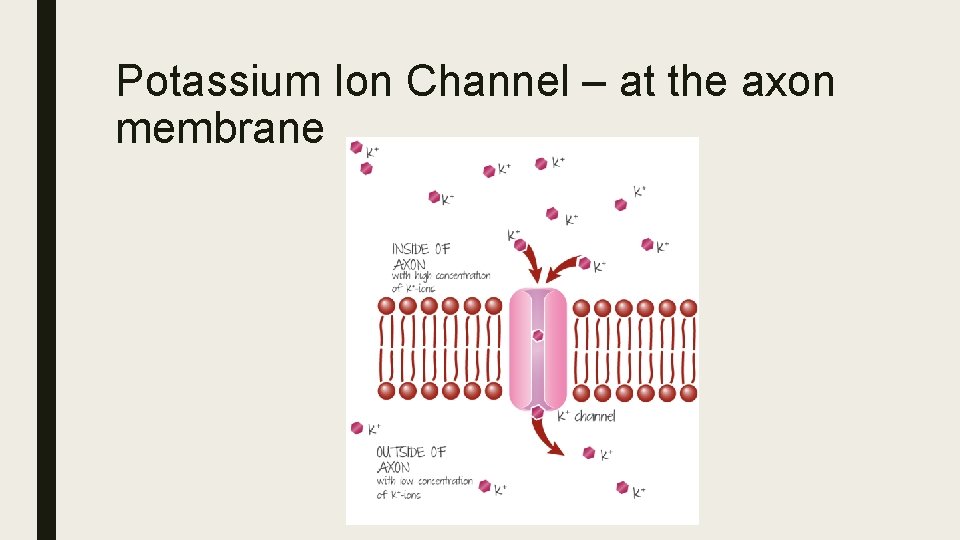
Potassium Ion Channel – at the axon membrane
Example of Facilitated Diffusion – Action Potentials
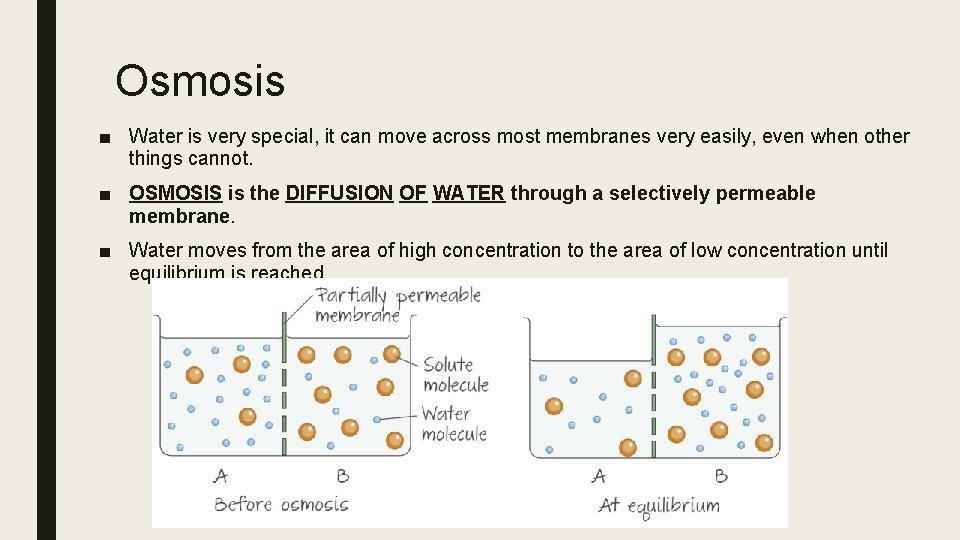
Osmosis ■ Water is very special, it can move across most membranes very easily, even when other things cannot. ■ OSMOSIS is the DIFFUSION OF WATER through a selectively permeable membrane. ■ Water moves from the area of high concentration to the area of low concentration until equilibrium is reached.
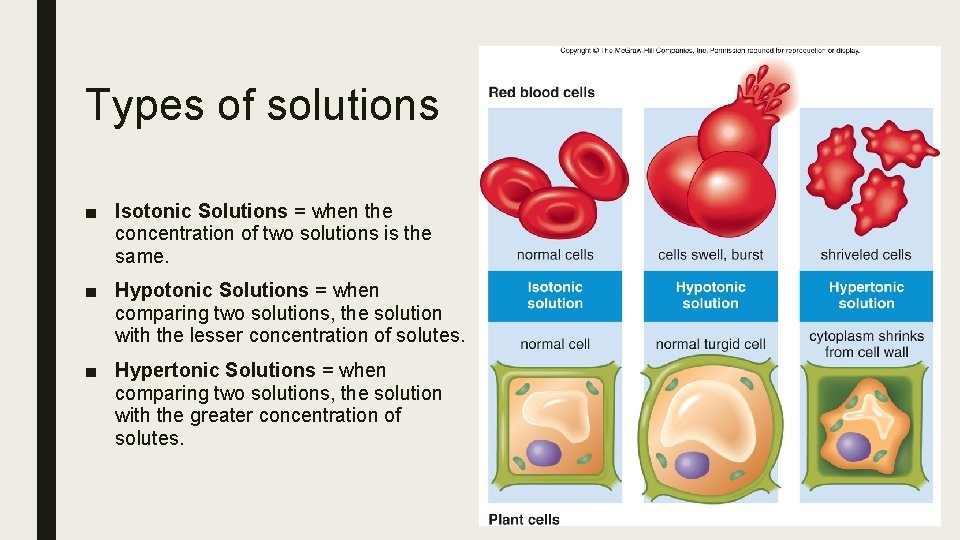
Types of solutions ■ Isotonic Solutions = when the concentration of two solutions is the same. ■ Hypotonic Solutions = when comparing two solutions, the solution with the lesser concentration of solutes. ■ Hypertonic Solutions = when comparing two solutions, the solution with the greater concentration of solutes.
Get thinking… ■ Because cells are filled with salts, sugars, proteins, and other molecules, it will almost always be hypotonic to fresh water. In which direction will water move? How can this affect living organisms? – Fortunately, most cells do not come in contact with fresh water. Instead, cells are bathed in fluids such as blood, which are isotonic. Other cells that do come in contact with fresh water, such as plants and bacteria, are surrounded by a cell wall. The cell walls prevent the cell from getting too big.
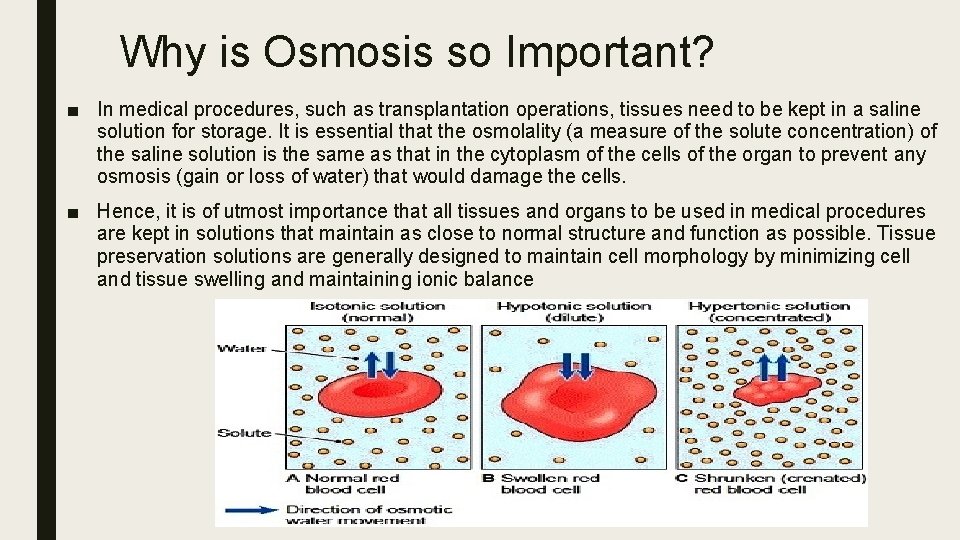
Why is Osmosis so Important? ■ In medical procedures, such as transplantation operations, tissues need to be kept in a saline solution for storage. It is essential that the osmolality (a measure of the solute concentration) of the saline solution is the same as that in the cytoplasm of the cells of the organ to prevent any osmosis (gain or loss of water) that would damage the cells. ■ Hence, it is of utmost importance that all tissues and organs to be used in medical procedures are kept in solutions that maintain as close to normal structure and function as possible. Tissue preservation solutions are generally designed to maintain cell morphology by minimizing cell and tissue swelling and maintaining ionic balance
Diffusion vs osmosis
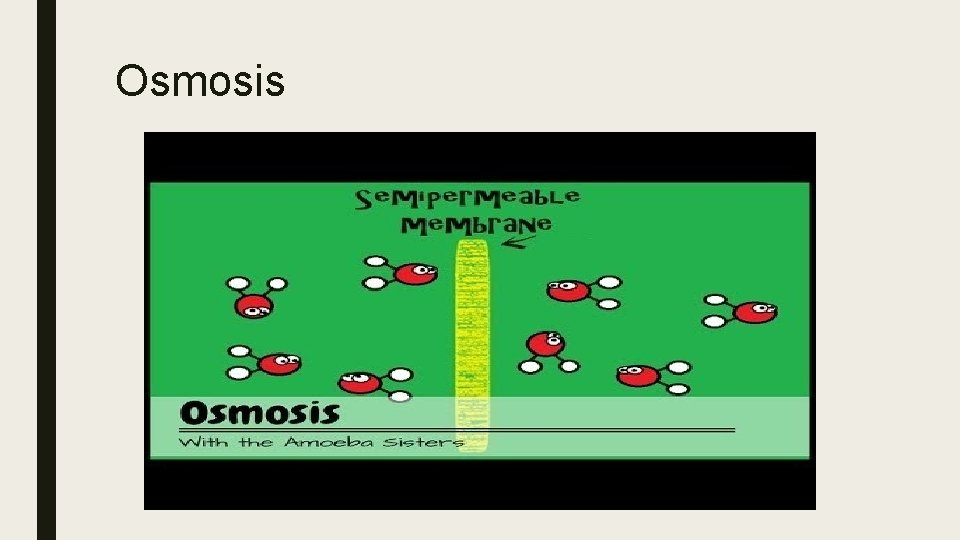
Osmosis
Active Transport ■ Require energy. ■ Moves against a concentration gradient. ■ This type of transport is called active because it requires energy to move molecules against the concentration gradient.
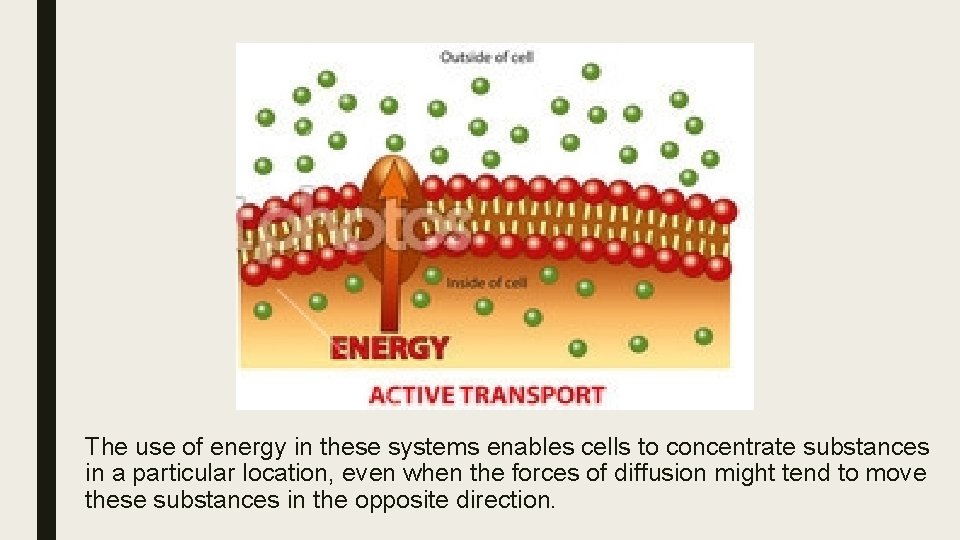
The use of energy in these systems enables cells to concentrate substances in a particular location, even when the forces of diffusion might tend to move these substances in the opposite direction.
Active Transport Importance ■ These techniques are critical to the survival of cells, since most molecules' important cells cannot normally pass through the cell’s hydrophobic plasma membrane.
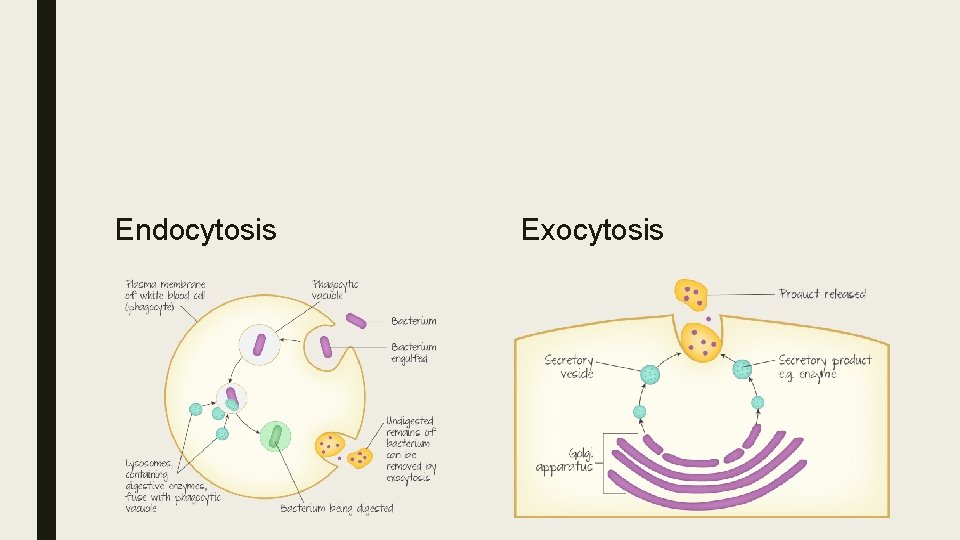
Active Transport: Endocytosis & Exocytosis ■ Often cells have to secrete or absorb much larger quantities of a substance or even take up other cells. This takes the form of bulk transport which can be of two types: endocytosis and exocytosis. Both these methods of transport utilize energy and are highly dependent on the flexibility of the plasma membrane. ■ Endocystosis (endo = in, cyto = cell) is the process of taking material into the cell by forming pockets on the cell membrane. The pocket breaks loose from the cell membrane and forms a vacuole in the cytoplasm. Large molecules, clumps of food and even whole cells can be taken up in this way. ■ Exocytosis (exo= out, cyto = cell) is the process of releasing materials from the cell. In this process, the membrane of the vacuole surrounding the material fuses (joins) with the cell membrane, releasing the contents of the vacuole out of the cell.
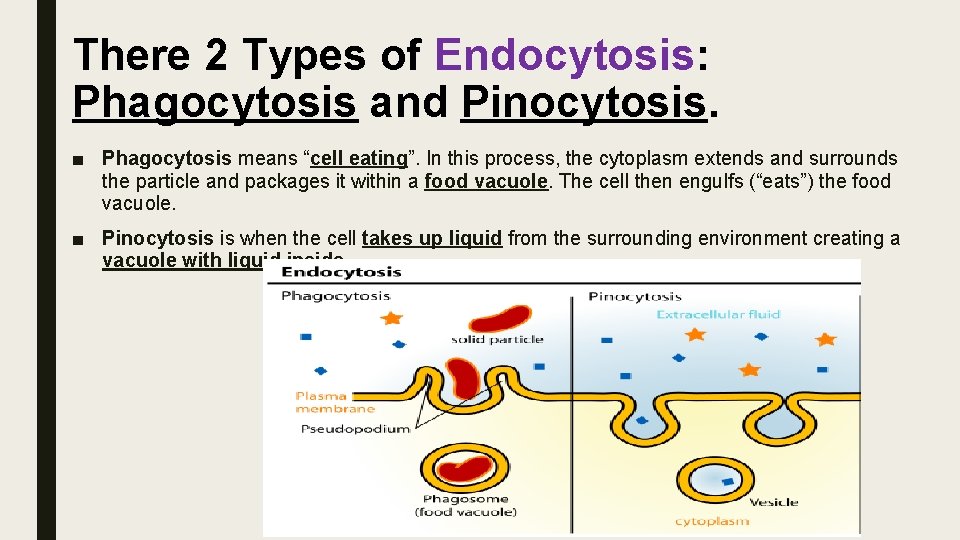
There 2 Types of Endocytosis: Phagocytosis and Pinocytosis. ■ Phagocytosis means “cell eating”. In this process, the cytoplasm extends and surrounds the particle and packages it within a food vacuole. The cell then engulfs (“eats”) the food vacuole. ■ Pinocytosis is when the cell takes up liquid from the surrounding environment creating a vacuole with liquid inside.
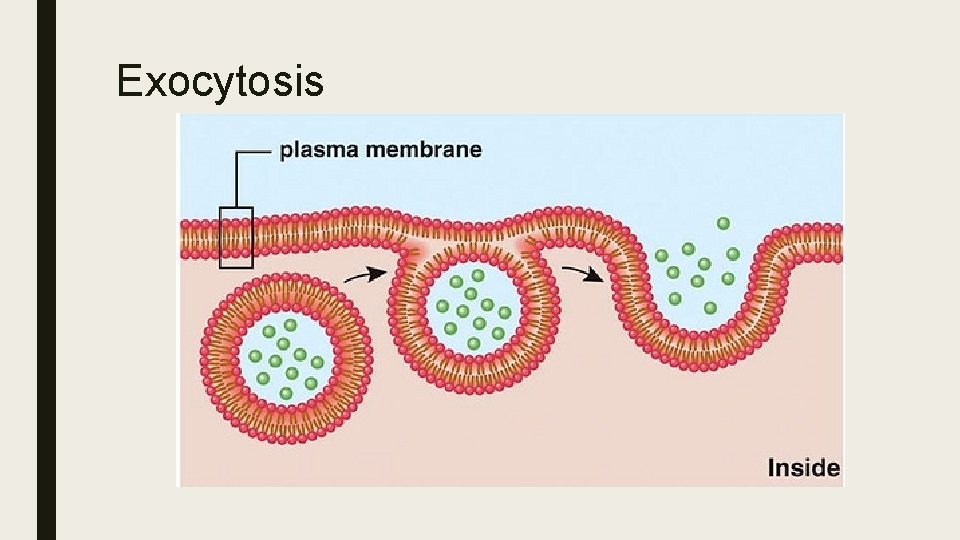
Exocytosis
Exocytosis can be divided into secretion and excretion ■ Depending on the type of material ejected from the cell, exocytosis can be subdivided into excretion and secretion. ■ Following phagocytosis, any undigested remains of the microbe that are not useful to the cell are excreted outside the cell. ■ Proteins synthesized by ribosomes on rough endoplasmic reticulum are first passed to the Golgi apparatus via vesicles, where they are processed and packaged (to give the enzymes or hormones the correct conformations) before being released in vesicles that in turn fuses with the plasma membrane for secretion outside the cell.
Endocytosis Exocytosis
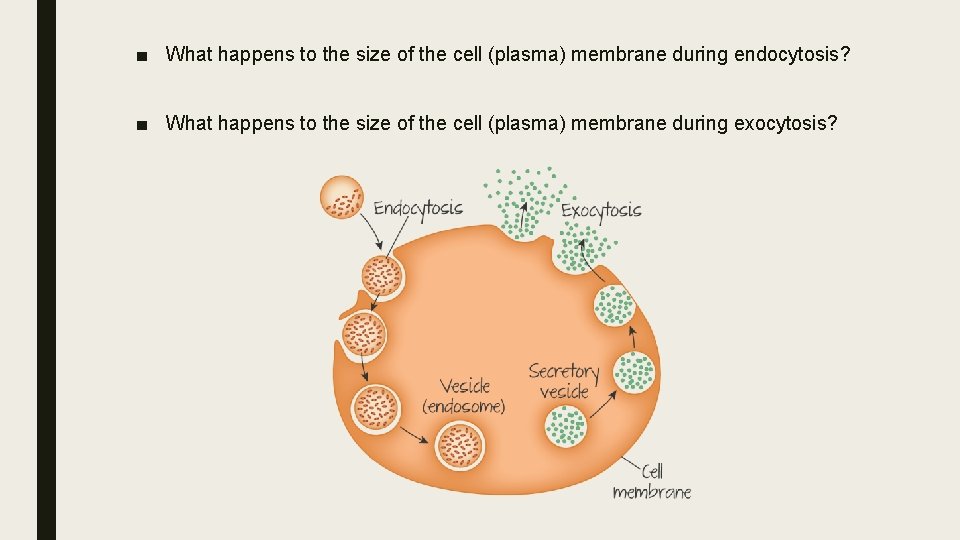
■ What happens to the size of the cell (plasma) membrane during endocytosis? ■ What happens to the size of the cell (plasma) membrane during exocytosis?
Role of Vesicles ■ Allow the movement of materials within the cell. In the case of endocytosis movement is from the plasma membrane towards the cell interior while it is in the opposite direction for exocytosis. Since vesicles are membrane bound, when they fuse with the plasma membrane during exocytosis they cause an increase in surface area. On the other hand, the invagination of the cell surface membrane to form vesicles that bud off during endocytosis leads to a decrease in surface area of the membrane.
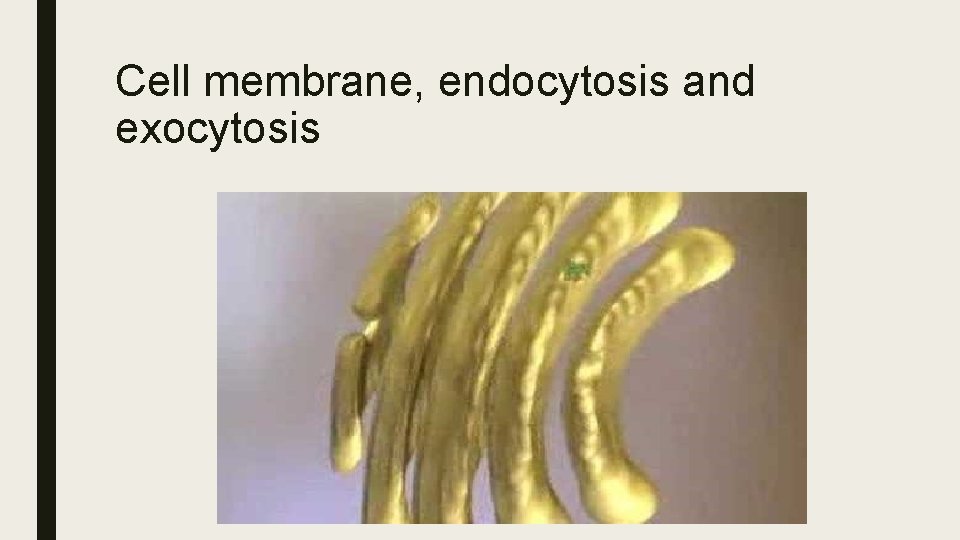
Cell membrane, endocytosis and exocytosis
Estimating the Osmolality in Tissues. ■ Osmolality refers to the concentration of a solution in terms of osmoles of solutes per liter of solution.
Nature of Science ■ Accurate quantitative measurements and sufficient repeats are essential in experiments. ■ Osmosis experiments involve placing plant tissues in hypotonic solutions where they gain water or hypertonic solutions where they lose water. The gain or loss of water affects both the length and the mass of the tissue. The length change would be expected to be no more than a few millimeters measured by a ruler accurate to ± 0. 5 mm. The mass change could be a few grams measured on an electronic balance accurate to ± 0. 01 g. It is clearly more accurate to measure the mass change. The greater the uncertainty, the less reliable the data collected. ■ Repeats, a minimum of 5, are needed to verify the result and allow for the fact that living tissues exhibit variation generating variability in the data.
- Slides: 36