
Membrane Structure lipid and protein components of biological
Membrane Structure lipid and protein components of biological membranes Jim Huettner
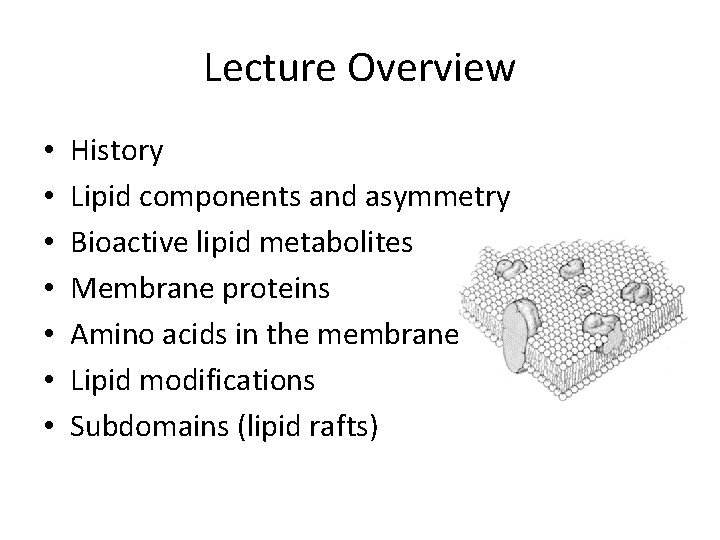
Lecture Overview • • History Lipid components and asymmetry Bioactive lipid metabolites Membrane proteins Amino acids in the membrane Lipid modifications Subdomains (lipid rafts)
Early History • The ability of oil to calm the surface of bodies of water was recognized in ancient times https: //www. youtube. com/watch? v=f 2 H 418 M 3 V 6 M • 1700’s - Ben Franklin performed early experiments with olive oil spreading to form a monolayer on a pond surface • 1800’s - Agnes Pockels and Lord Rayleigh calculated the thickness of an oil monolayer at 13 -16 Angstroms • 1900’s – Langmuir used a trough similar to Pockels’ homemade apparatus to analyze surface tension and confirm the earlier measurements Wang DN, Stieglitz H, Marden J, Tamm LK. (2013) Benjamin Franklin, Philadelphia's favorite son, was a membrane biophysicist. Biophys J. 104: 287 -91.
Bilayer History • 1925 - Gorter and Grendel calculate that RBC membranes have enough lipids for 2 x the surface area • 1935 -1960 s – Davidson-Danielli-Robertson models envisioned a bilayer with proteins coating the inner and outer surface • 1972 – Singer and Nicholson – Fluid Mosaic Model
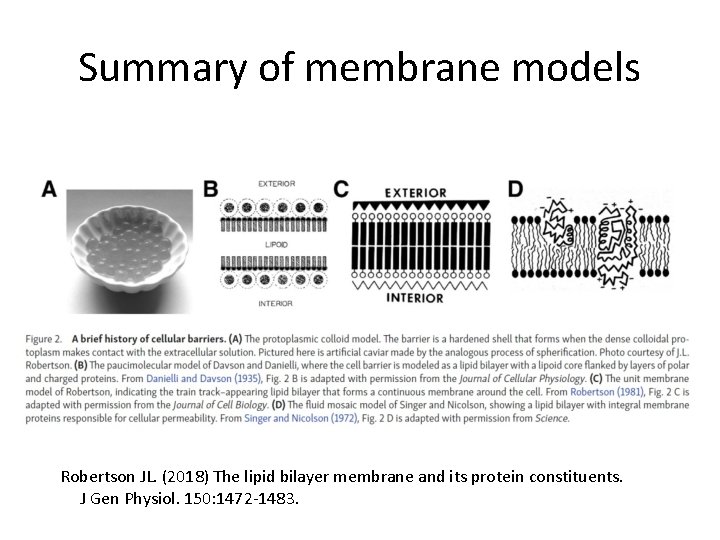
Summary of membrane models Robertson JL. (2018) The lipid bilayer membrane and its protein constituents. J Gen Physiol. 150: 1472 -1483.
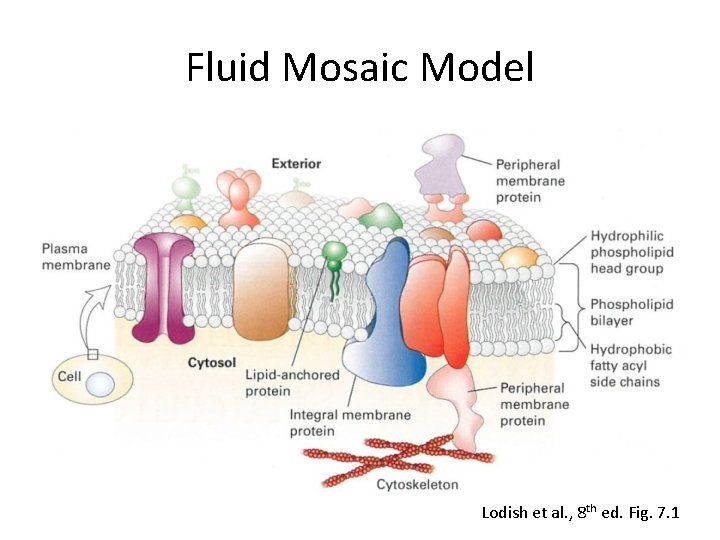
Fluid Mosaic Model Lodish et al. , 8 th ed. Fig. 7. 1
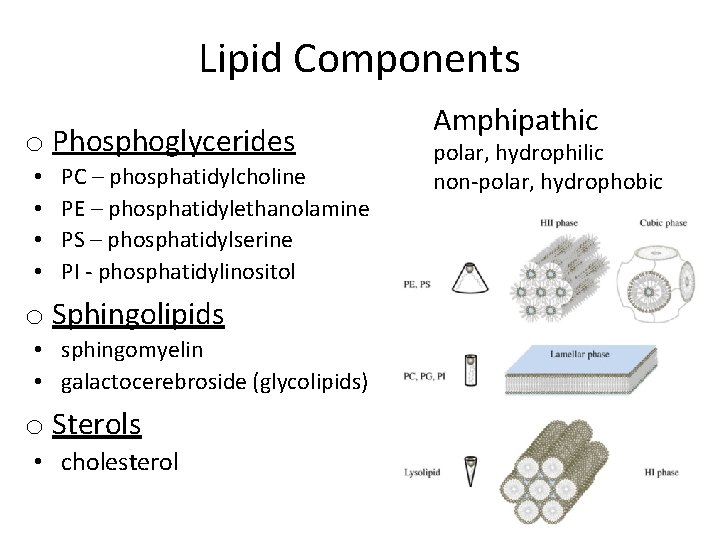
Lipid Components o Phosphoglycerides • • PC – phosphatidylcholine PE – phosphatidylethanolamine PS – phosphatidylserine PI - phosphatidylinositol o Sphingolipids • sphingomyelin • galactocerebroside (glycolipids) o Sterols • cholesterol Amphipathic polar, hydrophilic non-polar, hydrophobic
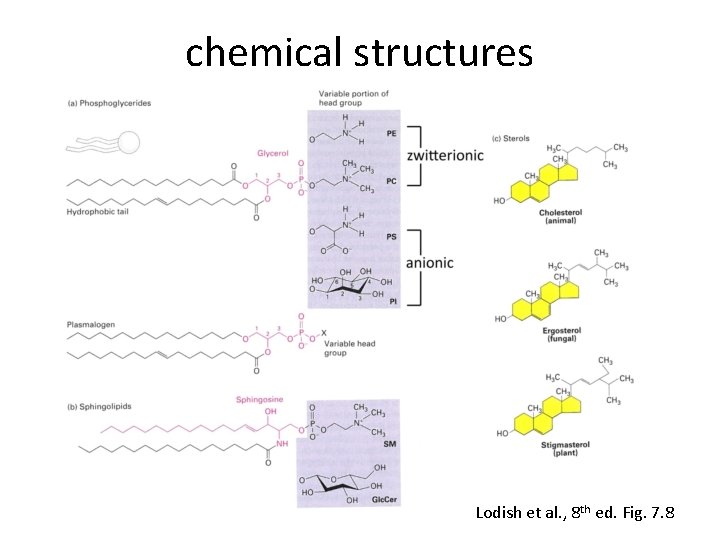
chemical structures Lodish et al. , 8 th ed. Fig. 7. 8
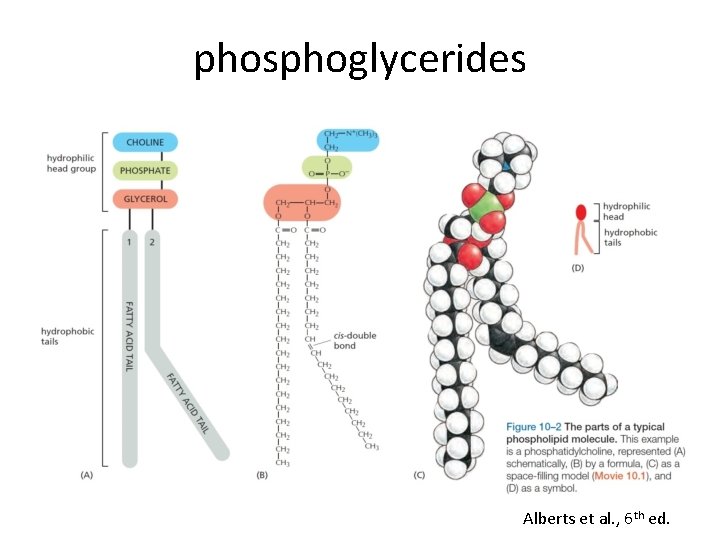
phosphoglycerides Alberts et al. , 6 th ed.

w-6 and w-3 cis-unsaturated FAs
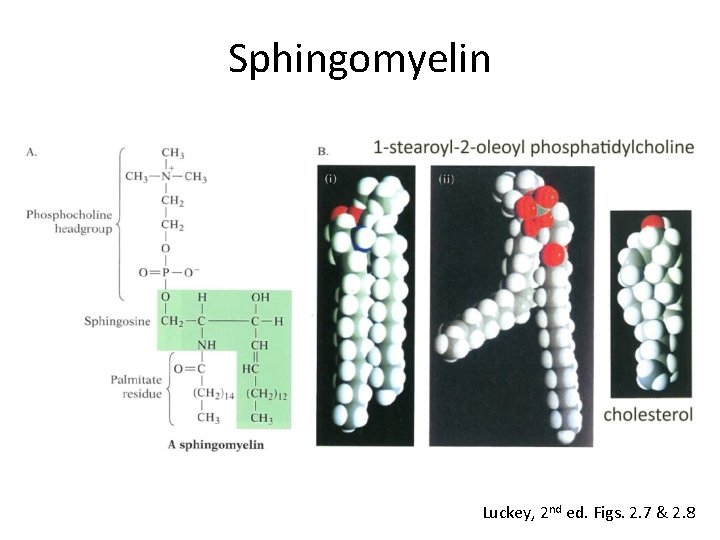
Sphingomyelin Luckey, 2 nd ed. Figs. 2. 7 & 2. 8
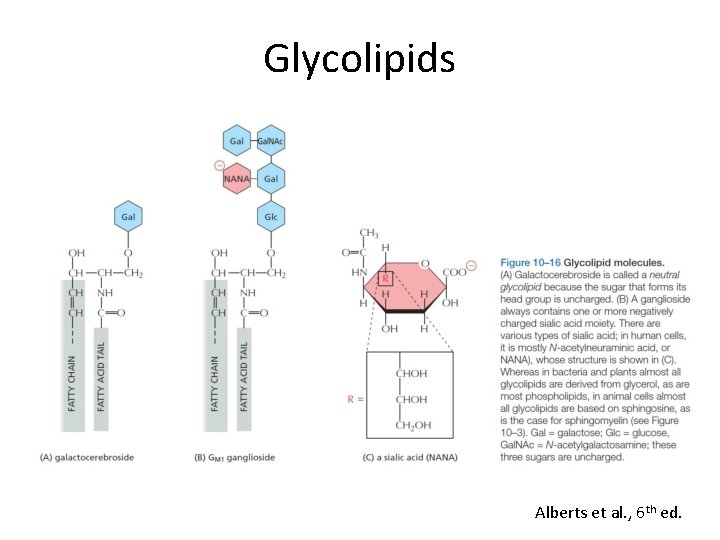
Glycolipids Alberts et al. , 6 th ed.
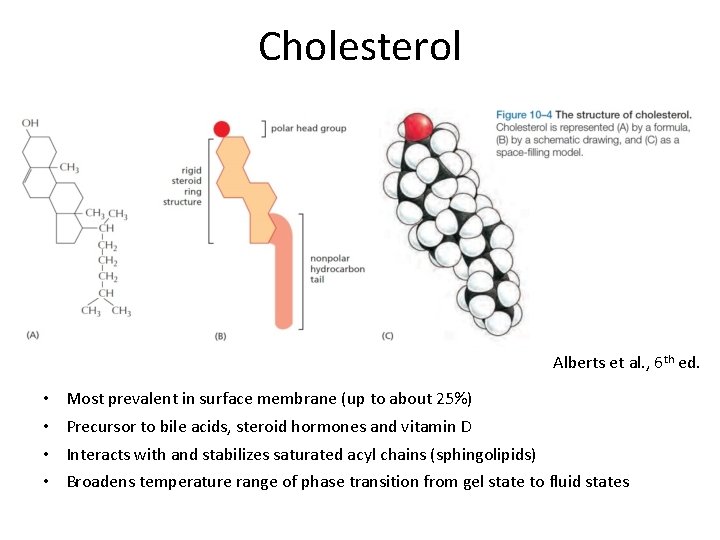
Cholesterol Alberts et al. , 6 th ed. • • Most prevalent in surface membrane (up to about 25%) Precursor to bile acids, steroid hormones and vitamin D Interacts with and stabilizes saturated acyl chains (sphingolipids) Broadens temperature range of phase transition from gel state to fluid states
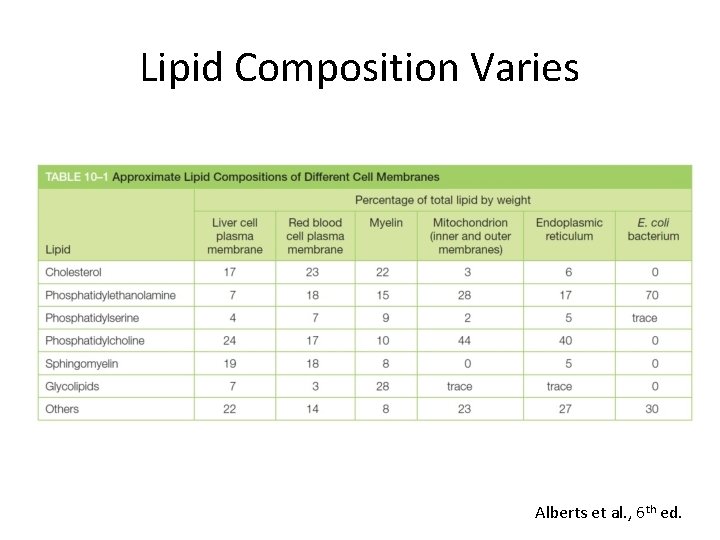
Lipid Composition Varies Alberts et al. , 6 th ed.
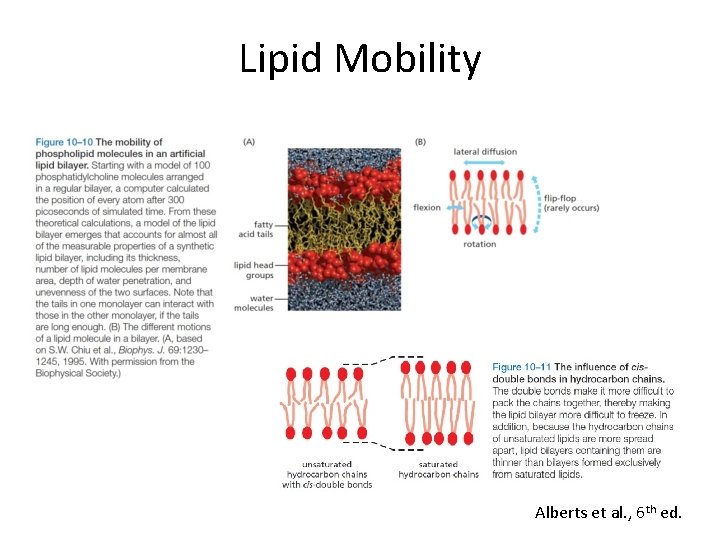
Lipid Mobility Alberts et al. , 6 th ed.
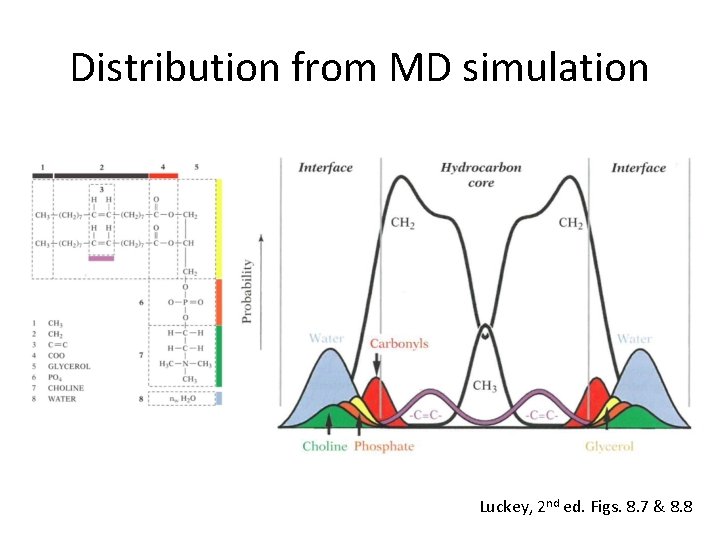
Distribution from MD simulation Luckey, 2 nd ed. Figs. 8. 7 & 8. 8
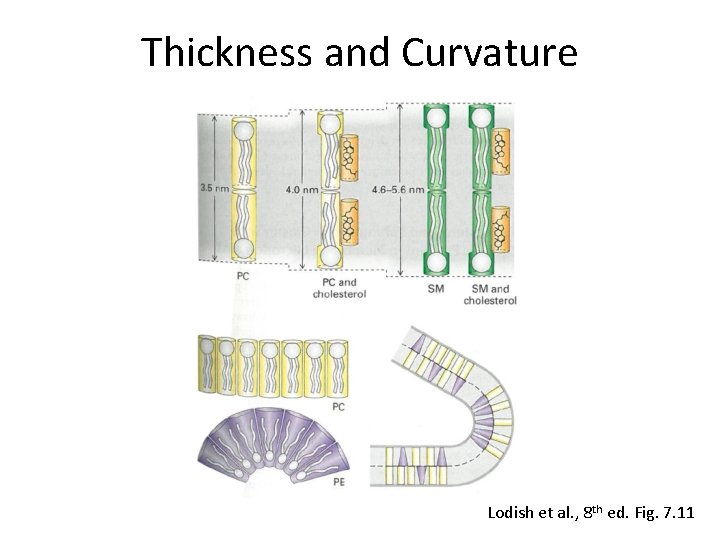
Thickness and Curvature Lodish et al. , 8 th ed. Fig. 7. 11
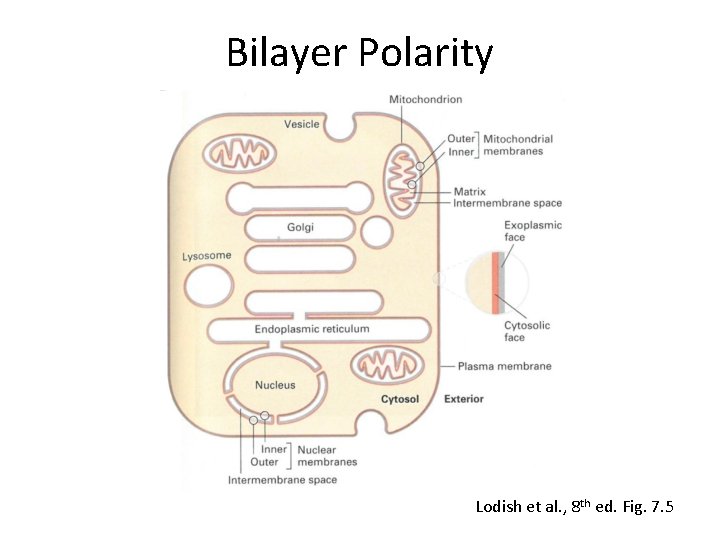
Bilayer Polarity Lodish et al. , 8 th ed. Fig. 7. 5
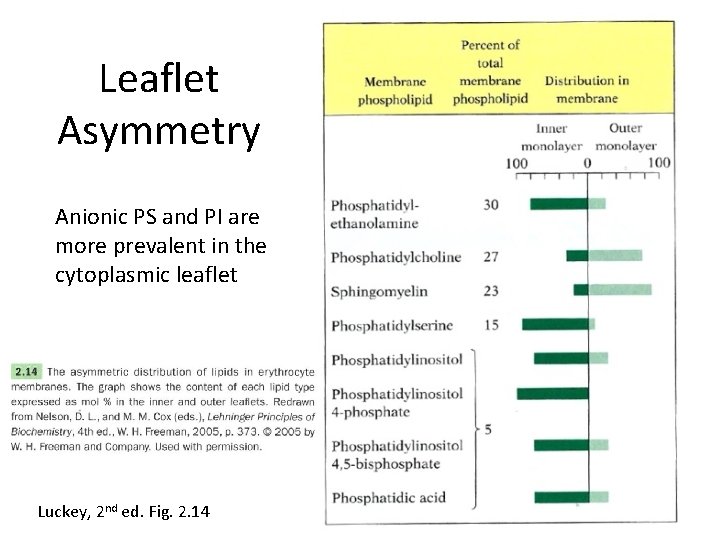
Leaflet Asymmetry Anionic PS and PI are more prevalent in the cytoplasmic leaflet Luckey, 2 nd ed. Fig. 2. 14
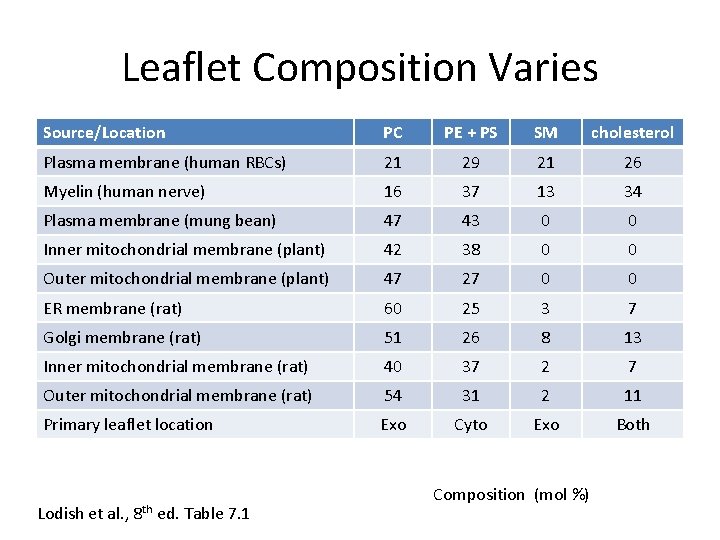
Leaflet Composition Varies Source/Location PC PE + PS SM cholesterol Plasma membrane (human RBCs) 21 29 21 26 Myelin (human nerve) 16 37 13 34 Plasma membrane (mung bean) 47 43 0 0 Inner mitochondrial membrane (plant) 42 38 0 0 Outer mitochondrial membrane (plant) 47 27 0 0 ER membrane (rat) 60 25 3 7 Golgi membrane (rat) 51 26 8 13 Inner mitochondrial membrane (rat) 40 37 2 7 Outer mitochondrial membrane (rat) 54 31 2 11 Primary leaflet location Exo Cyto Exo Both Lodish et al. , 8 th ed. Table 7. 1 Composition (mol %)

Enzymatic Modification
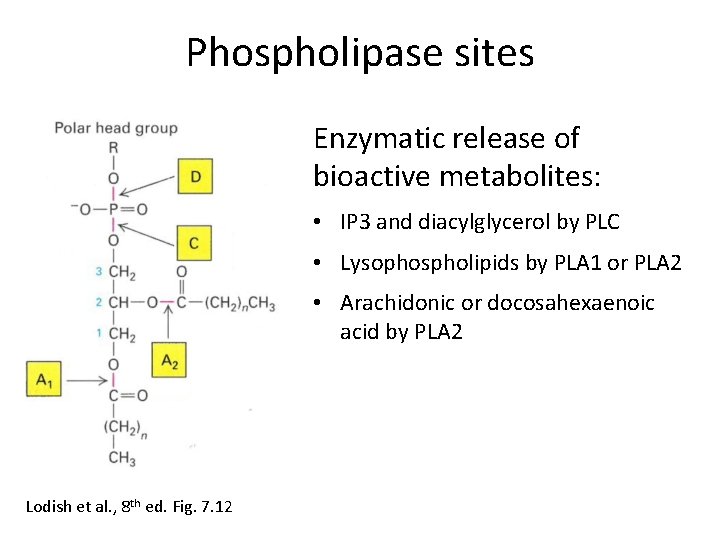
Phospholipase sites Enzymatic release of bioactive metabolites: • IP 3 and diacylglycerol by PLC • Lysophospholipids by PLA 1 or PLA 2 • Arachidonic or docosahexaenoic acid by PLA 2 Lodish et al. , 8 th ed. Fig. 7. 12
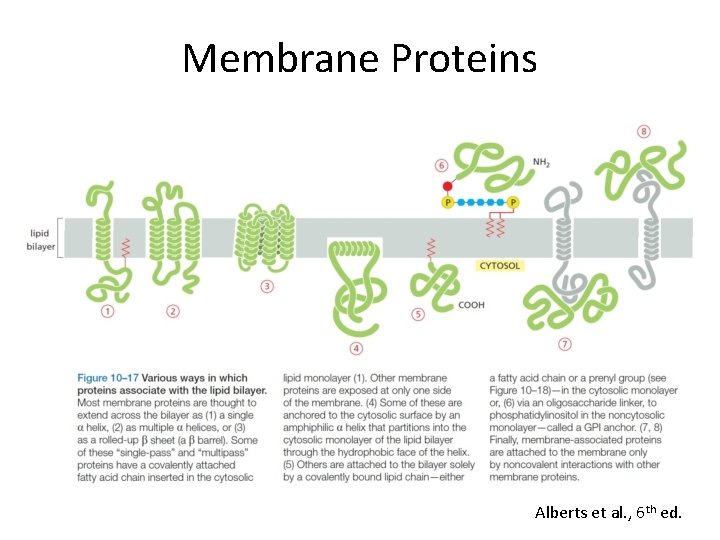
Membrane Proteins Alberts et al. , 6 th ed.
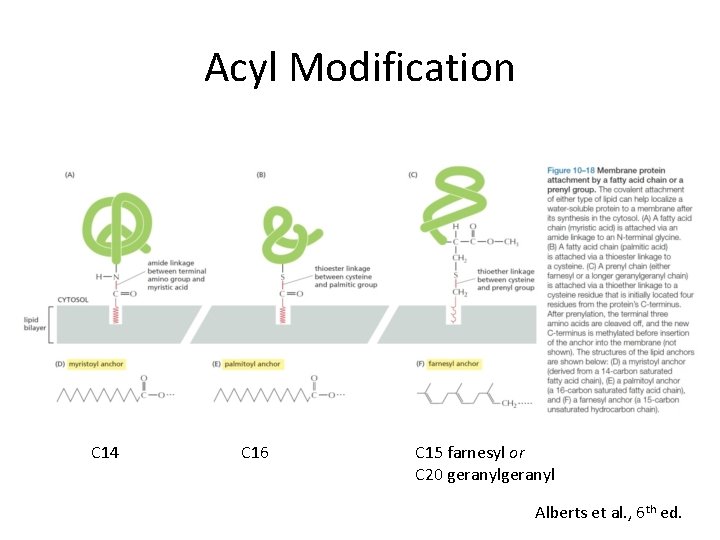
Acyl Modification C 14 C 16 C 15 farnesyl or C 20 geranyl Alberts et al. , 6 th ed.
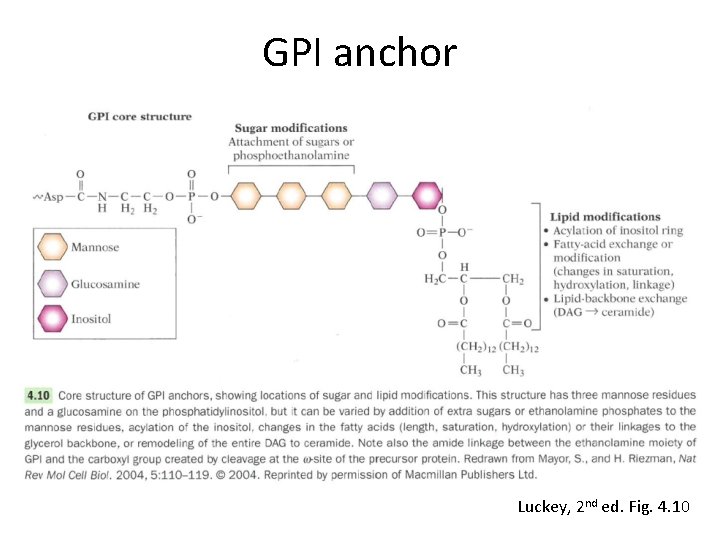
GPI anchor Luckey, 2 nd ed. Fig. 4. 10
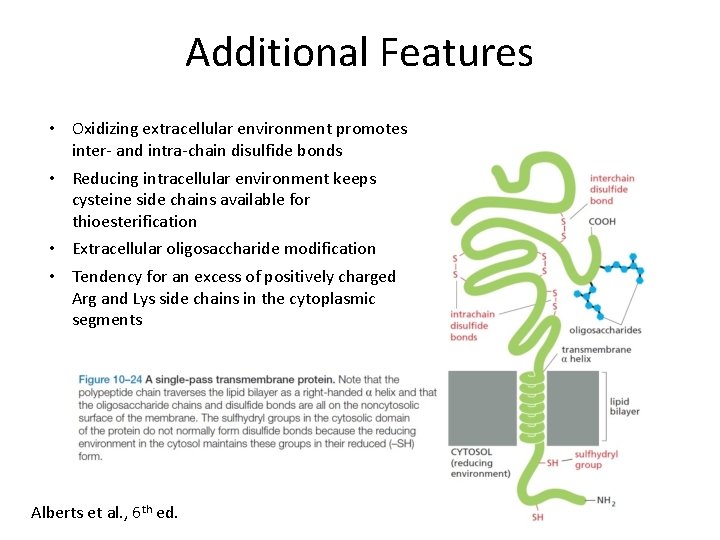
Additional Features • Oxidizing extracellular environment promotes inter- and intra-chain disulfide bonds • Reducing intracellular environment keeps cysteine side chains available for thioesterification • Extracellular oligosaccharide modification • Tendency for an excess of positively charged Arg and Lys side chains in the cytoplasmic segments Alberts et al. , 6 th ed.
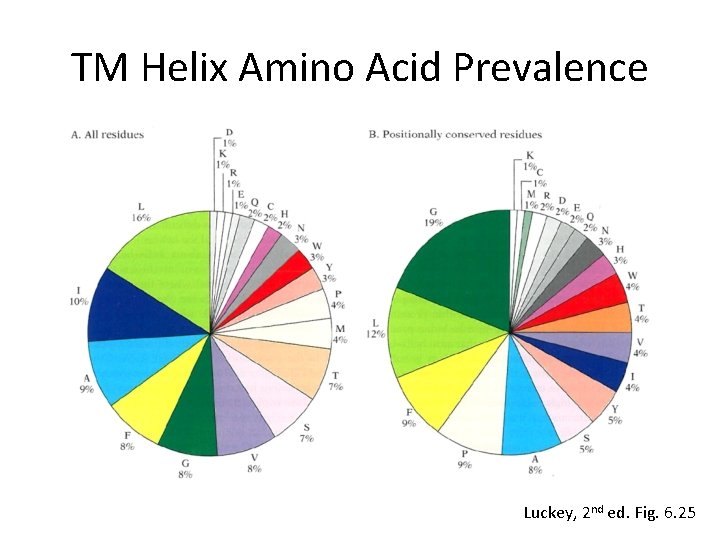
TM Helix Amino Acid Prevalence Luckey, 2 nd ed. Fig. 6. 25
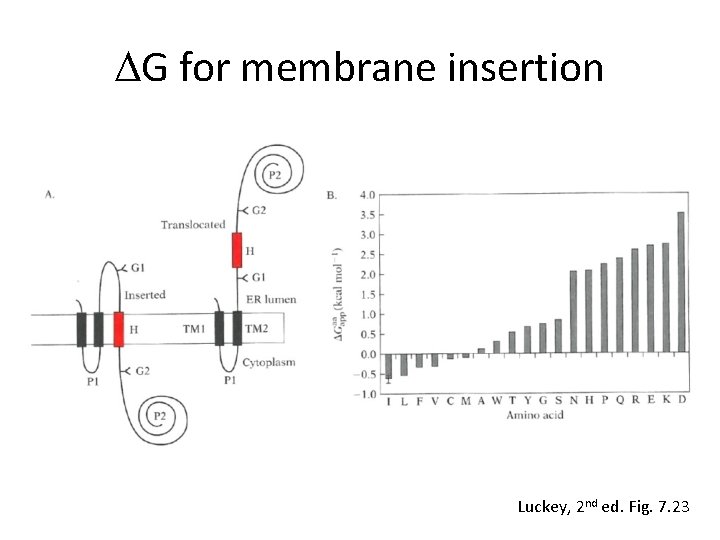
DG for membrane insertion Luckey, 2 nd ed. Fig. 7. 23
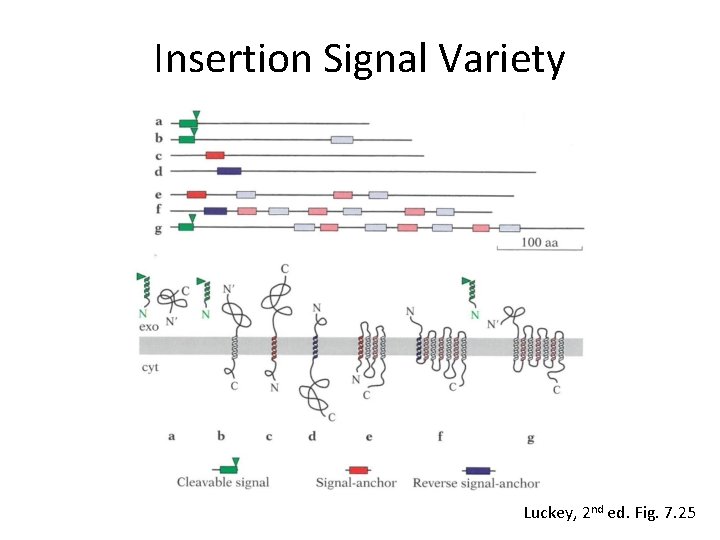
Insertion Signal Variety Luckey, 2 nd ed. Fig. 7. 25
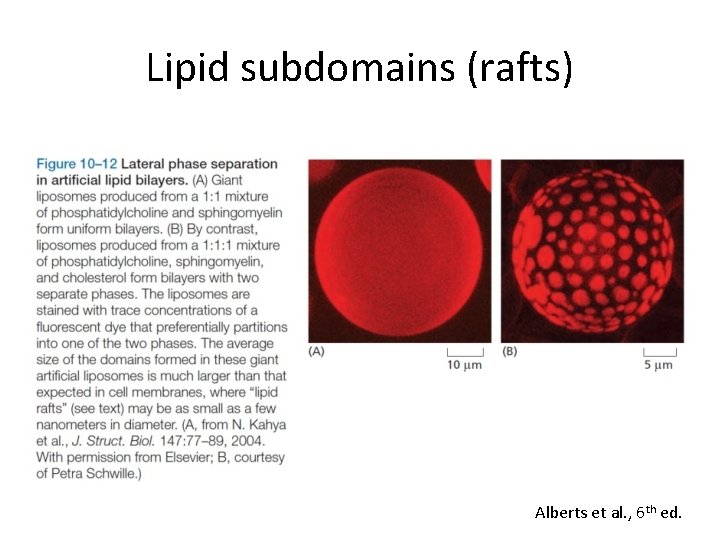
Lipid subdomains (rafts) Alberts et al. , 6 th ed.
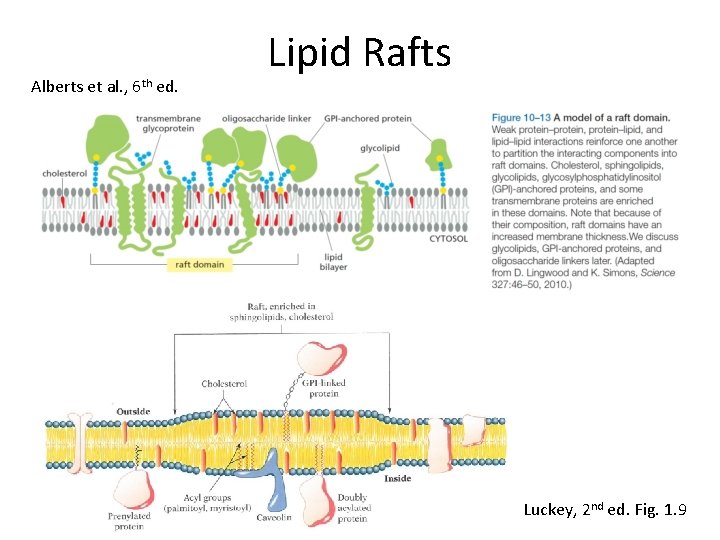
Alberts et al. , 6 th ed. Lipid Rafts Luckey, 2 nd ed. Fig. 1. 9
“Ballpark” Numbers • “Typical” membrane includes more than 100 distinct lipids • More than 500 different fatty acids have been identified • Lateral mobility in liposomes similar to olive oil and about 100 fold slower than for molecules in water • In animal cells about 50 -90% of cholesterol is in the surface membrane • Lipid / Protein ratio varies: 80%L / 20%P in myelin, 25%L / 75%P in mitochondrial inner membrane
Additional Reading • van Meer G, Voelker DR, Feigenson GW. (2008) Membrane lipids: where they are and how they behave. Nat Rev Mol Cell Biol. 9: 112 -24. • van Meer G, de Kroon AI. (2011) Lipid map of the mammalian cell. J Cell Sci. 124: 5 -8. • Sezgin E, Levental I, Mayor S, Eggeling C. (2017) The mystery of membrane organization: composition, regulation and roles of lipid rafts. Nat Rev Mol Cell Biol. 18: 361 -374. • Jacobson K, Liu P, Lagerholm BC. (2019) The Lateral Organization and Mobility of Plasma Membrane Components. Cell. 177: 806 -819.

Discussion Paper for Wednesday Shi Z, Graber ZT, Baumgart T, Stone HA, Cohen E. (2018) Cell Membranes Resist Flow. Cell. 175: 1769 -1779. Groves JT. (2019) Membrane Mechanics in Living Cells. Dev Cell. 48: 15 -16. (a brief intro/review of the Shi et al. paper)
- Slides: 34