
Membrane Structure Function Terms Selective Permeability Fluidity of
Membrane Structure & Function
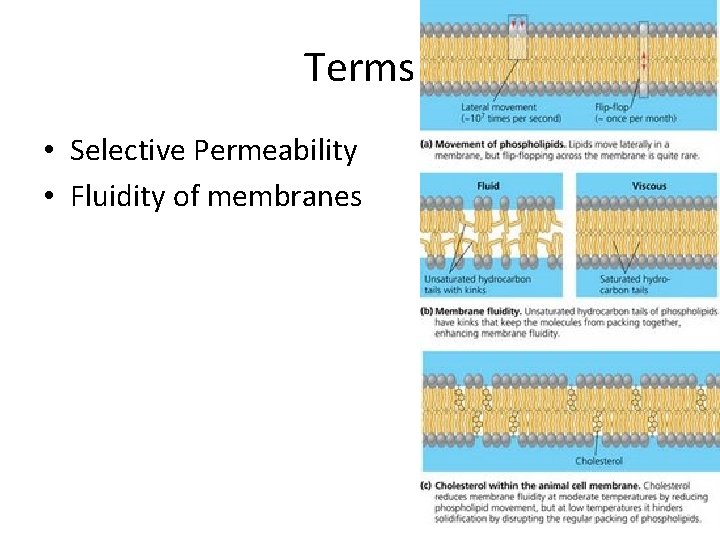
Terms • Selective Permeability • Fluidity of membranes
Membrane Proteins • Determine most of the membrane’s specific functions • Two types: – Integral Proteins: often transmembrane; hydrophilic areas in a hydrophobic membrane – Peripheral Proteins: not embedded but are appendages bound to membrane
Functions of Membrane Proteins • Transport – some are a selectively permeable channel; some work as a pump that changes shape to transport with the help of ATP • Enzymatic Activity – active site of the enzyme exposed to cytoplasm • Signal Transduction – chemical signal attaches to protein, which changes shape to communicate inside the cell
Functions of Membrane Proteins (2) • Cell-cell Reception: recognize another cell’s glycoproteins in their ECM to communicate messages • Intercellular Joining: form junctions with other cells • Attachment to Cytoskeleton and ECM
Glycoproteins • Carbohydrate chains attached to membrane proteins as identity tags – Blood types are determined by glycoproteins on RBC’s
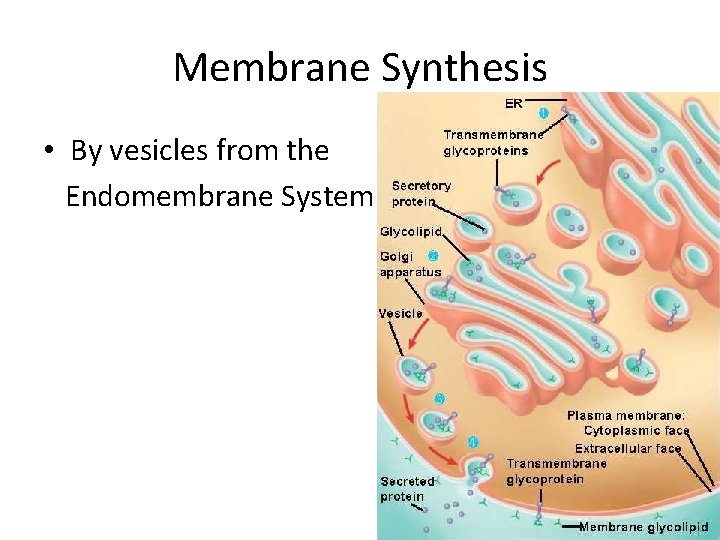
Membrane Synthesis • By vesicles from the Endomembrane System
Transport Proteins • More specified type of membrane protein • Transport hydrophilic substances which could not naturally pass through • Types: – Channel proteins – hydrophilic channel used as a tunnel – Carrier proteins – lock and change shape around a substance to carry it across membrane • Aquaporins – channel proteins that facilitate passage of water molecules • Two types of transport: Passive and Active
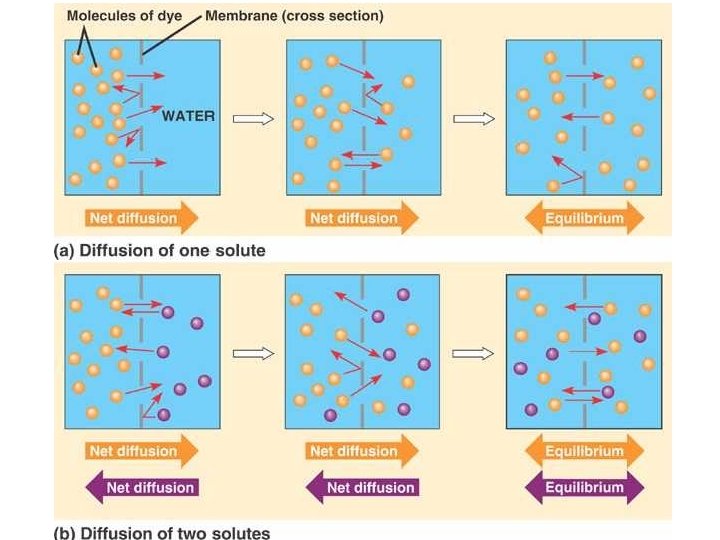
Passive Transport • Diffusion of a substance across a membrane – Cell doesn’t have to expend energy • Diffusion – tendency for molecules of any substance to spread out evenly into the available space. – Each molecules moves randomly, but diffusion of a population of molecules could be directional – Move from more populated area to less populated • This movement is called a concentration gradient – Each molecule has its own concentration gradient
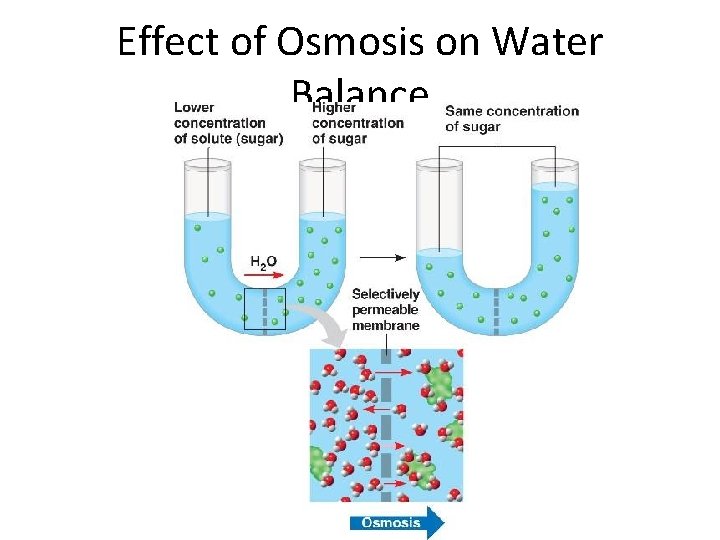
Effect of Osmosis on Water Balance
Cells Without Walls (Animal) • Solute concentration and membrane permeability must be considered • Tonicity – the ability of a solution to cause a cell to gain or lose water – Depends on how many solutes cannot cross the membrane – Water will go where the higher nonpermeable solute is located • Hypertonic • Hypotonic
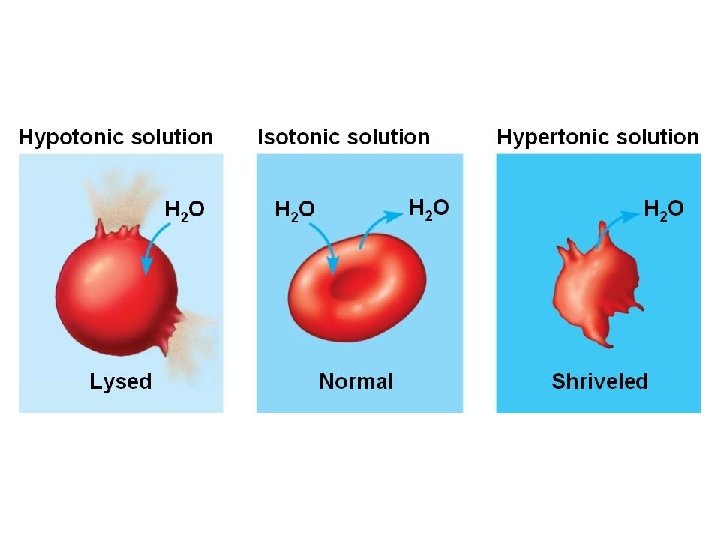
Cells with Walls • Walls help maintain water balance • Cells will still swell with water, but only to a point, then a cell becomes turgid – pressure opposing further water intake • If there is no swelling of the cell, it becomes flaccid – no tendency for water to enter
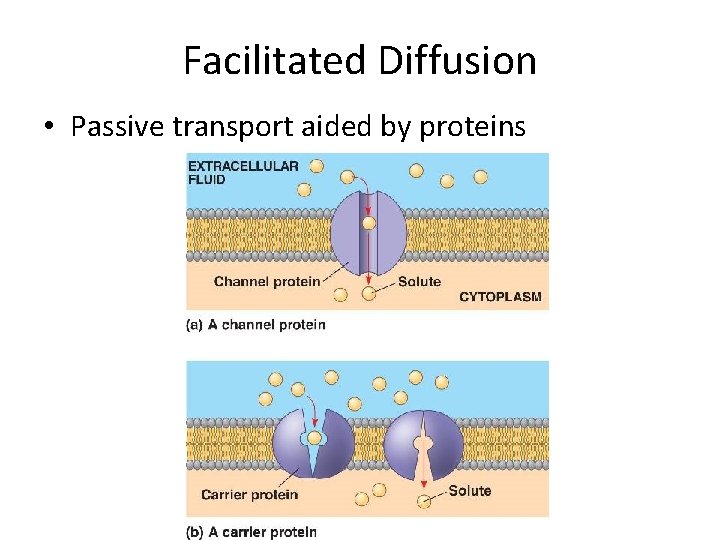
Facilitated Diffusion • Passive transport aided by proteins
Active Transport • Molecular movement across a membrane that requires a pump doing work • ATP releases phosphate, which attaches to transport protein, causing it to change shape to move the molecule across the membrane – Ex: Sodium-Potassium Pump
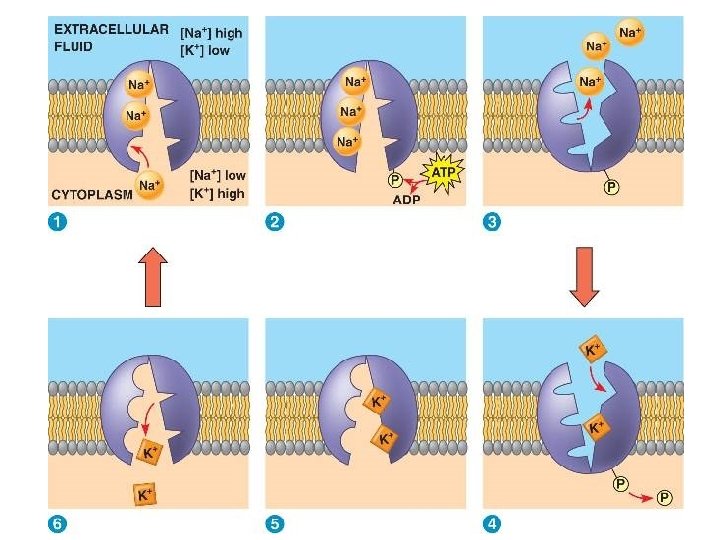
Sodium-Potassium Pump • Necessary because inside of a cell is negative compared to the outside, so membrane potential (voltage across a membrane) favors cations moving into the cell and anions moving out. • Pumps 3 Na as it pumps 2 K, giving one “extra” positive voltage built up, which can be later used for energy
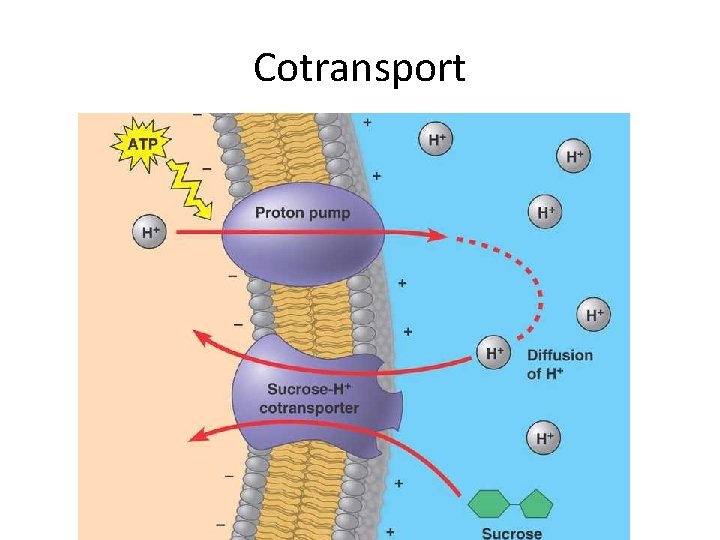
Cotransport

- Slides: 20