
Membrane Structure Function Membrane Structure and Function A
Membrane Structure & Function
Membrane Structure and Function • A membrane is a collage of different proteins embedded in the fluid matrix of the lipid bilayer. • The plasma membrane has a unique collection of proteins.
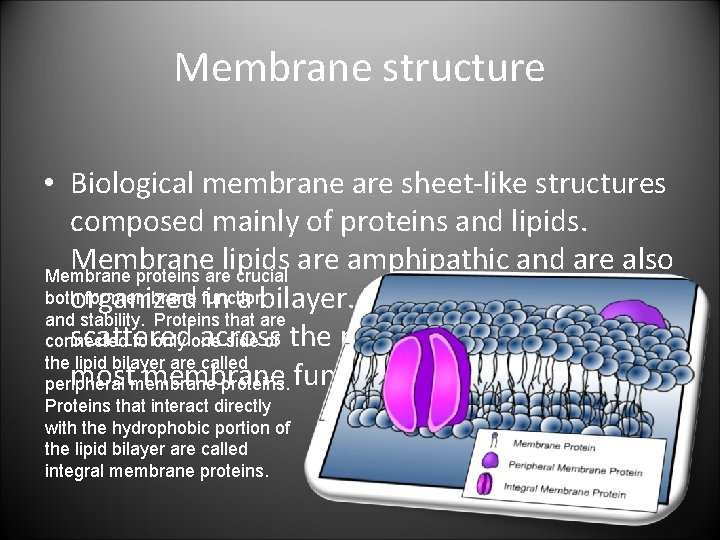
Membrane structure • Biological membrane are sheet-like structures composed mainly of proteins and lipids. Membrane lipids are amphipathic and are also Membrane proteins are crucial both for membrane function organized in a bilayer. While proteins are and stability. Proteins that are scattered across connected to only one side of the membrane and perform the lipid bilayer are called mostmembrane peripheral proteins. functions. Proteins that interact directly with the hydrophobic portion of the lipid bilayer are called integral membrane proteins.
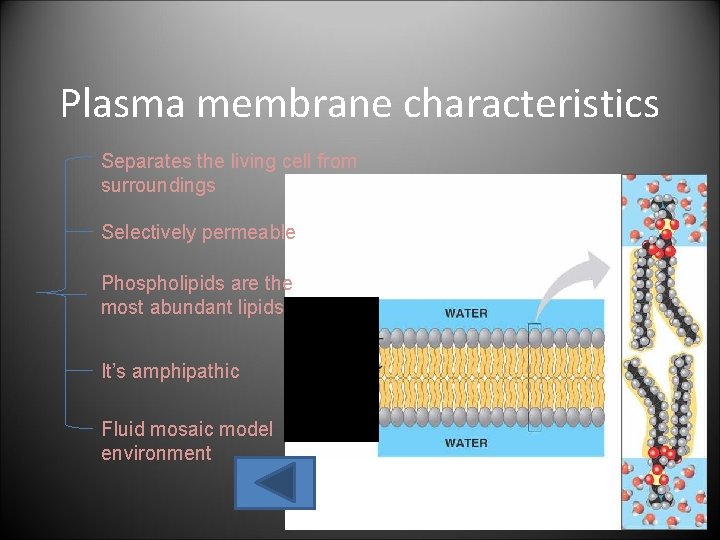
Plasma membrane characteristics Separates the living cell from surroundings Selectively permeable Phospholipids are the most abundant lipids It’s amphipathic Fluid mosaic model environment
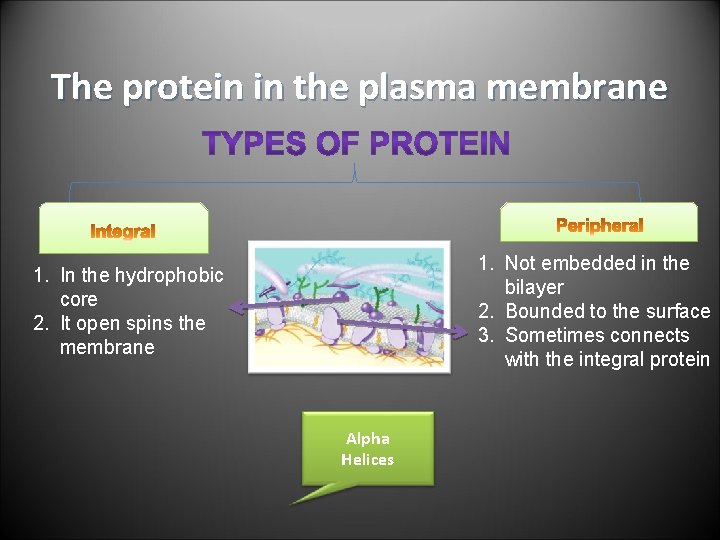
The protein in the plasma membrane 1. Not embedded in the bilayer 2. Bounded to the surface 3. Sometimes connects with the integral protein 1. In the hydrophobic core 2. It open spins the membrane Alpha Helices
The proteins in the plasma membrane may provide a variety of major cell functions:
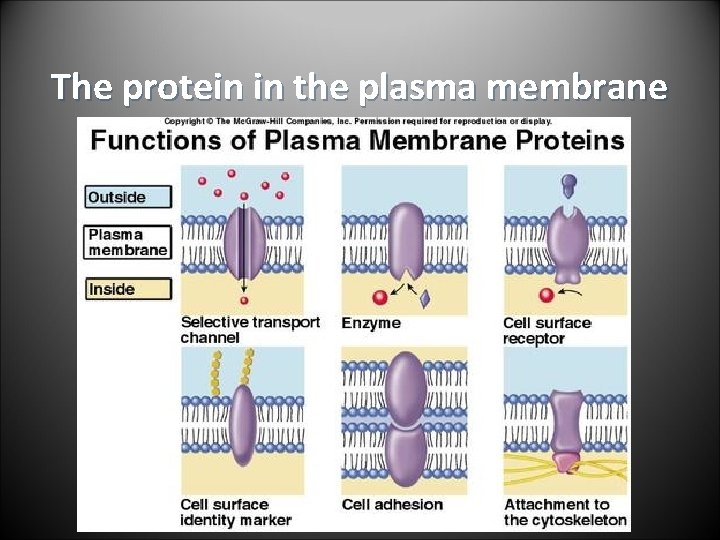
The protein in the plasma membrane
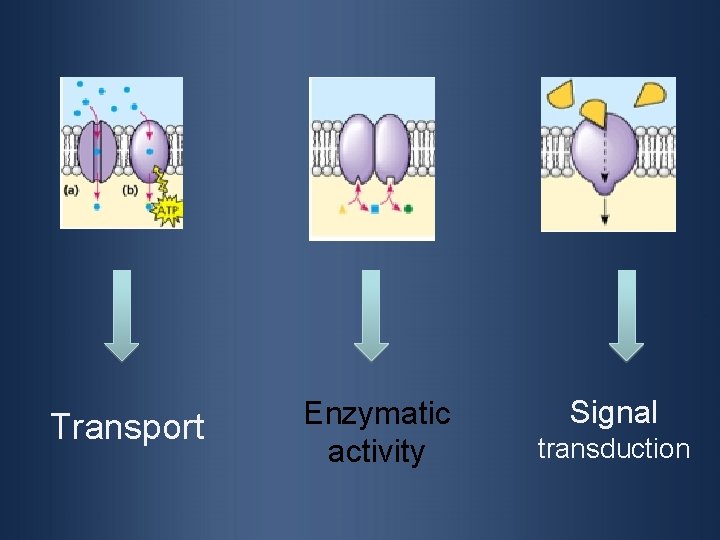
Transport Enzymatic activity Signal transduction
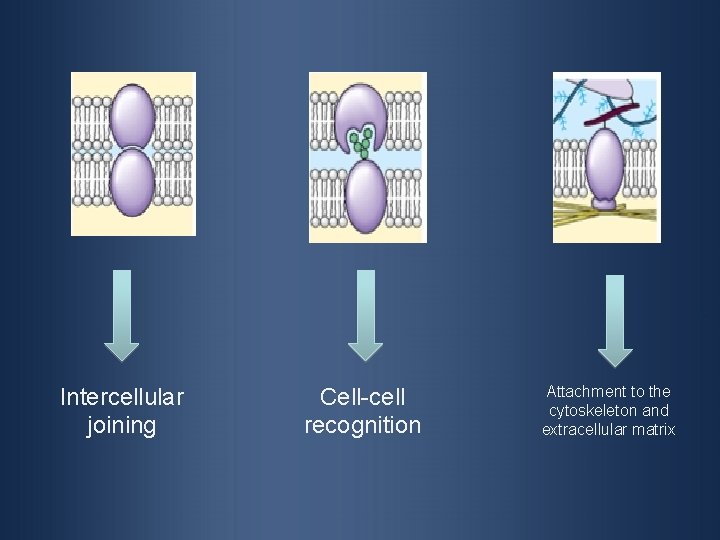
Intercellular joining Cell-cell recognition Attachment to the cytoskeleton and extracellular matrix
Functions of cell membrane
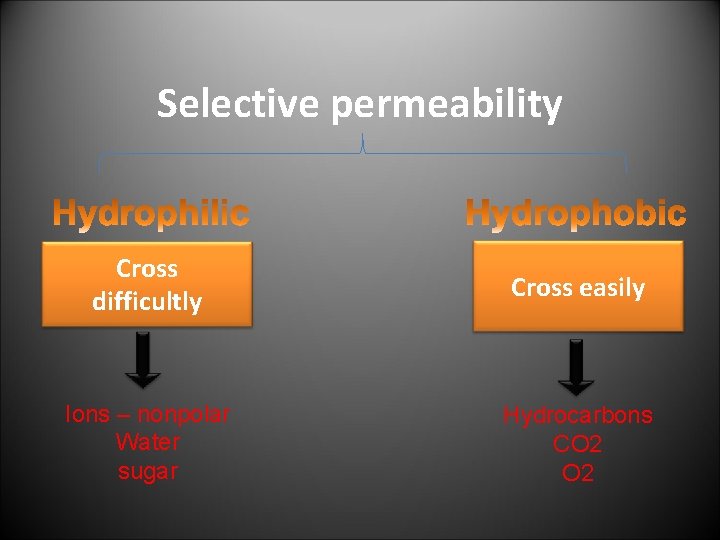
Selective permeability Cross difficultly Cross easily Ions – nonpolar Water sugar Hydrocarbons CO 2
A steady traffic of small molecules and ions moves across the plasma membrane in both directions for example, sugars, amino acids and other nutrients enter a muscle cell and metabolic waste products leave it. Hydrophobic molecules like hydrocarbons co 2 and o 2 can dissolve in the lipid bilayer and cross easily. Ions and polar molecules pass through with difficulty; this includes small molecules like water and larger critical molecules like glucose and other sugars. Proteins can assist and regulate the transport of ions and polar molecules.
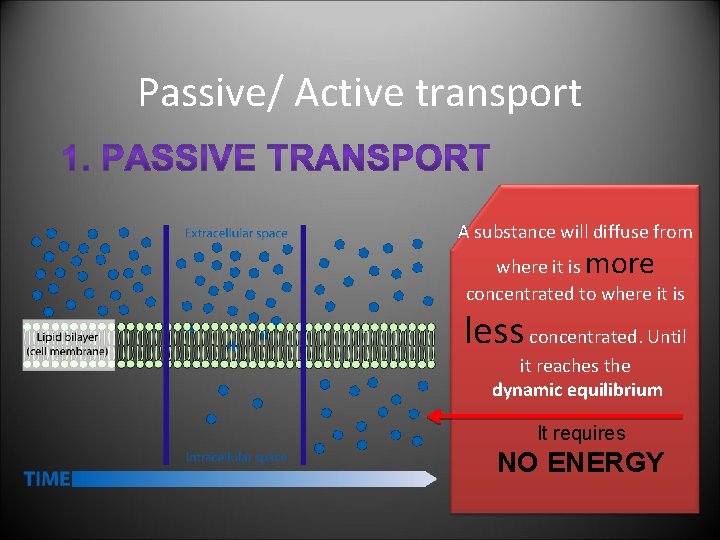
Passive/ Active transport A substance will diffuse from more where it is concentrated to where it is less concentrated. Until it reaches the dynamic equilibrium It requires NO ENERGY
is diffusion across a membrane Diffusion: is the tendency of molecules of any substance to spread out in the available space randomly. Passive transport: is the diffusion of a substance across a biological membrane which requires no energy from the cell to make it happen.
Differences in concentration of dissolved materials in two solutions can lead to the movement of ions from one to the other. higher concentration of solutes is hypertonic The solution with the lower concentration of solutes is hypotonic The solution with the Solutions with equal solute concentrations are isotonic
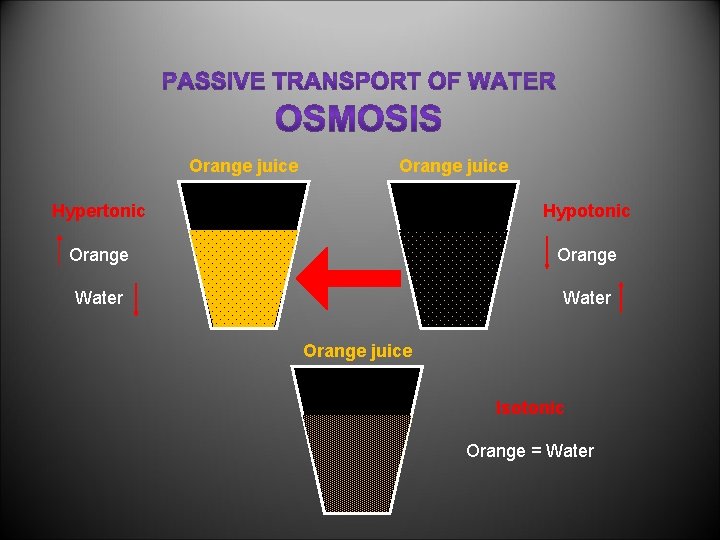
Orange juice Hypertonic Hypotonic Orange Water Orange juice Isotonic Orange = Water
Osmosis: Is a passive transport in which water diffuses across a selectively permeable membrane from the hypotonic solution to the hypertonic solution until the solutions become isotonic.
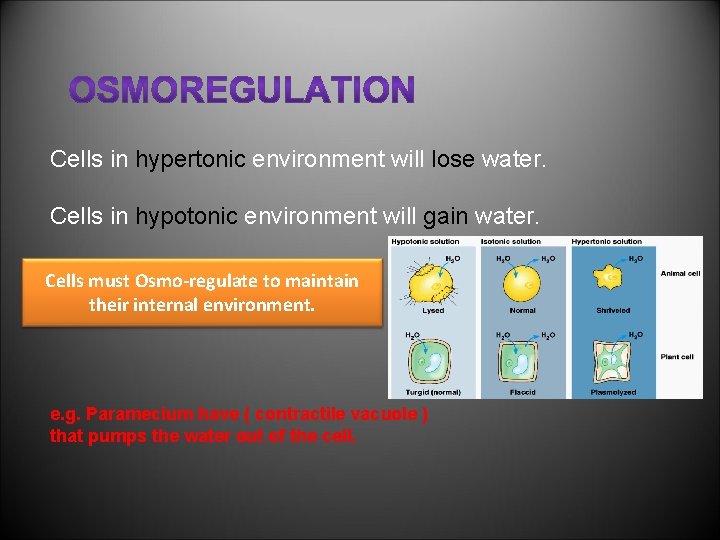
Cells in hypertonic environment will lose water. Cells in hypotonic environment will gain water. Cells must Osmo-regulate to maintain their internal environment. e. g. Paramecium have ( contractile vacuole ) that pumps the water out of the cell.
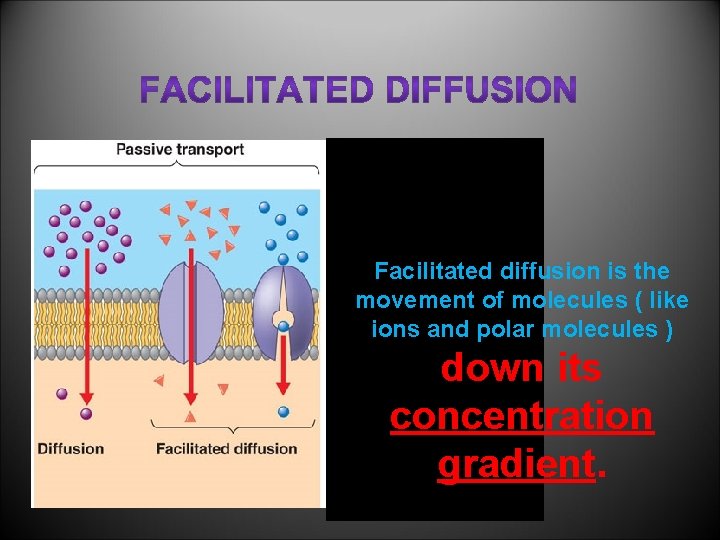
Facilitated diffusion is the movement of molecules ( like ions and polar molecules ) down its concentration gradient.
Active transport is critical for a cell to maintain its internal concentrations of small molecules. Active transport is performed by specific proteins embedded in the membranes (transport protein). "requires energy".
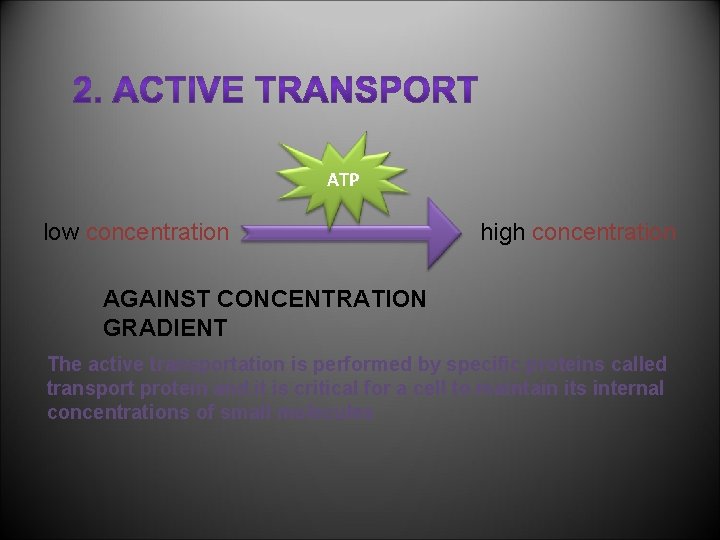
ATP low concentration high concentration AGAINST CONCENTRATION GRADIENT The active transportation is performed by specific proteins called transport protein and it is critical for a cell to maintain its internal concentrations of small molecules
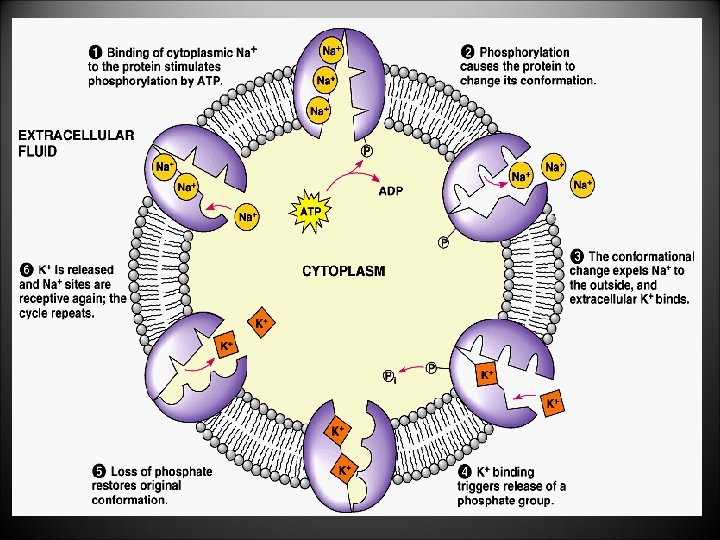
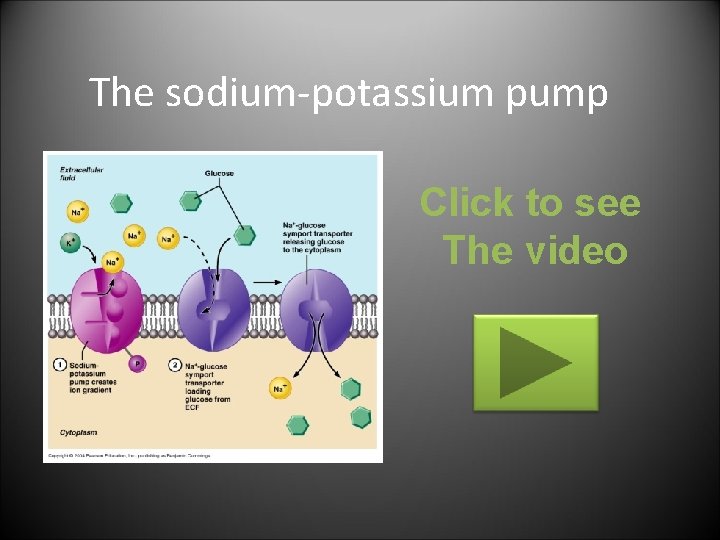
The sodium-potassium pump Click to see The video
1)- Small molecules: Small molecules and water enter or leave the cell through the lipid bilayer or by transport proteins. 2)- Large molecules: Large molecules, such as polysaccharides and proteins, cross the membrane by vesicles and transported by Exocytosis and endocytosis.
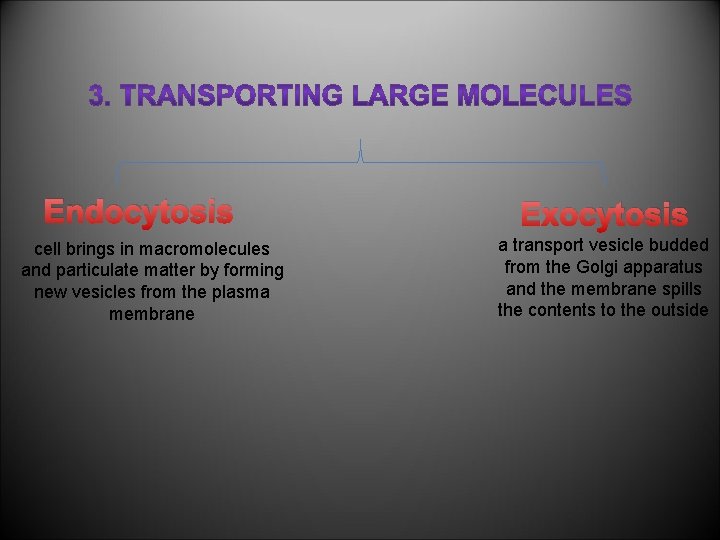
Endocytosis cell brings in macromolecules and particulate matter by forming new vesicles from the plasma membrane Exocytosis a transport vesicle budded from the Golgi apparatus and the membrane spills the contents to the outside

VIDEO
Endocytosis:
Called “cellular eating”. The cell engulfs a particle by extending pseudopodia around it and packaging it in a large vacuole. The contents of the vacuole are digested when the vacuole fuses with a lysosome.
“cellular drinking”, a cell creates a vesicle around droplets of extracellular fluid. This is a non-specific process.
It Is called (Selective eating) which very specific in what substances are being transported. It is triggered when extracellular substances bind to special receptors, on the membrane surface. This triggers the formation of a vesicle It enables a cell to take large quantities of specific materials that may be in low concentrations in the environment.
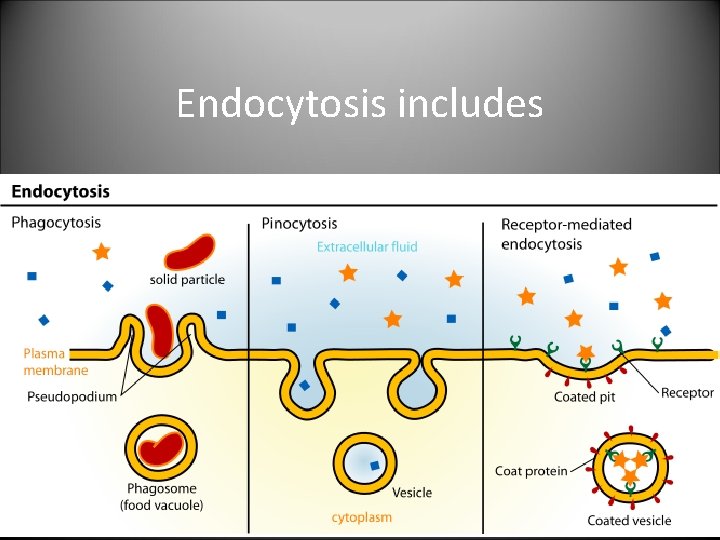
Endocytosis includes
Some questions for More understanding
• • - Q 1: Write whether each of the following statements is True (T) or False (F): • 1 -Active transport needs ATP to move substances down their concentration gradient. • 2 - Endocytosis and exocytosis move materials across the cell membrane by passive diffusion. • 3 - Diffusion of solutes across a membrane with the help of transport proteins, without the of energy is known as facilitated diffusion. 4 -The Na+ - K+ pump works in order to pump 3 Na+ out of the • cell and 2 K+ into the cell. 5 - The movement of water through a semi-permeable • membrane is called osmosis. •
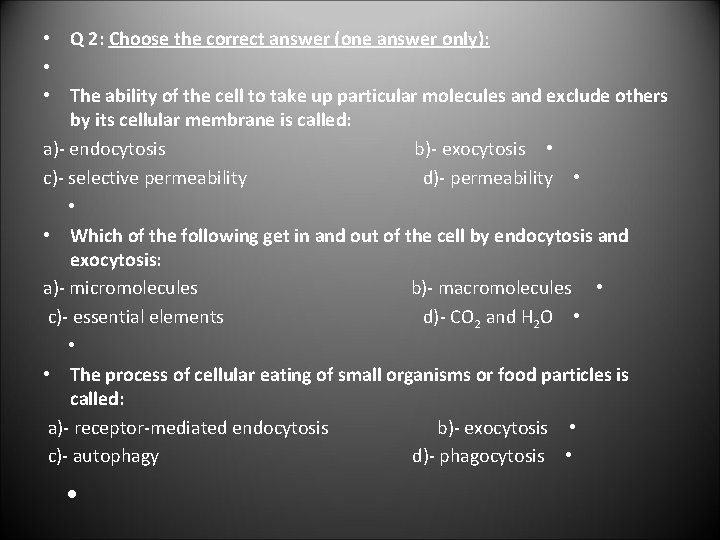
• Q 2: Choose the correct answer (one answer only): • • The ability of the cell to take up particular molecules and exclude others by its cellular membrane is called: a)- endocytosis b)- exocytosis • c)- selective permeability d)- permeability • • • Which of the following get in and out of the cell by endocytosis and exocytosis: a)- micromolecules b)- macromolecules • c)- essential elements d)- CO 2 and H 2 O • • • The process of cellular eating of small organisms or food particles is called: a)- receptor-mediated endocytosis b)- exocytosis • c)- autophagy d)- phagocytosis • •
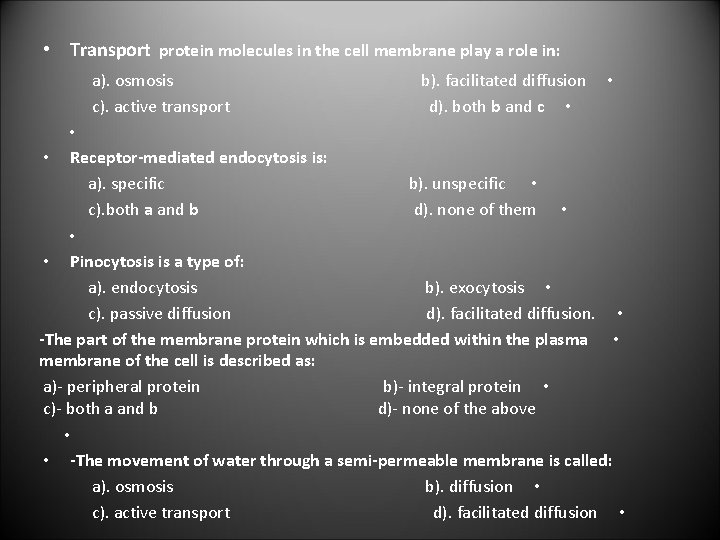
• Transport protein molecules in the cell membrane play a role in: a). osmosis c). active transport b). facilitated diffusion d). both b and c • • Receptor-mediated endocytosis is: a). specific b). unspecific • c). both a and b d). none of them • • • Pinocytosis is a type of: a). endocytosis b). exocytosis • c). passive diffusion d). facilitated diffusion. • -The part of the membrane protein which is embedded within the plasma • membrane of the cell is described as: a)- peripheral protein b)- integral protein • c)- both a and b d)- none of the above • • -The movement of water through a semi-permeable membrane is called: a). osmosis b). diffusion • c). active transport d). facilitated diffusion •
- Slides: 35