
Membrane Structure and Function Fluid Mosaic Model amphipathic
Membrane Structure and Function
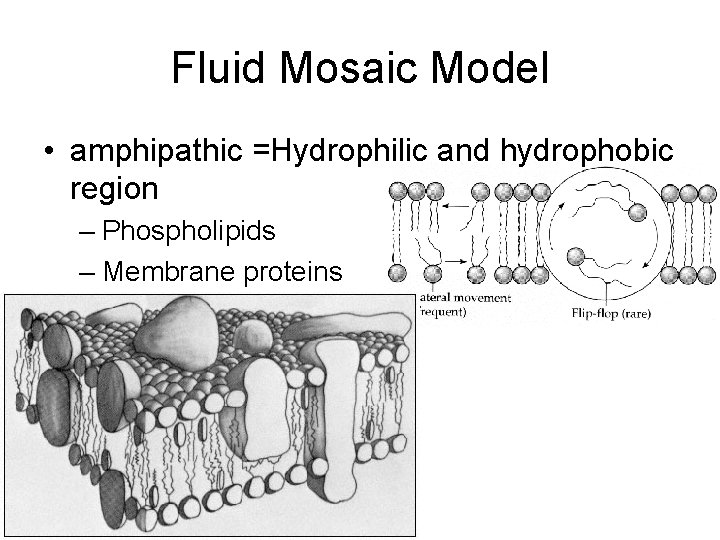
Fluid Mosaic Model • amphipathic =Hydrophilic and hydrophobic region – Phospholipids – Membrane proteins
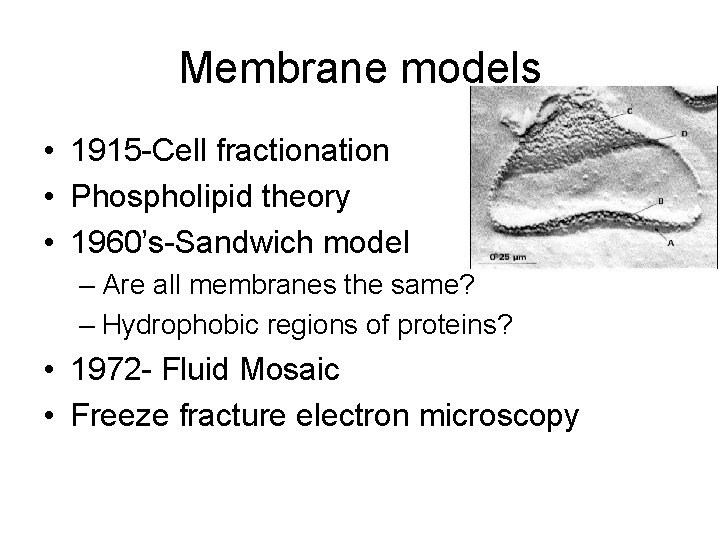
Membrane models • 1915 -Cell fractionation • Phospholipid theory • 1960’s-Sandwich model – Are all membranes the same? – Hydrophobic regions of proteins? • 1972 - Fluid Mosaic • Freeze fracture electron microscopy
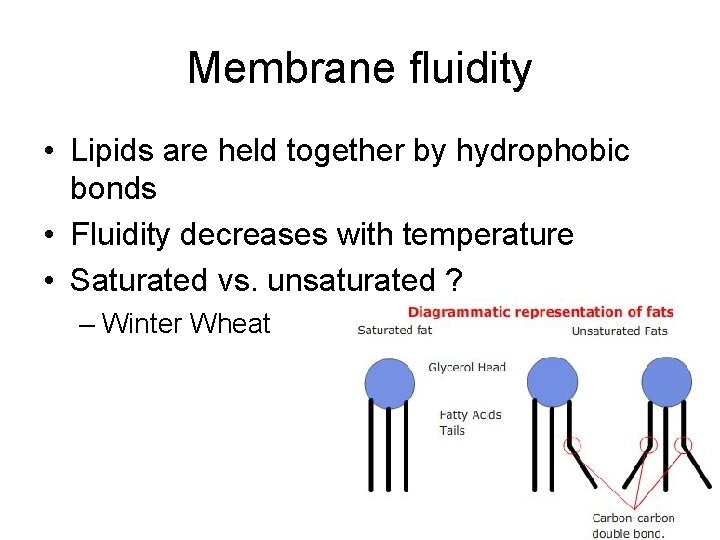
Membrane fluidity • Lipids are held together by hydrophobic bonds • Fluidity decreases with temperature • Saturated vs. unsaturated ? – Winter Wheat
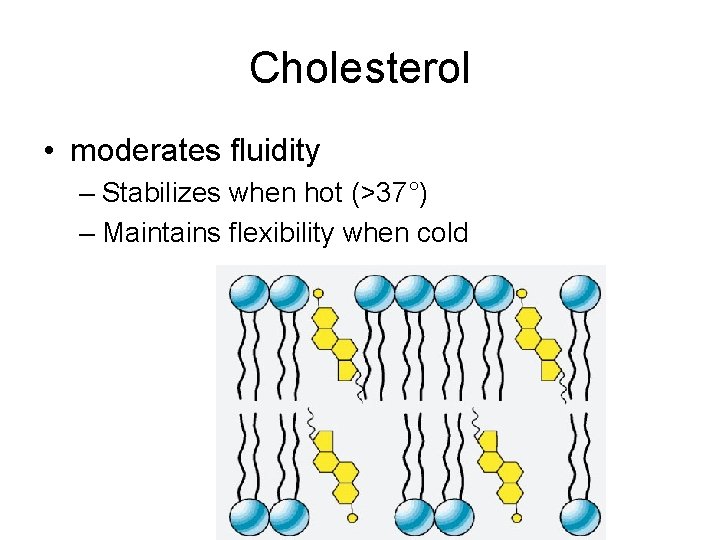
Cholesterol • moderates fluidity – Stabilizes when hot (>37°) – Maintains flexibility when cold
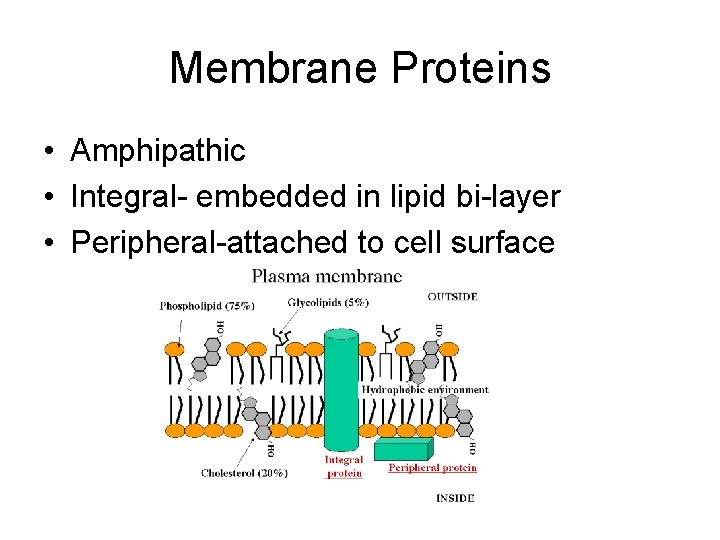
Membrane Proteins • Amphipathic • Integral- embedded in lipid bi-layer • Peripheral-attached to cell surface
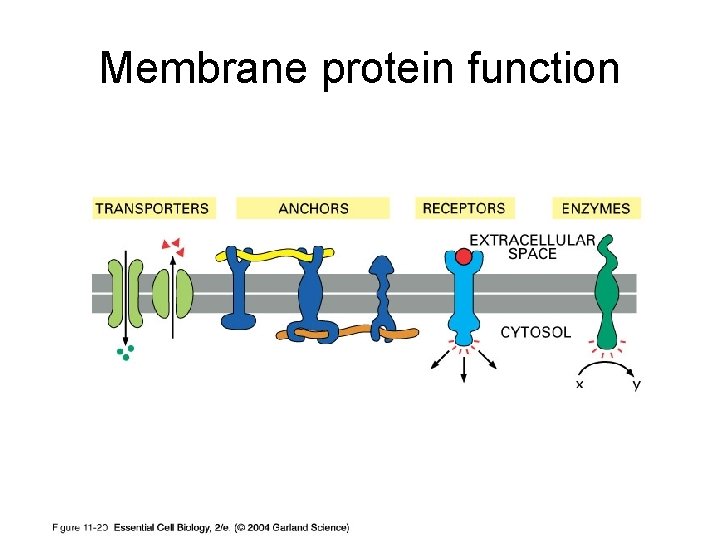
Membrane protein function
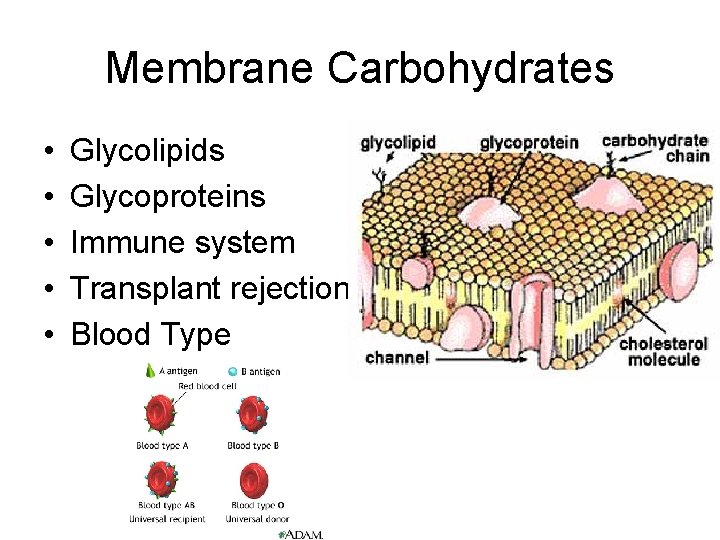
Membrane Carbohydrates • • • Glycolipids Glycoproteins Immune system Transplant rejection Blood Type
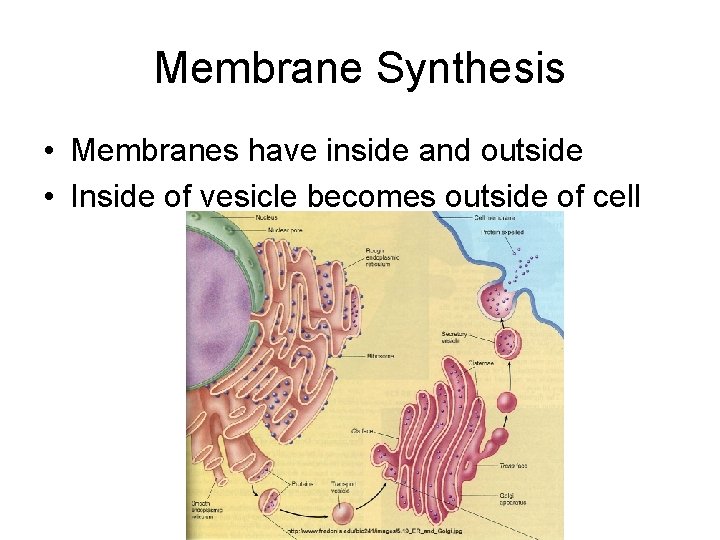
Membrane Synthesis • Membranes have inside and outside • Inside of vesicle becomes outside of cell
Semi-permeability • Constant exchange of small molecules • Ex. Muscle Cell – Glucose – Amino acids – CO 2 – Ions (K+, Na+, Ca 2+) • Various rates of movement
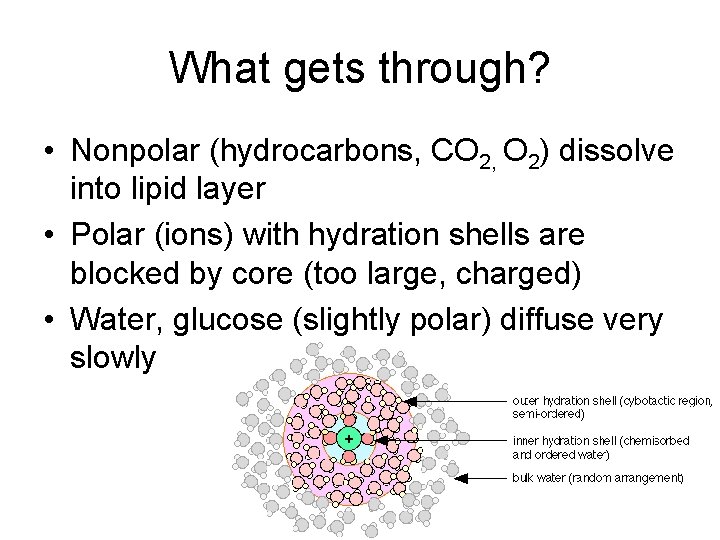
What gets through? • Nonpolar (hydrocarbons, CO 2, O 2) dissolve into lipid layer • Polar (ions) with hydration shells are blocked by core (too large, charged) • Water, glucose (slightly polar) diffuse very slowly
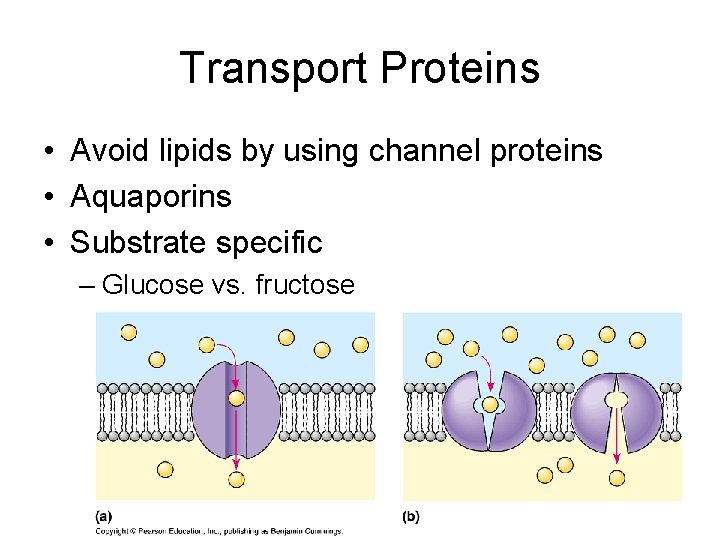
Transport Proteins • Avoid lipids by using channel proteins • Aquaporins • Substrate specific – Glucose vs. fructose
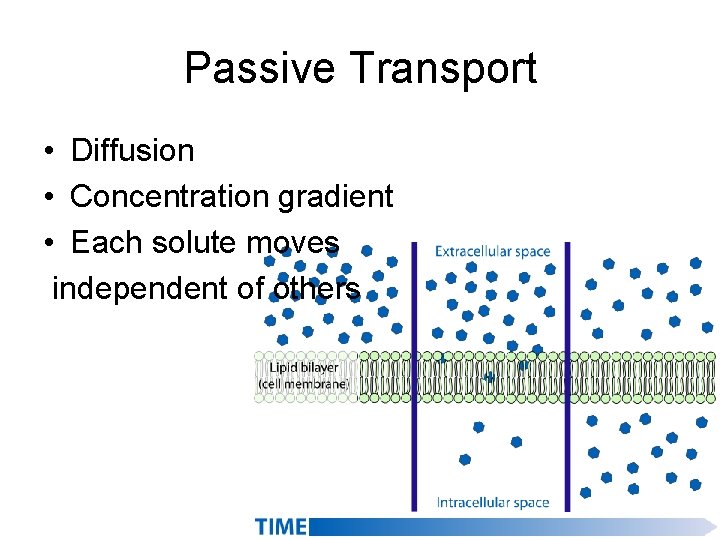
Passive Transport • Diffusion • Concentration gradient • Each solute moves independent of others
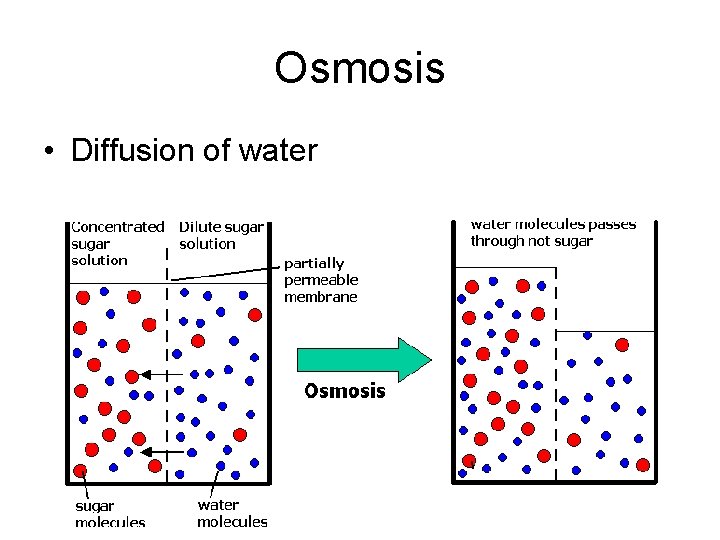
Osmosis • Diffusion of water
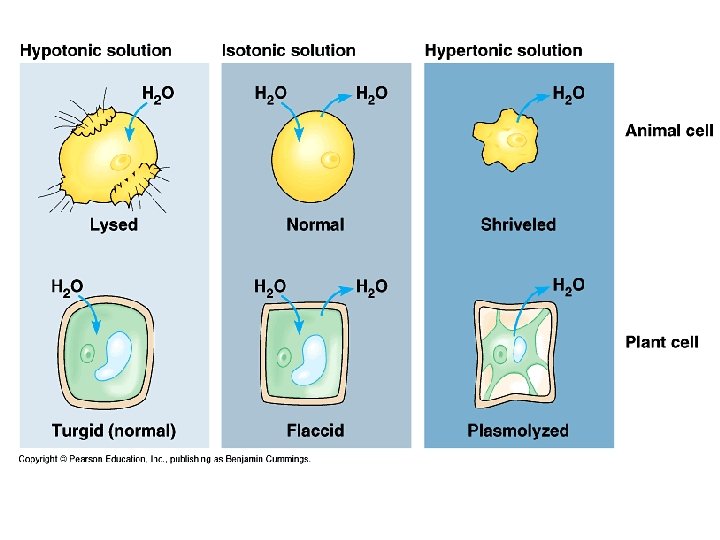
Tonicity-ability of solution to cause a cell to gain or lose water • Hypertonic – Relatively more solutes • shrink • Hypotonic – Relatively less solutes • expand • Isotonic – Equal solutes • Stay the same
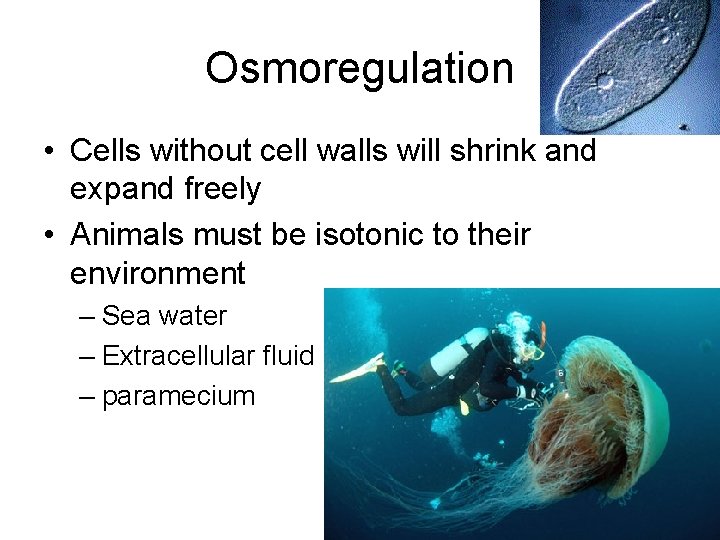
Osmoregulation • Cells without cell walls will shrink and expand freely • Animals must be isotonic to their environment – Sea water – Extracellular fluid – paramecium
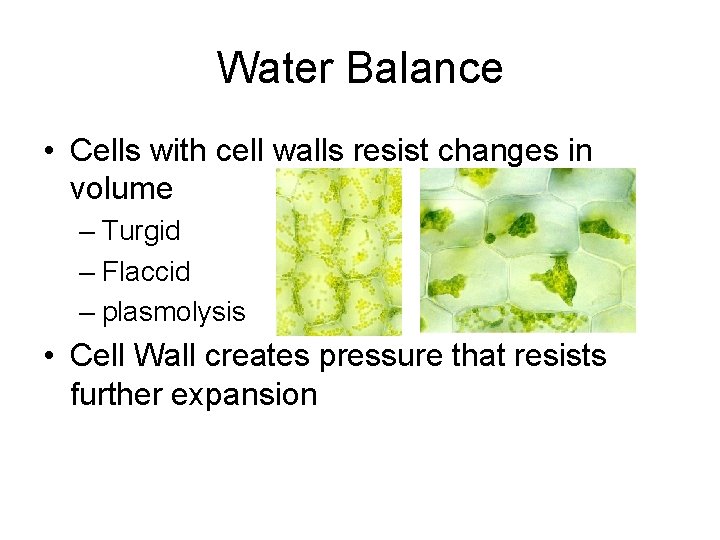
Water Balance • Cells with cell walls resist changes in volume – Turgid – Flaccid – plasmolysis • Cell Wall creates pressure that resists further expansion
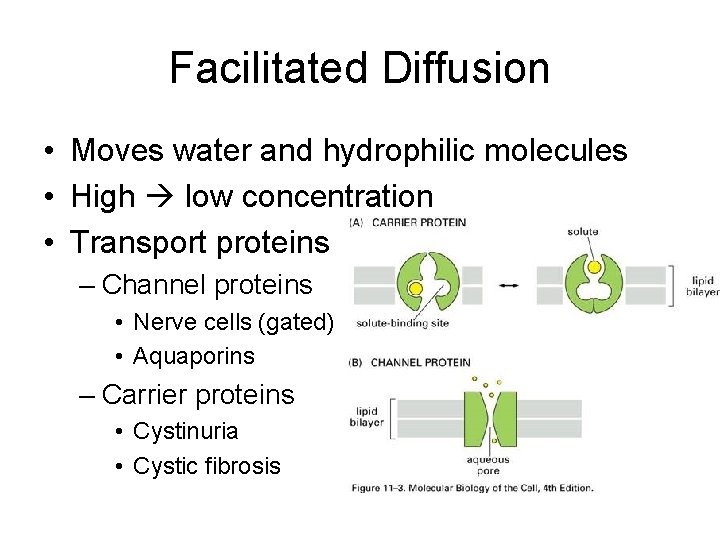
Facilitated Diffusion • Moves water and hydrophilic molecules • High low concentration • Transport proteins – Channel proteins • Nerve cells (gated) • Aquaporins – Carrier proteins • Cystinuria • Cystic fibrosis
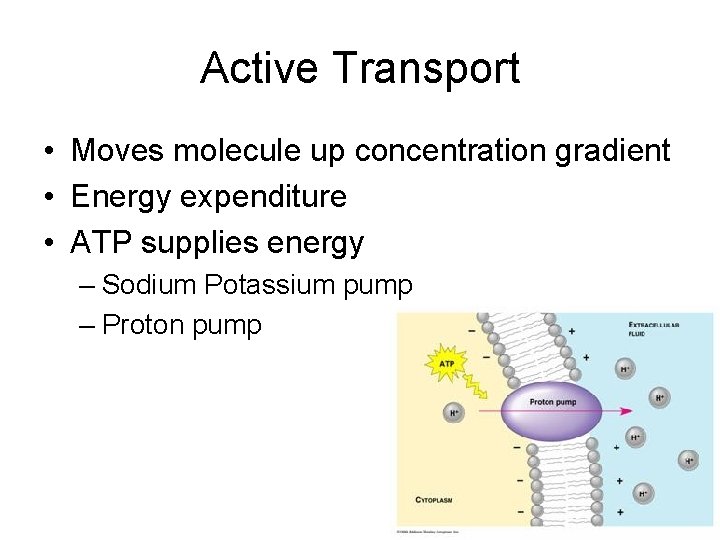
Active Transport • Moves molecule up concentration gradient • Energy expenditure • ATP supplies energy – Sodium Potassium pump – Proton pump
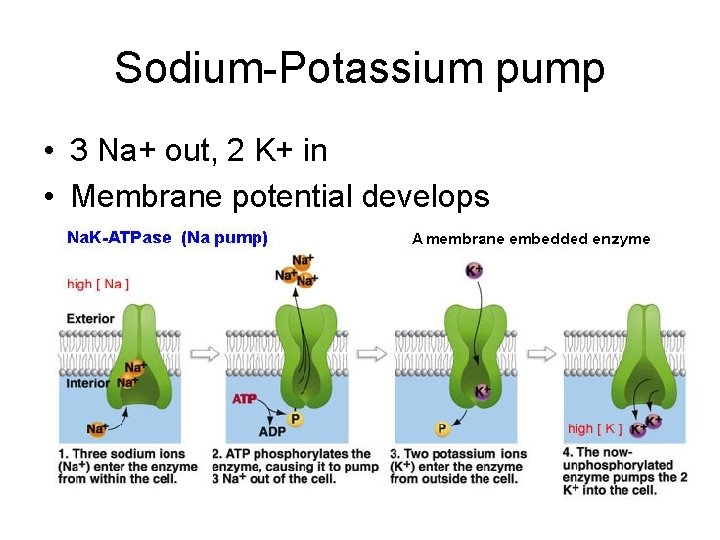
Sodium-Potassium pump • 3 Na+ out, 2 K+ in • Membrane potential develops
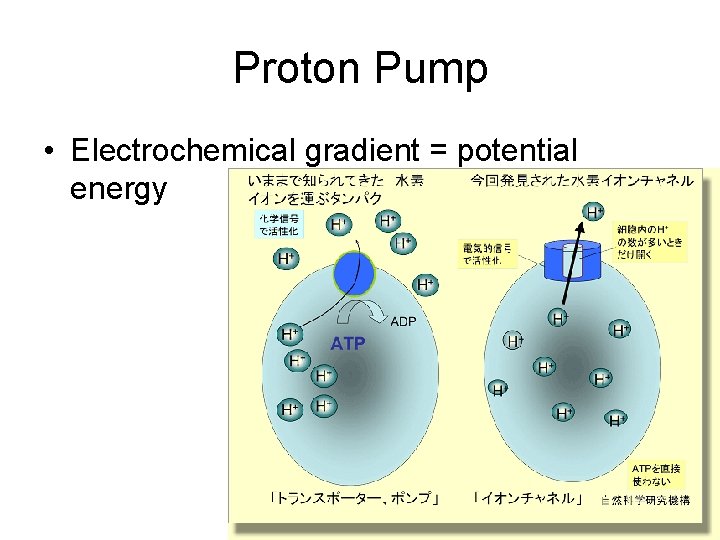
Proton Pump • Electrochemical gradient = potential energy
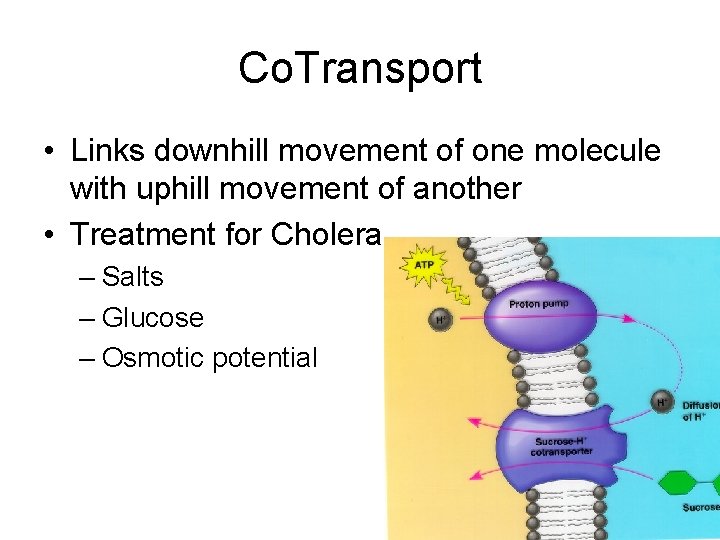
Co. Transport • Links downhill movement of one molecule with uphill movement of another • Treatment for Cholera – Salts – Glucose – Osmotic potential
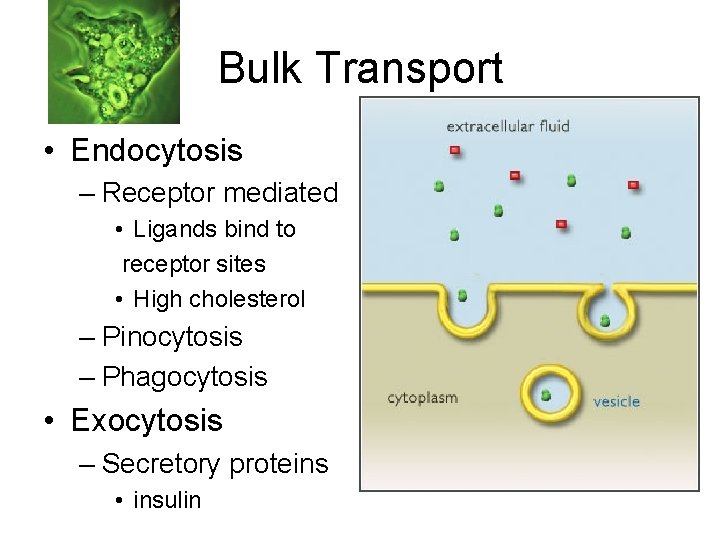
Bulk Transport • Endocytosis – Receptor mediated • Ligands bind to receptor sites • High cholesterol – Pinocytosis – Phagocytosis • Exocytosis – Secretory proteins • insulin
- Slides: 24