
Membrane Potential Active Electrical Properties of the Neuron
九十六學年度 腦科學所 腦科學慨論 Membrane Potential Active Electrical Properties of the Neuron Synaptic Transmission 楊靜修老師 (含Principles of Neuroscience Ch 6, Ch 7, Ch 8, Ch 9, Ch 11, Ch 12)
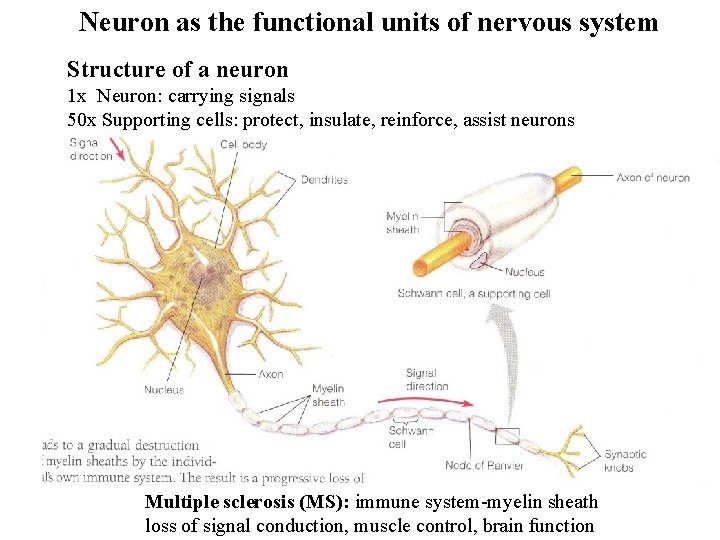
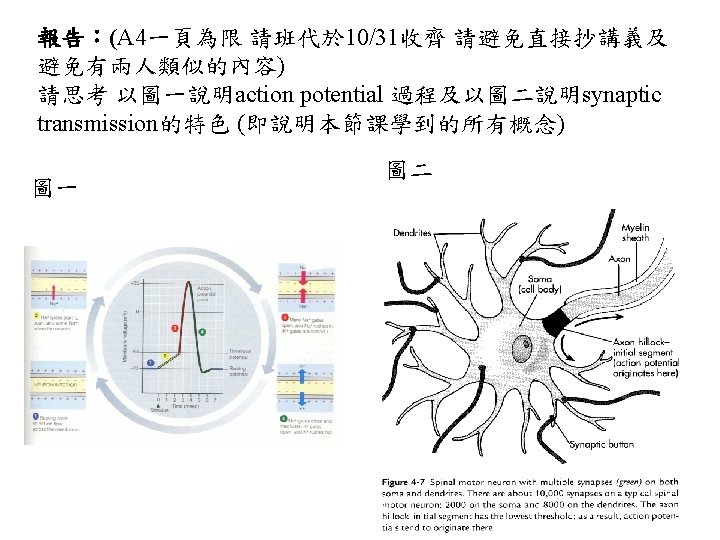
Neuron as the functional units of nervous system Structure of a neuron 1 x Neuron: carrying signals 50 x Supporting cells: protect, insulate, reinforce, assist neurons Multiple sclerosis (MS): immune system-myelin sheath loss of signal conduction, muscle control, brain function
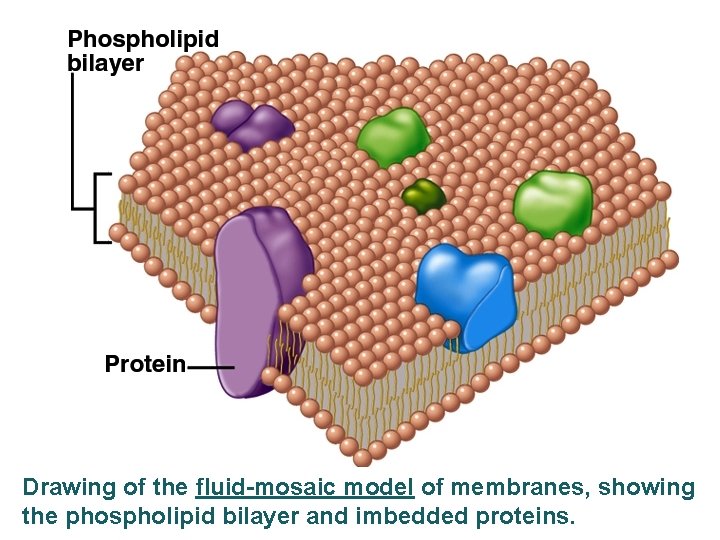
Drawing of the fluid-mosaic model of membranes, showing the phospholipid bilayer and imbedded proteins.
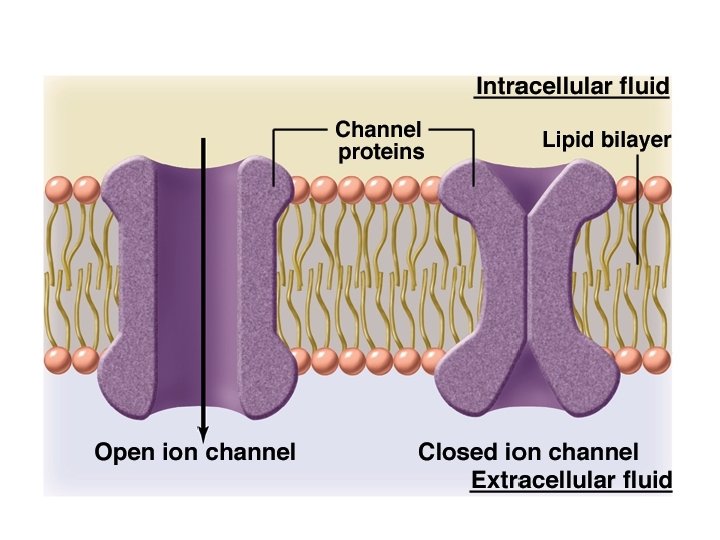
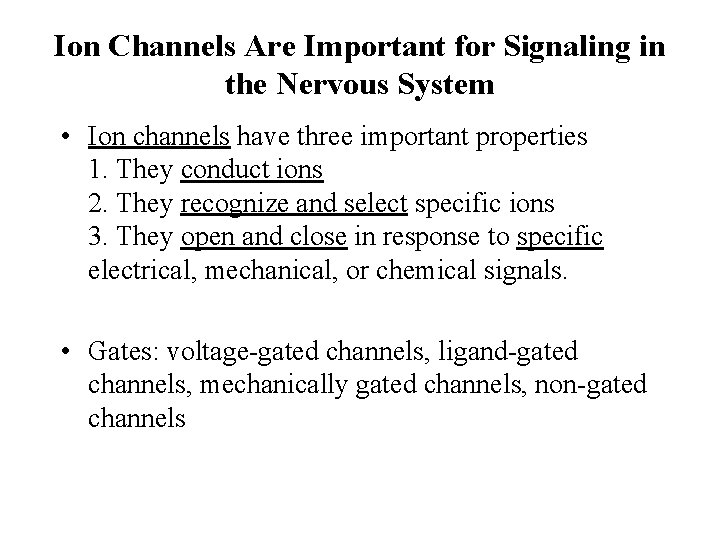
Ion Channels Are Important for Signaling in the Nervous System • Ion channels have three important properties 1. They conduct ions 2. They recognize and select specific ions 3. They open and close in response to specific electrical, mechanical, or chemical signals. • Gates: voltage-gated channels, ligand-gated channels, mechanically gated channels, non-gated channels
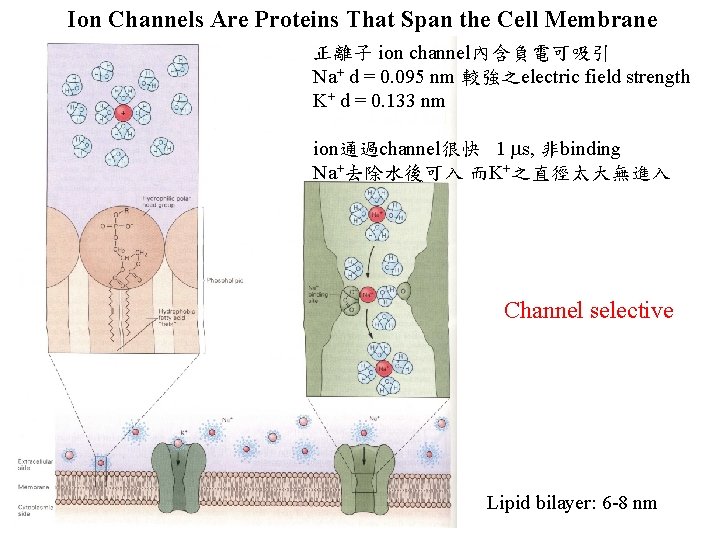
Ion Channels Are Proteins That Span the Cell Membrane 正離子 ion channel內含負電可吸引 Na+ d = 0. 095 nm 較強之electric field strength K+ d = 0. 133 nm ion通過channel很快 1 s, 非binding Na+去除水後可入 而K+之直徑太大無進入 Channel selective Lipid bilayer: 6 -8 nm
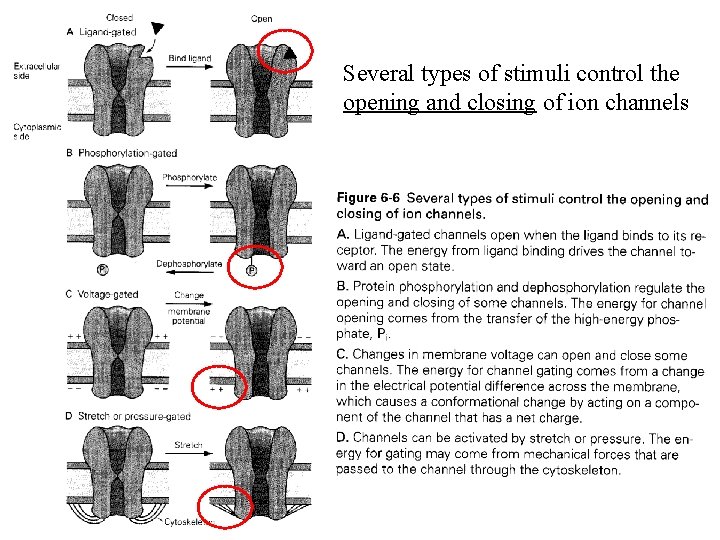
Several types of stimuli control the opening and closing of ion channels
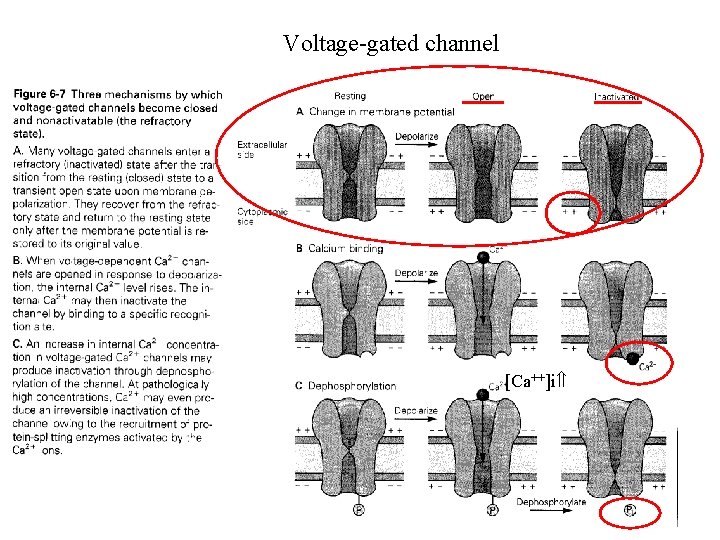
Voltage-gated channel [Ca++]i
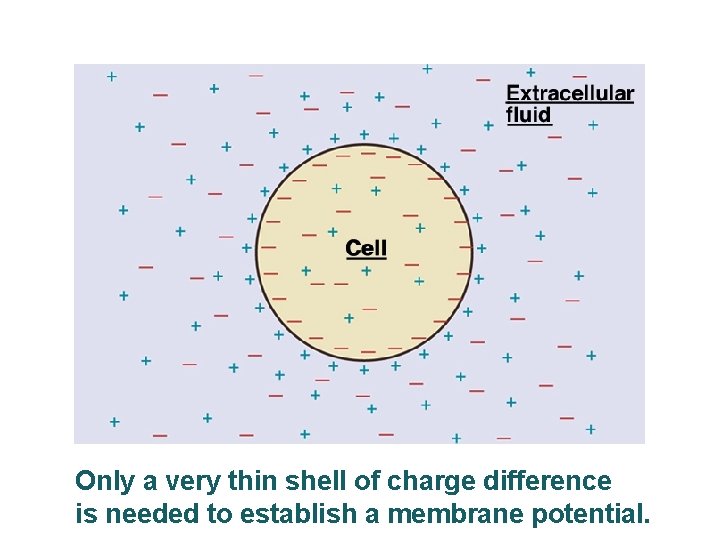
Only a very thin shell of charge difference is needed to establish a membrane potential.
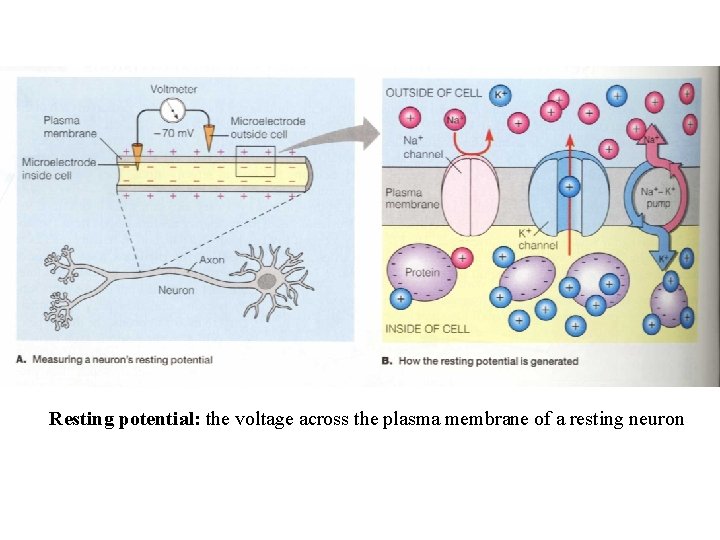
Resting potential: the voltage across the plasma membrane of a resting neuron
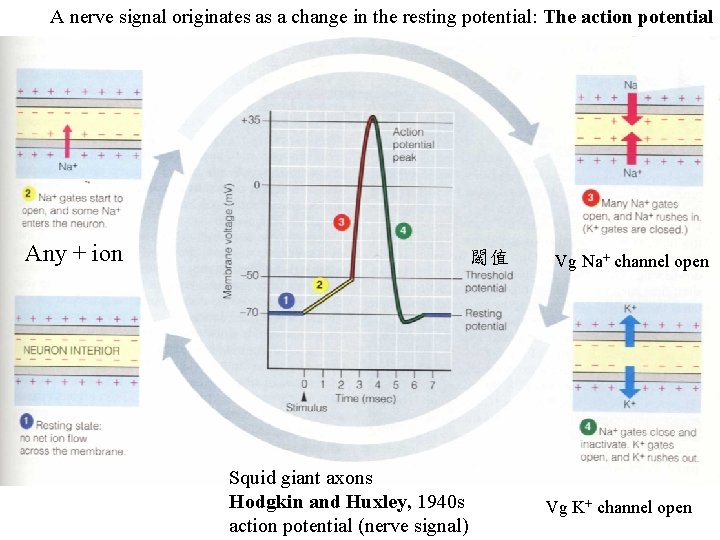
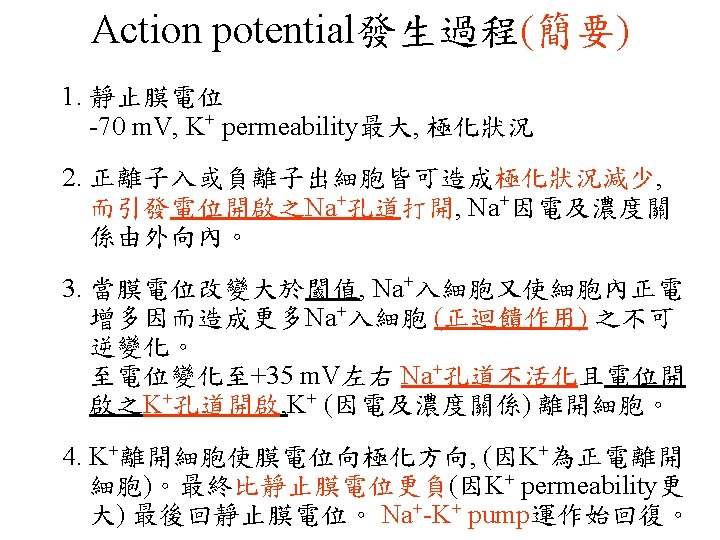
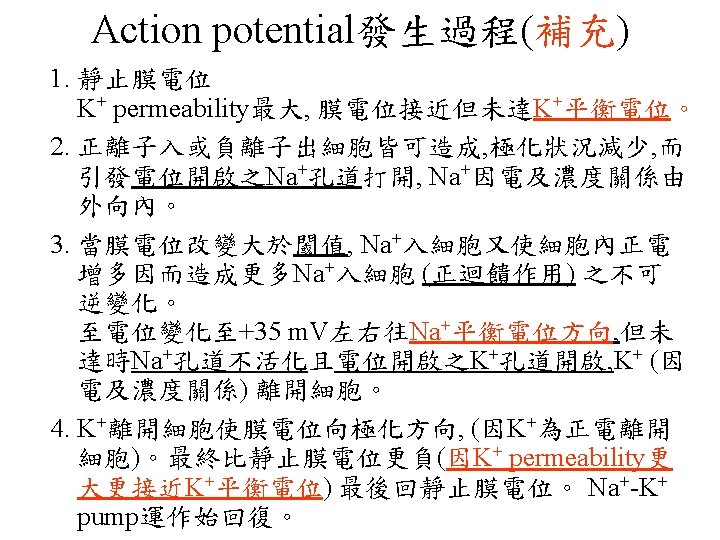
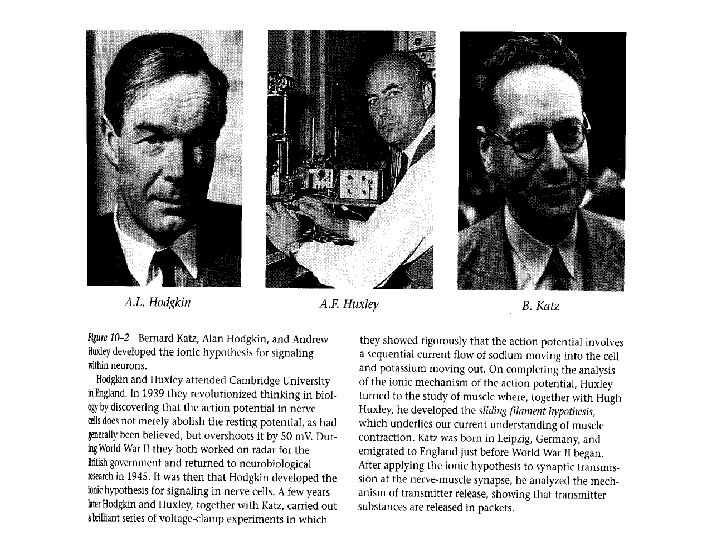
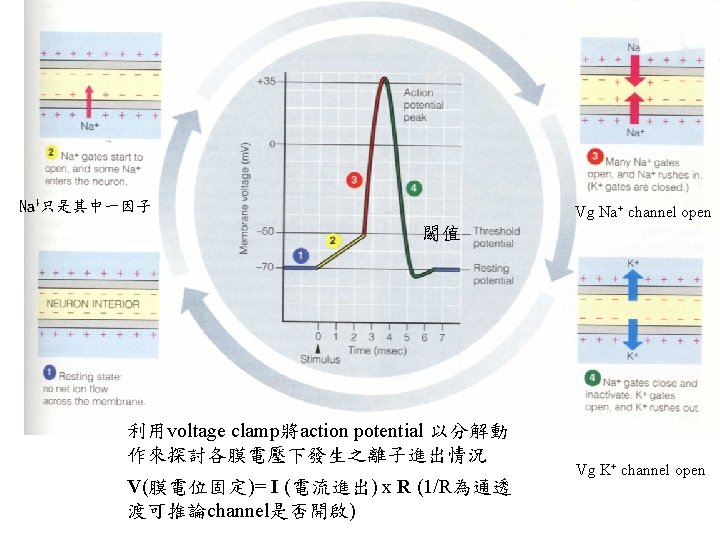
A nerve signal originates as a change in the resting potential: The action potential Any + ion 閾值 Squid giant axons Hodgkin and Huxley, 1940 s action potential (nerve signal) Vg Na+ channel open Vg K+ channel open
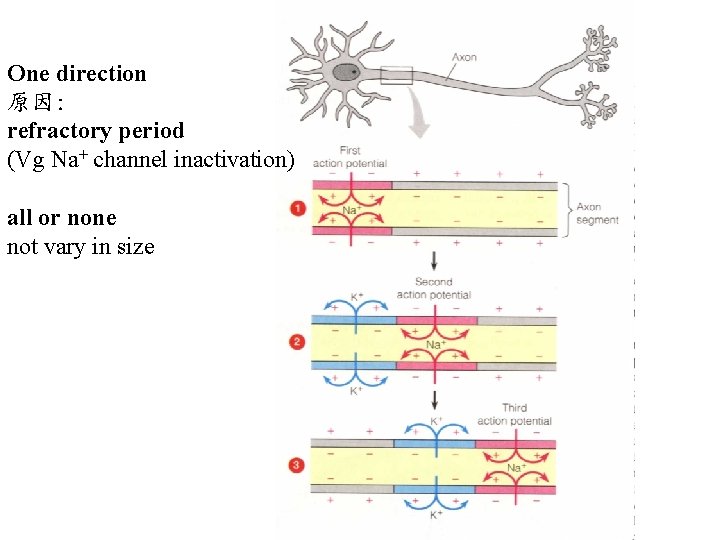
One direction 原因: refractory period (Vg Na+ channel inactivation) all or none not vary in size
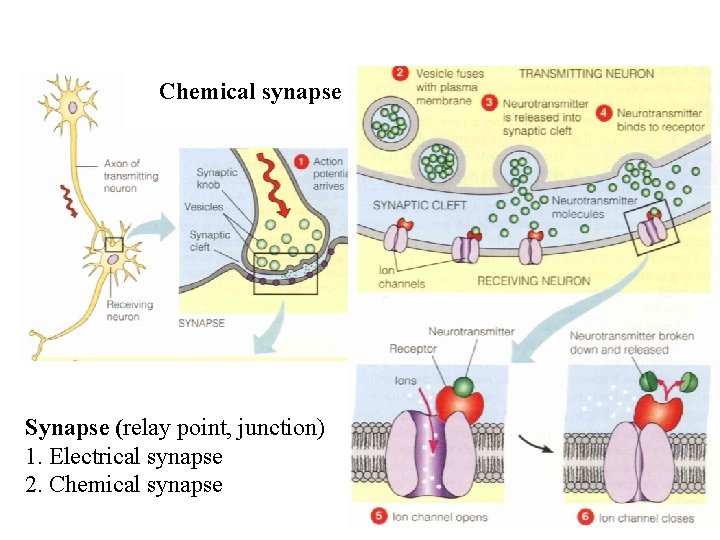
Chemical synapse Synapse (relay point, junction) 1. Electrical synapse 2. Chemical synapse
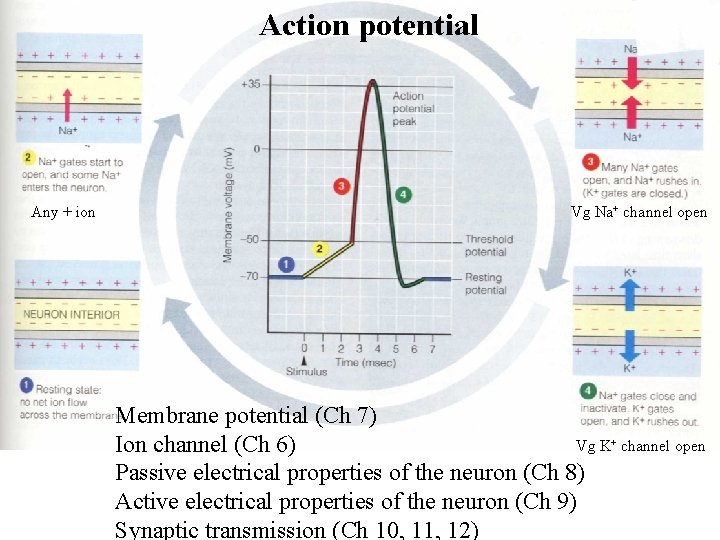
Action potential Any + ion Vg Na+ channel open Membrane potential (Ch 7) Vg K+ channel open Ion channel (Ch 6) Passive electrical properties of the neuron (Ch 8) Active electrical properties of the neuron (Ch 9) Synaptic transmission (Ch 10, 11, 12)
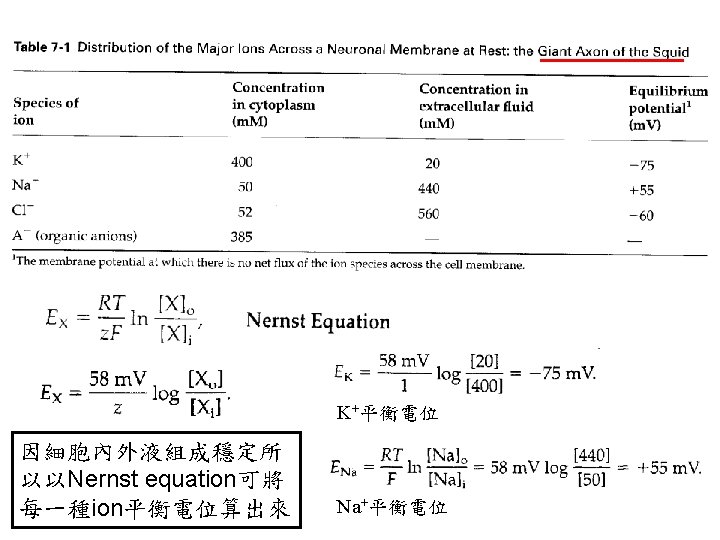
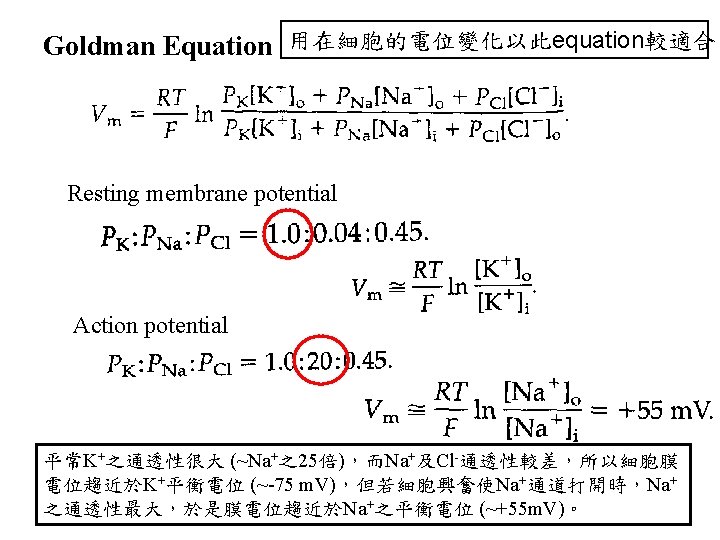
Membrane Potential 1. Resting membrane potential 為何為負電? 2. Action potential 最高不超過 +100 m. V 最低不會-200 m. V 原因為何?
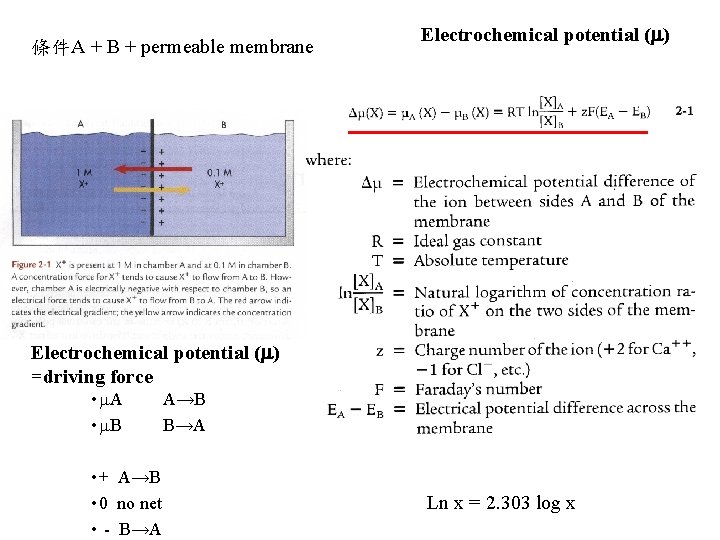
條件A + B + permeable membrane Electrochemical potential ( ) =driving force • A • B • + A→B • 0 no net • - B→A A→B B→A Ln x = 2. 303 log x
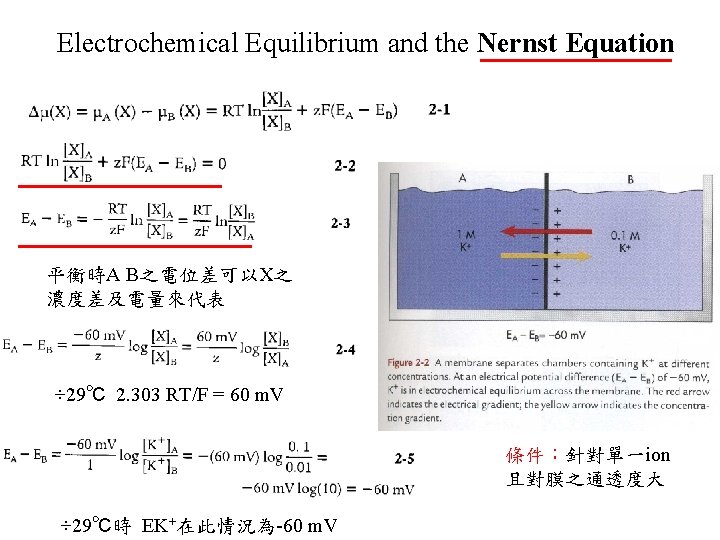
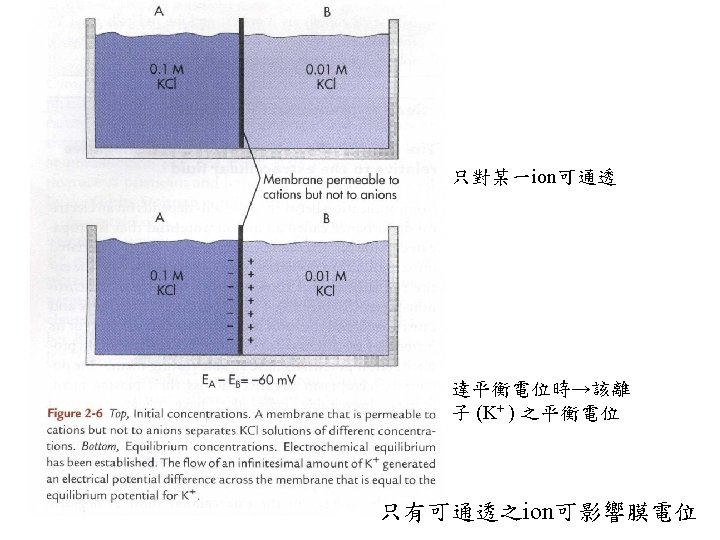
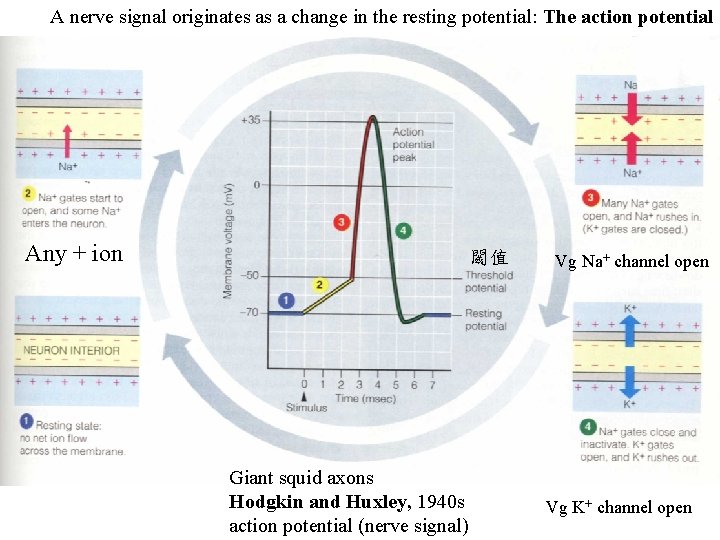
A nerve signal originates as a change in the resting potential: The action potential Any + ion 閾值 Giant squid axons Hodgkin and Huxley, 1940 s action potential (nerve signal) Vg Na+ channel open Vg K+ channel open
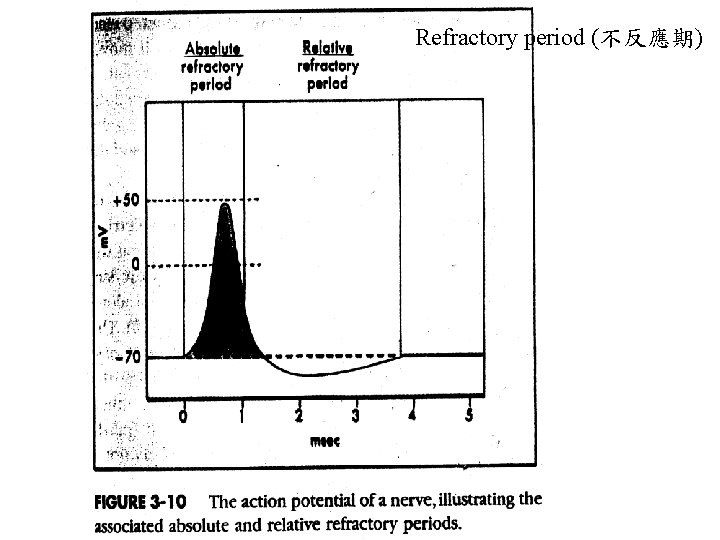
Refractory period (不反應期)
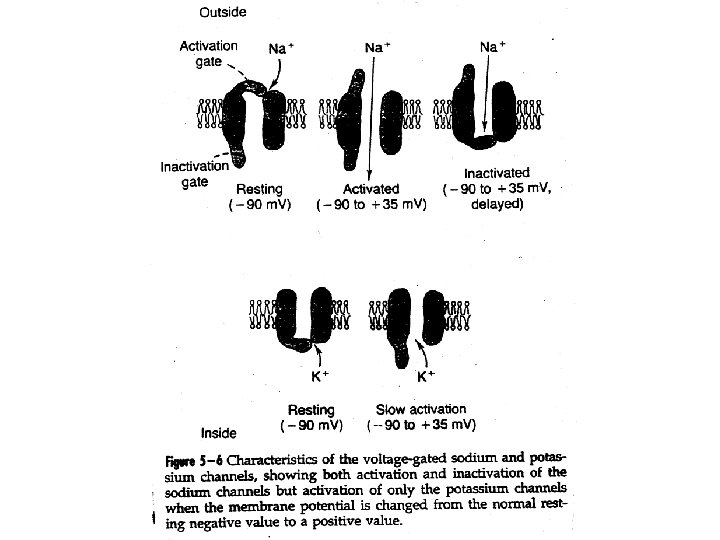
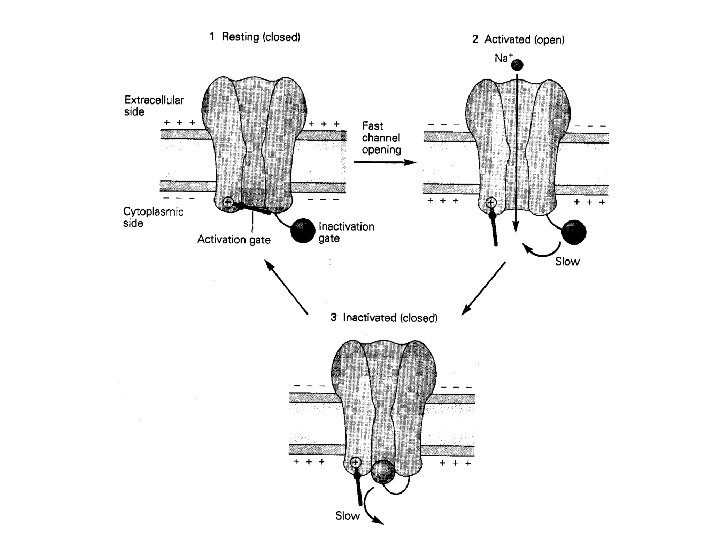
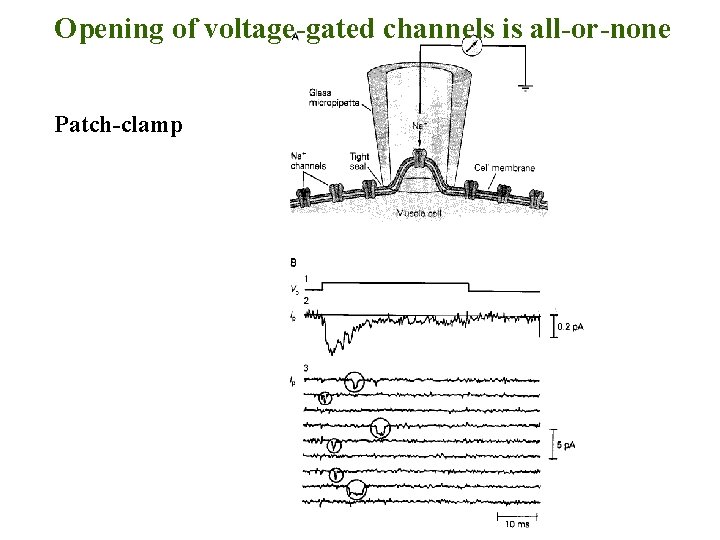
Opening of voltage-gated channels is all-or-none Patch-clamp
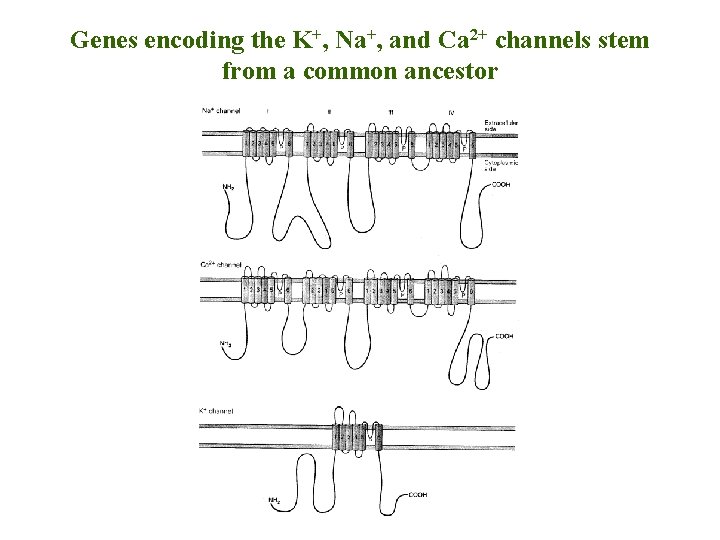
Genes encoding the K+, Na+, and Ca 2+ channels stem from a common ancestor
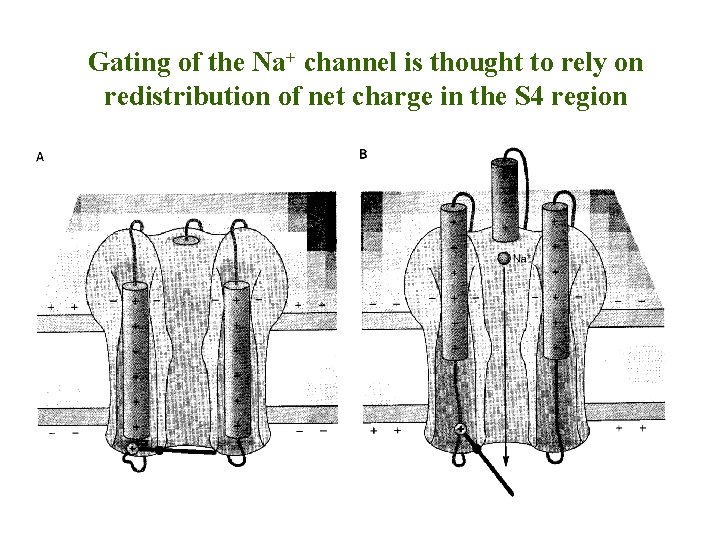
Gating of the Na+ channel is thought to rely on redistribution of net charge in the S 4 region
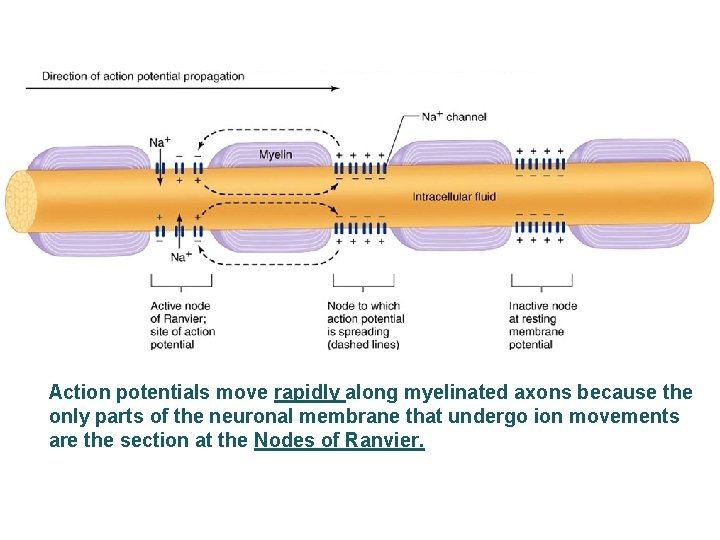
Action potentials move rapidly along myelinated axons because the only parts of the neuronal membrane that undergo ion movements are the section at the Nodes of Ranvier.
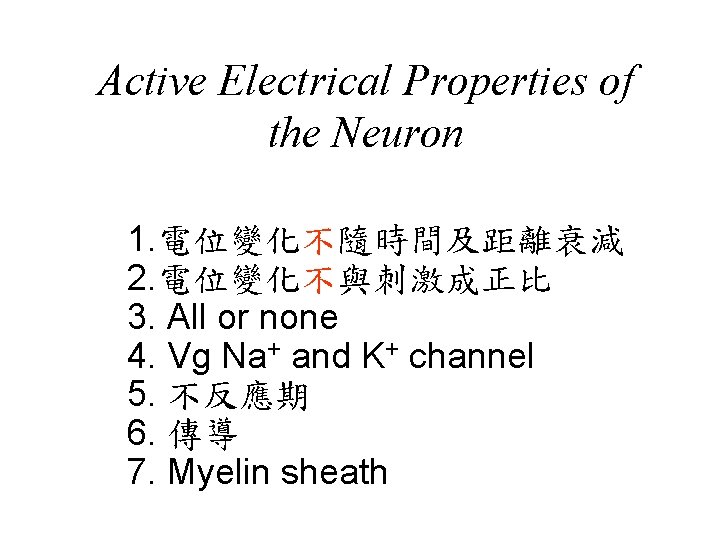
Active Electrical Properties of the Neuron 1. 電位變化不隨時間及距離衰減 2. 電位變化不與刺激成正比 3. All or none 4. Vg Na+ and K+ channel 5. 不反應期 6. 傳導 7. Myelin sheath
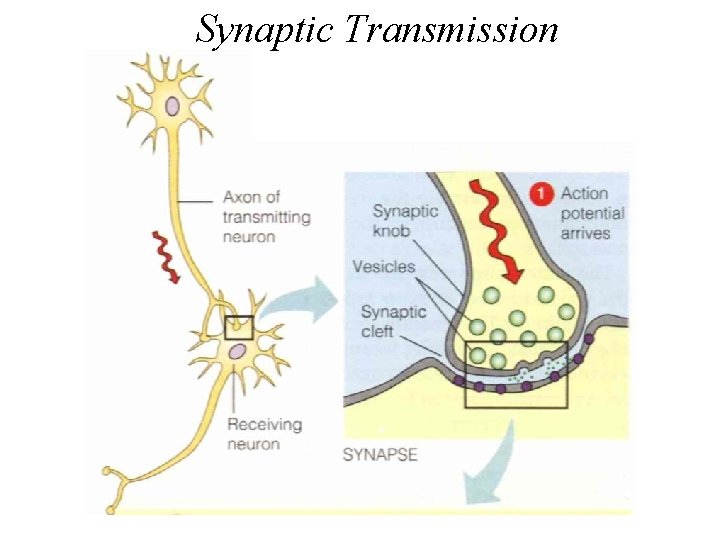
Synaptic Transmission
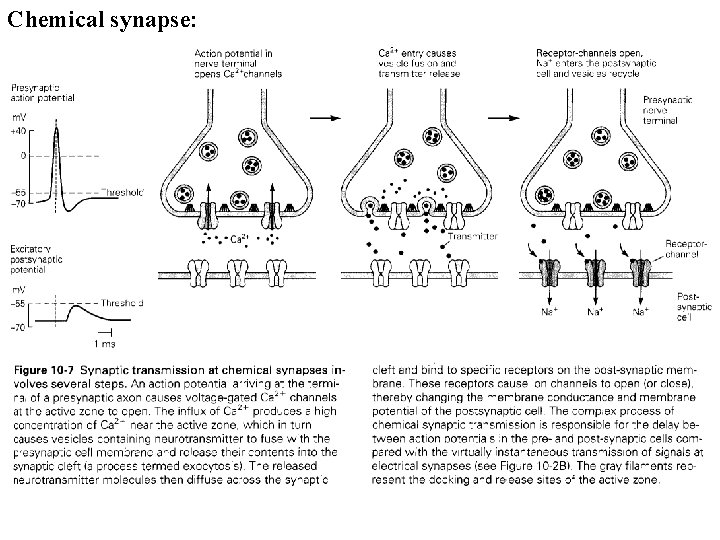
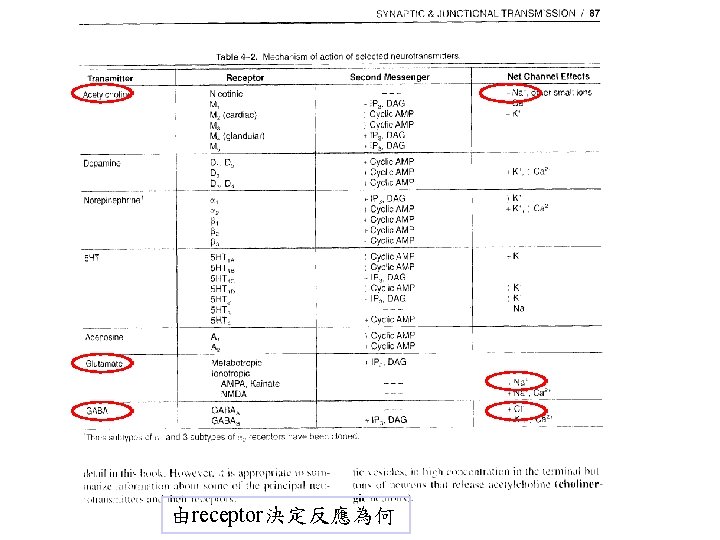
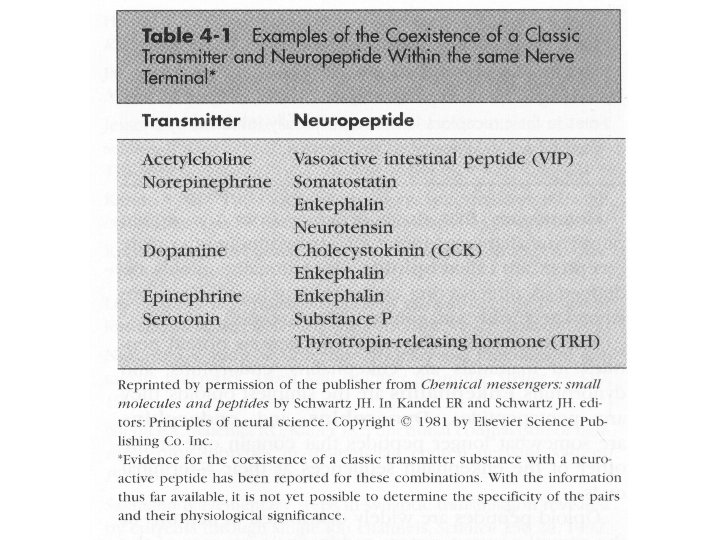
Chemical synapse:
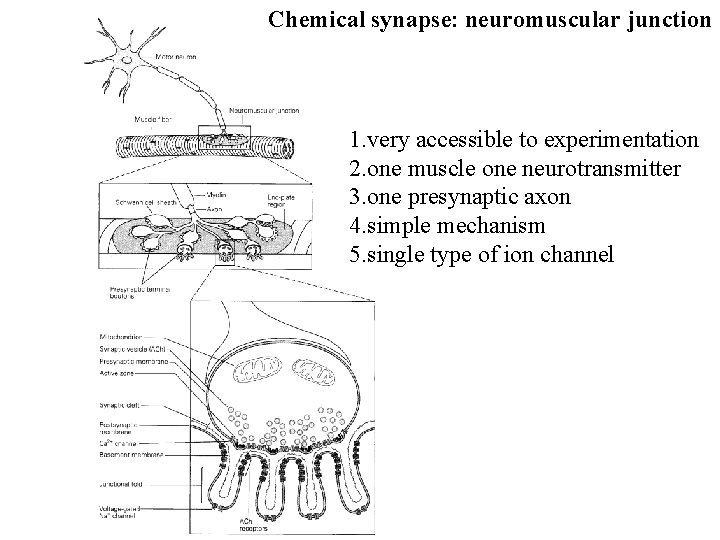
Chemical synapse: neuromuscular junction 1. very accessible to experimentation 2. one muscle one neurotransmitter 3. one presynaptic axon 4. simple mechanism 5. single type of ion channel
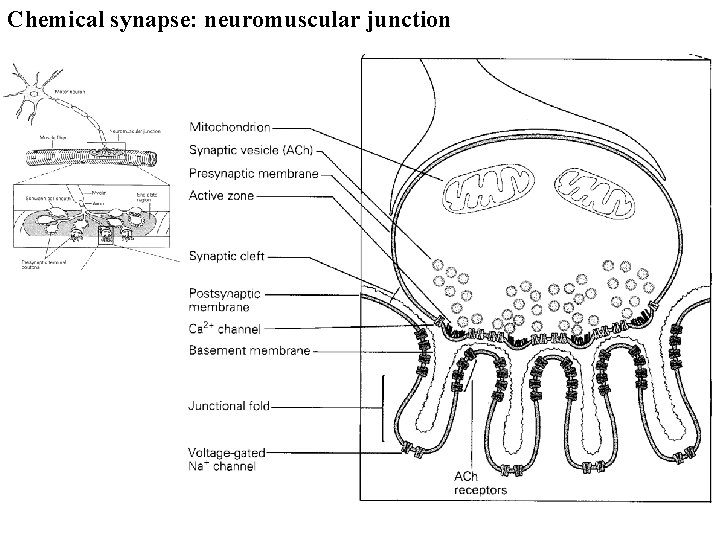
Chemical synapse: neuromuscular junction
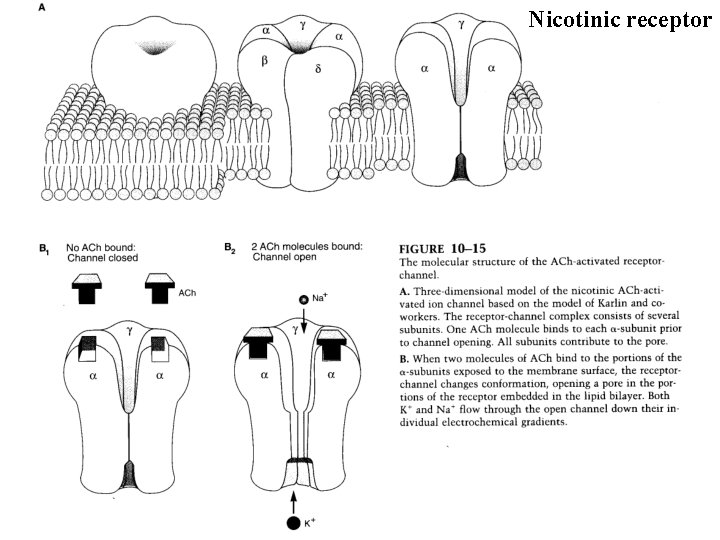
Nicotinic receptor
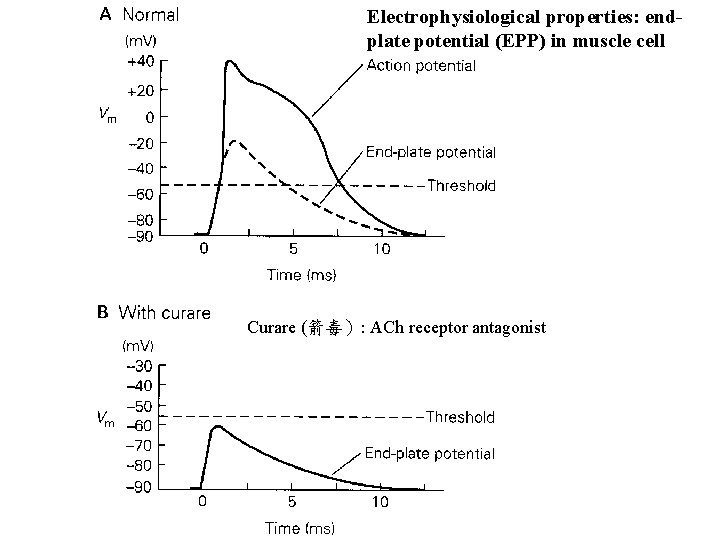
Electrophysiological properties: endplate potential (EPP) in muscle cell Curare (箭毒): ACh receptor antagonist
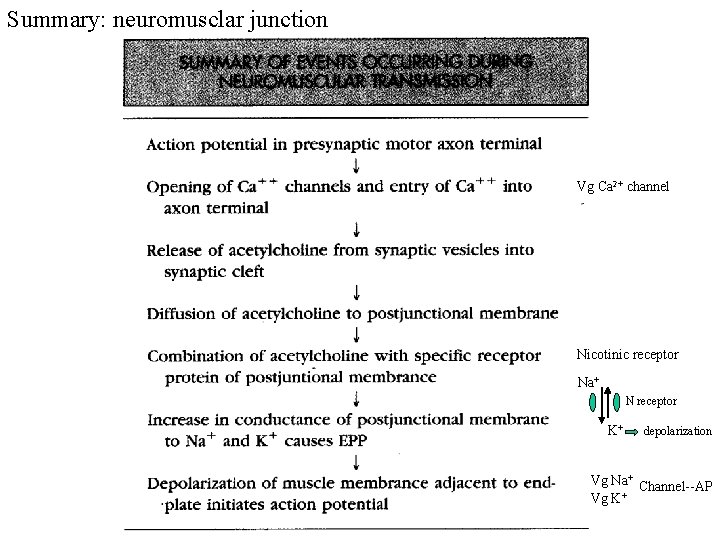
Summary: neuromusclar junction Vg Ca 2+ channel Nicotinic receptor Na+ N receptor K+ depolarization Vg Na+ Channel--AP Vg K+
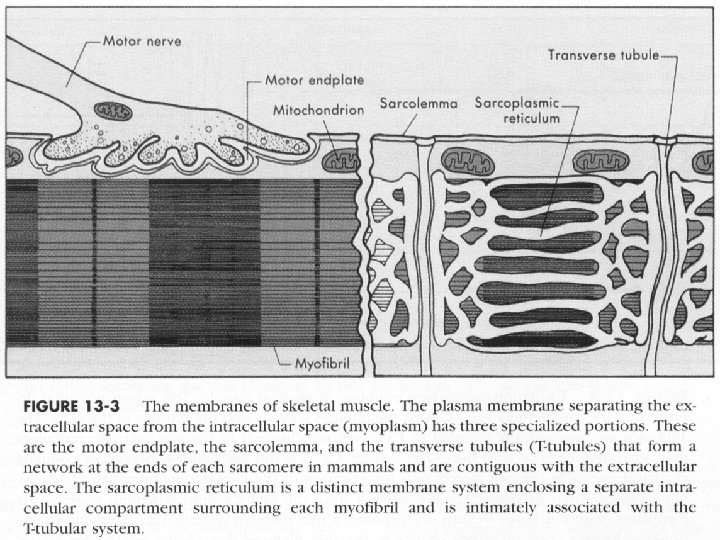
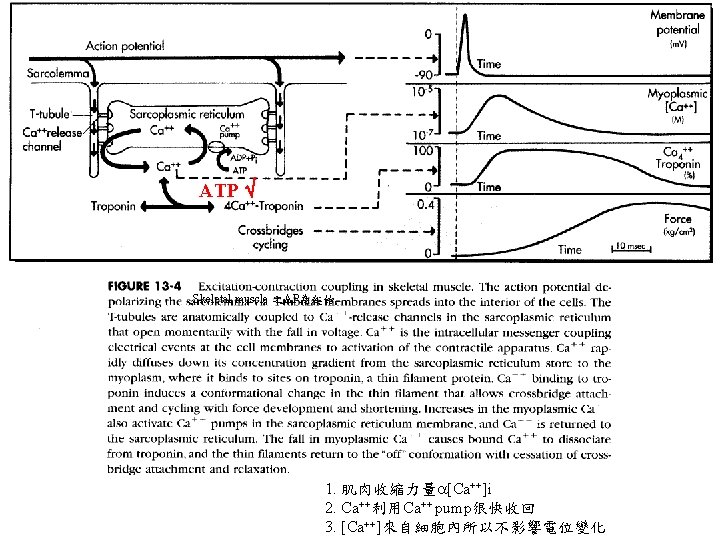
Central Nervous System Four primary neurons communicate to one secondary neuron. One primary neuron communicates to four secondary neurons.
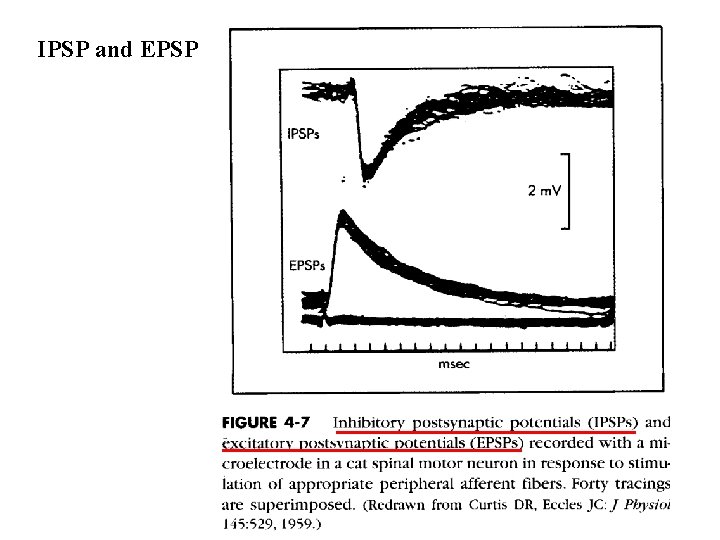
IPSP and EPSP
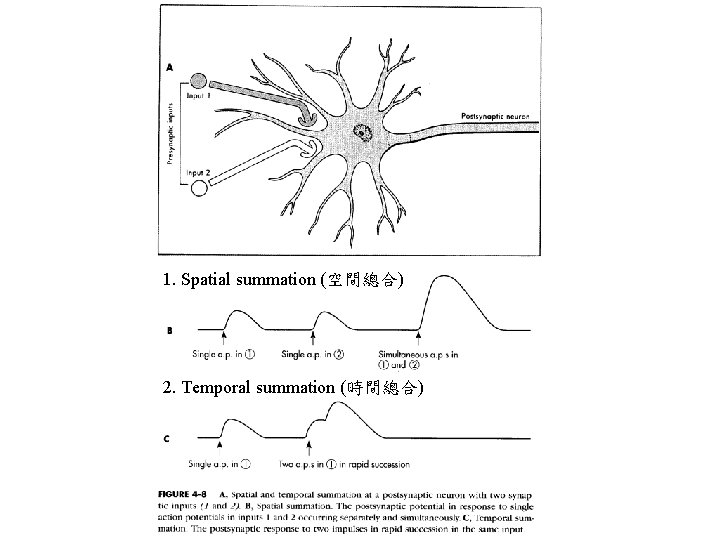
1. Spatial summation (空間總合) 2. Temporal summation (時間總合)
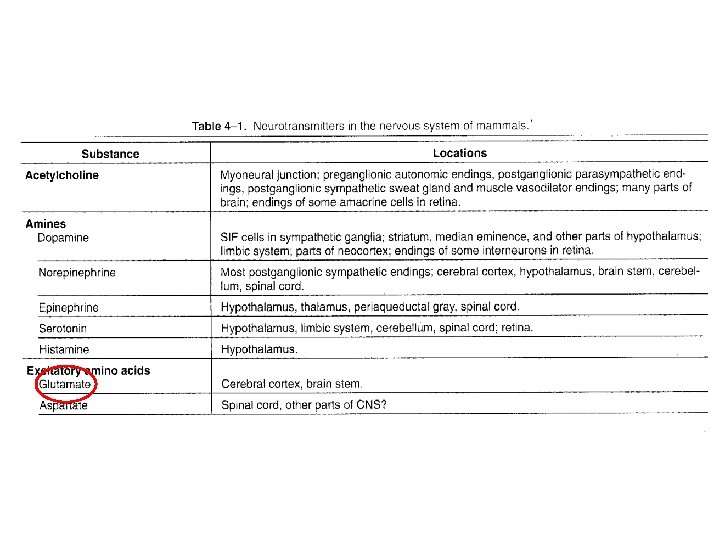
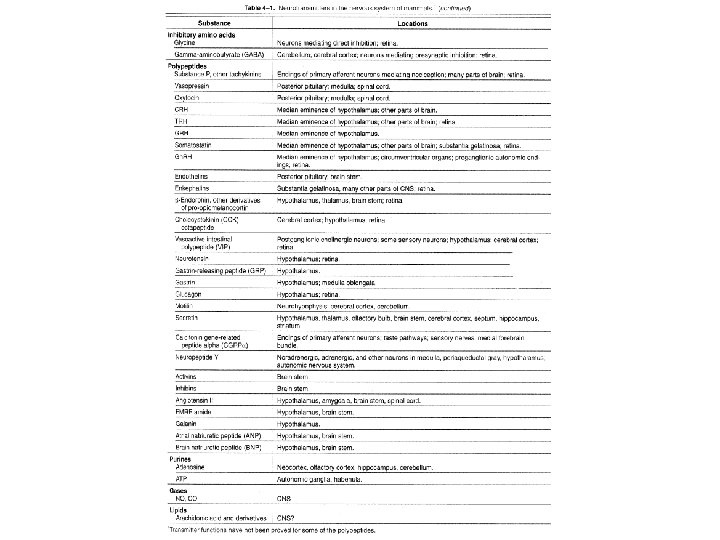
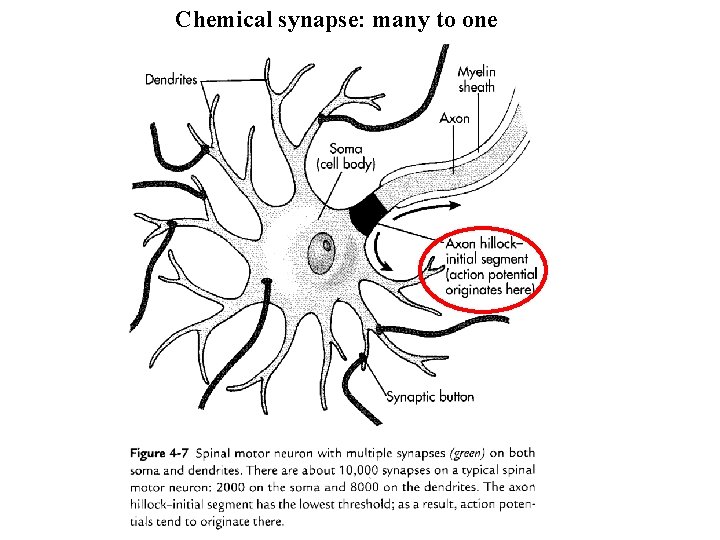
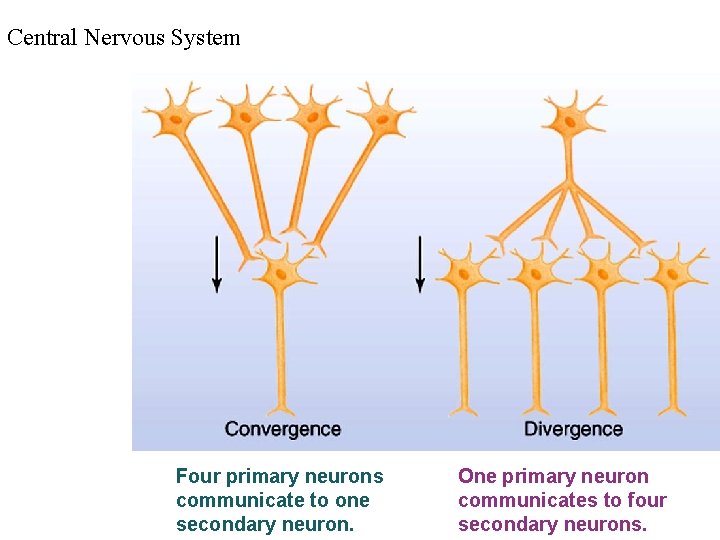
Chemical synapse: many to one
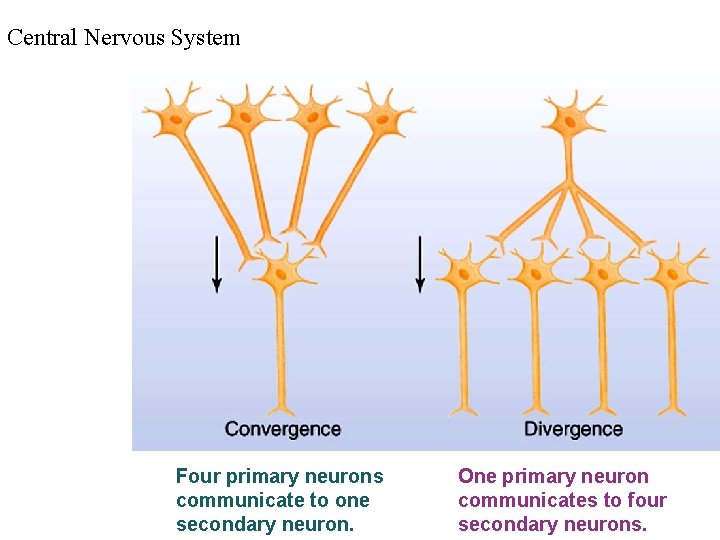
Central Nervous System Four primary neurons communicate to one secondary neuron. One primary neuron communicates to four secondary neurons.
- Slides: 53