
Membrane functions a review Diffusion rate J final
Membrane functions a review
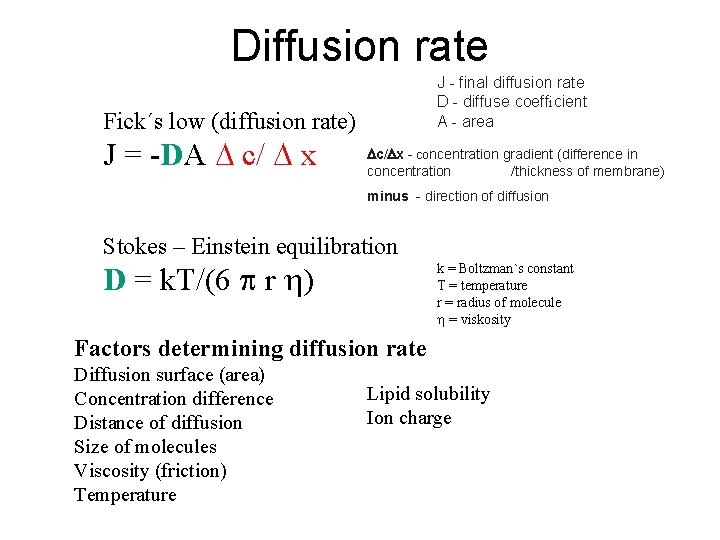
Diffusion rate J - final diffusion rate D - diffuse coefficient A - area Fick´s low (diffusion rate) J = -DA c/ x c/ x - concentration gradient (difference in concentration /thickness of membrane) minus - direction of diffusion Stokes – Einstein equilibration D = k. T/(6 r ) k = Boltzman`s constant T = temperature r = radius of molecule = viskosity Factors determining diffusion rate Diffusion surface (area) Concentration difference Distance of diffusion Size of molecules Viscosity (friction) Temperature Lipid solubility Ion charge
? ? ? In which organs the diffusion is a limiting factor (examples)

Examples of diffusion edema x fibrosis η change A O 2 CO 2 x CO 2
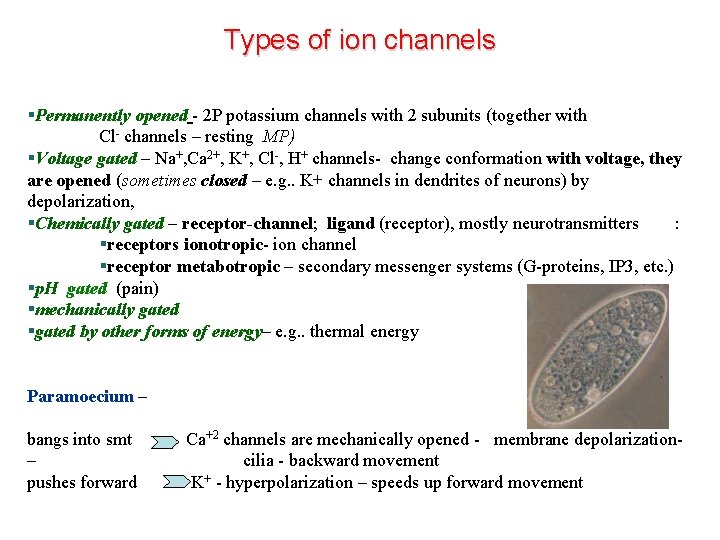
Types of ion channels §Permanently opened - 2 P potassium channels with 2 subunits (together with Cl- channels – resting MP) §Voltage gated – Na+, Ca 2+, K+, Cl-, H+ channels- change conformation with voltage, they are opened (sometimes closed – e. g. . K+ channels in dendrites of neurons) by depolarization, §Chemically gated – receptor-channel; ligand (receptor), mostly neurotransmitters : §receptors ionotropic- ion channel §receptor metabotropic – secondary messenger systems (G-proteins, IP 3, etc. ) §p. H gated (pain) §mechanically gated §gated by other forms of energy– e. g. . thermal energy Paramoecium – bangs into smt – pushes forward Ca+2 channels are mechanically opened - membrane depolarizationcilia - backward movement K+ - hyperpolarization – speeds up forward movement
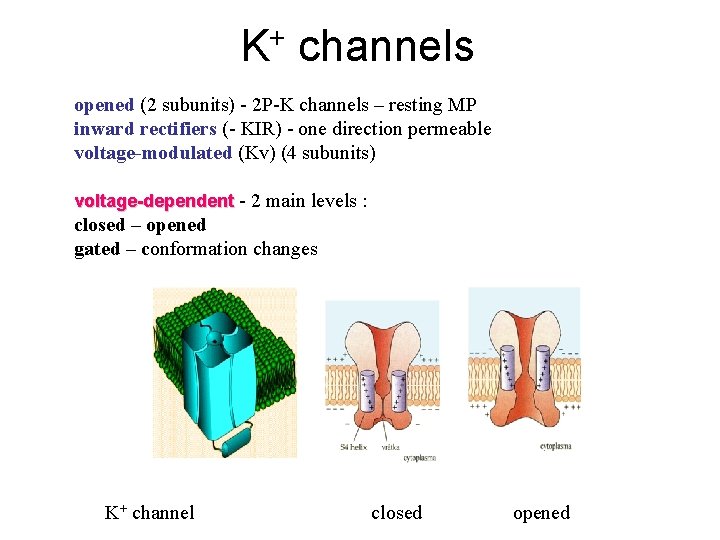
K+ channels opened (2 subunits) - 2 P-K channels – resting MP inward rectifiers (- KIR) - one direction permeable voltage-modulated (Kv) (4 subunits) voltage-dependent - 2 main levels : closed – opened gated – conformation changes K+ channel closed opened
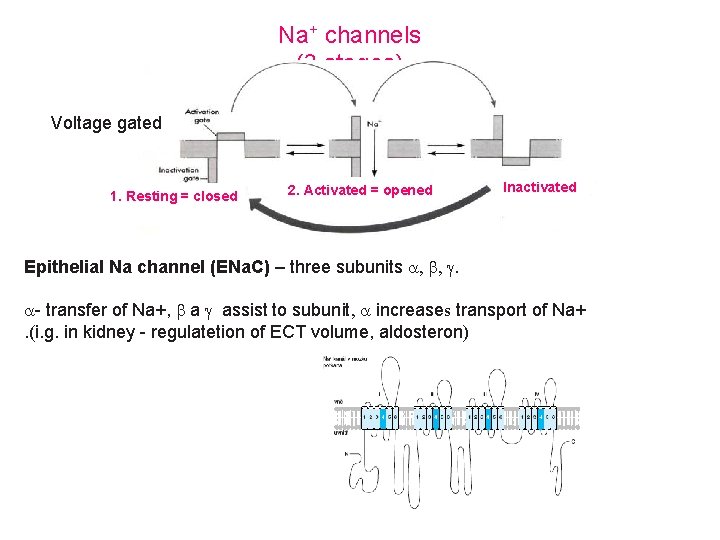
Na+ channels (3 stages) Voltage gated 1. Resting = closed 2. Activated = opened Inactivated Epithelial Na channel (ENa. C) – three subunits a, b, g. a- transfer of Na+, b a g assist to subunit, a increases transport of Na+. (i. g. in kidney - regulatetion of ECT volume, aldosteron)
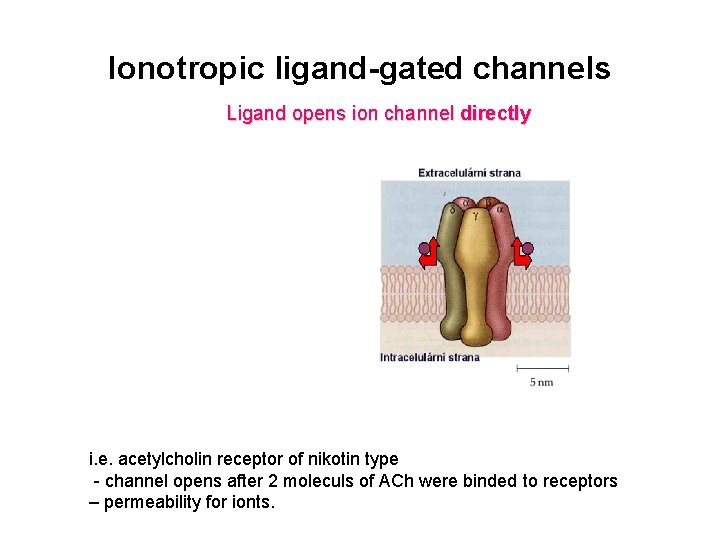
Ionotropic ligand-gated channels Ligand opens ion channel directly i. e. acetylcholin receptor of nikotin type - channel opens after 2 moleculs of ACh were binded to receptors – permeability for ionts.
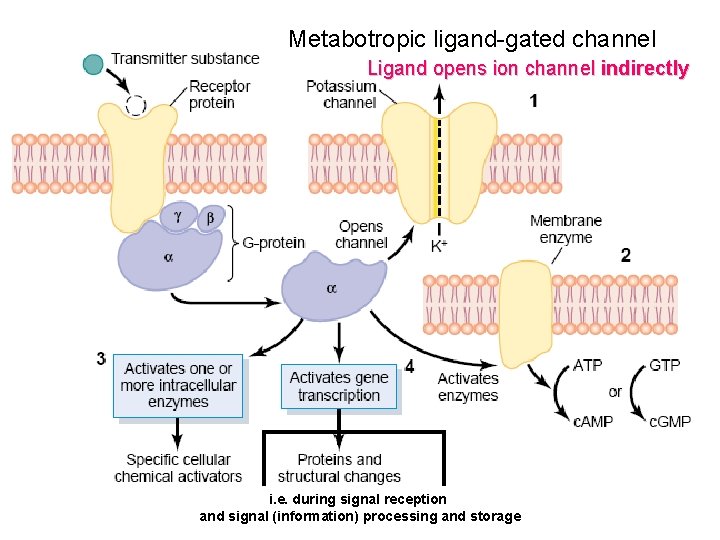
Metabotropic ligand-gated channel Ligand kanály opens ion channel indirectly Metabotropní i. e. during signal reception and signal (information) processing and storage
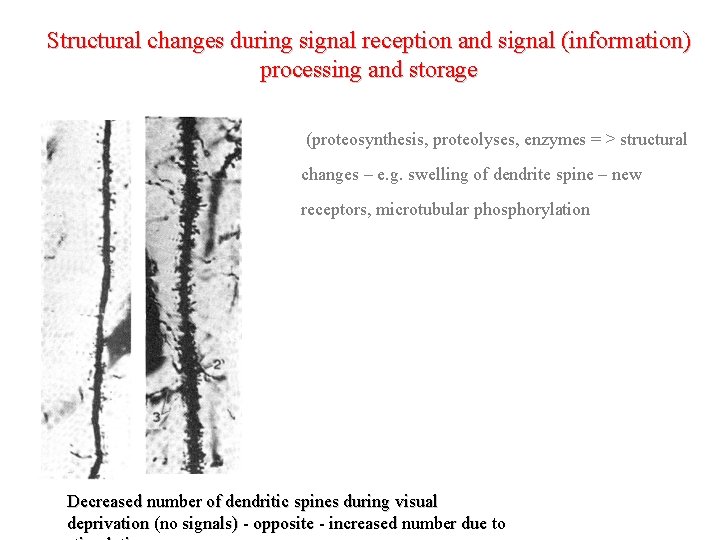
Structural changes during signal reception and signal (information) processing and storage (proteosynthesis, proteolyses, enzymes = > structural changes – e. g. swelling of dendrite spine – new receptors, microtubular phosphorylation Decreased number of dendritic spines during visual deprivation (no signals) - opposite - increased number due to
![Passive - active transport MEMBRANE TRANSPORT PASSIVE or ACTIVE [xy]1 > [xy]2 [xy]1 [xy]2](http://slidetodoc.com/presentation_image_h2/e7bffee170b02f4ec56b4b6f79544a6a/image-11.jpg "Passive - active transport MEMBRANE TRANSPORT PASSIVE or ACTIVE [xy]1 > [xy]2 [xy]1 [xy]2")
Passive - active transport MEMBRANE TRANSPORT PASSIVE or ACTIVE [xy]1 > [xy]2 [xy]1 [xy]2 ANY MOVEMENT NEEDS AN ENERGY!! facilitated diffusion primary PASSIVE TRANSPORT MOVEMENTS OF MOLECULES “DOWNHILL” from a region of high concentration occurs SPONTANEOUSLY SIMPLE DIFFUSION FACILITATED DIFFUSION ACTIVE TRANSPORT A SOLUTE MOVES AGAINST ITS CONCENTRATION gradient = the “UPHILL” flow by coupling it to some other process that provides energy secondary
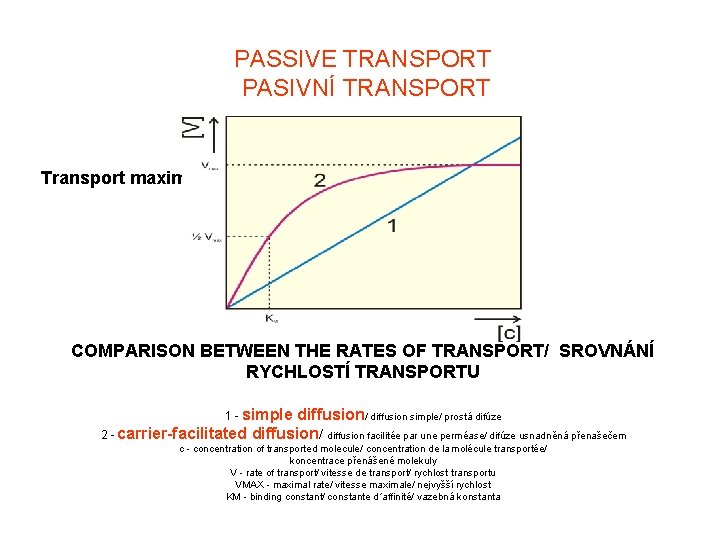
PASSIVE TRANSPORT PASIVNÍ TRANSPORT Transport maximum COMPARISON BETWEEN THE RATES OF TRANSPORT/ SROVNÁNÍ RYCHLOSTÍ TRANSPORTU 1 - simple diffusion/ diffusion simple/ prostá difúze 2 - carrier-facilitated diffusion/ diffusion facilitée par une perméase/ difúze usnadněná přenašečem c - concentration of transported molecule/ concentration de la molécule transportée/ koncentrace přenášené molekuly V - rate of transport/ vitesse de transport/ rychlost transportu VMAX - maximal rate/ vitesse maximale/ nejvyšší rychlost KM - binding constant/ constante d´affinité/ vazebná konstanta
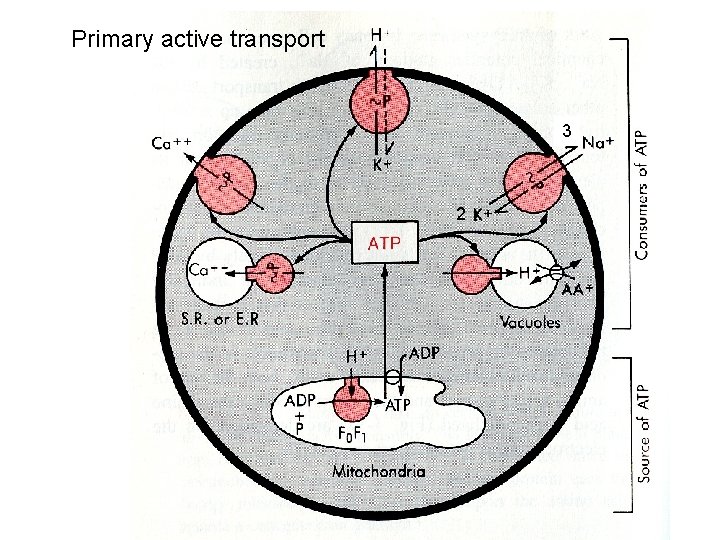
Primary active transport 3 2
Proton pump Difference in electrochemic potencials of protons H+ (secondary of other ions) is, besides ATP, universal source of energy which cells use
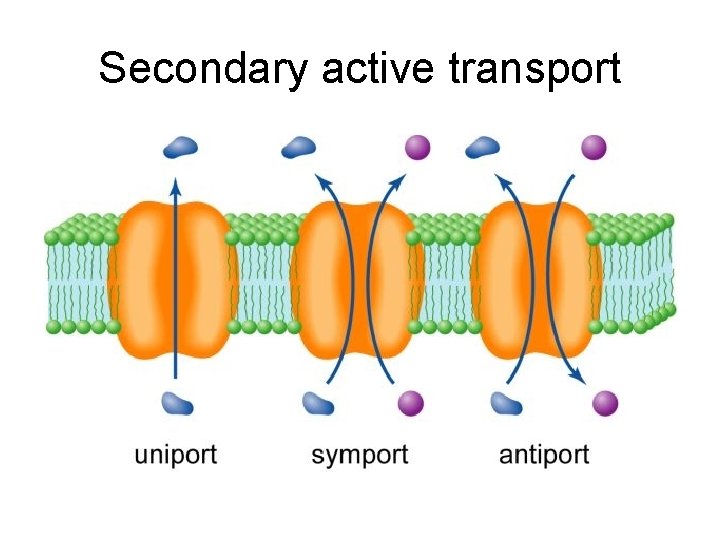
Secondary active transport
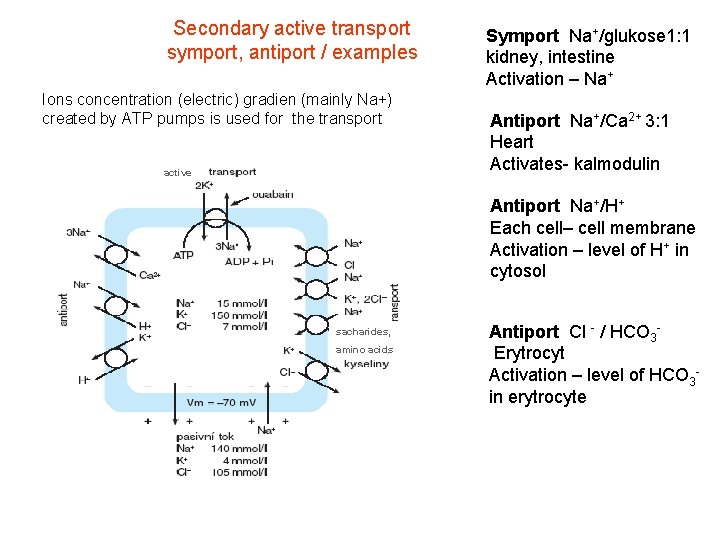
Secondary active transport symport, antiport / examples Ions concentration (electric) gradien (mainly Na+) created by ATP pumps is used for the transport active Symport Na+/glukose 1: 1 kidney, intestine Activation – Na+ Antiport Na+/Ca 2+ 3: 1 Heart Activates- kalmodulin Antiport Na+/H+ Each cell– cell membrane Activation – level of H+ in cytosol sacharides, amino acids Antiport Cl - / HCO 3 Erytrocyt Activation – level of HCO 3 in erytrocyte
Transport through cell membrane (examples)
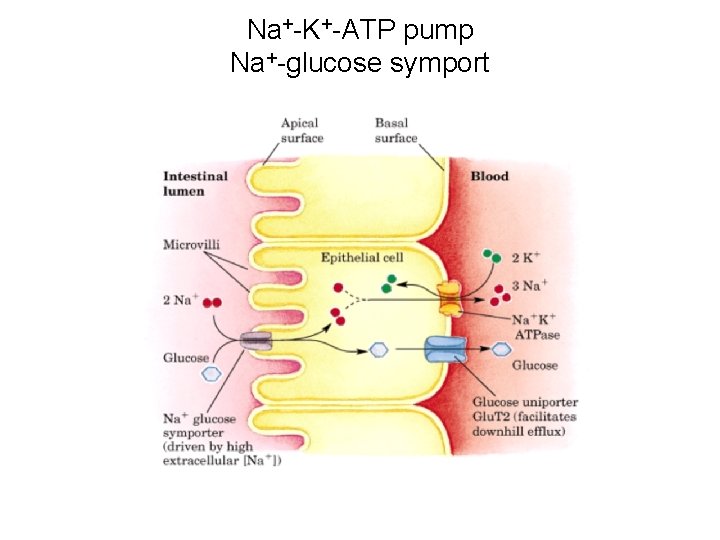
Na+-K+-ATP pump Na+-glucose symport
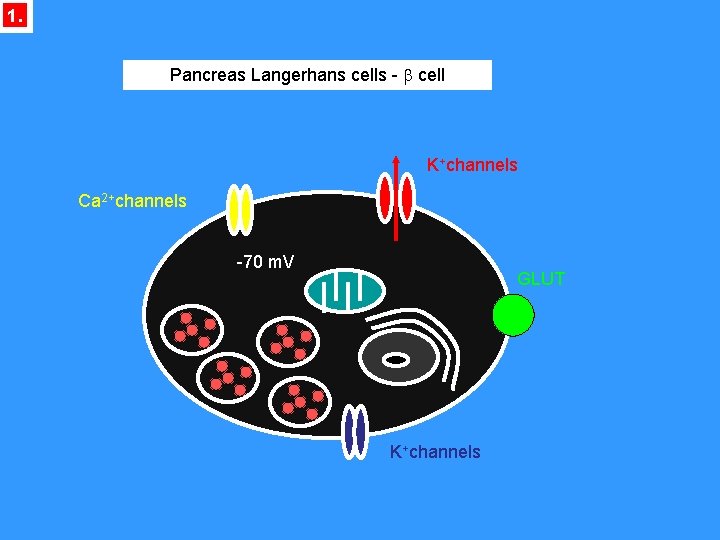
1. Pancreas Langerhans cells - b cell K+channels Ca 2+channels -70 m. V GLUT K+channels
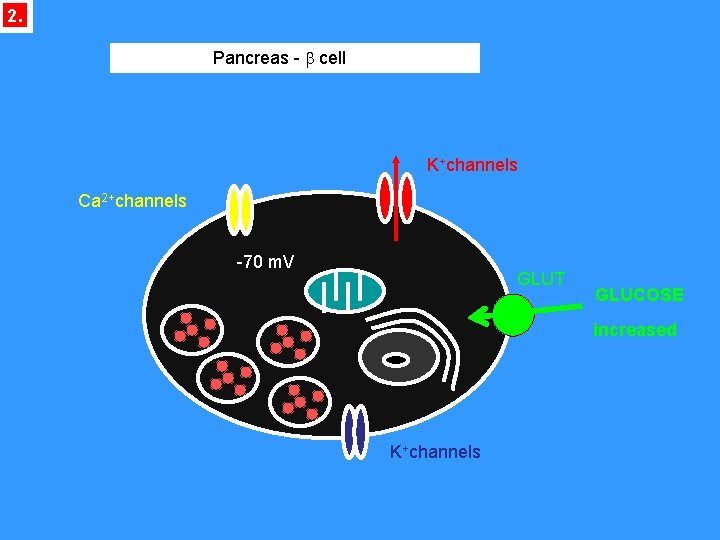
2. Pancreas - b cell K+channels Ca 2+channels -70 m. V GLUT GLUCOSE increased K+channels
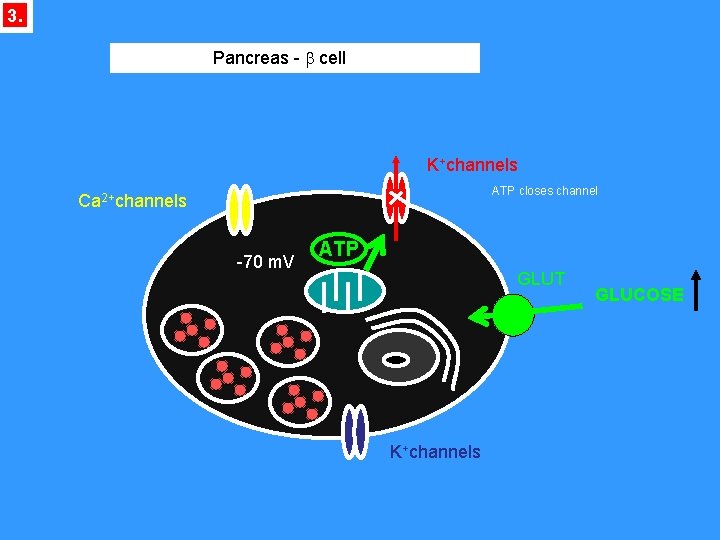
3. Pancreas - b cell K+channels ATP closes channel Ca 2+channels -70 m. V ATP GLUT K+channels GLUCOSE
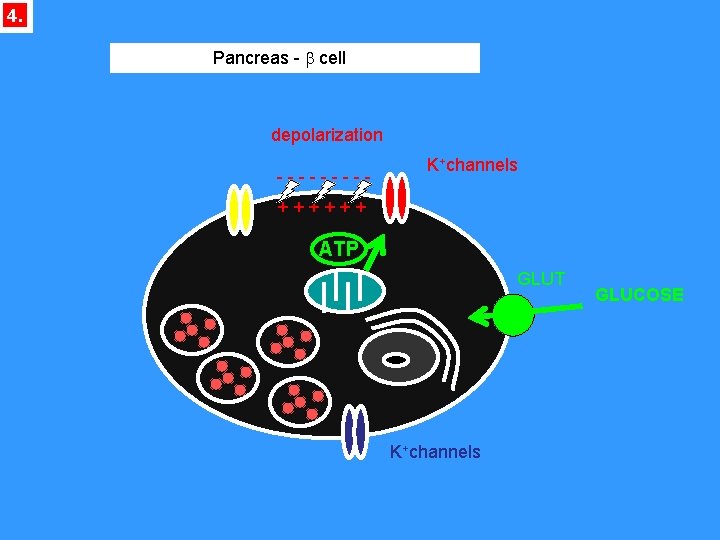
4. Pancreas - b cell depolarization ----- K+channels ++++++ ATP GLUT K+channels GLUCOSE
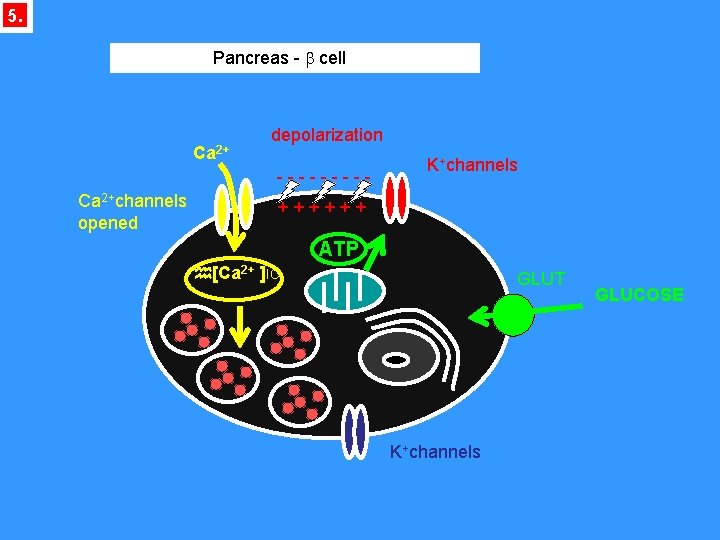
5. Pancreas - b cell Ca 2+ depolarization ----- Ca 2+channels opened K+channels ++++++ ATP [Ca 2+ ]IC GLUT K+channels GLUCOSE
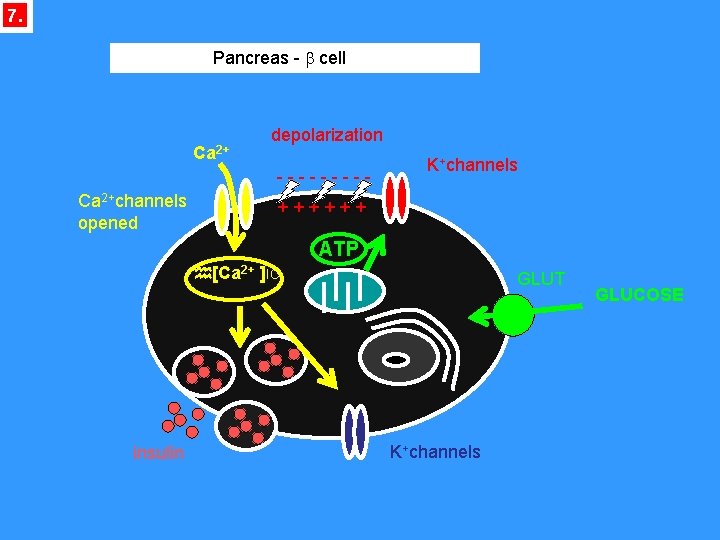
7. Pancreas - b cell Ca 2+ depolarization ----- Ca 2+channels opened K+channels ++++++ ATP [Ca 2+ ]IC insulin GLUT K+channels GLUCOSE
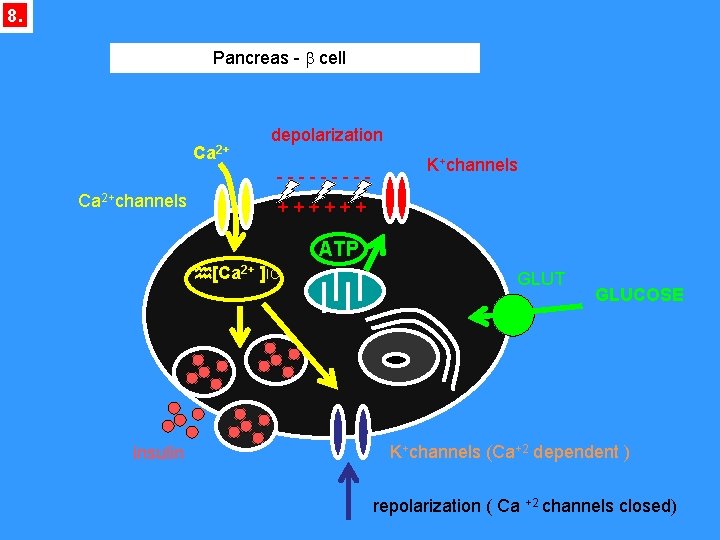
8. Pancreas - b cell Ca 2+ depolarization ----- Ca 2+channels K+channels ++++++ ATP [Ca 2+ ]IC insulin GLUT GLUCOSE K+channels (Ca+2 dependent ) repolarization ( Ca +2 channels closed)
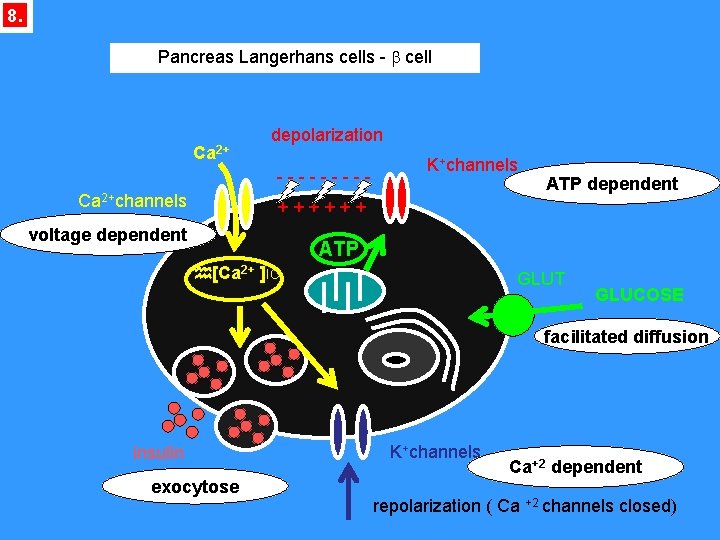
8. Pancreas Langerhans cells - b cell Ca 2+ depolarization ----- Ca 2+channels K+channels ATP dependent ++++++ voltage dependent ATP [Ca 2+ ]IC GLUT GLUCOSE facilitated diffusion insulin exocytose K+channels Ca+2 dependent repolarization ( Ca +2 channels closed)
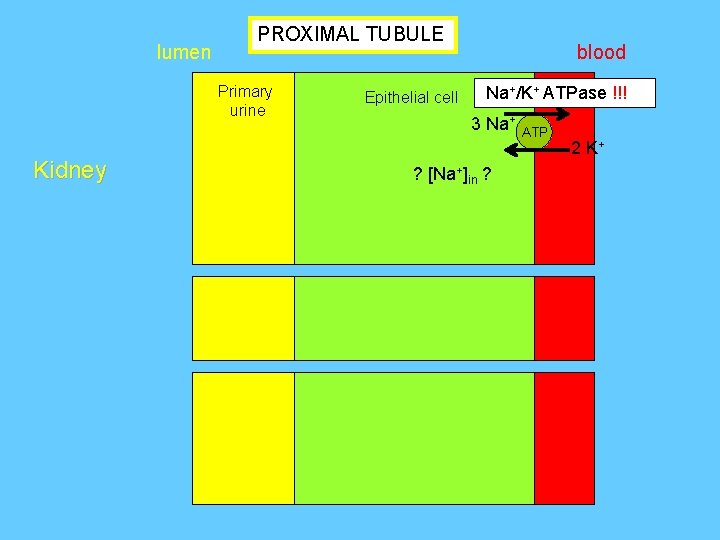
lumen PROXIMAL TUBULE blood Proximal tubule Na /K ATPase !!! Primary urine Kidney + Epithelial cell + 3 Na+ ATP ? [Na+]in ? 2 K+
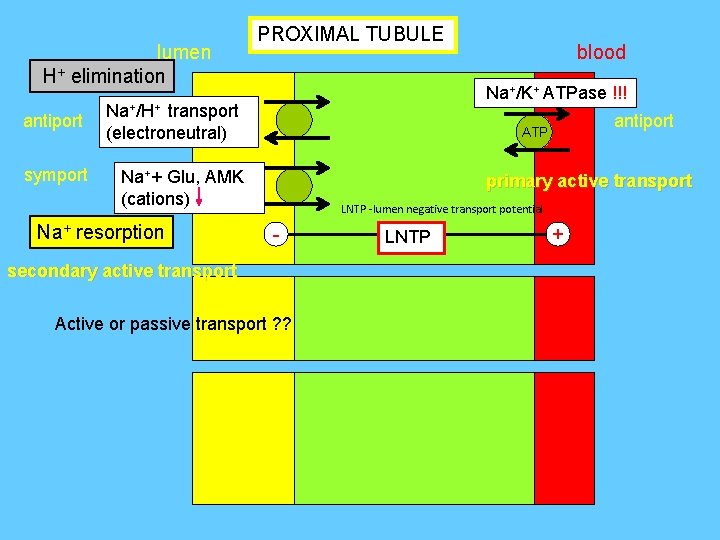
lumen H+ elimination antiport symport PROXIMAL TUBULE Na+/K+ ATPase !!! Na+/H+ transport (electroneutral) antiport ATP Na++ Glu, AMK (cations) Na+ resorption blood primary active transport LNTP -lumen negative transport potential - secondary active transport Active or passive transport ? ? LNTP +
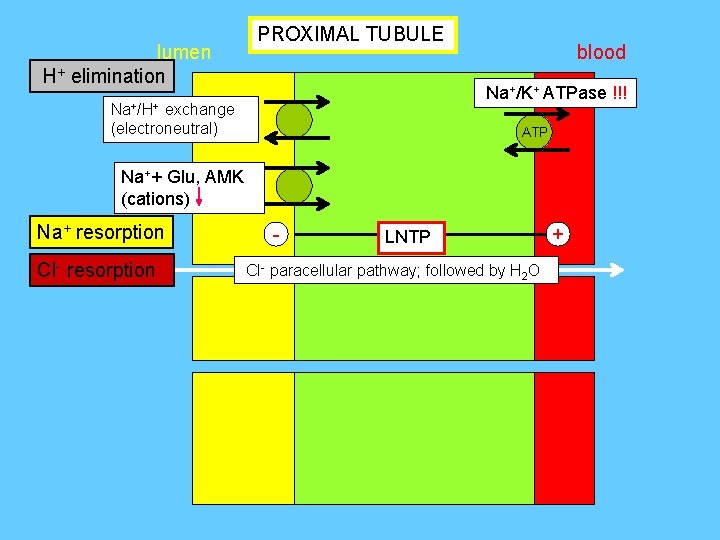
lumen H+ elimination PROXIMAL TUBULE blood Na+/K+ ATPase !!! Na+/H+ exchange (electroneutral) ATP Na++ Glu, AMK (cations) Na+ resorption Cl- resorption - LNTP Cl- paracellular pathway; followed by H 2 O +
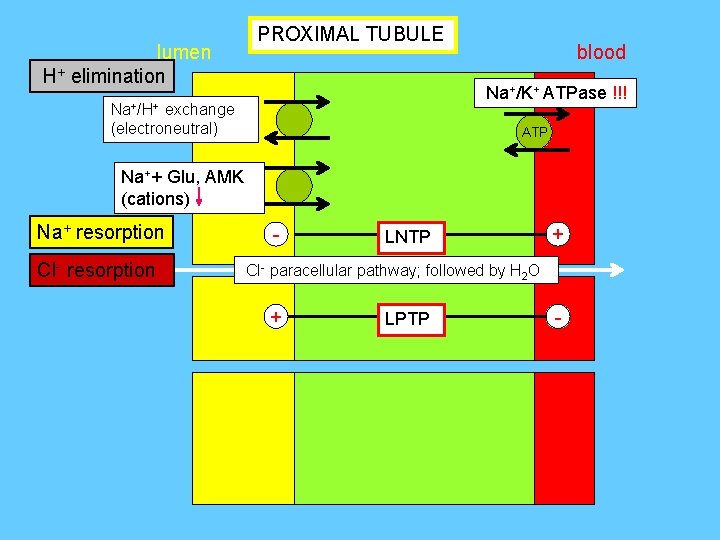
lumen H+ elimination PROXIMAL TUBULE blood Na+/K+ ATPase !!! Na+/H+ exchange (electroneutral) ATP Na++ Glu, AMK (cations) Na+ resorption Cl- resorption - LNTP + Cl- paracellular pathway; followed by H 2 O + LPTP -
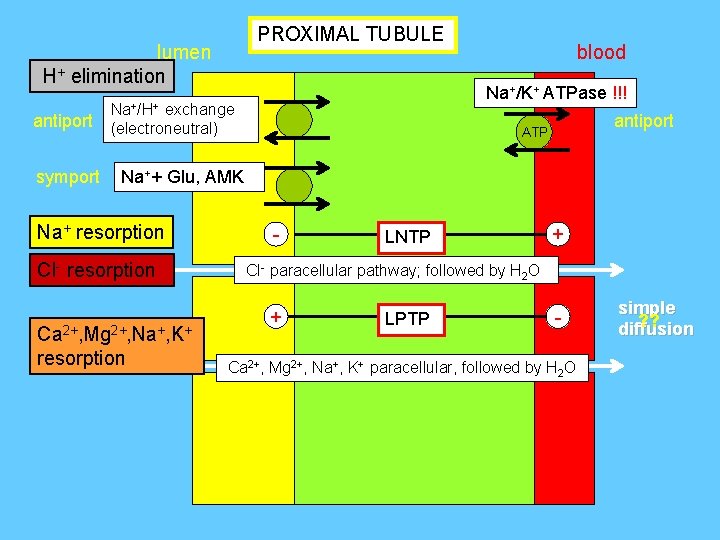
PROXIMAL TUBULE lumen H+ elimination antiport symport blood Na+/K+ ATPase !!! Na+/H+ exchange (electroneutral) antiport ATP Na++ Glu, AMK Na+ resorption Cl- resorption Ca 2+, Mg 2+, Na+, K+ resorption - LNTP + Cl- paracellular pathway; followed by H 2 O + LPTP - Ca 2+, Mg 2+, Na+, K+ paracellular, followed by H 2 O simple ? ? diffusion
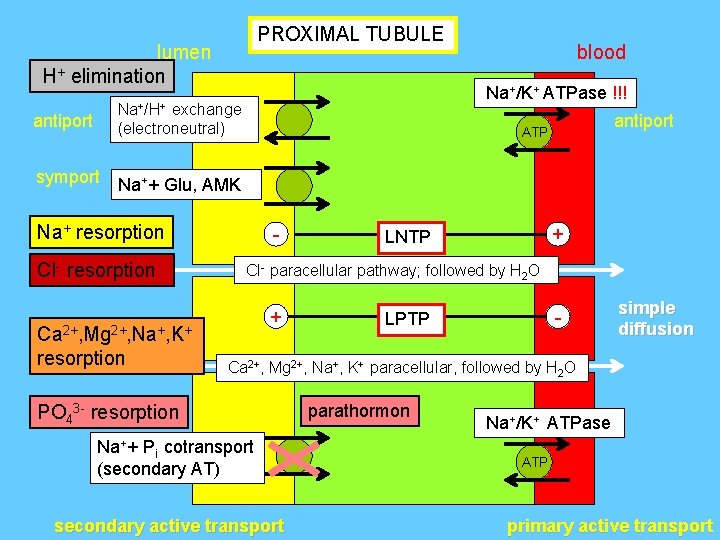
PROXIMAL TUBULE lumen H+ elimination antiport Na+/H+ exchange (electroneutral) symport Na++ Glu, AMK Na+/K+ ATPase !!! Ca 2+, Mg 2+, Na+, K+ resorption antiport ATP Na+ resorption Cl- resorption blood - + LNTP Cl- paracellular pathway; followed by H 2 O + - LPTP simple diffusion Ca 2+, Mg 2+, Na+, K+ paracellular, followed by H 2 O PO 43 - resorption Na++ Pi cotransport (secondary AT) secondary active transport parathormon Na+/K+ ATPase ATP primary active transport
Excitable membrane is ability of a membrane to respond to variations in electric and chemical gradients, to generate and conduct action potentials (AP) ? ? Resting M-ne potential - definition? ?
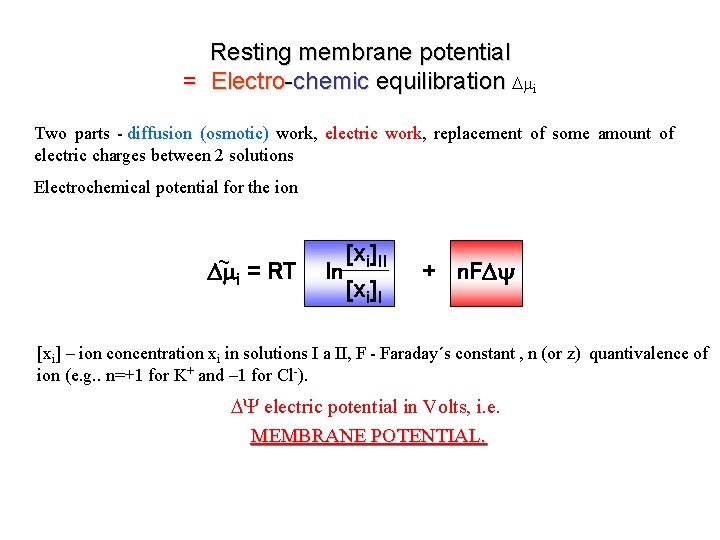
Resting membrane potential = Electro-chemic equilibration mi Two parts - diffusion (osmotic) work, electric work, replacement of some amount of electric charges between 2 solutions Electrochemical potential for the ion ~ mi = RT [xi]II ln [xi]I + n. F [xi] – ion concentration xi in solutions I a II, F - Faraday´s constant , n (or z) quantivalence of ion (e. g. . n=+1 for K+ and – 1 for Cl-). electric potential in Volts, i. e. MEMBRANE POTENTIAL.
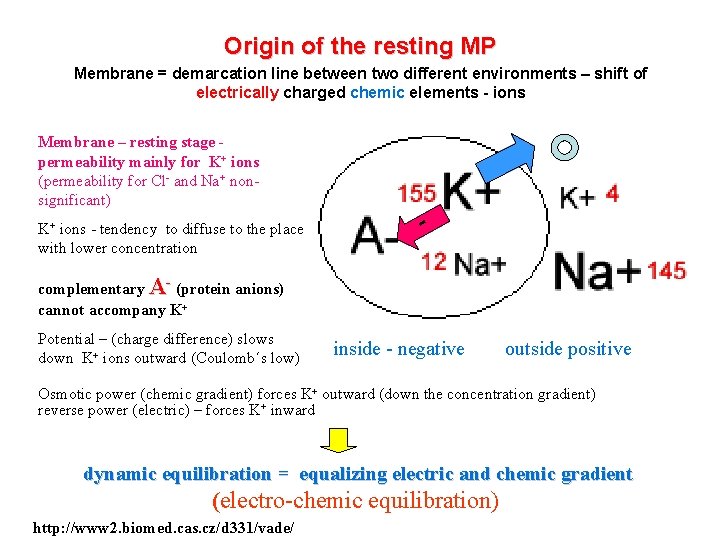
Origin of the resting MP Membrane = demarcation line between two different environments – shift of electrically charged chemic elements - ions Membrane – resting stage permeability mainly for K+ ions (permeability for Cl- and Na+ nonsignificant) - K+ ions - tendency to diffuse to the place with lower concentration complementary A- (protein anions) cannot accompany K+ Potential – (charge difference) slows down K+ ions outward (Coulomb´s low) inside - negative outside positive Osmotic power (chemic gradient) forces K+ outward (down the concentration gradient) reverse power (electric) – forces K+ inward dynamic equilibration = equalizing electric and chemic gradient (electro-chemic equilibration) http: //www 2. biomed. cas. cz/d 331/vade/
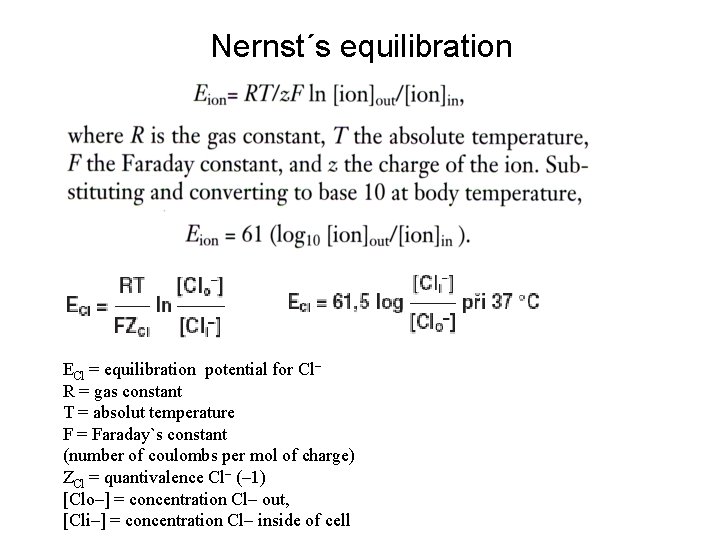
Nernst´s equilibration ECl = equilibration potential for Cl– R = gas constant T = absolut temperature F = Faraday`s constant (number of coulombs per mol of charge) ZCl = quantivalence Cl– (– 1) [Clo–] = concentration Cl– out, [Cli–] = concentration Cl– inside of cell
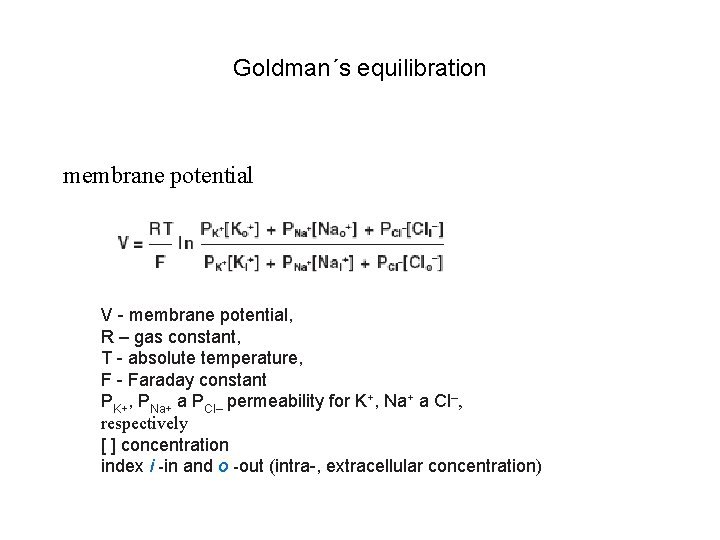
Goldman´s equilibration membrane potential V - membrane potential, R – gas constant, T - absolute temperature, F - Faraday constant PK+, PNa+ a PCl– permeability for K+, Na+ a Cl–, respectively [ ] concentration index i -in and o -out (intra-, extracellular concentration)
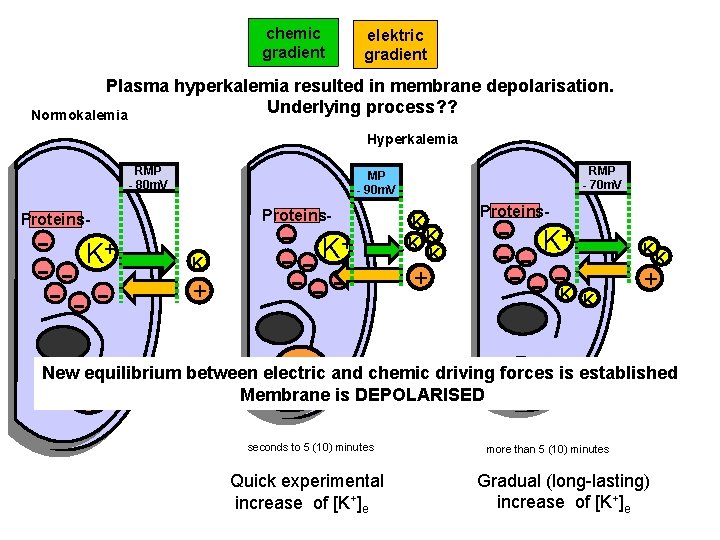
Hyperkalemia chemic gradient elektric gradient Plasma hyperkalemia resulted in membrane depolarisation. Underlying process? ? Normokalemia Hyperkalemia RMP - 80 m. V Proteins- - K+ ---- RMP - 70 m. V MP - 90 m. V K+ + - K+ ---- K+ + K+K + Proteins- - K+ -- - -K + K+ + K K+ + New equilibrium between electric - is established - and chemic driving forces Membrane is DEPOLARISED seconds to 5 (10) minutes Quick experimental increase of [K+]e more than 5 (10) minutes Gradual (long-lasting) increase of [K+]e
Electric impulses in the NS 1. LOCAL POTENTIALS OR CURRENTS - graded, spreading with decrement generator or receptor potentials - sensory terminals – transduction of energy i. e. mechanic or thermal to electric (graded according to the number of activated receptor cells and intensity of activation); foto-, chemo-, mechano-transduction (post)synaptic potential (current), graded according to - number of excreted quanta of neuromediators: inhibitory (hyperpolarization of postsynaptic membrane several ms - Cl channels) excitatory (depolarization – Na and/or Ca channels) - number of active receptors (postsynaptic membrane) 2. ACTION POTENTIALS (spikes)
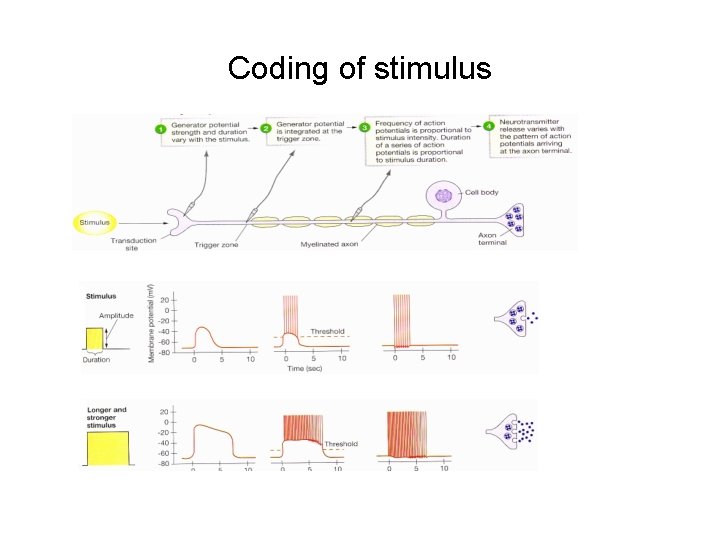
Coding of stimulus
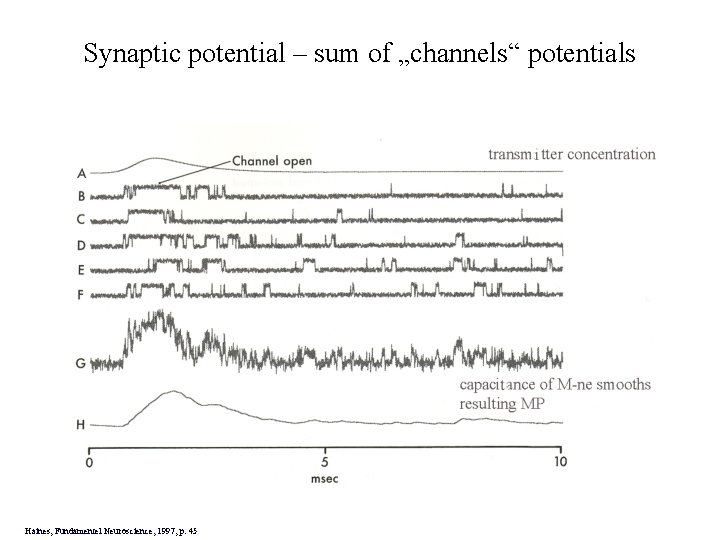
Synaptic potential – sum of „channels“ potentials Haines, Fundamentel Neuroscience, 1997, p. 45
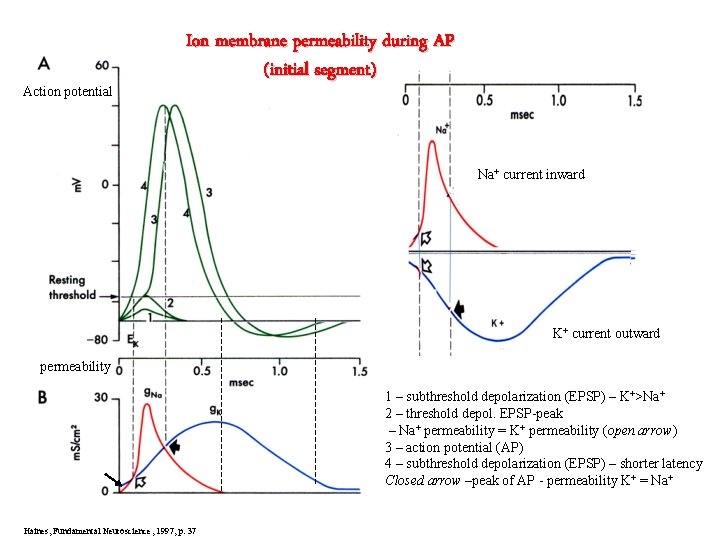
Action potential Ion membrane permeability during AP (initial segment) Na+ current inward K+ current outward permeability 1 – subthreshold depolarization (EPSP) – K+>Na+ 2 – threshold depol. EPSP-peak – Na+ permeability = K+ permeability (open arrow) 3 – action potential (AP) 4 – subthreshold depolarization (EPSP) – shorter latency Closed arrow –peak of AP - permeability K+ = Na+ Haines, Fundamental Neuroscience, 1997, p. 37
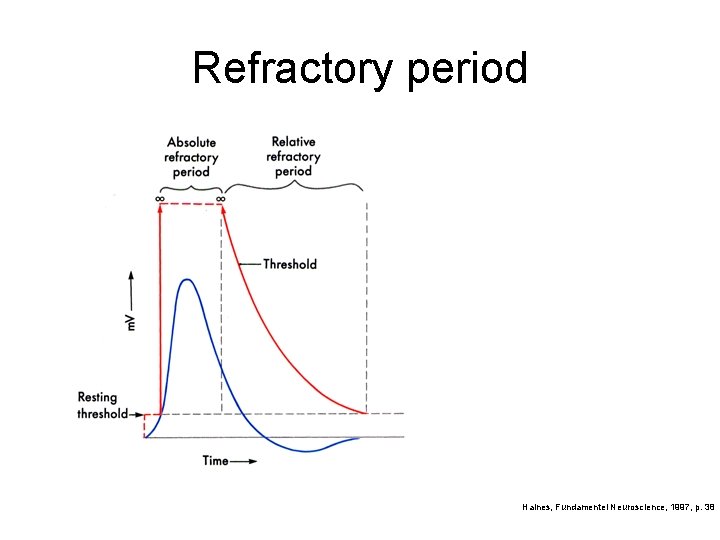
Refractory period Haines, Fundamentel Neuroscience, 1997, p. 38
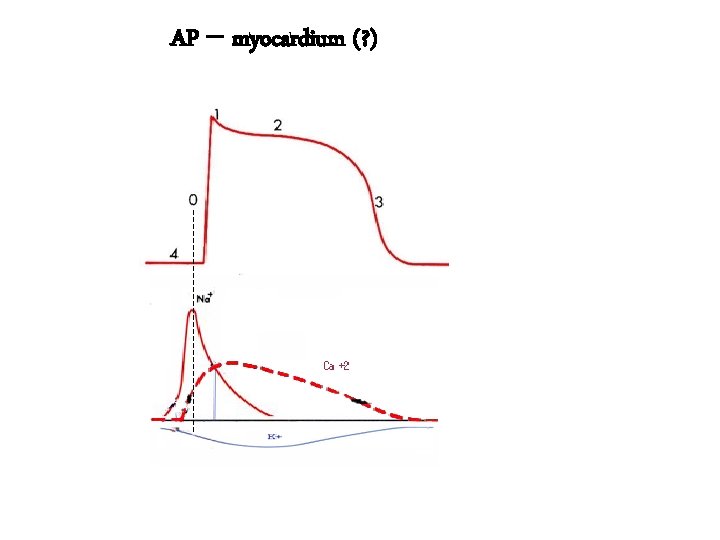
AP – myocardium (? )

- Slides: 45