
MELT SPINNING Dr Shama Sadaf Home Economics Department

- Slides: 10
MELT SPINNING Dr Shama Sadaf Home Economics Department Lahore College for Women University Lahore
SPINNING
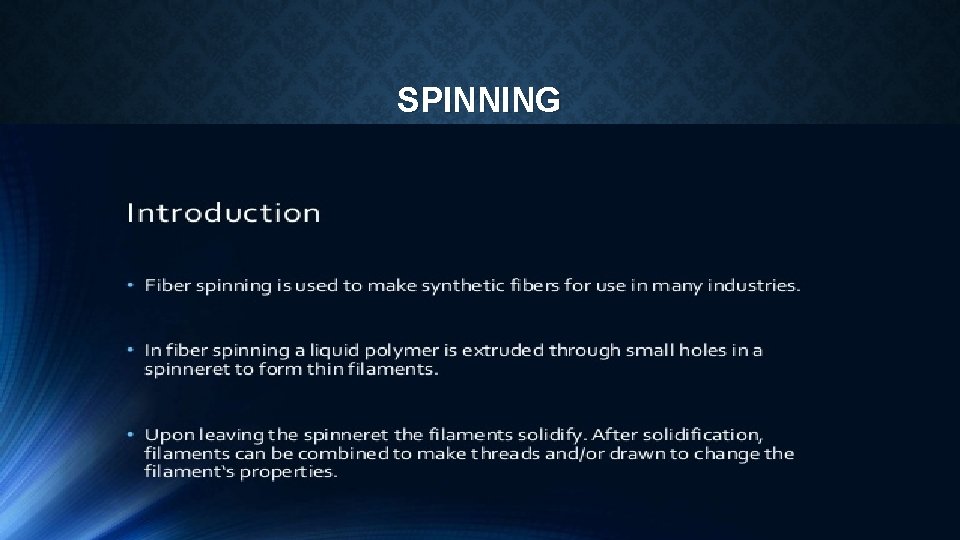
SPINNING • Spinning is manufacturing process for creating polymer fibers. It is a specialized form of extrusion that uses a spinneret to form multiple continuous filaments. There are three types of spinning • Wet • Dry • Melt spinning
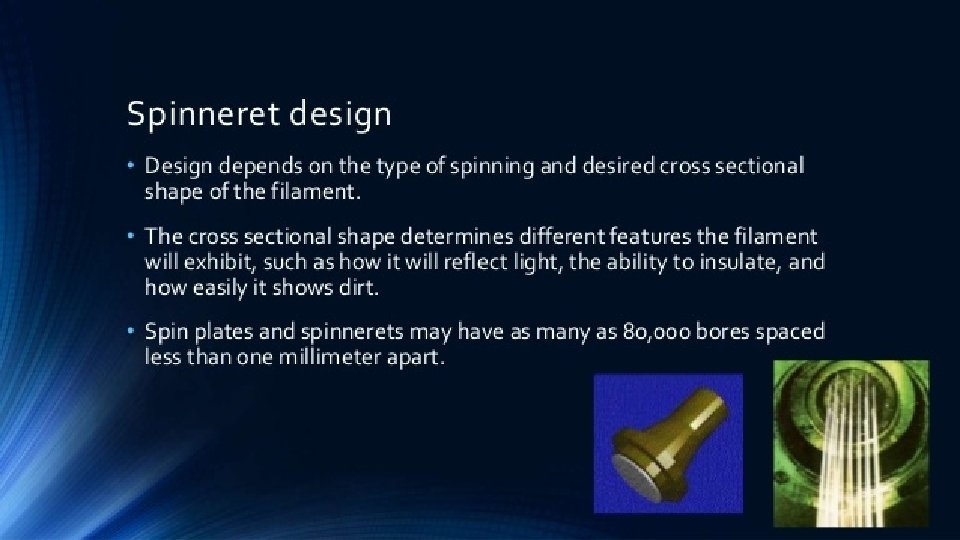
MELT SPINNING Melt spinning is the most convenient and economic method for polymer fiber manufacturing at industrial scales. • Melt spun fibers can be extruded from the spinneret in different cross-sectional shapes (round, trilobal, pentagonal, octagonal, and others). Trilobal-shaped fibers reflect more light and give an attractive sparkle to textiles. Pentagonal-shaped and hollow fibers, when used in carpet, show less soil and dirt. Octagonal-shaped fibers offer glitter-free effects. Hollow fibers trap air, creating insulation and provide loft characteristics equal to, or better than, down.
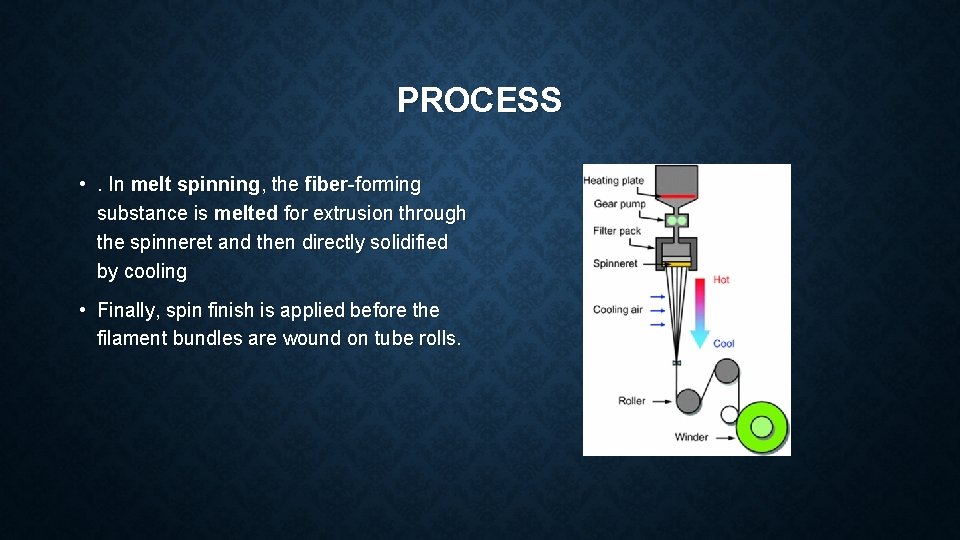
PROCESS • . In melt spinning, the fiber-forming substance is melted for extrusion through the spinneret and then directly solidified by cooling • Finally, spin finish is applied before the filament bundles are wound on tube rolls.
ADVANTAGES • Can be used for both staple and continuous filament • No environment pollution • High production speed (2500 -3000) ft/min • Low investment cost
DISADVANTAGES • Separate drawing step (unless spin draw) • Necessary high temperature may damage some polymers