
MEK 4600 Experimental methods in fluid mechanics Particle

- Slides: 18
MEK 4600 – Experimental methods in fluid mechanics Particle Image Velocimetry 2 and Particle Tracking Velocimetry (PIV and PTV) 28. 2. 2013 J. Kristian Sveen (IFE/FACE/Ui. O)
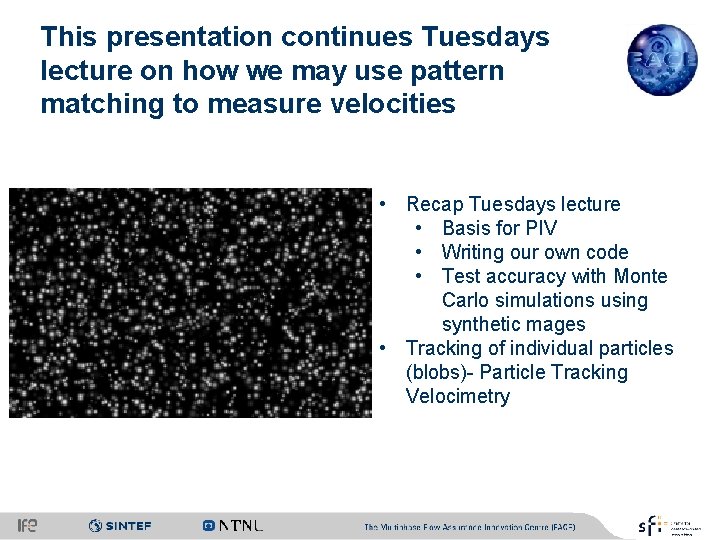
This presentation continues Tuesdays lecture on how we may use pattern matching to measure velocities • Recap Tuesdays lecture • Basis for PIV • Writing our own code • Test accuracy with Monte Carlo simulations using synthetic mages • Tracking of individual particles (blobs)- Particle Tracking Velocimetry
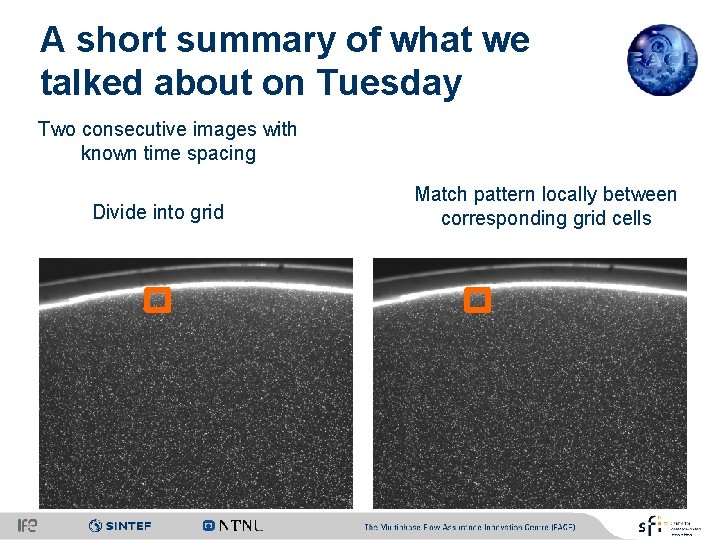
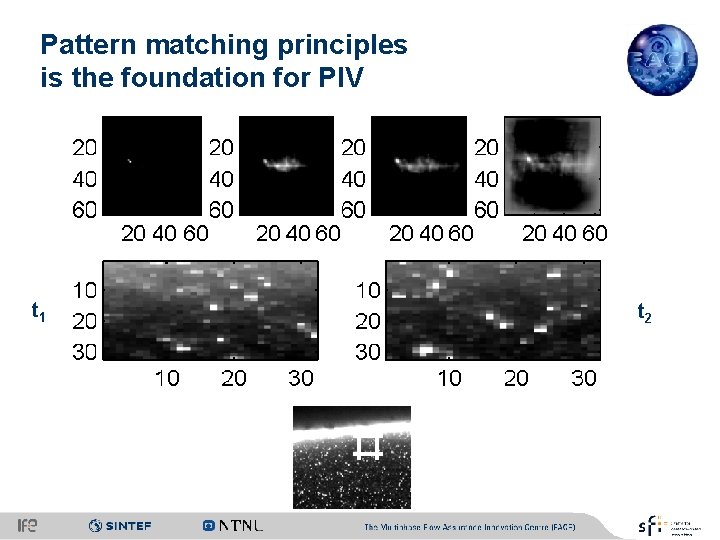
A short summary of what we talked about on Tuesday Two consecutive images with known time spacing Divide into grid Match pattern locally between corresponding grid cells
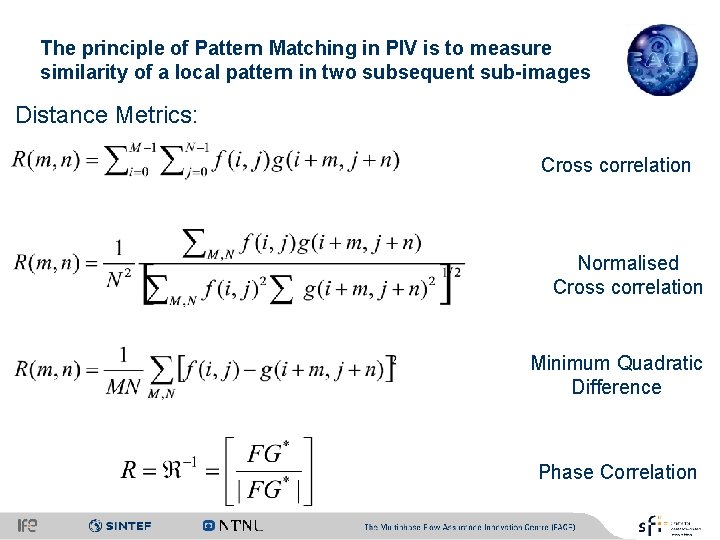
The principle of Pattern Matching in PIV is to measure similarity of a local pattern in two subsequent sub-images Distance Metrics: Cross correlation Normalised Cross correlation Minimum Quadratic Difference Phase Correlation
Pattern matching principles is the foundation for PIV t 1 t 2
PIV in the laboratory
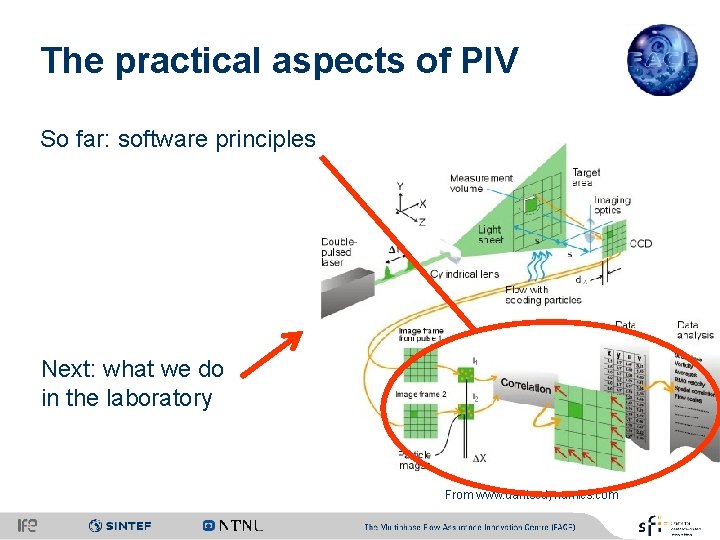
The practical aspects of PIV So far: software principles Next: what we do in the laboratory From www. dantecdynamics. com
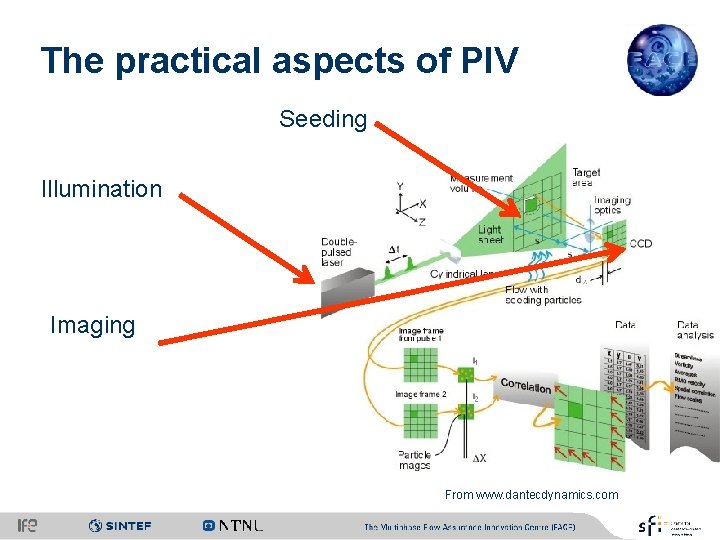
The practical aspects of PIV Seeding Illumination Imaging From www. dantecdynamics. com
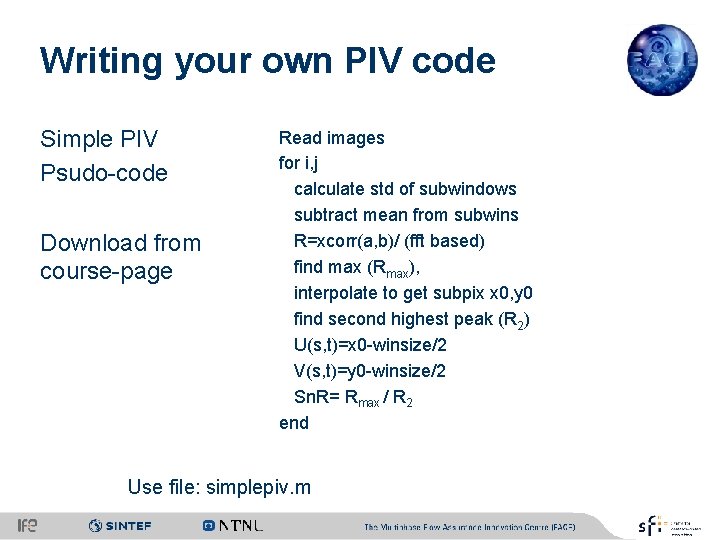
Writing your own PIV code Simple PIV Psudo-code Download from course-page Read images for i, j calculate std of subwindows subtract mean from subwins R=xcorr(a, b)/ (fft based) find max (Rmax), interpolate to get subpix x 0, y 0 find second highest peak (R 2) U(s, t)=x 0 -winsize/2 V(s, t)=y 0 -winsize/2 Sn. R= Rmax / R 2 end Use file: simplepiv. m
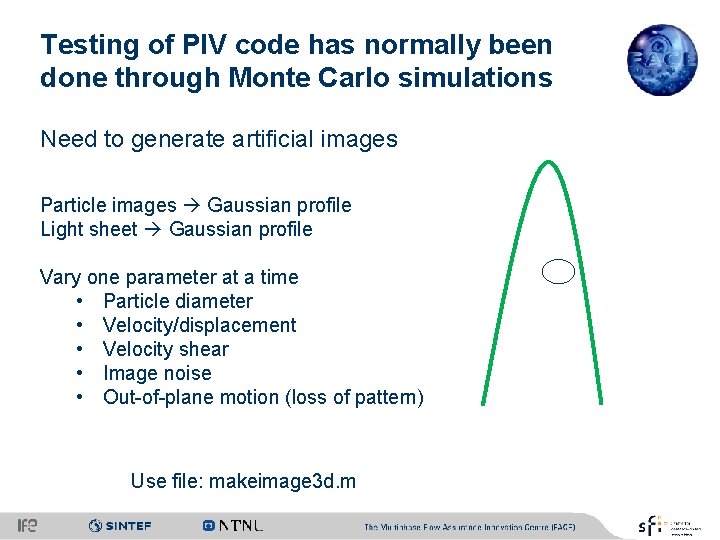
Testing of PIV code has normally been done through Monte Carlo simulations Need to generate artificial images Particle images Gaussian profile Light sheet Gaussian profile Vary one parameter at a time • Particle diameter • Velocity/displacement • Velocity shear • Image noise • Out-of-plane motion (loss of pattern) Use file: makeimage 3 d. m
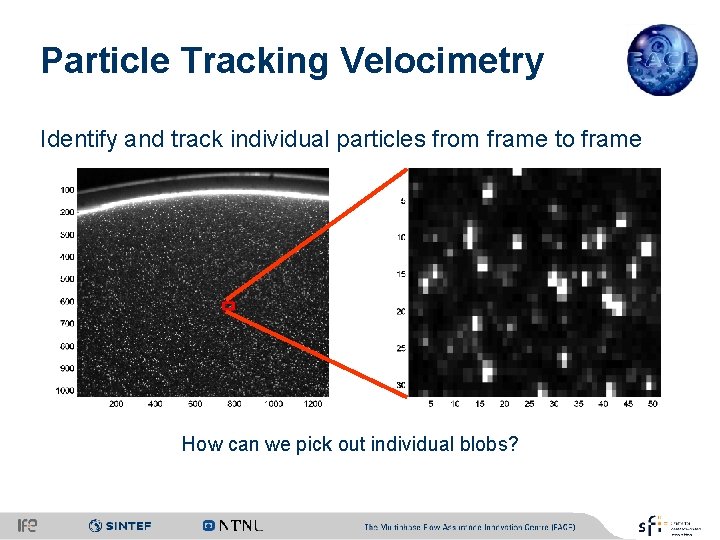
Particle Tracking Velocimetry Identify and track individual particles from frame to frame How can we pick out individual blobs?
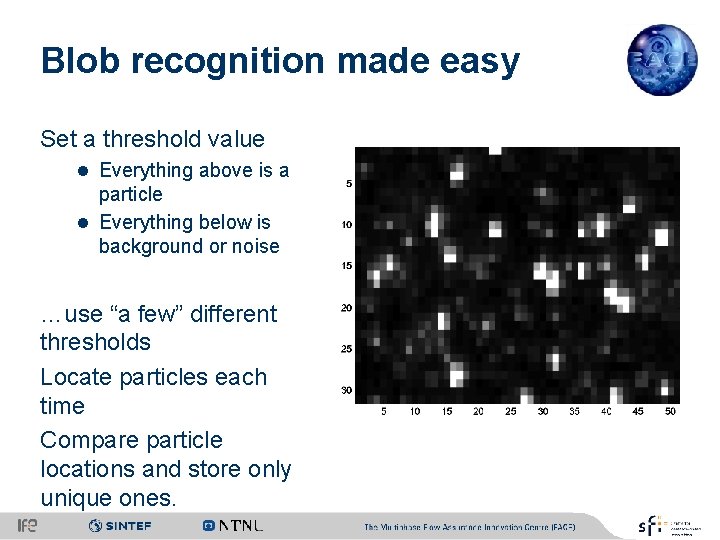
Blob recognition made easy Set a threshold value l Everything above is a particle l Everything below is background or noise …use “a few” different thresholds Locate particles each time Compare particle locations and store only unique ones.
Matlabs Image Processing toolbox has most of the tools you need to find blobs Functions: l regionprops. m – measures a set of properties for connected pixels (1’s) in a binary image (=thresholded) l im 2 bw. m – produce binary image based on given threshold l bwlabel. m – label each connected blob (set of connected 1’s) in an image …the rest is “just” about matching particles between frames
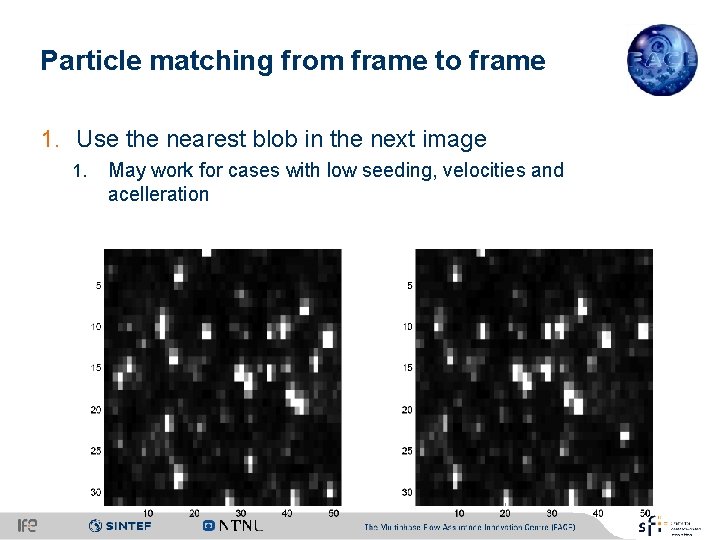
Particle matching from frame to frame 1. Use the nearest blob in the next image 1. May work for cases with low seeding, velocities and acelleration
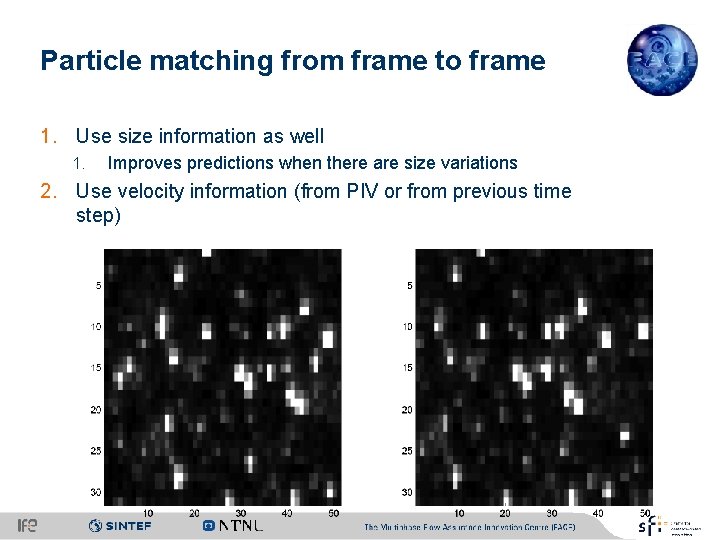
Particle matching from frame to frame 1. Use size information as well 1. Improves predictions when there are size variations 2. Use velocity information (from PIV or from previous time step)
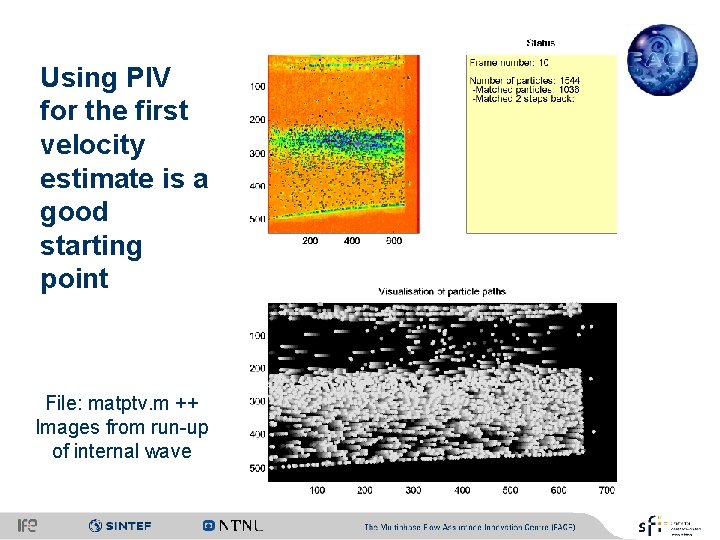
Using PIV for the first velocity estimate is a good starting point File: matptv. m ++ Images from run-up of internal wave
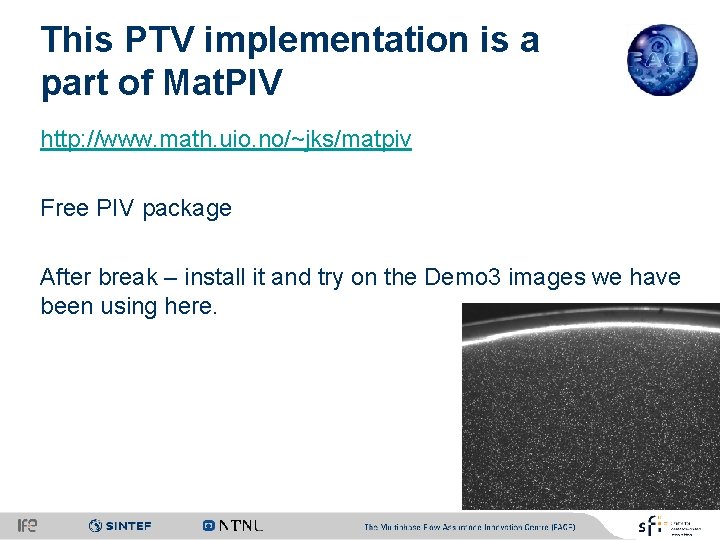
This PTV implementation is a part of Mat. PIV http: //www. math. uio. no/~jks/matpiv Free PIV package After break – install it and try on the Demo 3 images we have been using here.