
Meiosis What is an n Haploid n Number
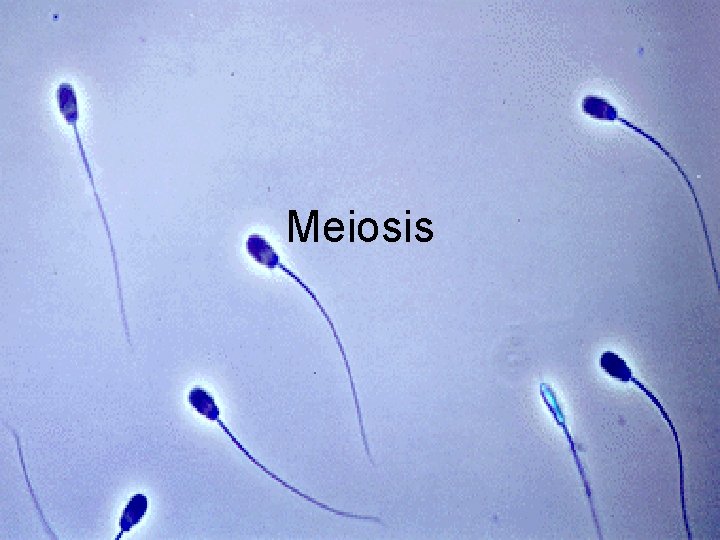
Meiosis
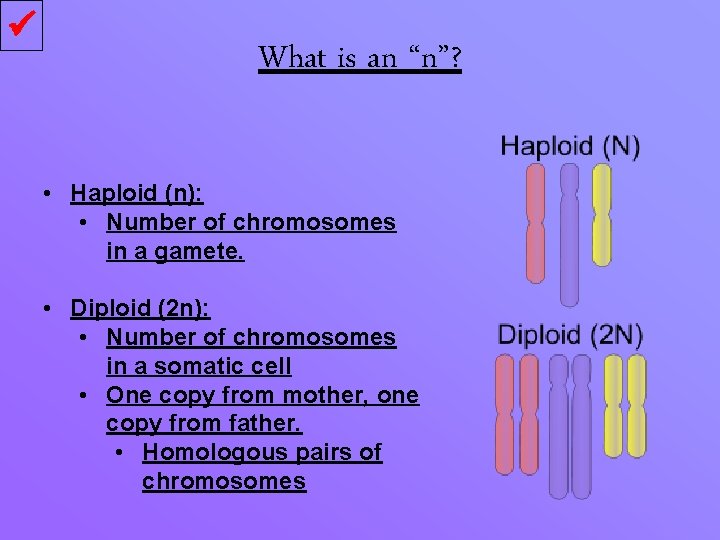
What is an “n”? • Haploid (n): • Number of chromosomes in a gamete. • Diploid (2 n): • Number of chromosomes in a somatic cell • One copy from mother, one copy from father. • Homologous pairs of chromosomes
Two Types of Diploid Cells In Sexual Organisms Somatic • Body Cells • Diploid • Divide by mitosis to make exact copies • In every tissue except reproductive tissue GERM • “Germinating” (reproductive) cells • Diploid • (Most) Divide by meiosis to make gametes (sex cells) (sperm & ova) • In testes & ovaries
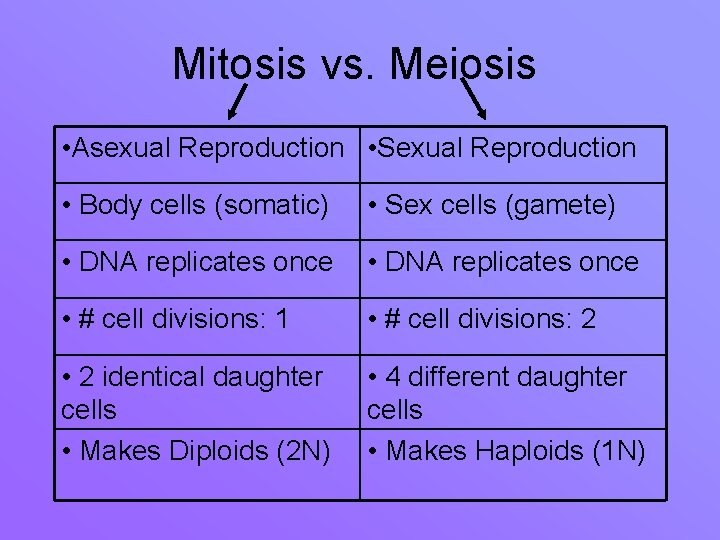
Mitosis vs. Meiosis • Asexual Reproduction • Sexual Reproduction • Body cells (somatic) • Sex cells (gamete) • DNA replicates once • # cell divisions: 1 • # cell divisions: 2 • 2 identical daughter cells • Makes Diploids (2 N) • 4 different daughter cells • Makes Haploids (1 N)
Meiosis is part of SEXUAL Reproduction (requiring 2 parents)
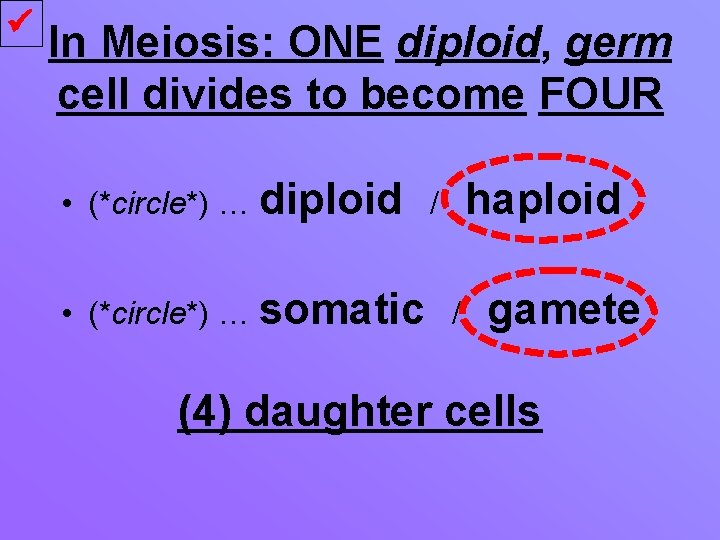
In Meiosis: ONE diploid, germ cell divides to become FOUR • (*circle*) … diploid / • (*circle*) … somatic / haploid gamete (4) daughter cells
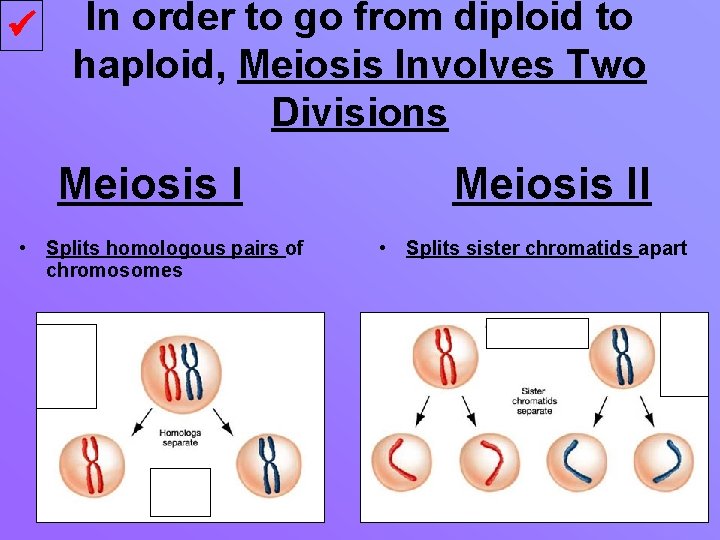
In order to go from diploid to haploid, Meiosis Involves Two Divisions Meiosis I • Splits homologous pairs of chromosomes Meiosis II • Splits sister chromatids apart
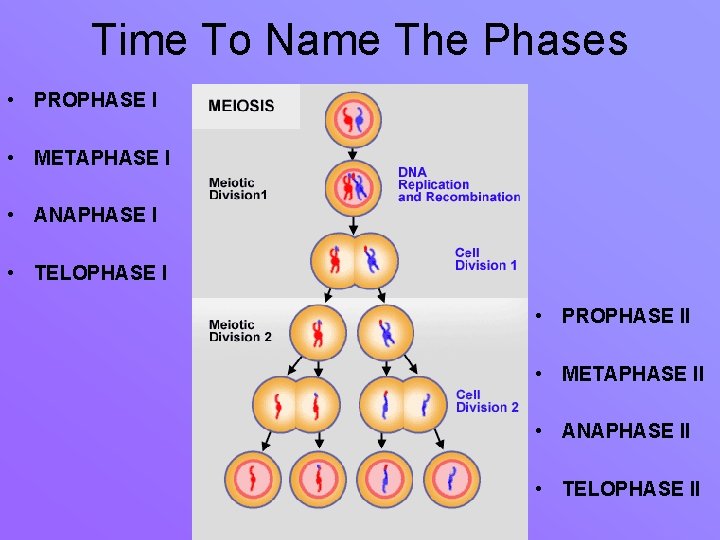
Time To Name The Phases • PROPHASE I • METAPHASE I • ANAPHASE I • TELOPHASE I • PROPHASE II • METAPHASE II • ANAPHASE II • TELOPHASE II
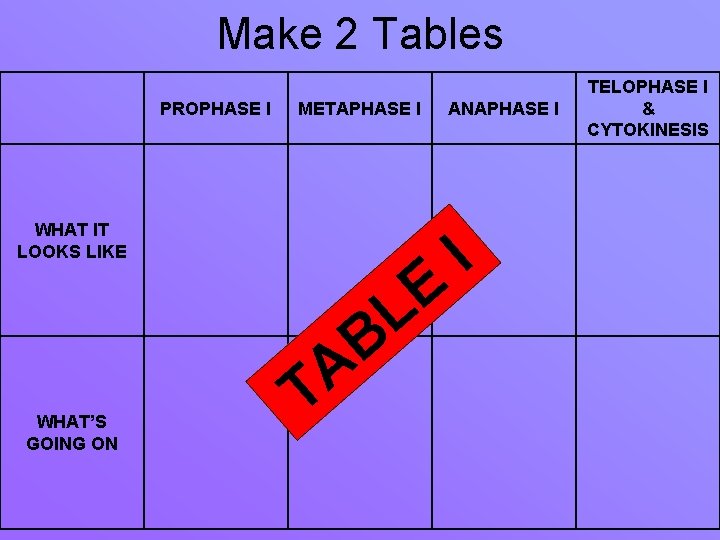
Make 2 Tables PROPHASE I METAPHASE I WHAT IT LOOKS LIKE WHAT’S GOING ON ANAPHASE I B A T E L I TELOPHASE I & CYTOKINESIS
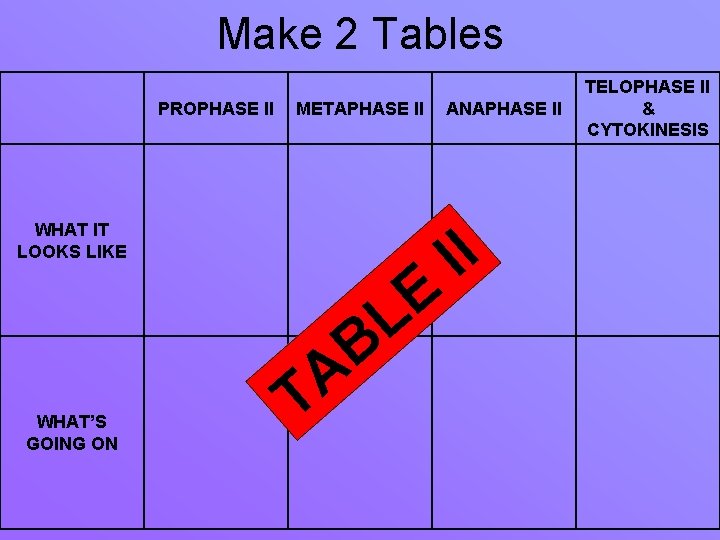
Make 2 Tables PROPHASE II METAPHASE II WHAT IT LOOKS LIKE E L B A WHAT’S GOING ON T ANAPHASE II II TELOPHASE II & CYTOKINESIS
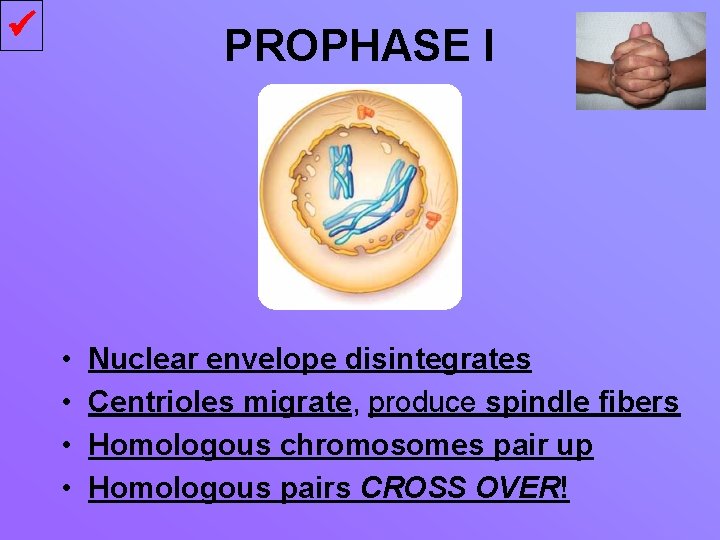
PROPHASE I • • Nuclear envelope disintegrates Centrioles migrate, produce spindle fibers Homologous chromosomes pair up Homologous pairs CROSS OVER!
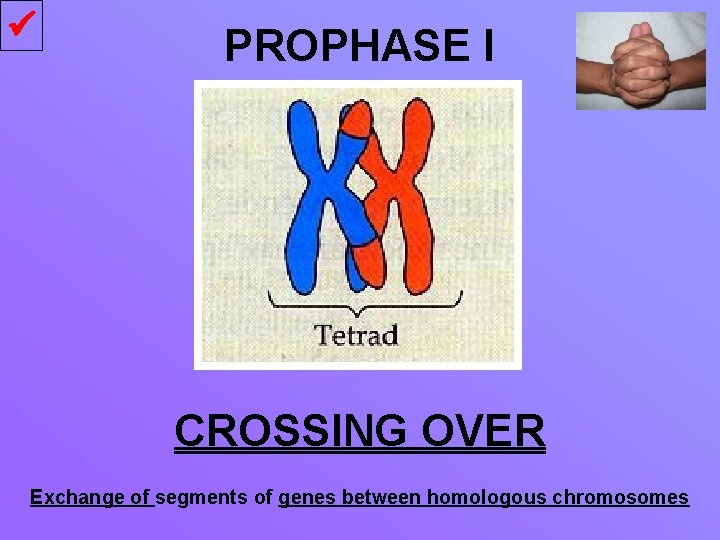
PROPHASE I CROSSING OVER Exchange of segments of genes between homologous chromosomes
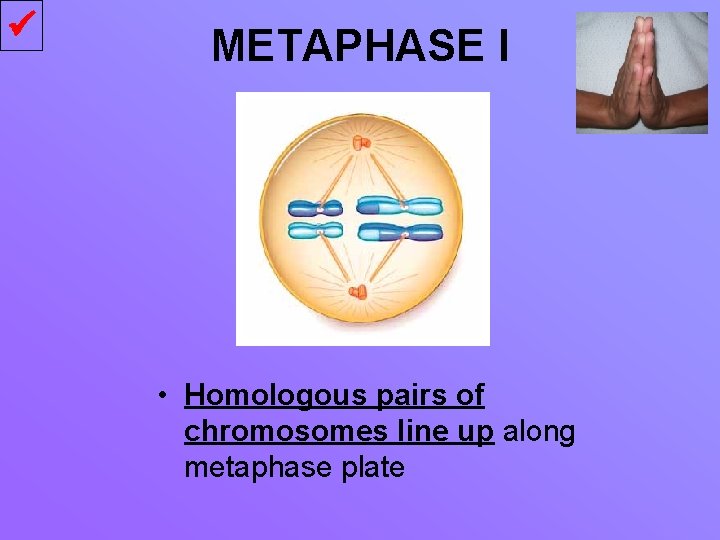
METAPHASE I • Homologous pairs of chromosomes line up along metaphase plate
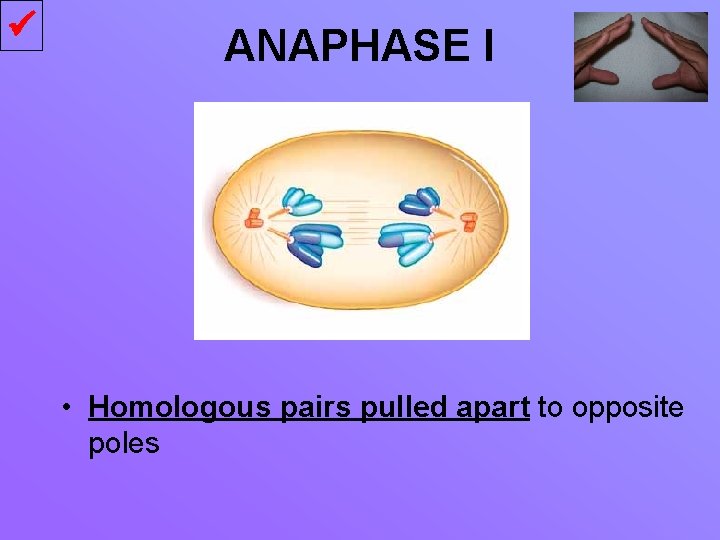
ANAPHASE I • Homologous pairs pulled apart to opposite poles
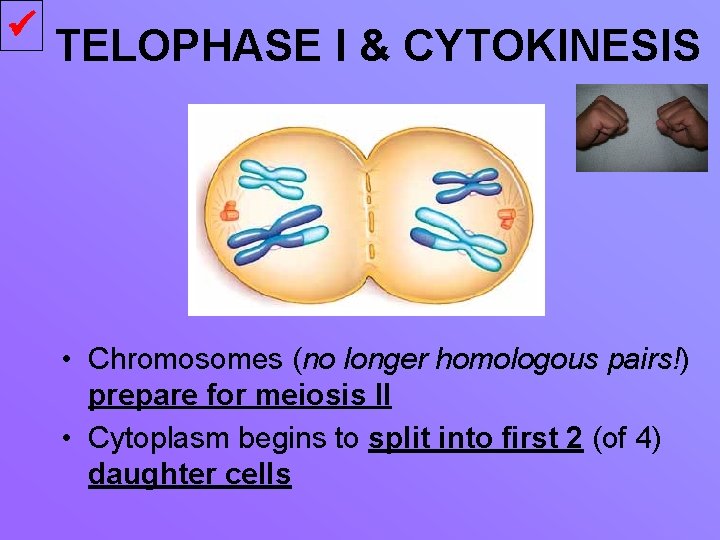
TELOPHASE I & CYTOKINESIS • Chromosomes (no longer homologous pairs!) prepare for meiosis II • Cytoplasm begins to split into first 2 (of 4) daughter cells
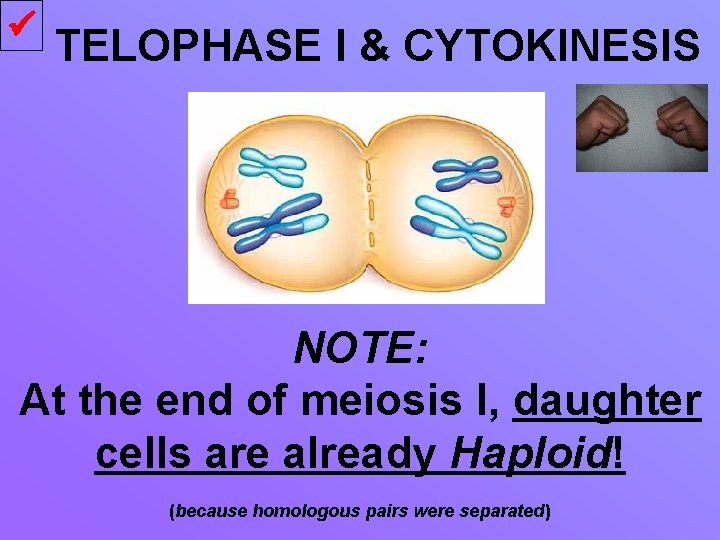
TELOPHASE I & CYTOKINESIS NOTE: At the end of meiosis I, daughter cells are already Haploid! (because homologous pairs were separated)
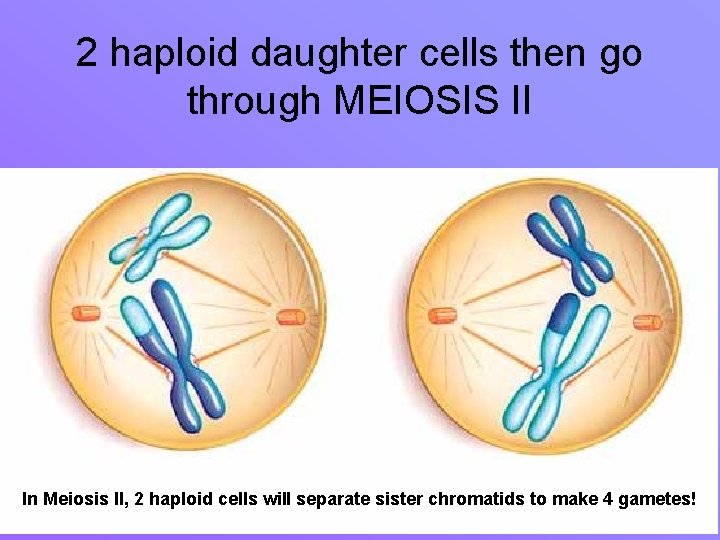
2 haploid daughter cells then go through MEIOSIS II In Meiosis II, 2 haploid cells will separate sister chromatids to make 4 gametes!
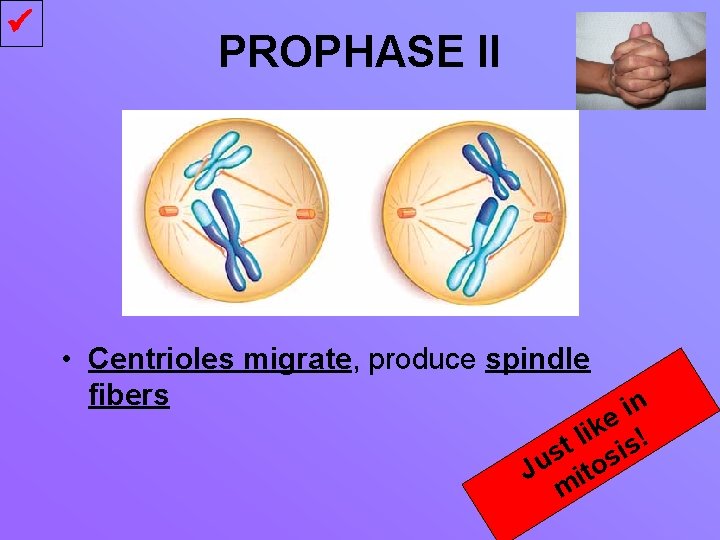
PROPHASE II • Centrioles migrate, produce spindle fibers n i e k i l is! t s os u J it m
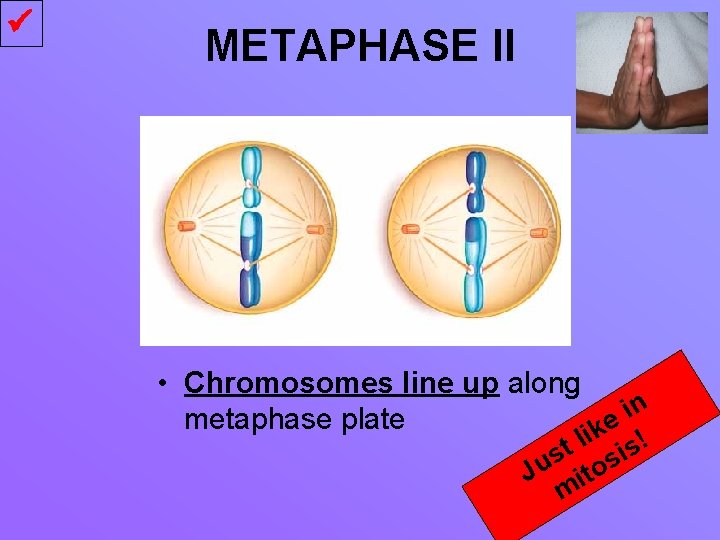
METAPHASE II • Chromosomes line up along n i metaphase plate ike l is! t s os u J it m
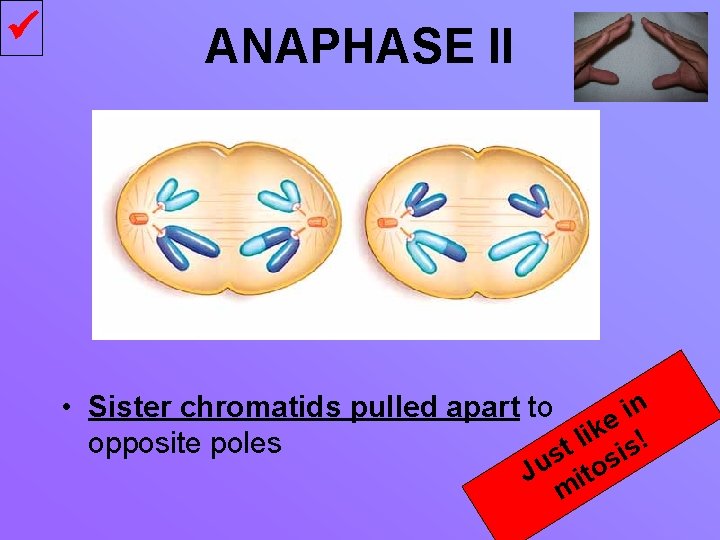
ANAPHASE II n • Sister chromatids pulled apart to i e k i l is! opposite poles t s Ju itos m
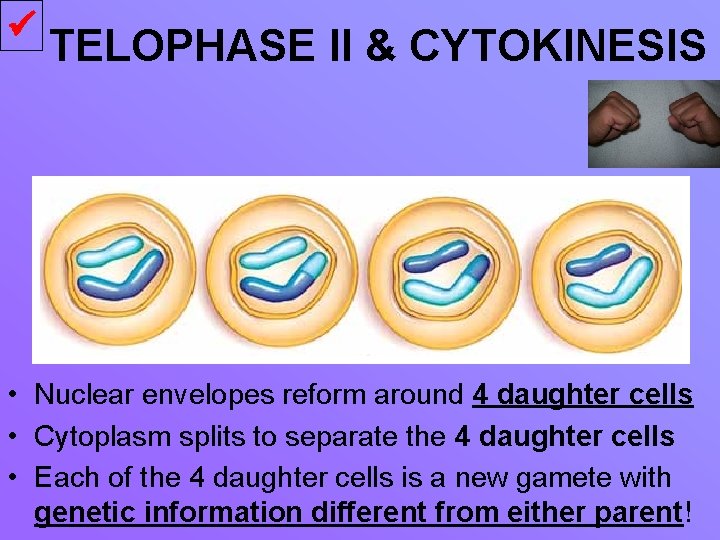
TELOPHASE II & CYTOKINESIS • Nuclear envelopes reform around 4 daughter cells • Cytoplasm splits to separate the 4 daughter cells • Each of the 4 daughter cells is a new gamete with genetic information different from either parent!
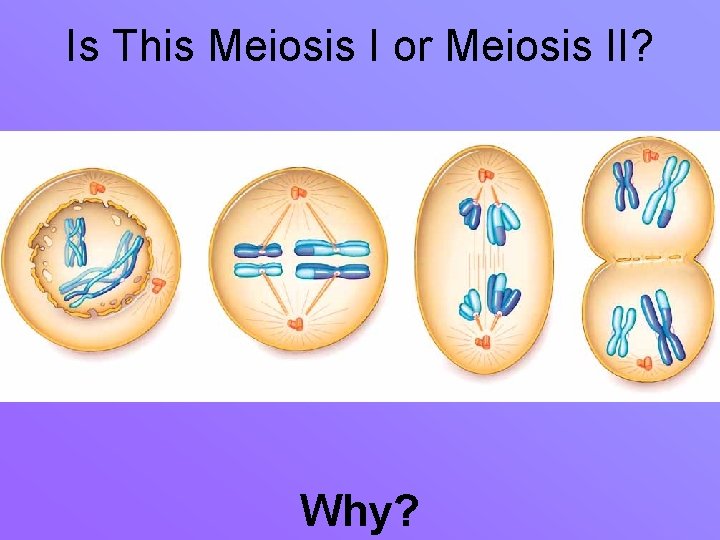
Is This Meiosis I or Meiosis II? Why?
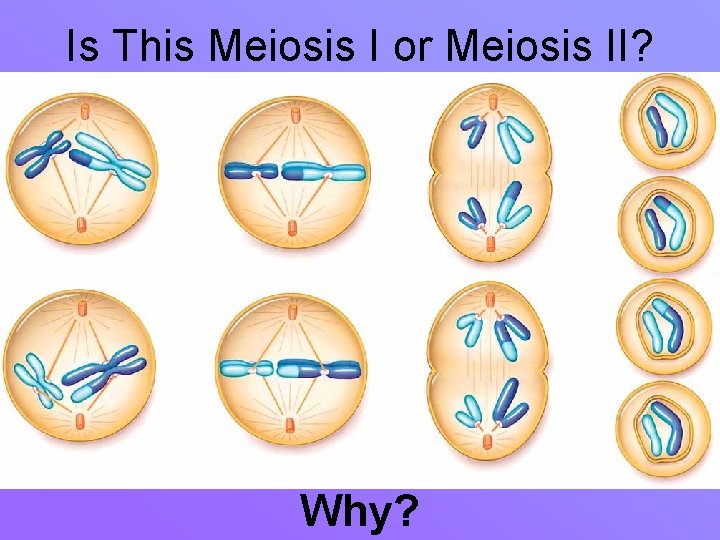
Is This Meiosis I or Meiosis II? Why?
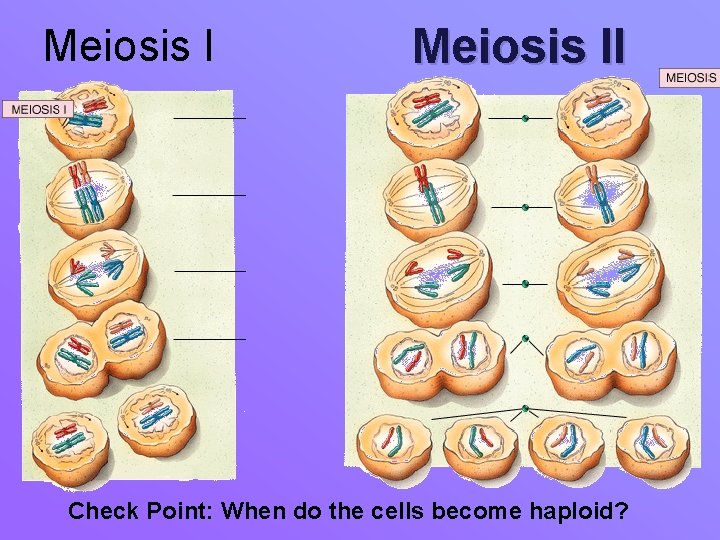
Meiosis II Check Point: When do the cells become haploid?
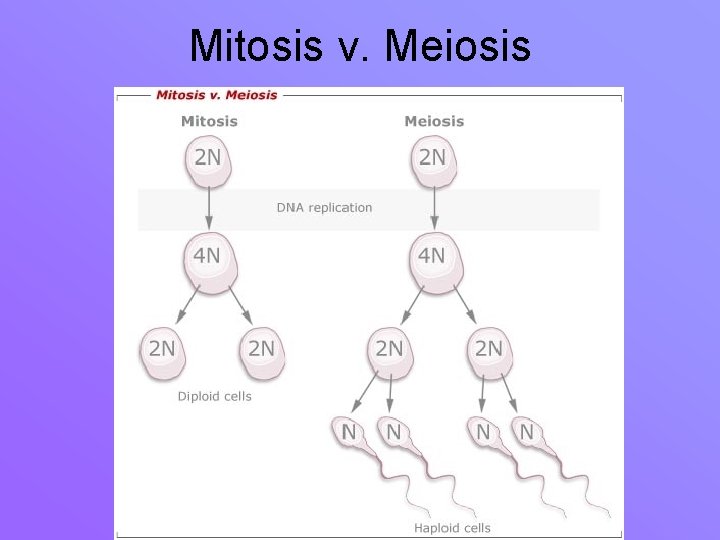
Mitosis v. Meiosis
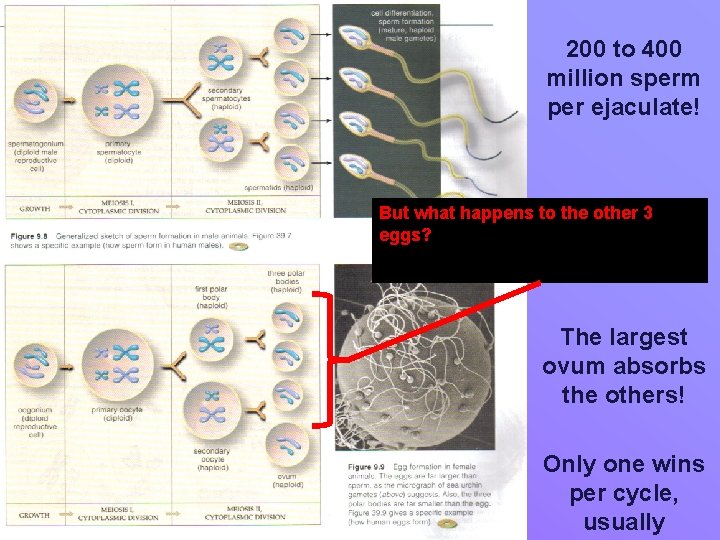
200 to 400 million sperm per ejaculate! But what happens to the other 3 eggs? The largest ovum absorbs the others! Only one wins per cycle, usually
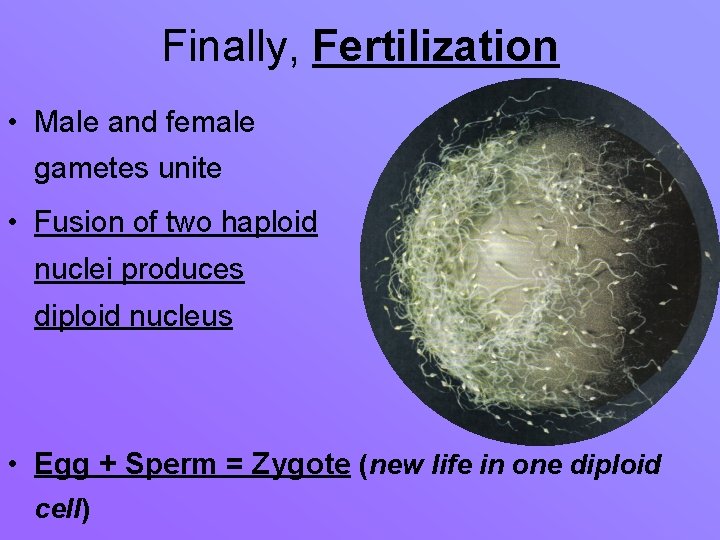
Finally, Fertilization • Male and female gametes unite • Fusion of two haploid nuclei produces diploid nucleus • Egg + Sperm = Zygote (new life in one diploid cell)
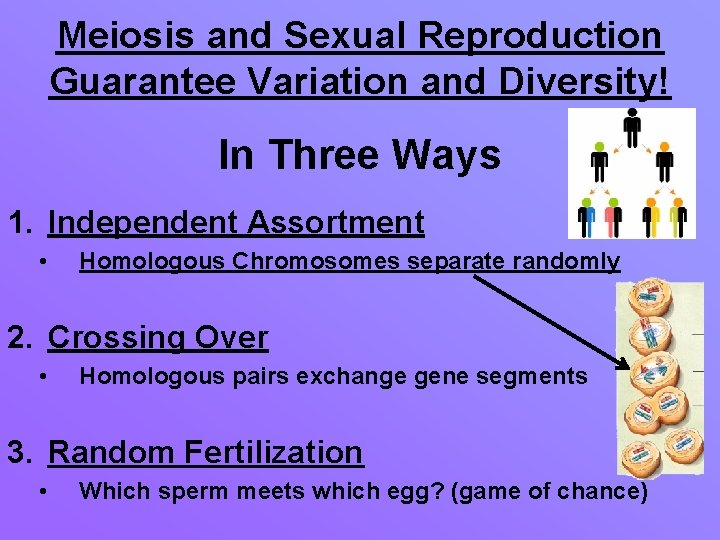
Meiosis and Sexual Reproduction Guarantee Variation and Diversity! In Three Ways 1. Independent Assortment • Homologous Chromosomes separate randomly 2. Crossing Over • Homologous pairs exchange gene segments 3. Random Fertilization • Which sperm meets which egg? (game of chance)
- Slides: 28