
MEIOSIS The Great Divide 1 2 MEIOSIS 1
- Slides: 49
MEIOSIS The Great Divide 1
2
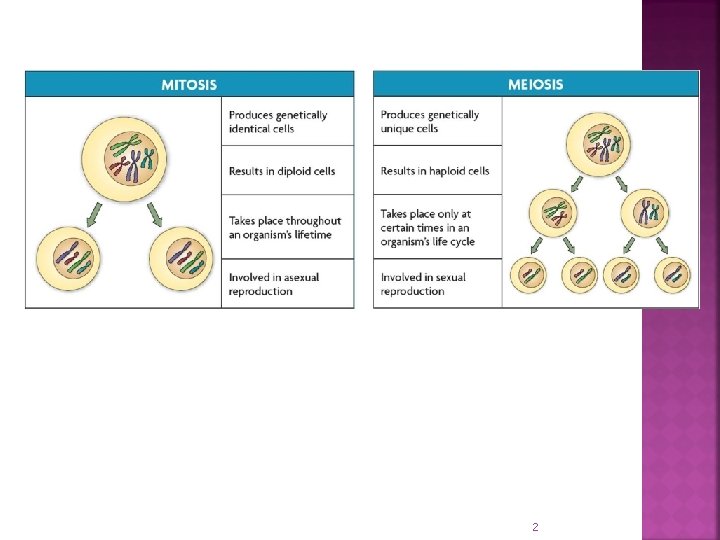
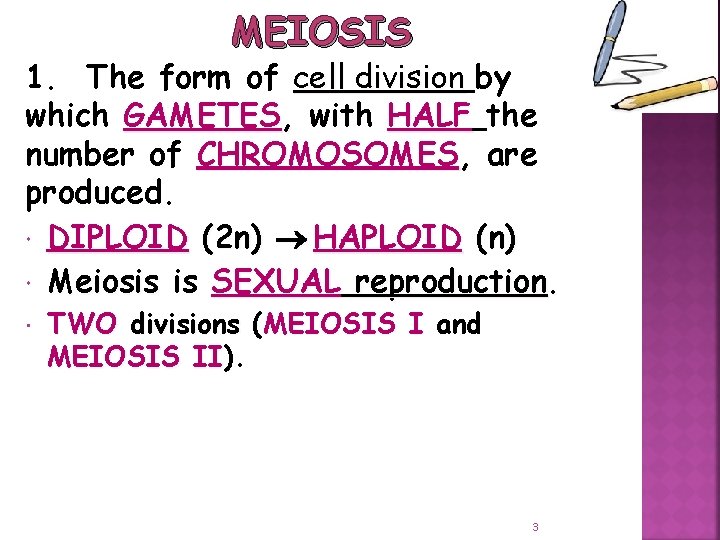
MEIOSIS 1. The form of cell division by which GAMETES, with HALF the number of CHROMOSOMES, are produced. DIPLOID (2 n) HAPLOID (n) Meiosis is SEXUAL reproduction. TWO divisions (MEIOSIS I and MEIOSIS II). II 3
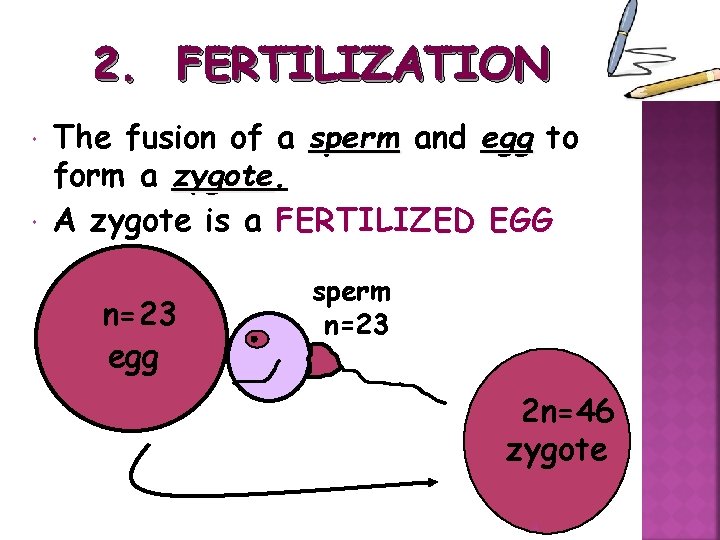
2. FERTILIZATION The fusion of a sperm and egg to form a zygote A zygote is a FERTILIZED EGG n=23 egg sperm n=23 2 n=46 zygote 4
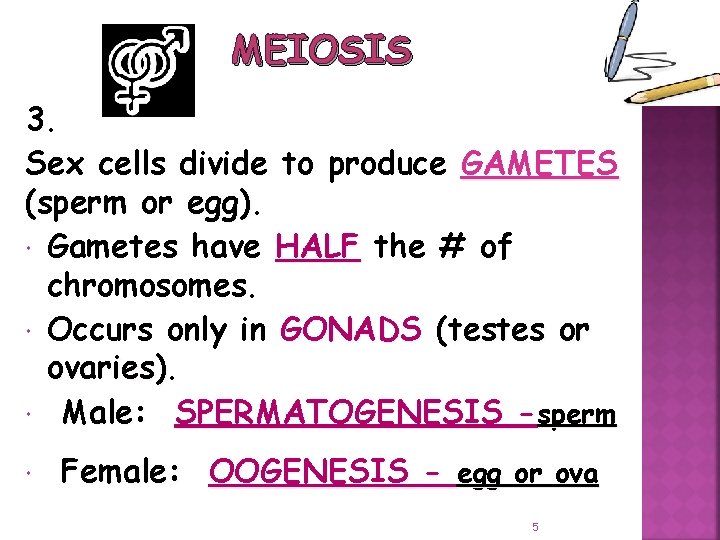
MEIOSIS 3. Sex cells divide to produce GAMETES (sperm or egg) Gametes have HALF the # of chromosomes. Occurs only in GONADS (testes or ovaries). Male: SPERMATOGENESIS -sperm Female: OOGENESIS - egg or ova 5
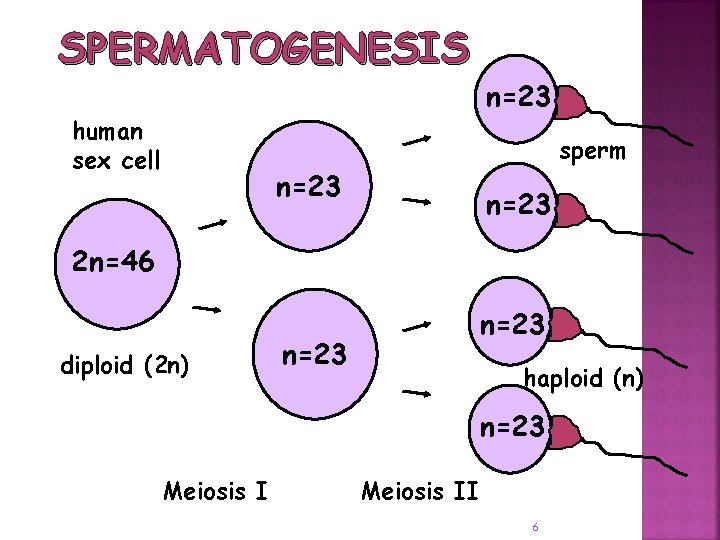
SPERMATOGENESIS human sex cell n=23 sperm n=23 2 n=46 diploid (2 n) n=23 haploid (n) n=23 Meiosis II 6
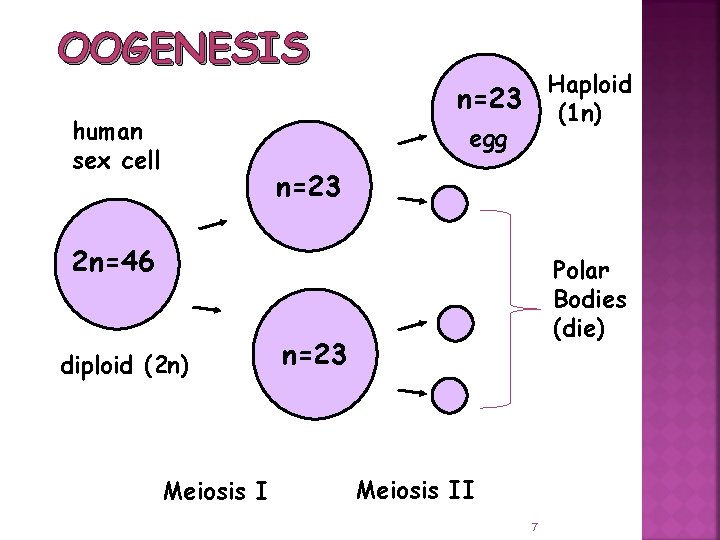
OOGENESIS Haploid (1 n) n=23 human sex cell egg n=23 2 n=46 diploid (2 n) Meiosis I Polar Bodies (die) n=23 Meiosis II 7
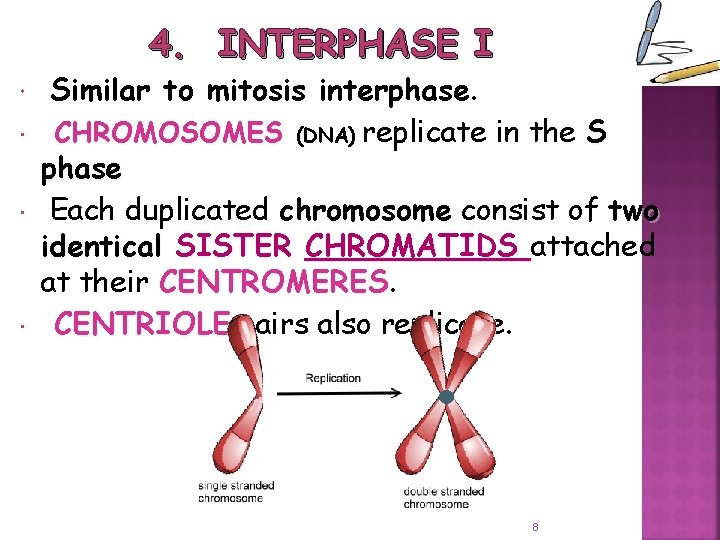
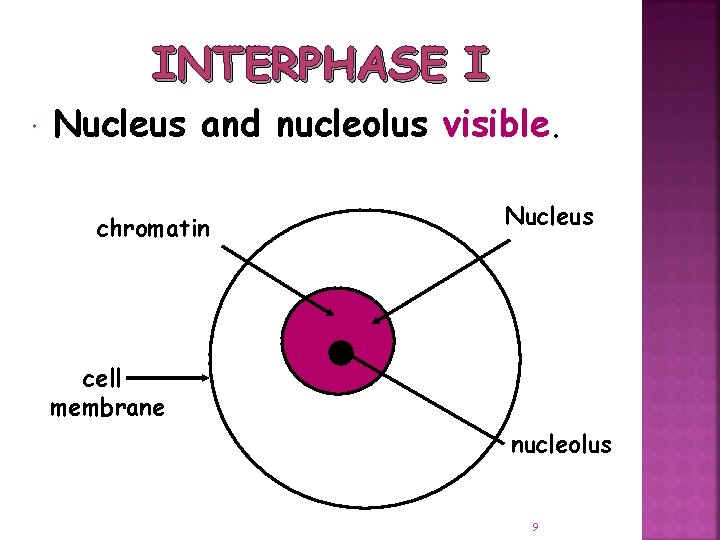
4. INTERPHASE I Similar to mitosis interphase. CHROMOSOMES (DNA) replicate in the S phase Each duplicated chromosome consist of two identical SISTER CHROMATIDS attached at their CENTROMERES CENTRIOLE pairs also replicate. 8
INTERPHASE I Nucleus and nucleolus visible. chromatin Nucleus cell membrane nucleolus 9
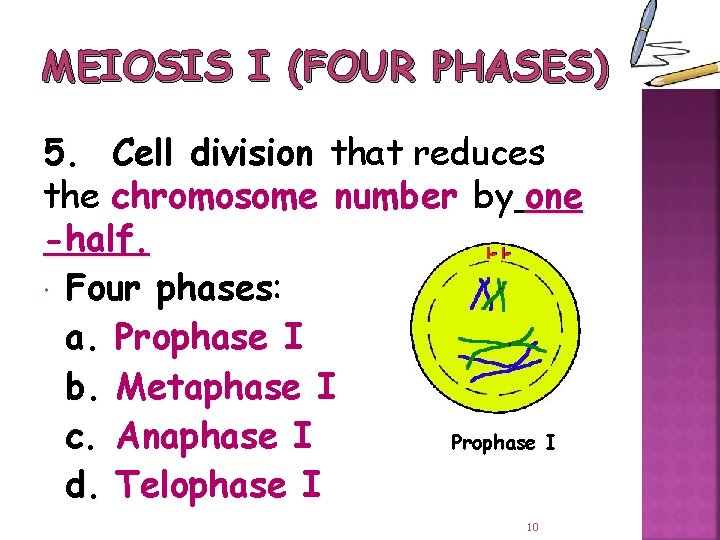
MEIOSIS I (FOUR PHASES) 5. Cell division that reduces the chromosome number by one -half. Four phases: phases a. Prophase I b. Metaphase I c. Anaphase I Prophase I d. Telophase I 10
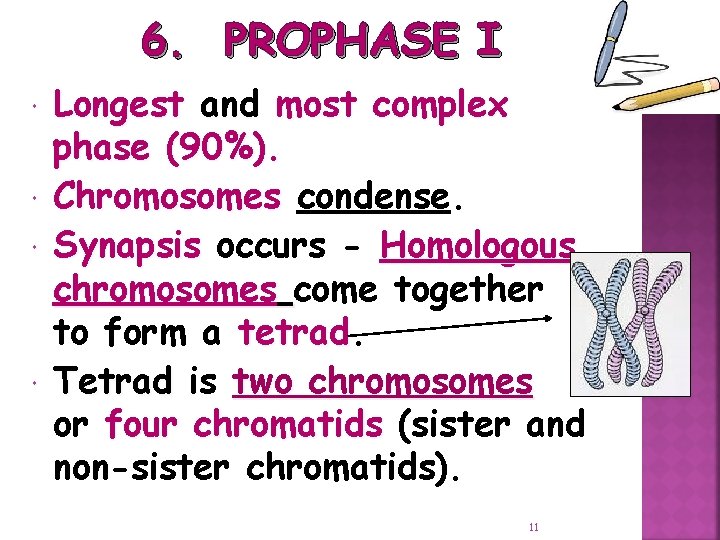
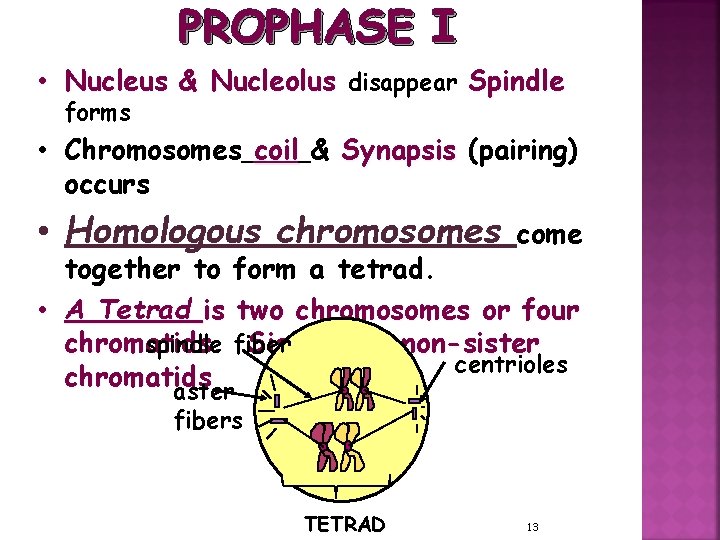
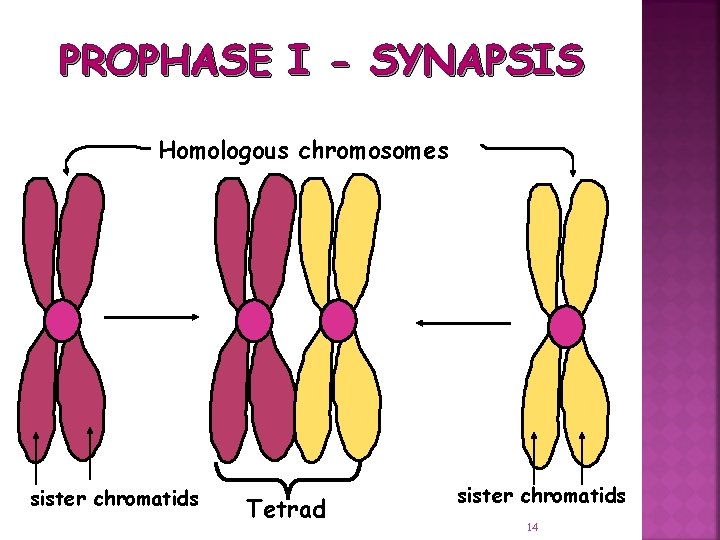
6. PROPHASE I Longest and most complex phase (90%). Chromosomes condense. Synapsis occurs - Homologous chromosomes come together to form a tetrad Tetrad is two chromosomes or four chromatids (sister and non-sister chromatids). 11
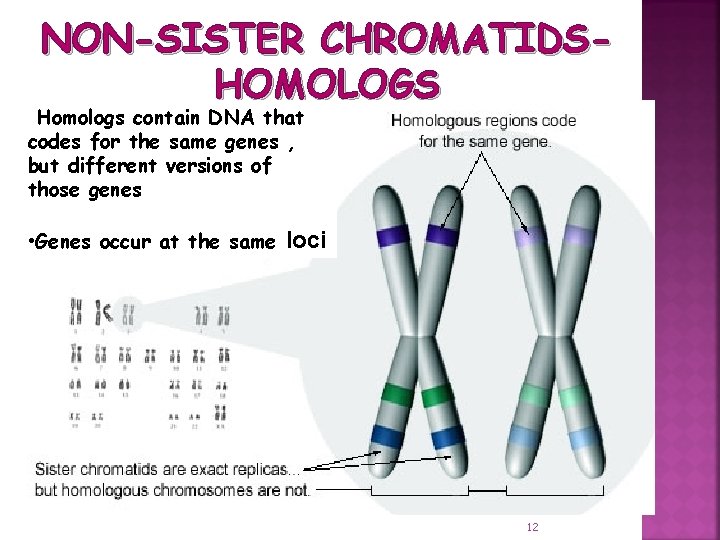
NON-SISTER CHROMATIDSHOMOLOGS Homologs contain DNA that codes for the same genes , but different versions of those genes • Genes occur at the same loci 12
PROPHASE I • Nucleus & Nucleolus disappear Spindle forms • Chromosomes coil & Synapsis (pairing) occurs • Homologous chromosomes come together to form a tetrad. • A Tetrad is two chromosomes or four chromatids. Sister and non-sister spindle fiber centrioles chromatids aster fibers TETRAD 13
PROPHASE I - SYNAPSIS Homologous chromosomes sister chromatids Tetrad sister chromatids 14
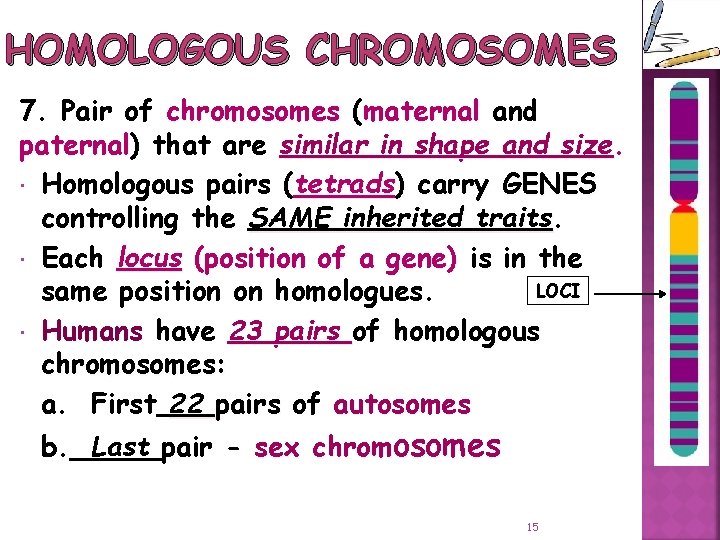
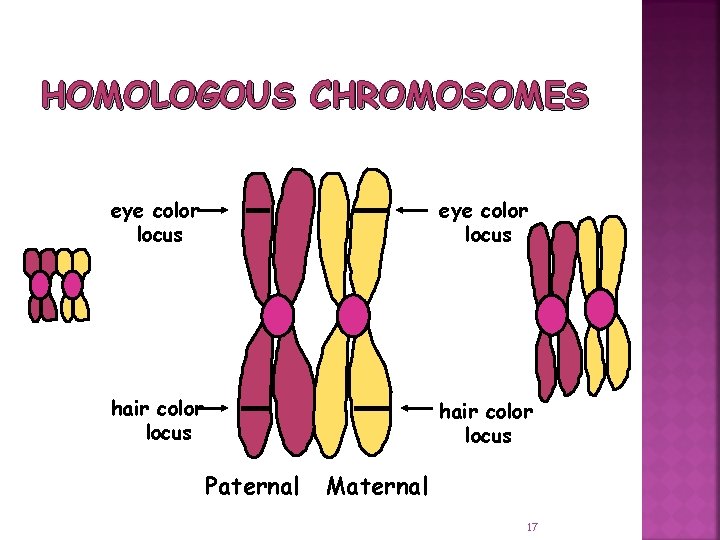
HOMOLOGOUS CHROMOSOMES 7. Pair of chromosomes (maternal and paternal) paternal that are similar in shape and size. Homologous pairs (tetrads) carry GENES controlling the SAME inherited traits Each locus (position of a gene) is in the LOCI same position on homologues. Humans have 23 pairs of homologous chromosomes: a. First 22 pairs of autosomes b. Last pair - sex chromosomes 15
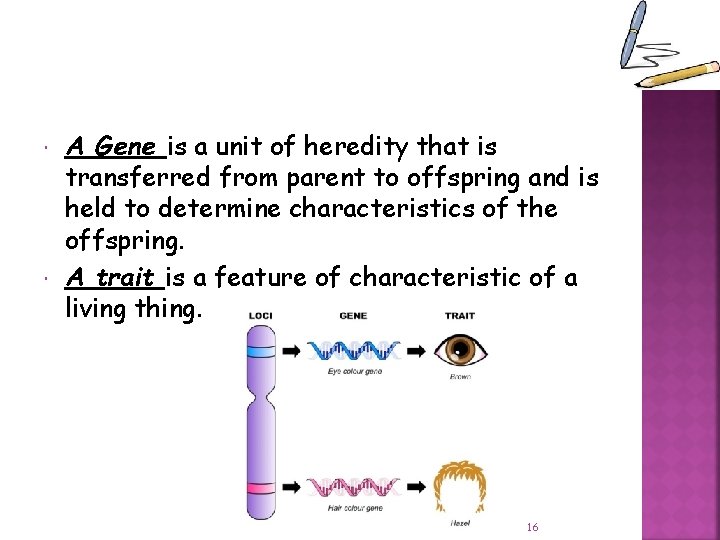
A Gene is a unit of heredity that is transferred from parent to offspring and is held to determine characteristics of the offspring. A trait is a feature of characteristic of a living thing. 16
HOMOLOGOUS CHROMOSOMES eye color locus hair color locus Paternal Maternal 17
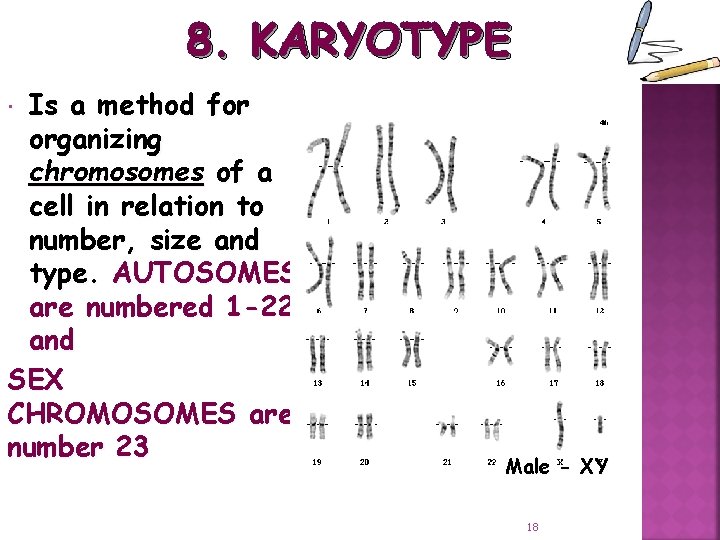
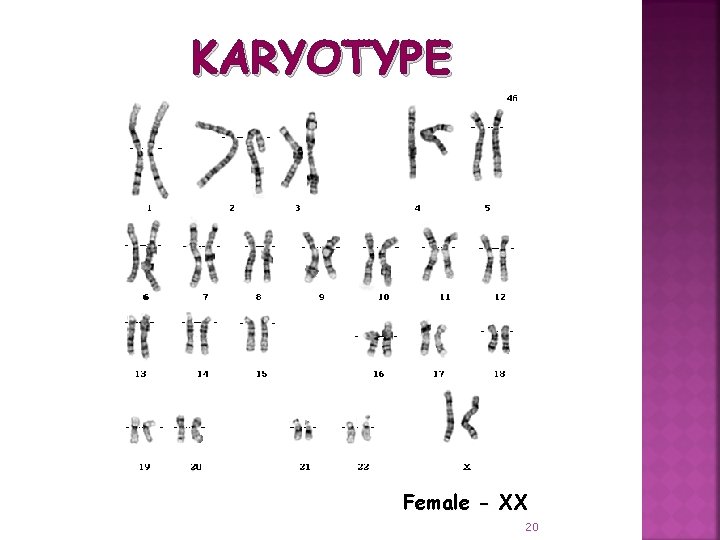
8. KARYOTYPE Is a method for organizing chromosomes of a cell in relation to number, size and type. AUTOSOMES are numbered 1 -22 and SEX CHROMOSOMES are number 23 Male - XY 18
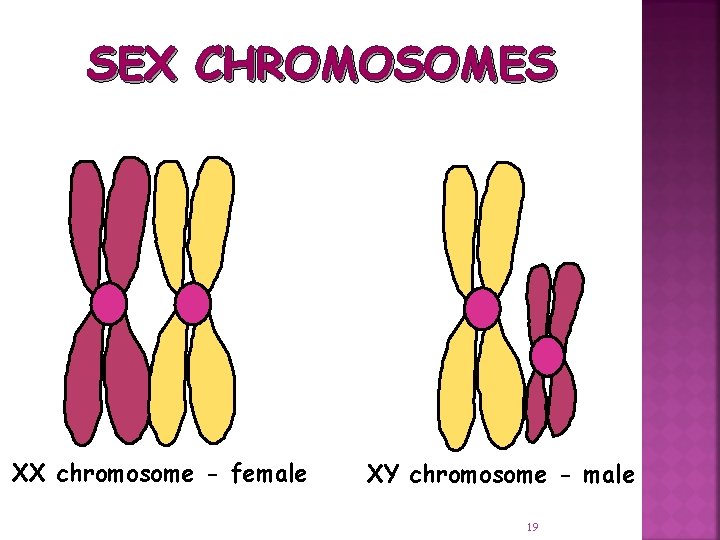
SEX CHROMOSOMES XX chromosome - female XY chromosome - male 19
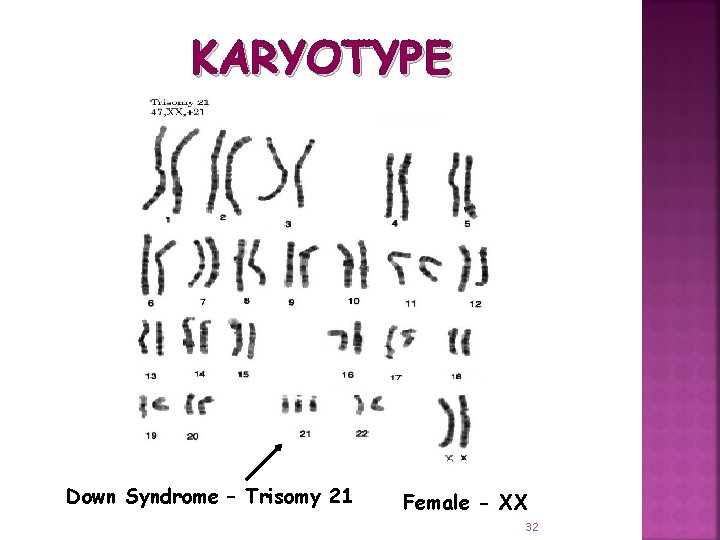
KARYOTYPE Female - XX 20
9. sex chromosomes code for the sex of the offspring. If the offspring has two X chromosome it will be a female. If the offspring has one X and one Y chromosome it will be a male. 21
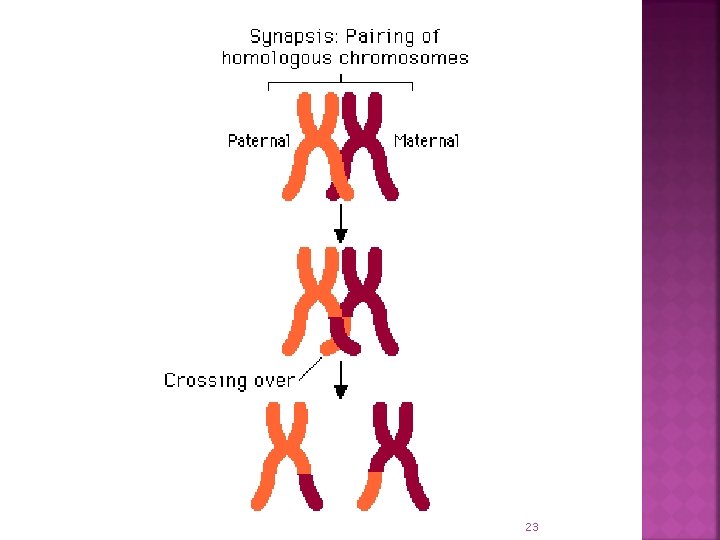
10. CROSSING OVER Crossing over may occur between nonsister chromatids at sites called chiasmata Crossing over: over segments of nonsister chromatids break and reattach to the other chromatid Chiasmata (chiasma) are the sites of crossing over. Causes Genetic Recombination Crossing over multiplies the already huge number of different gamete types produced by meiosis. 22
23
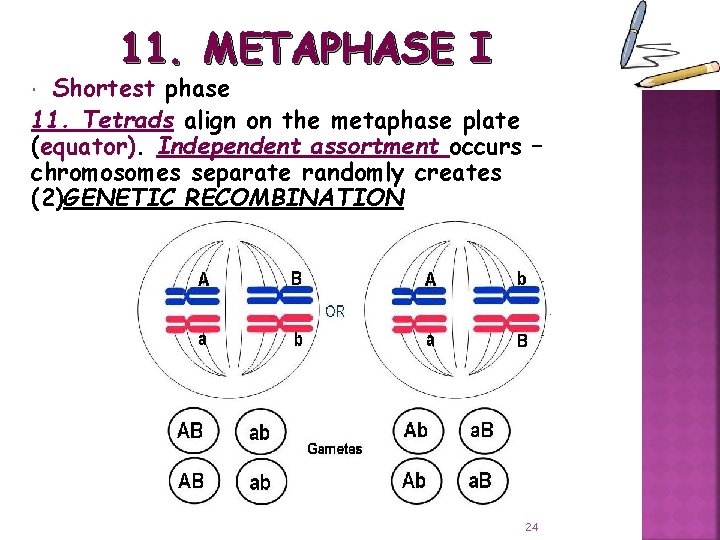
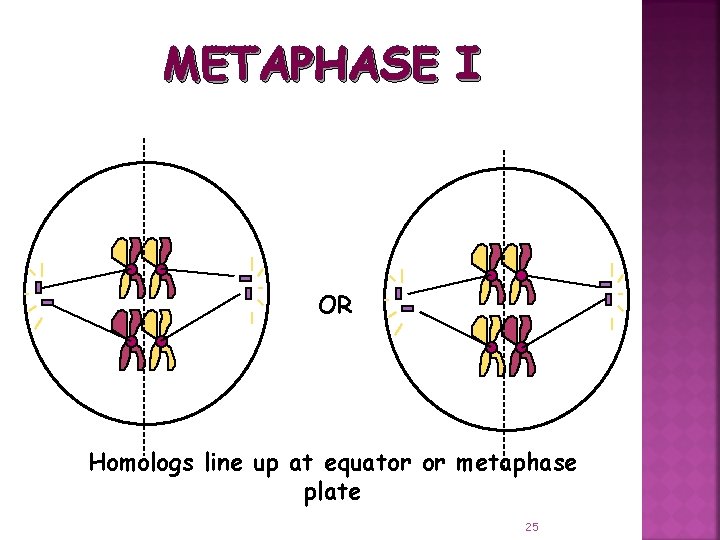
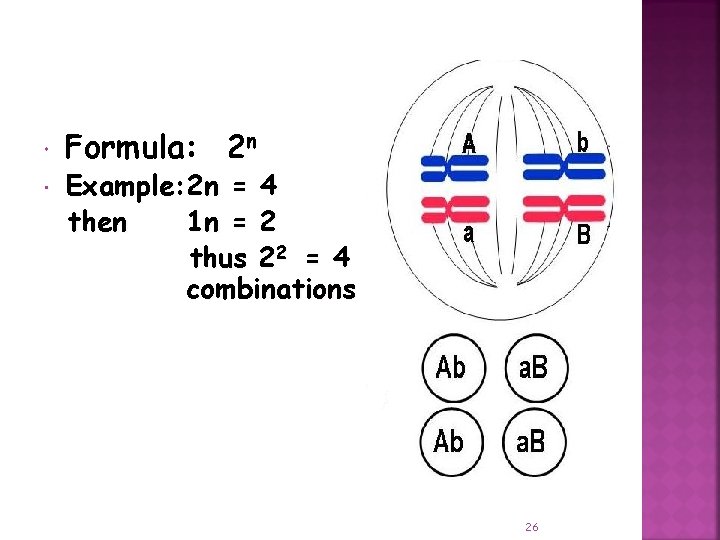
11. METAPHASE I Shortest phase 11. Tetrads align on the metaphase plate (equator). Independent assortment occurs – chromosomes separate randomly creates (2)GENETIC RECOMBINATION 24
METAPHASE I OR Homologs line up at equator or metaphase plate 25
Formula: 2 n Example: 2 n = 4 then 1 n = 2 thus 22 = 4 combinations 26
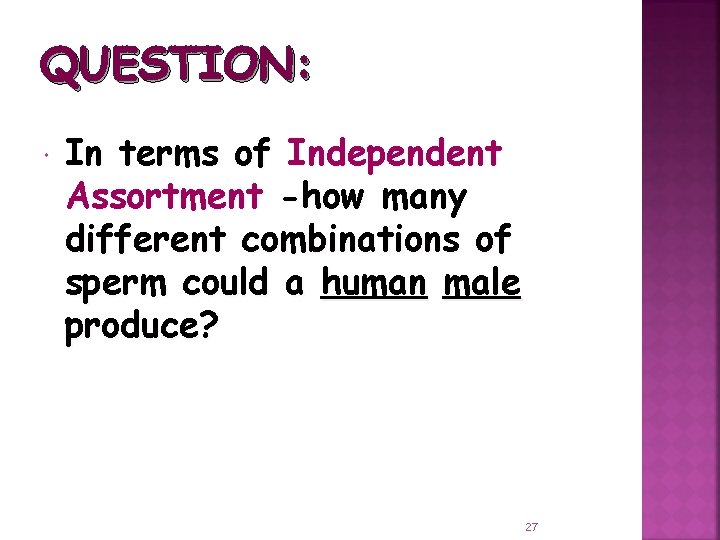
QUESTION: In terms of Independent Assortment -how many different combinations of sperm could a human male produce? 27
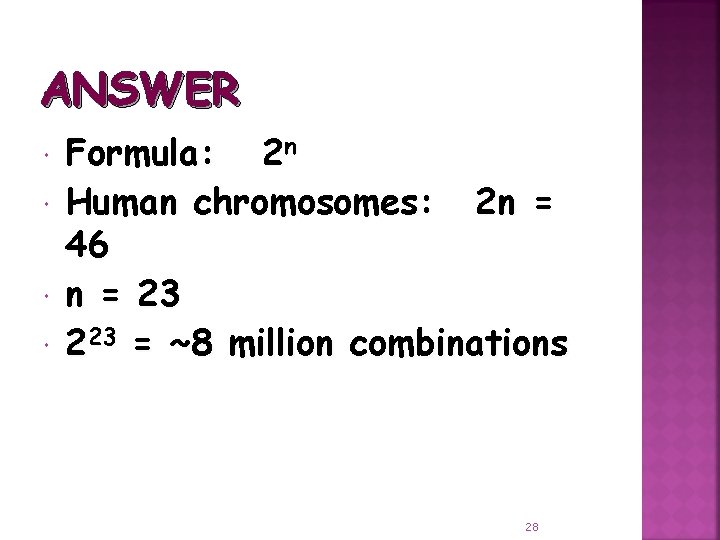
ANSWER Formula: 2 n Human chromosomes: 2 n = 46 n = 23 223 = ~8 million combinations 28
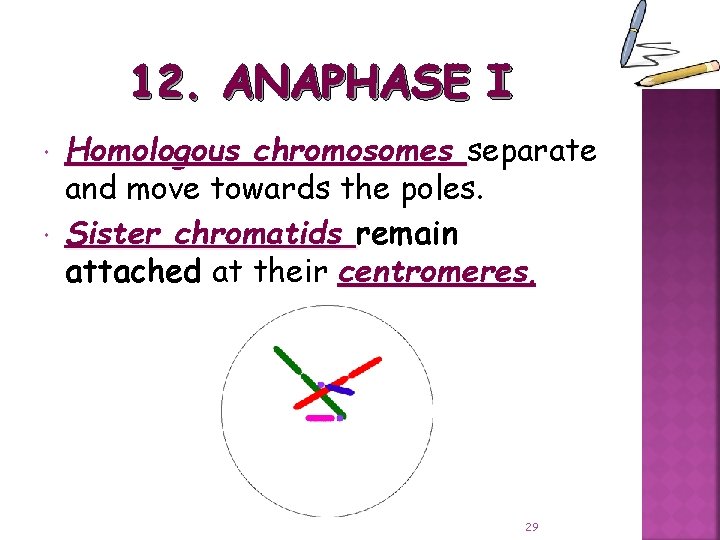
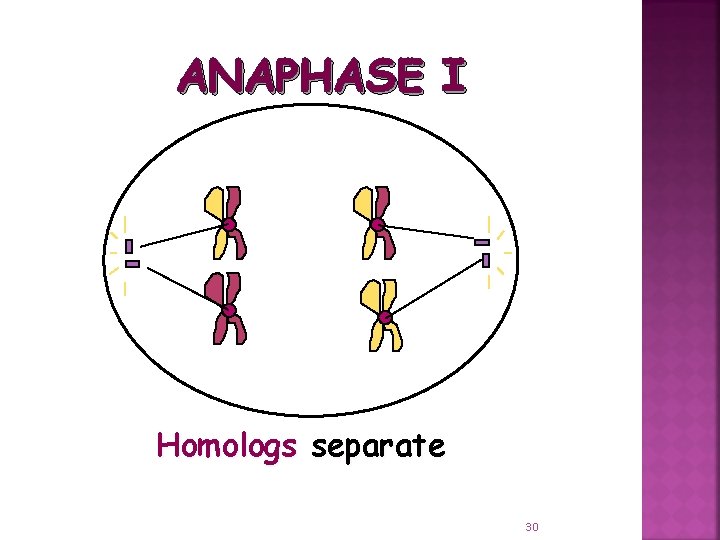
12. ANAPHASE I Homologous chromosomes separate and move towards the poles. Sister chromatids remain attached at their centromeres 29
ANAPHASE I Homologs separate 30
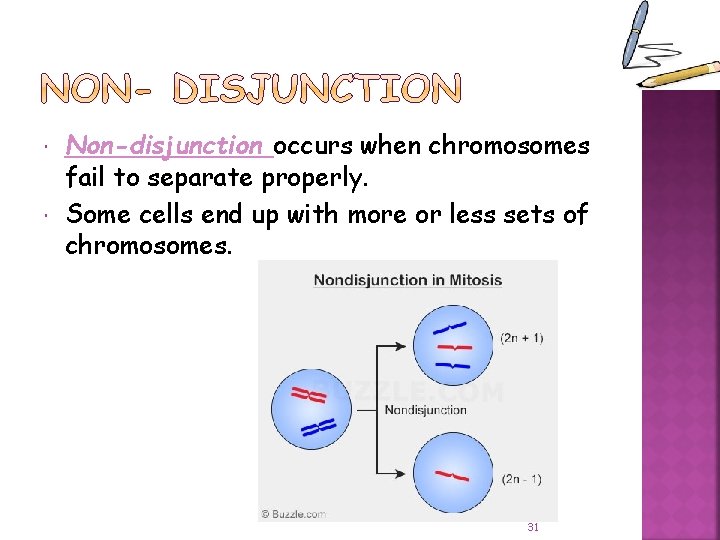
Non-disjunction occurs when chromosomes fail to separate properly. Some cells end up with more or less sets of chromosomes. 31
KARYOTYPE Down Syndrome – Trisomy 21 Female - XX 32
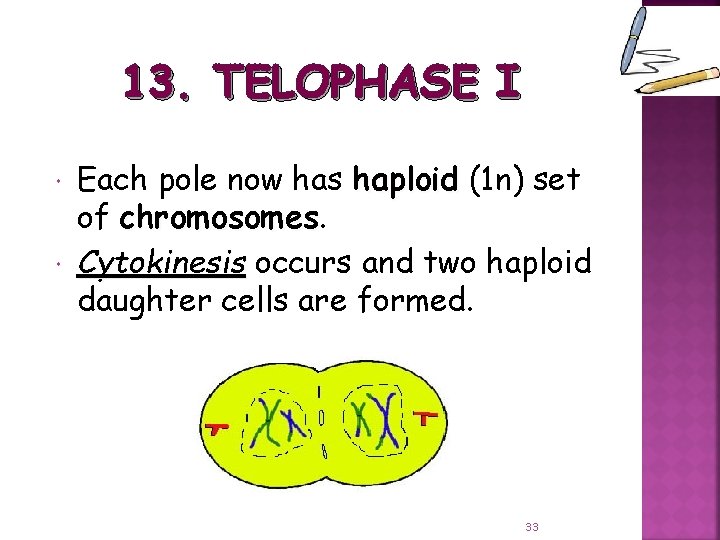
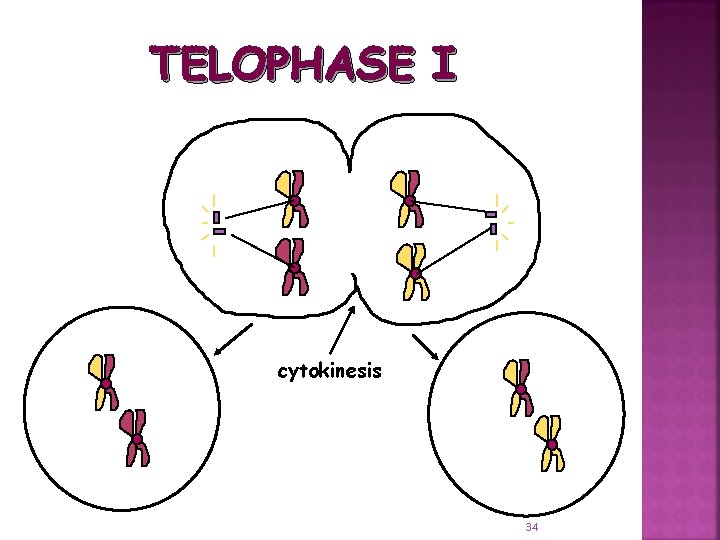
13. TELOPHASE I Each pole now has haploid (1 n) set of chromosomes Cytokinesis occurs and two haploid daughter cells are formed. 33
TELOPHASE I cytokinesis 34
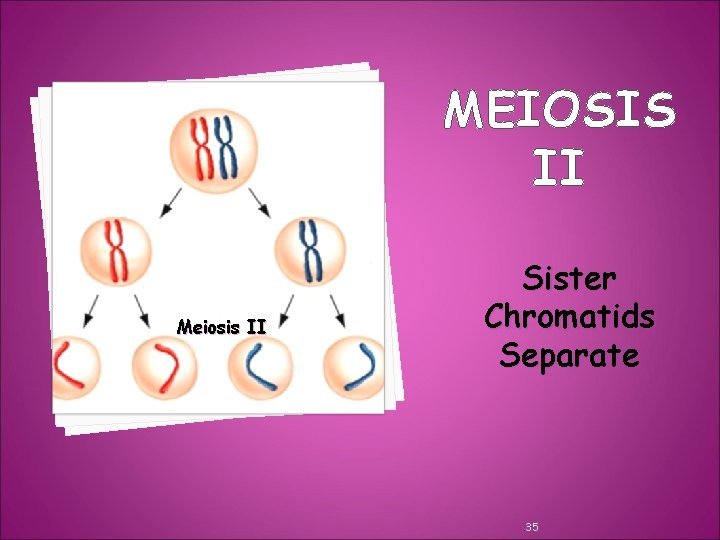
MEIOSIS II Meiosis II Sister Chromatids Separate 35
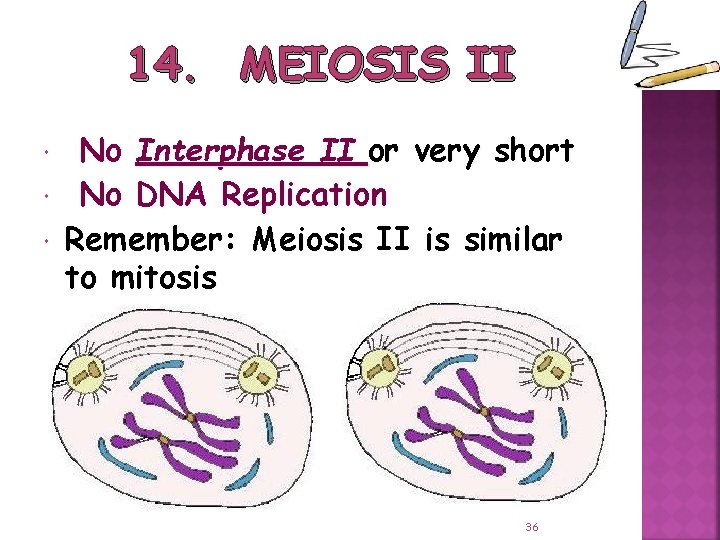
14. MEIOSIS II No Interphase II or very short No DNA Replication Remember: Meiosis II is similar to mitosis 36
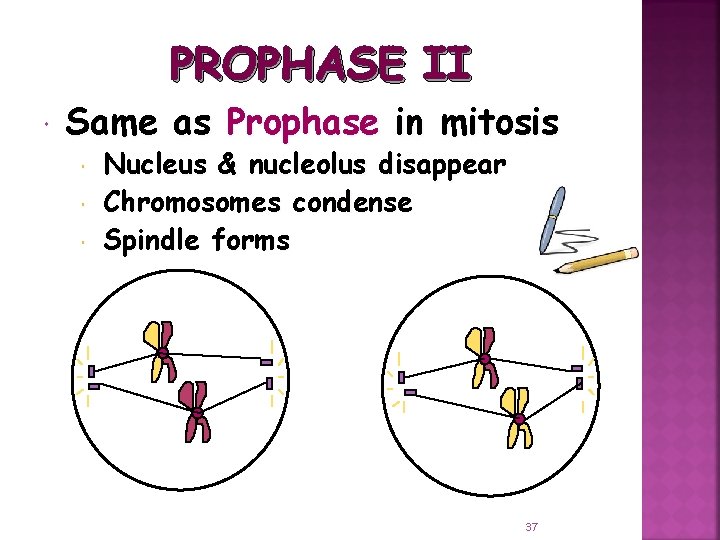
PROPHASE II Same as Prophase in mitosis Nucleus & nucleolus disappear Chromosomes condense Spindle forms 37
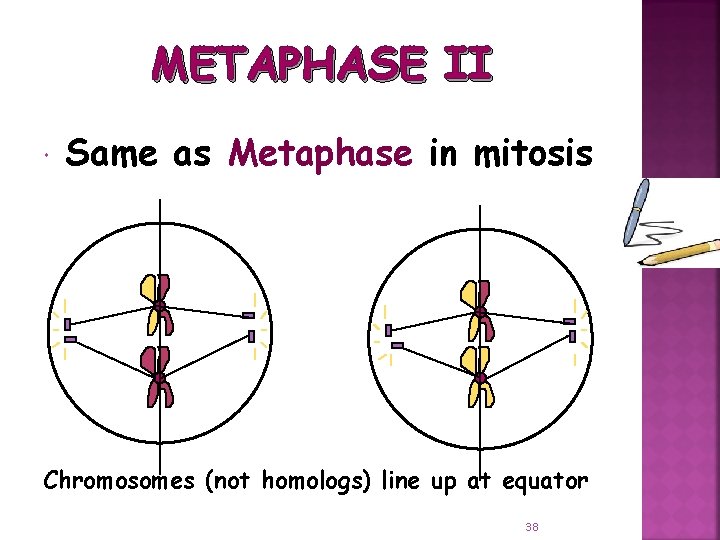
METAPHASE II Same as Metaphase in mitosis Chromosomes (not homologs) line up at equator 38
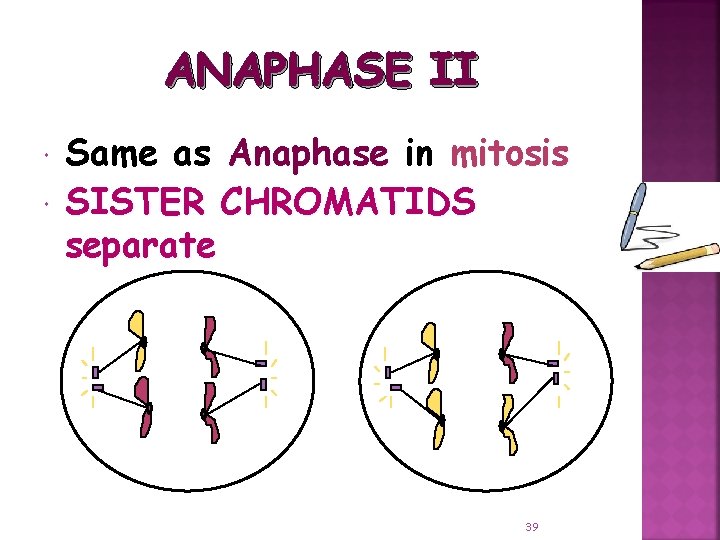
ANAPHASE II Same as Anaphase in mitosis SISTER CHROMATIDS separate 39
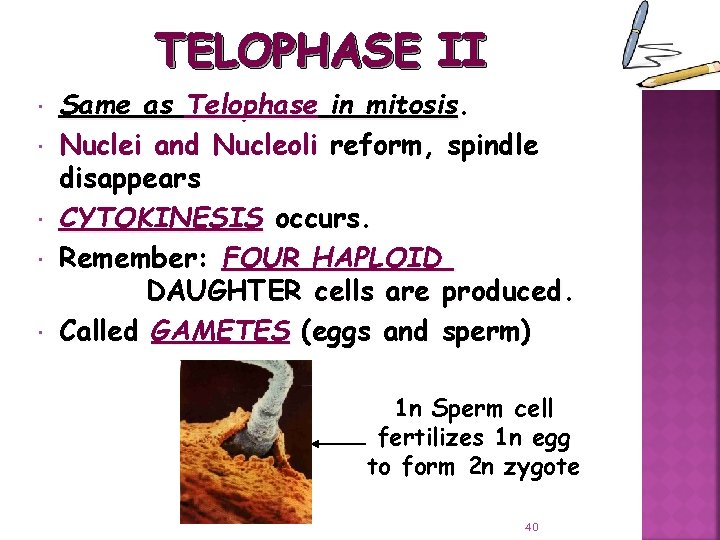
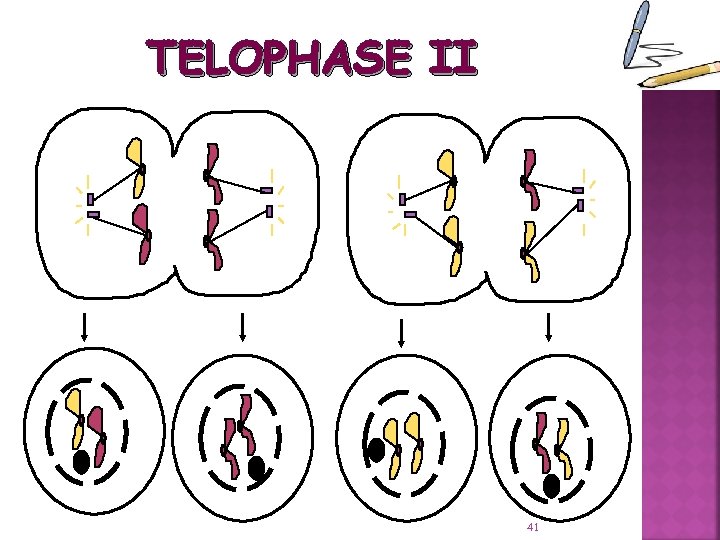
TELOPHASE II Same as Telophase in mitosis. Nuclei and Nucleoli reform, spindle disappears CYTOKINESIS occurs. Remember: FOUR HAPLOID DAUGHTER cells are produced. Called GAMETES (eggs and sperm) 1 n Sperm cell fertilizes 1 n egg to form 2 n zygote 40
TELOPHASE II 41
QUESTION: What are the 3 sources of genetic recombination or variation? 42
ANSWER: 1. 2. 3. CROSSING OVER (prophase I) INDEPENDENT ASSORTMENT (metaphase I) RANDOM FERTILIZATION 43
QUESTION: A cell containing 20 chromosomes (diploid) at the beginning of meiosis would, at its completion, produce cells containing how many chromosomes? chromosomes 44
ANSWER: 10 chromosomes (haploid or 1 n) 45
QUESTION: A cell containing 40 chromatids at the beginning of meiosis would, at its completion, produce cells containing how many chromosomes? chromosomes 46
ANSWER: 10 chromosomes 47
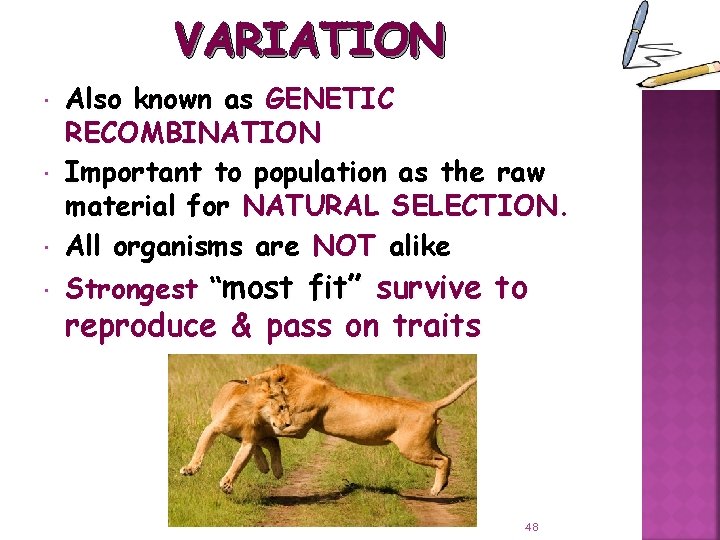
VARIATION Also known as GENETIC RECOMBINATION Important to population as the raw material for NATURAL SELECTION. All organisms are NOT alike Strongest “most fit” survive to reproduce & pass on traits 48
49