
MEIOSIS THE FORMATION OF SEX CELLS What is



- Slides: 21
MEIOSIS THE FORMATION OF SEX CELLS
What is the Purpose? • Meiosis is similar to Mitosis in that cells are dividing. • However, in Meiosis the overall result is different from mitosis. • What was the overall result of Mitosis?
Mitosis • Mitosis resulted in two identical daughter cells. • Meiosis results in four completely different cells.
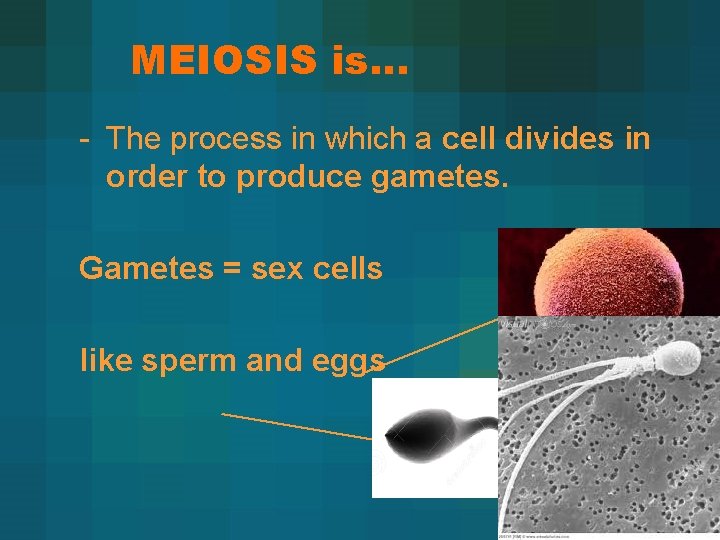
MEIOSIS is… - The process in which a cell divides in order to produce gametes. Gametes = sex cells like sperm and eggs
Haploid Vs Diploid • Mitosis results in 2 diploid cells. • Diploid means a full set of chromosomes • Meiosis results in 4 haploid cells. • Haploid means only one half of the total chromosome number.
Original Cell has 4 chromosomes Sex Cells have 2 chromosomes (1/2 the number!)
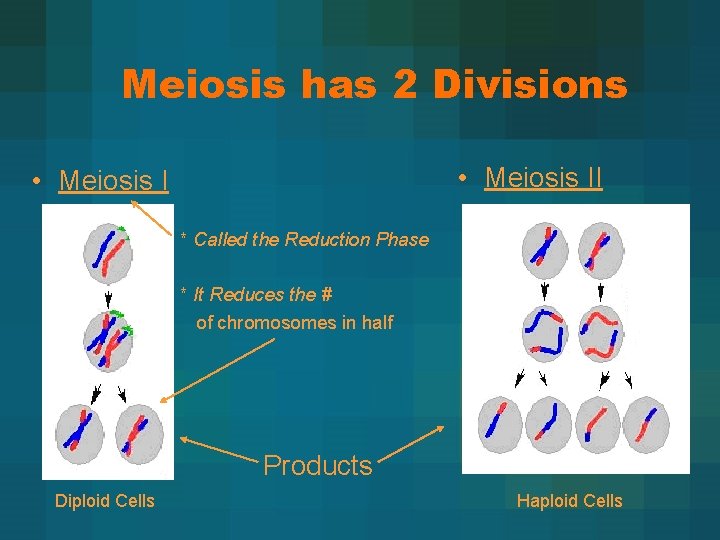
How does this occur? • Meiosis is actually a process in which the cell divides two times. • The first division creates cells with the normal number of chromosomes (diploid). • The second division creates cells with half the normal number of chromosomes (haploid)
Meiosis has 2 Divisions • Meiosis II • Meiosis I * Called the Reduction Phase * It Reduces the # of chromosomes in half Products Diploid Cells Haploid Cells
The Goal: A New Life • Each of your cells undergo mitosis to produce exact copies of the original cell. • But what about the first cell that was you? • That cell was a combination of cells from both of your parents.
Importance of Meiosis • Meiosis is important because it creates cells that are only half of what a “normal” cell would be. • Haploid + Haploid = Diploid Egg + Sperm = Baby • This way- when they meet up a “whole” cell is created a zygote (fertilized egg)
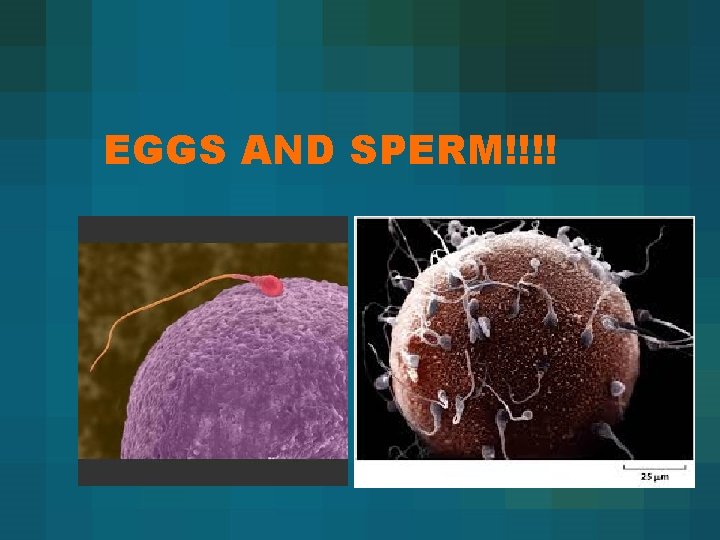
EGGS AND SPERM!!!!
Meiosis • Each sperm and each egg were formed by the process of meiosis, • Cells are created with only half of what they need to survive alone. • Half the number of chromosomes!!
The First Division • The first division is actually an extremely important division. • This is when CROSSING OVER occurs
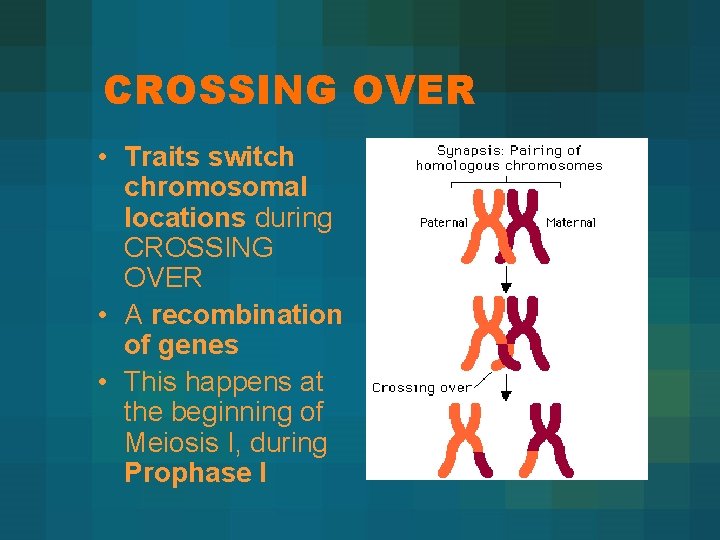
CROSSING OVER • Traits switch chromosomal locations during CROSSING OVER • A recombination of genes • This happens at the beginning of Meiosis I, during Prophase I
10. Crossing Over • Why is crossing over important? • Results in new combinations of genetic info • “Shuffles the deck of genetic cards” • Provide variation – This is why you are different from your parents and siblings
Then What? ? • After crossing over, which occurs during Prophase I, the cell undergoes Metaphse, Anaphase and Telophase…. • Then it divides again, resulting in…
CELLS WITH ONLY HALF THE NUMBER OF CHROMOSOMES!!!!!!
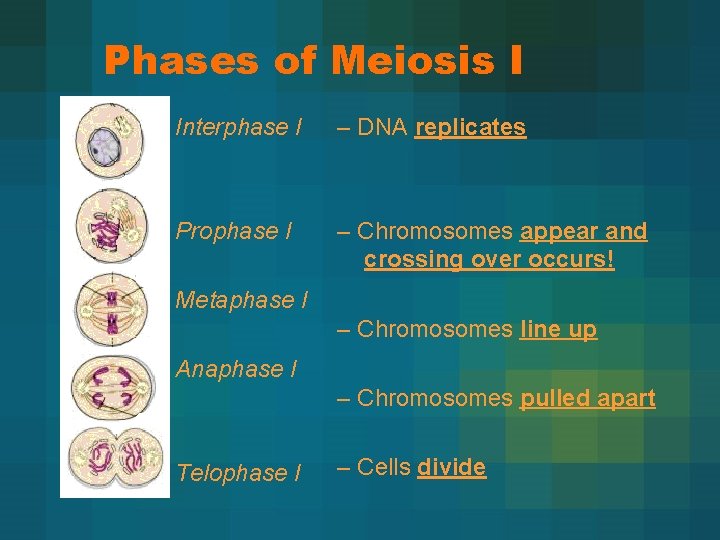
Phases of Meiosis I Interphase I – DNA replicates Prophase I – Chromosomes appear and crossing over occurs! Metaphase I – Chromosomes line up Anaphase I – Chromosomes pulled apart Telophase I – Cells divide
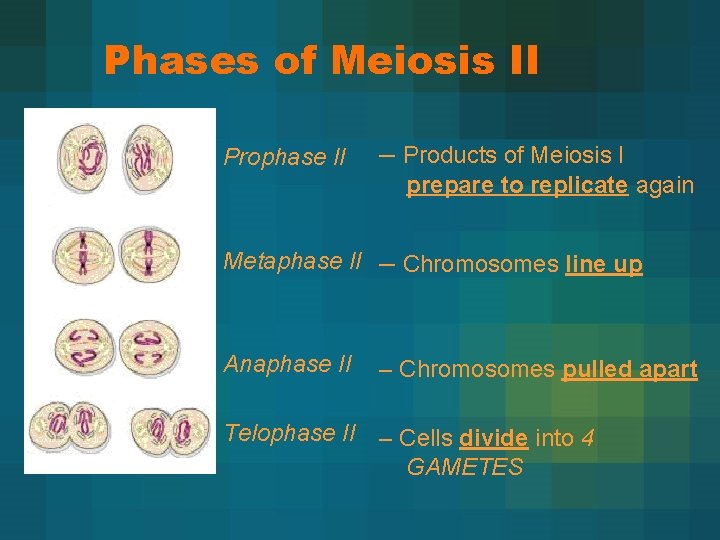
Phases of Meiosis II Prophase II – Products of Meiosis I prepare to replicate again Metaphase II – Chromosomes line up Anaphase II – Chromosomes pulled apart Telophase II – Cells divide into 4 GAMETES