
Meiosis Some Mitosis Review What do we know
- Slides: 25
Meiosis & Some Mitosis
Review: What do we know about Mitosis?
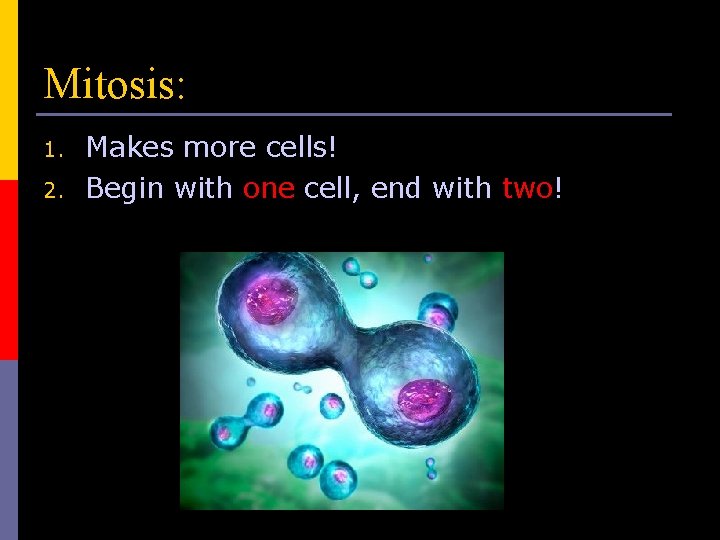
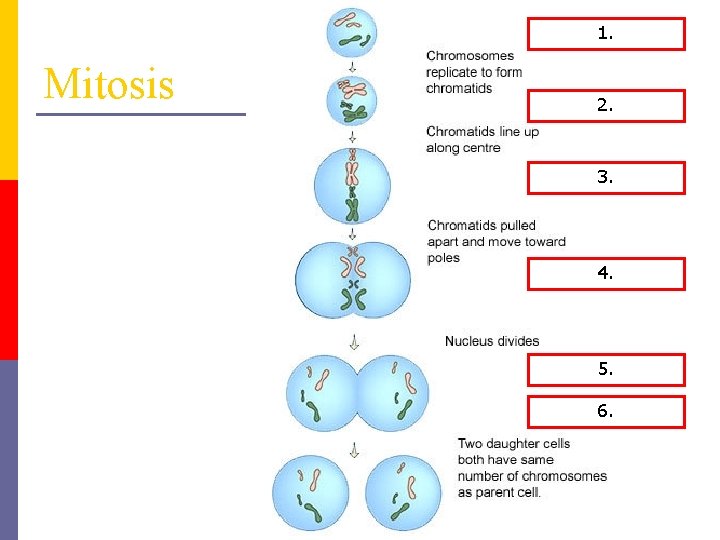
Mitosis: 1. 2. Makes more cells! Begin with one cell, end with two!
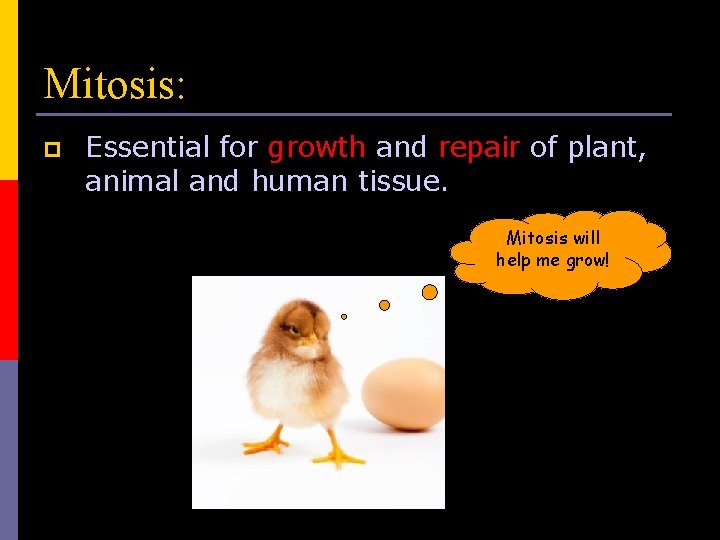
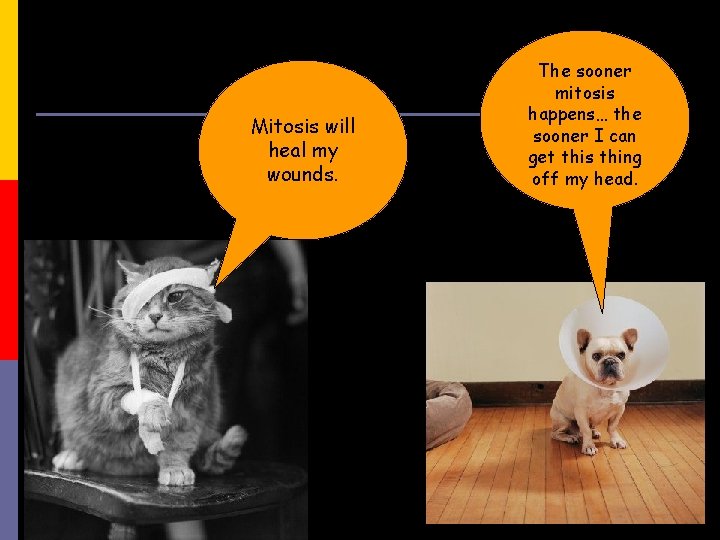
Mitosis: p Essential for growth and repair of plant, animal and human tissue. Mitosis will help me grow!
Mitosis will heal my wounds. The sooner mitosis happens… the sooner I can get this thing off my head.
1. Interphase 1. Mitosis 2. Prophase 2. 3. Metaphase 3. 4. Anaphase 4. 5. Telophase 5. 6. Cytokinesis 6.
Enough about mitosis… what’s meiosis?
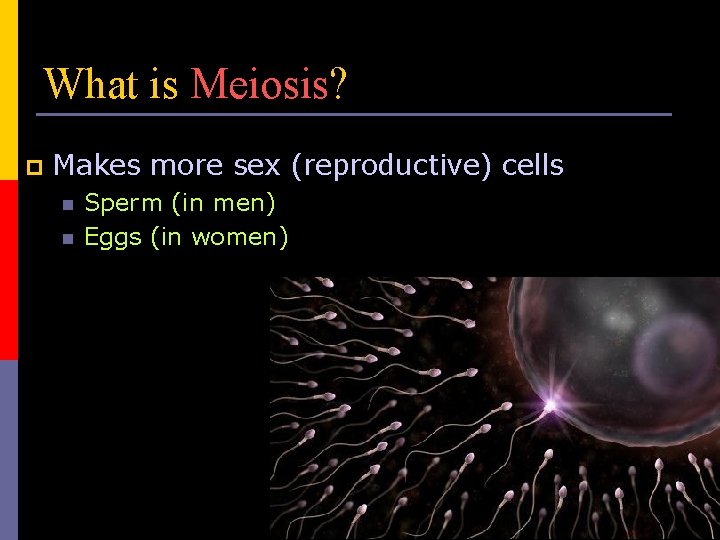
What is Meiosis? p Makes more sex (reproductive) cells n n Sperm (in men) Eggs (in women)
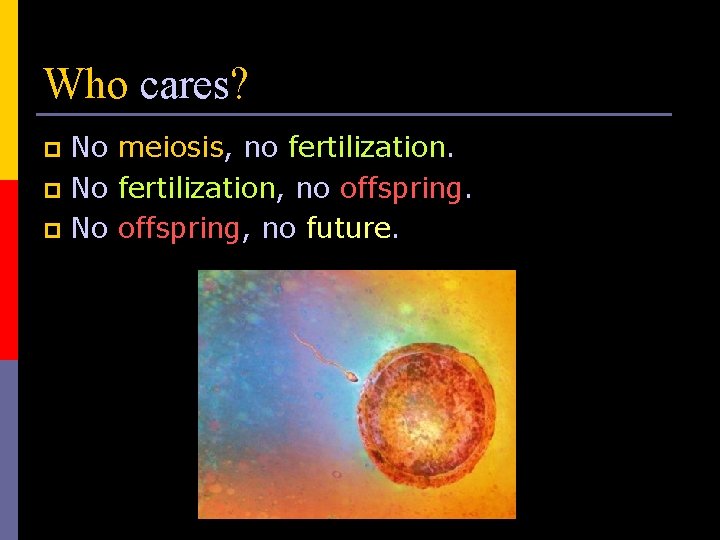
Who cares? No meiosis, no fertilization. p No fertilization, no offspring. p No offspring, no future. p
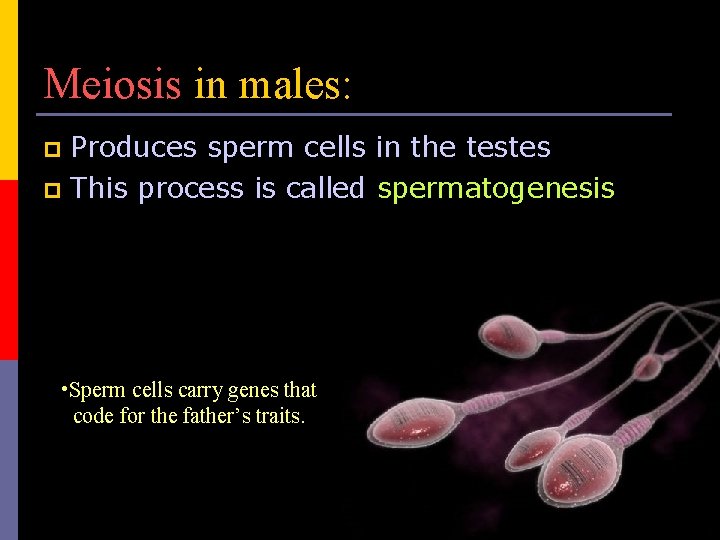
Meiosis in males: Produces sperm cells in the testes p This process is called spermatogenesis p • Sperm cells carry genes that code for the father’s traits.
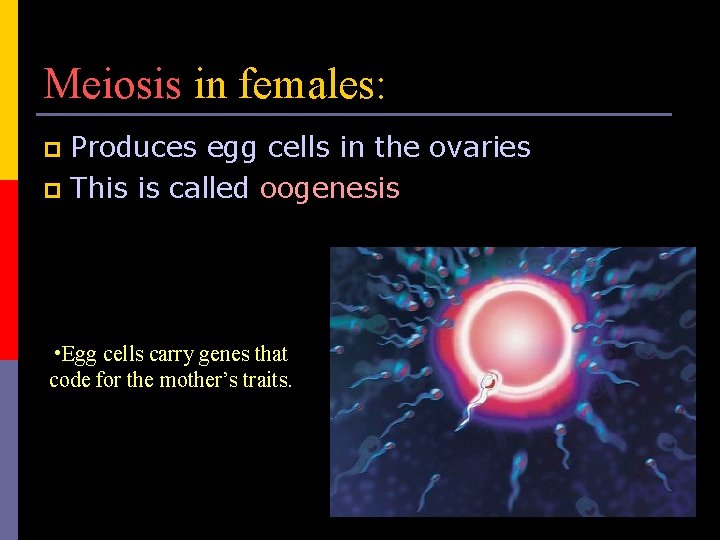
Meiosis in females: Produces egg cells in the ovaries p This is called oogenesis p • Egg cells carry genes that code for the mother’s traits.
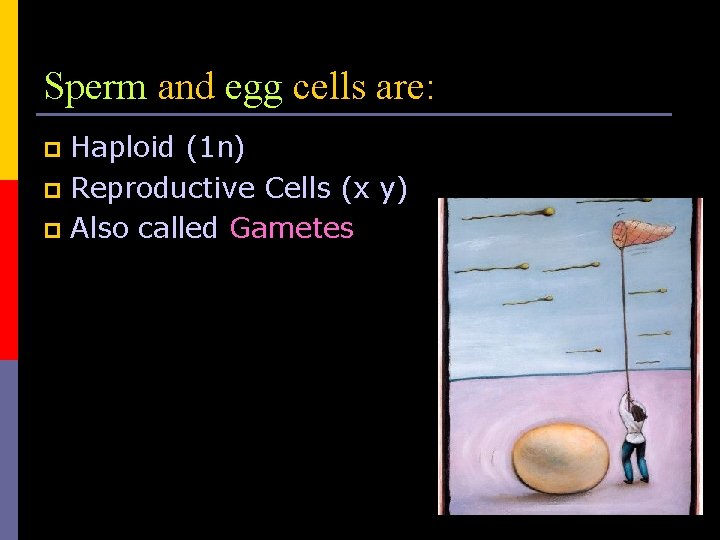
Sperm and egg cells are: Haploid (1 n) p Reproductive Cells (x y) p Also called Gametes p
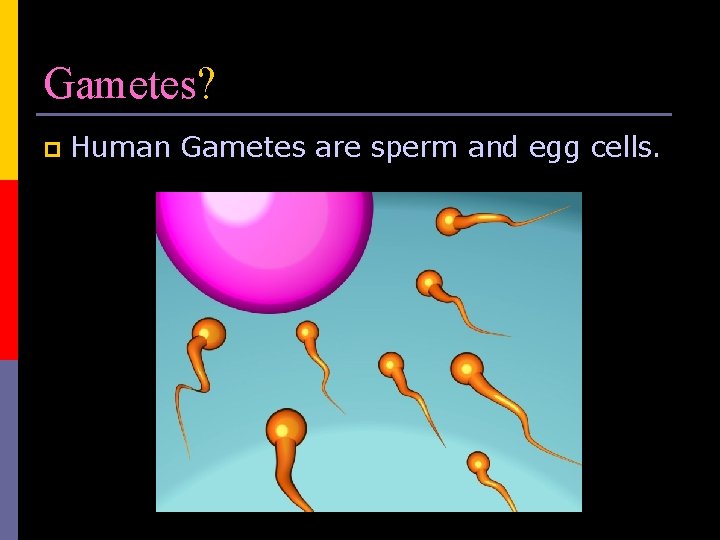
Gametes? p Human Gametes are sperm and egg cells.
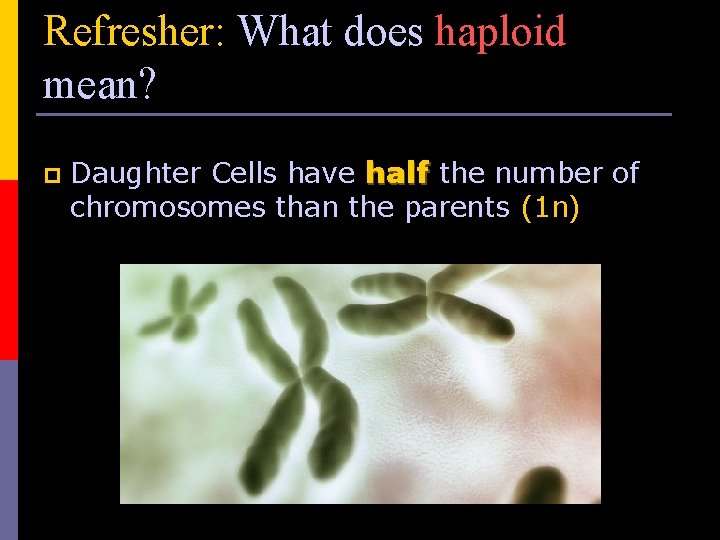
Refresher: What does haploid mean? p Daughter Cells have half the number of chromosomes than the parents (1 n)
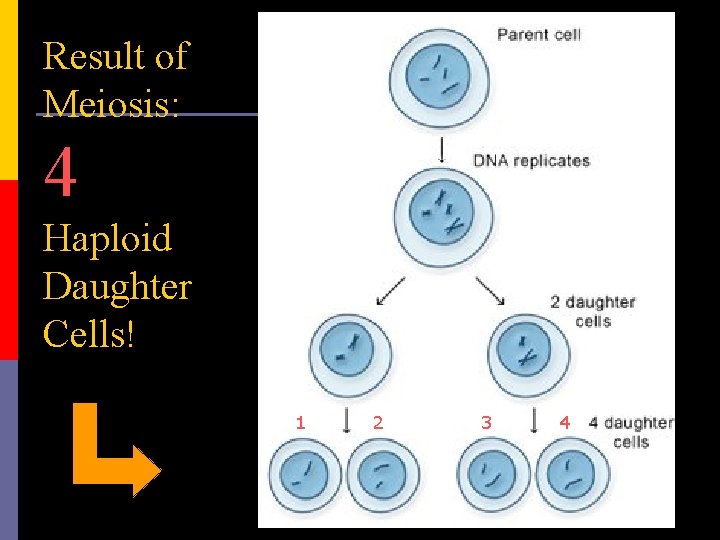
Result of Meiosis: 4 Haploid Daughter Cells! 1 2 3 4
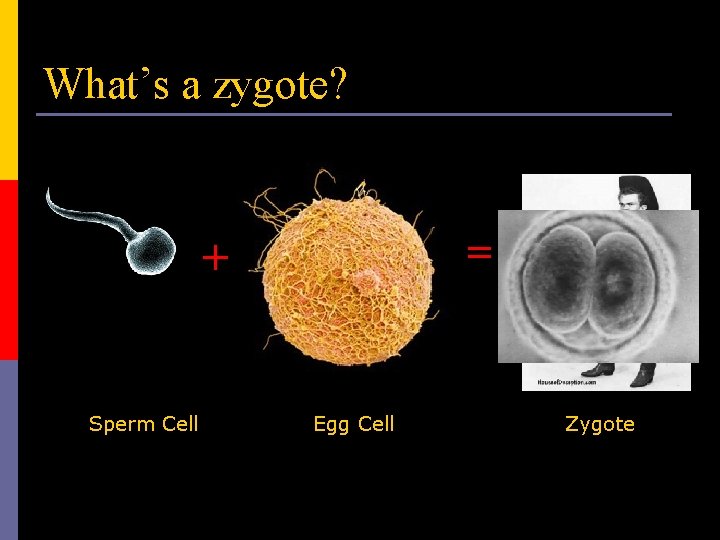
What’s a zygote? = + Sperm Cell Egg Cell Zygote
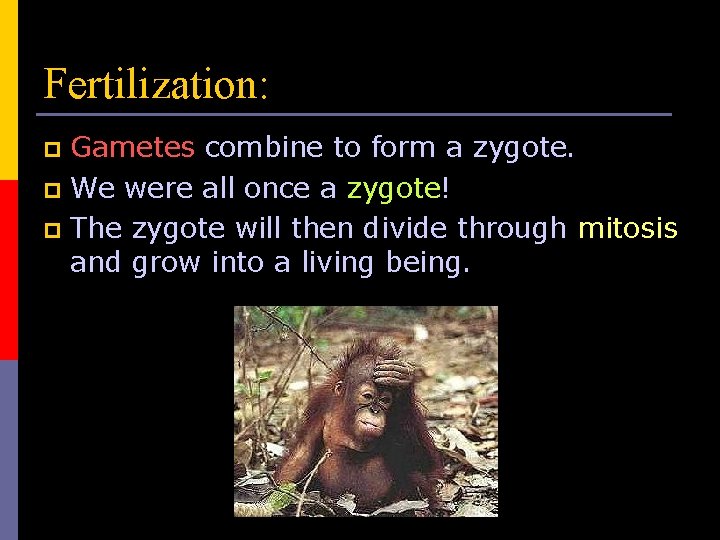
Fertilization: Gametes combine to form a zygote. p We were all once a zygote! p The zygote will then divide through mitosis and grow into a living being. p
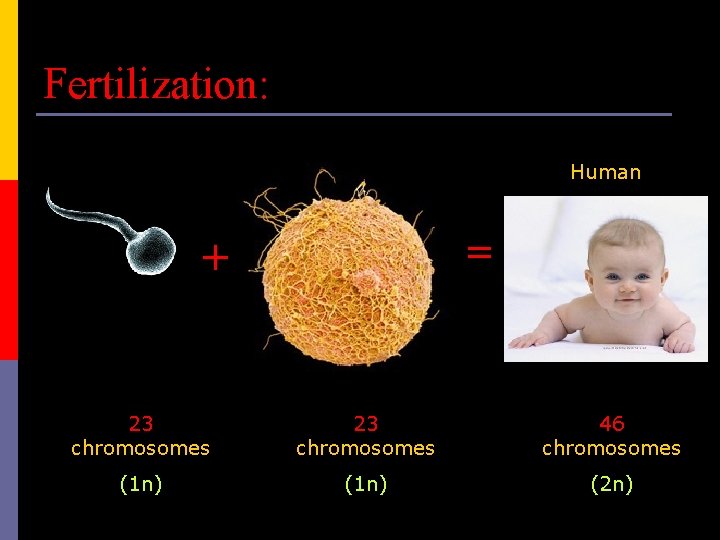
Fertilization: Human = + 23 chromosomes 46 chromosomes (1 n) (2 n)
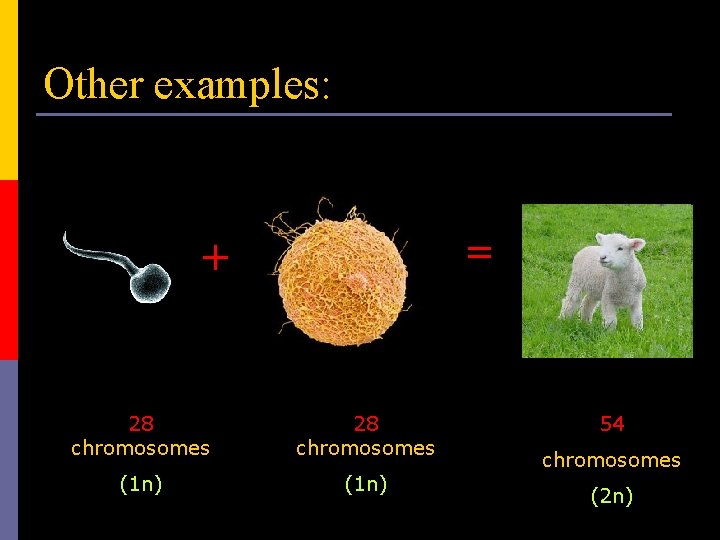
Other examples: = + 28 chromosomes (1 n) 54 chromosomes (2 n)
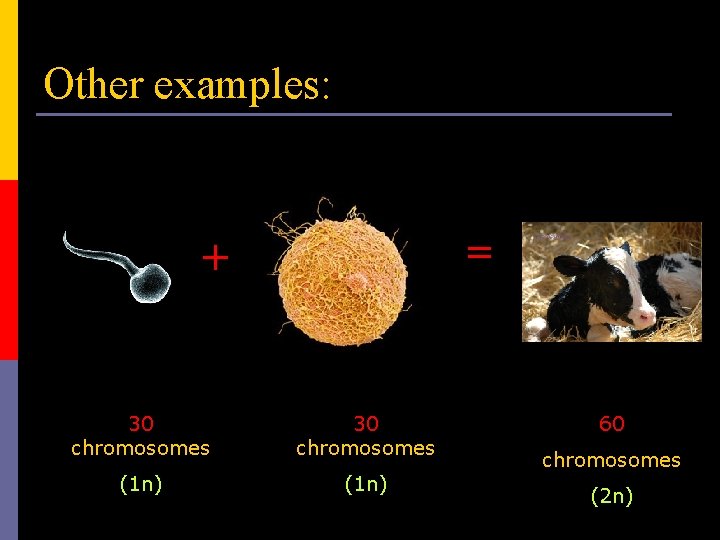
Other examples: = + 30 chromosomes (1 n) 60 chromosomes (2 n)
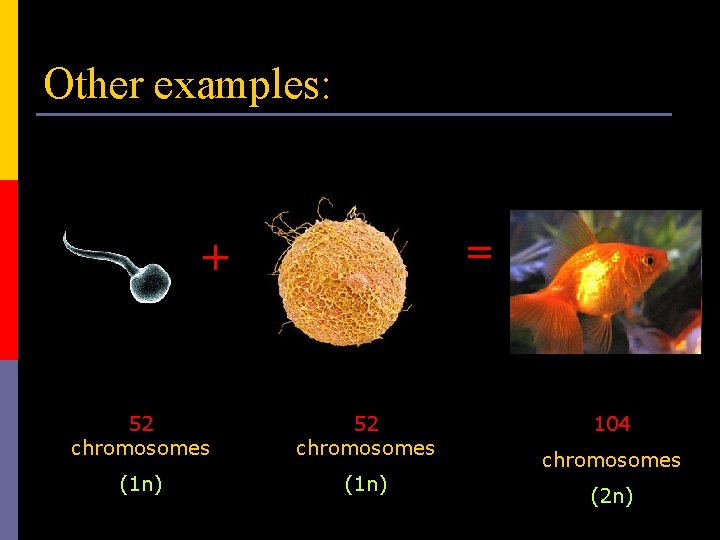
Other examples: = + 52 chromosomes (1 n) 104 chromosomes (2 n)
Recap: How is Meiosis different than Mitosis?
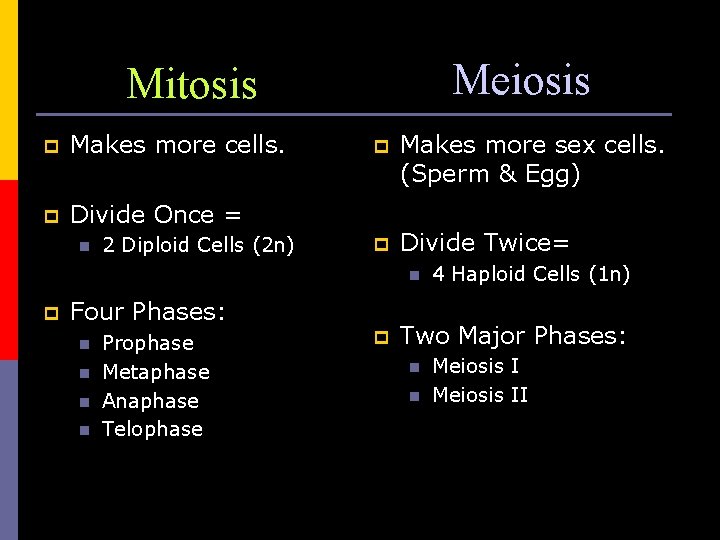
Meiosis Mitosis p Makes more cells. p Divide Once = n 2 Diploid Cells (2 n) p Makes more sex cells. (Sperm & Egg) p Divide Twice= n p Four Phases: n n Prophase Metaphase Anaphase Telophase p 4 Haploid Cells (1 n) Two Major Phases: n n Meiosis II
Critical Thinking: Please answer in complete sentences on a blank piece of paper.
Answer the following questions: 1. Explain a time when you have never felt so much pain. How did mitosis help you get through it? 2. Why do you think meiosis is important to production agriculture & animal science?