
Meiosis Sexual Life Cycles Inheritance of Genes units
- Slides: 43
Meiosis & Sexual Life Cycles
Inheritance of Genes › units of heredity › segments of DNA › have specific locus on a certain chromosomes › One set is inherited from each parent
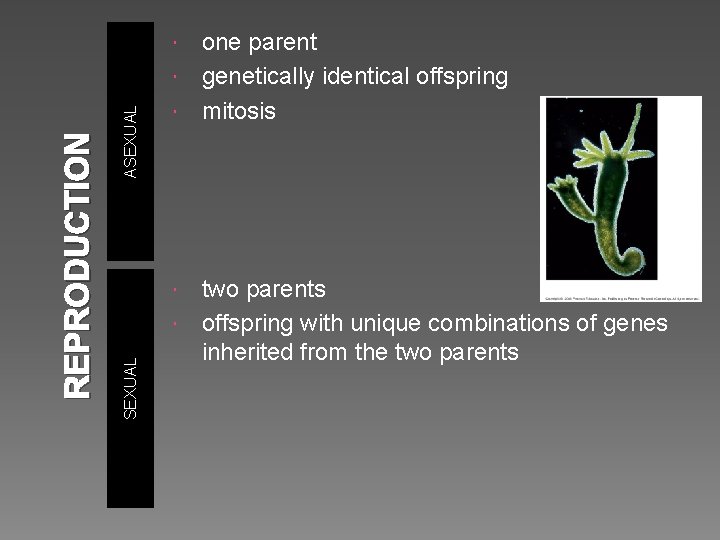
one parent genetically identical offspring mitosis two parents offspring with unique combinations of genes inherited from the two parents ASEXUAL REPRODUCTION
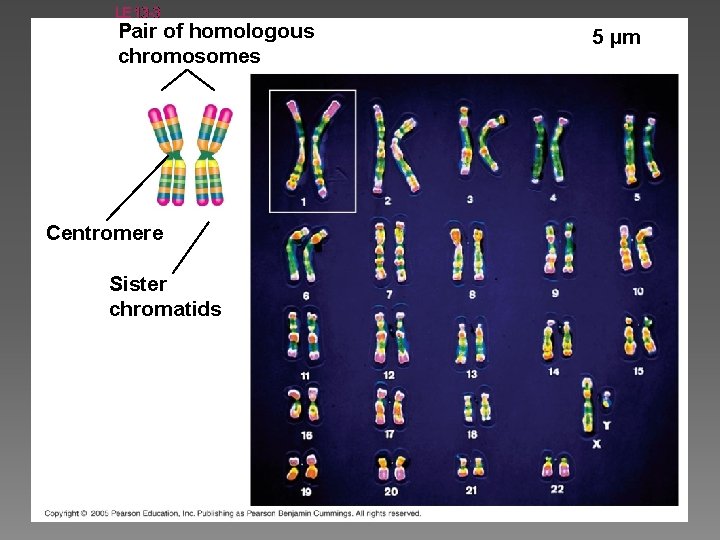
Chromosomes in Human Cells • somatic cells • 46 chromosomes arranged in pairs • Diploid (2 N) • Gametes • 23 chromosomes • Haploid (N) A karyotype › ordered display of the pairs of chromosomes from a cell homologous chromosomes (homologues) › The two chromosomes in each pair › Both chromosomes carry genes controlling the same inherited characteristics
LE 13 -3 Pair of homologous chromosomes Centromere Sister chromatids 5 µm
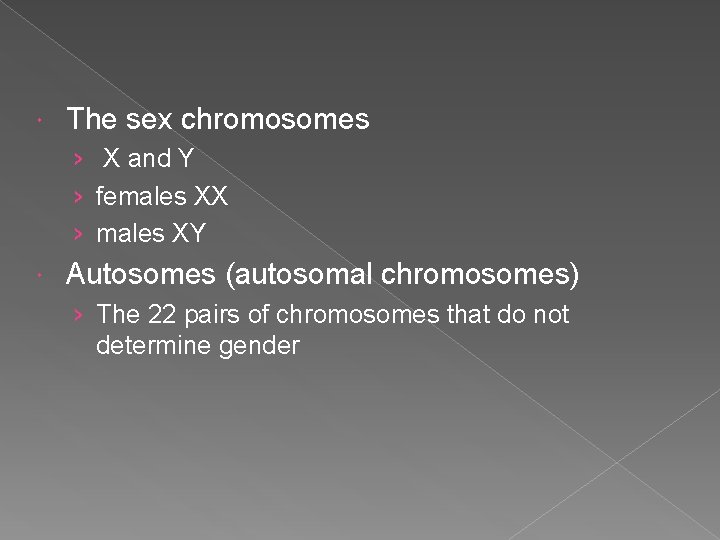
The sex chromosomes › X and Y › females XX › males XY Autosomes (autosomal chromosomes) › The 22 pairs of chromosomes that do not determine gender
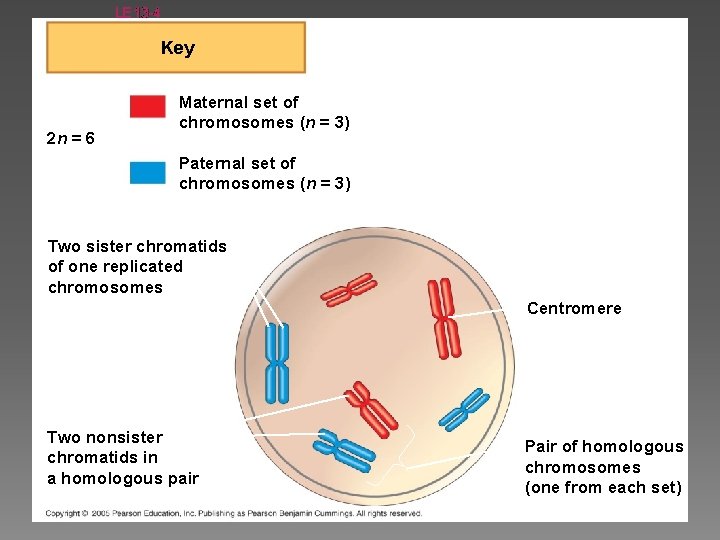
LE 13 -4 Key 2 n = 6 Maternal set of chromosomes (n = 3) Paternal set of chromosomes (n = 3) Two sister chromatids of one replicated chromosomes Centromere Two nonsister chromatids in a homologous pair Pair of homologous chromosomes (one from each set)
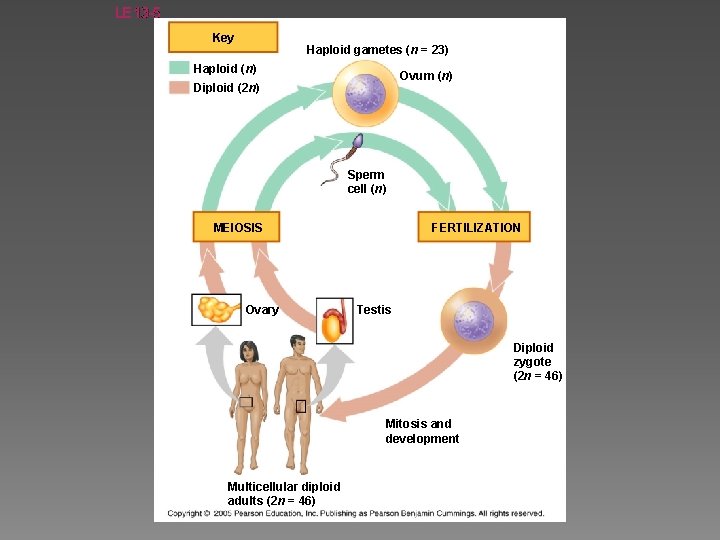
LE 13 -5 Key Haploid gametes (n = 23) Haploid (n) Ovum (n) Diploid (2 n) Sperm cell (n) MEIOSIS Ovary FERTILIZATION Testis Diploid zygote (2 n = 46) Mitosis and development Multicellular diploid adults (2 n = 46)
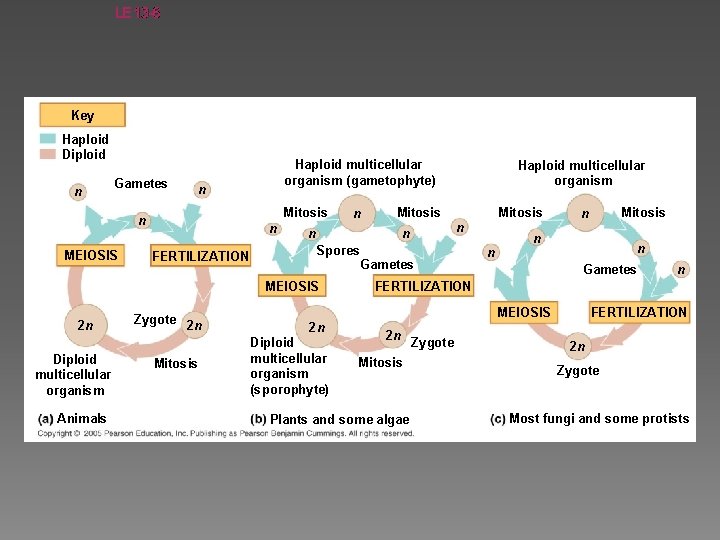
The Variety of Sexual Life Cycles The alternation of meiosis and fertilization is common to all organisms that reproduce sexually The three main types of sexual life cycles differ in the timing of meiosis and fertilization
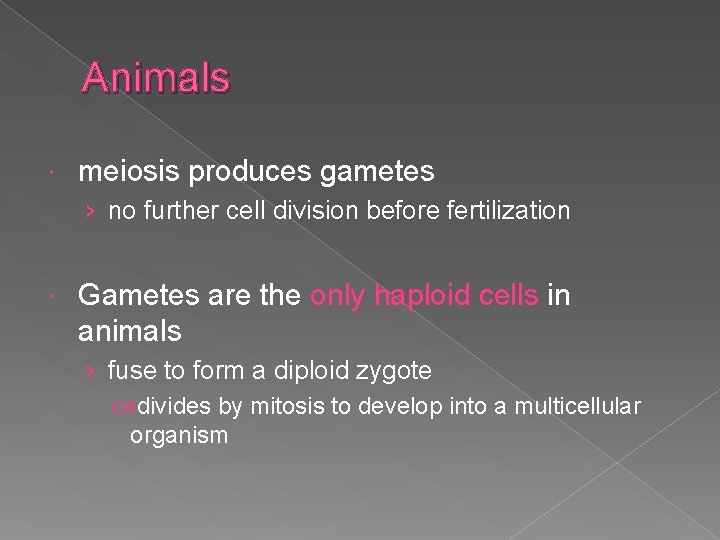
Animals meiosis produces gametes › no further cell division before fertilization Gametes are the only haploid cells in animals › fuse to form a diploid zygote divides by mitosis to develop into a multicellular organism
LE 13 -6 Key Haploid Diploid n Gametes n Mitosis n MEIOSIS Haploid multicellular organism (gametophyte) n FERTILIZATION Diploid multicellular organism Animals Zygote 2 n Mitosis n Spores Gametes MEIOSIS 2 n n Haploid multicellular organism 2 n Diploid multicellular organism (sporophyte) Mitosis n n Gametes n FERTILIZATION MEIOSIS 2 n Mitosis Plants and some algae Zygote FERTILIZATION 2 n Zygote Most fungi and some protists
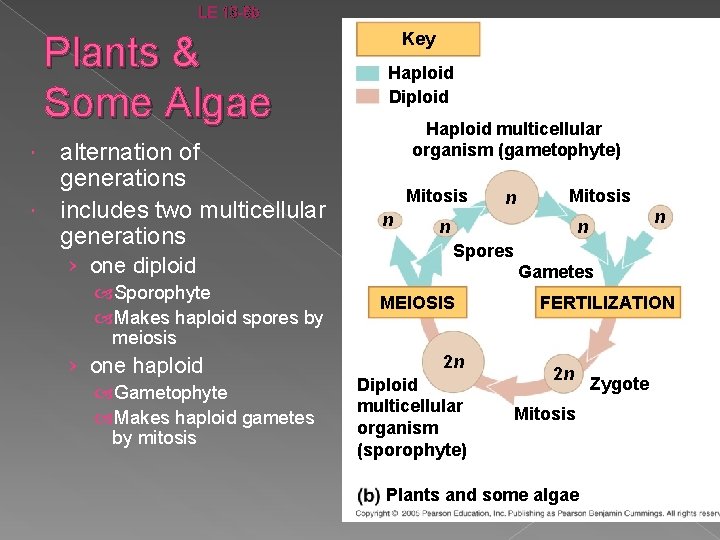
LE 13 -6 b Plants & Some Algae alternation of generations includes two multicellular generations › one diploid Sporophyte Makes haploid spores by meiosis › one haploid Gametophyte Makes haploid gametes by mitosis Key Haploid Diploid Haploid multicellular organism (gametophyte) Mitosis n n n Spores Gametes MEIOSIS 2 n Diploid multicellular organism (sporophyte) FERTILIZATION 2 n Mitosis Plants and some algae Zygote
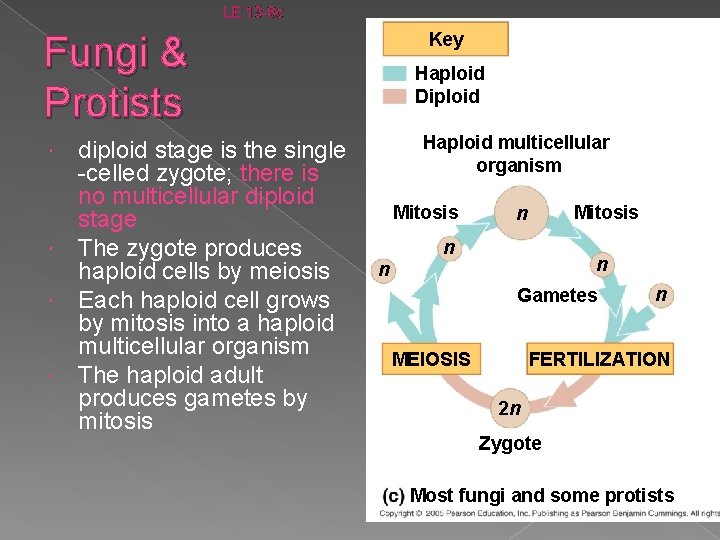
LE 13 -6 c Fungi & Protists diploid stage is the single -celled zygote; there is no multicellular diploid stage The zygote produces haploid cells by meiosis Each haploid cell grows by mitosis into a haploid multicellular organism The haploid adult produces gametes by mitosis Key Haploid Diploid Haploid multicellular organism Mitosis n n Gametes MEIOSIS n FERTILIZATION 2 n Zygote Most fungi and some protists
Meiosis Occurs after chromosome replication 2 divisions › Meiosis II 4 daughter cells › haploid
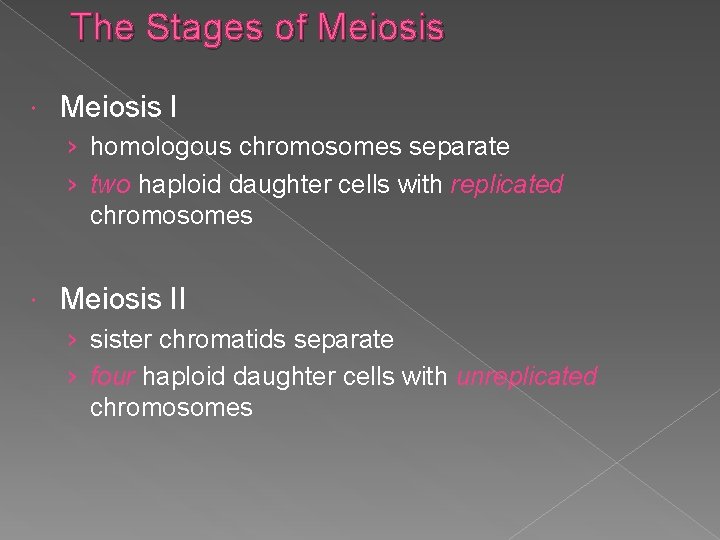
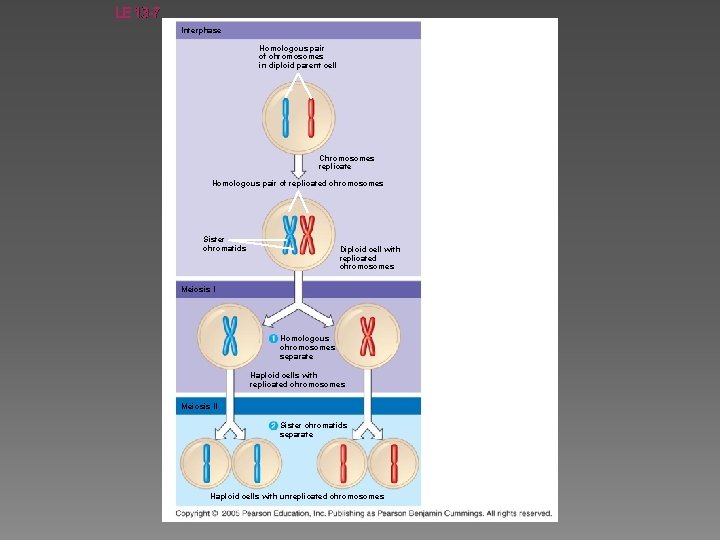
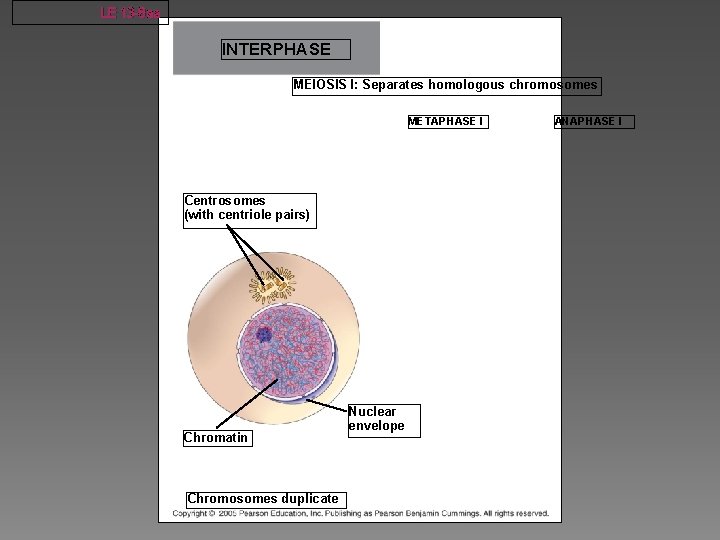
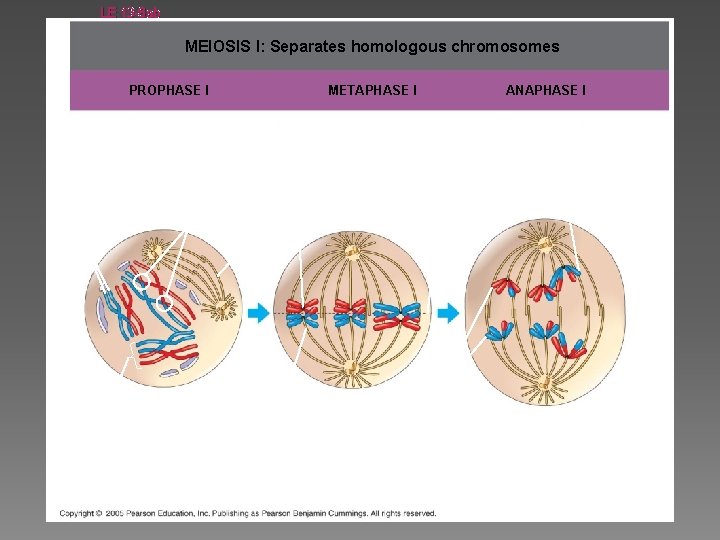
The Stages of Meiosis I › homologous chromosomes separate › two haploid daughter cells with replicated chromosomes Meiosis II › sister chromatids separate › four haploid daughter cells with unreplicated chromosomes
LE 13 -7 Interphase Homologous pair of chromosomes in diploid parent cell Chromosomes replicate Homologous pair of replicated chromosomes Sister chromatids Diploid cell with replicated chromosomes Meiosis I Homologous chromosomes separate Haploid cells with replicated chromosomes Meiosis II Sister chromatids separate Haploid cells with unreplicated chromosomes
LE 13 -8 aa INTERPHASE MEIOSIS I: Separates homologous chromosomes METAPHASE I Centrosomes (with centriole pairs) Chromatin Chromosomes duplicate Nuclear envelope ANAPHASE I
Animation: Meiosis Overview
Interphase • Meiosis I • • • Prophase I Metaphase I Anaphase I Telophase I (& cytokinesis) Meiosis II • • Prophase II Metaphase II Anaphase II Telophase II
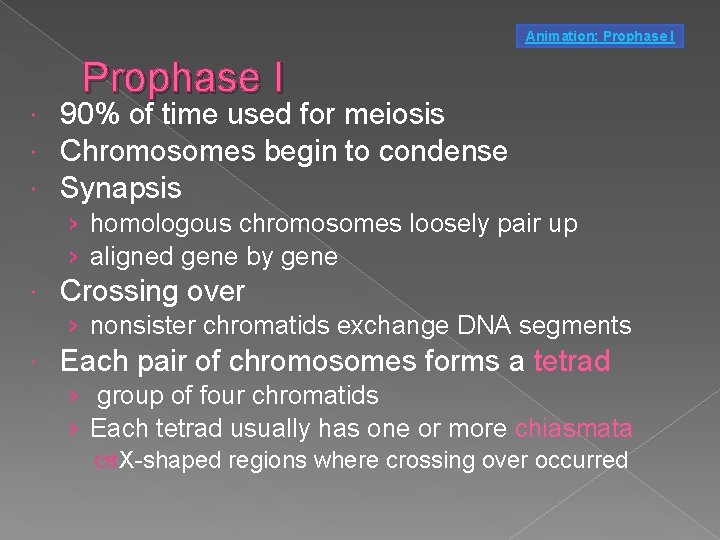
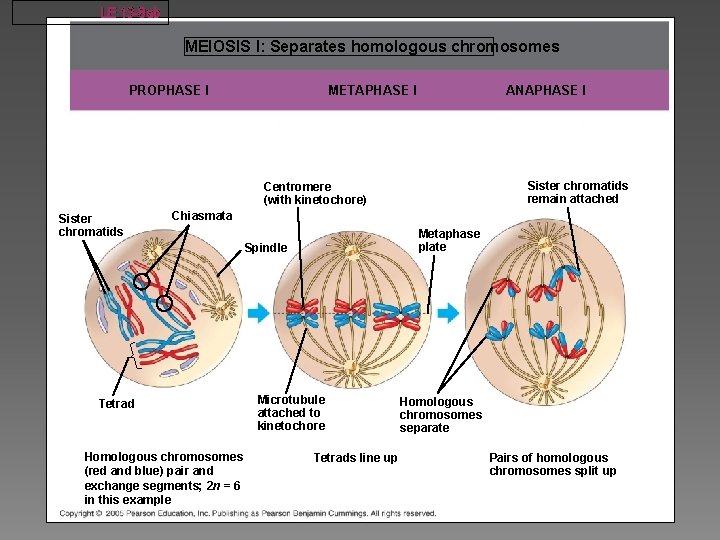
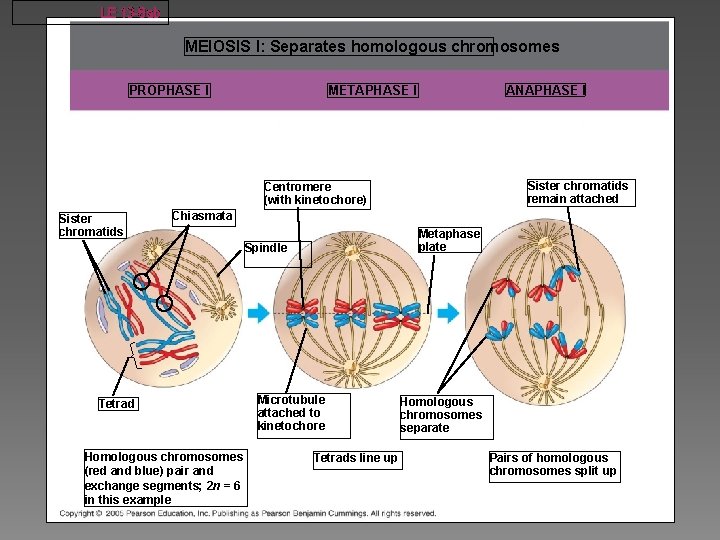
Animation: Prophase I 90% of time used for meiosis Chromosomes begin to condense Synapsis › homologous chromosomes loosely pair up › aligned gene by gene Crossing over › nonsister chromatids exchange DNA segments Each pair of chromosomes forms a tetrad › group of four chromatids › Each tetrad usually has one or more chiasmata X-shaped regions where crossing over occurred
LE 13 -8 ab MEIOSIS I: Separates homologous chromosomes METAPHASE I PROPHASE I ANAPHASE I Sister chromatids remain attached Centromere (with kinetochore) Sister chromatids Chiasmata Metaphase plate Spindle Tetrad Homologous chromosomes (red and blue) pair and exchange segments; 2 n = 6 in this example Microtubule attached to kinetochore Tetrads line up Homologous chromosomes separate Pairs of homologous chromosomes split up
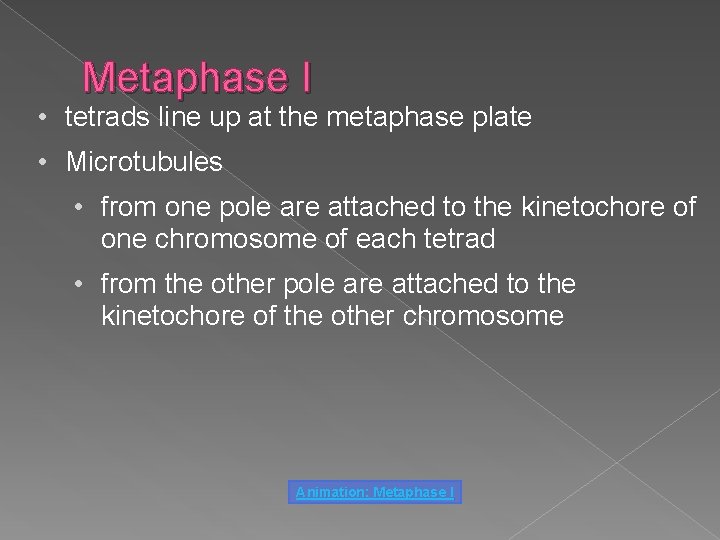
Metaphase I • tetrads line up at the metaphase plate • Microtubules • from one pole are attached to the kinetochore of one chromosome of each tetrad • from the other pole are attached to the kinetochore of the other chromosome Animation: Metaphase I
LE 13 -8 ab MEIOSIS I: Separates homologous chromosomes METAPHASE I PROPHASE I ANAPHASE I Sister chromatids remain attached Centromere (with kinetochore) Sister chromatids Chiasmata Metaphase plate Spindle Tetrad Homologous chromosomes (red and blue) pair and exchange segments; 2 n = 6 in this example Microtubule attached to kinetochore Tetrads line up Homologous chromosomes separate Pairs of homologous chromosomes split up
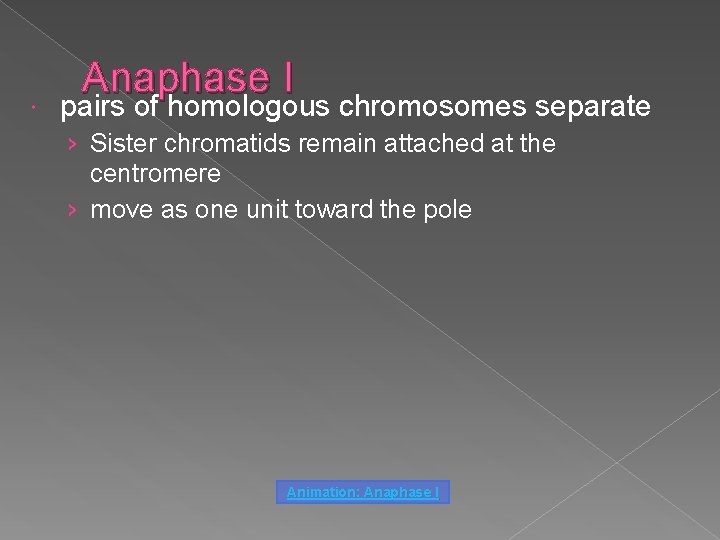
Anaphase I pairs of homologous chromosomes separate › Sister chromatids remain attached at the centromere › move as one unit toward the pole Animation: Anaphase I
LE 13 -8 ab MEIOSIS I: Separates homologous chromosomes METAPHASE I PROPHASE I ANAPHASE I Sister chromatids remain attached Centromere (with kinetochore) Sister chromatids Chiasmata Metaphase plate Spindle Tetrad Homologous chromosomes (red and blue) pair and exchange segments; 2 n = 6 in this example Microtubule attached to kinetochore Tetrads line up Homologous chromosomes separate Pairs of homologous chromosomes split up
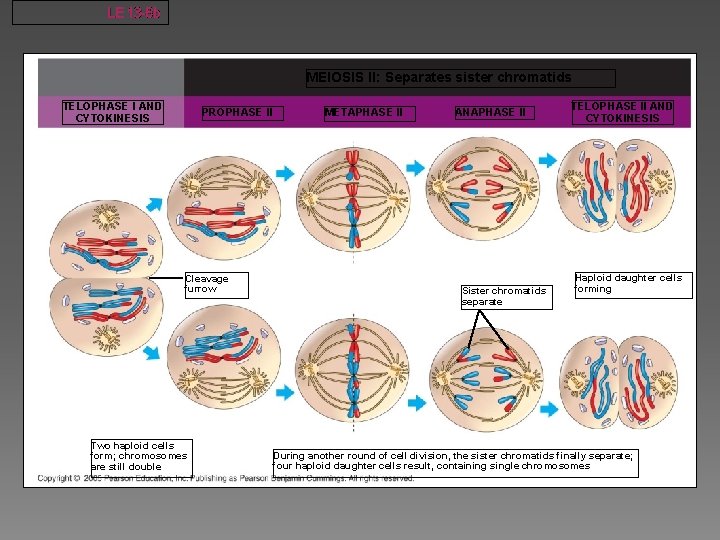
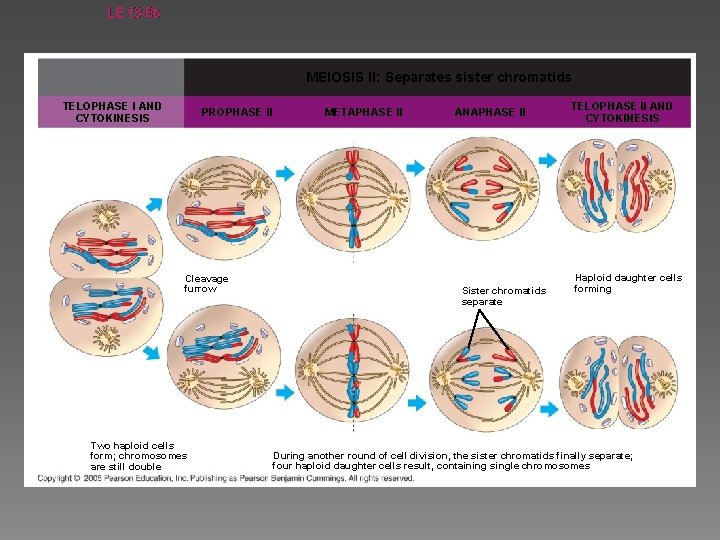
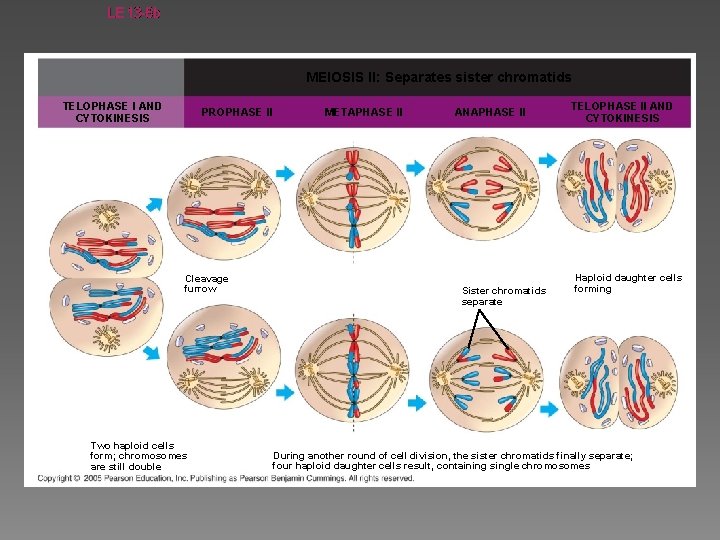
Telophase I and Cytokinesis In the beginning of telophase I, each half of the cell has a haploid set of chromosomes; each chromosome still consists of two sister chromatids Cytokinesis usually occurs simultaneously, forming two haploid daughter cells In animal cells, a cleavage furrow forms; in plant cells, a cell plate forms No chromosome replication occurs between the end of meiosis I and the beginning of meiosis II because the chromosomes are already replicated Animation: Telophase I and Cytokinesis
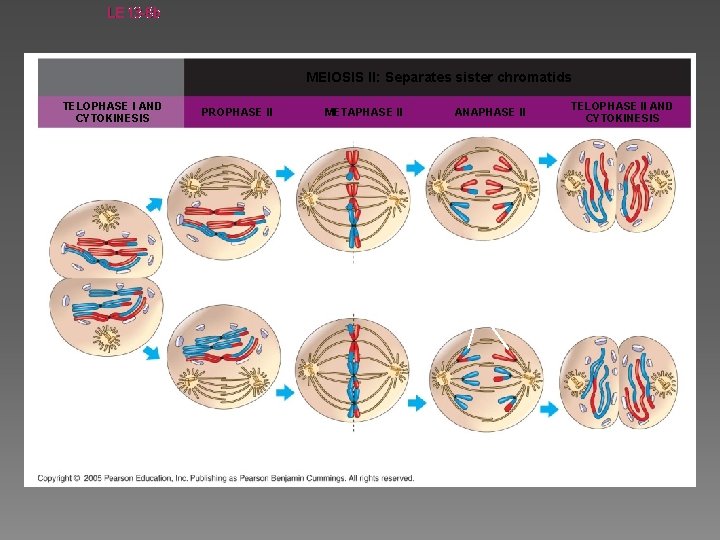
LE 13 -8 b MEIOSIS II: Separates sister chromatids TELOPHASE I AND CYTOKINESIS PROPHASE II Cleavage furrow Two haploid cells form; chromosomes are still double METAPHASE II ANAPHASE II Sister chromatids separate TELOPHASE II AND CYTOKINESIS Haploid daughter cells forming During another round of cell division, the sister chromatids finally separate; four haploid daughter cells result, containing single chromosomes
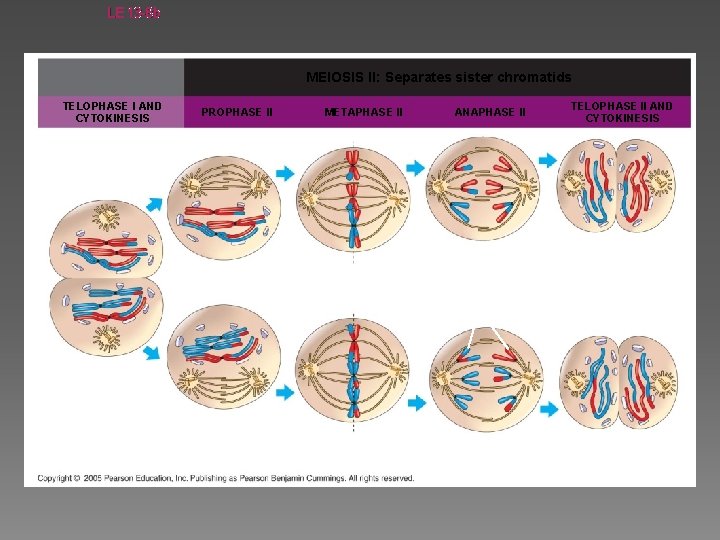
Prophase II a spindle apparatus forms chromosomes (each still composed of two chromatids) begin to move toward the metaphase plate Animation: Prophase II
LE 13 -8 b MEIOSIS II: Separates sister chromatids TELOPHASE I AND CYTOKINESIS PROPHASE II Cleavage furrow Two haploid cells form; chromosomes are still double METAPHASE II ANAPHASE II Sister chromatids separate TELOPHASE II AND CYTOKINESIS Haploid daughter cells forming During another round of cell division, the sister chromatids finally separate; four haploid daughter cells result, containing single chromosomes
Metaphase II sister chromatids are arranged at the metaphase plate Due to crossing over in meiosis I, the two sister chromatids of each chromosome are no longer genetically identical kinetochores of sister chromatids attach to microtubules extending from opposite poles Animation: Metaphase II
LE 13 -8 b MEIOSIS II: Separates sister chromatids TELOPHASE I AND CYTOKINESIS PROPHASE II Cleavage furrow Two haploid cells form; chromosomes are still double METAPHASE II ANAPHASE II Sister chromatids separate TELOPHASE II AND CYTOKINESIS Haploid daughter cells forming During another round of cell division, the sister chromatids finally separate; four haploid daughter cells result, containing single chromosomes
Anaphase II At anaphase II, the sister chromatids separate The sister chromatids of each chromosome now move as two newly individual chromosomes toward opposite poles Animation: Anaphase II
LE 13 -8 b MEIOSIS II: Separates sister chromatids TELOPHASE I AND CYTOKINESIS PROPHASE II Cleavage furrow Two haploid cells form; chromosomes are still double METAPHASE II ANAPHASE II Sister chromatids separate TELOPHASE II AND CYTOKINESIS Haploid daughter cells forming During another round of cell division, the sister chromatids finally separate; four haploid daughter cells result, containing single chromosomes
Telophase II and Cytokinesis the chromosomes arrive at opposite poles Nuclei form chromosomes begin decondensing Cytokinesis separates the cytoplasm four daughter cells produced › each with a haploid set of unreplicated chromosomes Each daughter cell is genetically distinct from the others and from the parent cell Animation: Telophase II and Cytokinesis
LE 13 -8 b MEIOSIS II: Separates sister chromatids TELOPHASE I AND CYTOKINESIS PROPHASE II Cleavage furrow Two haploid cells form; chromosomes are still double METAPHASE II ANAPHASE II Sister chromatids separate TELOPHASE II AND CYTOKINESIS Haploid daughter cells forming During another round of cell division, the sister chromatids finally separate; four haploid daughter cells result, containing single chromosomes
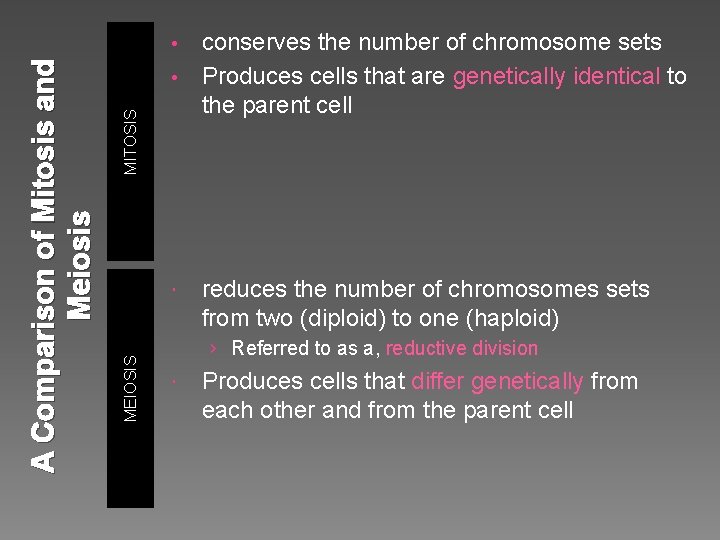
conserves the number of chromosome sets • Produces cells that are genetically identical to the parent cell MITOSIS MEIOSIS A Comparison of Mitosis and Meiosis • reduces the number of chromosomes sets from two (diploid) to one (haploid) › Referred to as a, reductive division Produces cells that differ genetically from each other and from the parent cell
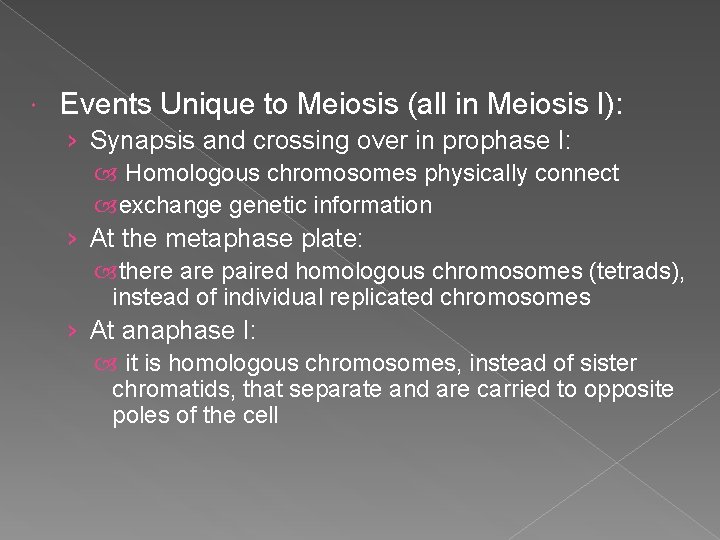
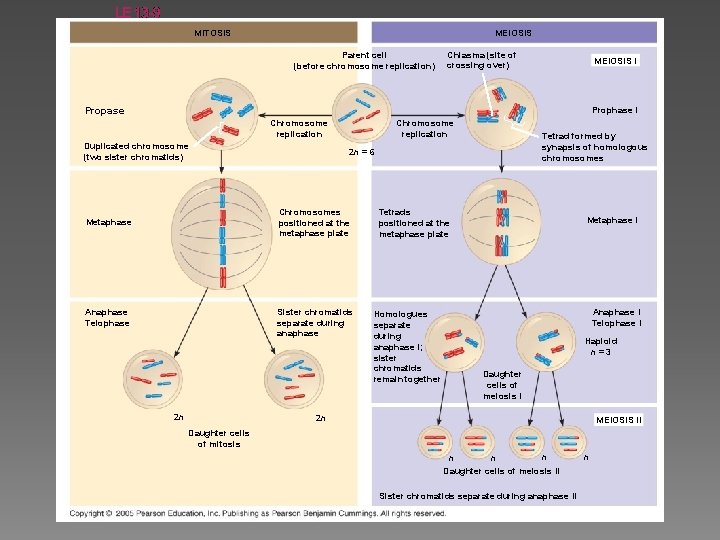
Events Unique to Meiosis (all in Meiosis I): › Synapsis and crossing over in prophase I: Homologous chromosomes physically connect exchange genetic information › At the metaphase plate: there are paired homologous chromosomes (tetrads), instead of individual replicated chromosomes › At anaphase I: it is homologous chromosomes, instead of sister chromatids, that separate and are carried to opposite poles of the cell
LE 13 -9 MITOSIS MEIOSIS Parent cell (before chromosome replication) Chiasma (site of crossing over) MEIOSIS I Propase Prophase I Chromosome replication Duplicated chromosome (two sister chromatids) Chromosome replication 2 n = 6 Chromosomes positioned at the metaphase plate Metaphase Anaphase Telophase Sister chromatids separate during anaphase 2 n Tetrad formed by synapsis of homologous chromosomes Tetrads positioned at the metaphase plate Homologues separate during anaphase I; sister chromatids remain together Metaphase I Anaphase I Telophase I Haploid n=3 Daughter cells of meiosis I 2 n MEIOSIS II Daughter cells of mitosis n n n Daughter cells of meiosis II Sister chromatids separate during anaphase II n
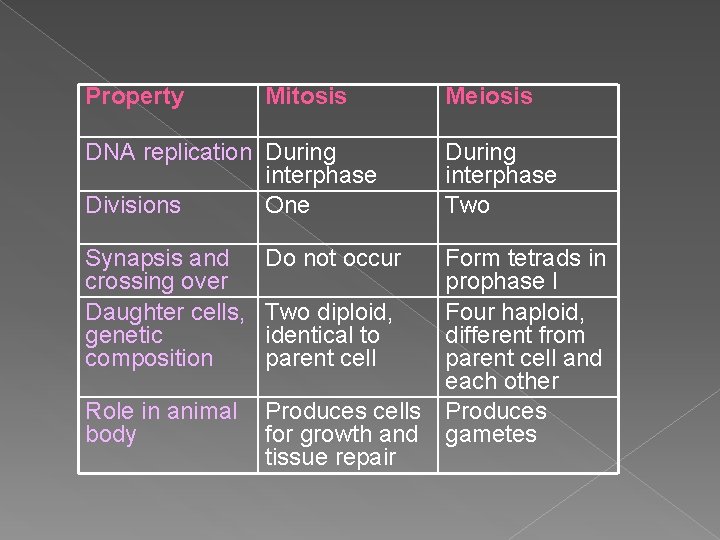
Property Mitosis Meiosis DNA replication During interphase Divisions One During interphase Two Synapsis and crossing over Daughter cells, genetic composition Do not occur Role in animal body Produces cells for growth and tissue repair Form tetrads in prophase I Four haploid, different from parent cell and each other Produces gametes Two diploid, identical to parent cell
Genetic Variation Mutations › original source of genetic diversity › create different versions of genes Reshuffling during sexual reproduction
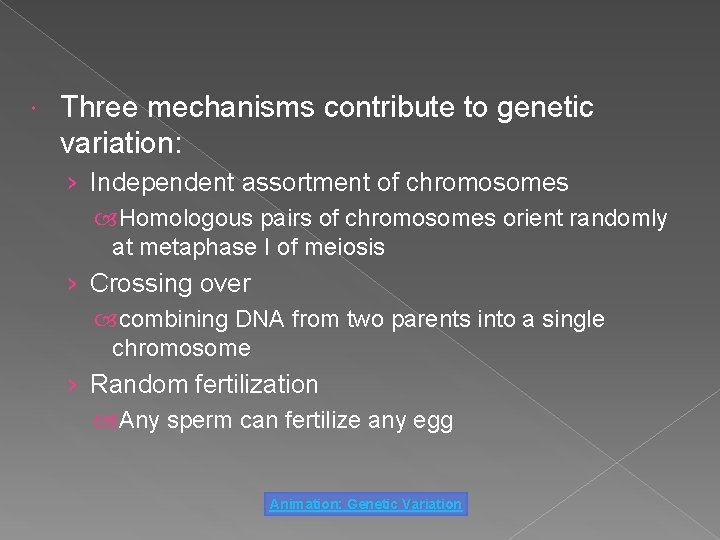
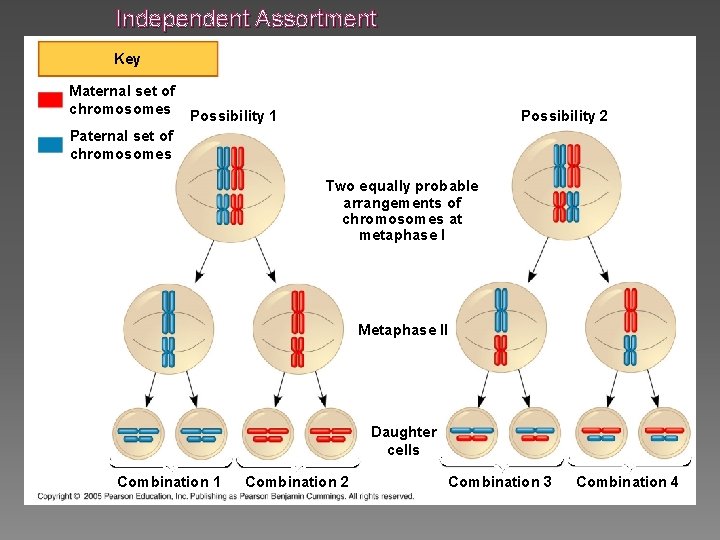
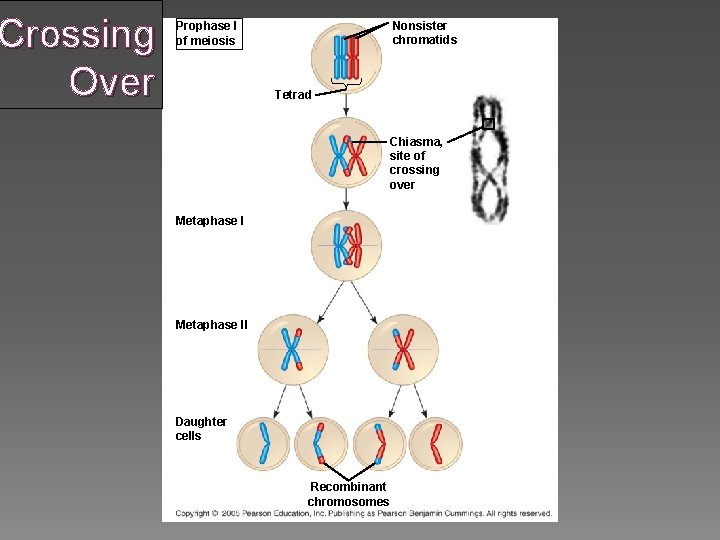
Three mechanisms contribute to genetic variation: › Independent assortment of chromosomes Homologous pairs of chromosomes orient randomly at metaphase I of meiosis › Crossing over combining DNA from two parents into a single chromosome › Random fertilization Any sperm can fertilize any egg Animation: Genetic Variation
Independent Assortment Key Maternal set of chromosomes Possibility 2 Possibility 1 Paternal set of chromosomes Two equally probable arrangements of chromosomes at metaphase I Metaphase II Daughter cells Combination 1 Combination 2 Combination 3 Combination 4
Crossing Over Nonsister chromatids Prophase I of meiosis Tetrad Chiasma, site of crossing over Metaphase II Daughter cells Recombinant chromosomes