
Meiosis Sexual Life Cycles Chapter 13 Cell Reproduction
- Slides: 37
Meiosis & Sexual Life Cycles Chapter 13
Cell Reproduction • Mitosis – produce cells with same information • identical daughter cells – exact copies (clones) – same amount of DNA • same number of chromosomes – asexual reproduction What are disadvantages of asexual reproduction? What are advantages?
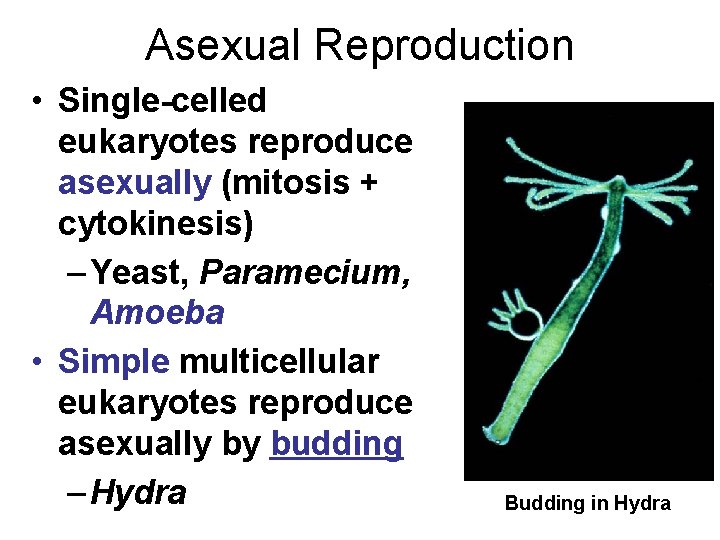
Asexual Reproduction • Single-celled eukaryotes reproduce asexually (mitosis + cytokinesis) – Yeast, Paramecium, Amoeba • Simple multicellular eukaryotes reproduce asexually by budding – Hydra Budding in Hydra
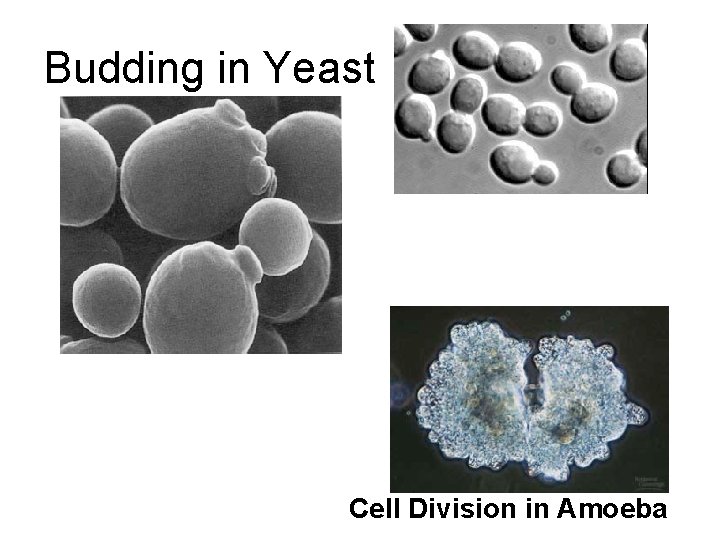
Budding in Yeast Cell Division in Amoeba
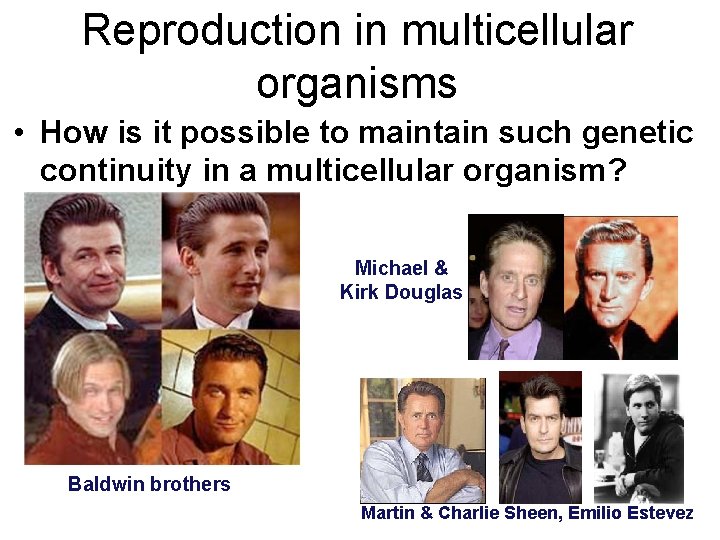
Reproduction in multicellular organisms • How is it possible to maintain such genetic continuity in a multicellular organism? Michael & Kirk Douglas Baldwin brothers Martin & Charlie Sheen, Emilio Estevez
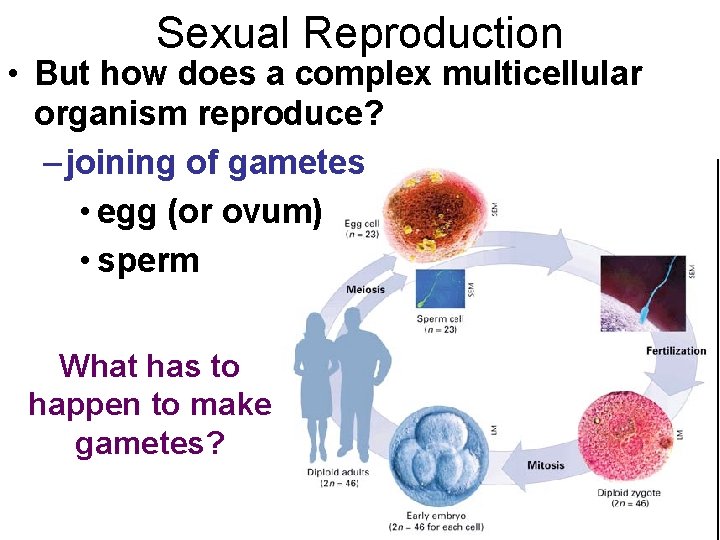
Sexual Reproduction • But how does a complex multicellular organism reproduce? – joining of gametes • egg (or ovum) • sperm What has to happen to make gametes?
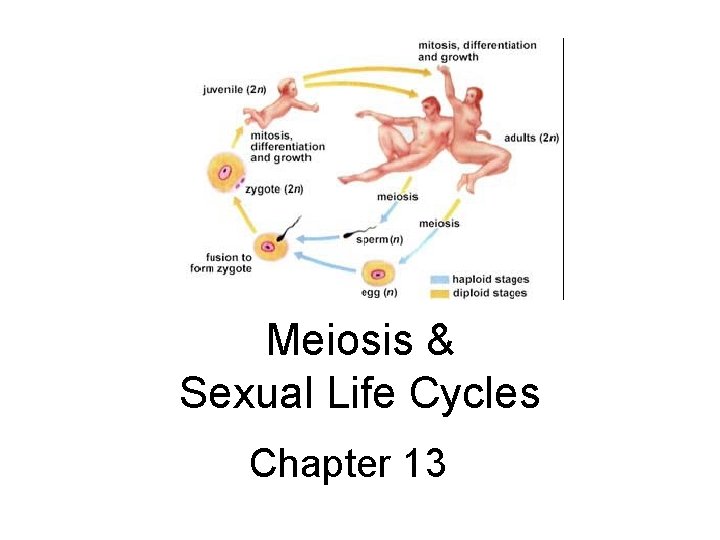
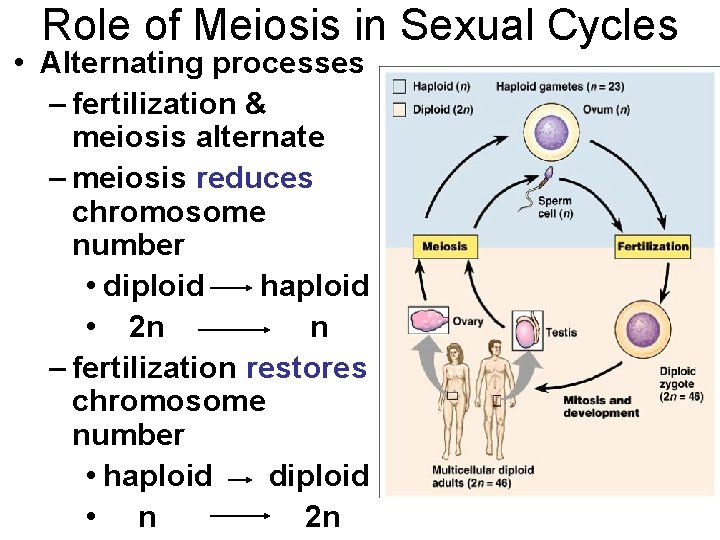
Role of Meiosis in Sexual Cycles • Alternating processes – fertilization & meiosis alternate – meiosis reduces chromosome number • diploid haploid • 2 n n – fertilization restores chromosome number • haploid diploid • n 2 n
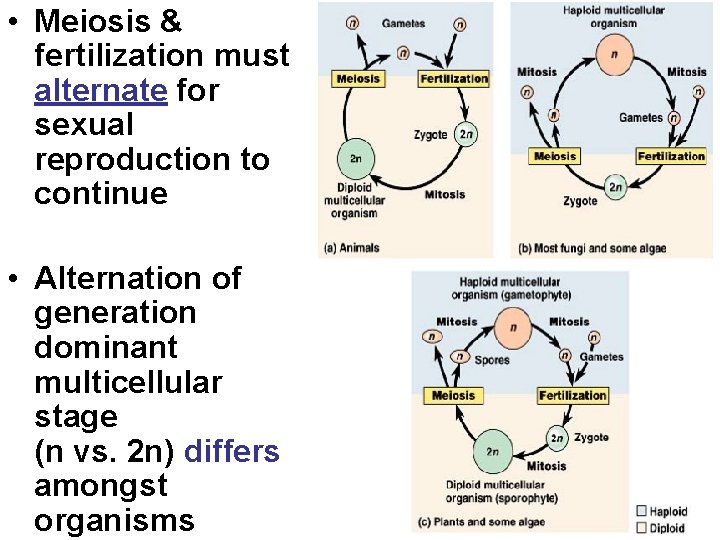
• Meiosis & fertilization must alternate for sexual reproduction to continue • Alternation of generation dominant multicellular stage (n vs. 2 n) differs amongst organisms
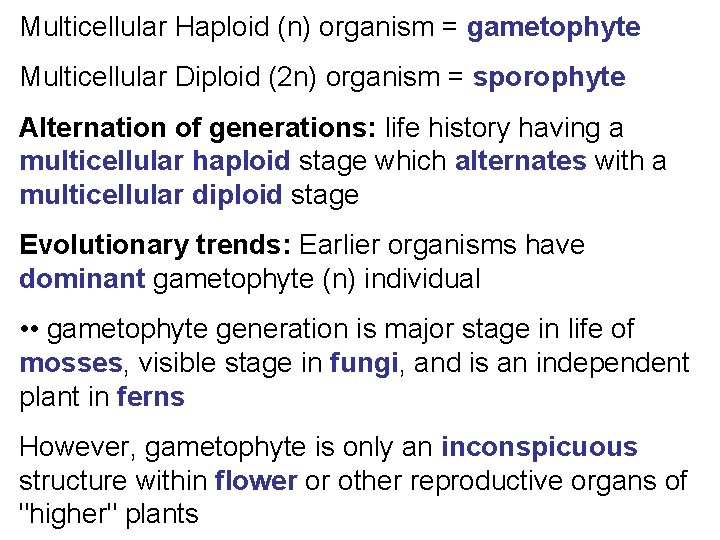
Multicellular Haploid (n) organism = gametophyte Multicellular Diploid (2 n) organism = sporophyte Alternation of generations: life history having a multicellular haploid stage which alternates with a multicellular diploid stage Evolutionary trends: Earlier organisms have dominant gametophyte (n) individual • • gametophyte generation is major stage in life of mosses, visible stage in fungi, and is an independent plant in ferns However, gametophyte is only an inconspicuous structure within flower or other reproductive organs of "higher" plants
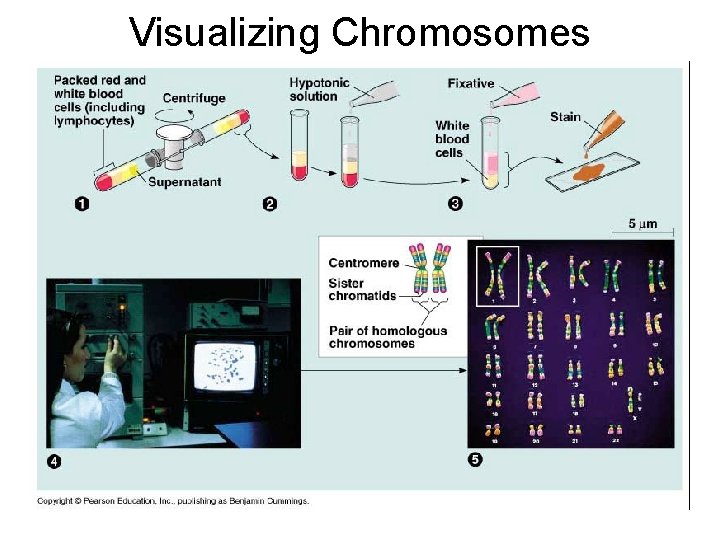
Visualizing Chromosomes
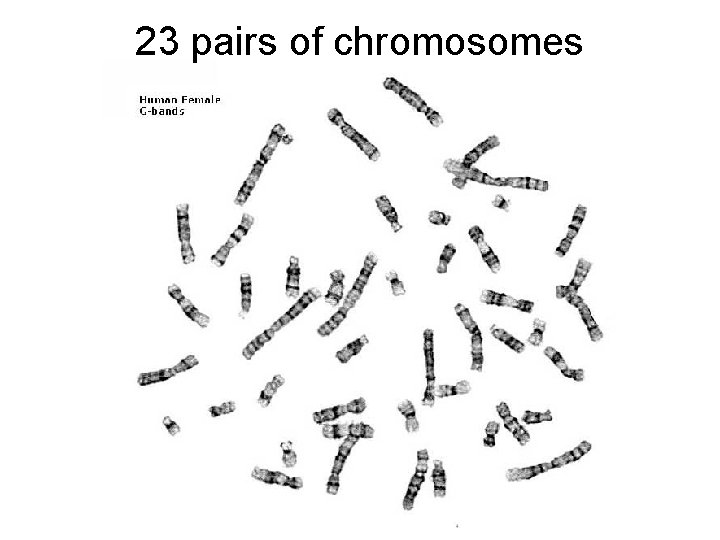
23 pairs of chromosomes
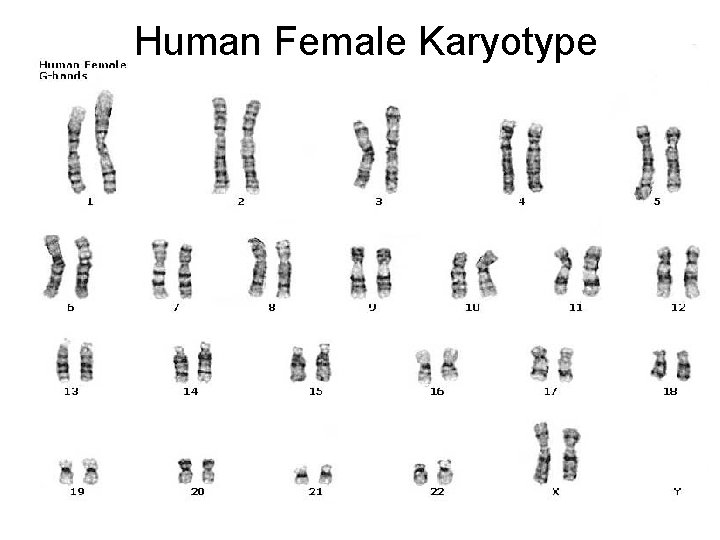
Human Female Karyotype
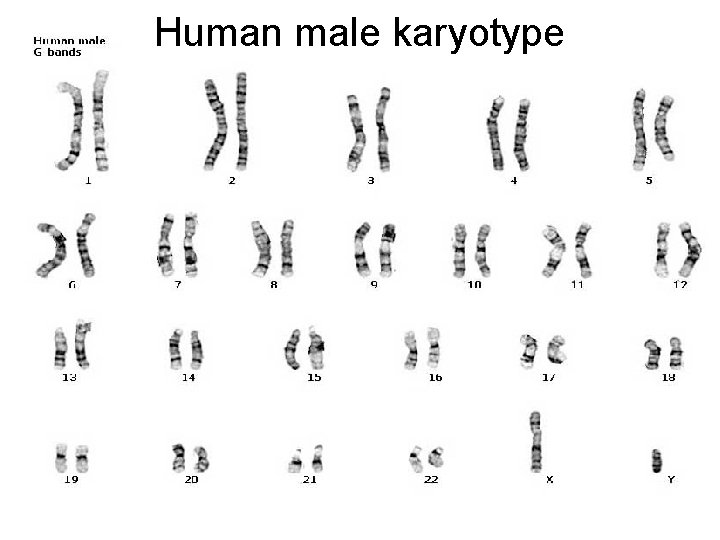
Human male karyotype
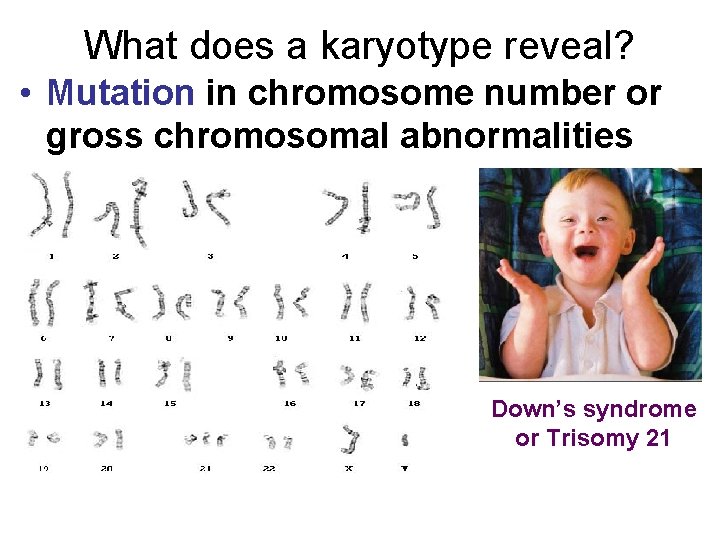
What does a karyotype reveal? • Mutation in chromosome number or gross chromosomal abnormalities Down’s syndrome or Trisomy 21
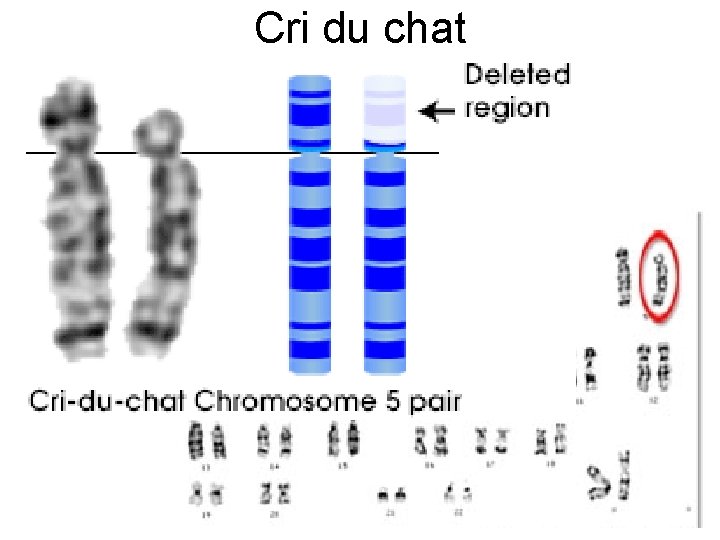
Cri du chat
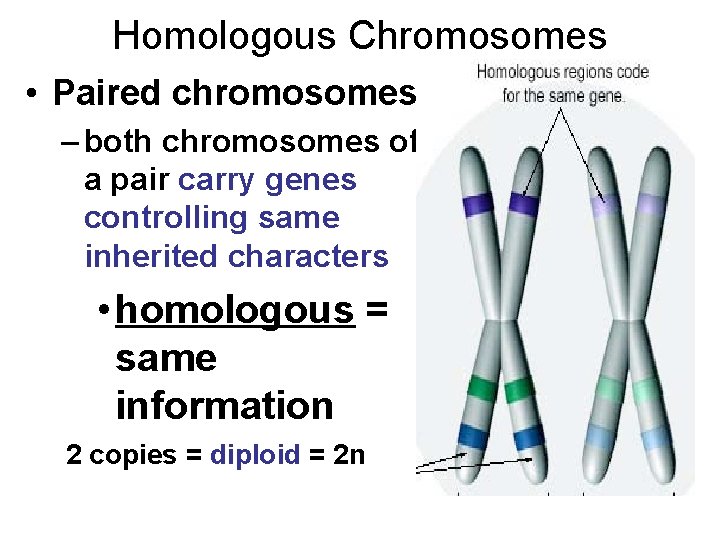
Homologous Chromosomes • Paired chromosomes – both chromosomes of a pair carry genes controlling same inherited characters • homologous = same information 2 copies = diploid = 2 n
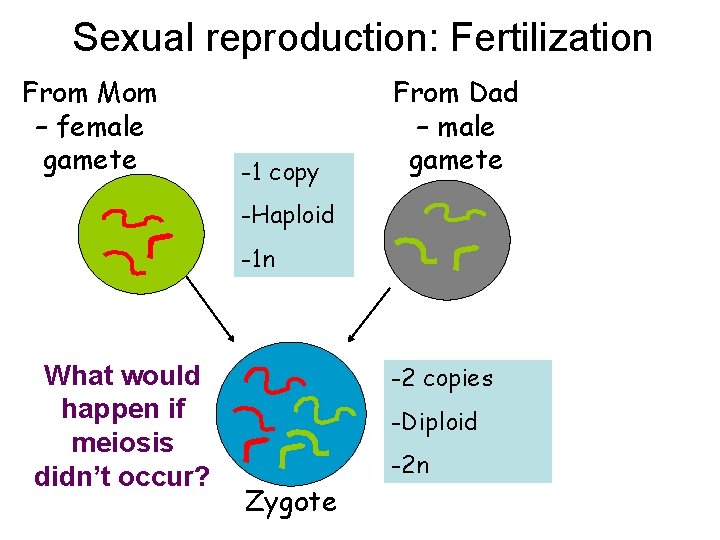
Sexual reproduction: Fertilization From Mom – female gamete -1 copy From Dad – male gamete -Haploid -1 n What would happen if meiosis didn’t occur? -2 copies -Diploid -2 n Zygote
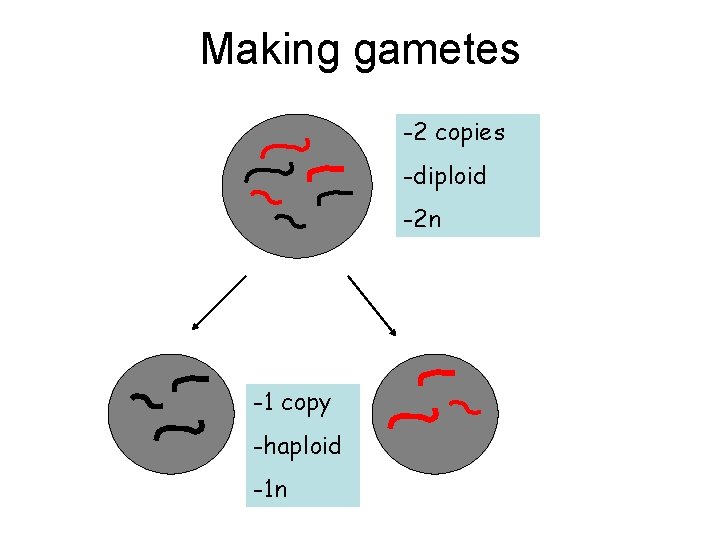
Making gametes -2 copies -diploid -2 n -1 copy -haploid -1 n
Meiosis = reduction division • Meiosis – special cell division in sexually reproducing organisms • reduce 2 n • diploid 1 n haploid (half) – makes gametes (sperm, eggs) Warning: meiosis evolved from mitosis, so stages & “machinery” are similar but the processes are radically different. Do not confuse!
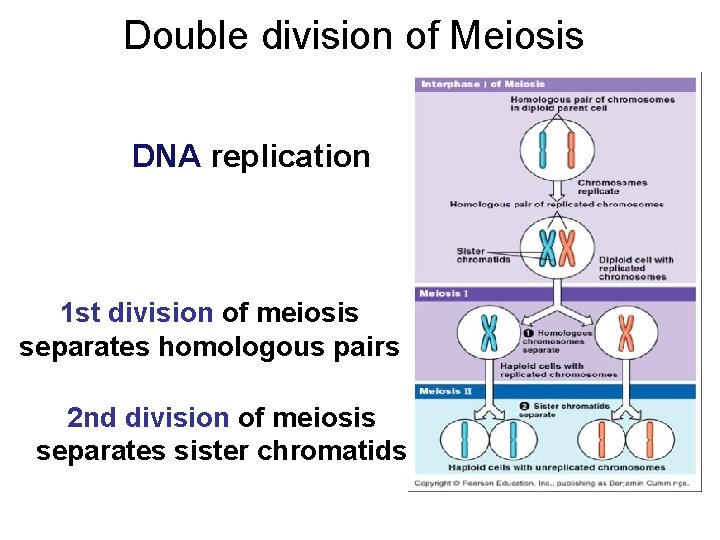
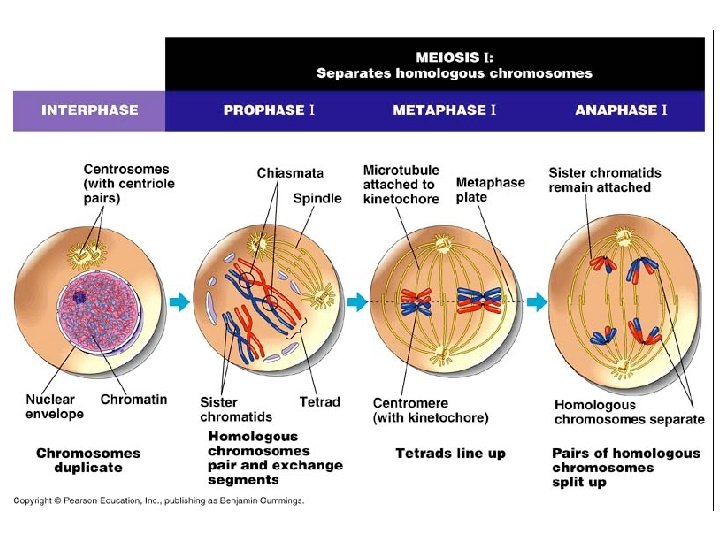
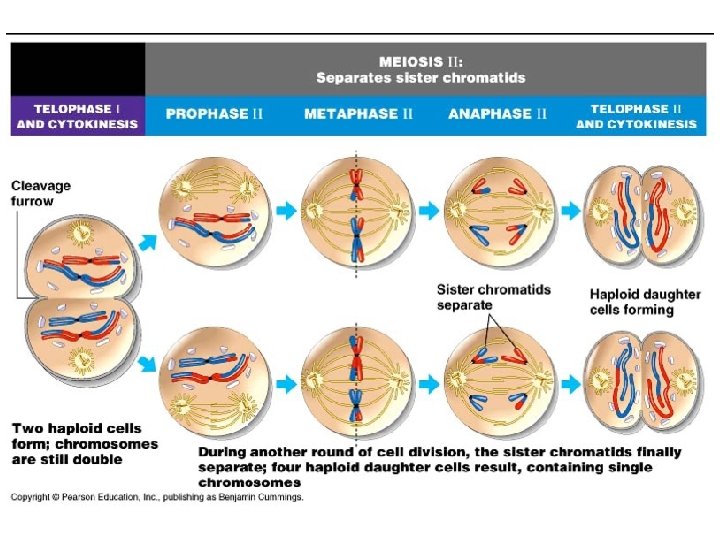
Double division of Meiosis DNA replication 1 st division of meiosis separates homologous pairs 2 nd division of meiosis separates sister chromatids
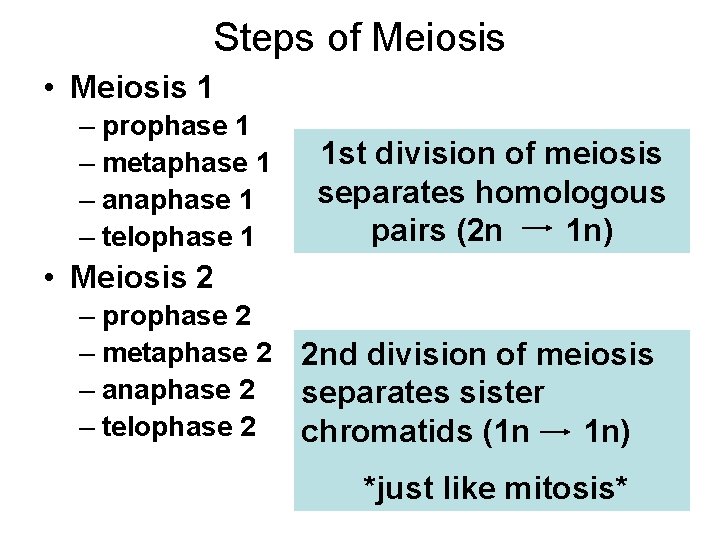
Steps of Meiosis • Meiosis 1 – prophase 1 – metaphase 1 – anaphase 1 – telophase 1 1 st division of meiosis separates homologous pairs (2 n 1 n) • Meiosis 2 – prophase 2 – metaphase 2 – anaphase 2 – telophase 2 2 nd division of meiosis separates sister chromatids (1 n 1 n) *just like mitosis*
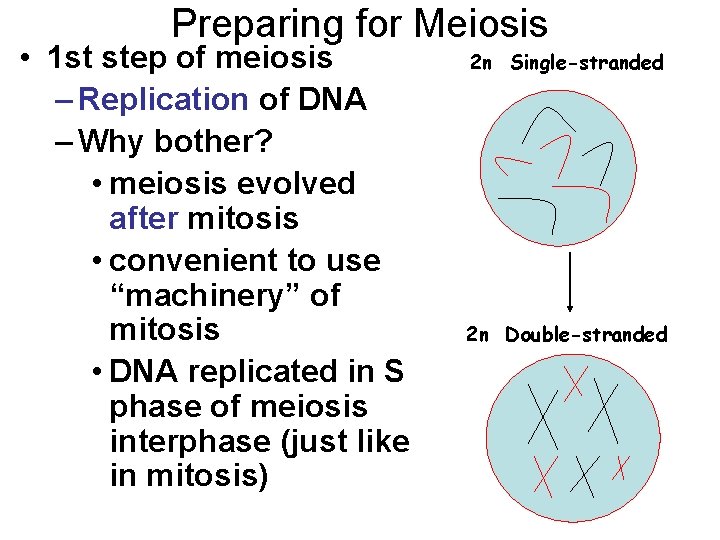
Preparing for Meiosis • 1 st step of meiosis – Replication of DNA – Why bother? • meiosis evolved after mitosis • convenient to use “machinery” of mitosis • DNA replicated in S phase of meiosis interphase (just like in mitosis) 2 n Single-stranded 2 n Double-stranded
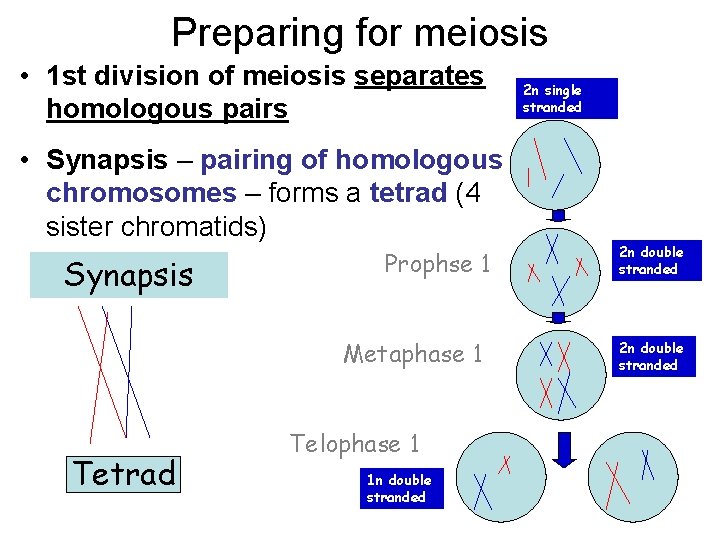
Preparing for meiosis • 1 st division of meiosis separates homologous pairs • Synapsis – pairing of homologous chromosomes – forms a tetrad (4 sister chromatids) Synapsis Prophse 1 Metaphase 1 Tetrad Telophase 1 1 n double stranded 2 n single stranded 2 n double stranded
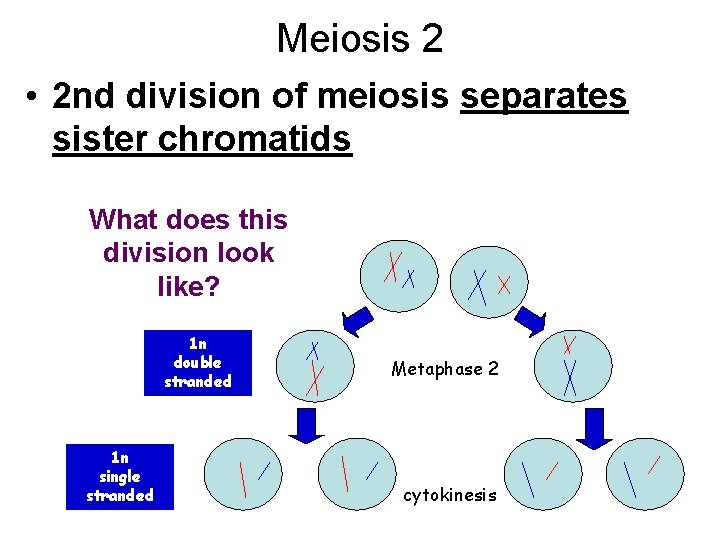
Meiosis 2 • 2 nd division of meiosis separates sister chromatids What does this division look like? 1 n double stranded 1 n single stranded Metaphase 2 cytokinesis
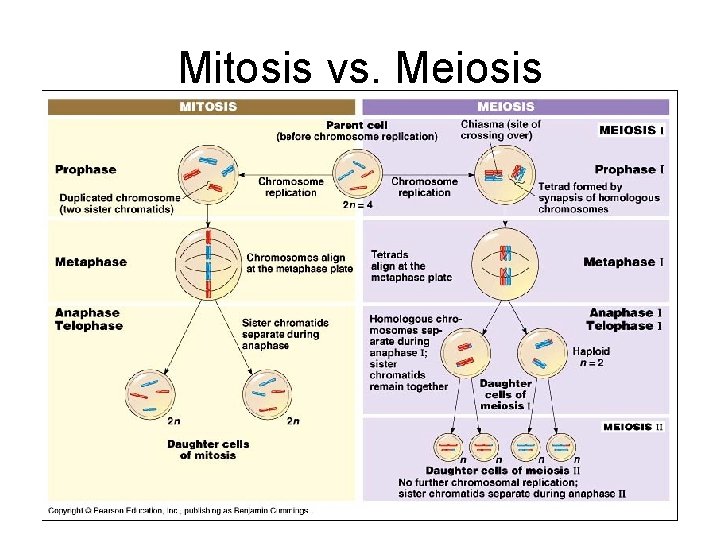
Mitosis vs. Meiosis
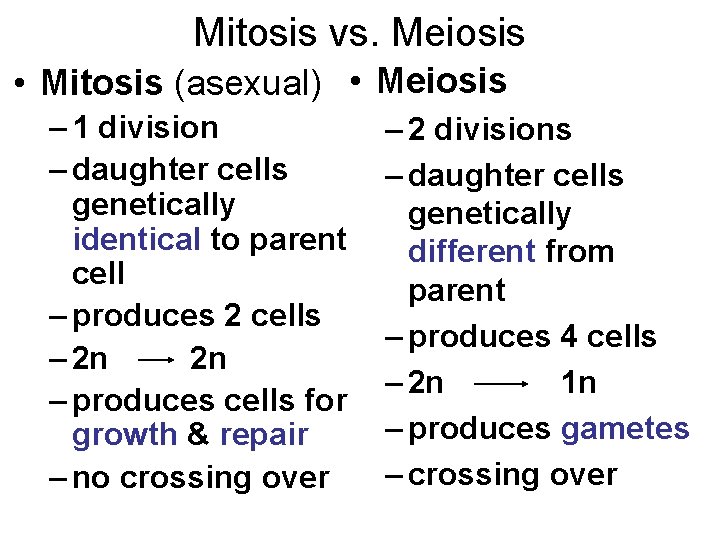
Mitosis vs. Meiosis • Mitosis (asexual) • Meiosis – 1 division – daughter cells genetically identical to parent cell – produces 2 cells – 2 n 2 n – produces cells for growth & repair – no crossing over – 2 divisions – daughter cells genetically different from parent – produces 4 cells – 2 n 1 n – produces gametes – crossing over
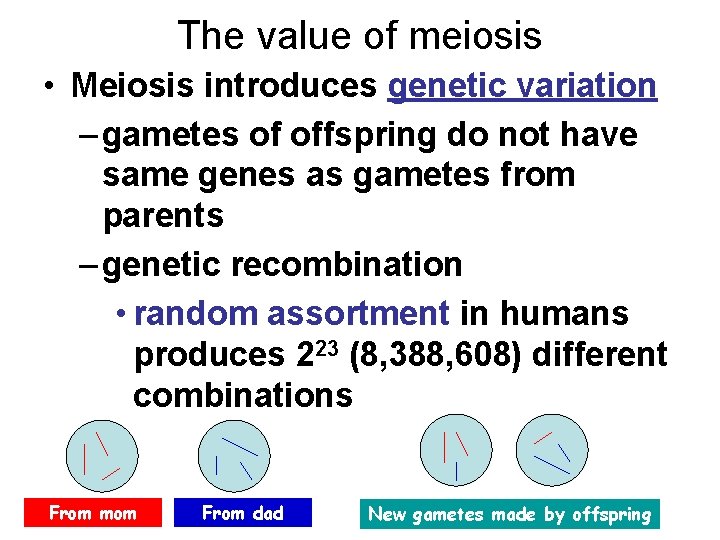
The value of meiosis • Meiosis introduces genetic variation – gametes of offspring do not have same genes as gametes from parents – genetic recombination • random assortment in humans produces 223 (8, 388, 608) different combinations From mom From dad New gametes made by offspring
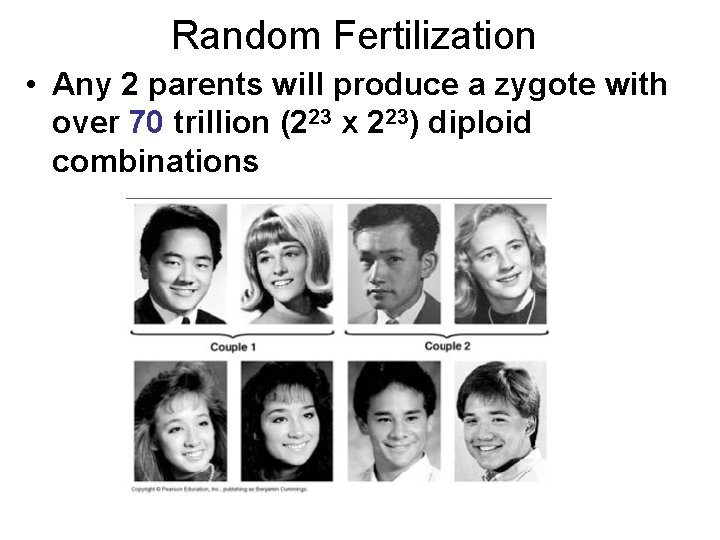
Random Fertilization • Any 2 parents will produce a zygote with over 70 trillion (223 x 223) diploid combinations
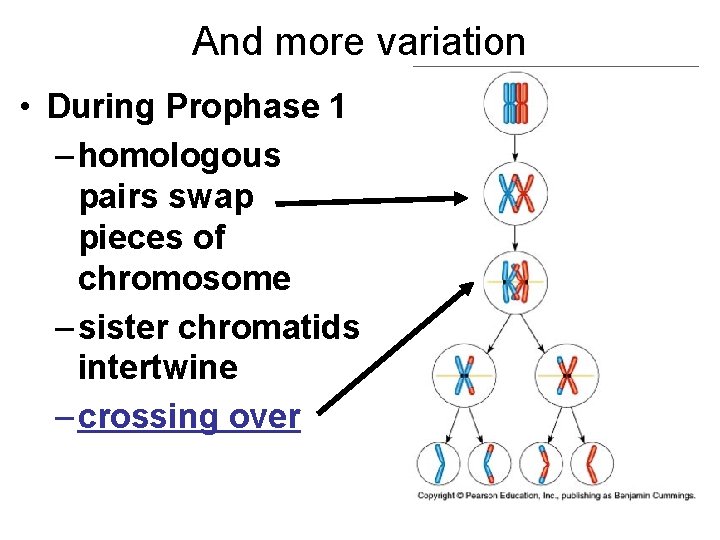
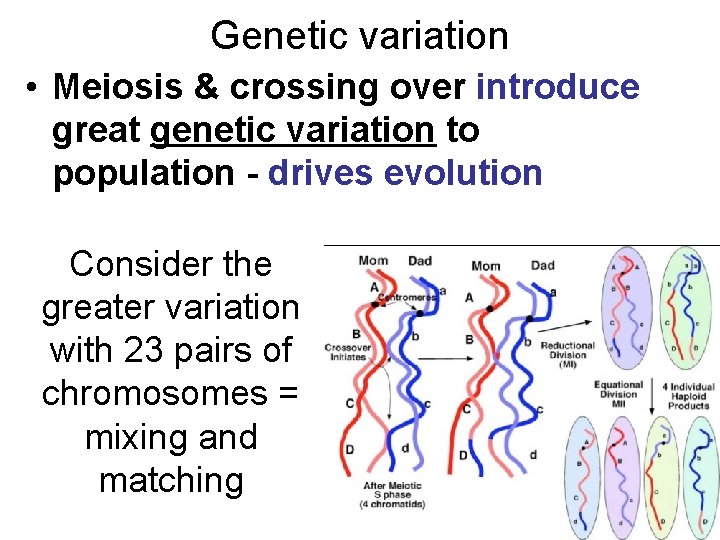
And more variation • During Prophase 1 – homologous pairs swap pieces of chromosome – sister chromatids intertwine – crossing over
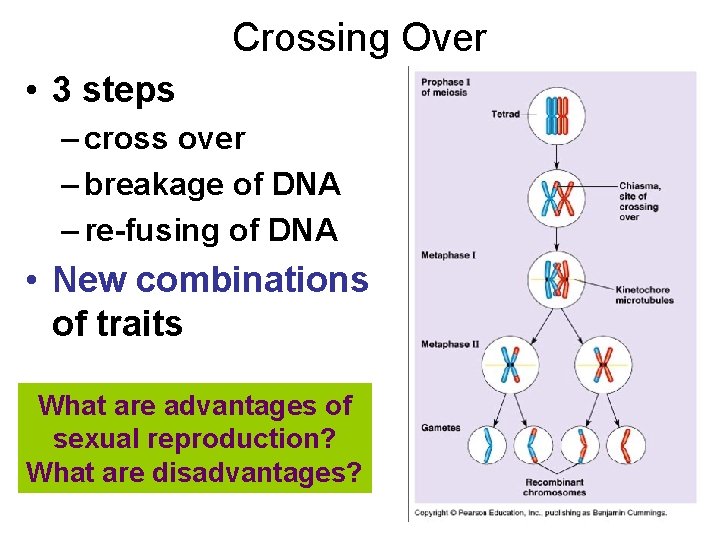
Crossing Over • 3 steps – cross over – breakage of DNA – re-fusing of DNA • New combinations of traits What are advantages of sexual reproduction? What are disadvantages?
Genetic variation • Meiosis & crossing over introduce great genetic variation to population - drives evolution Consider the greater variation with 23 pairs of chromosomes = mixing and matching
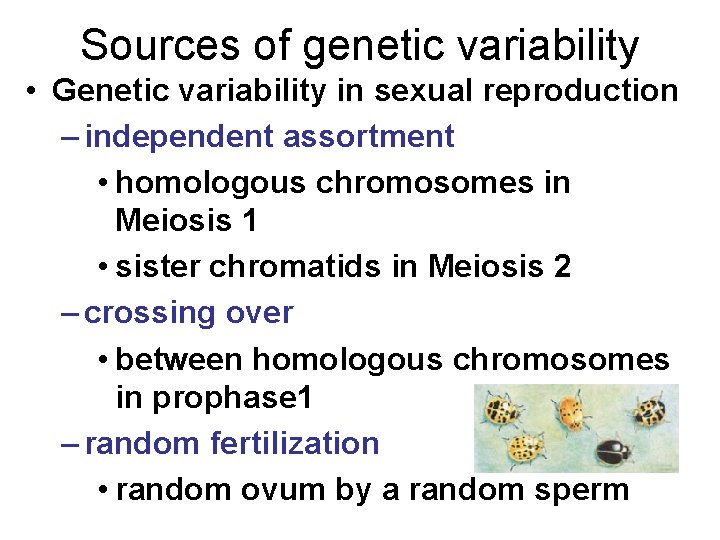
Sources of genetic variability • Genetic variability in sexual reproduction – independent assortment • homologous chromosomes in Meiosis 1 • sister chromatids in Meiosis 2 – crossing over • between homologous chromosomes in prophase 1 – random fertilization • random ovum by a random sperm
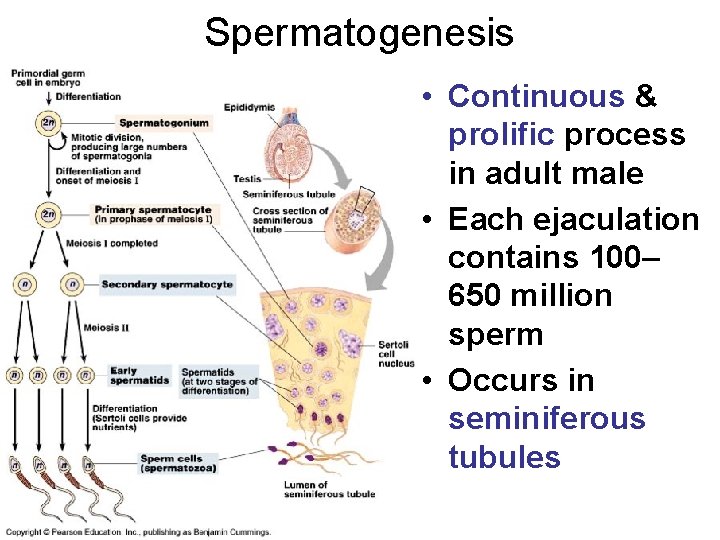
Spermatogenesis • Continuous & prolific process in adult male • Each ejaculation contains 100– 650 million sperm • Occurs in seminiferous tubules
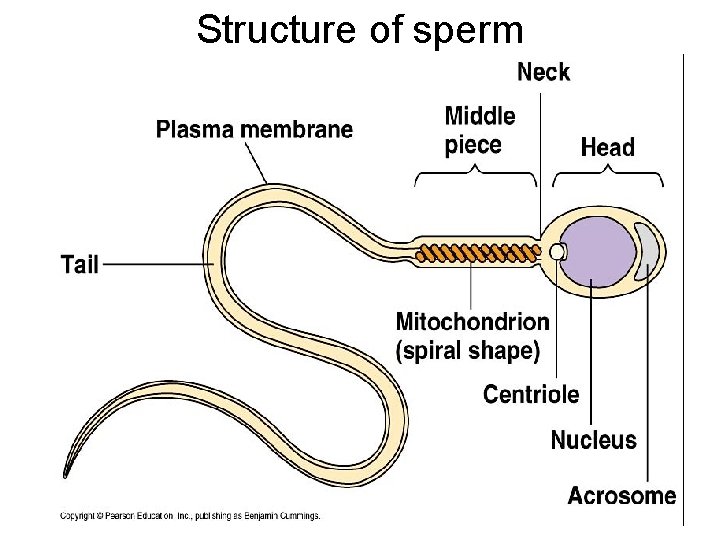
Structure of sperm
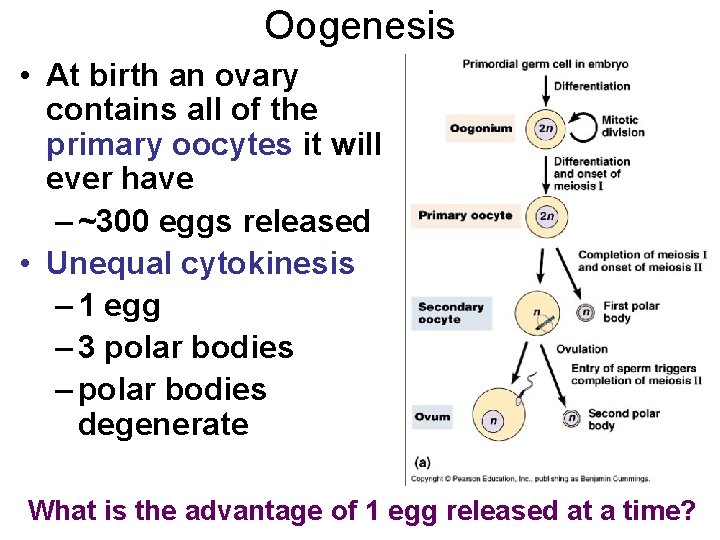
Oogenesis • At birth an ovary contains all of the primary oocytes it will ever have – ~300 eggs released • Unequal cytokinesis – 1 egg – 3 polar bodies – polar bodies degenerate What is the advantage of 1 egg released at a time?