
Meiosis Sex Cells I Cell Division in Prokaryotes

- Slides: 38
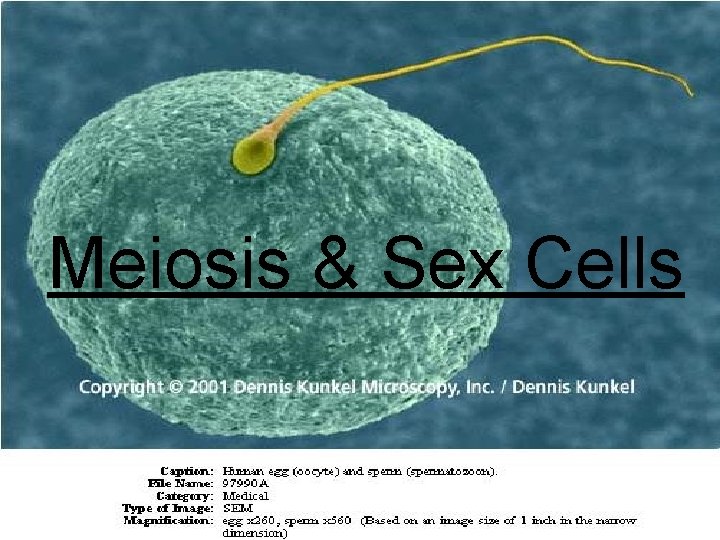
Meiosis & Sex Cells
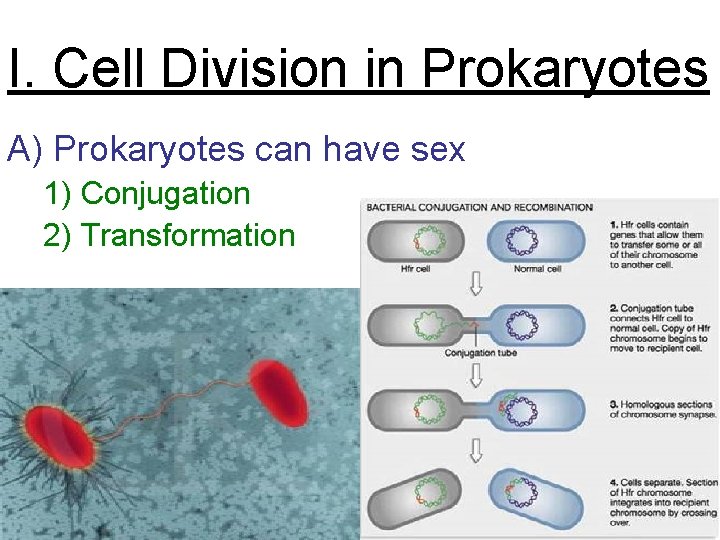
I. Cell Division in Prokaryotes A) Prokaryotes can have sex 1) Conjugation 2) Transformation
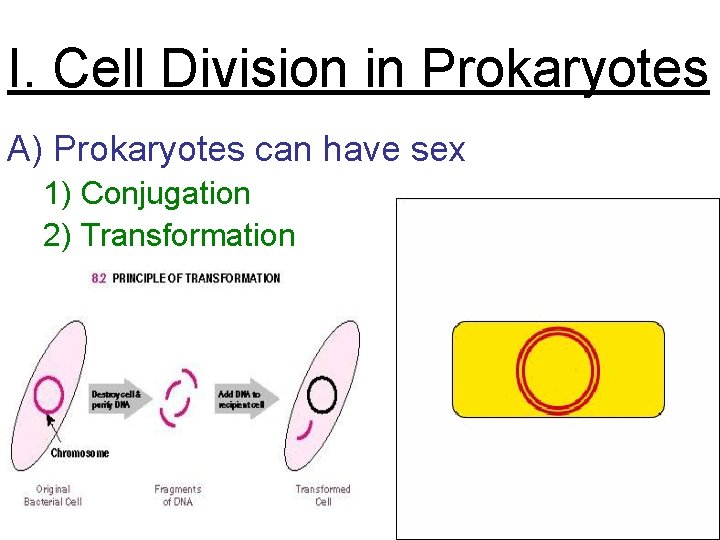
I. Cell Division in Prokaryotes A) Prokaryotes can have sex 1) Conjugation 2) Transformation
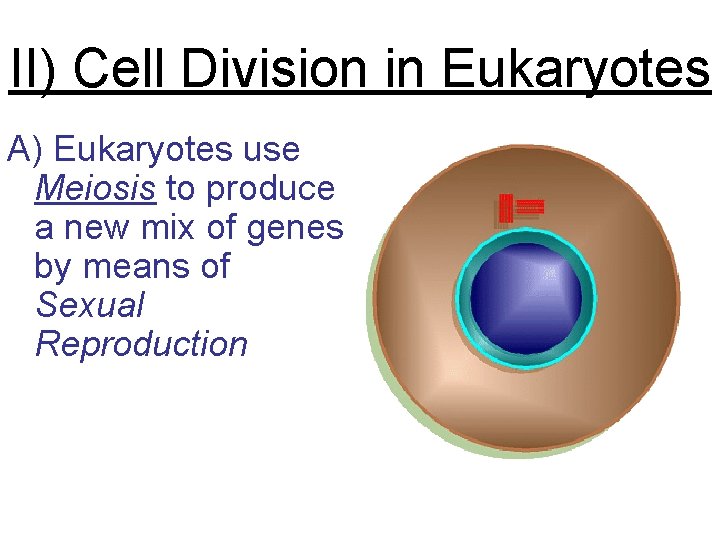
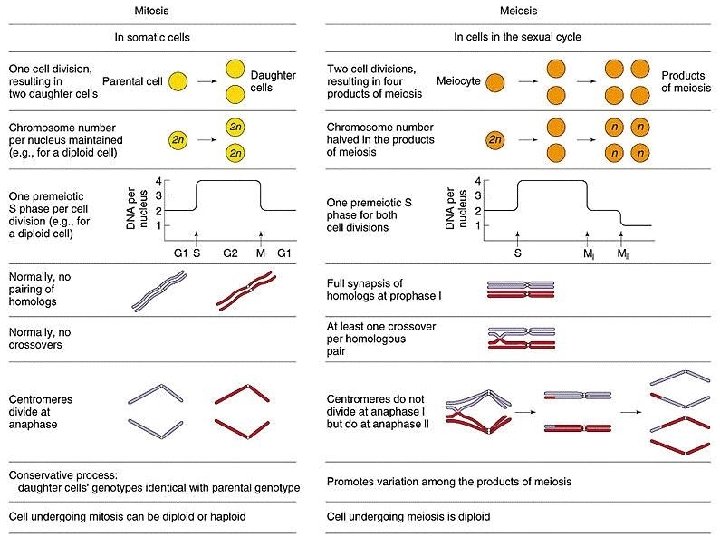
II) Cell Division in Eukaryotes A) Eukaryotes use Meiosis to produce a new mix of genes by means of Sexual Reproduction
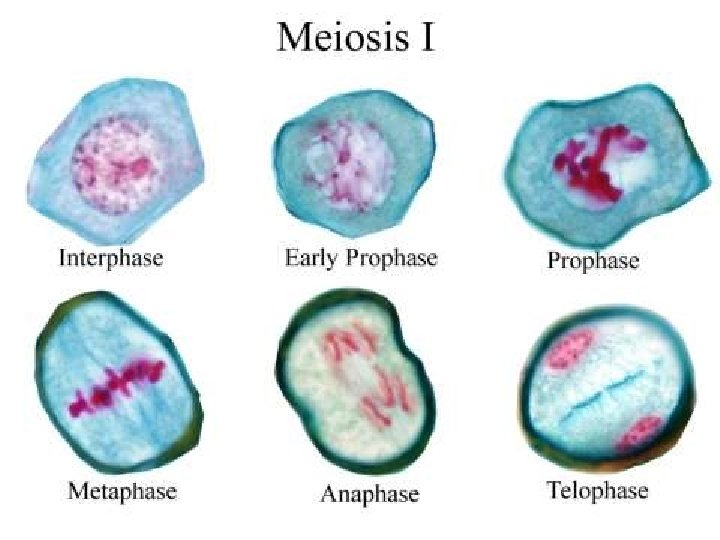
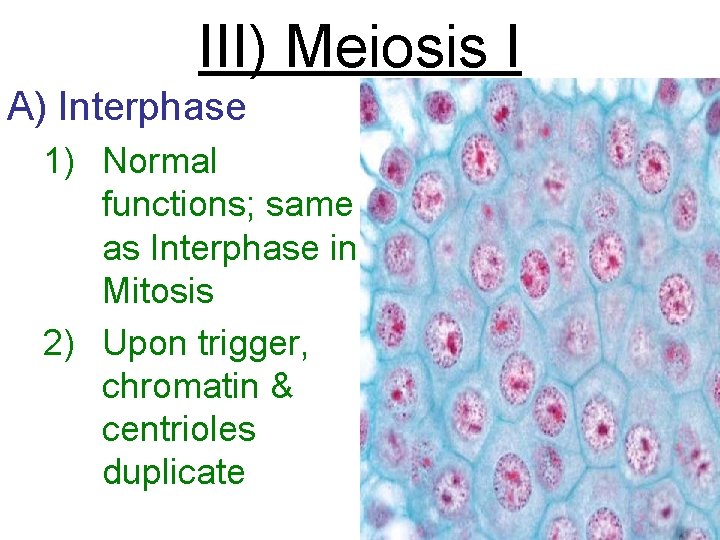
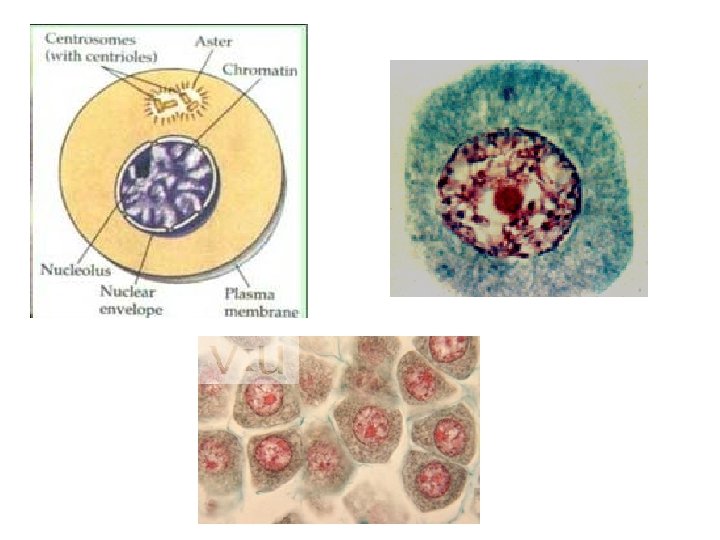
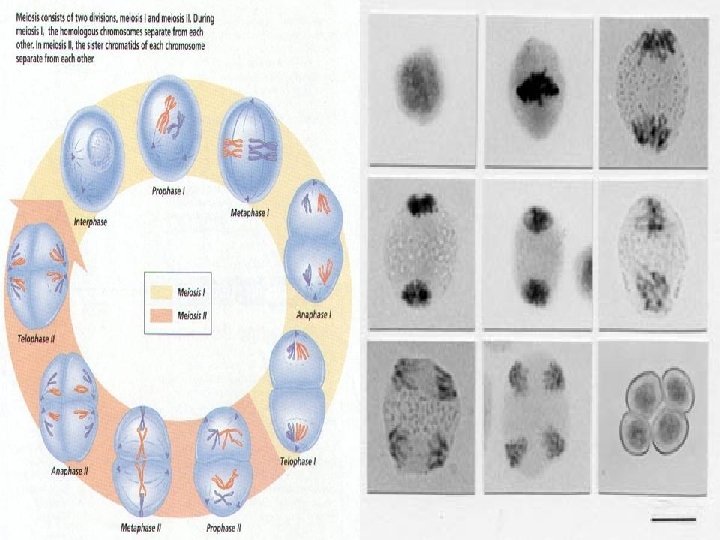
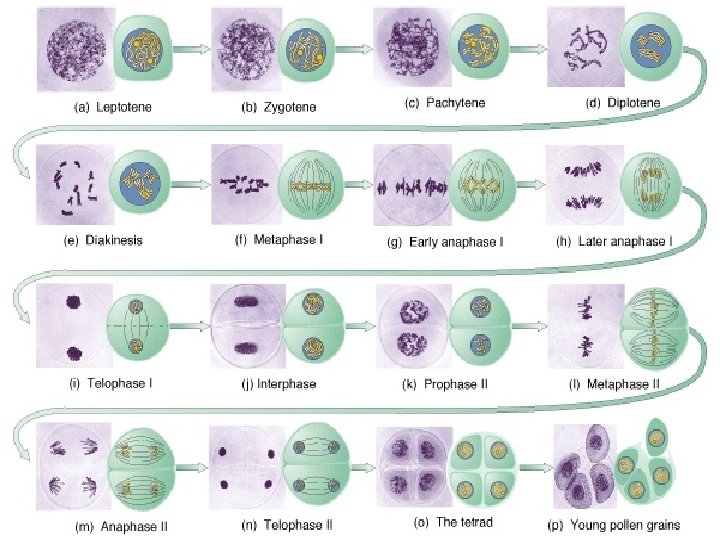
III) Meiosis I A) Interphase 1) Normal functions; same as Interphase in Mitosis 2) Upon trigger, chromatin & centrioles duplicate
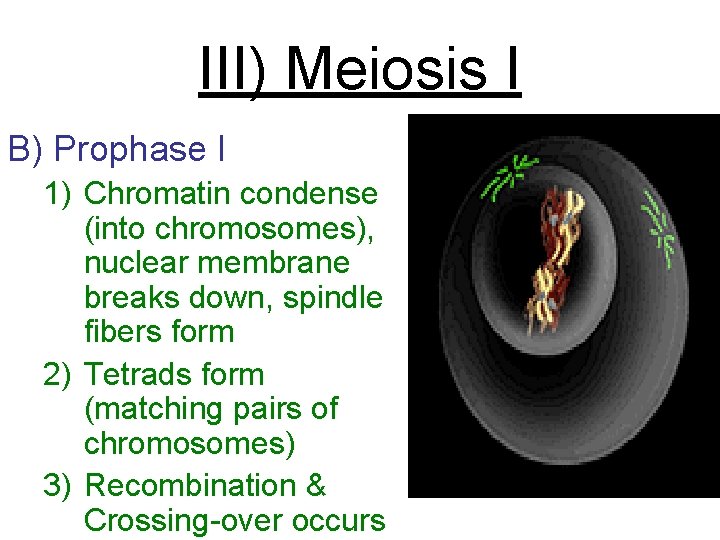
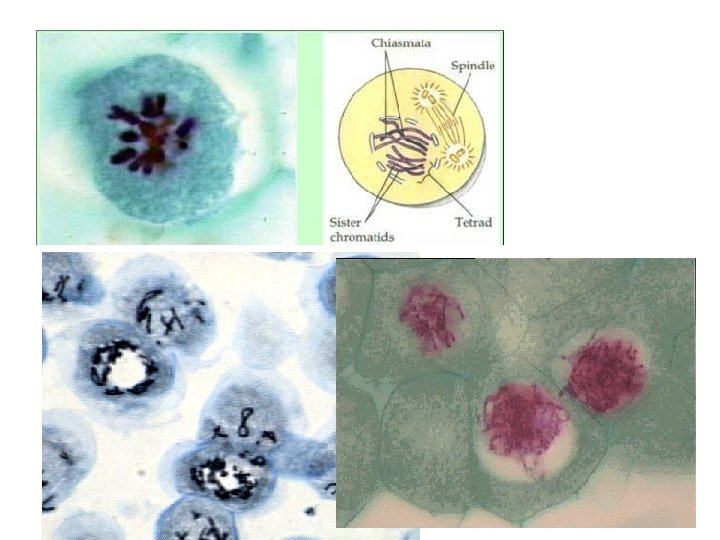
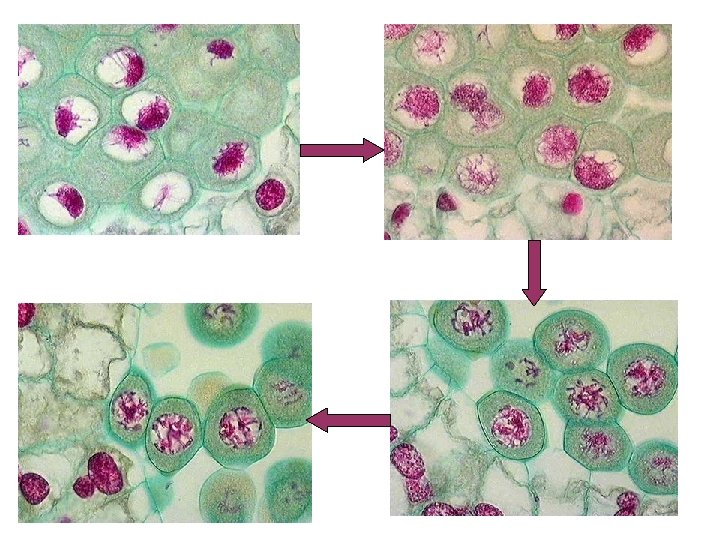
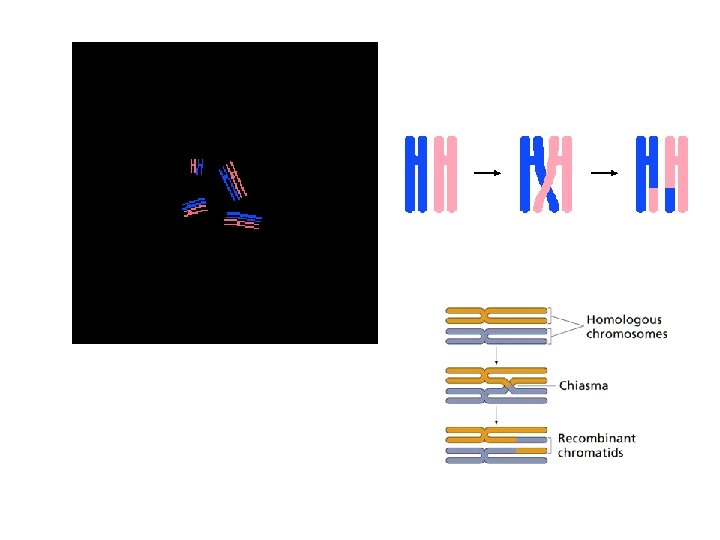
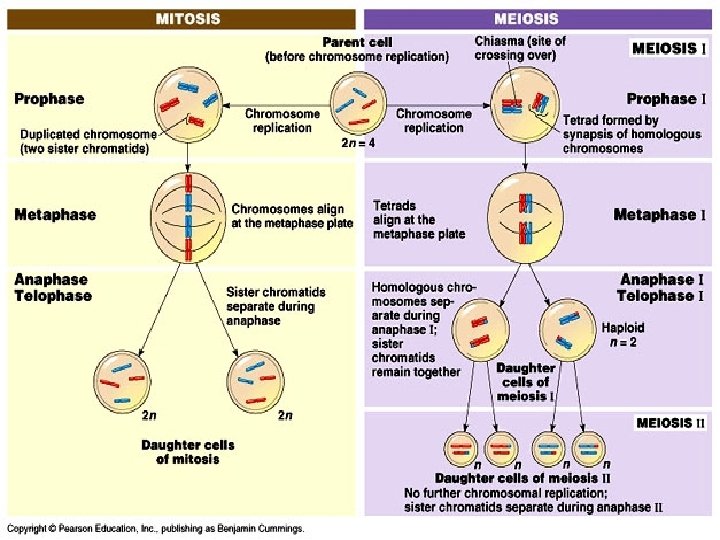
III) Meiosis I B) Prophase I 1) Chromatin condense (into chromosomes), nuclear membrane breaks down, spindle fibers form 2) Tetrads form (matching pairs of chromosomes) 3) Recombination & Crossing-over occurs
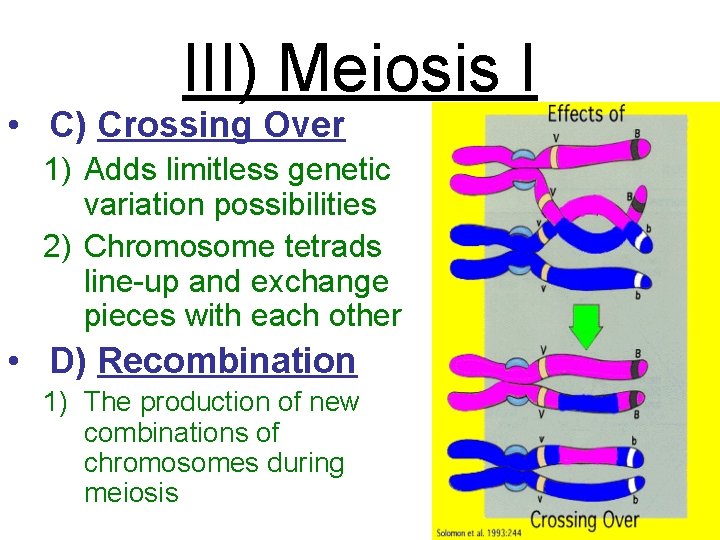
III) Meiosis I • C) Crossing Over 1) Adds limitless genetic variation possibilities 2) Chromosome tetrads line-up and exchange pieces with each other • D) Recombination 1) The production of new combinations of chromosomes during meiosis
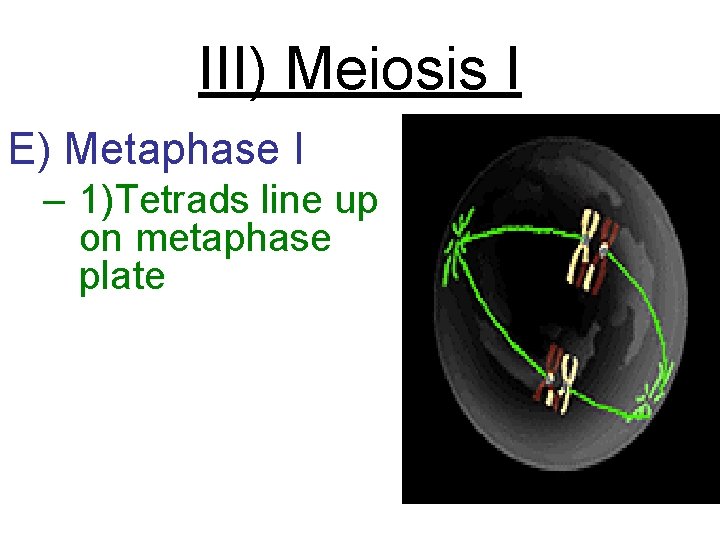
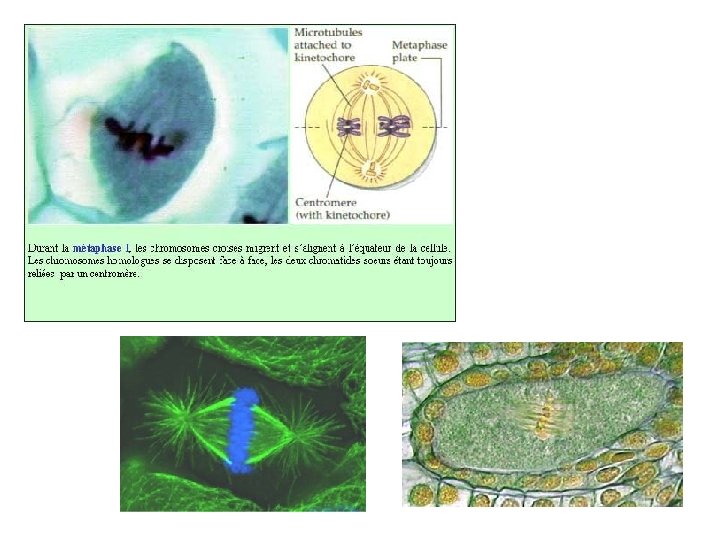
III) Meiosis I E) Metaphase I – 1)Tetrads line up on metaphase plate
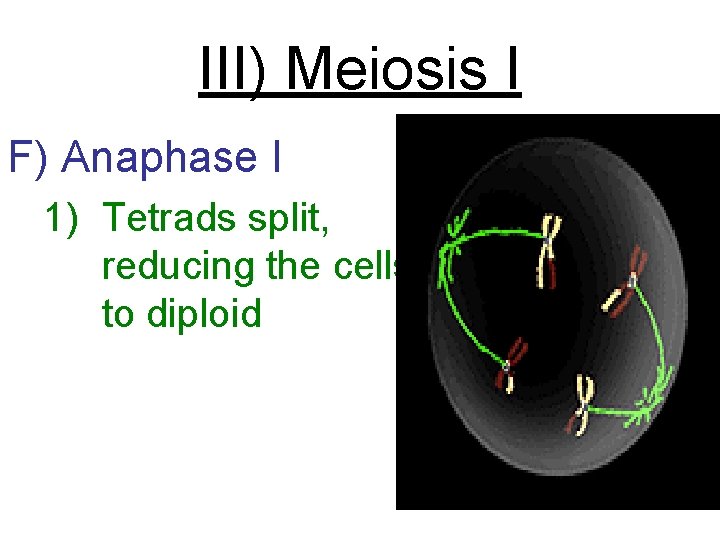
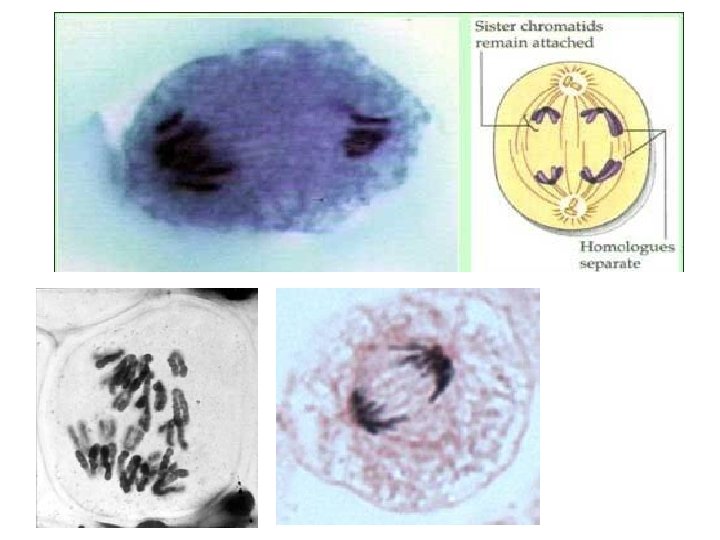
III) Meiosis I F) Anaphase I 1) Tetrads split, reducing the cells to diploid
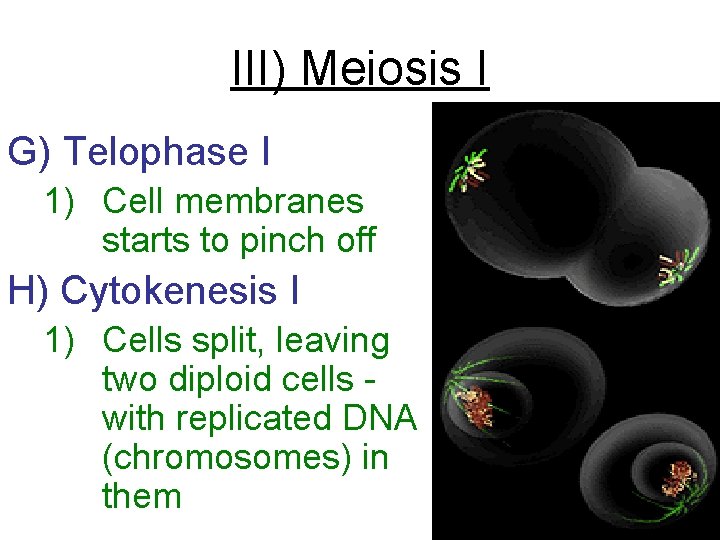
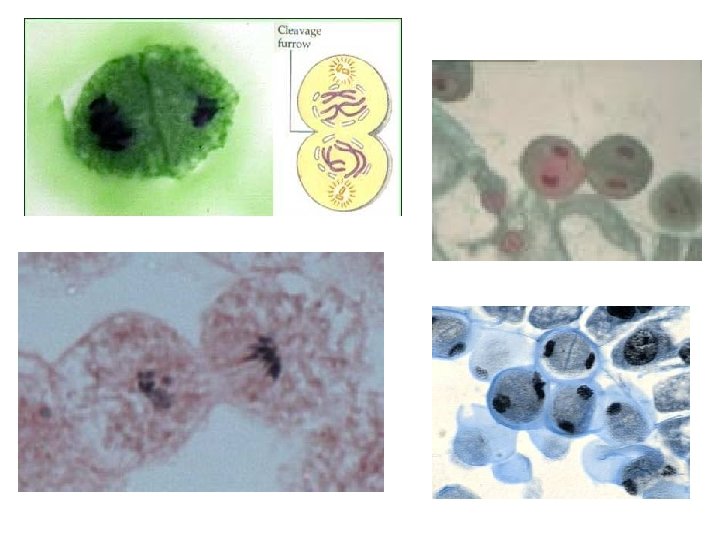
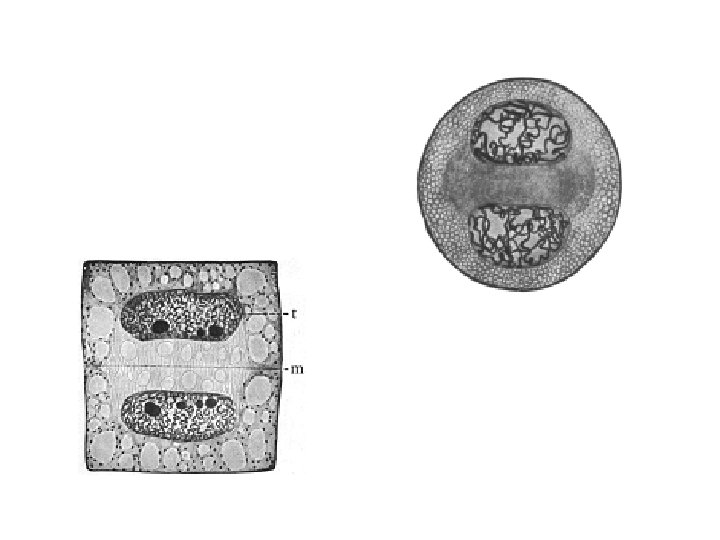
III) Meiosis I G) Telophase I 1) Cell membranes starts to pinch off H) Cytokenesis I 1) Cells split, leaving two diploid cells with replicated DNA (chromosomes) in them
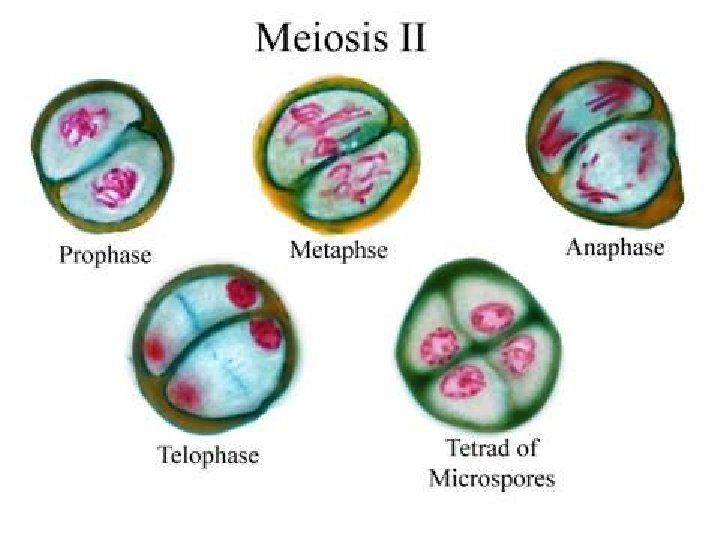
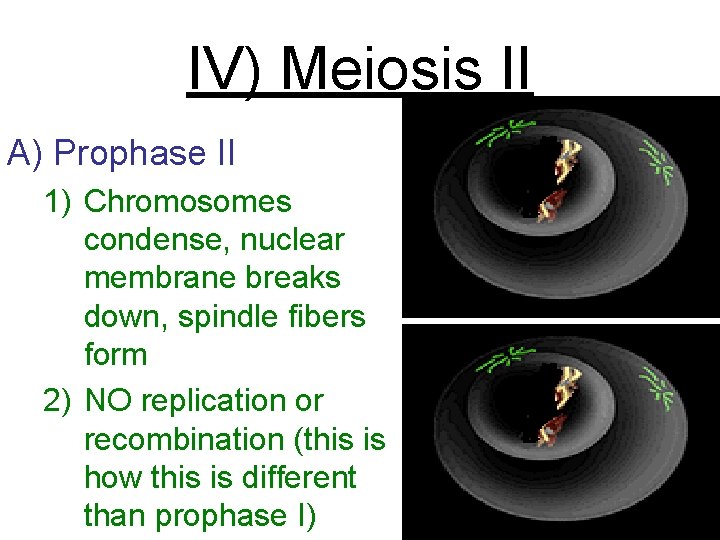
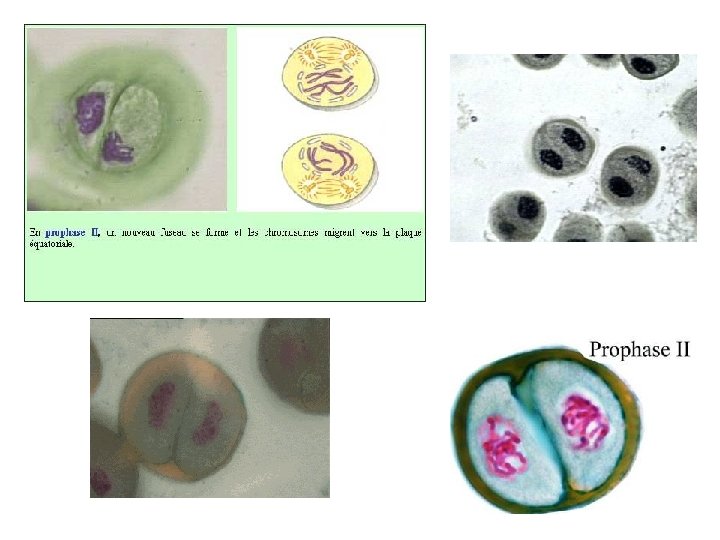
IV) Meiosis II A) Prophase II 1) Chromosomes condense, nuclear membrane breaks down, spindle fibers form 2) NO replication or recombination (this is how this is different than prophase I)
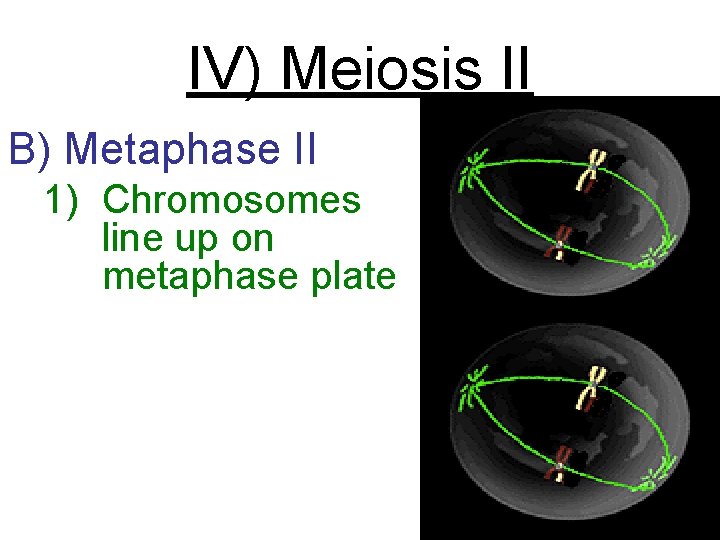
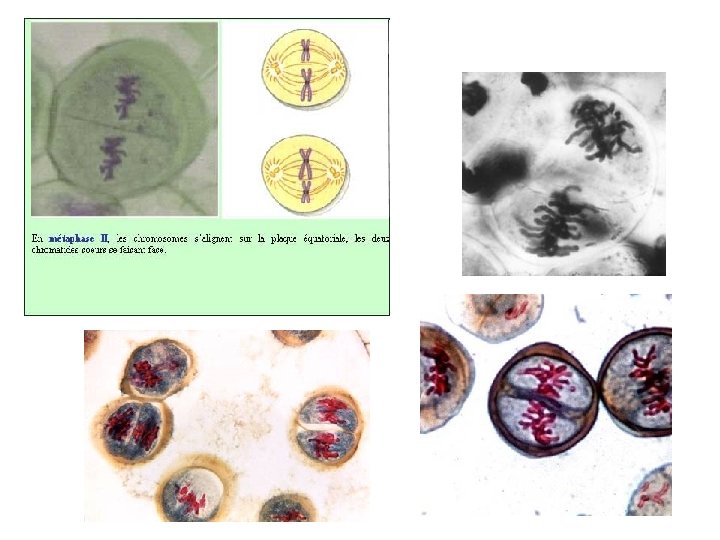
IV) Meiosis II B) Metaphase II 1) Chromosomes line up on metaphase plate
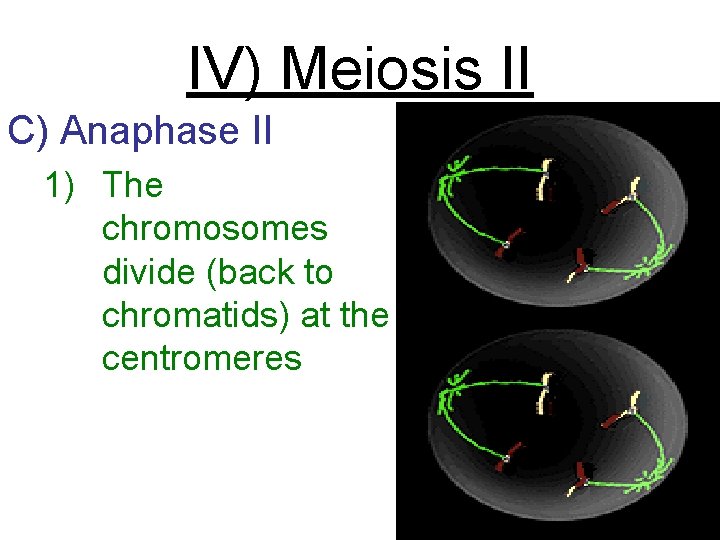
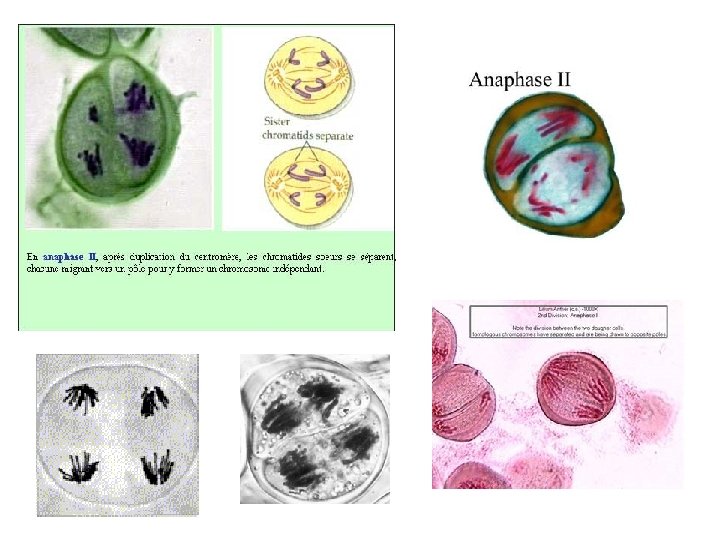
IV) Meiosis II C) Anaphase II 1) The chromosomes divide (back to chromatids) at the centromeres
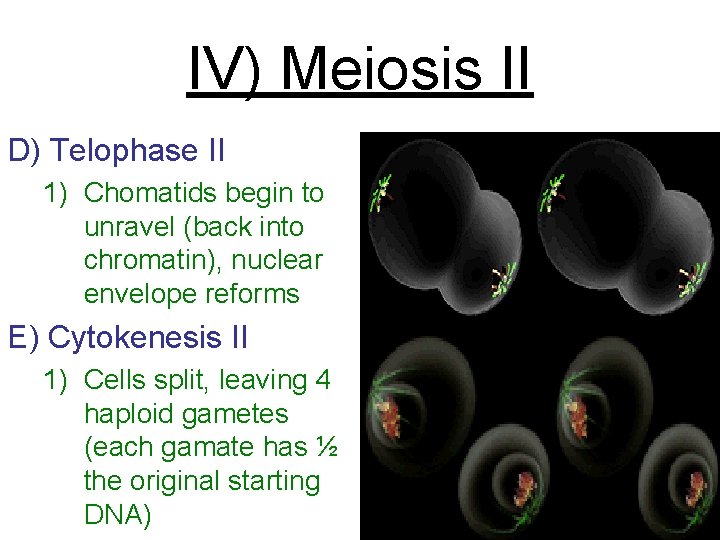
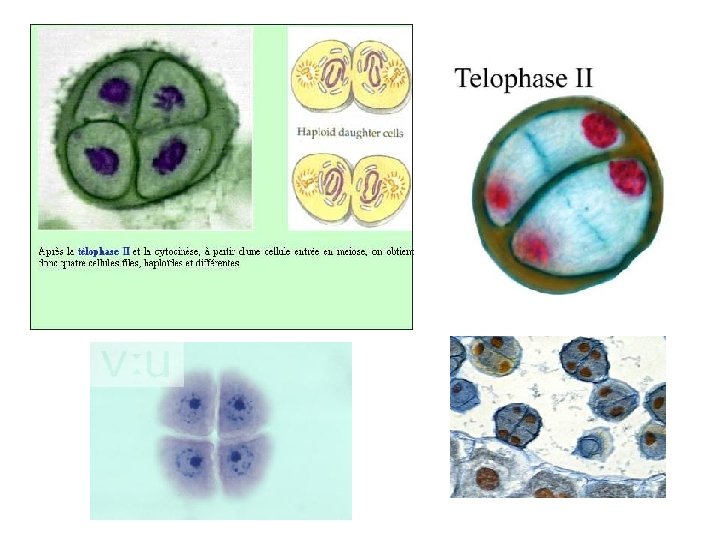
IV) Meiosis II D) Telophase II 1) Chomatids begin to unravel (back into chromatin), nuclear envelope reforms E) Cytokenesis II 1) Cells split, leaving 4 haploid gametes (each gamate has ½ the original starting DNA)
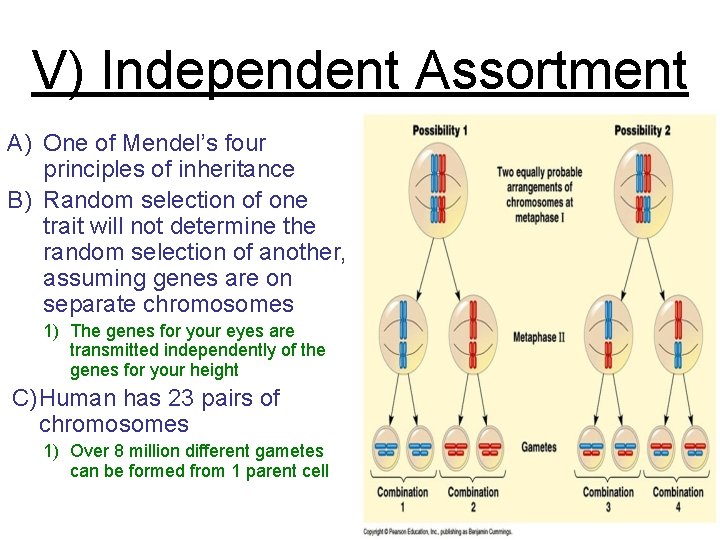
V) Independent Assortment A) One of Mendel’s four principles of inheritance B) Random selection of one trait will not determine the random selection of another, assuming genes are on separate chromosomes 1) The genes for your eyes are transmitted independently of the genes for your height C) Human has 23 pairs of chromosomes 1) Over 8 million different gametes can be formed from 1 parent cell
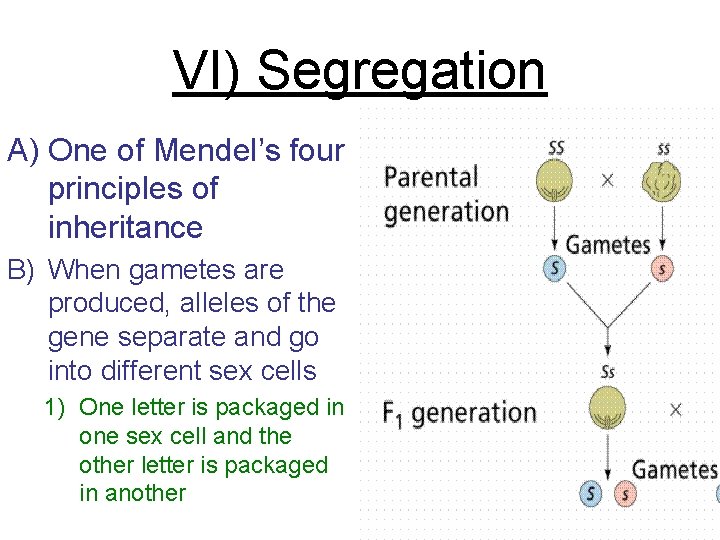
VI) Segregation A) One of Mendel’s four principles of inheritance B) When gametes are produced, alleles of the gene separate and go into different sex cells 1) One letter is packaged in one sex cell and the other letter is packaged in another
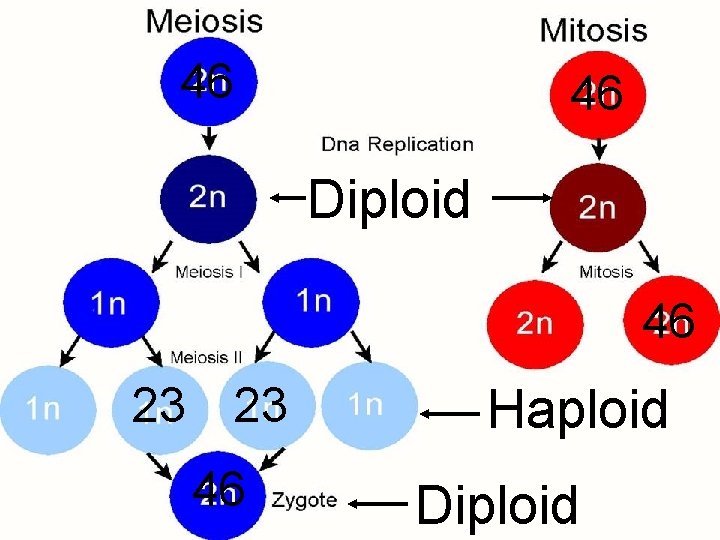
46 46 Diploid 46 23 23 46 Haploid Diploid
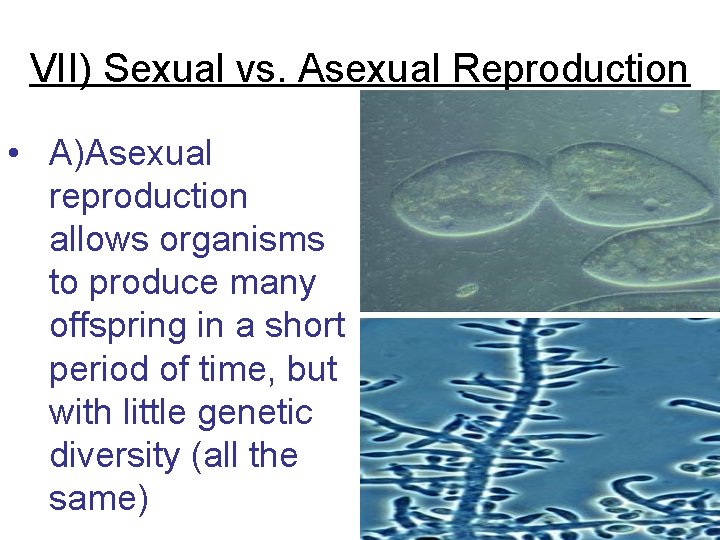
VII) Sexual vs. Asexual Reproduction • A)Asexual reproduction allows organisms to produce many offspring in a short period of time, but with little genetic diversity (all the same)
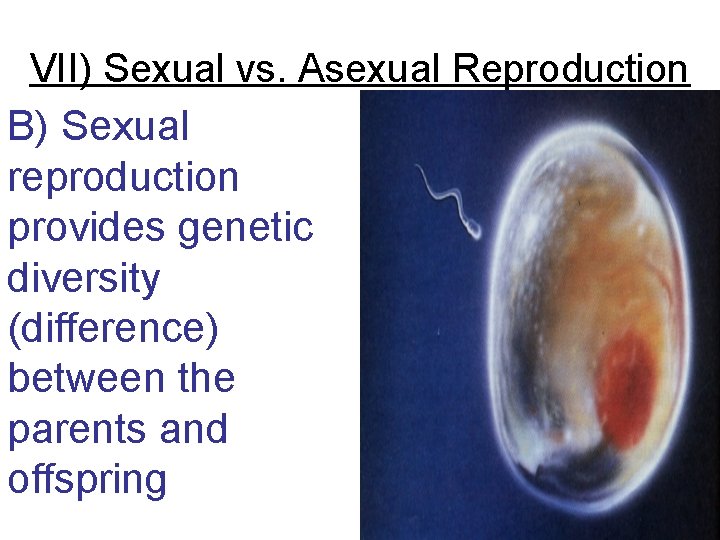
VII) Sexual vs. Asexual Reproduction B) Sexual reproduction provides genetic diversity (difference) between the parents and offspring