
MEIOSIS SEX CELL FORMATION 1 SEXUAL REPRODUCTION Involves
- Slides: 19
MEIOSIS SEX CELL FORMATION 1
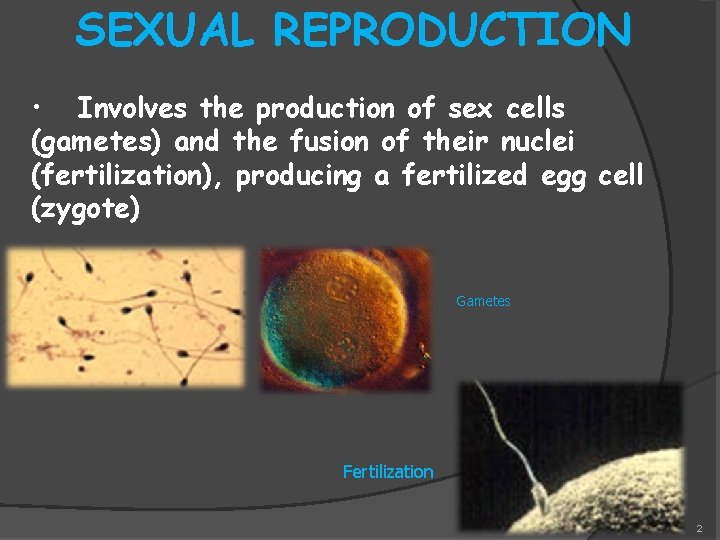
SEXUAL REPRODUCTION • Involves the production of sex cells (gametes) and the fusion of their nuclei (fertilization), producing a fertilized egg cell (zygote) Gametes Fertilization 2
Each body (somatic) cell contains a diploid (2 n) number of chromosomes Chromosomes are present in homologous pairs. • Homologous chromosomes: contain genes for the same traits, and look alike. • Gametes have a monoploid (1 n) number of chromosomes 3
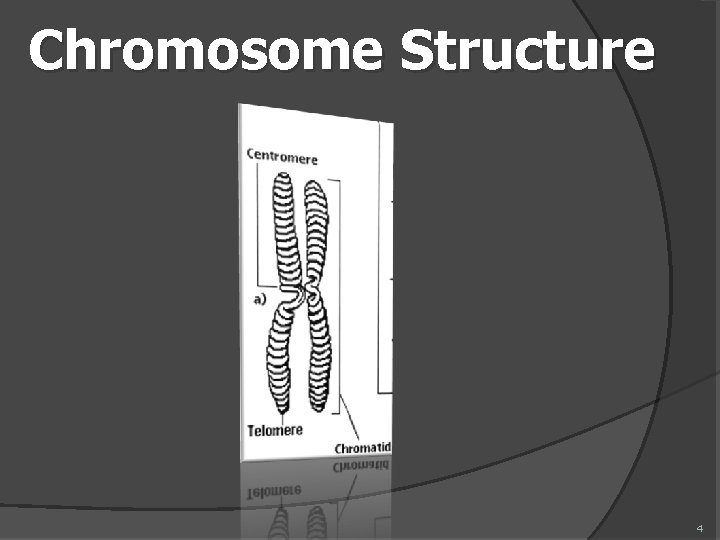
Chromosome Structure 4
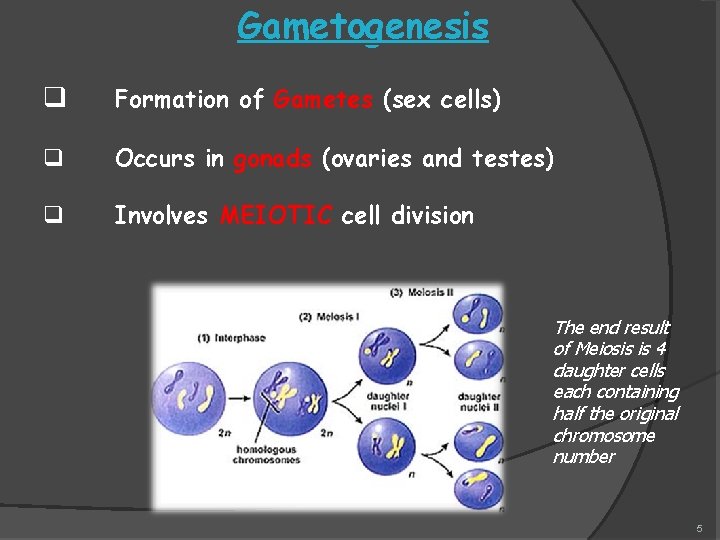
Gametogenesis q Formation of Gametes (sex cells) q Occurs in gonads (ovaries and testes) q Involves MEIOTIC cell division The end result of Meiosis is 4 daughter cells each containing half the original chromosome number 5
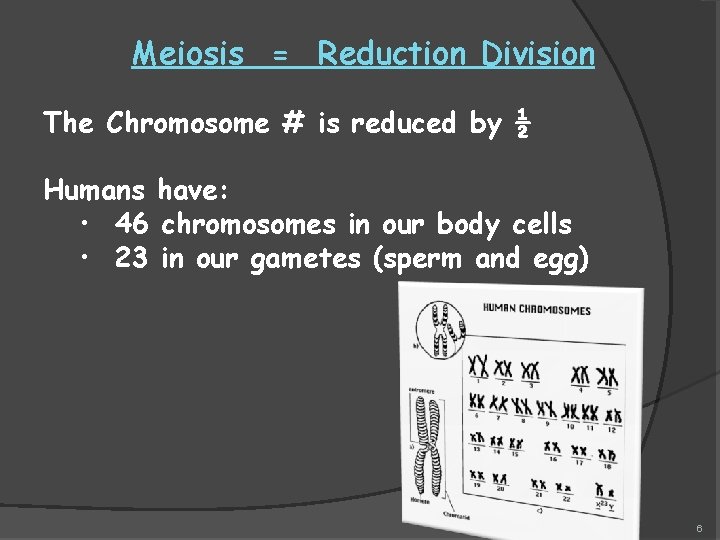
Meiosis = Reduction Division The Chromosome # is reduced by ½ Humans have: • 46 chromosomes in our body cells • 23 in our gametes (sperm and egg) 6
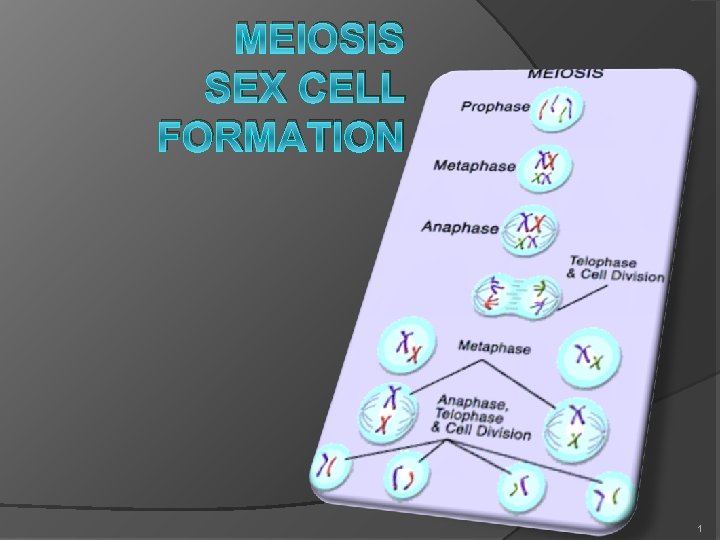
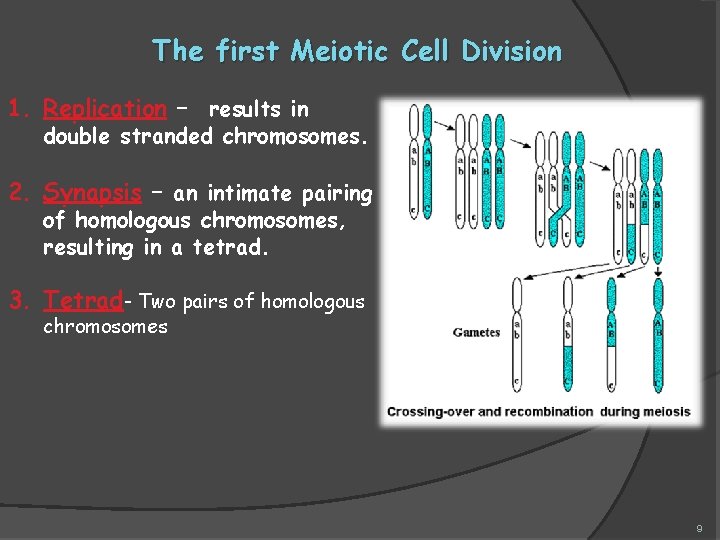
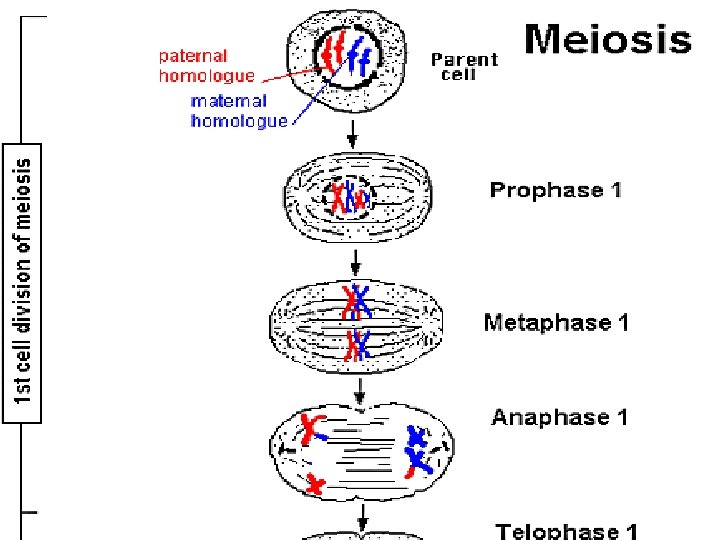
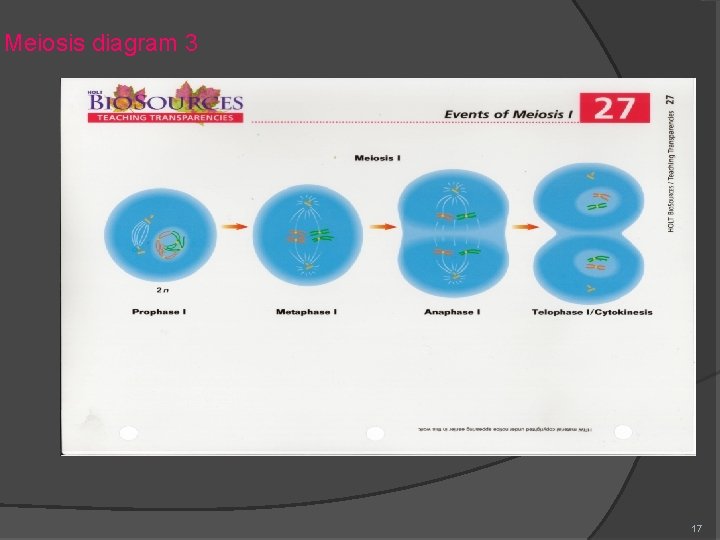
First Meiotic Division 1. Each single stranded chromosome is replicated during the non dividing resting period. This results in double stranded homologous chromosomes being formed. 2. Chromosomes shorten and thicken with the spindle apparatus being formed. 3. Homologous chromosomes pair up side by side in a double line at the equator. (center of the cell) These homologous chromosome pairs are called tetrads. It is here that synapsis and crossing over occurs. 7
4. During synapsis the chromatids may twist around each other and exchange segments. This is called crossing over, which increases the variation in gametes, and therefore offspring. 5. Homologous chromosomes (in tetrad formation) then line up on the equator (Metaphase I) 6. Disjunction – homologous chromosomes then separate and move towards opposite poles (Anaphase I) 7. Cytoplasm divides (cytokinesis) 8. The 2 new cells are now monoploid (1 n) 8
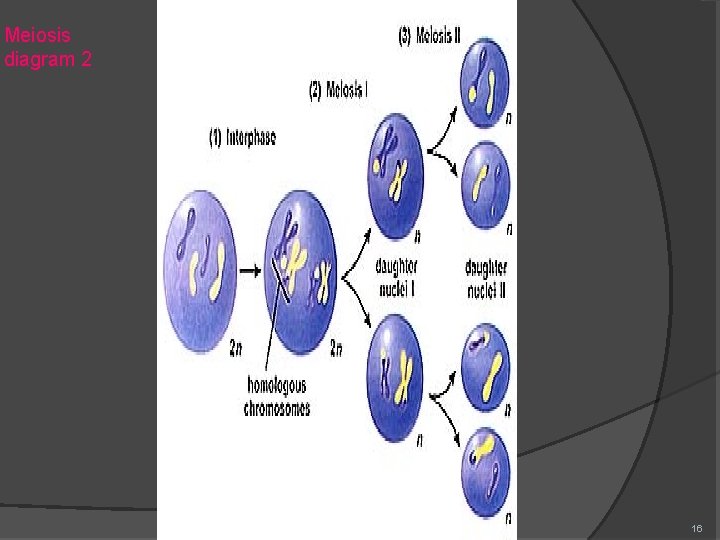
The first Meiotic Cell Division 1. Replication – results in double stranded chromosomes. 2. Synapsis – an intimate pairing of homologous chromosomes, resulting in a tetrad. 3. Tetrad- Two pairs of homologous chromosomes 9
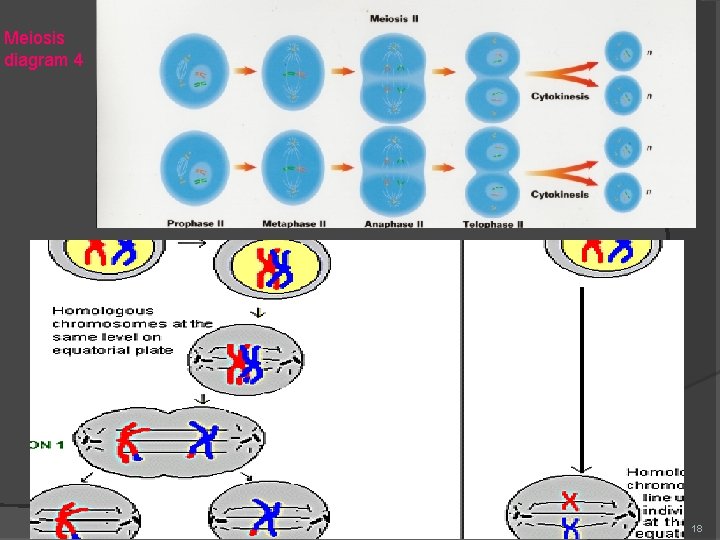
The Second Meiotic Cell Division 1. Double stranded chromosomes line up on equator (Metaphase II) 2. Centromeres replicate, to allow chromatids to separate 3. Single stranded chromosomes are pulled to opposite ends of the cell by spindle fibers (Anaphase II) 4. Cytokinesis: cytoplasm divides again. 5. The result of meiosis is the formation of 4 monoploid cells that are all DIFFERENT. Distribution of homologous chromosomes between the resulting nuclei is random, resulting in variation. 10
Mitosis and Meiosis Compared Mitosis • • is for growth repair and replacement of cells Asexual reproduction Results in two IDENTICAL (2 n) cells Meiosis is strictly for sex cells. • production of gametes • Results in 4 DIFFERENT cells with ½ the number of chromosomes (1 n) n=haploid or monoploid 11
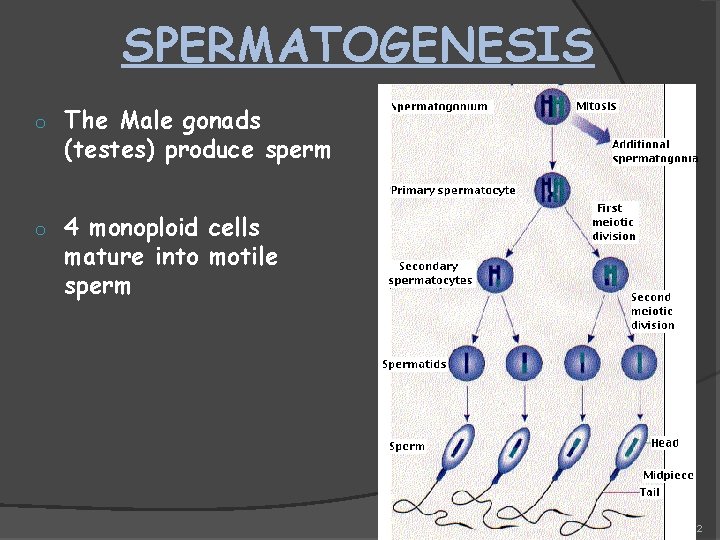
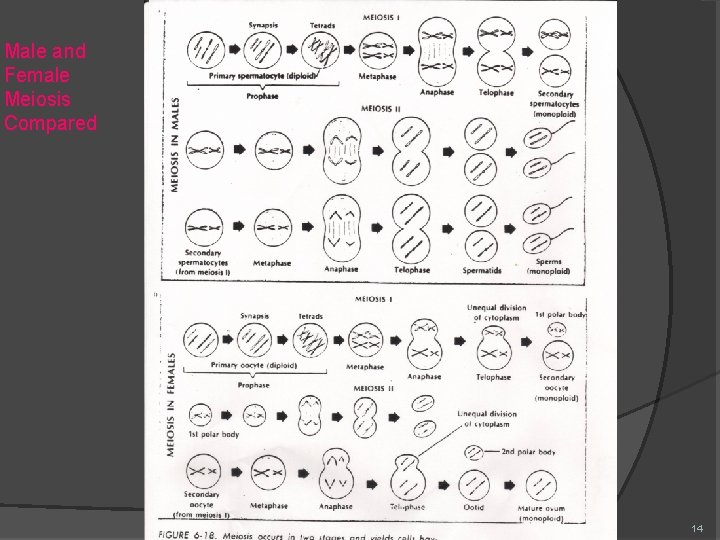
SPERMATOGENESIS o o The Male gonads (testes) produce sperm 4 monoploid cells mature into motile sperm 12
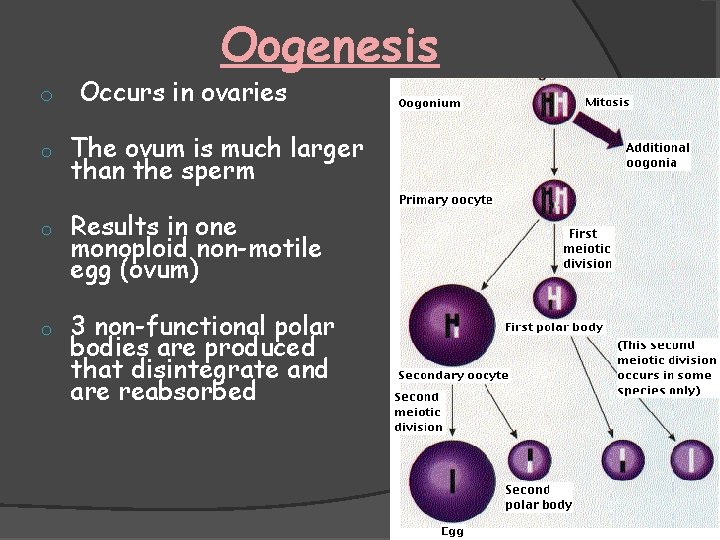
Oogenesis o o Occurs in ovaries The ovum is much larger than the sperm Results in one monoploid non-motile egg (ovum) 3 non-functional polar bodies are produced that disintegrate and are reabsorbed 13
Male and Female Meiosis Compared 14
eiosis diagram 1 15
Meiosis diagram 2 16
Meiosis diagram 3 17
Meiosis diagram 4 18
Mitosis and Meiosis compared 19