
MEIOSIS ReductionDivision Genetic Recombination 1 MEIOSIS Mitosis asexual
MEIOSIS Reduction-Division Genetic Recombination 1
MEIOSIS Mitosis – asexual reproduction Meiosis – sexual reproduction Mitosis – 2 identical cells Meiosis – 4 unique sex cells (sperm/eggs) 2
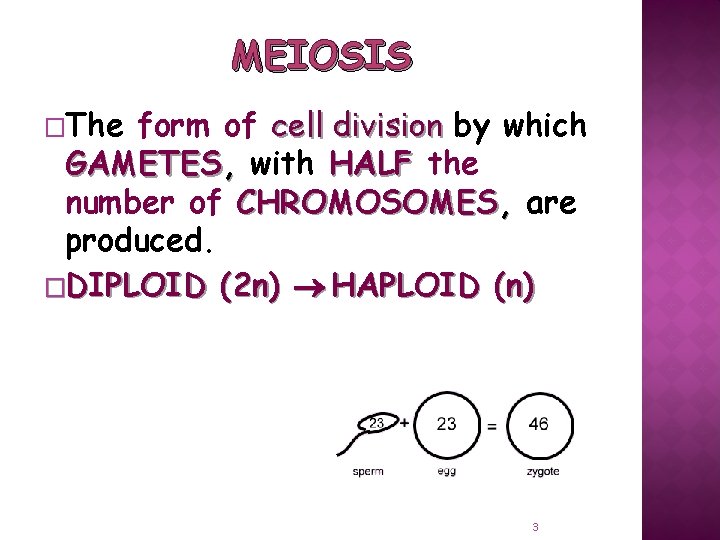
MEIOSIS �The form of cell division by which GAMETES, with HALF the number of CHROMOSOMES, are produced. �DIPLOID (2 n) HAPLOID (n) 3
MEIOSIS Haploid – (n) one copy of every chromosome Sperm and eggs have 23 chromosomes each Diploid – (2 n) two copies of every chromosome The rest of your body has 2 copies of each chromosome in every cell, 46 chromosomes total Flipping between haploid and diploid in order to produce new organisms is called alternation of generations 4
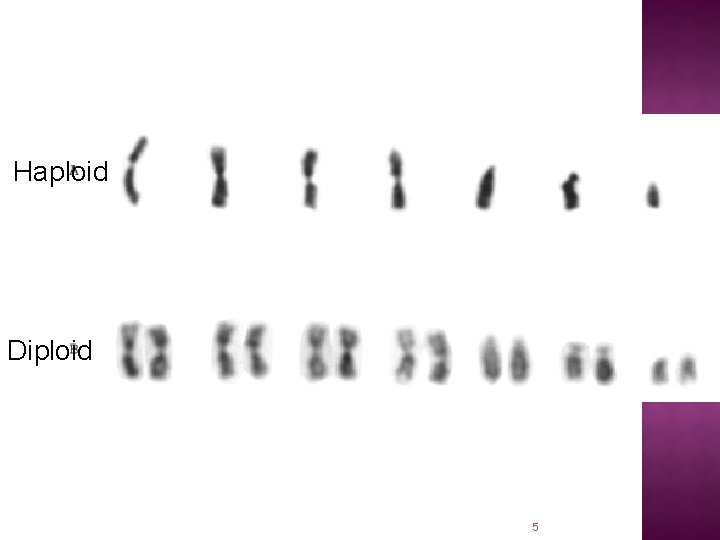
Haploid Diploid 5
STAGES OF MEIOSIS TWO divisions (MEIOSIS I and MEIOSIS II) II I-PMAT 6
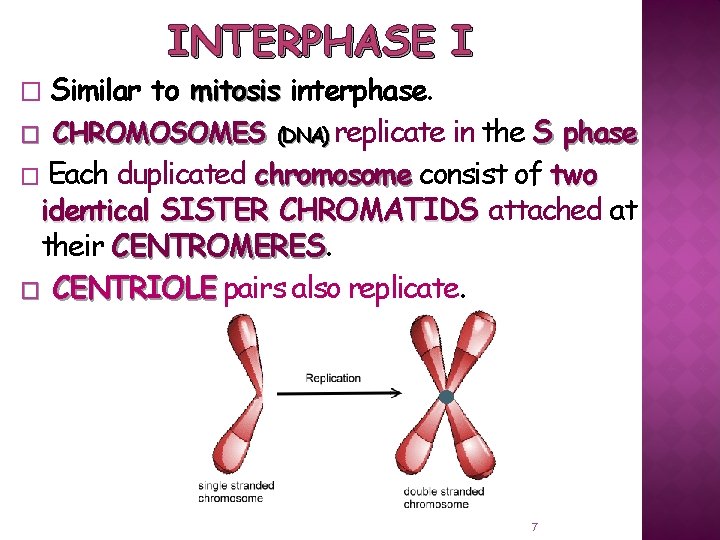
INTERPHASE I Similar to mitosis interphase. � CHROMOSOMES (DNA) replicate in the S phase � Each duplicated chromosome consist of two identical SISTER CHROMATIDS attached at their CENTROMERES � CENTRIOLE pairs also replicate. � 7
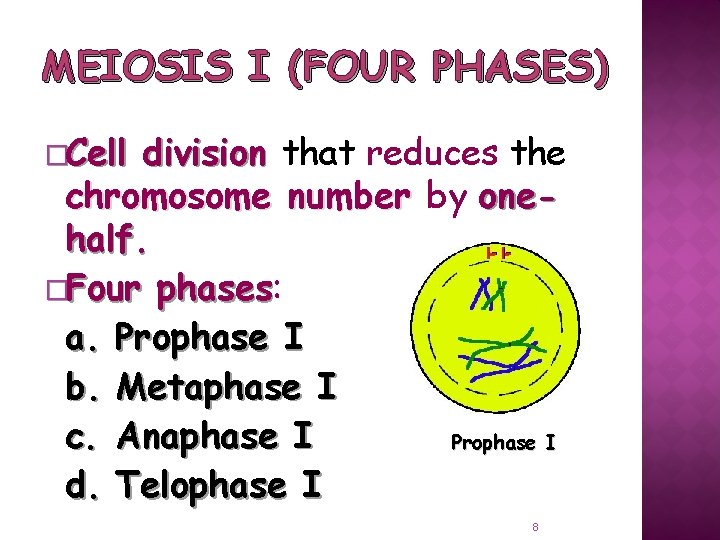
MEIOSIS I (FOUR PHASES) �Cell division that reduces the chromosome number by onehalf. �Four phases: phases a. Prophase I b. Metaphase I c. Anaphase I Prophase I d. Telophase I 8
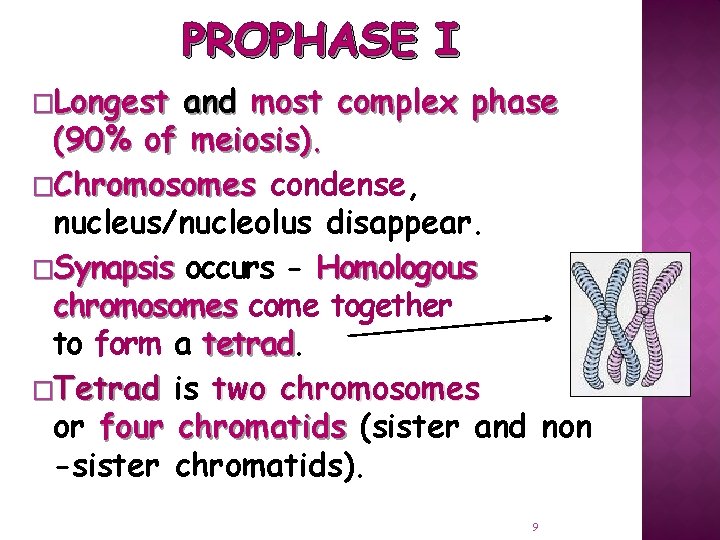
PROPHASE I �Longest and most complex phase (90% of meiosis). �Chromosomes condense, nucleus/nucleolus disappear. �Synapsis occurs - Homologous chromosomes come together to form a tetrad �Tetrad is two chromosomes or four chromatids (sister and non -sister chromatids). 9
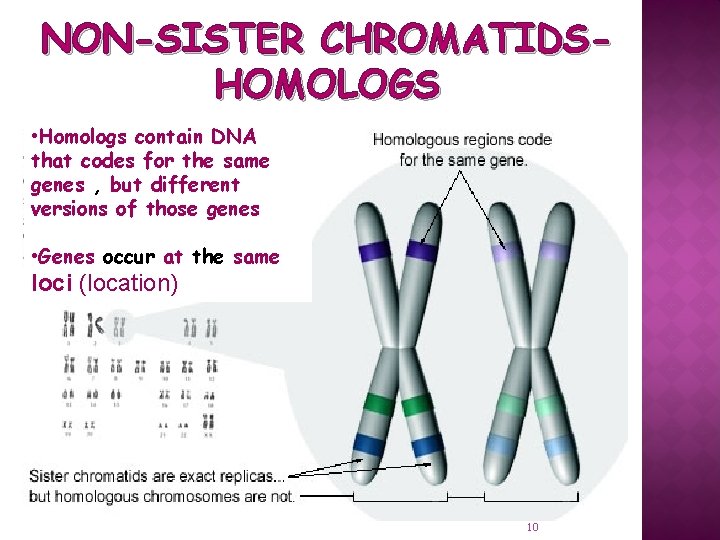
NON-SISTER CHROMATIDSHOMOLOGS • Homologs contain DNA that codes for the same genes , but different versions of those genes • Genes occur at the same loci (location) 10
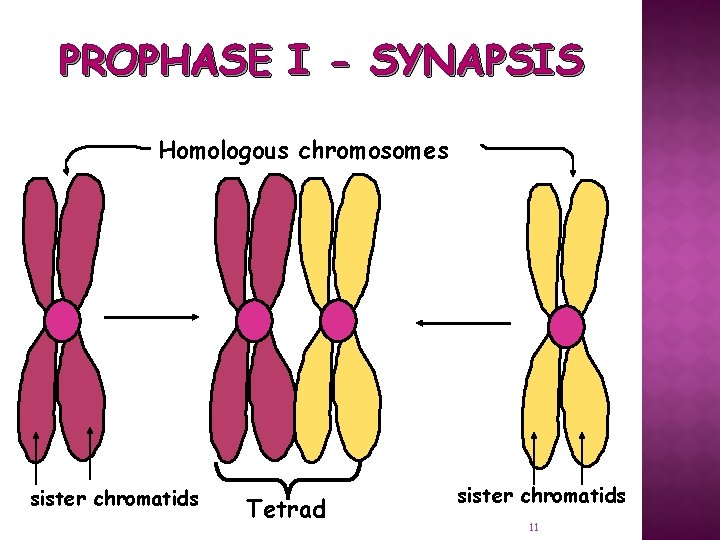
PROPHASE I - SYNAPSIS Homologous chromosomes sister chromatids Tetrad sister chromatids 11
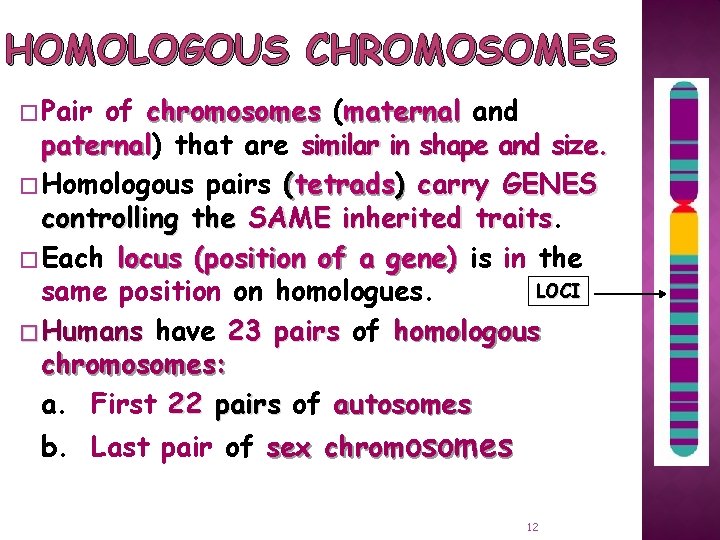
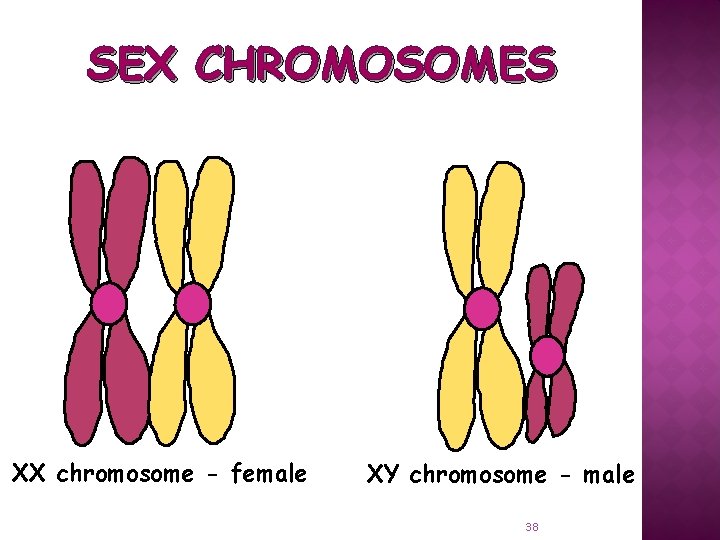
HOMOLOGOUS CHROMOSOMES � Pair of chromosomes (maternal and paternal) paternal that are similar in shape and size. � Homologous pairs (tetrads) carry GENES controlling the SAME inherited traits � Each locus (position of a gene) is in the LOCI same position on homologues. � Humans have 23 pairs of homologous chromosomes: a. First 22 pairs of autosomes b. Last pair of sex chromosomes 12
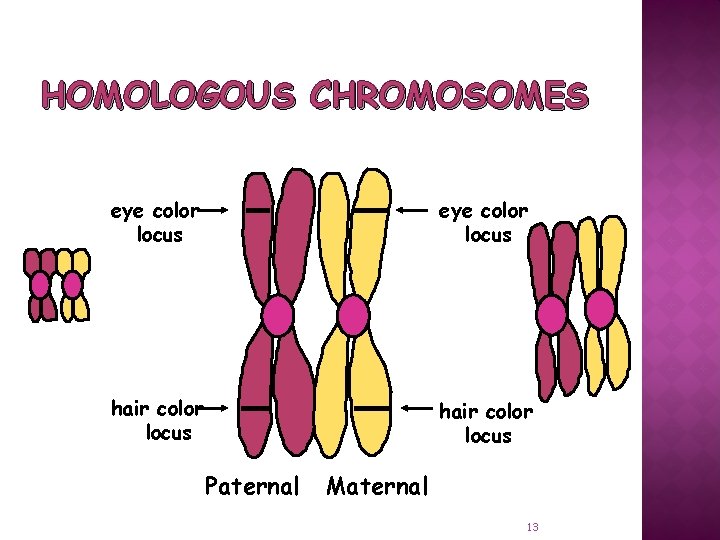
HOMOLOGOUS CHROMOSOMES eye color locus hair color locus Paternal Maternal 13
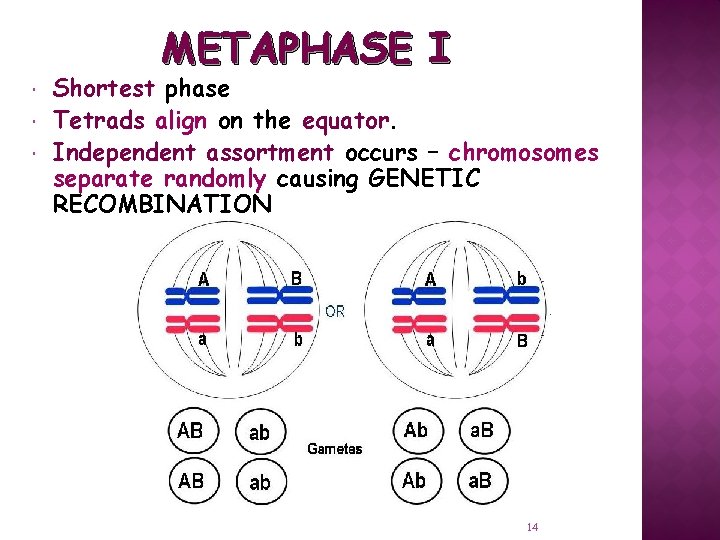
METAPHASE I Shortest phase Tetrads align on the equator. Independent assortment occurs – chromosomes separate randomly causing GENETIC RECOMBINATION 14
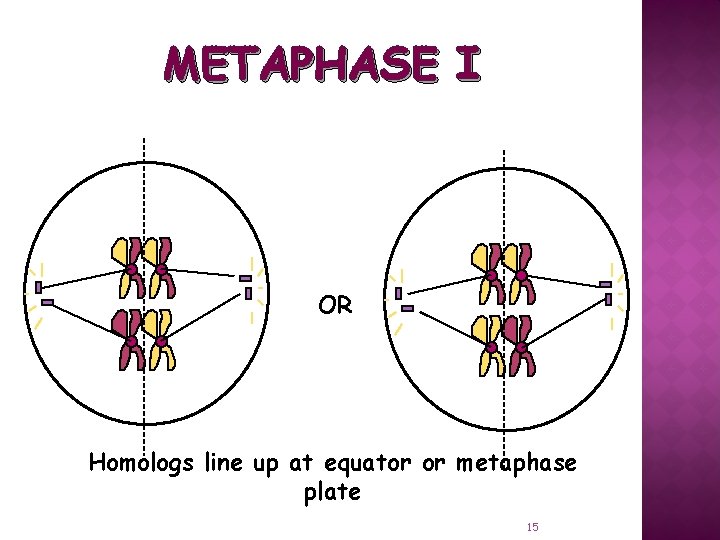
METAPHASE I OR Homologs line up at equator or metaphase plate 15
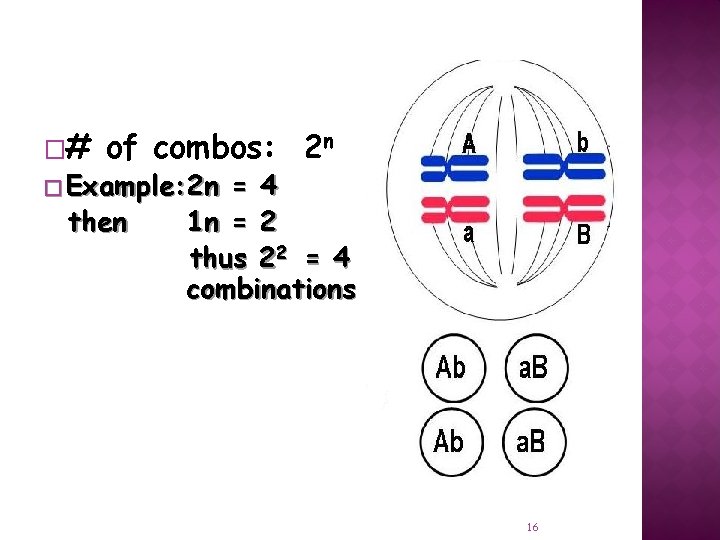
�# of combos: 2 n � Example: 2 n then = 4 1 n = 2 thus 22 = 4 combinations 16
QUESTION: �In terms of Independent Assortment -how many different combinations of sperm could a human male produce? 17
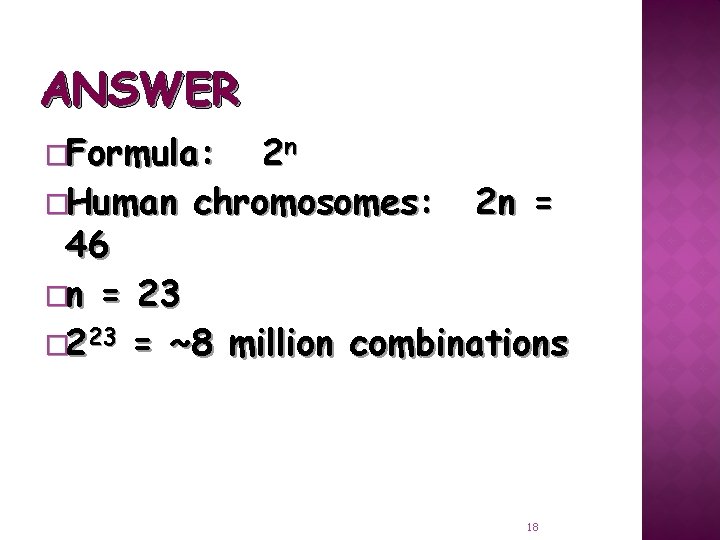
ANSWER �Formula: 2 n �Human chromosomes: 2 n = 46 �n = 23 � 223 = ~8 million combinations 18
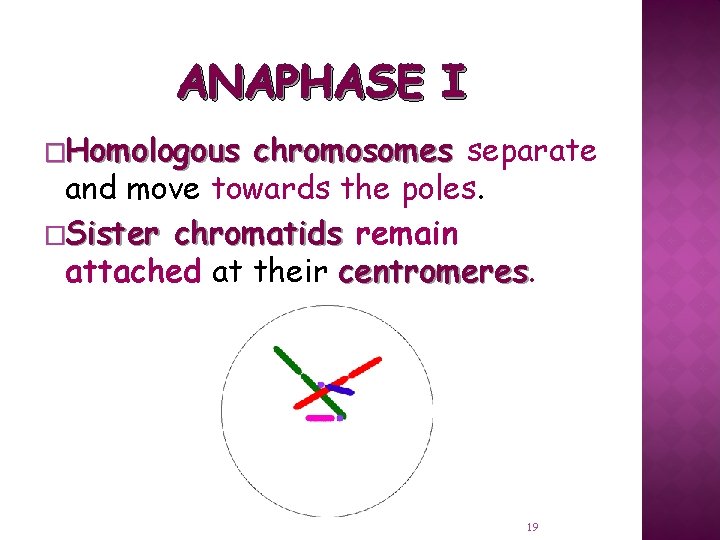
ANAPHASE I �Homologous chromosomes separate and move towards the poles. �Sister chromatids remain attached at their centromeres 19
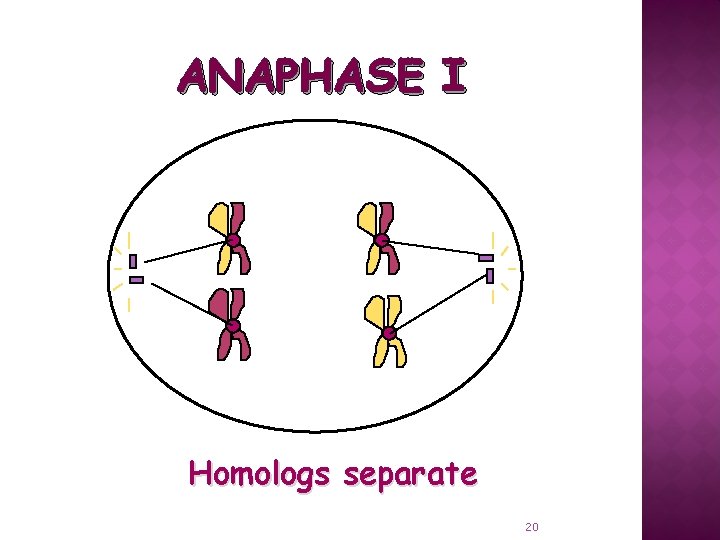
ANAPHASE I Homologs separate 20
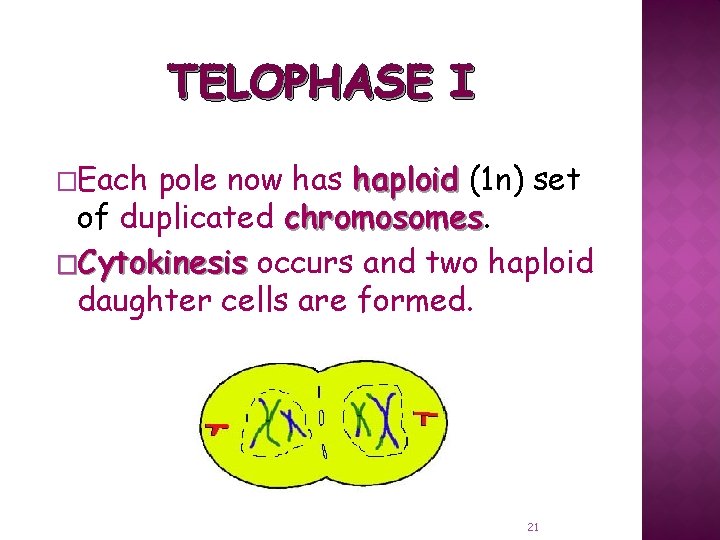
TELOPHASE I �Each pole now has haploid (1 n) set of duplicated chromosomes �Cytokinesis occurs and two haploid daughter cells are formed. 21
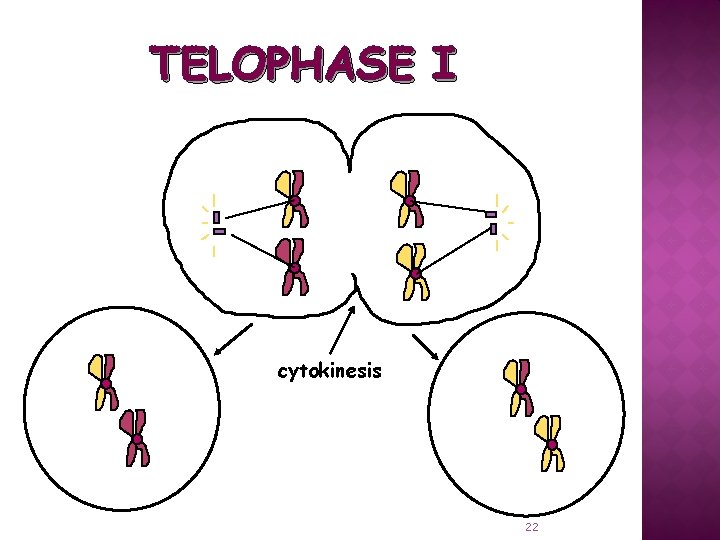
TELOPHASE I cytokinesis 22
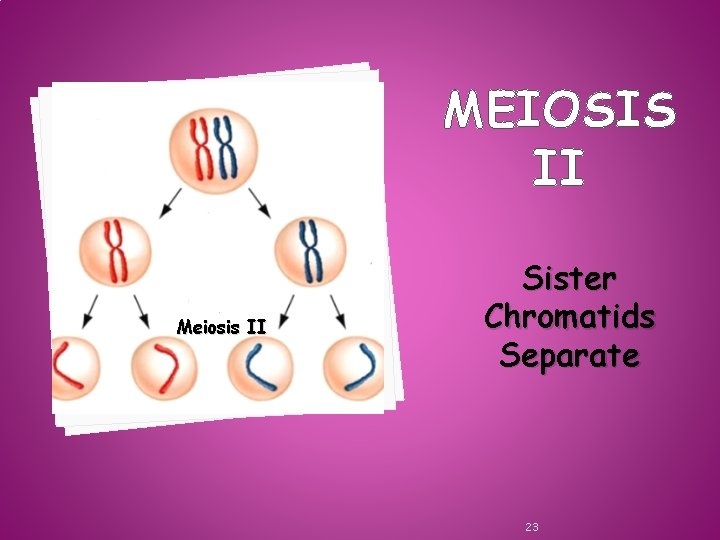
MEIOSIS II Meiosis II Sister Chromatids Separate 23
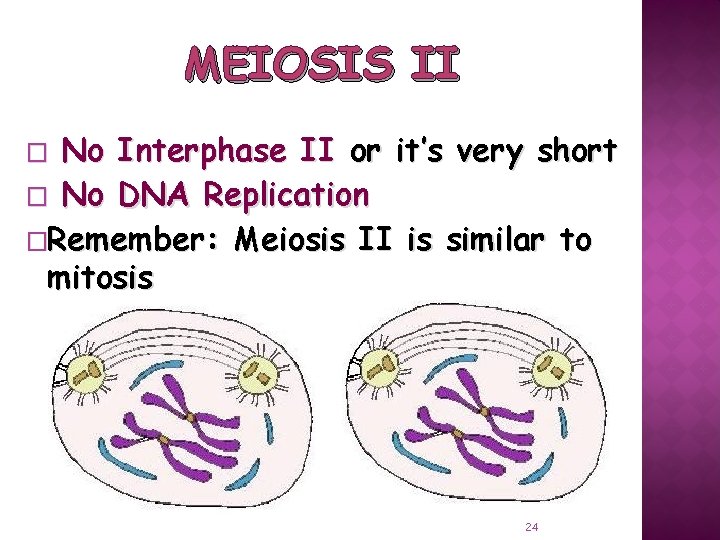
MEIOSIS II No Interphase II or it’s very short � No DNA Replication �Remember: Meiosis II is similar to mitosis � 24
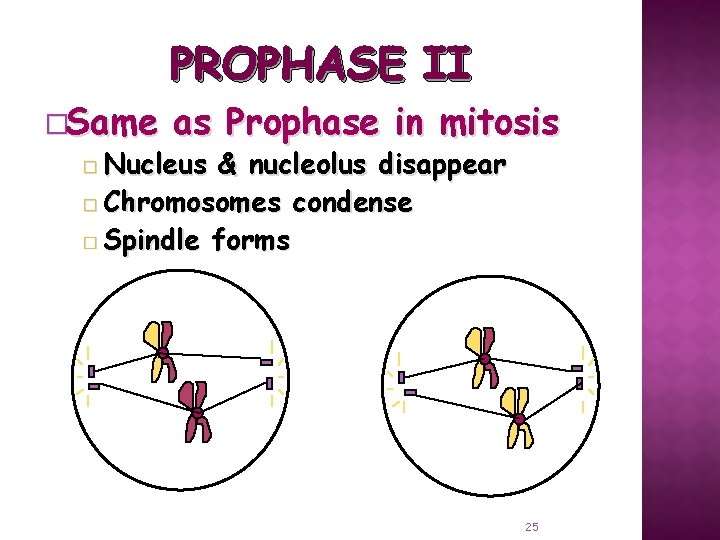
PROPHASE II �Same as Prophase in mitosis � Nucleus & nucleolus disappear � Chromosomes condense � Spindle forms 25
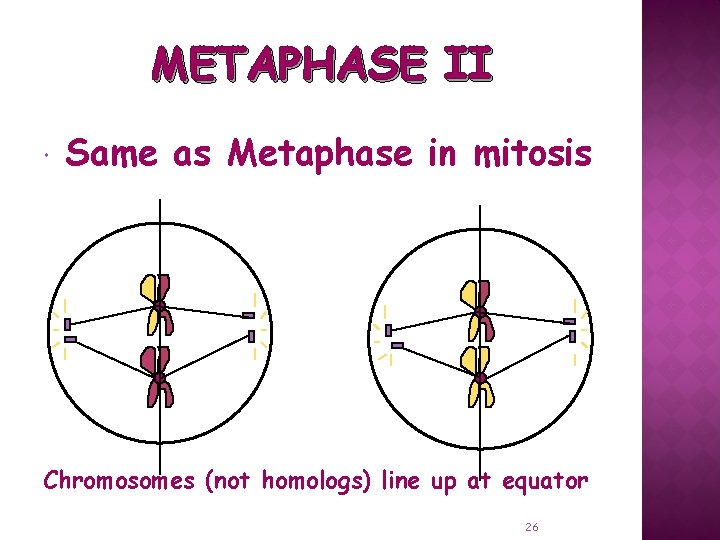
METAPHASE II Same as Metaphase in mitosis Chromosomes (not homologs) line up at equator 26
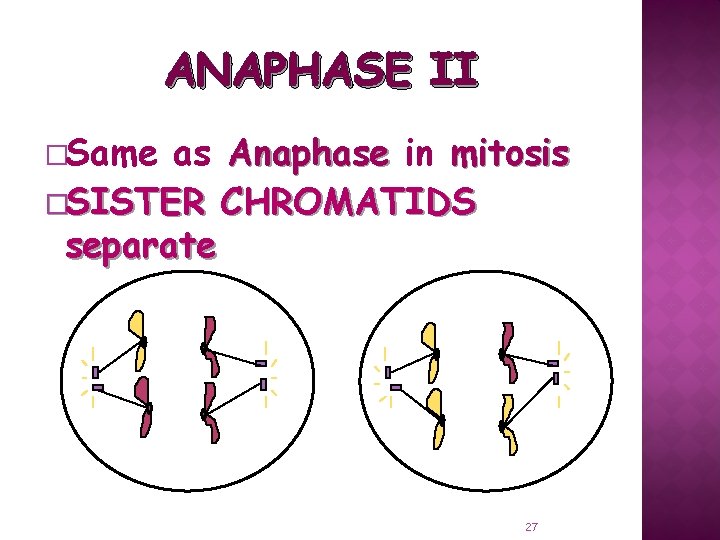
ANAPHASE II �Same as Anaphase in mitosis �SISTER CHROMATIDS separate 27
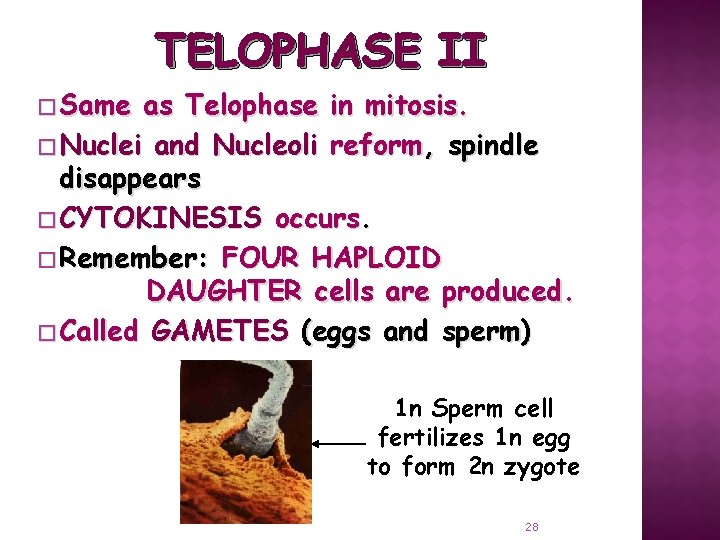
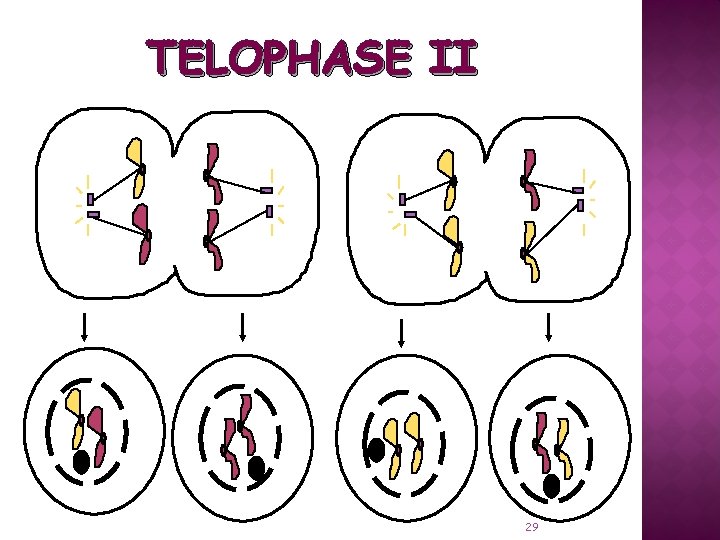
TELOPHASE II � Same as Telophase in mitosis. � Nuclei and Nucleoli reform, spindle disappears � CYTOKINESIS occurs. � Remember: FOUR HAPLOID DAUGHTER cells are produced. � Called GAMETES (eggs and sperm) 1 n Sperm cell fertilizes 1 n egg to form 2 n zygote 28
TELOPHASE II 29
QUESTION: �A cell containing 20 chromosomes (diploid) at the beginning of meiosis would, at its completion, produce cells containing how many chromosomes? chromosomes 30
ANSWER: � 10 1 n) chromosomes (haploid or 31
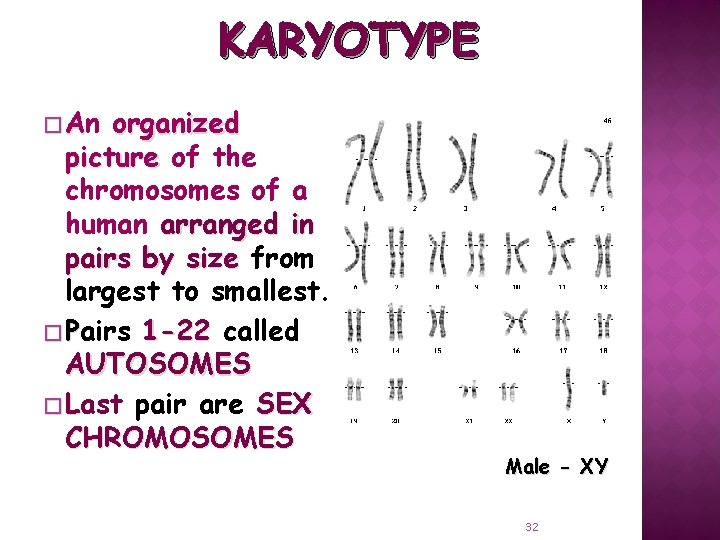
KARYOTYPE � An organized picture of the chromosomes of a human arranged in pairs by size from largest to smallest. � Pairs 1 -22 called AUTOSOMES � Last pair are SEX CHROMOSOMES Male - XY 32
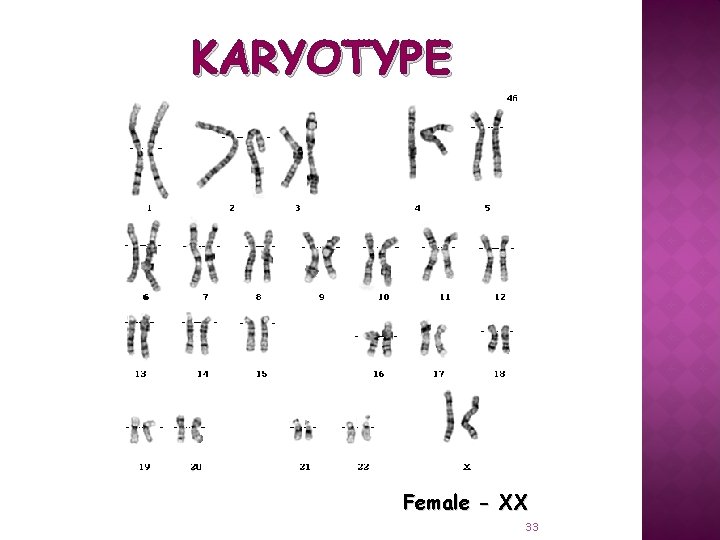
KARYOTYPE Female - XX 33
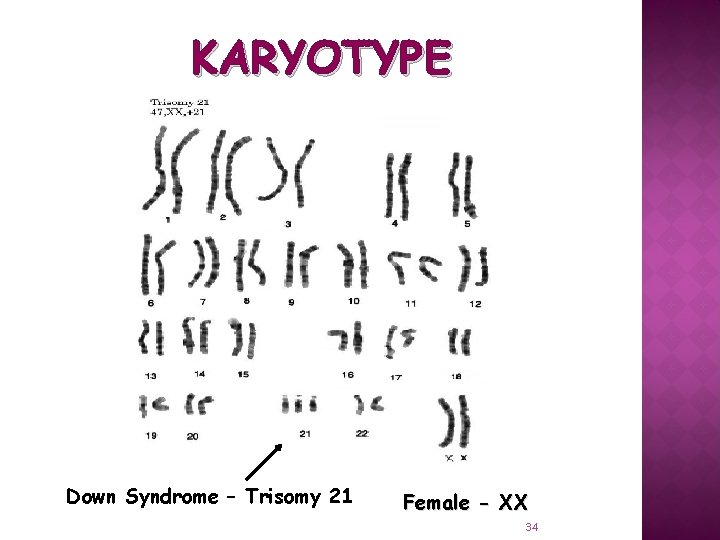
KARYOTYPE Down Syndrome – Trisomy 21 Female - XX 34
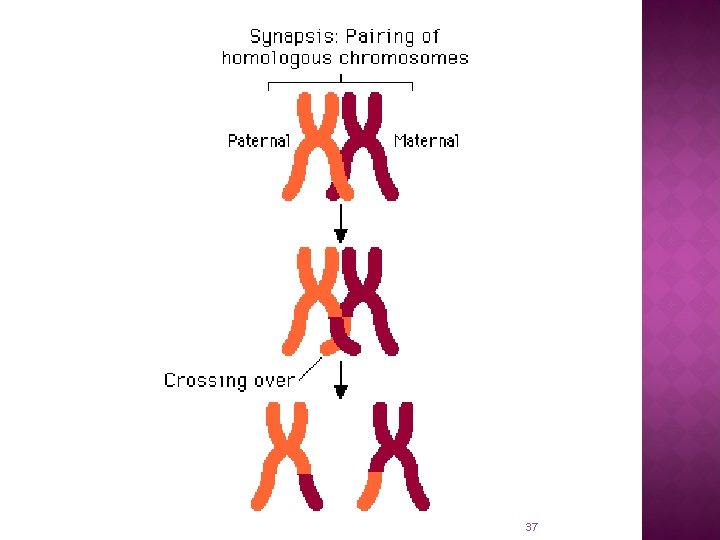
CROSSING OVER �Crossing over: over segments of nonsister chromatids break and reattach to the other chromatid �Chiasmata (chiasma) are where chromosomes touch each other and exchange genes (crossing over. ) over �Causes Genetic Recombination 35
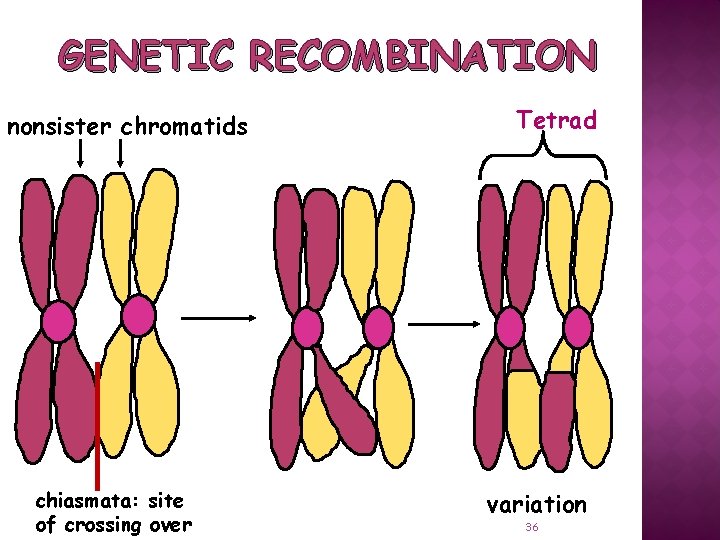
GENETIC RECOMBINATION nonsister chromatids chiasmata: site of crossing over Tetrad variation 36
37
SEX CHROMOSOMES XX chromosome - female XY chromosome - male 38
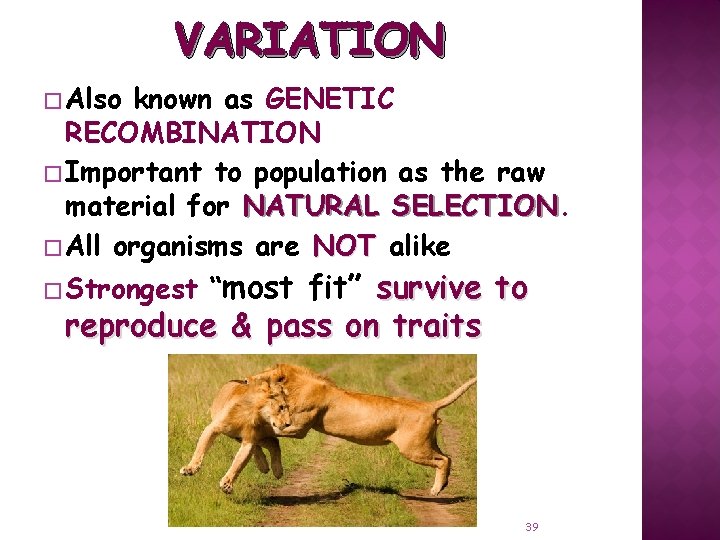
VARIATION � Also known as GENETIC RECOMBINATION � Important to population as the raw material for NATURAL SELECTION. � All organisms are NOT alike � Strongest “most fit” survive to reproduce & pass on traits 39
QUESTION: �What are the 3 sources of genetic recombination or variation? 40
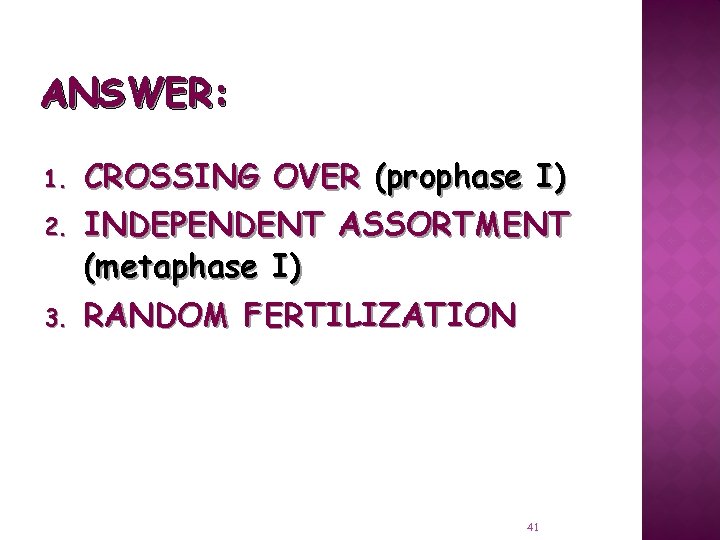
ANSWER: 1. 2. 3. CROSSING OVER (prophase I) INDEPENDENT ASSORTMENT (metaphase I) RANDOM FERTILIZATION 41
- Slides: 41