
MEIOSIS REDUCTIONAL DIVISION PREPARED BY MRS R M
MEIOSIS: REDUCTIONAL DIVISION PREPARED BY: MRS. R. M. PATIL PGT. BIOLOGY K. V. 9 BRD, AF. PUNE
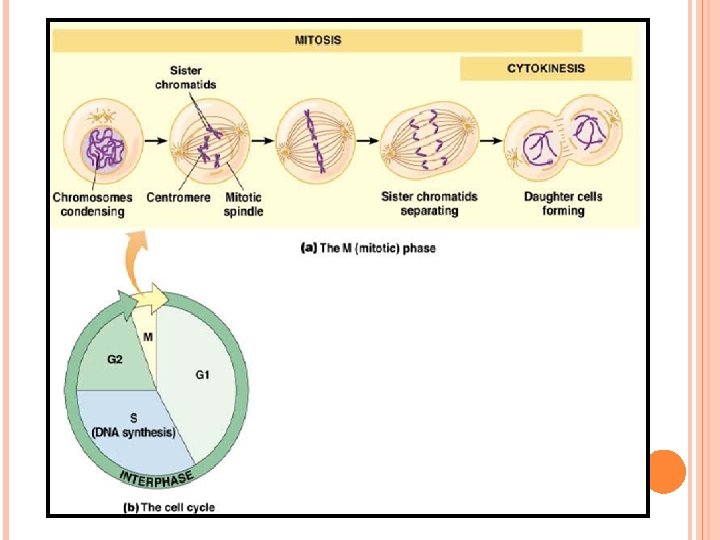
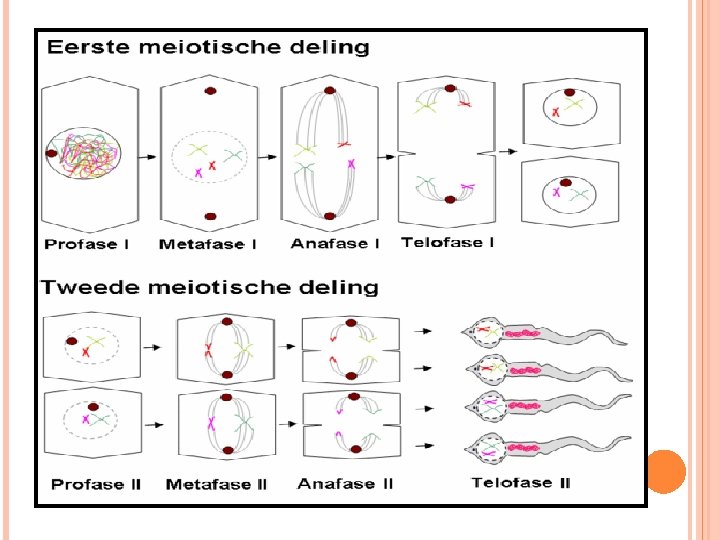
MEIOSIS: REDUCTIONAL DIVISION Occurs in germ cells to form gametes in sexually reproducing organisms. Many stages of meiosis are similar to mitosis. It includes meiosis I and meiosis II The essential stages during meiosis are: a) two successive divisions without any DNA replication occurring between them, b) formation of chiasmata and crossing over, c)segregation of homologous chromosomes, d) Separation of sister chromatids.
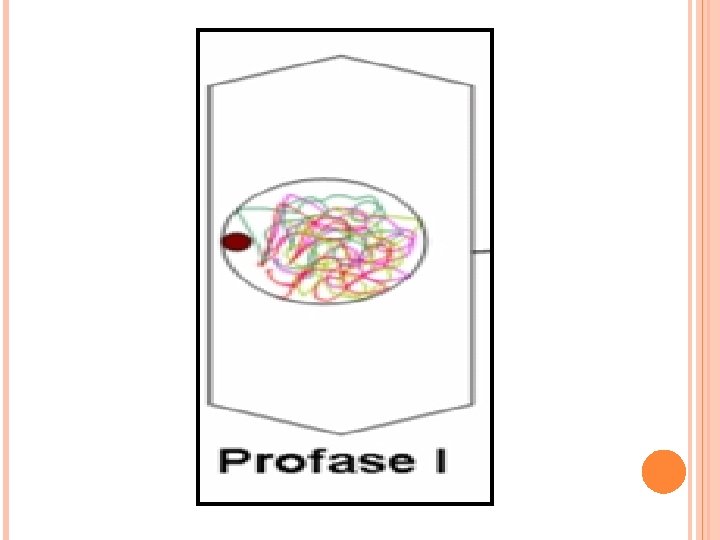
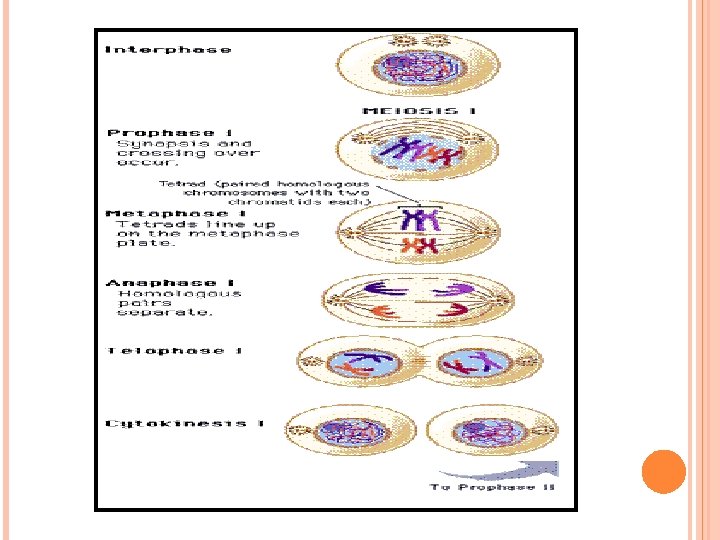
MEIOSIS: I Prophase -I DNA is exchanged between homologous chromosomes (crossover). The new combinations of alleles/GENES. The paired and replicated chromosomes are called bivalents or tetrads. Non-sister chromatids may cross-over at points called chiasmata (plural; singular chiasma.

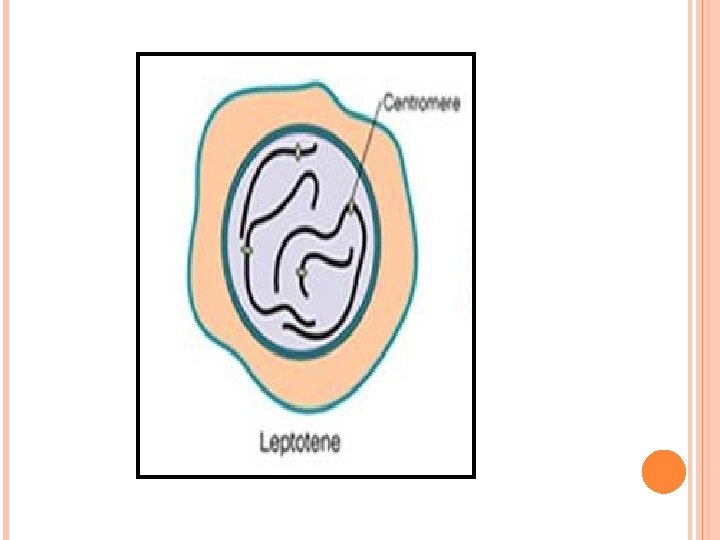
Leptotene: Greek words "thin threads". Chromosomes begin to condense. Two sister chromatids are still so tightly bound indistinguishable.
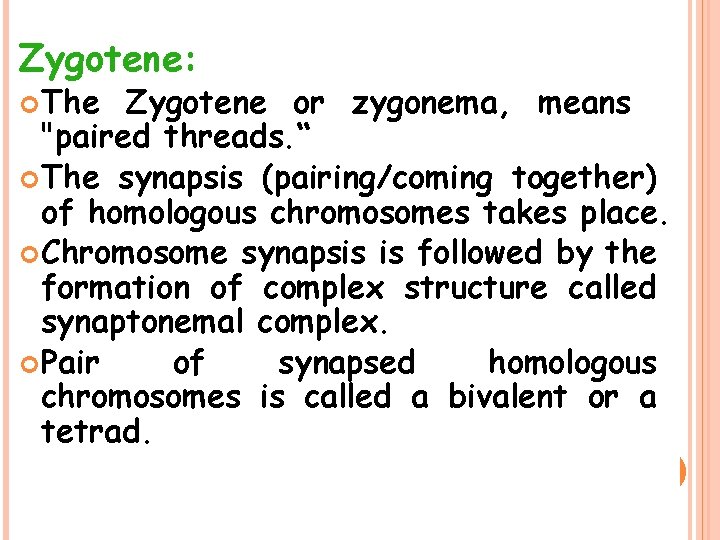
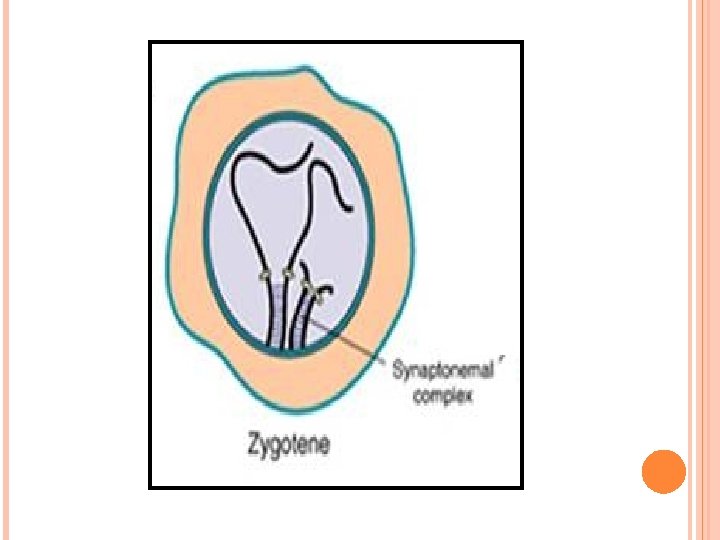
Zygotene: The Zygotene or zygonema, means "paired threads. “ The synapsis (pairing/coming together) of homologous chromosomes takes place. Chromosome synapsis is followed by the formation of complex structure called synaptonemal complex. Pair of synapsed homologous chromosomes is called a bivalent or a tetrad.
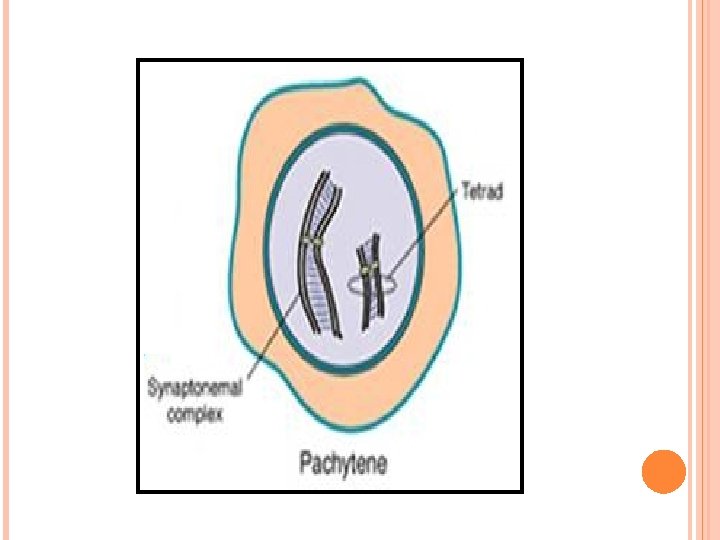
Pachytene: thick threads Clear appearance of tetrad. Characterised by appearance of recombination nodules. Exchange takes place at sites where recombination nodules (the chiasmata) have formed. (Crossing over occurs between non- sister chromatids of homologous chromosomes. Enzyme recombinase is involved in crossing over.
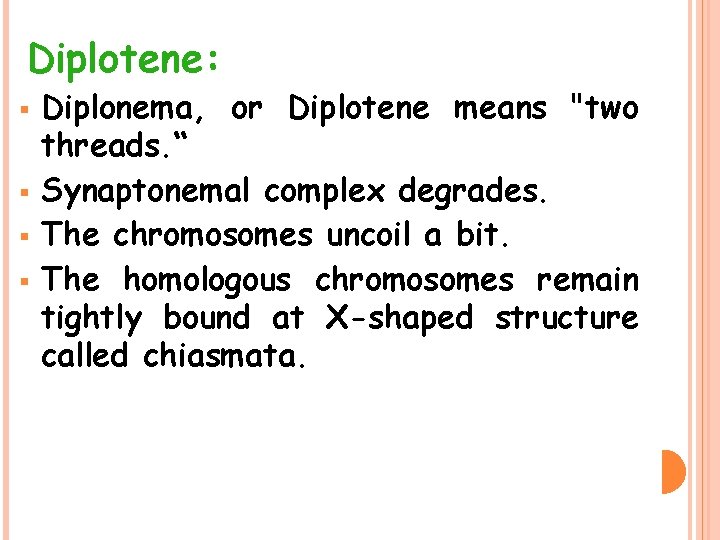
Diplotene: § § Diplonema, or Diplotene means "two threads. “ Synaptonemal complex degrades. The chromosomes uncoil a bit. The homologous chromosomes remain tightly bound at X-shaped structure called chiasmata.
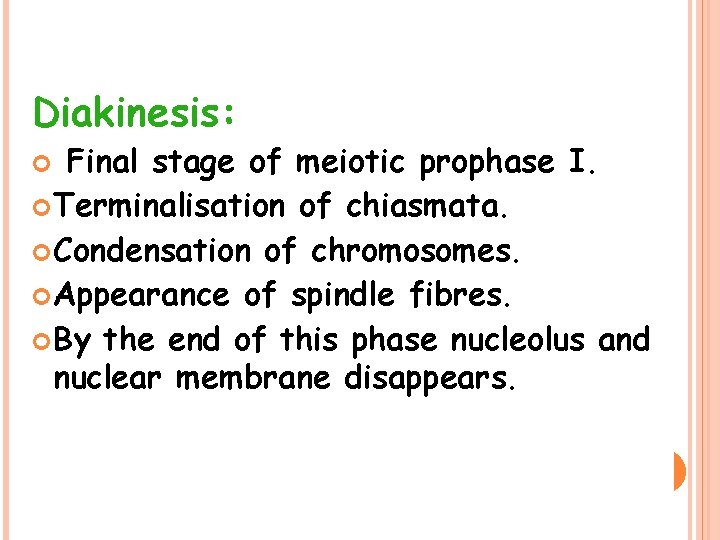
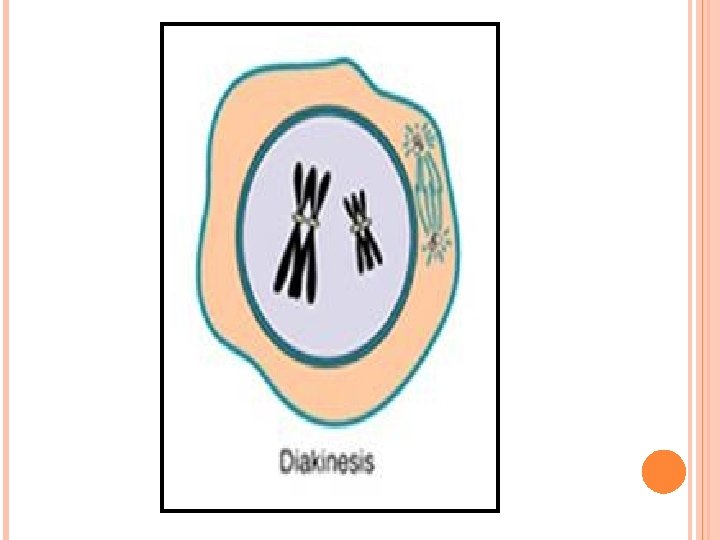
Diakinesis: Final stage of meiotic prophase I. Terminalisation of chiasmata. Condensation of chromosomes. Appearance of spindle fibres. By the end of this phase nucleolus and nuclear membrane disappears.
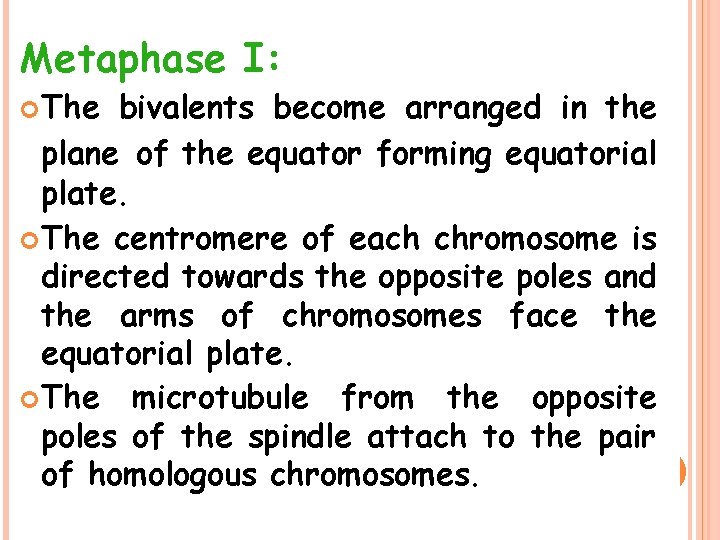
Metaphase I: The bivalents become arranged in the plane of the equator forming equatorial plate. The centromere of each chromosome is directed towards the opposite poles and the arms of chromosomes face the equatorial plate. The microtubule from the opposite poles of the spindle attach to the pair of homologous chromosomes.
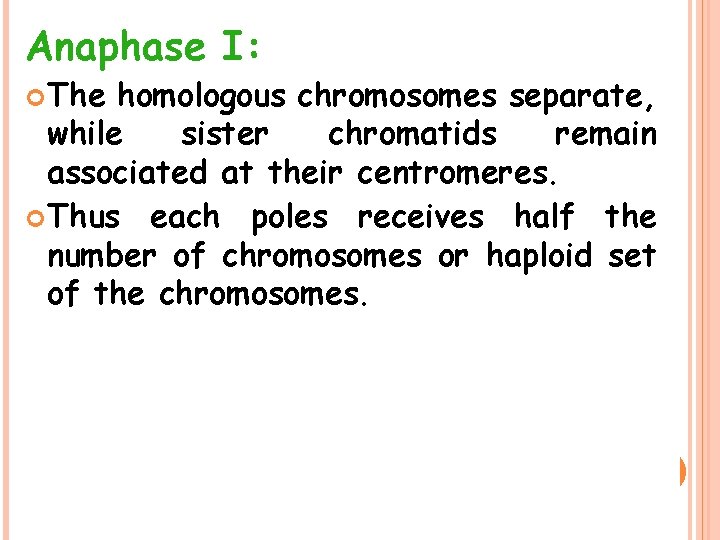
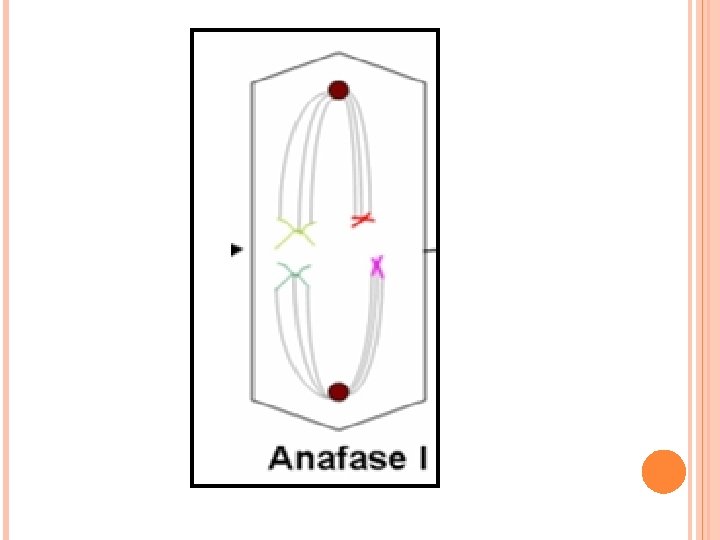
Anaphase I: The homologous chromosomes separate, while sister chromatids remain associated at their centromeres. Thus each poles receives half the number of chromosomes or haploid set of the chromosomes.
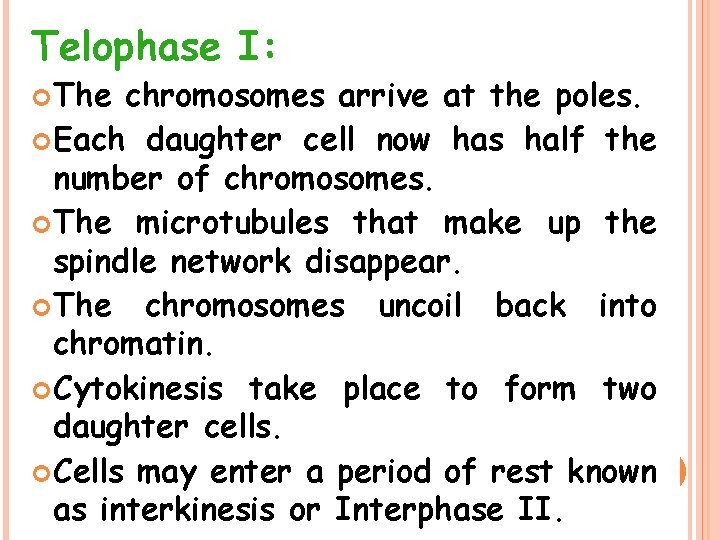
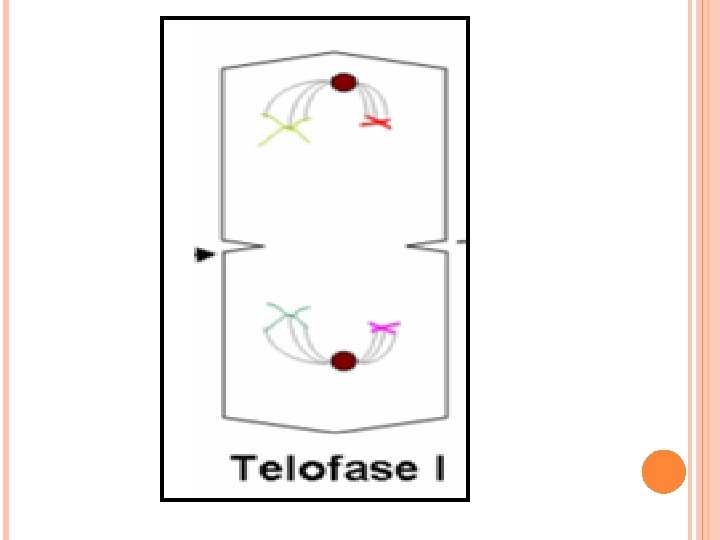
Telophase I: The chromosomes arrive at the poles. Each daughter cell now has half the number of chromosomes. The microtubules that make up the spindle network disappear. The chromosomes uncoil back into chromatin. Cytokinesis take place to form two daughter cells. Cells may enter a period of rest known as interkinesis or Interphase II.
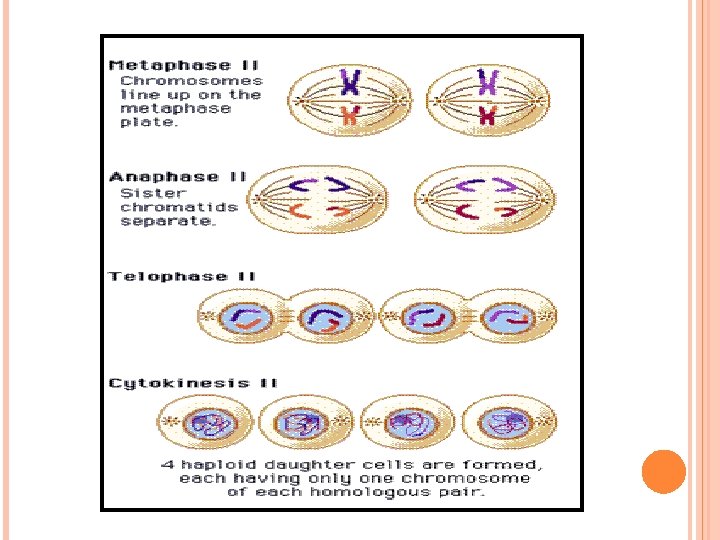
Meiosis II: Similar to mitosis. Production of four haploid cells The four main steps: Prophase II, Metaphase II, Anaphase II, and Telophase II.
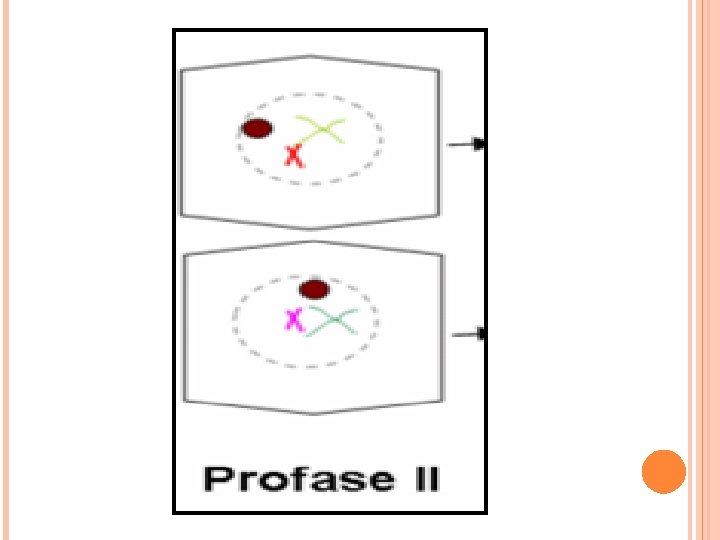
Prophase II: Disappearance of the nucleoli and the nuclear envelope/ nuclear membrane Shortening and thickening of the chromatids. Centrioles move to the polar regions and arrange spindle fibers.
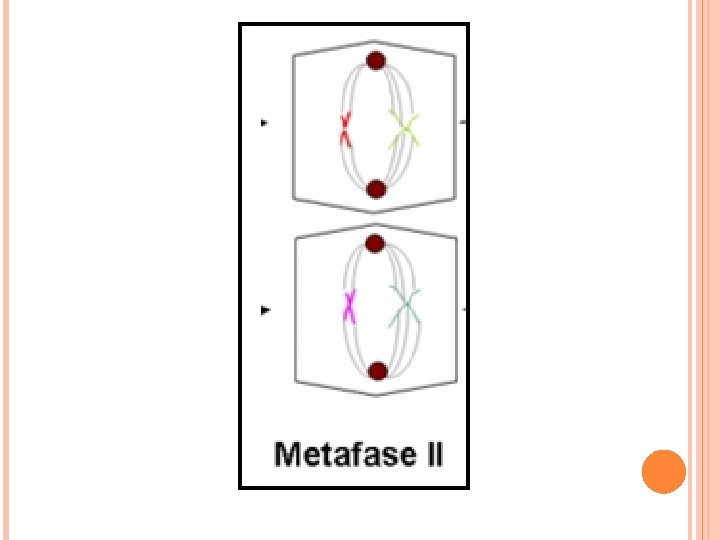
Metaphase II: The centromeres contain two kinetochores that attach to spindle fibers. The chromosomes align at the equator and the microtubules from opposite poles of the spindle get attached to the kinetochores of sister chromatids.
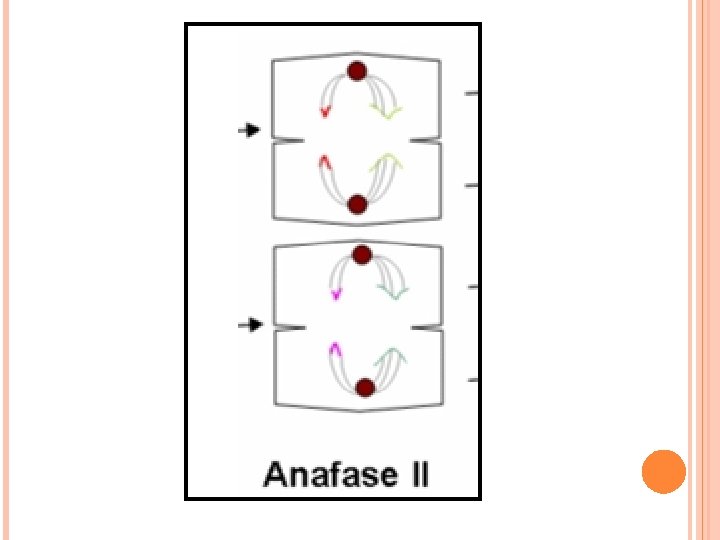
Anaphase II: The centromeres are cleaved, Fibre-kinetochores to pull the sister chromatids apart. The sister chromatids called sister chromosomes.
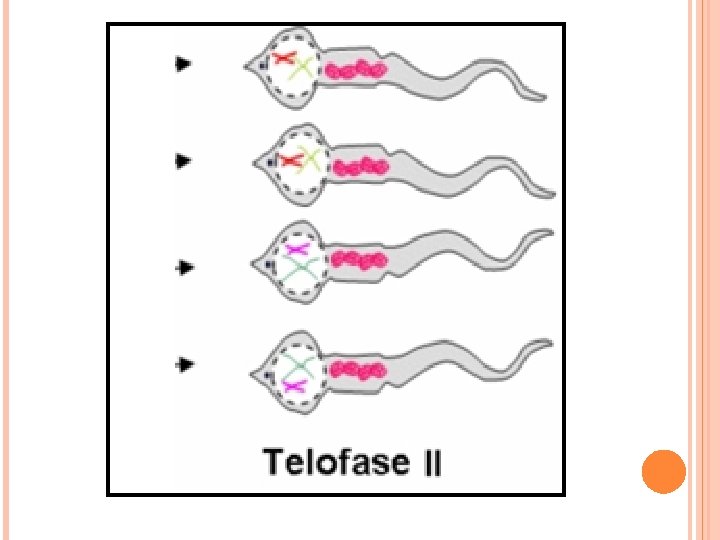
Telophase II: Uncoiling and lengthening of the chromosomes. Disappearance of the spindle. Reappearance of nucleolus and nuclear membrane. Cleavage or cell wall formation. Four daughter cells, with a haploid set of chromosomes.
SIGNIFICANE OF MEIOSIS: In helps in maintaining the definite and constant number of chromosomes in the organisms. Helps in increasing genetic variability. Helps in formation of gametes. It leads to evolution.
- Slides: 34