
Meiosis Process by which GAMETES are formed sex
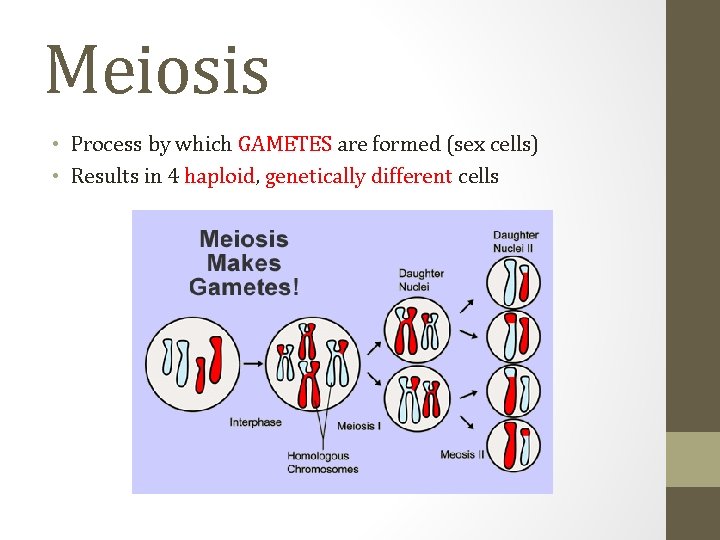
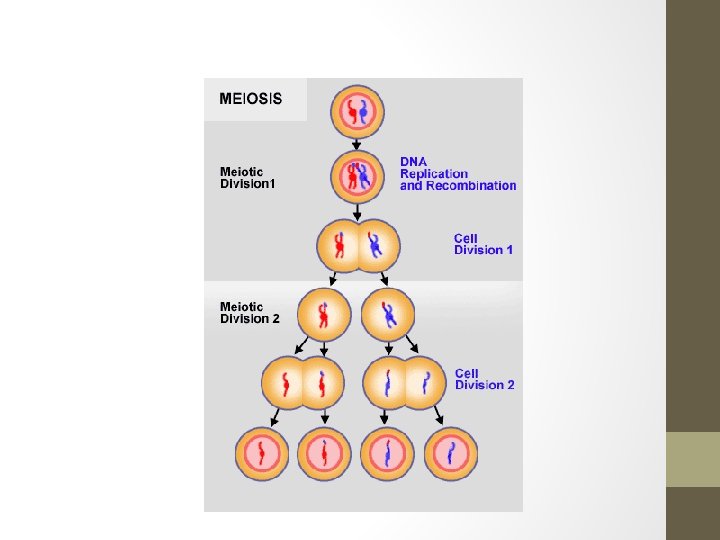
Meiosis • Process by which GAMETES are formed (sex cells) • Results in 4 haploid, genetically different cells
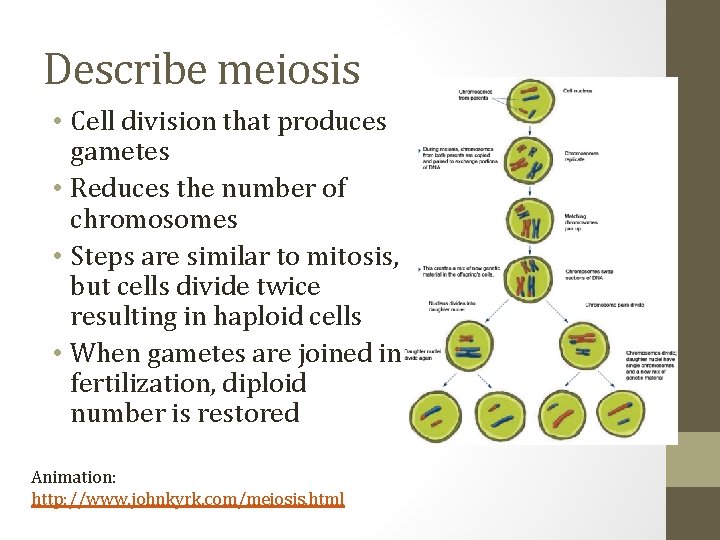
Describe meiosis • Cell division that produces gametes • Reduces the number of chromosomes • Steps are similar to mitosis, but cells divide twice resulting in haploid cells • When gametes are joined in fertilization, diploid number is restored Animation: http: //www. johnkyrk. com/meiosis. html
Mitosis Vs. Meiosis • The most important thing to remember in distinguishing Mitosis from Meiosis is: • Mitosis results in body cells. (SOMATIC) (Diploid, 2 n, genetically identical) • Meiosis results in gametes. (SEX CELLS) (Haploid, n, genetically different) • Every sexually reproducing organism inherits a single copy of every chromosome from both its parents. Humans receive 23 chromosomes from mom and 23 from dad, 46 total.
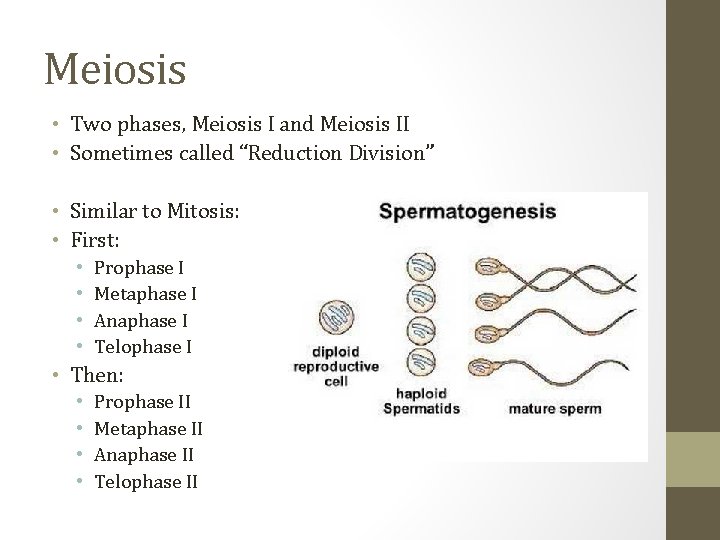
Meiosis • Two phases, Meiosis I and Meiosis II • Sometimes called “Reduction Division” • Similar to Mitosis: • First: • • Prophase I Metaphase I Anaphase I Telophase I • Then: • • Prophase II Metaphase II Anaphase II Telophase II
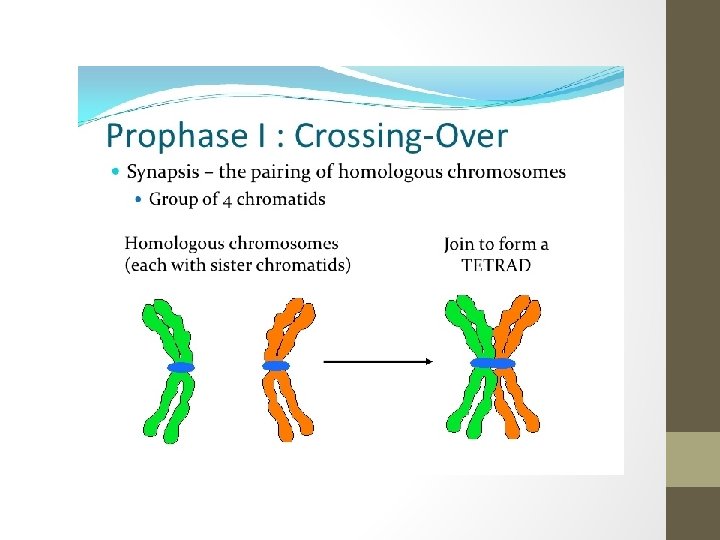

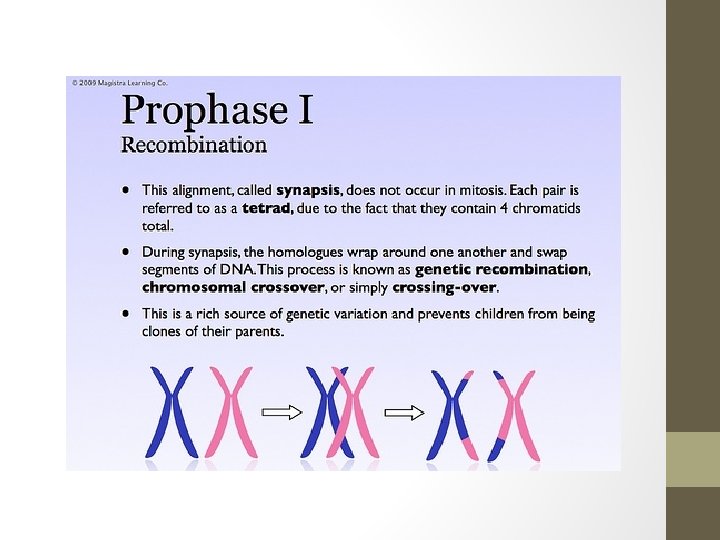
Tetrad • Remember, these are the homologous chromosomes together. • There are 4 sister chromatids in a tetrad. Prophase I of Meiosis I is where crossing over takes place!
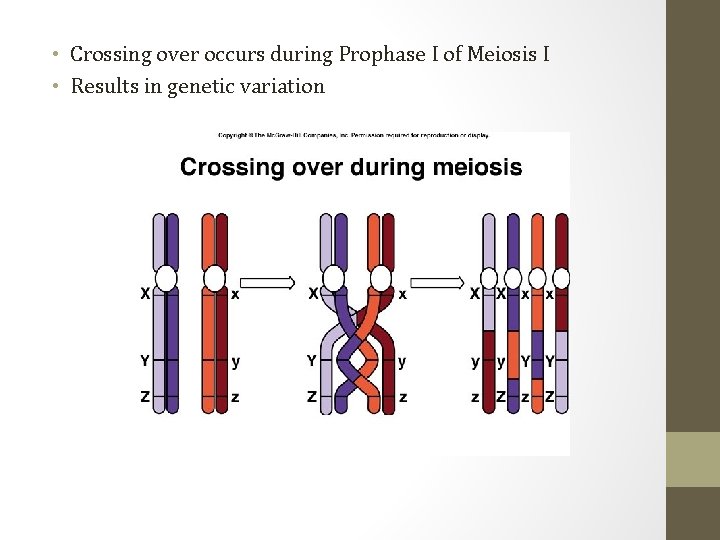
• Crossing over occurs during Prophase I of Meiosis I • Results in genetic variation
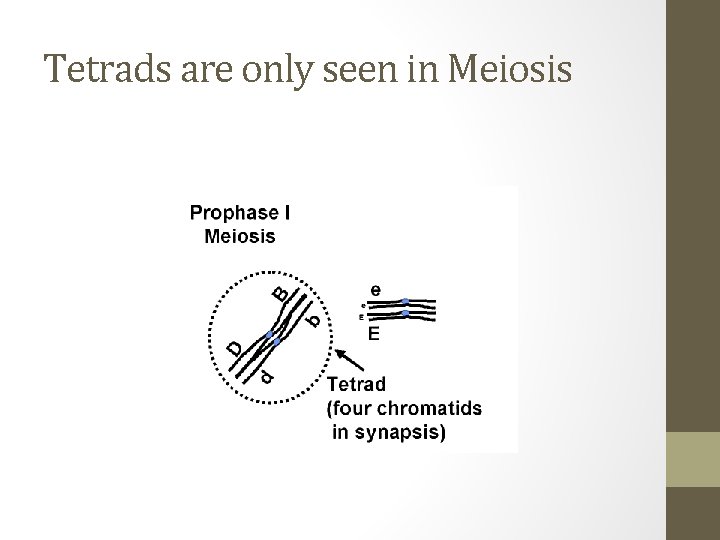
Tetrads are only seen in Meiosis
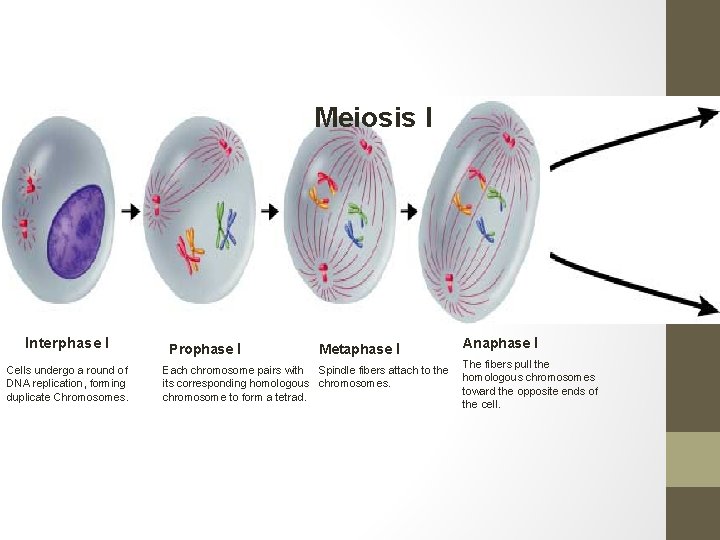
Meiosis I Interphase I Cells undergo a round of DNA replication, forming duplicate Chromosomes. : Prophase I Metaphase I Each chromosome pairs with Spindle fibers attach to the its corresponding homologous chromosomes. chromosome to form a tetrad. Anaphase I The fibers pull the homologous chromosomes toward the opposite ends of the cell.
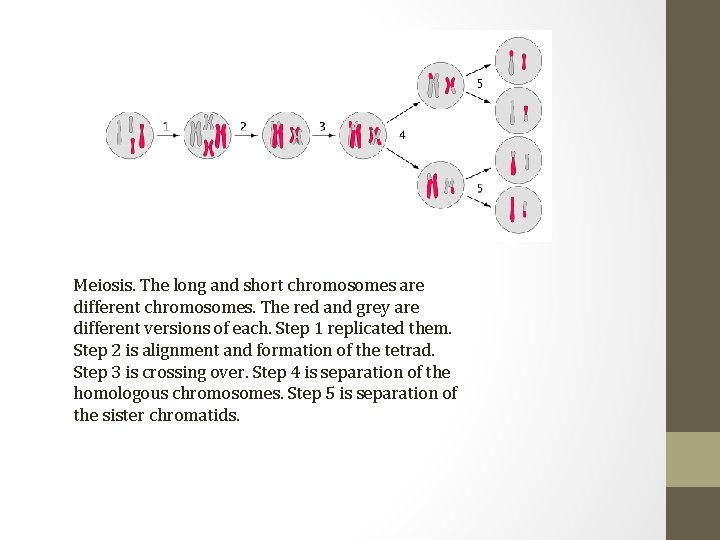
Meiosis. The long and short chromosomes are different chromosomes. The red and grey are different versions of each. Step 1 replicated them. Step 2 is alignment and formation of the tetrad. Step 3 is crossing over. Step 4 is separation of the homologous chromosomes. Step 5 is separation of the sister chromatids.
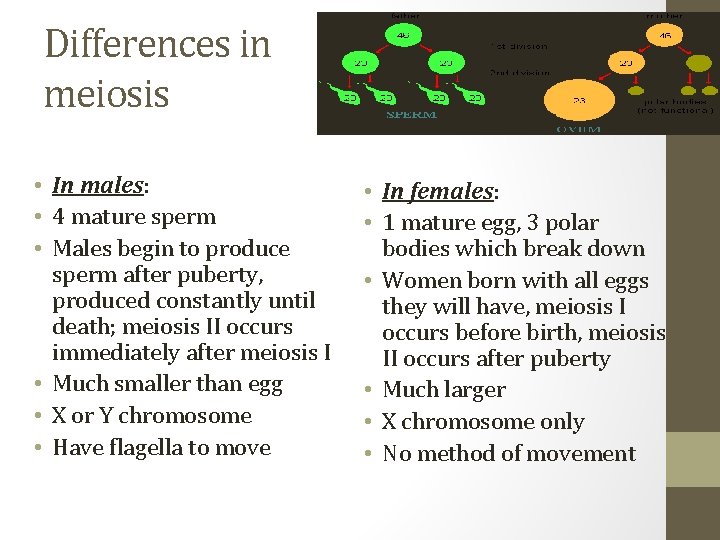
Differences in meiosis • In males: • 4 mature sperm • Males begin to produce sperm after puberty, produced constantly until death; meiosis II occurs immediately after meiosis I • Much smaller than egg • X or Y chromosome • Have flagella to move • In females: • 1 mature egg, 3 polar bodies which break down • Women born with all eggs they will have, meiosis I occurs before birth, meiosis II occurs after puberty • Much larger • X chromosome only • No method of movement
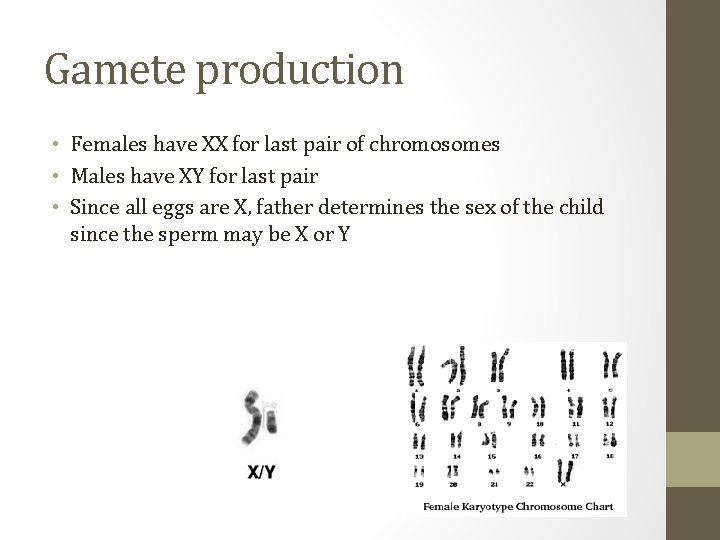
Gamete production • Females have XX for last pair of chromosomes • Males have XY for last pair • Since all eggs are X, father determines the sex of the child since the sperm may be X or Y
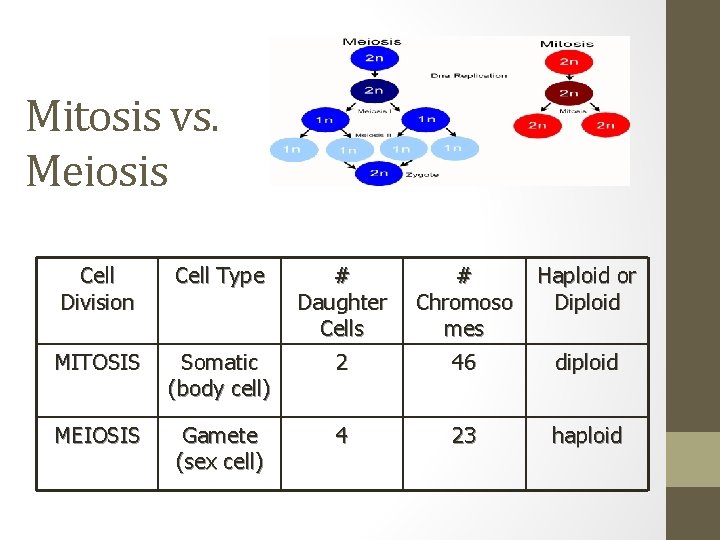
Mitosis vs. Meiosis Cell Division Cell Type MITOSIS Somatic (body cell) MEIOSIS Gamete (sex cell) # Daughter Cells 2 # Chromoso mes 46 Haploid or Diploid 4 23 haploid diploid
- Slides: 15