
Meiosis Overview sexual reproduction requires special cells made

- Slides: 28
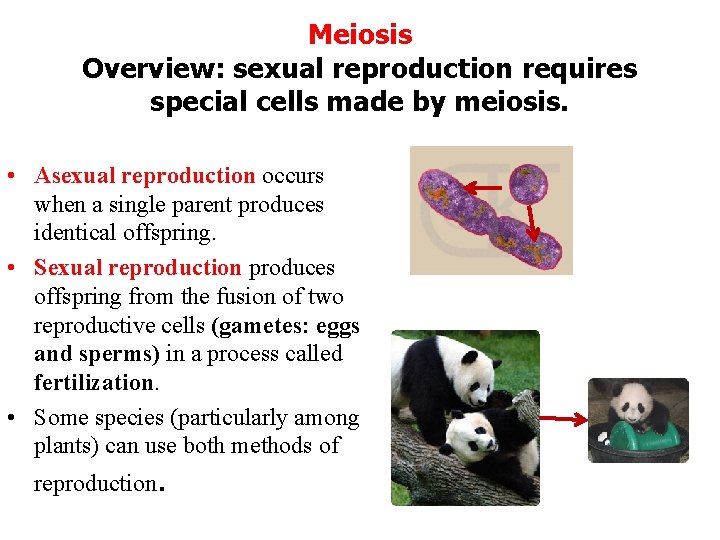
Meiosis Overview: sexual reproduction requires special cells made by meiosis. • Asexual reproduction occurs when a single parent produces identical offspring. • Sexual reproduction produces offspring from the fusion of two reproductive cells (gametes: eggs and sperms) in a process called fertilization. • Some species (particularly among plants) can use both methods of reproduction.
Chromosome number-Ploidy levels Diploid: two sets of chromosomes • Humans- 46 Haploid : one set of chromosomes; eggs and sperms Polyploidy: more than two complete sets of chromosomes
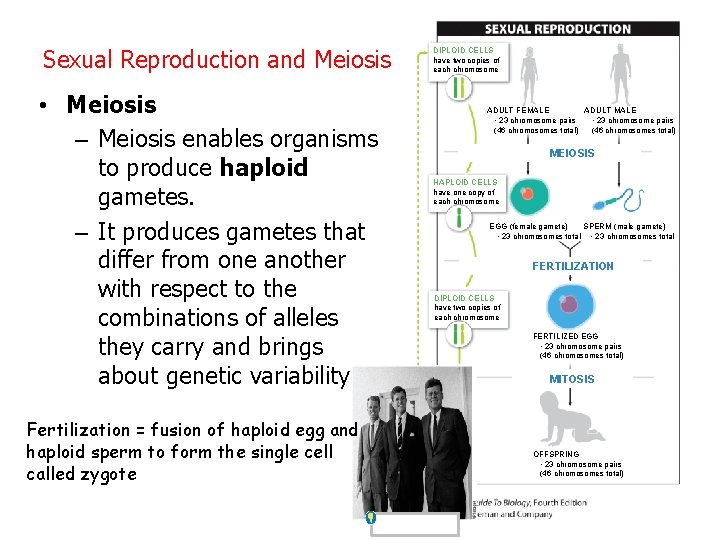
Sexual Reproduction and Meiosis • Meiosis – Meiosis enables organisms to produce haploid gametes. – It produces gametes that differ from one another with respect to the combinations of alleles they carry and brings about genetic variability Fertilization = fusion of haploid egg and haploid sperm to form the single cell called zygote DIPLOID CELLS have two copies of each chromosome ADULT FEMALE ADULT MALE • 23 chromosome pairs (46 chromosomes total) MEIOSIS HAPLOID CELLS have one copy of each chromosome EGG (female gamete) SPERM (male gamete) • 23 chromosomes total FERTILIZATION DIPLOID CELLS have two copies of each chromosome FERTILIZED EGG • 23 chromosome pairs (46 chromosomes total) MITOSIS OFFSPRING • 23 chromosome pairs (46 chromosomes total)
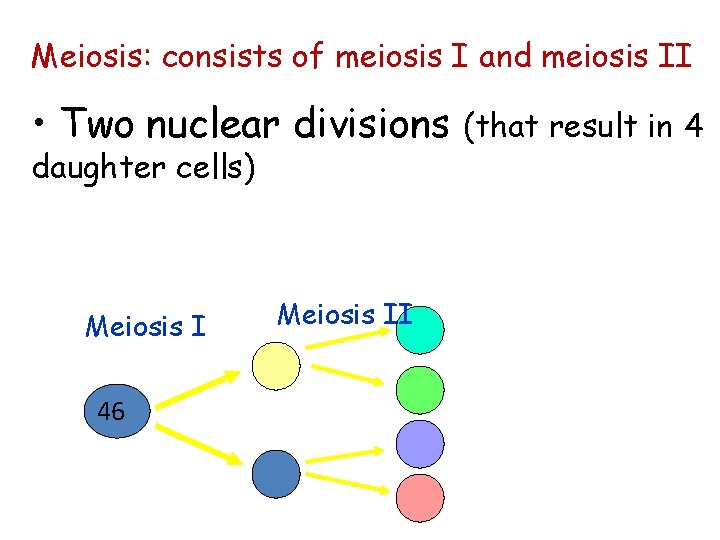
What is meiosis? • “Reduction Division” • 1 diploid (2 n) cell 4 haploid (1 n) cells • involves 2 nuclear divisions (meiosis I & meiosis II) • occurs in gonads (reproductive organs)
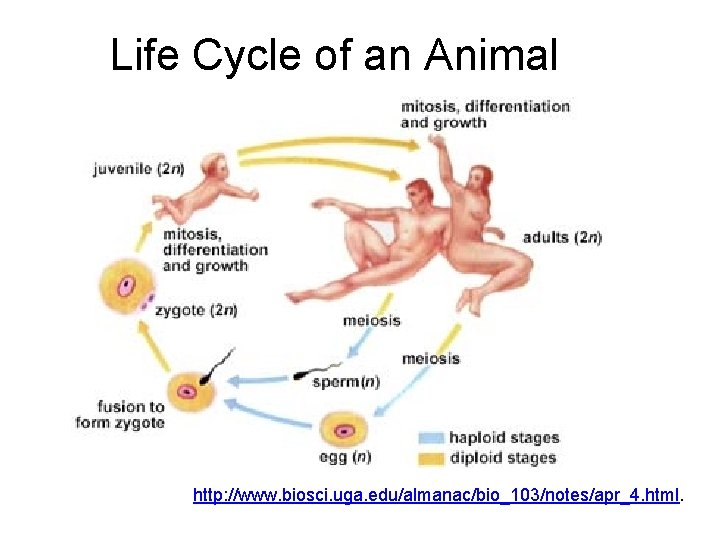
Life Cycle of an Animal http: //www. biosci. uga. edu/almanac/bio_103/notes/apr_4. html.
Meiosis: consists of meiosis I and meiosis II • Two nuclear divisions daughter cells) Meiosis I 46 Meiosis II (that result in 4
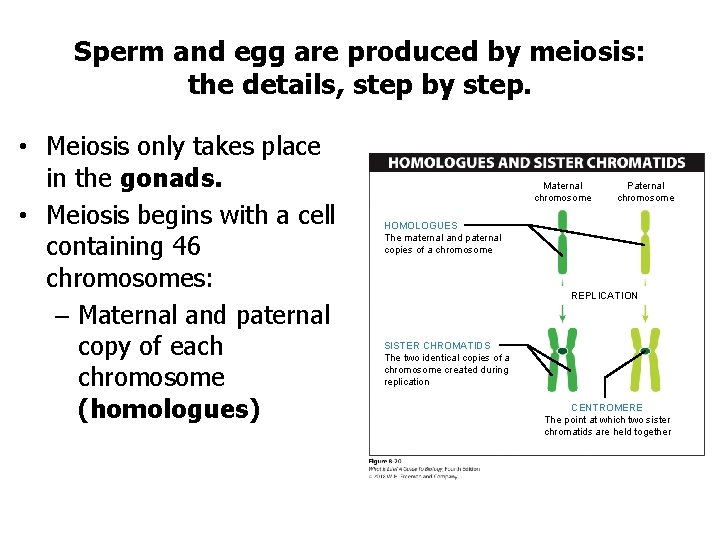
Sperm and egg are produced by meiosis: the details, step by step. • Meiosis only takes place in the gonads. • Meiosis begins with a cell containing 46 chromosomes: – Maternal and paternal copy of each chromosome (homologues) Maternal chromosome Paternal chromosome HOMOLOGUES The maternal and paternal copies of a chromosome REPLICATION SISTER CHROMATIDS The two identical copies of a chromosome created during replication CENTROMERE The point at which two sister chromatids are held together
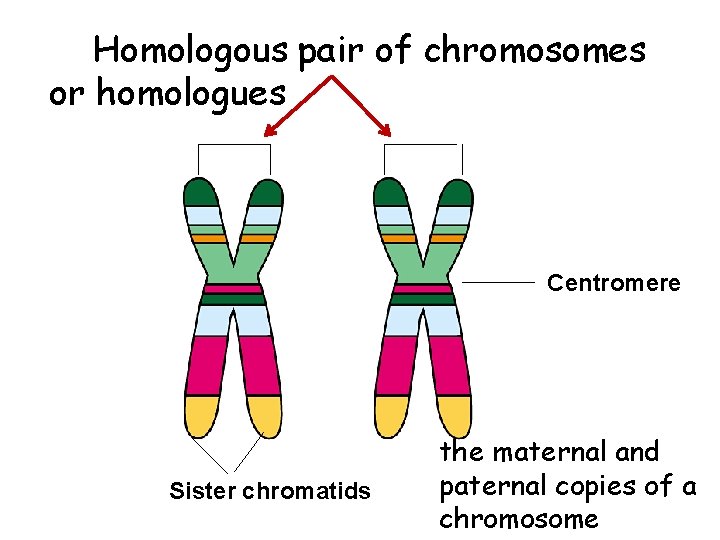
Homologous pair of chromosomes or homologues Centromere Sister chromatids the maternal and paternal copies of a chromosome
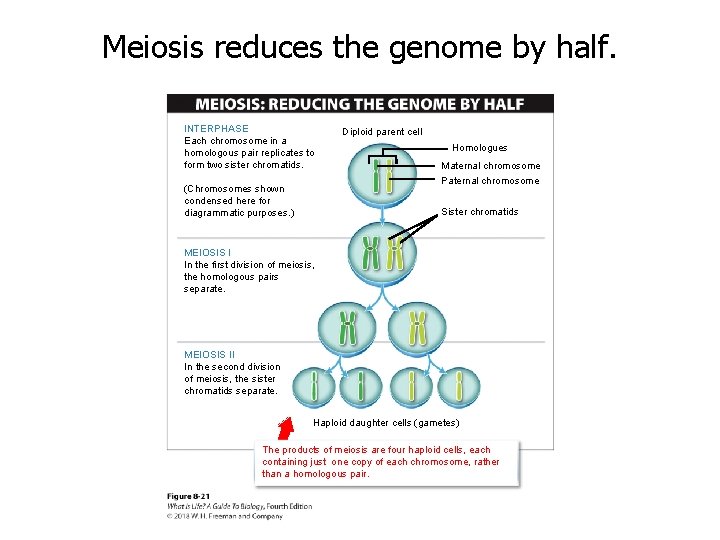
Meiosis reduces the genome by half. INTERPHASE Each chromosome in a homologous pair replicates to form two sister chromatids. (Chromosomes shown condensed here for diagrammatic purposes. ) Diploid parent cell Homologues Maternal chromosome Paternal chromosome Sister chromatids MEIOSIS I In the first division of meiosis, the homologous pairs separate. MEIOSIS II In the second division of meiosis, the sister chromatids separate. Haploid daughter cells (gametes) The products of meiosis are four haploid cells, each containing just one copy of each chromosome, rather than a homologous pair.
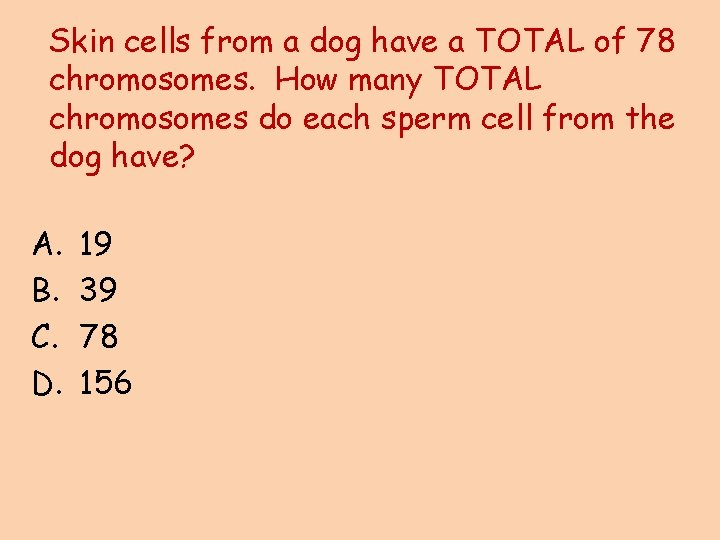
Skin cells from a dog have a TOTAL of 78 chromosomes. How many TOTAL chromosomes do each sperm cell from the dog have? A. B. C. D. 19 39 78 156
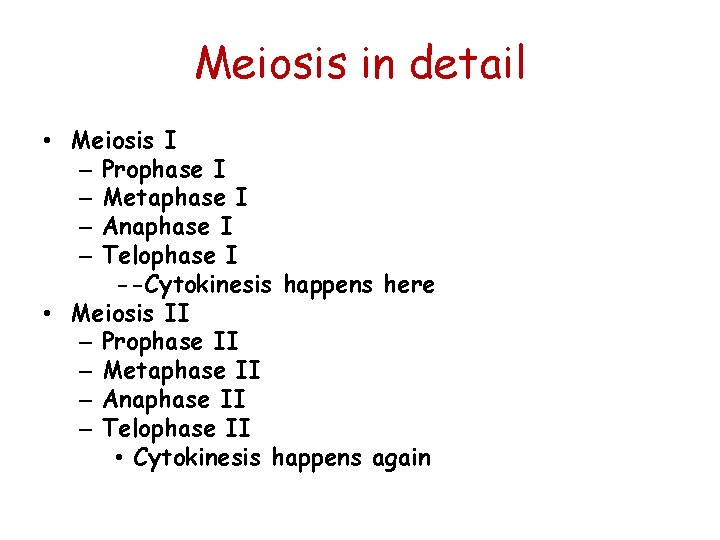
Meiosis in detail • Meiosis I – Prophase I – Metaphase I – Anaphase I – Telophase I --Cytokinesis happens here • Meiosis II – Prophase II – Metaphase II – Anaphase II – Telophase II • Cytokinesis happens again
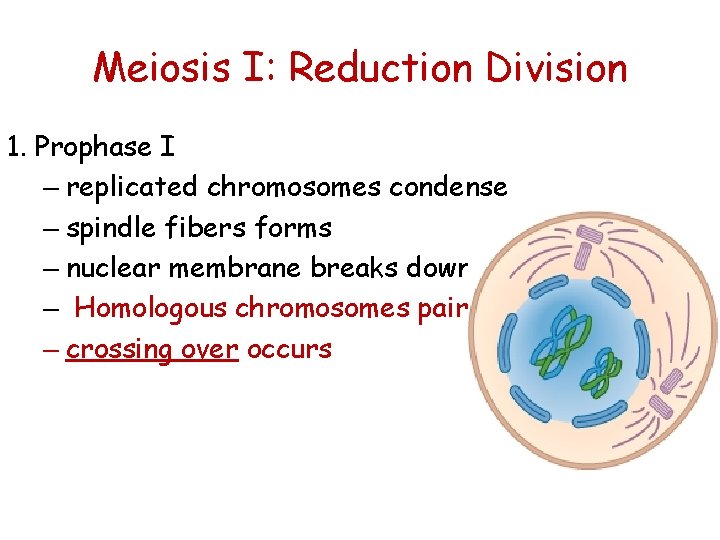
Meiosis I: Reduction Division 1. Prophase I – replicated chromosomes condense – spindle fibers forms – nuclear membrane breaks down – Homologous chromosomes pair – crossing over occurs
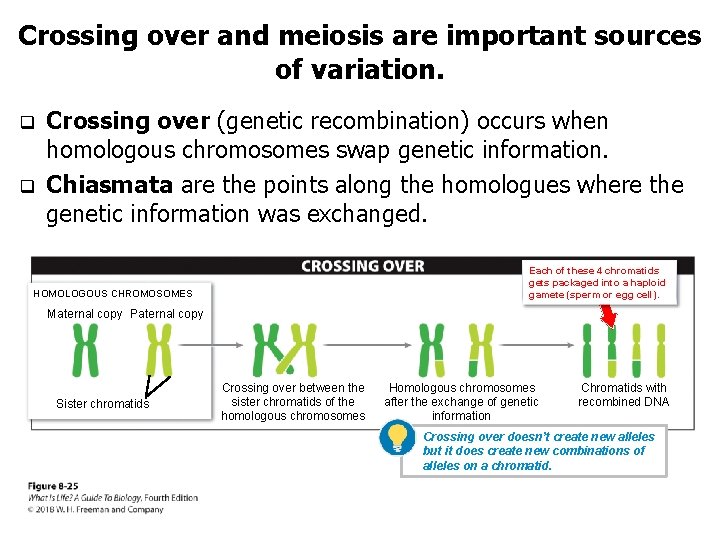
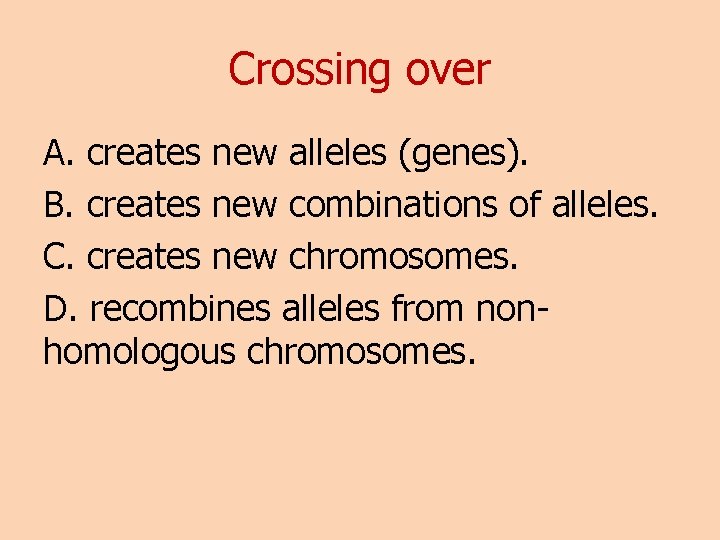
Crossing over and meiosis are important sources of variation. q q Crossing over (genetic recombination) occurs when homologous chromosomes swap genetic information. Chiasmata are the points along the homologues where the genetic information was exchanged. Each of these 4 chromatids gets packaged into a haploid gamete (sperm or egg cell). HOMOLOGOUS CHROMOSOMES Maternal copy Paternal copy Sister chromatids Crossing over between the sister chromatids of the homologous chromosomes Homologous chromosomes after the exchange of genetic information Chromatids with recombined DNA Crossing over doesn’t create new alleles but it does create new combinations of alleles on a chromatid.
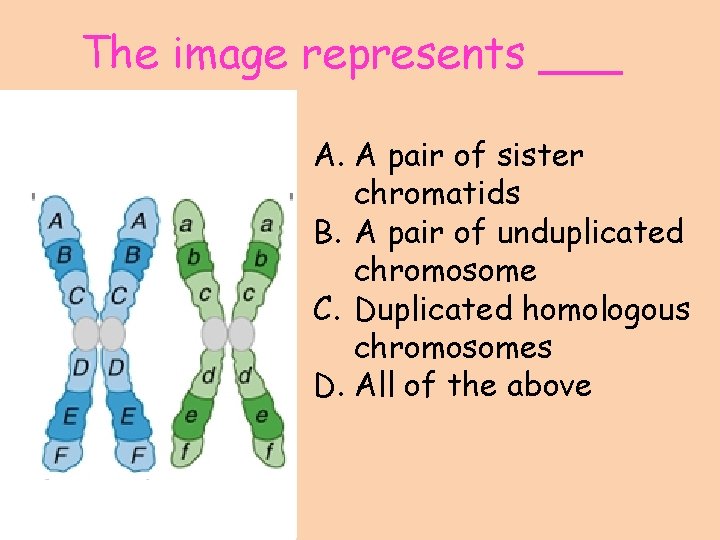
The image represents ___ A. A pair of sister chromatids B. A pair of unduplicated chromosome C. Duplicated homologous chromosomes D. All of the above
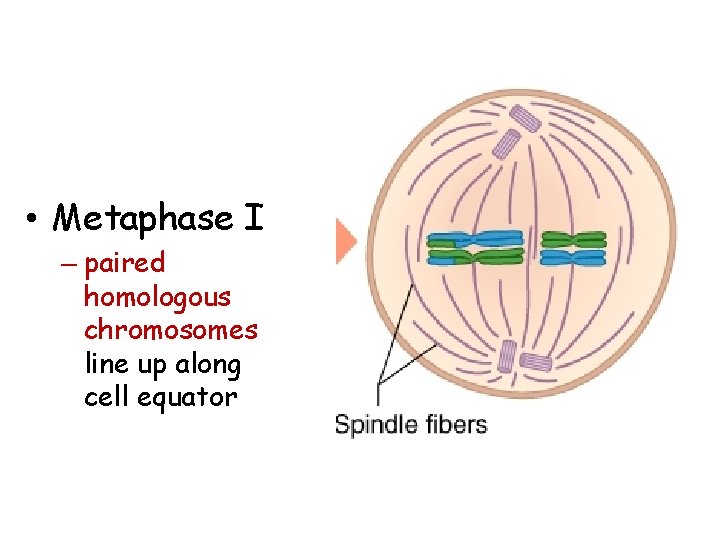
• Metaphase I – paired homologous chromosomes line up along cell equator
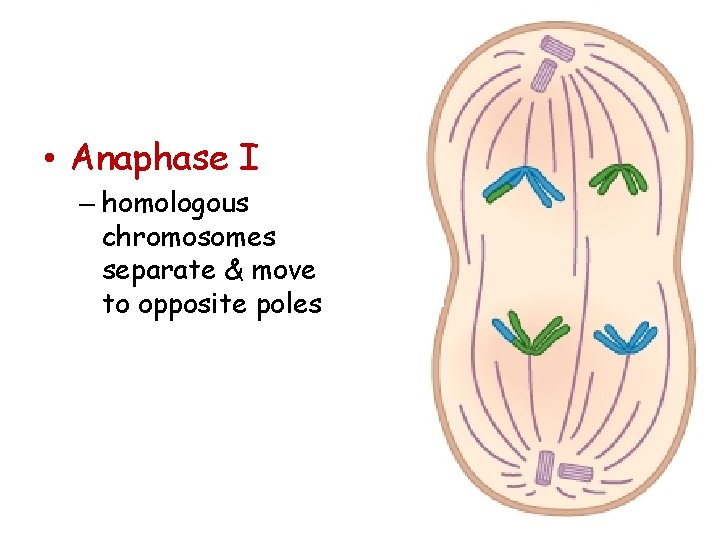
• Anaphase I – homologous chromosomes separate & move to opposite poles
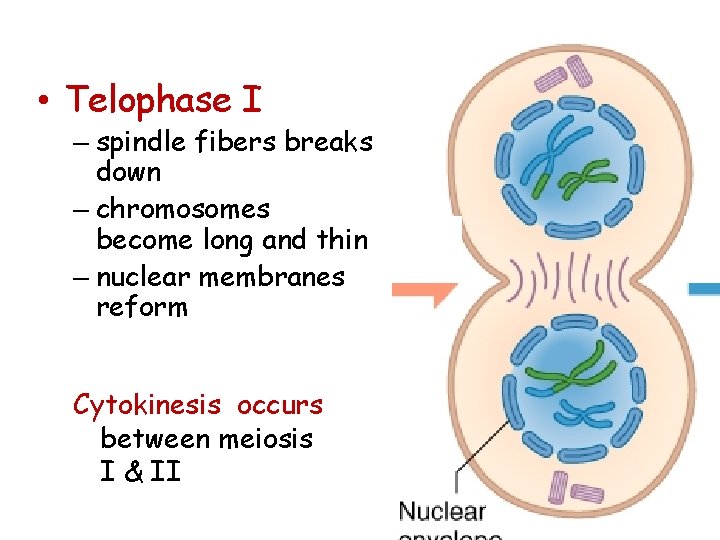
• Telophase I – spindle fibers breaks down – chromosomes become long and thin – nuclear membranes reform Cytokinesis occurs between meiosis I & II
Meiosis II (equational division) • Prophase II – chromosomes condense – spindle fibers forms – nuclear membrane breaks down • Metaphase II – chromosomes line up along equator of cell – Fibers attach to chromatids
Meiosis II (equational division) • Anaphase II – sister chromatids (now called chromosomes) separate & move toward opposite poles • Telophase II – spindle fibers break down – chromosomes de-condense – nuclear membranes reform Cytokinesis divides two cells into four nonidentical cells.
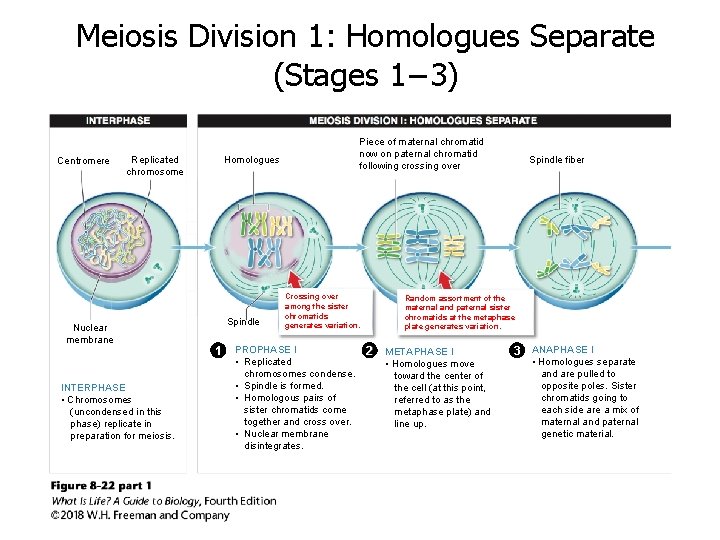
Meiosis Division 1: Homologues Separate (Stages 1− 3) Centromere Homologues Replicated chromosome Nuclear membrane INTERPHASE • Chromosomes (uncondensed in this phase) replicate in preparation for meiosis. Piece of maternal chromatid now on paternal chromatid following crossing over Spindle 1 Crossing over among the sister chromatids generates variation. PROPHASE I • Replicated chromosomes condense. • Spindle is formed. • Homologous pairs of sister chromatids come together and cross over. • Nuclear membrane disintegrates. Spindle fiber Random assortment of the maternal and paternal sister chromatids at the metaphase plate generates variation. 2 METAPHASE I • Homologues move toward the center of the cell (at this point, referred to as the metaphase plate) and line up. 3 ANAPHASE I • Homologues separate and are pulled to opposite poles. Sister chromatids going to each side are a mix of maternal and paternal genetic material.
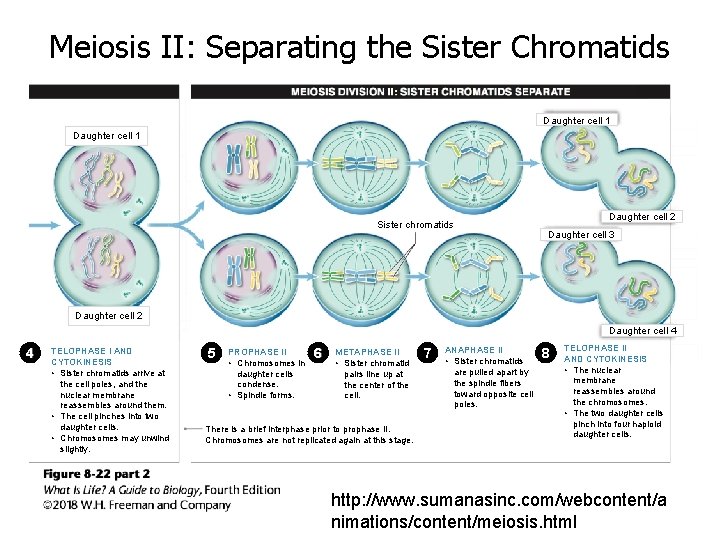
Meiosis II: Separating the Sister Chromatids Daughter cell 1 Sister chromatids Daughter cell 2 Daughter cell 3 Daughter cell 2 Daughter cell 4 4 TELOPHASE I AND CYTOKINESIS • Sister chromatids arrive at the cell poles, and the nuclear membrane reassembles around them. • The cell pinches into two daughter cells. • Chromosomes may unwind slightly. 5 PROPHASE II • Chromosomes in daughter cells condense. • Spindle forms. 6 METAPHASE II • Sister chromatid pairs line up at the center of the cell. There is a brief interphase prior to prophase II. Chromosomes are not replicated again at this stage. 7 ANAPHASE II • Sister chromatids are pulled apart by the spindle fibers toward opposite cell poles. 8 TELOPHASE II AND CYTOKINESIS • The nuclear membrane reassembles around the chromosomes. • The two daughter cells pinch into four haploid daughter cells. http: //www. sumanasinc. com/webcontent/a nimations/content/meiosis. html
Which of the following is most like mitosis? A. Meiosis I B. Meiosis II
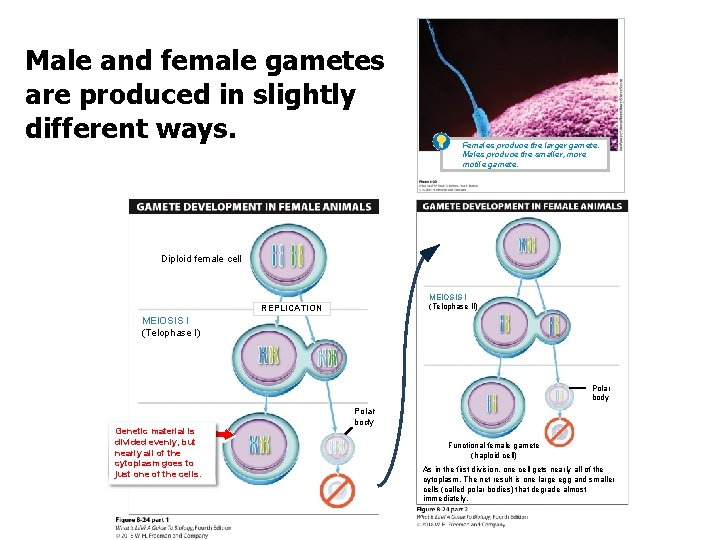
Male and female gametes are produced in slightly different ways. Females produce the larger gamete. Males produce the smaller, more motile gamete. Diploid female cell MEIOSIS I (Telophase II) REPLICATION MEIOSIS I (Telophase I) Polar body Genetic material is divided evenly, but nearly all of the cytoplasm goes to just one of the cells. Polar body Functional female gamete (haploid cell) As in the first division, one cell gets nearly all of the cytoplasm. The net result is one large egg and smaller cells (called polar bodies) that degrade almost immediately.
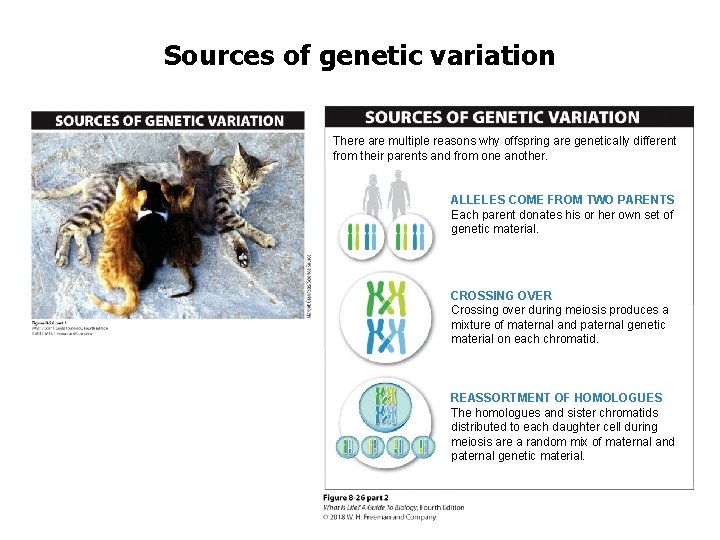
Sources of genetic variation There are multiple reasons why offspring are genetically different from their parents and from one another. ALLELES COME FROM TWO PARENTS Each parent donates his or her own set of genetic material. CROSSING OVER Crossing over during meiosis produces a mixture of maternal and paternal genetic material on each chromatid. REASSORTMENT OF HOMOLOGUES The homologues and sister chromatids distributed to each daughter cell during meiosis are a random mix of maternal and paternal genetic material.
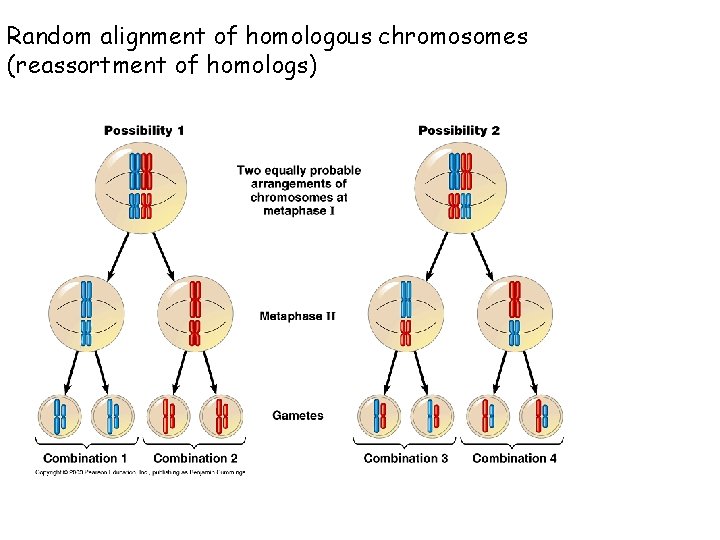
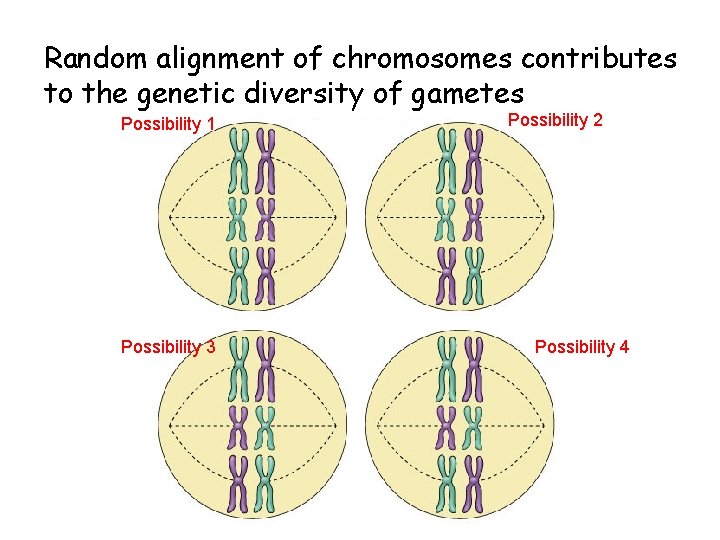
Random alignment of homologous chromosomes (reassortment of homologs)
Random alignment of chromosomes contributes to the genetic diversity of gametes Possibility 1 Possibility 3 Possibility 2 Possibility 4
Crossing over A. creates new alleles (genes). B. creates new combinations of alleles. C. creates new chromosomes. D. recombines alleles from nonhomologous chromosomes.
Meiosis Summary • Occurs in _____ cells • Produces ______ daughter cells • Gametes (sperm and egg) are made by meiosis • Increases genetic variability