
MEIOSIS Outcome Illustrate and describe the basic processes
MEIOSIS Outcome: Illustrate and describe the basic processes of mitosis and meiosis (304 -11) COPY SLIDES THAT HAVE A PENCIL ICON
Meiosis – A Source of Distinction Why do you share some but not all characters of each parent? What the rules of this sharing Why do siblings lookare similar but also have game? differences?
Meiosis • The form of cell division by which gametes, with half the number of chromosomes, are produced. • Diploid (2 n) 46 chromosomes → haploid (n) 23 chromosomes • Meiosis is sexual reproduction. • There are two divisions (Meiosis I and Meiosis II).
Diploid (2 n) - the full set of chromosomes (46) in a somatic (body) cell Haploid (n) - half the number of chromosomes (23), found in gametes (sex cells)

Gametes �The Male Gamete is the Sperm and is produced in the male gonad the Testes. �The Female Gamete is the Ovum (ova = plural) and is produced in the female gonad the Ovaries.
During Ovulation the ovum is released from the ovary and transported to an area where fertilization, the joining of the sperm and ovum, can occur…… Fertilization, in Humans, occurs in the Fallopian tube. Fertilization results in the formation of the Zygote. (fertilized egg) Sperm + Ovum (egg) fertilization Zygote

Organisms that reproduce sexually show greater variance than those that reproduce asexually. Variance means differences in characteristics.
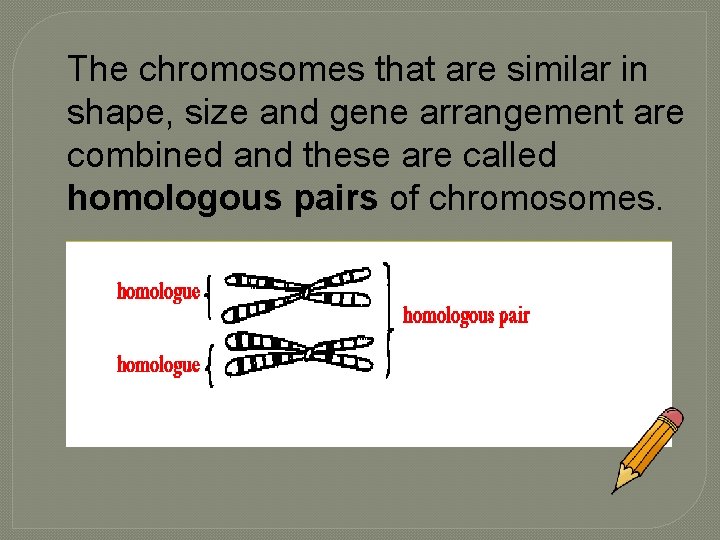
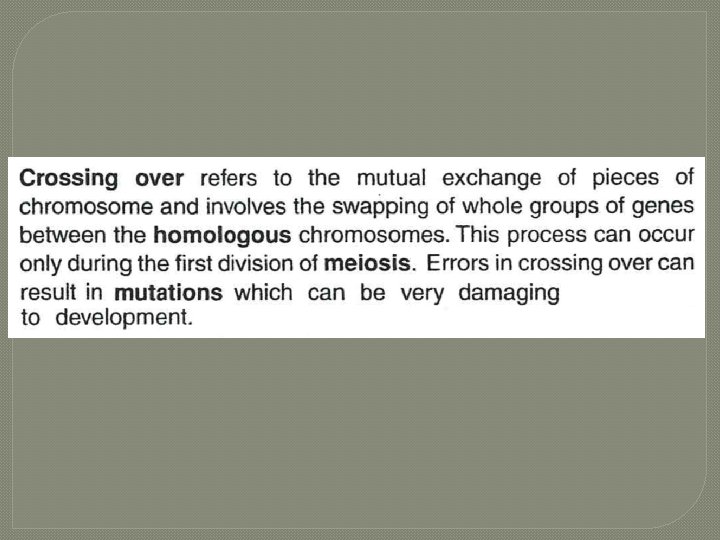
The chromosomes that are similar in shape, size and gene arrangement are combined and these are called homologous pairs of chromosomes.
The appearance of the organism is determined by the way the genes from this pair interact. (color of hair, eyes, etc…)
- Slides: 11