
MEIOSIS Objectives Compare the end products of meiosis
MEIOSIS
Objectives • Compare the end products of meiosis with those of mitosis. • Summarize the events of meiosis I. • Explain crossing-over and how it contributes to the production of unique individuals. • Summarize the events of meiosis II. • Compare spermatogenesis and oogenesis. • Define sexual reproduction.
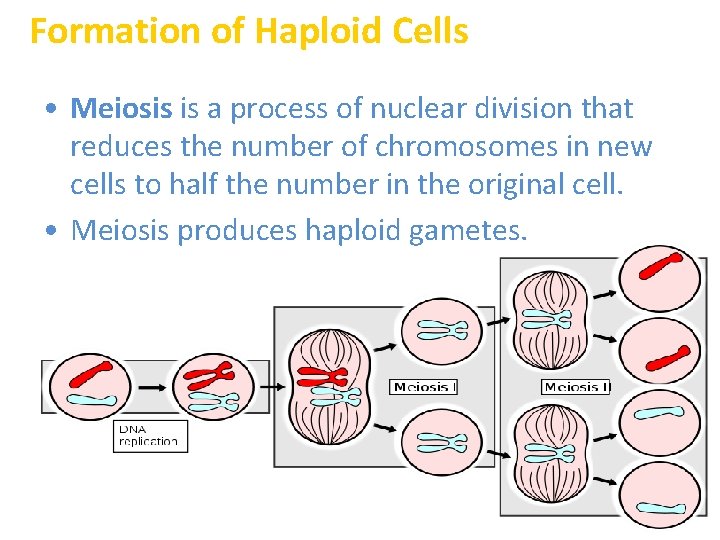
Formation of Haploid Cells • Meiosis is a process of nuclear division that reduces the number of chromosomes in new cells to half the number in the original cell. • Meiosis produces haploid gametes.
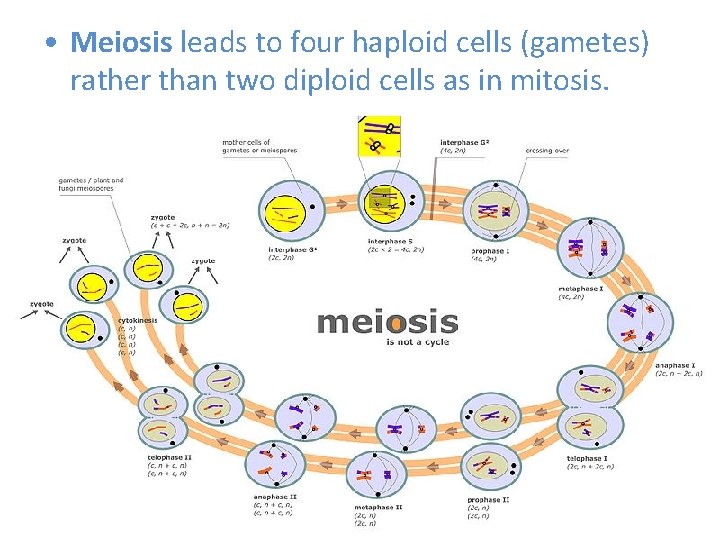
• Meiosis leads to four haploid cells (gametes) rather than two diploid cells as in mitosis.
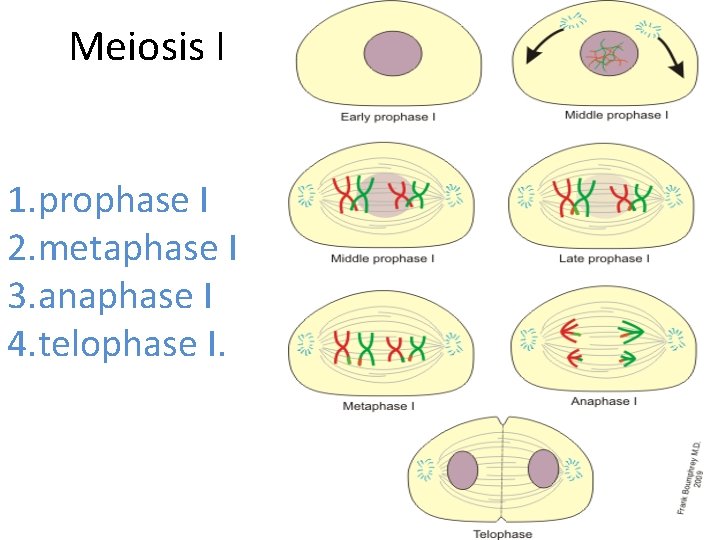
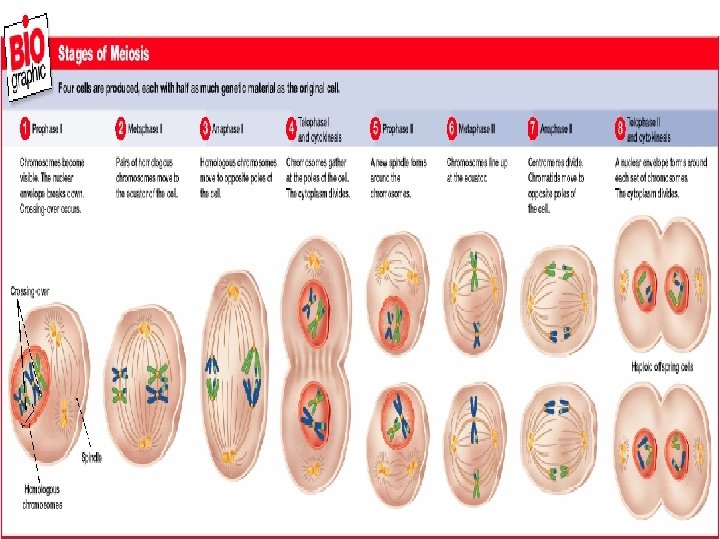
Meiosis I 1. prophase I 2. metaphase I 3. anaphase I 4. telophase I.
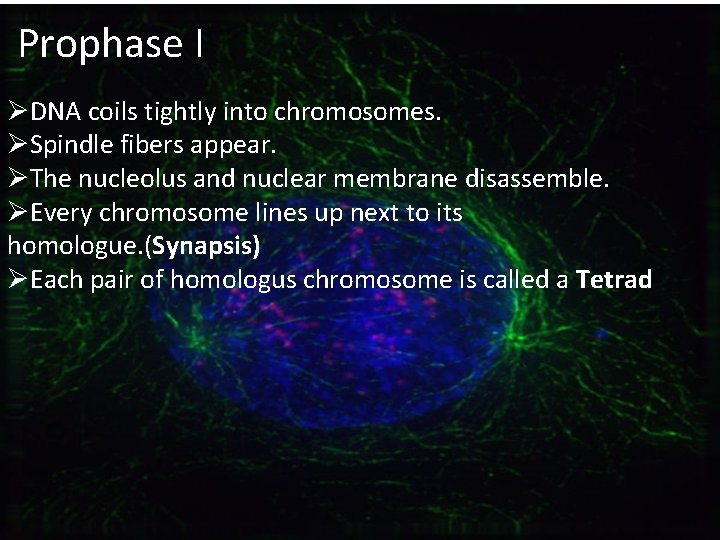
Prophase I ØDNA coils tightly into chromosomes. ØSpindle fibers appear. ØThe nucleolus and nuclear membrane disassemble. ØEvery chromosome lines up next to its homologue. (Synapsis) ØEach pair of homologus chromosome is called a Tetrad
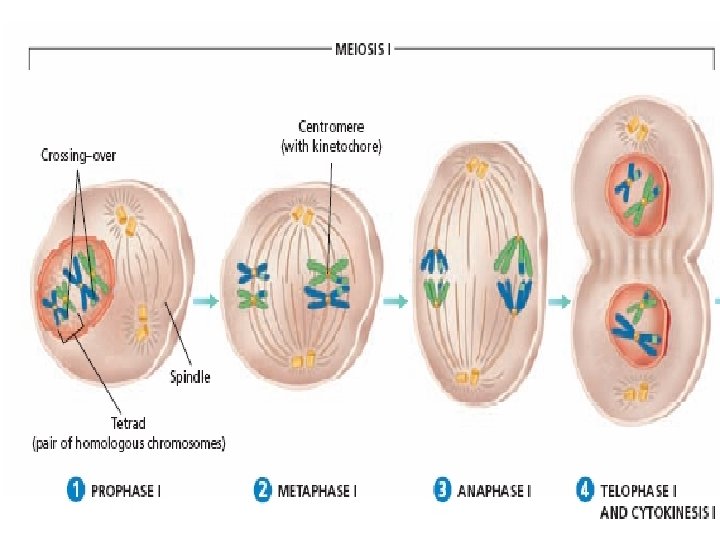
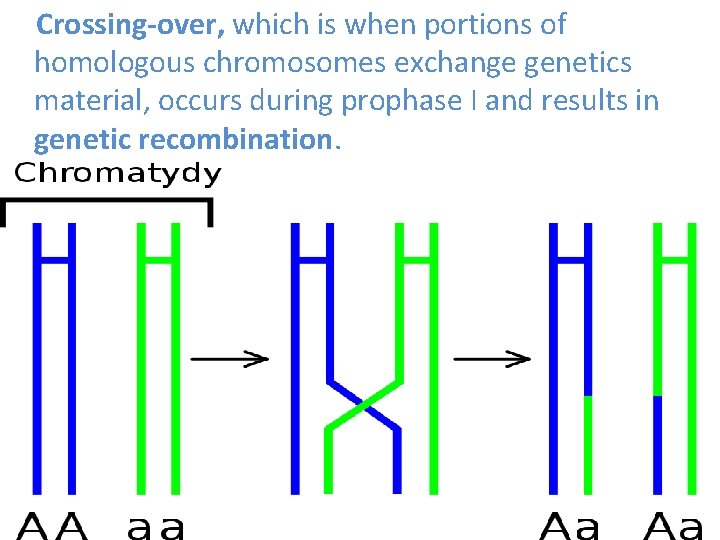
Crossing-over, which is when portions of homologous chromosomes exchange genetics material, occurs during prophase I and results in genetic recombination.
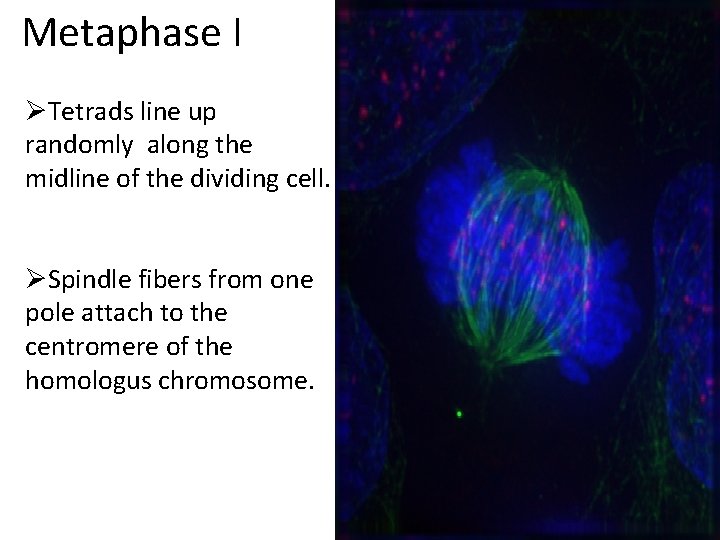
Metaphase I ØTetrads line up randomly along the midline of the dividing cell. ØSpindle fibers from one pole attach to the centromere of the homologus chromosome.

Anaphase I ØEach homologus chromosome moves towards one pole of the cell. ØThe random separation of chromosomes is called independent assortment. ØIndependent assortment results in genetic variation.
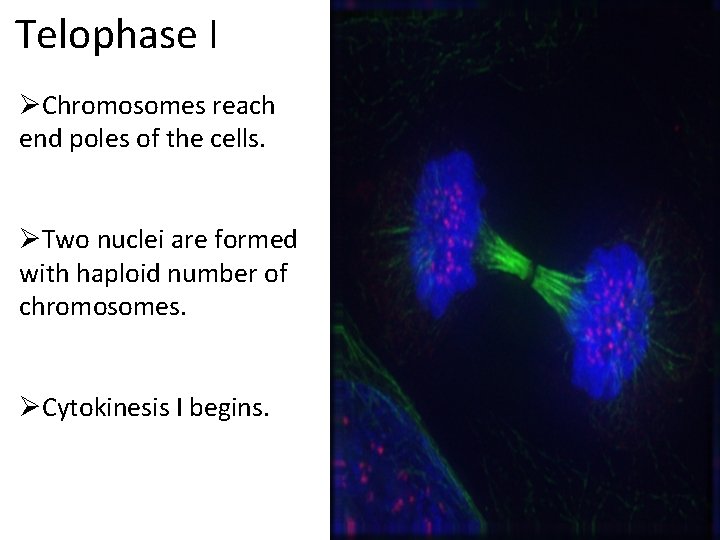
Telophase I ØChromosomes reach end poles of the cells. ØTwo nuclei are formed with haploid number of chromosomes. ØCytokinesis I begins.
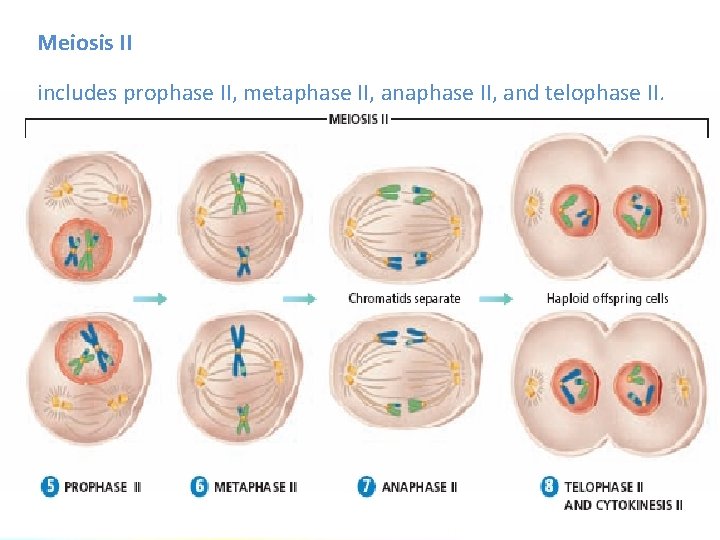
Meiosis II includes prophase II, metaphase II, and telophase II.
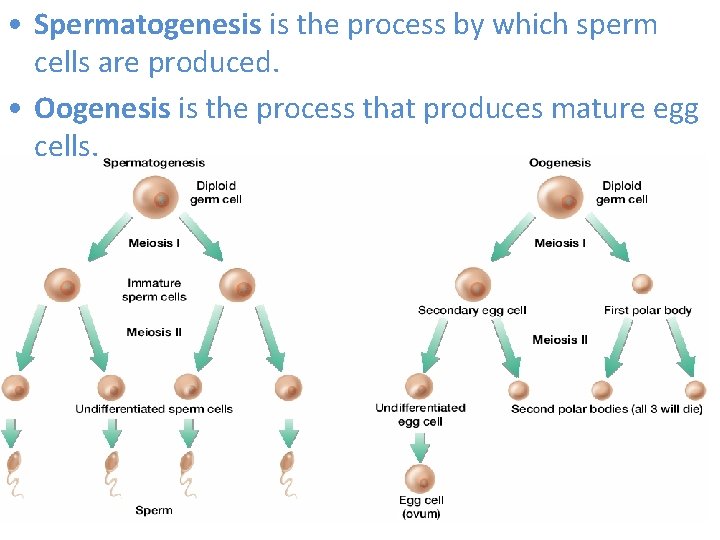
• Spermatogenesis is the process by which sperm cells are produced. • Oogenesis is the process that produces mature egg cells.
- Slides: 14