
Meiosis Mistakes Chapter 10 2 Meiosis Genetic Variation
- Slides: 10
Meiosis & Mistakes Chapter 10. 2
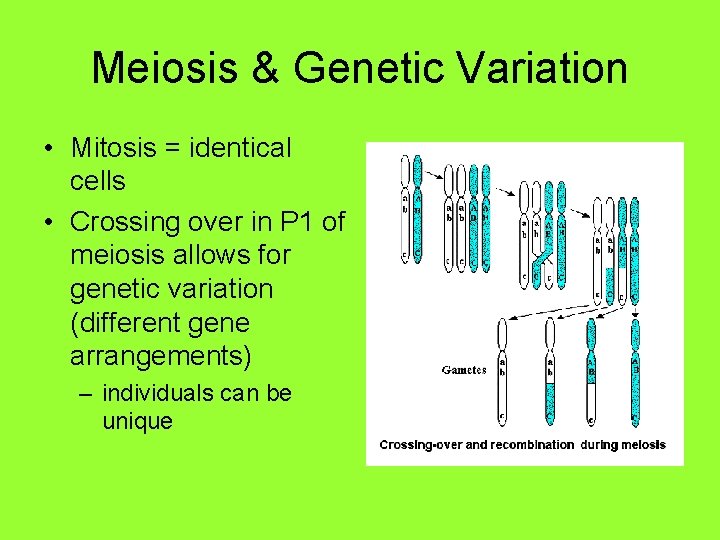
Meiosis & Genetic Variation • Mitosis = identical cells • Crossing over in P 1 of meiosis allows for genetic variation (different gene arrangements) – individuals can be unique
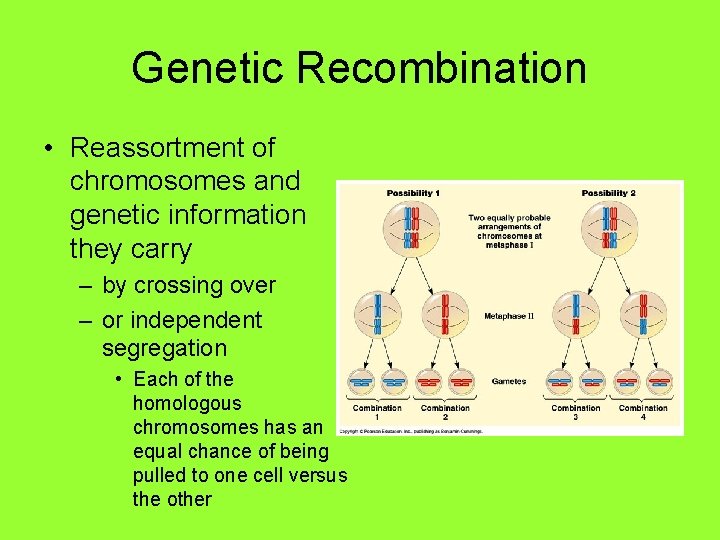
Genetic Recombination • Reassortment of chromosomes and genetic information they carry – by crossing over – or independent segregation • Each of the homologous chromosomes has an equal chance of being pulled to one cell versus the other
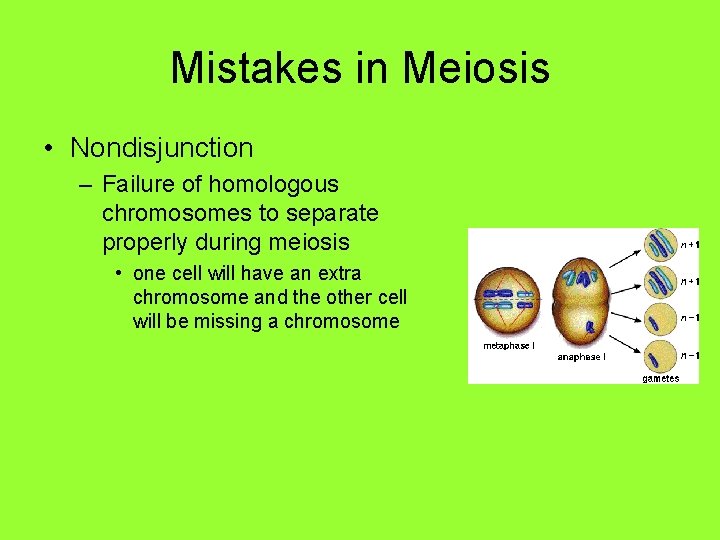
Mistakes in Meiosis • Nondisjunction – Failure of homologous chromosomes to separate properly during meiosis • one cell will have an extra chromosome and the other cell will be missing a chromosome
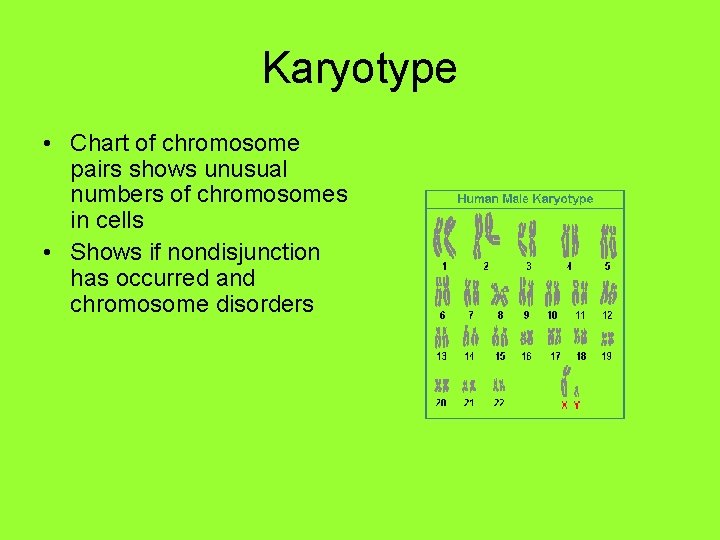
Karyotype • Chart of chromosome pairs shows unusual numbers of chromosomes in cells • Shows if nondisjunction has occurred and chromosome disorders
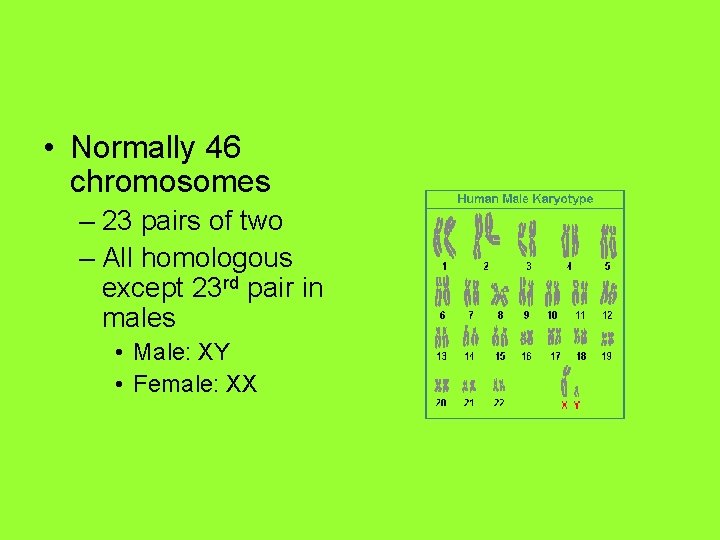
• Normally 46 chromosomes – 23 pairs of two – All homologous except 23 rd pair in males • Male: XY • Female: XX
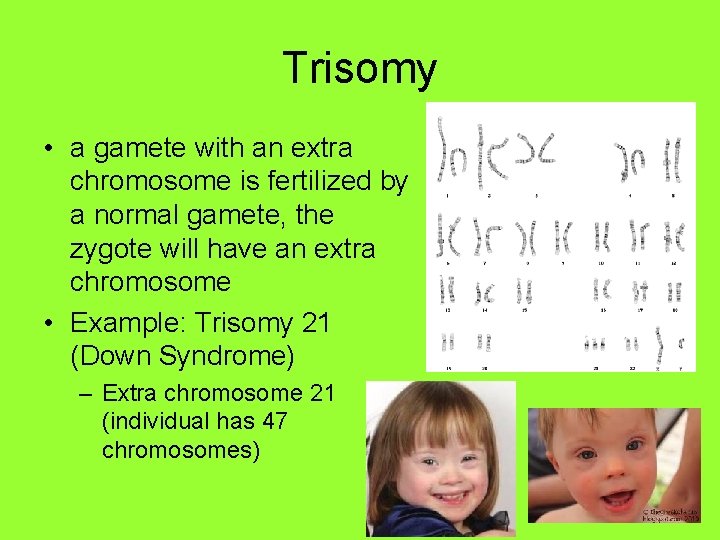
Trisomy • a gamete with an extra chromosome is fertilized by a normal gamete, the zygote will have an extra chromosome • Example: Trisomy 21 (Down Syndrome) – Extra chromosome 21 (individual has 47 chromosomes)
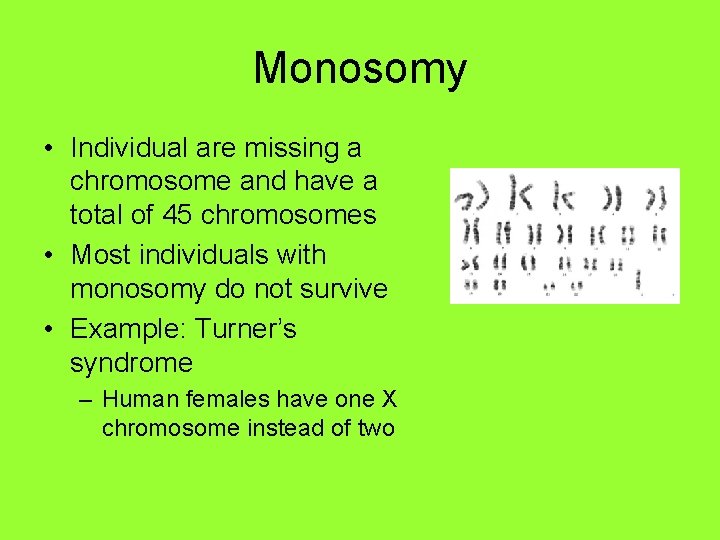
Monosomy • Individual are missing a chromosome and have a total of 45 chromosomes • Most individuals with monosomy do not survive • Example: Turner’s syndrome – Human females have one X chromosome instead of two
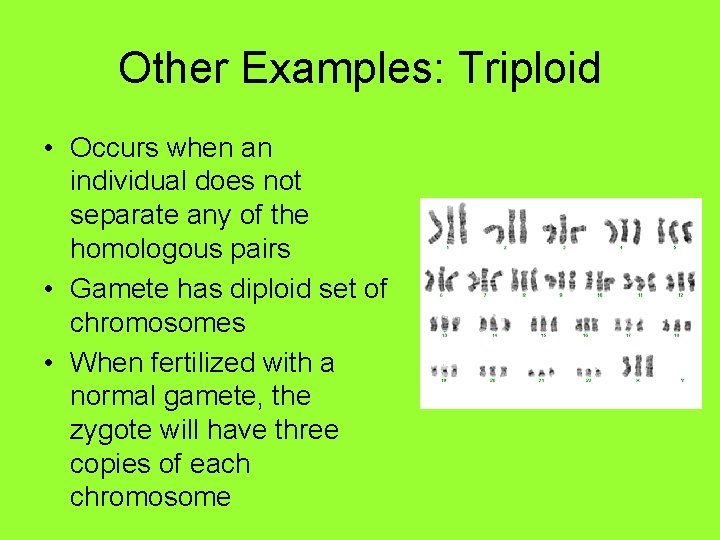
Other Examples: Triploid • Occurs when an individual does not separate any of the homologous pairs • Gamete has diploid set of chromosomes • When fertilized with a normal gamete, the zygote will have three copies of each chromosome
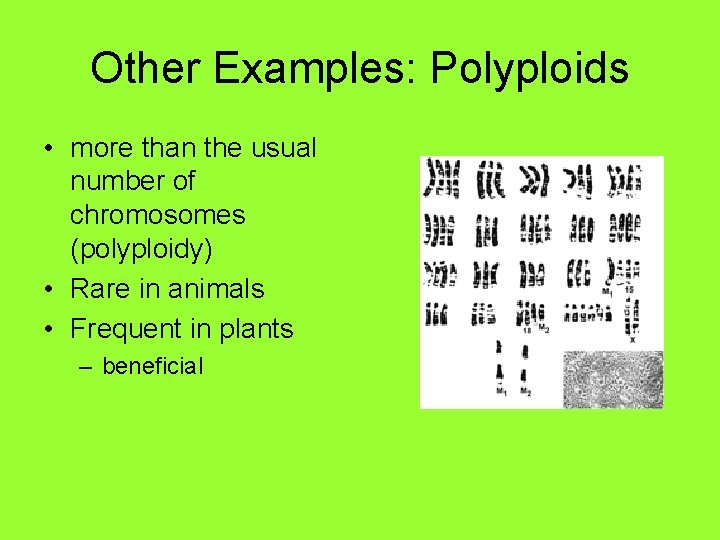
Other Examples: Polyploids • more than the usual number of chromosomes (polyploidy) • Rare in animals • Frequent in plants – beneficial