
Meiosis Meiosis A process similar to mitosis except
- Slides: 14
Meiosis
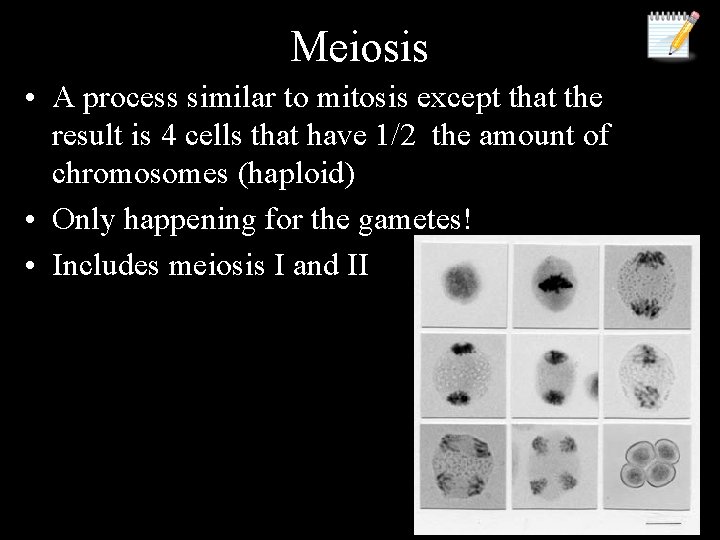
Meiosis • A process similar to mitosis except that the result is 4 cells that have 1/2 the amount of chromosomes (haploid) • Only happening for the gametes! • Includes meiosis I and II
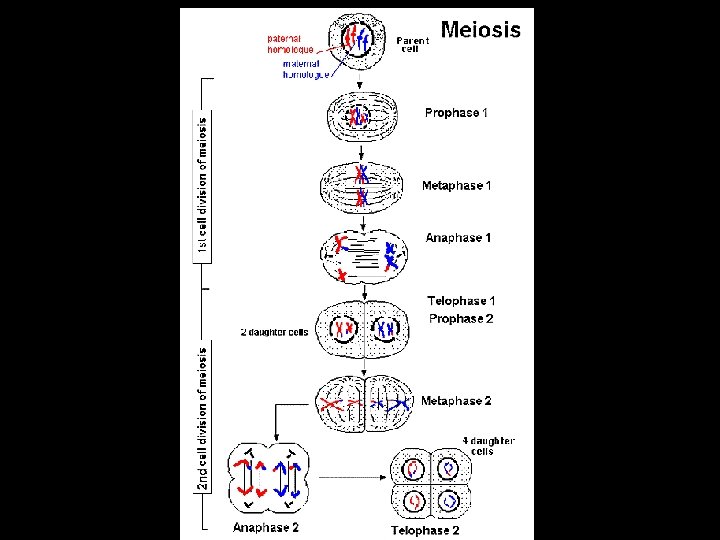
Meiosis I • Stage names are the same as mitosis • Divides Homologous chromosomes • Result is 2 cells with 2 identical copies of each chromosomes Meiosis II • Second half of meiosis that results in 4 haploid cells • Divides sister chromatids
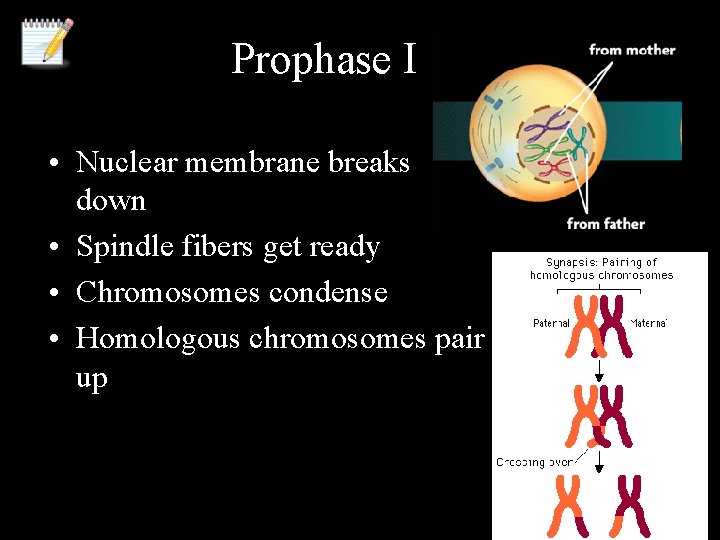
Prophase I • Nuclear membrane breaks down • Spindle fibers get ready • Chromosomes condense • Homologous chromosomes pair up
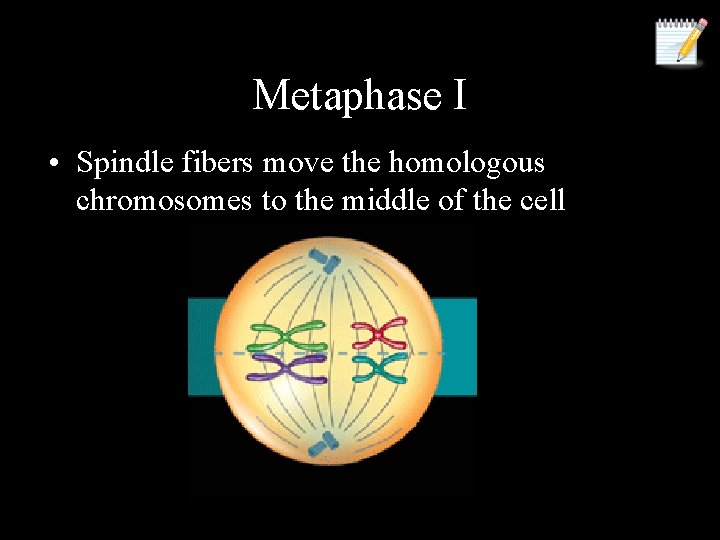
Metaphase I • Spindle fibers move the homologous chromosomes to the middle of the cell
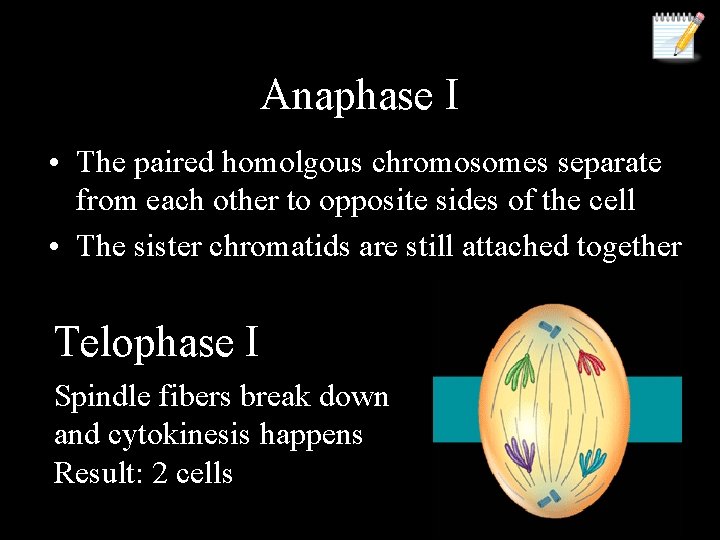
Anaphase I • The paired homolgous chromosomes separate from each other to opposite sides of the cell • The sister chromatids are still attached together Telophase I Spindle fibers break down and cytokinesis happens Result: 2 cells
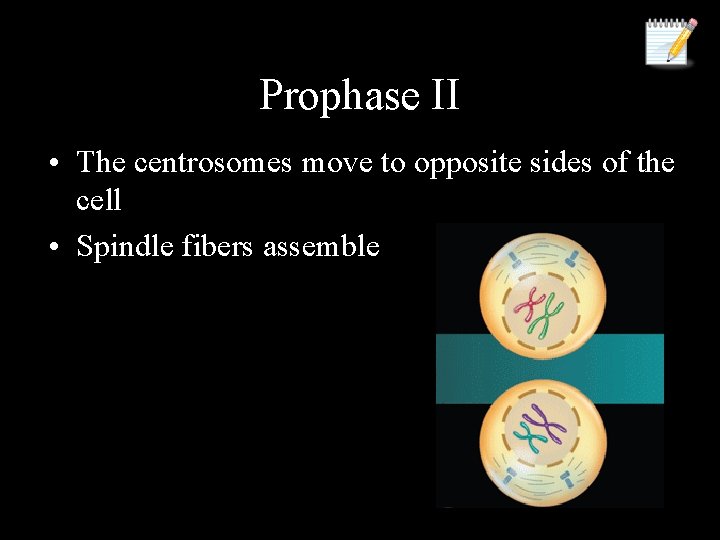
Prophase II • The centrosomes move to opposite sides of the cell • Spindle fibers assemble
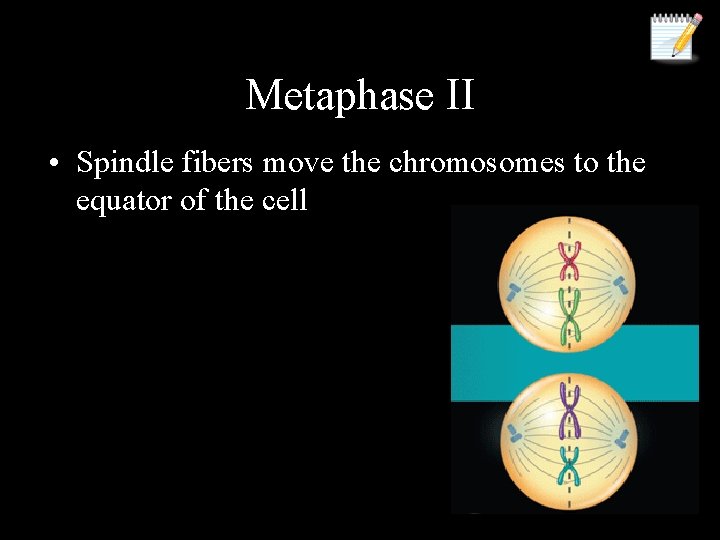
Metaphase II • Spindle fibers move the chromosomes to the equator of the cell
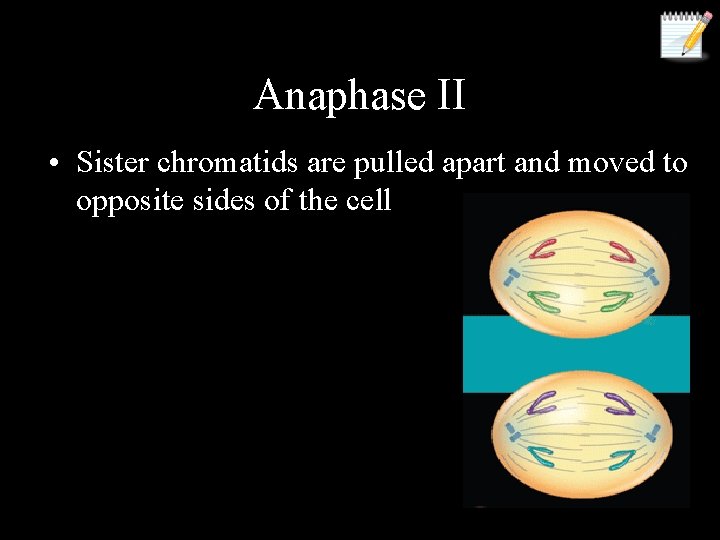
Anaphase II • Sister chromatids are pulled apart and moved to opposite sides of the cell
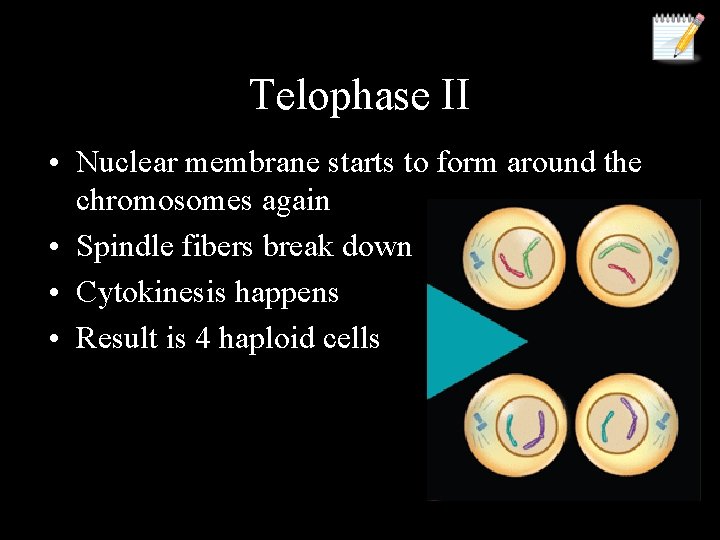
Telophase II • Nuclear membrane starts to form around the chromosomes again • Spindle fibers break down • Cytokinesis happens • Result is 4 haploid cells
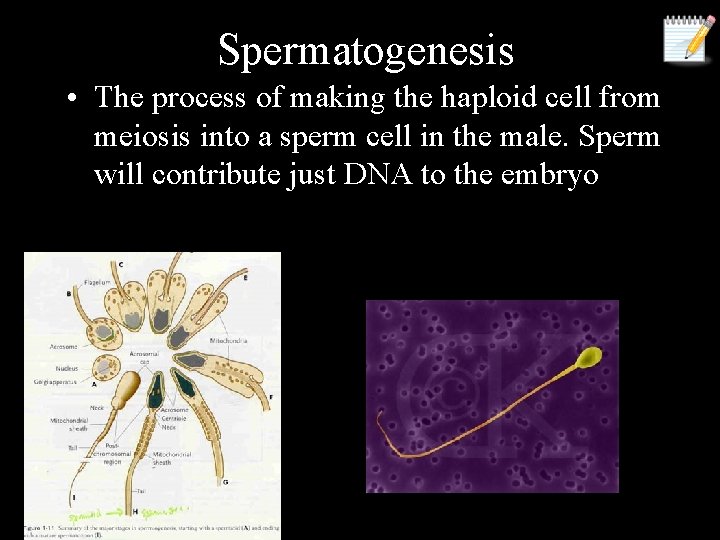
Spermatogenesis • The process of making the haploid cell from meiosis into a sperm cell in the male. Sperm will contribute just DNA to the embryo
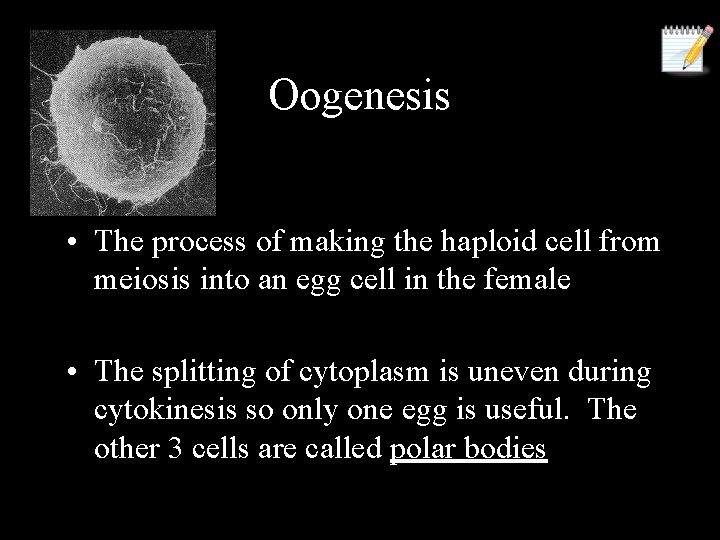
Oogenesis • The process of making the haploid cell from meiosis into an egg cell in the female • The splitting of cytoplasm is uneven during cytokinesis so only one egg is useful. The other 3 cells are called polar bodies
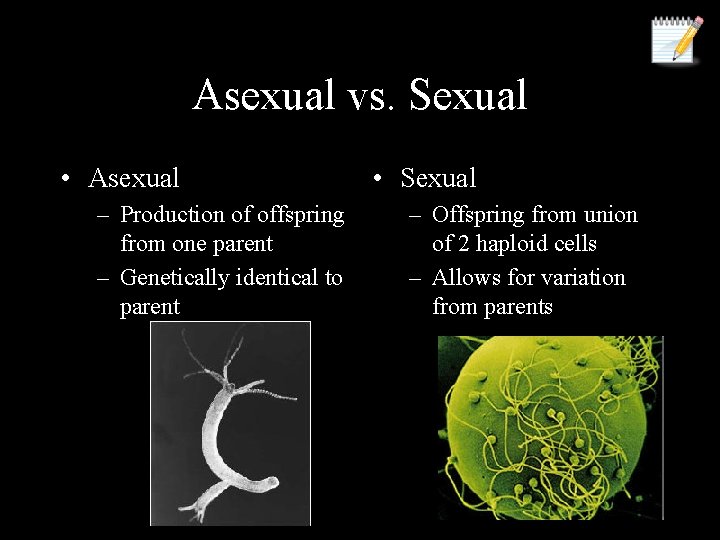
Asexual vs. Sexual • Asexual – Production of offspring from one parent – Genetically identical to parent • Sexual – Offspring from union of 2 haploid cells – Allows for variation from parents