
Meiosis Making Gametes Sex Cells Review Asexual Reproduction










- Slides: 23
Meiosis Making Gametes (Sex Cells)
Review • Asexual Reproduction is also called ________ • Mitosis starts with one parent cell and ends up with _____________________ • Genetically, the daughter cells are ________ to the parent cell • Making an identical copy of a cell is also called ________ • What type of cells in YOUR BODY divide by Mitosis? ________________ • The scientific term for Body cells is _______ • These cells are considered 2 N (diploid). What does that mean? ____________________
Review Cont’d • How many Chromosomes should a normal human have? _____ • If a human skin cell must divide to heal a wound, how many chromosomes would each of the daughter cells have? _____ • If a human bone cell must divide because a baby is growing, how many chromosomes would each of the daughter cells have? _____ • What are two reasons for Mitosis? _______ & ________ • Which organelle is in control of cell division? ______ • What happens when the nucleus loses control? _____
Mitosis • Asexual Cell Reproduction • Necessary for growth & repair • Chromosomes in Somatic Cells are in pairs • 2 N (diploid) • Two new daughter cells are identical copies of original parent cell • Clones
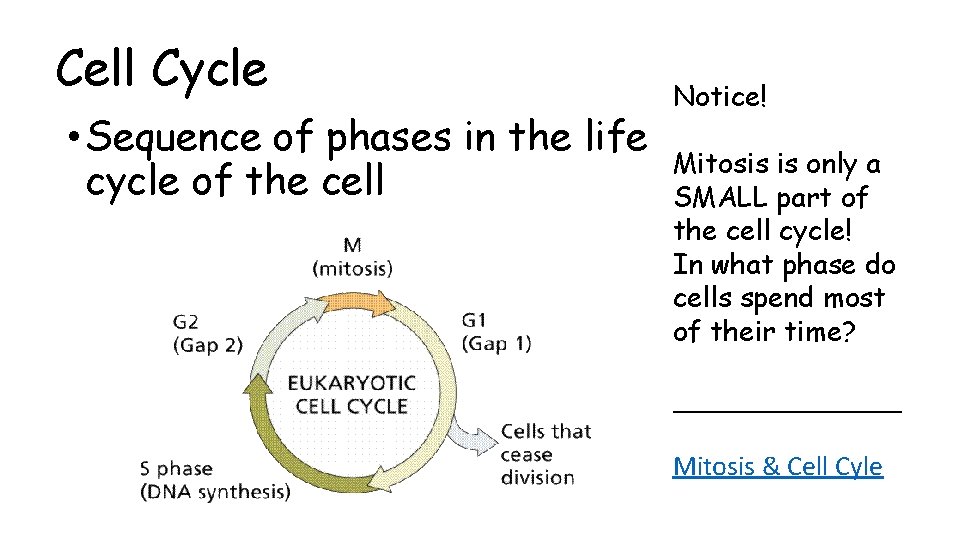
Cell Cycle • Sequence of phases in the life cycle of the cell Notice! Mitosis is only a SMALL part of the cell cycle! In what phase do cells spend most of their time? _______ Mitosis & Cell Cyle
Sex Cells are Different • Human beings have 46 chromosomes in every Somatic (Body) Cell • This is a complete set • But, if mom’s egg cell has 46… • And, if dad’s sperm cell has 46… • The Zygote (the fertilized egg cell) would have 92! • Would THAT make a human? _______
Meiosis • Cell division of reproductive cells (sex cells) • Gametes aka germ cells (sperm and egg) • Produced in Gonads (testes and ovary) • Each new cell is not exactly like the old one • Allows for variation • Important for the survival of our species!
Meiosis • In each new daughter cell, the chromosomes are not in pairs • NOT 2 N (not diploid!) • At the end of Meiosis, four daughter cells contain half of the original number of chromosomes (N) (haploid) • Each is unique! • Not identical to the parent
Gametes (aka germ cells) • Mature egg or sperm cell • Produced in the Gonads • Each gamete has half the original number of chromosomes • 1 N (haploid) • HALF IS IMPORTANT!
Why is Half is Important? • Meiosis makes unique sex cells (aka gametes or germ cells) • Half the number of chromosomes (haploid) is important for sexually reproducing organisms! • N = The number of chromosomes in a gamete • To create a new organism, two parents give half of their own chromosomes to make a baby with a complete set of chromosomes! • Half from mom N + N = 2 N (Zygote) • Half from dad
Sexual Reproduction • Sexual Reproduction requires two parents • Offspring have SOME traits inherited from their parents… but not all! • YOUR DNA is not identical to either parent • It is a mix of genes from both parents
Sexual Reproduction • Fusion of two (N) gametes to produce a single zygote (2 N) • Introduces greater genetic variation, allows genetic recombination • A VERY GOOD THING!
Chromosome Pairing • Homologous pair • Homologous means similar • Each chromosome in the pair are Homologous to the other (carry genes for same trait) • Only one pair differs - sex chromosomes X or Y
Different! Metaphase I in Meiosis… Chromosomes form TETRADS (four together) Metaphase II in Meiosis… Chromosomes line up in the middle and then a SECOND DIVISION happens! The two daughter cells are divided into four and each has HALF the chromosome number!
Independent assortment of homologous chromosomes POSSIBILITY 1 POSSIBILITY 2 Two equally probable arrangements of chromosomes at metaphase I Offers more genetic variation which allows species a better chance of survival! Metaphase II Gametes Combination 1 Combination 2 Combination 3 Combination 4
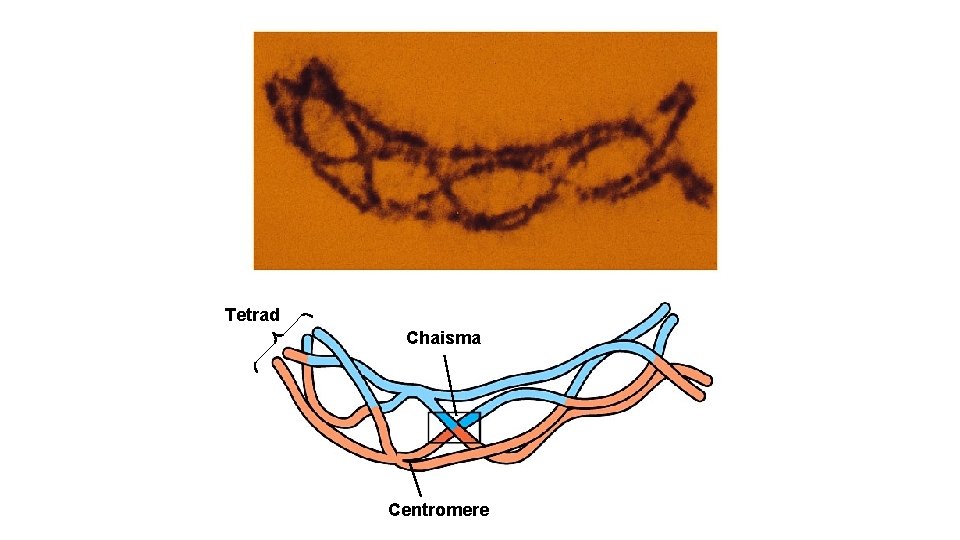
Crossing over increases genetic variability • The exchange of genes between two homologous chromosomes happens when in Tetrad formation
Tetrad Chaisma Centromere
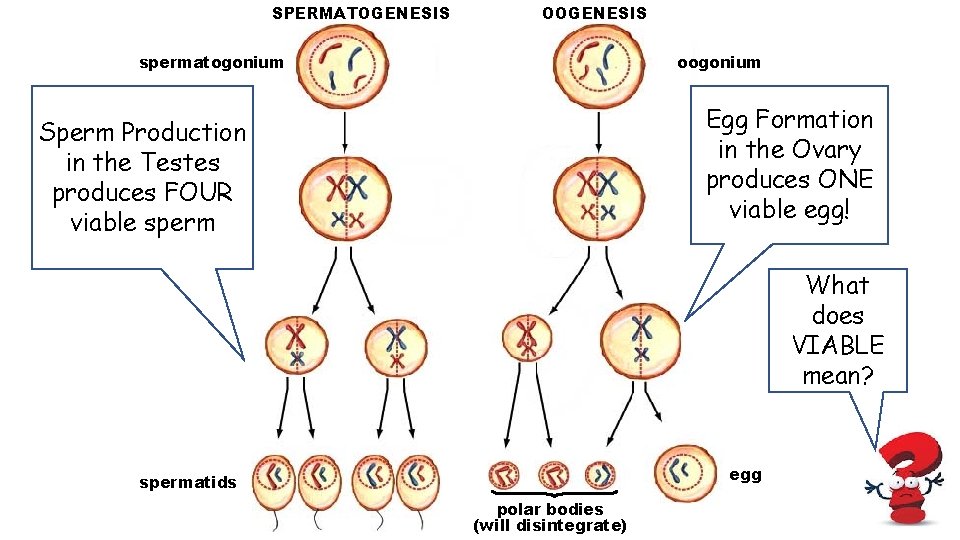
SPERMATOGENESIS OOGENESIS spermatogonium oogonium Egg Formation in the Ovary produces ONE viable egg! Sperm Production in the Testes produces FOUR viable sperm What does VIABLE mean? egg spermatids polar bodies (will disintegrate)
Meiosis makes Sex Cells • Meiosis makes gametes with genetic variation • This gives a species a better chance at survival! • Each sperm is different… • Each egg is different…
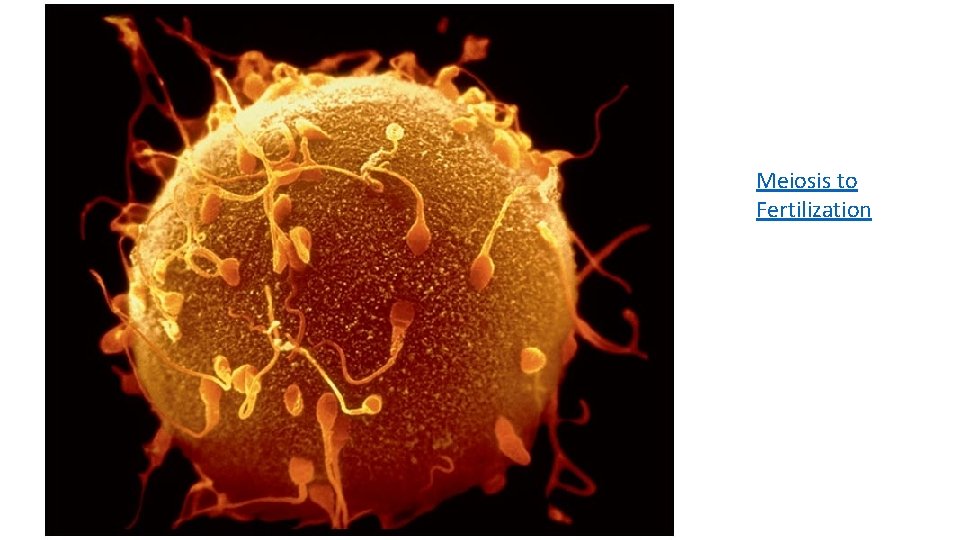
Meiosis to Fertilization
Meiosis and then What? • Meiosis makes gametes (germ cells) • IF the gametes come together, the egg is Fertilized • IF the egg is Fertilized, Mitosis takes over! • So the Zygote may grow! Meiosis Fertilization Mitosis
Review Mitosis & Meiosis • Both are forms of cell division • Both involve replication of DNA • Both involve disappearance of the nucleus, and nuclear membrane • Both involve formation of spindle fibers • Only Mitosis makes clones!