
Meiosis Karyotypes Unit 6 Part 1 Chromosomes Humans
- Slides: 20
Meiosis/ Karyotypes Unit 6
Part 1: Chromosomes
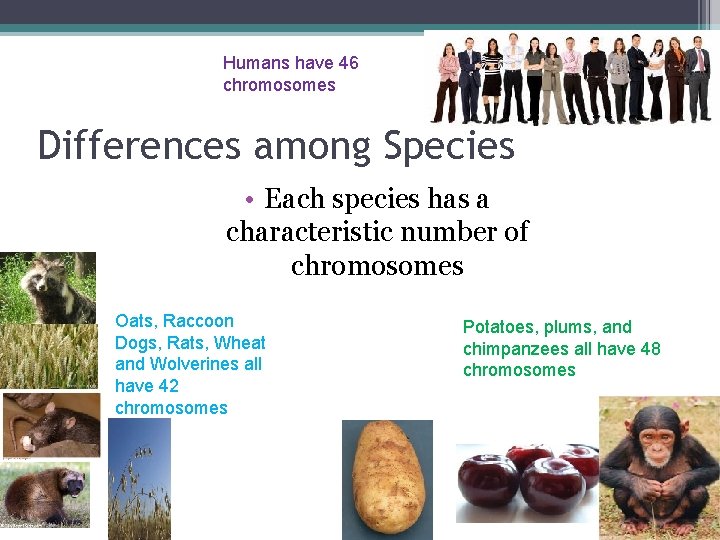
Humans have 46 chromosomes Differences among Species • Each species has a characteristic number of chromosomes Oats, Raccoon Dogs, Rats, Wheat and Wolverines all have 42 chromosomes Potatoes, plums, and chimpanzees all have 48 chromosomes
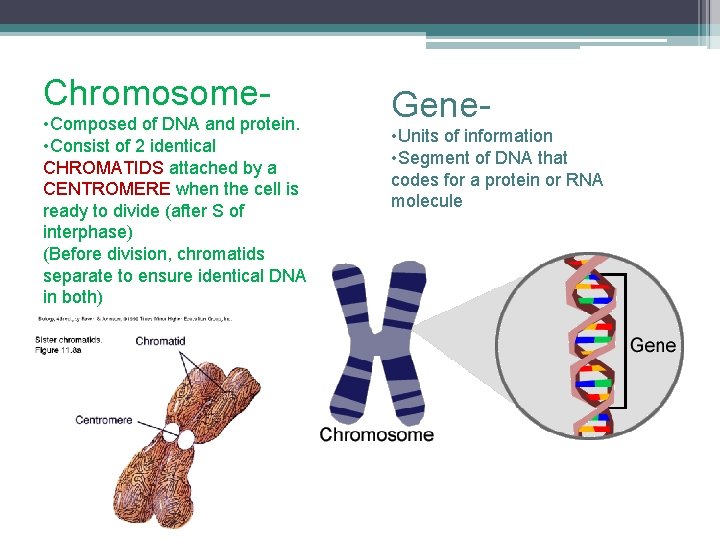
Chromosome • Composed of DNA and protein. • Consist of 2 identical CHROMATIDS attached by a CENTROMERE when the cell is ready to divide (after S of interphase) (Before division, chromatids separate to ensure identical DNA in both) Gene • Units of information • Segment of DNA that codes for a protein or RNA molecule
Somatic Cells • What are somatic cells? • Have 46 chromosomes in humans. ▫ Differ in size, shape, and genes ▫ 23 pairs � 2 HOMOLOGOUS chromosomes that are similar in size, shape, and genes �One comes from each parent! • Diploid (2 n) ▫ Contains 2 sets of chromosomes ▫ In humans, 2 n=46
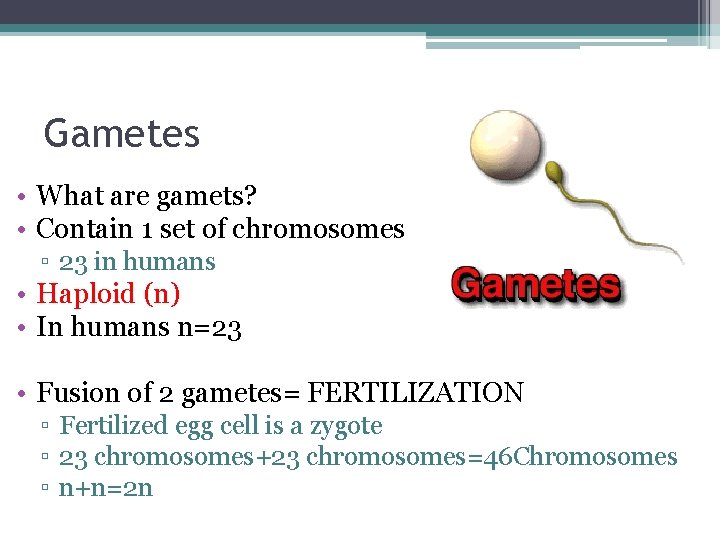
Gametes • What are gamets? • Contain 1 set of chromosomes ▫ 23 in humans • Haploid (n) • In humans n=23 • Fusion of 2 gametes= FERTILIZATION ▫ Fertilized egg cell is a zygote ▫ 23 chromosomes+23 chromosomes=46 Chromosomes ▫ n+n=2 n
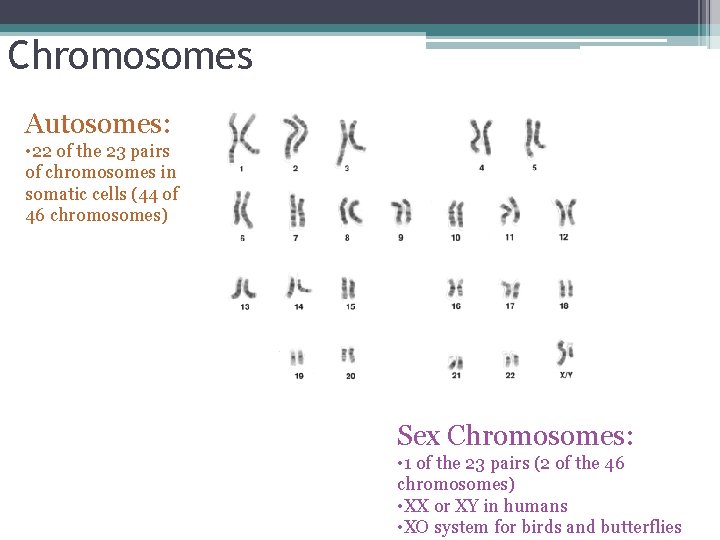
Chromosomes Autosomes: • 22 of the 23 pairs of chromosomes in somatic cells (44 of 46 chromosomes) Sex Chromosomes: • 1 of the 23 pairs (2 of the 46 chromosomes) • XX or XY in humans • XO system for birds and butterflies
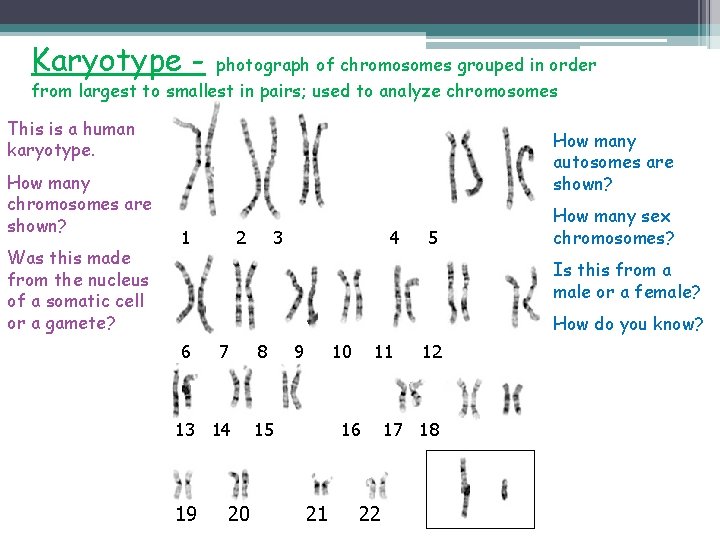
Karyotype - photograph of chromosomes grouped in order from largest to smallest in pairs; used to analyze chromosomes This is a human karyotype. How many chromosomes are shown? Was this made from the nucleus of a somatic cell or a gamete? How many autosomes are shown? 1 2 3 4 5 How many sex chromosomes? Is this from a male or a female? How do you know? 6 7 13 14 19 20 8 9 10 15 11 16 21 22 12 17 18
Abnormal Karyotypes
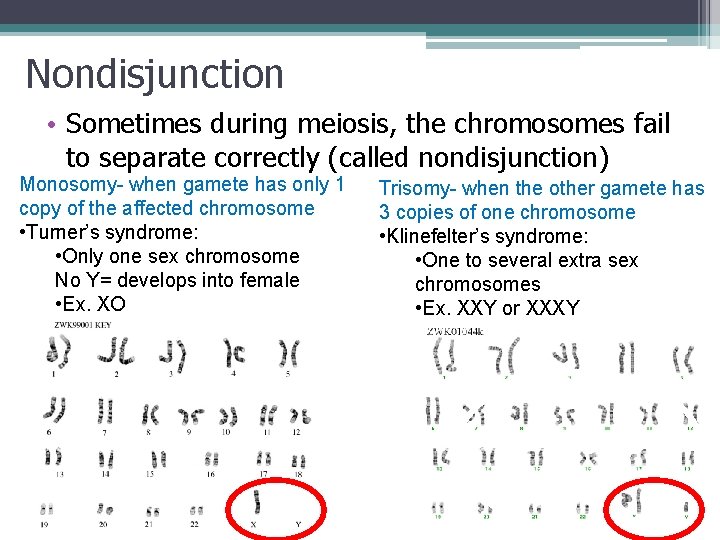
Nondisjunction • Sometimes during meiosis, the chromosomes fail to separate correctly (called nondisjunction) Monosomy- when gamete has only 1 copy of the affected chromosome • Turner’s syndrome: • Only one sex chromosome No Y= develops into female • Ex. XO Trisomy- when the other gamete has 3 copies of one chromosome • Klinefelter’s syndrome: • One to several extra sex chromosomes • Ex. XXY or XXXY
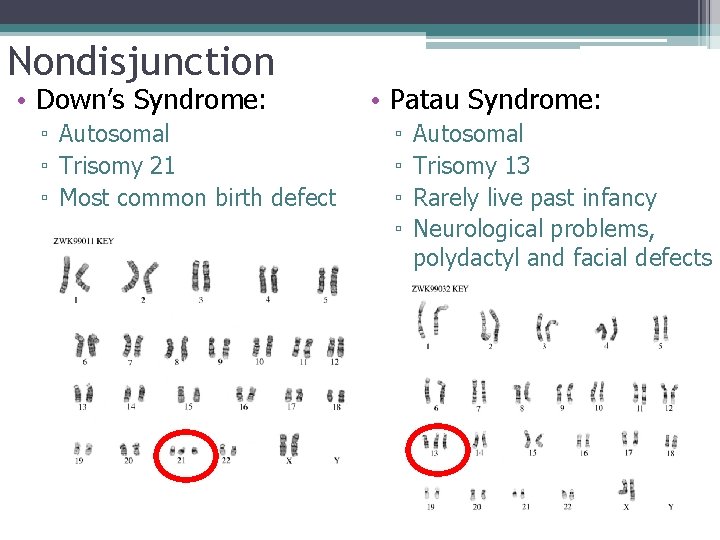
Nondisjunction • Down’s Syndrome: ▫ Autosomal ▫ Trisomy 21 ▫ Most common birth defect • Patau Syndrome: ▫ ▫ Autosomal Trisomy 13 Rarely live past infancy Neurological problems, polydactyl and facial defects
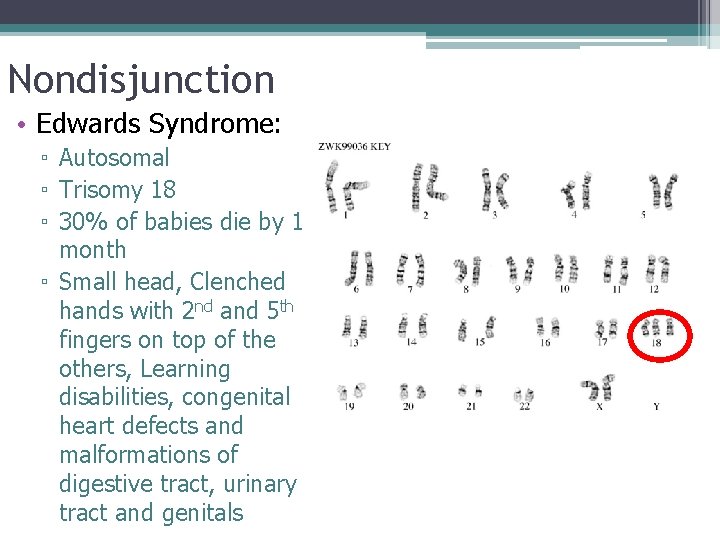
Nondisjunction • Edwards Syndrome: ▫ Autosomal ▫ Trisomy 18 ▫ 30% of babies die by 1 month ▫ Small head, Clenched hands with 2 nd and 5 th fingers on top of the others, Learning disabilities, congenital heart defects and malformations of digestive tract, urinary tract and genitals
Meiosis
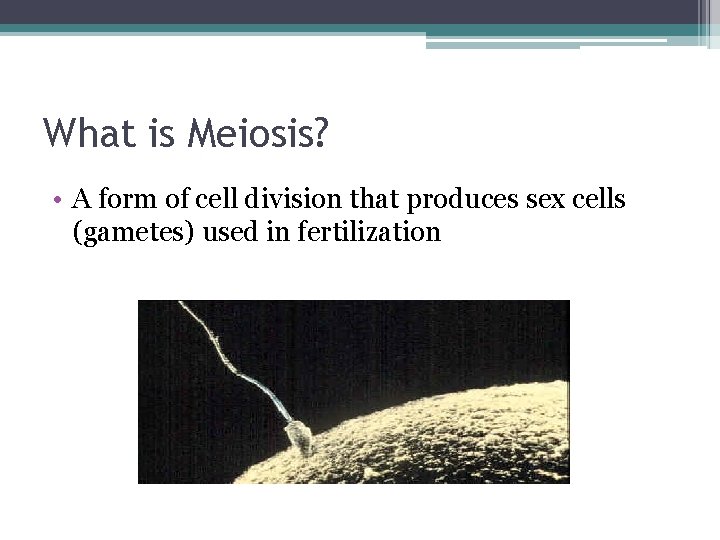
What is Meiosis? • A form of cell division that produces sex cells (gametes) used in fertilization
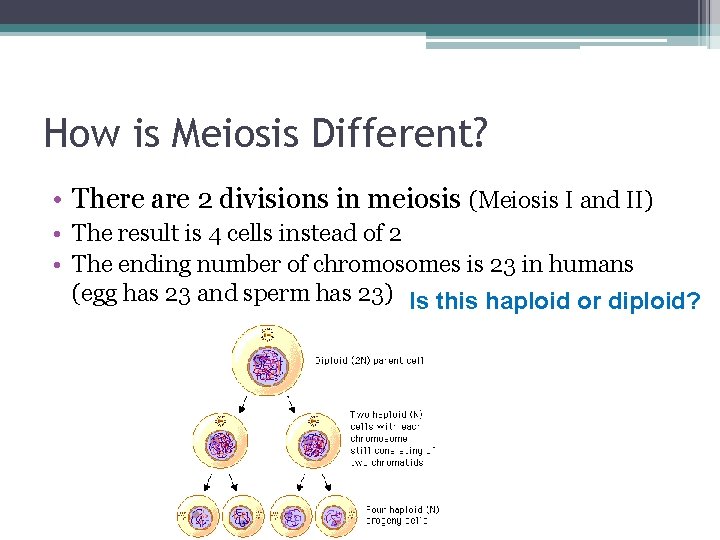
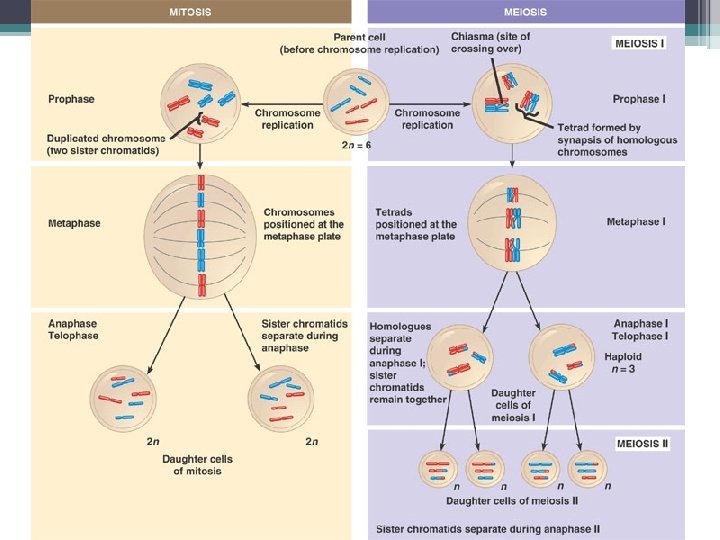
How is Meiosis Different? • There are 2 divisions in meiosis (Meiosis I and II) • The result is 4 cells instead of 2 • The ending number of chromosomes is 23 in humans (egg has 23 and sperm has 23) Is this haploid or diploid?
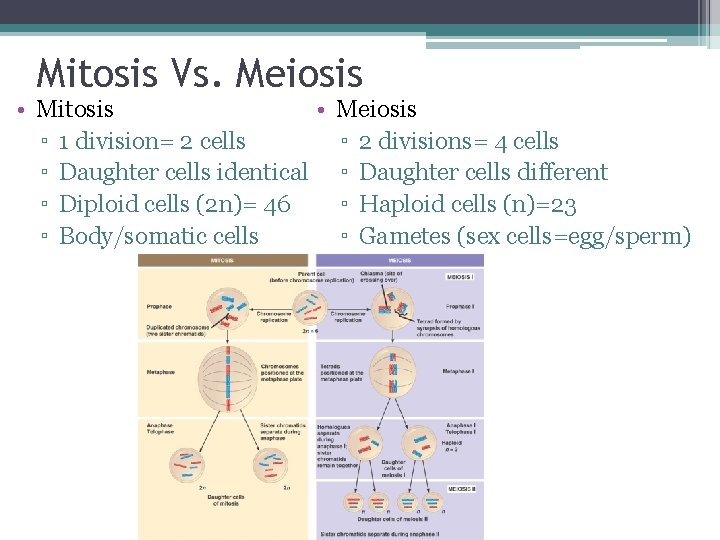
Mitosis Vs. Meiosis • Mitosis • ▫ 1 division= 2 cells ▫ Daughter cells identical ▫ Diploid cells (2 n)= 46 ▫ Body/somatic cells Meiosis ▫ 2 divisions= 4 cells ▫ Daughter cells different ▫ Haploid cells (n)=23 ▫ Gametes (sex cells=egg/sperm)
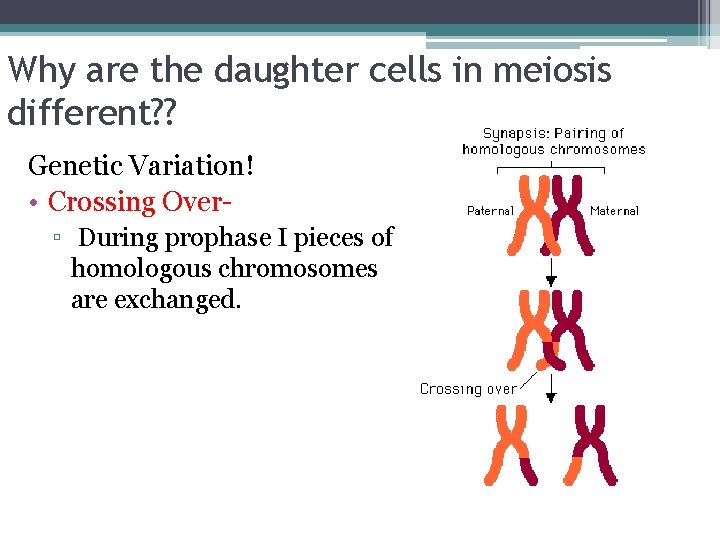
Why are the daughter cells in meiosis different? ? Genetic Variation! • Crossing Over▫ During prophase I pieces of homologous chromosomes are exchanged.
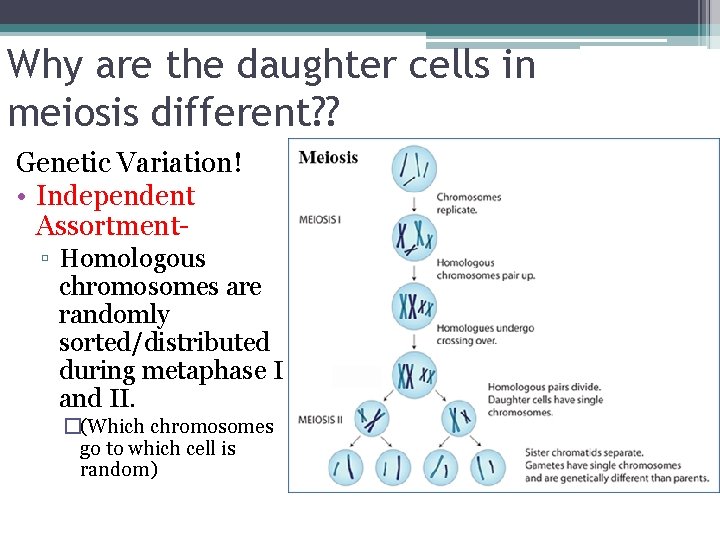
Why are the daughter cells in meiosis different? ? Genetic Variation! • Independent Assortment▫ Homologous chromosomes are randomly sorted/distributed during metaphase I and II. �(Which chromosomes go to which cell is random)
Why are the daughter cells in meiosis different? ? Genetic Variation! • Random fertilization- the fertilization of an egg and sperm is random!