
MEIOSIS Homologous Chromosomes Pair of chromosomes maternal and
- Slides: 22
MEIOSIS
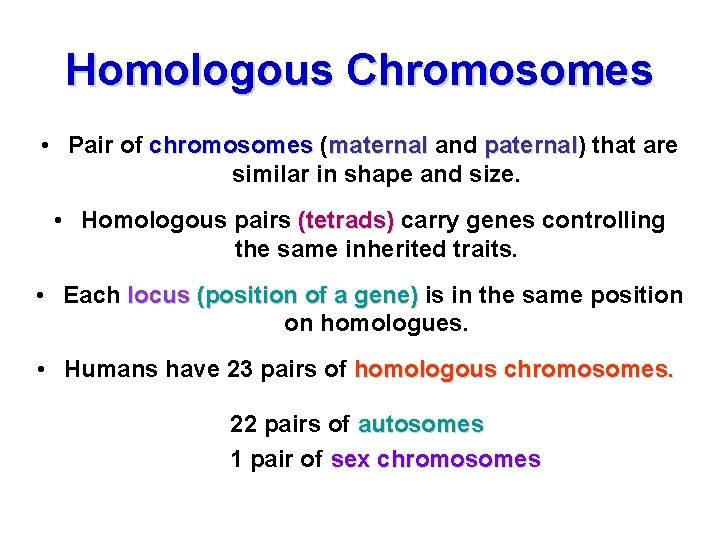
Homologous Chromosomes • Pair of chromosomes (maternal and paternal) paternal that are similar in shape and size. • Homologous pairs (tetrads) carry genes controlling the same inherited traits. • Each locus (position of a gene) is in the same position on homologues. • Humans have 23 pairs of homologous chromosomes. 22 pairs of autosomes 1 pair of sex chromosomes
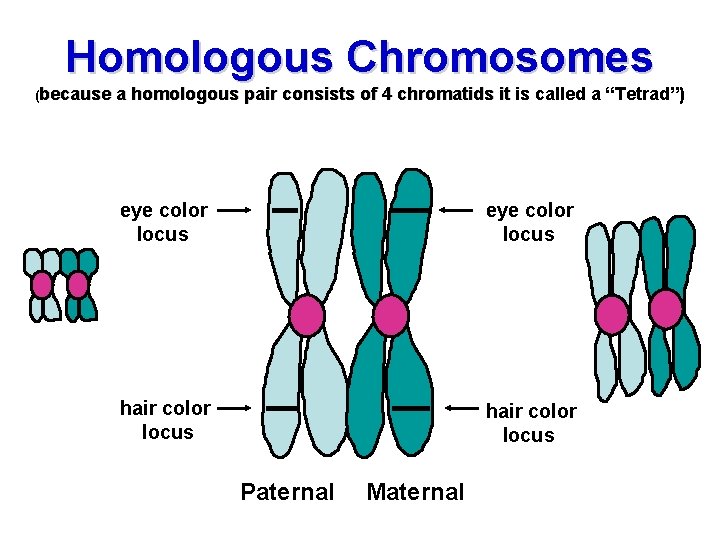
Homologous Chromosomes (because a homologous pair consists of 4 chromatids it is called a “Tetrad”) eye color locus hair color locus Paternal Maternal
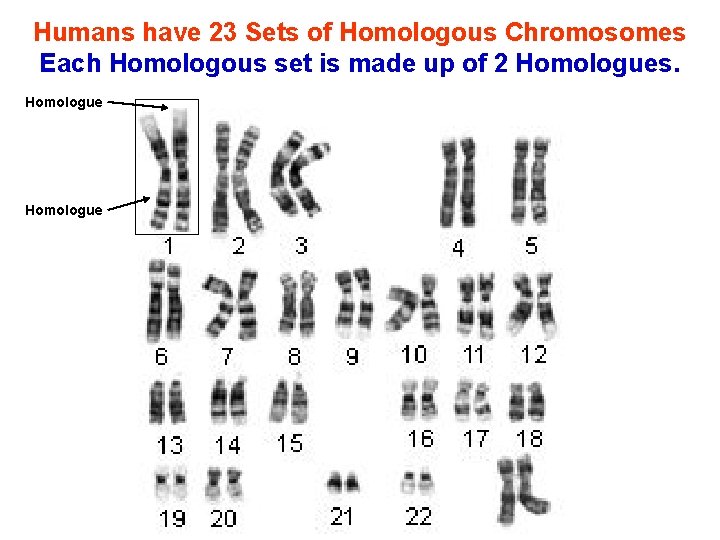
Humans have 23 Sets of Homologous Chromosomes Each Homologous set is made up of 2 Homologues. Homologue
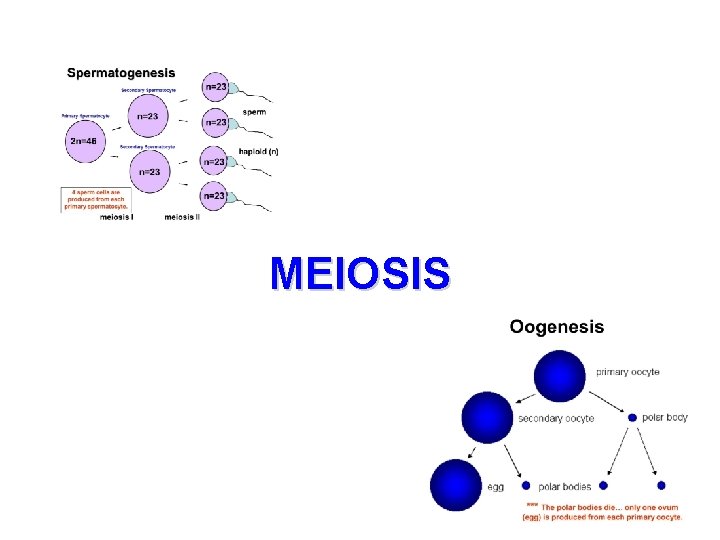
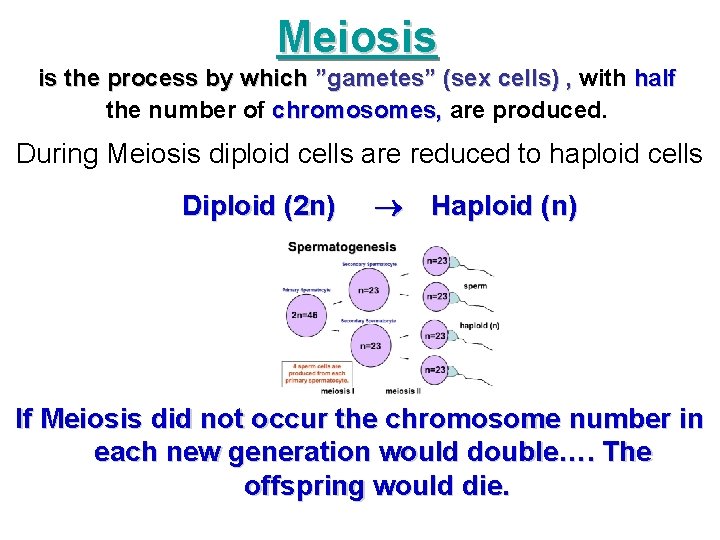
Meiosis is the process by which ”gametes” (sex cells) , with half the number of chromosomes, are produced. During Meiosis diploid cells are reduced to haploid cells Diploid (2 n) Haploid (n) If Meiosis did not occur the chromosome number in each new generation would double…. The offspring would die.
Meiosis is Two cell divisions (called meiosis I and meiosis II) II with only one duplication of chromosomes.
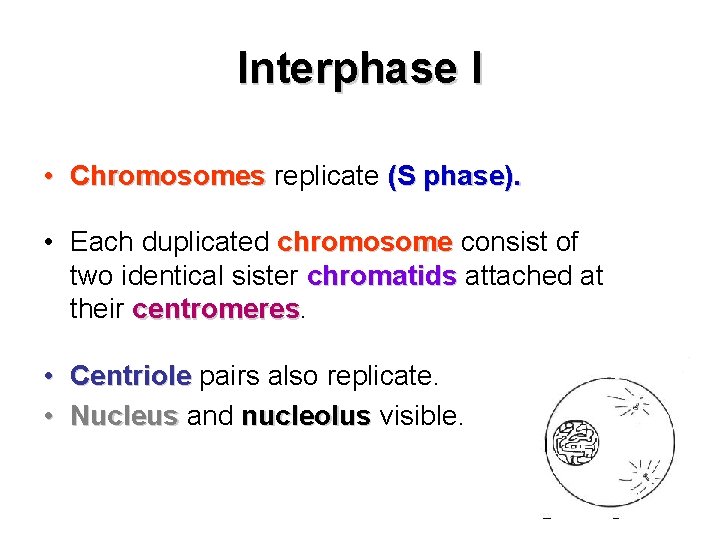
Interphase I • Chromosomes replicate (S phase). • Each duplicated chromosome consist of two identical sister chromatids attached at their centromeres • Centriole pairs also replicate. • Nucleus and nucleolus visible.
Meiosis I (four phases) • Cell division that reduces the chromosome number by one-half. • four phases: phases a. prophase I b. metaphase I c. anaphase I d. telophase I
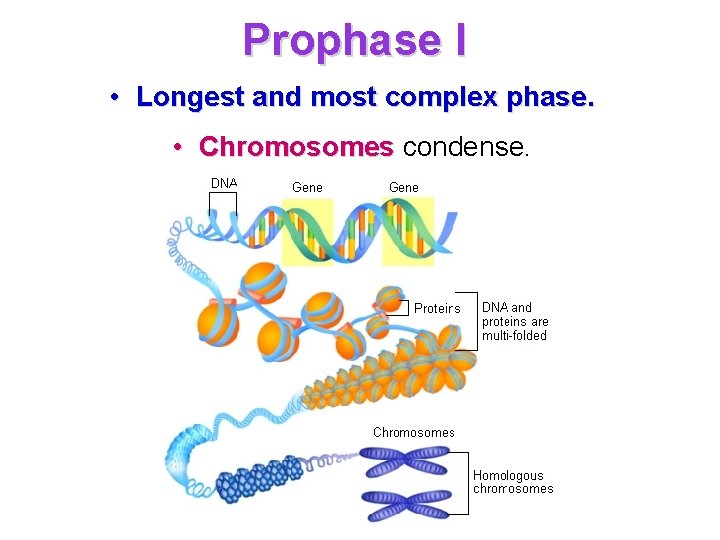
Prophase I • Longest and most complex phase. • Chromosomes condense.
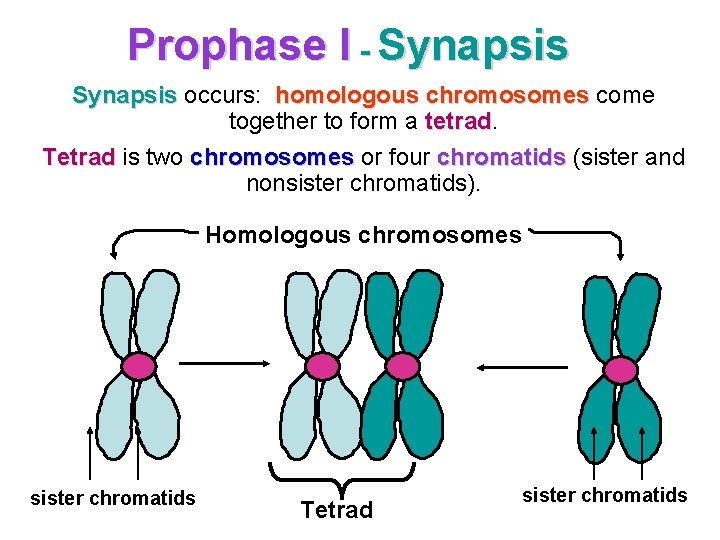
Prophase I - Synapsis occurs: homologous chromosomes come together to form a tetrad Tetrad is two chromosomes or four chromatids (sister and nonsister chromatids). Homologous chromosomes sister chromatids Tetrad sister chromatids
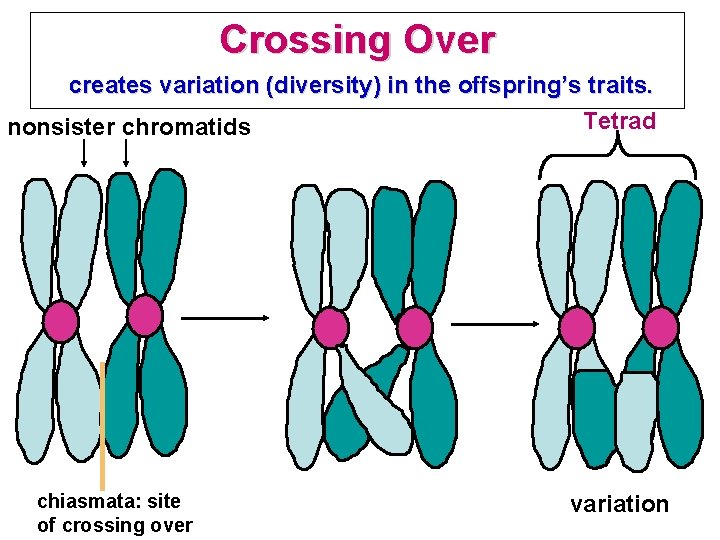
Crossing Over creates variation (diversity) in the offspring’s traits. Tetrad nonsister chromatids chiasmata: site of crossing over variation
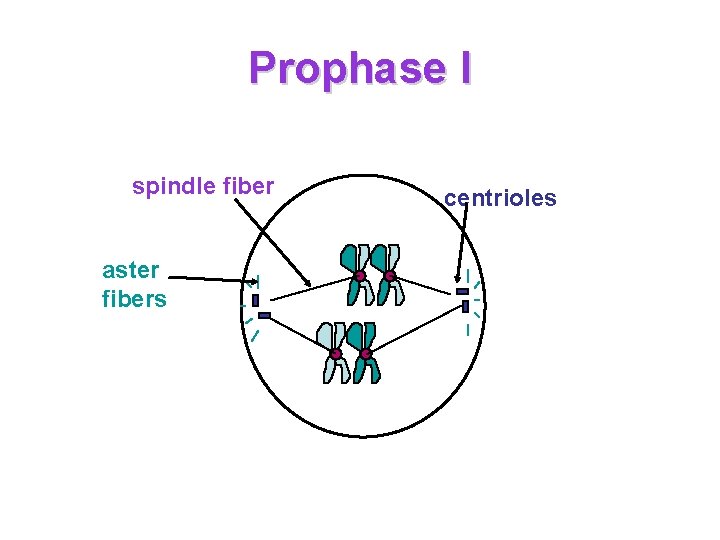
Prophase I spindle fiber aster fibers centrioles
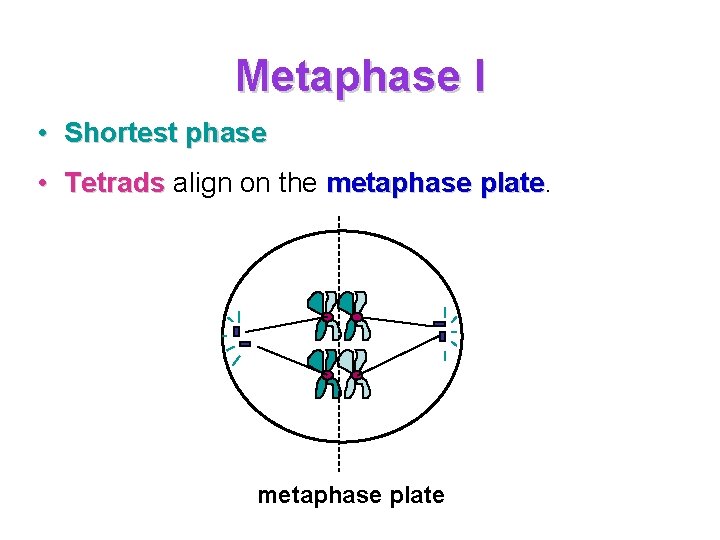
Metaphase I • Shortest phase • Tetrads align on the metaphase plate
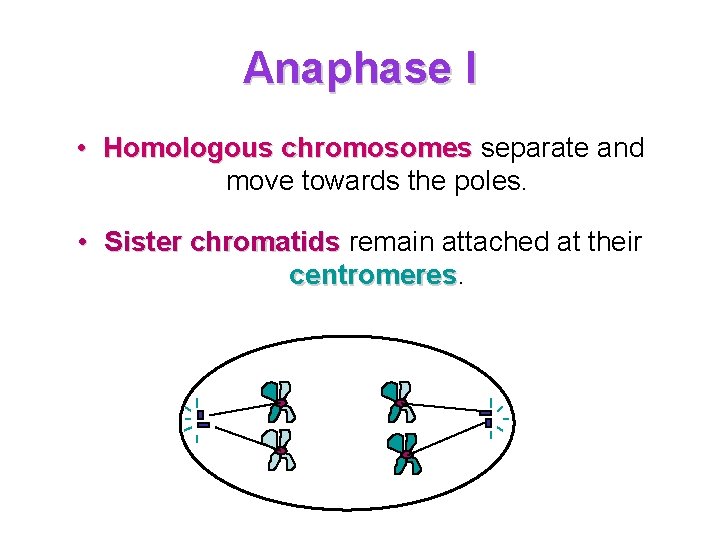
Anaphase I • Homologous chromosomes separate and move towards the poles. • Sister chromatids remain attached at their centromeres
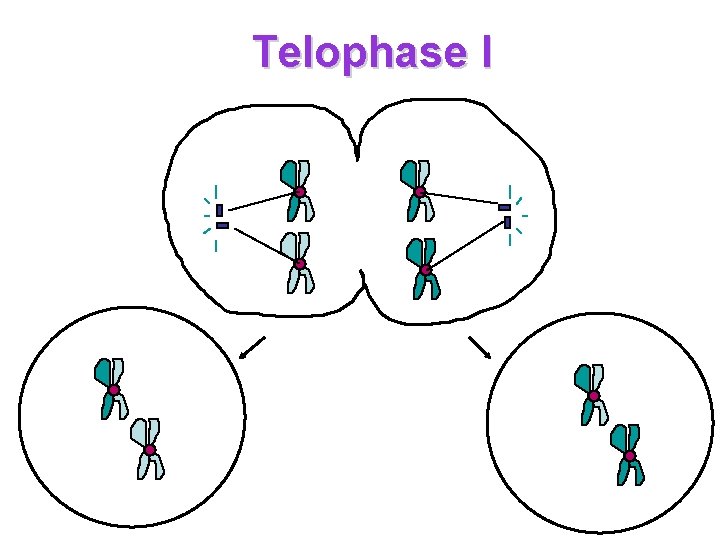
Telophase I • Each pole now has haploid set of chromosomes • Cytokinesis occurs and two haploid daughter cells are formed.
Telophase I
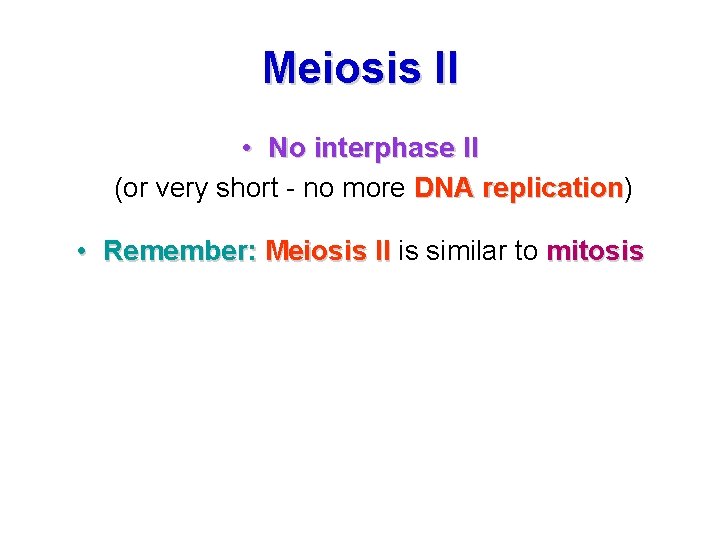
Meiosis II • No interphase II (or very short - no more DNA replication) replication • Remember: Meiosis II is similar to mitosis
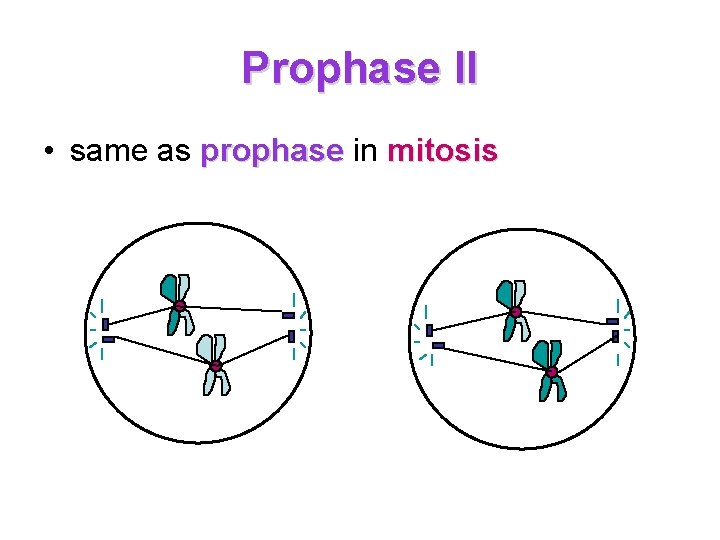
Prophase II • same as prophase in mitosis
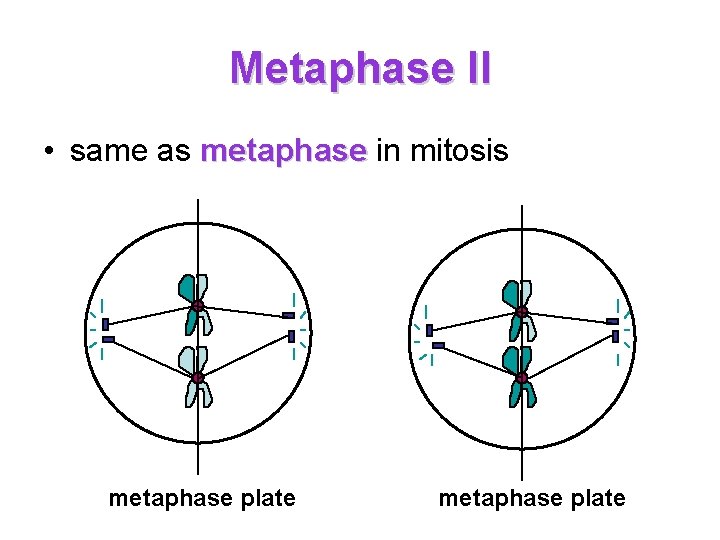
Metaphase II • same as metaphase in mitosis metaphase plate
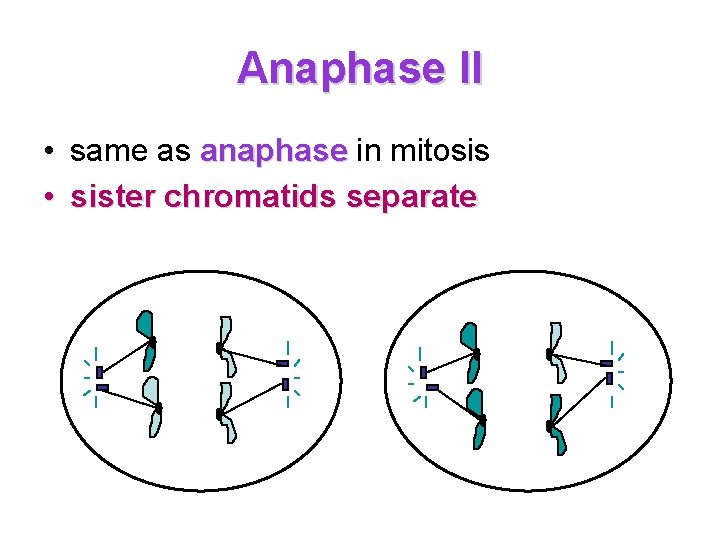
Anaphase II • same as anaphase in mitosis • sister chromatids separate
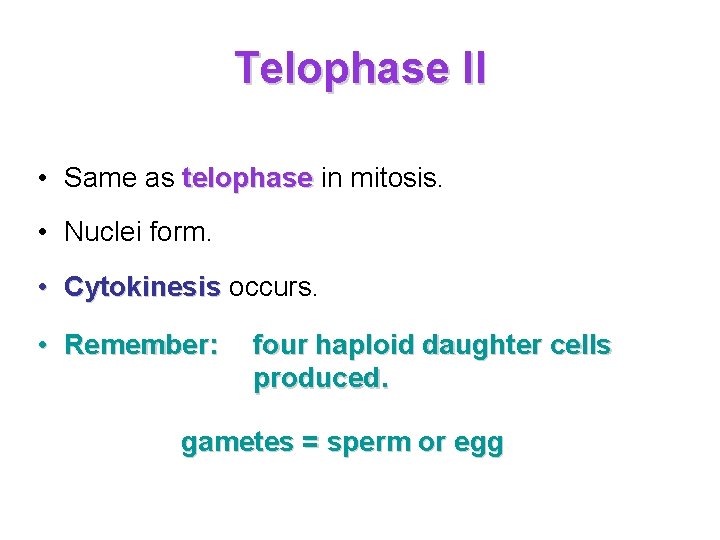
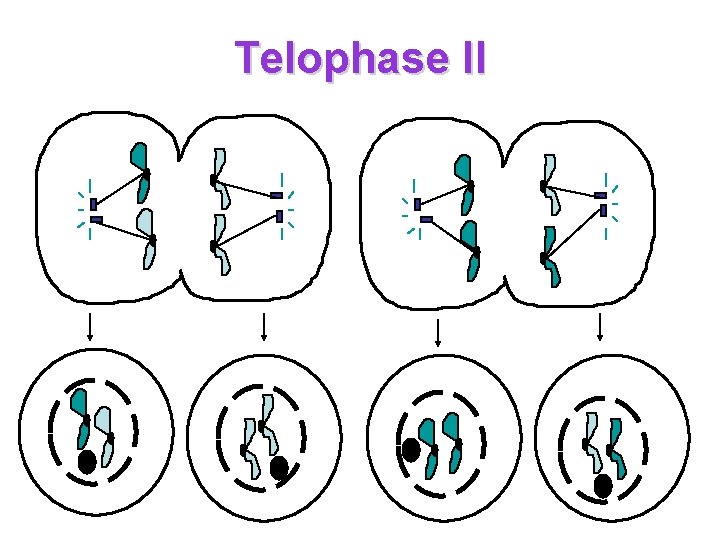
Telophase II • Same as telophase in mitosis. • Nuclei form. • Cytokinesis occurs. • Remember: four haploid daughter cells produced. gametes = sperm or egg
Telophase II